
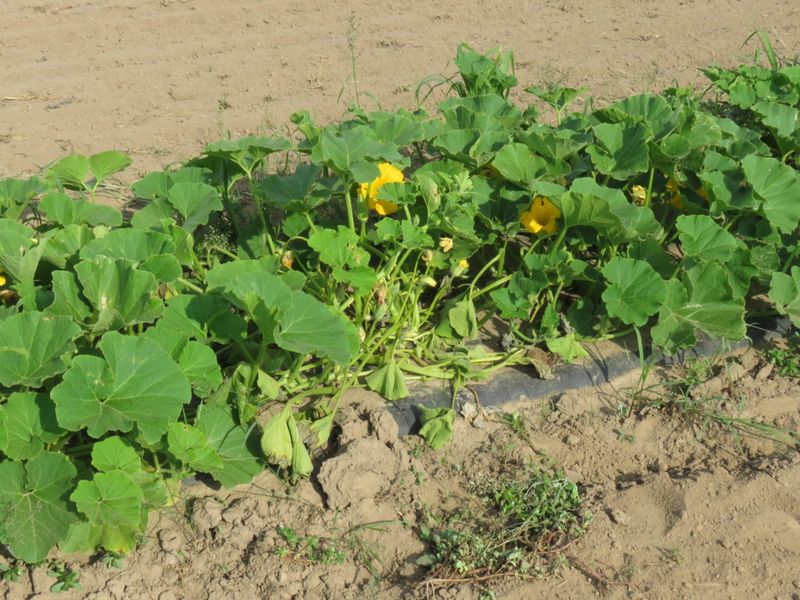
You step outside on an August morning and your zucchini looks healthy and full. By two in the afternoon, the leaves are draped flat on the ground like they gave up. That gap between a strong morning plant and a collapsed afternoon one is your first clue that something needs a closer look, and the base of the plant is the right place to start.
Afternoon wilting raises a question, not a diagnosis
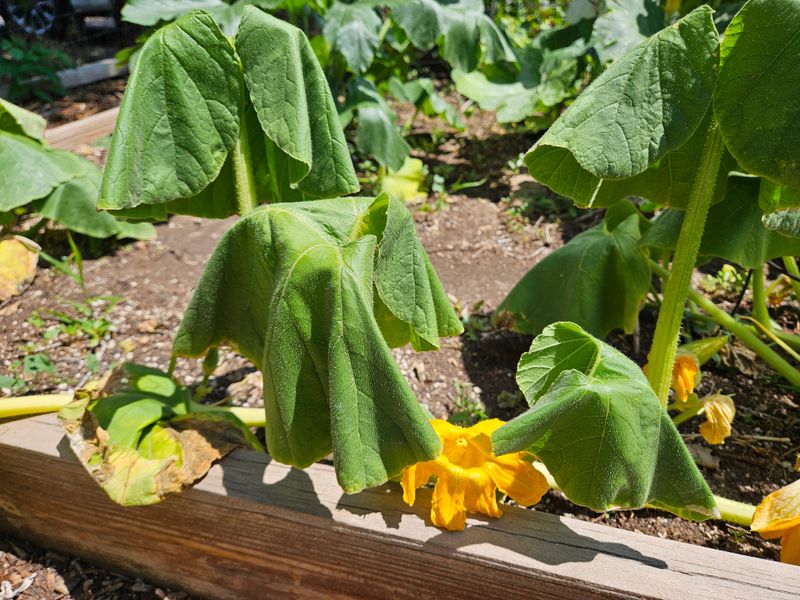
Squash plants have a tough job on hot August afternoons. Their broad leaves lose water faster than the roots can replace it during peak heat, and the result can look alarming even when nothing is structurally wrong. Colorado State University Extension notes that temporary afternoon wilting is common in cucurbits and is not automatically a sign of pest damage or disease.
The pattern that matters most is what happens after the sun drops. A plant that perks back up by evening or early morning is showing a classic heat-stress response, not necessarily a structural problem. The one that stays limp through the cool morning hours is sending a different signal entirely, and that distinction is worth remembering before you reach for a shovel or a spray bottle.
Inspecting the base of the plant is a smart first move, but treat it as a starting point rather than a verdict. Afternoon wilting alone does not establish that a squash vine borer, a disease, or any single cause is at work. University of Minnesota Extension lists several overlapping possibilities, and working through them systematically gives you a much better chance of choosing the right response.
Why squash vine borer belongs on the suspect list
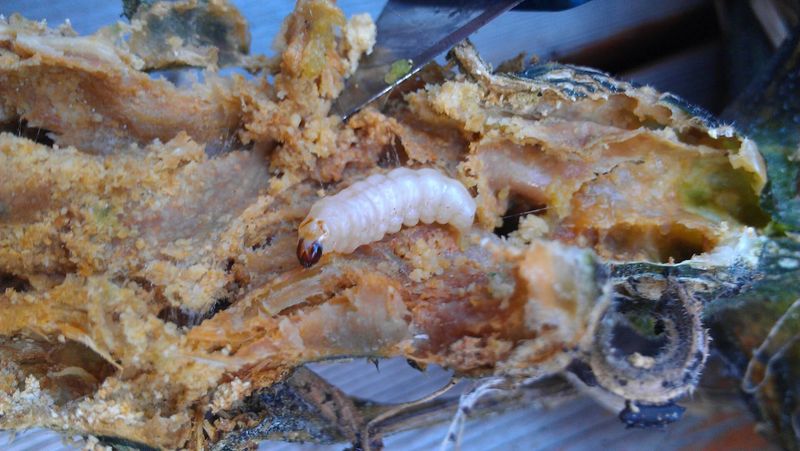
The squash vine borer is a clearwing moth whose larvae cause damage from the inside out. Adult moths lay their flat, reddish-brown eggs singly on lower stems and the crown of squash and pumpkin plants, often targeting zucchini, summer squash, winter squash, and pumpkins. Once an egg hatches, the larva bores directly into the stem and begins feeding on the tissue that moves water up through the plant.
That internal tunneling is what connects a borer infestation to the wilting you observe. As the larva feeds and grows, it increasingly disrupts the plant’s ability to move water, so the first symptom is often afternoon wilt when heat is highest and water demand peaks. University of Minnesota Extension describes how early damage may show up only during the hottest part of the day, then progress to persistent wilt and eventually plant death as tunneling worsens.
Timing varies more than many gardeners expect. In northern states, adult borer activity is often concentrated from late June through July, meaning that by August the larvae may already be well established inside the stem rather than newly hatching. University of Georgia Extension points out that some regions experience a second generation or later activity, so August is not off the table everywhere. University of Maryland Extension also notes that cucumbers and melons are generally less frequently attacked, though no cucurbit crop is completely safe.
Inspect the crown and lower stem for supporting clues
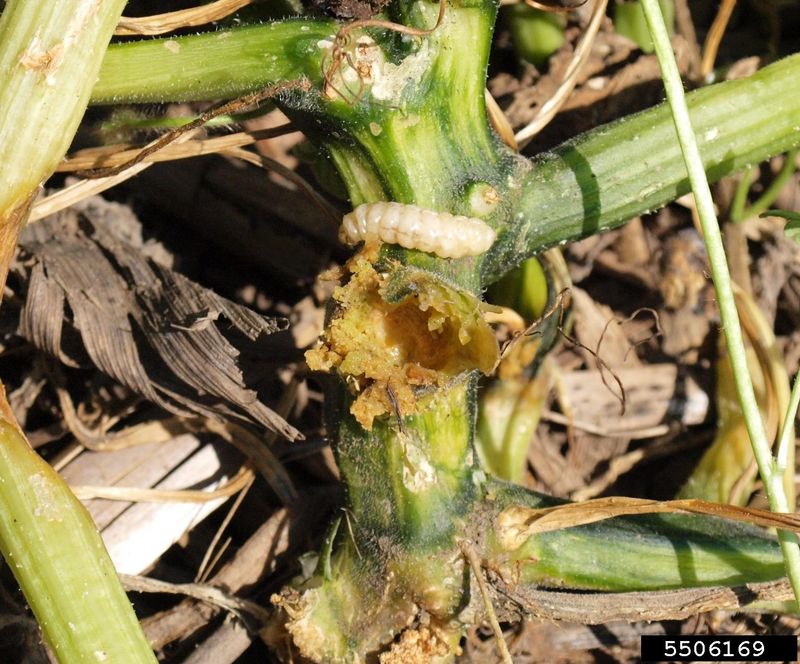
Before cutting anything or applying a treatment, spend two minutes crouching down at the base of the wilted plant. The crown, the point where the stem meets the soil, and the first several inches of the lower stem are the places to examine most carefully. You are looking for a combination of signs, not just one.
According to University of Maryland Extension, the key indicators that support a borer diagnosis include a small entrance hole in the lower stem or crown, moist greenish or orange frass that resembles coarse sawdust or wet grain, stem tissue that feels soft or mushy when gently pressed, and a single runner that wilts noticeably before the rest of the plant does. Any one of those clues by itself is worth noting, but the combination is what makes a borer diagnosis more credible.
A hole near the base does not automatically confirm an infestation. Other injuries, mechanical damage, or crown rot can also create openings near the soil line. Look for the frass alongside the hole, because that moist, crumbly material is the larva’s waste and is a much more specific indicator. If you find only a hole and the stem tissue feels firm, keep the other possible causes in mind and check soil moisture before doing anything else.
Check heat, soil moisture, and the root zone first
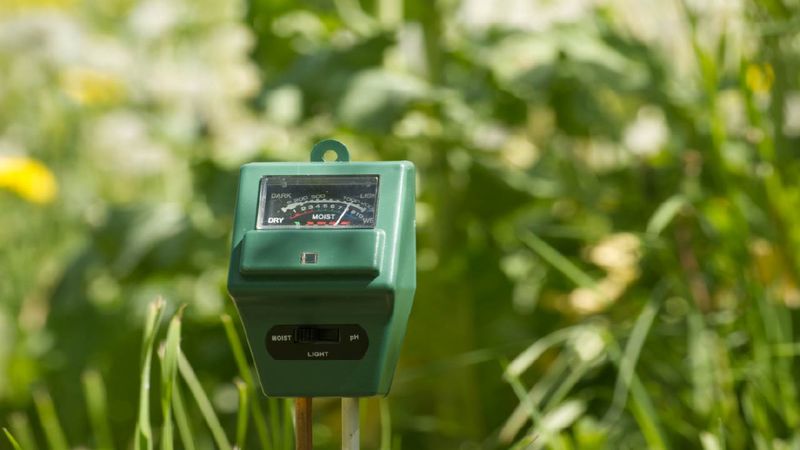
Reaching for an insecticide or a knife before checking the soil is one of the most common missteps when a squash plant wilts. Dry soil is a straightforward reason for afternoon wilt, and the fix is different from any pest treatment. Press your finger or a wooden dowel about two inches below the surface near the plant’s root zone. If the soil feels dry at that depth, slow and thorough watering is the next step, not a stem inspection.
University of Minnesota Extension recommends watering deeply and slowly near the soil surface rather than with frequent, shallow sprinkles, which encourages shallow roots and leaves the deeper zone dry. Their summer squash guidance suggests roughly one inch of water per week for squash, adjusted for your soil type, recent rainfall, and current temperatures.
Saturated soil is an equally real problem and one that is easy to overlook. Waterlogged soil drives oxygen out of the root zone, and roots that cannot breathe begin to fail, producing wilt symptoms that look nearly identical to drought stress. Colorado State University Extension treats morning wilt as a more serious distress signal than afternoon-only drooping, so if your plant has not recovered by the time temperatures drop and the soil is already wet, the root zone itself may be the problem rather than a pest.
Compare borer evidence with disease and squash-bug clues
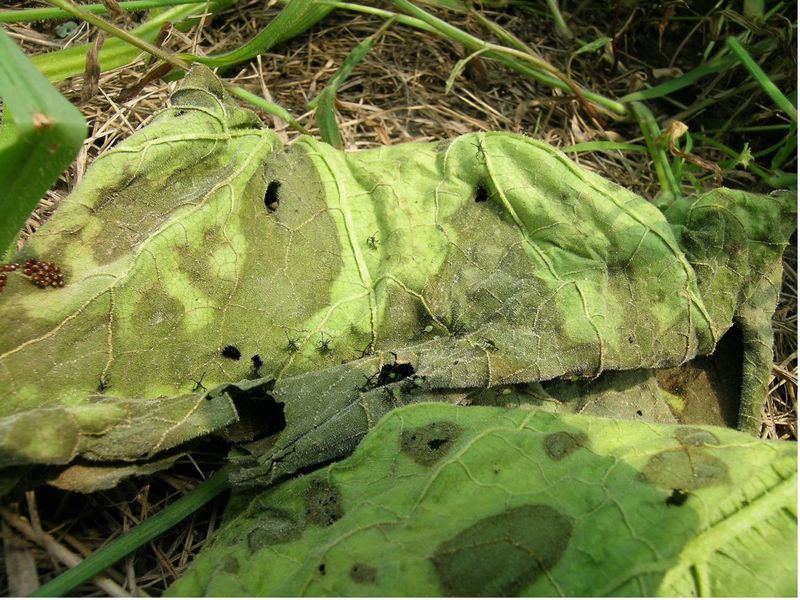
Several other problems can produce wilting that looks like a borer infestation at first glance, and sorting them out before acting can save you from treating the wrong thing. Bacterial wilt, spread mainly by cucumber beetles, tends to start in individual leaves or runners rather than the whole plant at once. Affected tissue may recover partially overnight in the early stages, and if you cut a wilted stem and touch the cut ends together, a sticky bacterial ooze can sometimes be pulled away in thin strands. Utah State University Extension notes that there is no curative treatment for bacterial wilt once a plant is infected, making early removal the most practical response.
Cucumber beetles are the key vector for bacterial wilt, and USU’s cucumber beetle research explains that squash and pumpkins vary in susceptibility compared to cucumbers and melons, which are more commonly affected. Still, if you are seeing striped or spotted beetles on your plants alongside wilting symptoms, bacterial wilt is worth considering as a possibility.
Squash bugs present a third scenario. These shield-shaped insects feed on plant tissue and can damage the water-conducting vessels in stems and leaves, causing rapid or sudden wilt that can mimic both borer damage and bacterial wilt. Utah State University Extension and University of Minnesota Extension both note that squash bug eggs, bronze-colored and laid in clusters on leaf undersides, nymphs, and adults can be found on leaves, stems, and near the base of the plant. Checking those locations adds another layer to your diagnosis before you commit to a response.
Attempt a careful rescue only when the vine remains viable
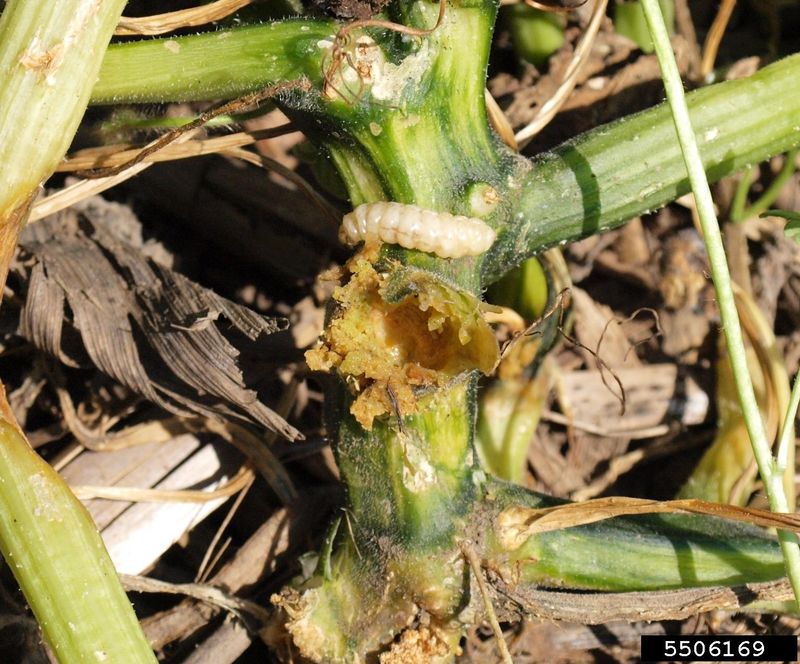
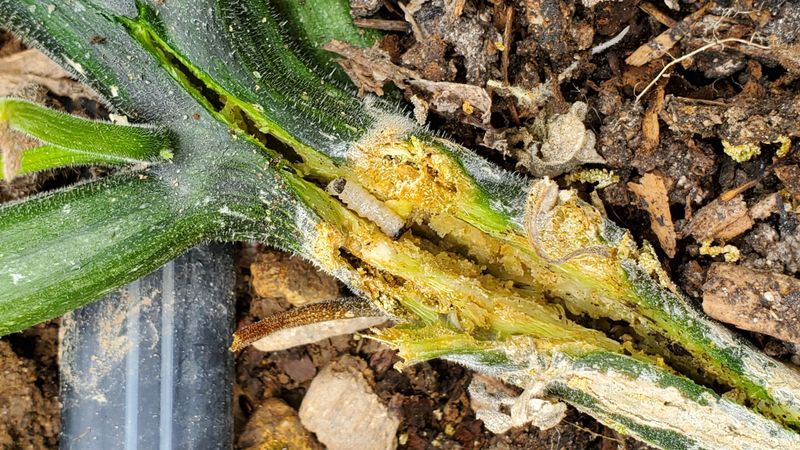
Finding a borer inside the stem is not an automatic death sentence for the plant, but the rescue procedure has real limits and is not right for every situation. The approach recommended by University of Maryland Extension involves making a careful, shallow vertical slit upward from the point of frass, locating and removing the larva without cutting deeper than necessary, and then mounding moist soil over the wounded section of stem. Squash vines can develop supplemental roots from buried stem tissue, which may help the plant compensate for the damage.
This is a rescue attempt with uncertain outcomes, not a guaranteed fix. A stem that is already severely softened or that contains multiple larvae may not tolerate the additional stress of cutting. Proceed only when the plant still looks viable overall, the stem tissue around the entry point is not completely mushy, and you can clearly see or locate the larva. Cutting into a heavily damaged stem can hasten the plant’s decline rather than reverse it.
For plants that are too far gone, removal is the better choice. University of Minnesota Extension recommends pulling and destroying severely infested plants before larvae finish feeding and exit the stem to pupate in the soil, which can reduce next year’s population. Spraying an insecticide on an already-infested plant is unlikely to reach a larva protected inside the stem. EPA guidance on pesticide labels makes clear that any product must be used strictly according to its current label, including the listed crop, target pest, rates, and safety requirements.
Prevent the next infestation with timing and pollinator access
Once you have dealt with the current season, shifting attention to prevention can change how the next crop fares. Secured floating row covers placed over young plants before adult moths begin laying eggs can physically block access to the stem. University of Maryland Extension’s row cover guidance explains that covers must be anchored at the edges to be effective and should be removed once squash plants begin flowering so that bees and other pollinators can reach the blossoms. Covers left on too long can also trap pests that were already present underneath, raise soil and air temperatures to stressful levels, and interfere with fruit set.
Crop selection and planting timing are two other tools worth considering. Maryland Extension describes butternut squash, Tromboncino, and cushaw types as less susceptible to squash vine borer than zucchini and many other summer squash, though none of those varieties should be treated as immune. Some gardeners in regions with a single borer generation also try planting a second crop in midsummer so the plants are still small when peak adult activity has already passed.
Preventive pesticide applications targeting adult moths or newly hatching larvae before they enter the stem are more likely to have an effect than spraying after damage appears. University of Minnesota Extension notes that timing and coverage are critical. Any product must list both the crop and the target pest on its current label, and EPA pollinator protection guidance and the EPA’s read-the-label-first resource both emphasize following all rates, harvest intervals, protective-equipment requirements, and restrictions related to pollinators.
Use the clues to choose the next step
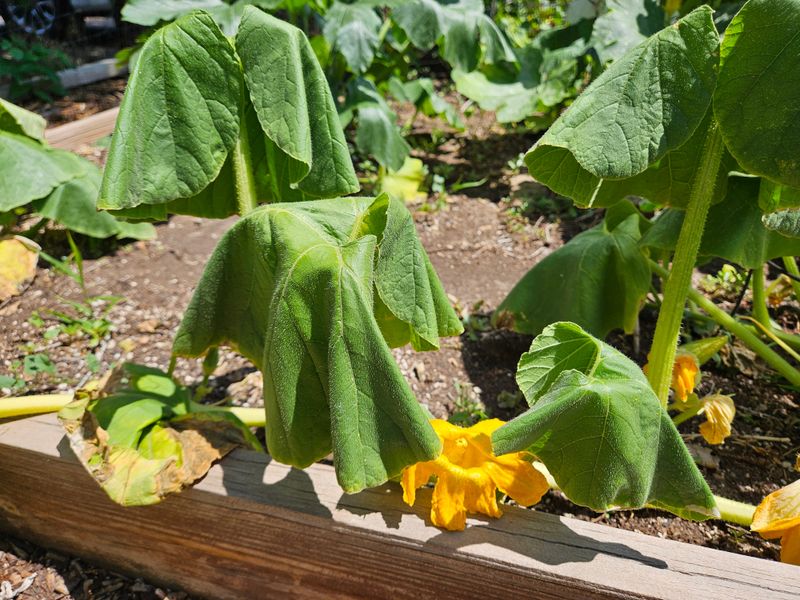
Working through a wilting squash plant takes a few minutes of observation before any action. Start by noting whether the wilt disappears overnight. If the plant looks fine every morning and only collapses during peak afternoon heat, heat stress is a reasonable first explanation, especially when the soil is adequately moist two inches below the surface.
When the plant stays limp into the morning or the soil check reveals a problem, move to the stem. Look for the combination of clues that together support a borer diagnosis: a hole near the crown, moist frass, soft tissue, and a runner that wilted first. Then compare those findings against bacterial wilt signs, such as sticky ooze from a cut stem and cucumber beetle activity, or squash bug evidence on leaves and stems. Maryland Extension’s squash vine borer resource and CSU Extension’s cucurbit guidance both support using multiple clues rather than a single symptom to guide your response.
A viable plant with early borer evidence and a reachable larva may be worth a careful rescue attempt. A plant that is collapsing with no recoverable tissue is better removed and destroyed before larvae exit the stem. Checking soil moisture before any other step keeps you from treating the wrong problem entirely. The real value of August afternoon wilting is not that it points to one hidden culprit, but that it prompts you to look closely enough to find the actual one.