
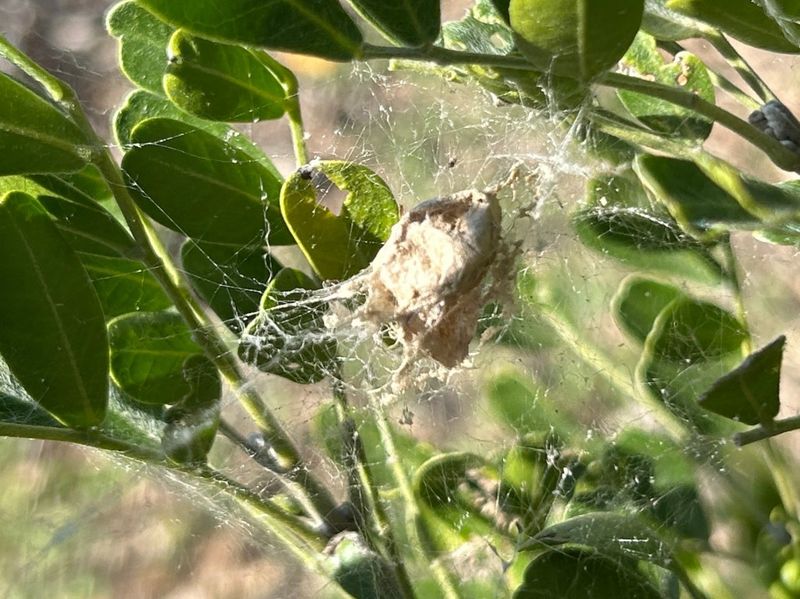
A bright-green spider hiding among your broccoli leaves is not a pest to sweep away. The green lynx spider is a native predator found across much of the southern United States, including Texas, and it quietly hunts the same caterpillars that chew holes in your fall cabbage and kale. Knowing what this spider does, and what it cannot do on its own, helps you make smarter decisions about your garden this season.
Recognize the green lynx spider in your Texas garden
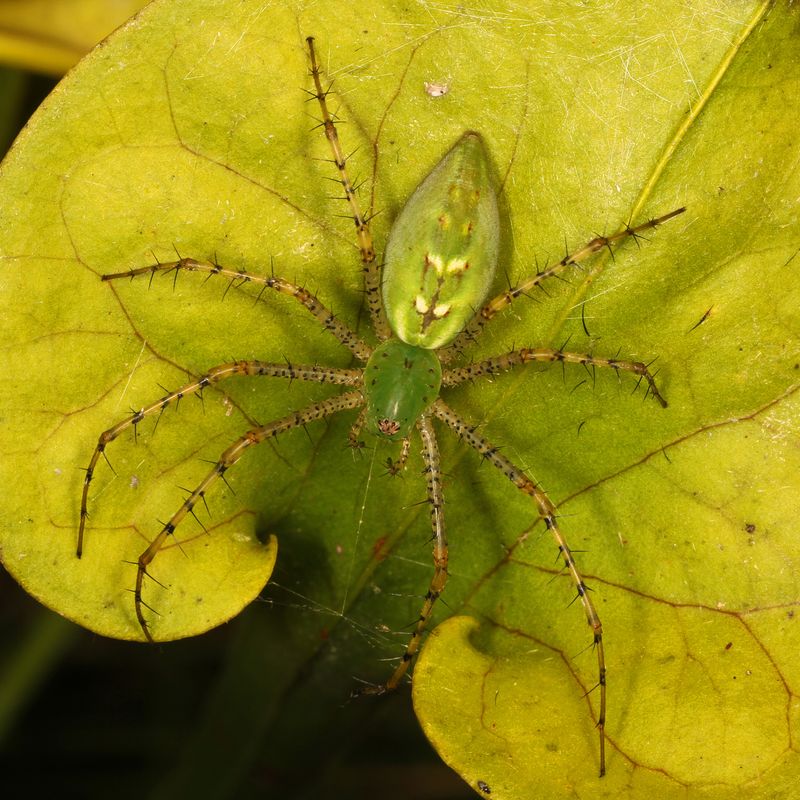
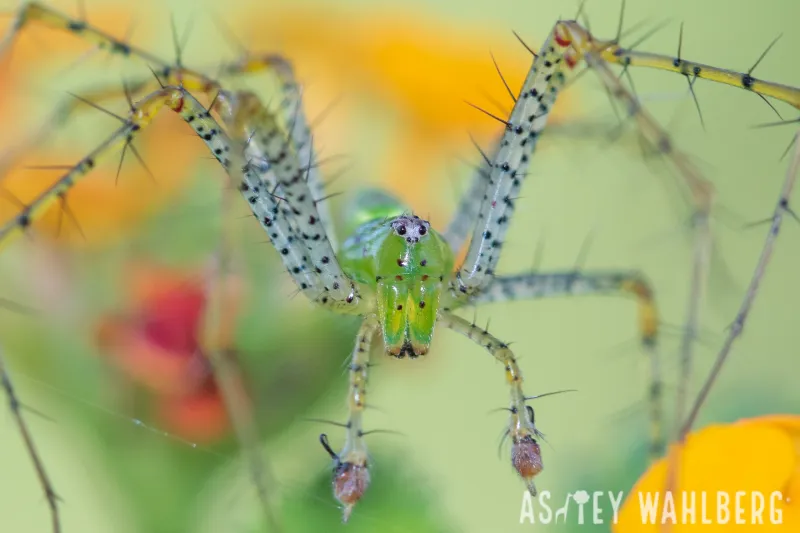
Spotting a green lynx spider for the first time can stop a gardener mid-step. The University of Florida IFAS profile for Peucetia viridans describes a conspicuously bright-green body, long legs lined with prominent dark spines, and eyes arranged in two curved rows that give the spider an alert, forward-facing look. Adult females typically reach about 22 mm in body length, making them one of the larger spiders a Texas gardener is likely to encounter on foliage.
Unlike orb weavers or funnel weavers, the green lynx does not spin a prey-catching web. Instead, it hunts by running, waiting, and pouncing directly on vegetation, which is why you are more likely to find one perched on a pepper plant or nestled in a shrub than suspended in a geometric web. The species is associated with shrubs and herbaceous plants across much of the southern United States, including Texas, so fall vegetable gardens with dense plantings offer plenty of suitable hunting ground.
Careful identification matters before you decide how to respond. Several lynx spider species live in Texas, including the striped lynx spider, and a quick glance at a green or patterned spider is not enough to confirm you have Peucetia viridans. Look for the combination of vivid green coloring, long spiny legs, and the active hunting style on plant surfaces rather than in a web.
One practical safety note: green lynx spiders very seldom bite people, and their bite is generally considered of little concern. That said, avoid handling or squeezing one. Any bite that produces spreading swelling, unusual pain, or breathing difficulty warrants prompt medical attention.
What the spider may contribute—and what the evidence does not show
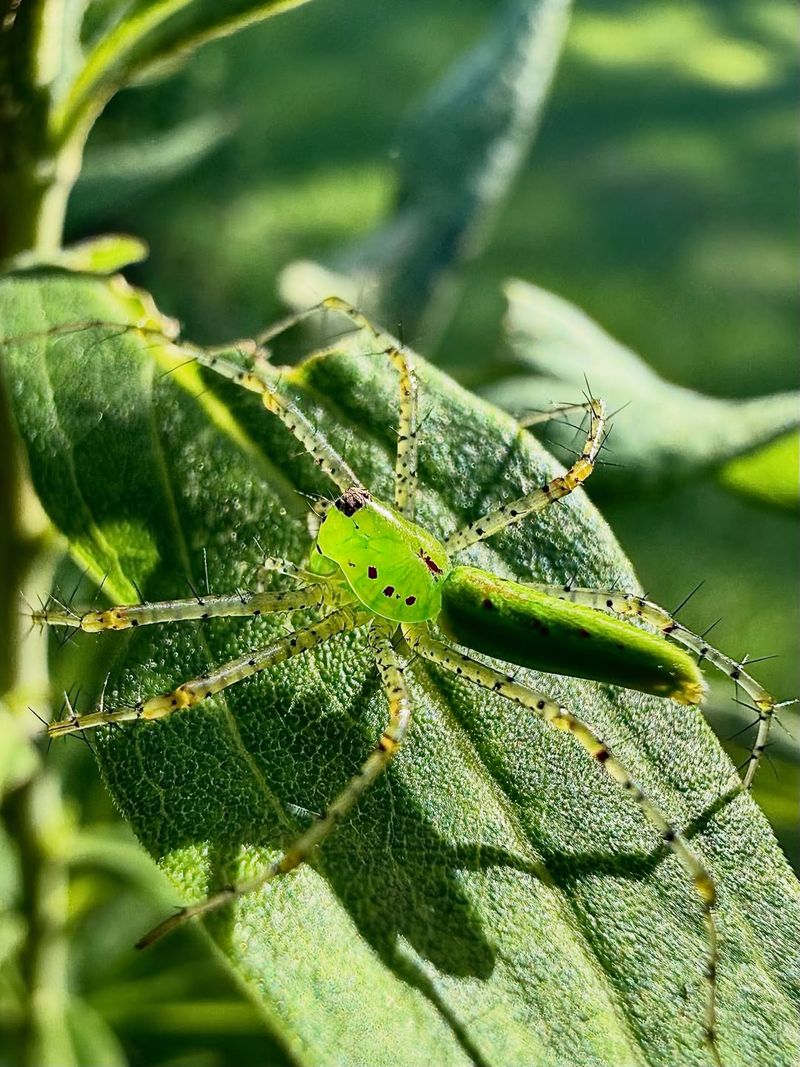
Green lynx spiders do eat caterpillars. The University of Florida’s species profile lists documented prey that includes corn earworm, cotton leafworm, and cabbage looper larvae, along with moths, flies, beetles, and true bugs. For a fall gardener dealing with imported cabbageworm or looper damage on broccoli, seeing that prey list is genuinely encouraging.
The critical question is how much predation actually happens and whether it translates to measurable crop protection. A field study of green lynx spiders in East Texas cotton and woolly croton plants offers the closest available evidence. Nyffeler, Dean, and Sterling’s research published in Environmental Entomology estimated an average of fewer than one prey capture per spider per day. In cotton, the two named caterpillar pests, Heliothis zea (corn earworm) and Alabama argillacea (cotton leafworm), together accounted for just 8% of recorded prey.
Those numbers deserve a plain reading. The spiders were eating a wide variety of arthropods, and caterpillar pests made up a small slice of their diet in that setting. The study was conducted in a commercial cotton field, not a home vegetable garden, so its numbers cannot be transferred directly to a backyard broccoli patch. What it does tell us is that predation occurs, is real, and is also limited and unpredictable in its focus on any particular pest.
Observing a green lynx spider on your kale does not mean caterpillar populations are being kept below damaging levels. Predator presence and crop protection are two different things. The spider may remove some caterpillars, and that contribution is worth respecting. Treating it as a guaranteed or sufficient control strategy, however, goes further than the evidence supports.
A helpful predator can also eat beneficial insects
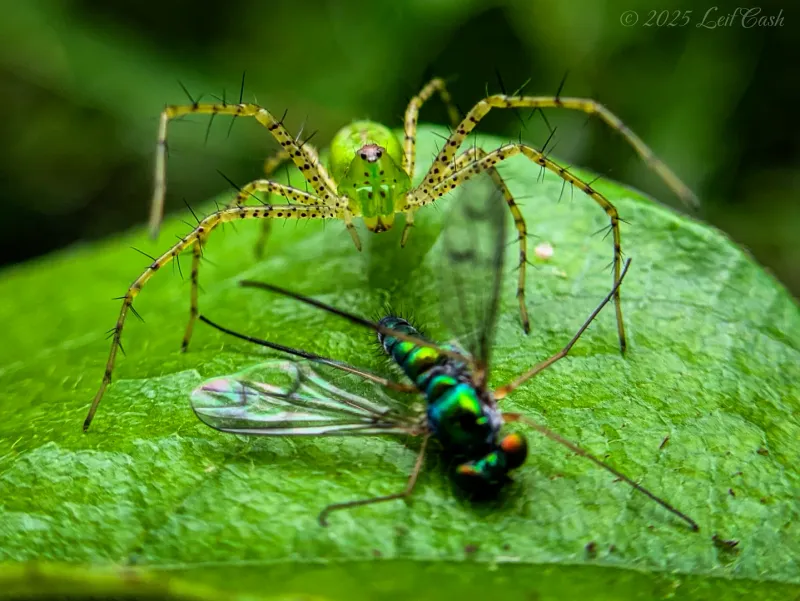
Calling the green lynx spider a “beneficial” insect can create a misleading picture. Beneficial compared to what? The spider does not distinguish between a cabbage looper and a honey bee when it decides to strike. The University of Florida profile documents prey that includes honey bees, predatory wasps, syrphid flies, tachinid flies, lady beetles, lacewings, and other spiders, in addition to the pest species that make gardeners cheer.
Syrphid flies and tachinid flies are themselves important natural enemies of aphids and caterpillars. Lady beetles and lacewings eat aphids and small pest larvae. When a green lynx spider takes one of these insects, it may be removing a pest controller rather than a pest. That does not make the spider a villain, but it does make the simple beneficial-versus-harmful label inadequate.
A context-based approach works better than a blanket rule. If a green lynx spider is stationed on a vegetable leaf or tucked into a shrub away from heavily visited flowers, leaving it in place is a reasonable choice. The spider may catch caterpillars, flies, or beetles without creating obvious losses to your pollinator population. On the other hand, if you spot one repeatedly ambushing bees on a flowering plant that draws heavy pollinator traffic, relocating the spider to a different part of the garden is a sensible response, not an overreaction.
The point is that management should fit the situation. The goal is not to protect every spider unconditionally or to treat every spider as a threat. Read the location, watch the behavior, and make the call that fits your garden’s balance at that moment.
Protect the guarded egg sac during fall
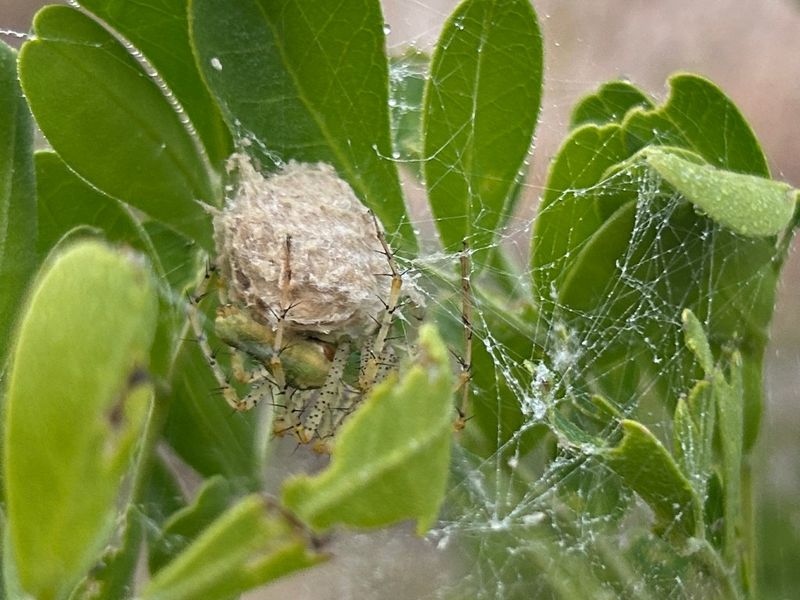
Fall is when green lynx spiders shift from active hunters into something closer to devoted parents. Females produce a straw-colored, papery egg sac and then stand guard over it until the spiderlings emerge, a process that commonly takes roughly four weeks. Texas A&M’s field guide to predators, parasites, and pathogens in cotton describes the straw-colored egg sac and the female’s guarding behavior as characteristic fall events.
The University of Florida IFAS profile notes that egg sacs are commonly constructed in September and October, typically placed in the upper branches of woody shrubs. That timing overlaps almost exactly with when Texas gardeners are planting and tending fall cole crops such as broccoli, cabbage, and cauliflower. Local conditions, plant availability, and regional weather can all shift the timing slightly, so what you observe may vary from the published norms.
A guarding female will not abandon her egg sac easily. She stays close, often refusing to retreat even when the plant is disturbed. That defensive commitment makes her vulnerable to accidental removal during fall garden cleanup, pruning, or pesticide applications aimed at nearby pests.
When you find a guarded egg sac, the practical response is straightforward: leave it alone when you can. Avoid pruning that branch, skip the spray application on that shrub, and route foot traffic away from the immediate area. The investment of a few weeks of patience costs very little and allows the next generation of spiders to emerge without interference.
Conserve habitat instead of chasing an attraction recipe
Gardeners sometimes ask which plant to grow or which product to apply to bring more green lynx spiders into the yard. The honest answer is that no tested Texas-specific formula exists. UC IPM’s guidance on biological control and natural enemies supports habitat conservation and reduced pesticide exposure as the foundation for encouraging natural enemies broadly, but this is general natural-enemy guidance, not a green-lynx-specific attraction trial. No published study confirms that a particular Texas native plant, flower color, fertilizer, food source, or watering schedule reliably increases green lynx spider numbers.
What the evidence does support is creating conditions where spiders that already live in your area are more likely to stay. The most impactful step for most Texas gardeners is reducing unnecessary broad-spectrum insecticide applications. Many common insecticides kill spiders and their prey alike, disrupting the food web that makes natural pest control possible in the first place. Routine calendar spraying, regardless of whether a pest problem actually exists, is especially counterproductive.
Beyond pesticide reduction, retaining suitable vegetation helps. Shrubs, ornamental grasses, and a mix of herbaceous plants near the vegetable garden give spiders hunting perches, shelter from heat, and a diverse supply of prey. Dense monocultures of a single crop offer less structural variety and less opportunity for predators to establish themselves.
Plant diversity also supports the broader arthropod community that green lynx spiders depend on. A garden with multiple plant types at different heights tends to harbor more insects overall, which in turn supports more predators. Leaving some leaf litter and undisturbed soil at garden edges adds to that structural complexity without requiring extra work or expense.
Use row covers for more controllable fall-crop protection
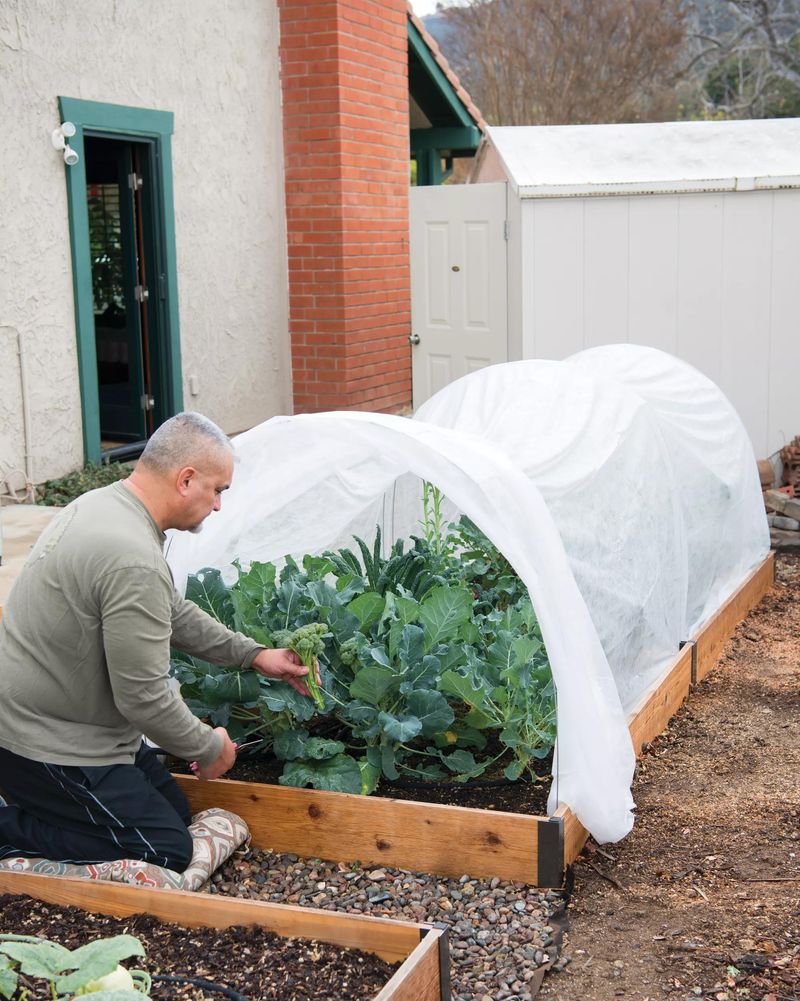
Row covers give Texas fall gardeners a level of caterpillar control that does not depend on predator behavior. Texas A&M AgriLife Extension’s fall vegetable gardening guide recommends row covers or spunweb fabric for protecting cole crops such as broccoli and cabbage from leaf-eating caterpillars. The physical barrier works by preventing adult moths and butterflies from laying eggs on the plants in the first place, cutting the problem off before larvae hatch and begin feeding.
Spunbonded polyester row cover fabric is lightweight enough to rest directly on plants without crushing them, and it transmits enough light and air for normal growth. Edges should be buried or weighted securely to close any gaps that a determined moth might exploit. The cover needs to be lifted for hand-pollinated crops or removed during bloom if pollinators are needed, but cole crops like broccoli and cabbage do not require insect pollination during the vegetative stage when caterpillar damage is the main concern.
Row covers are a controllable option because the gardener decides when to apply them, how long to leave them in place, and when to remove them. That predictability contrasts with relying on a predator whose presence, location, and feeding choices the gardener cannot direct.
Texas A&M divides the state into five gardening regions and provides different fall planting windows for each. A gardener in Amarillo works with different timing than one in Houston or the Rio Grande Valley. Follow the regional schedule for your area rather than a single statewide calendar, and plan to install row covers shortly after transplanting or seeding, before caterpillar pressure builds.
Escalate through IPM when damage justifies action
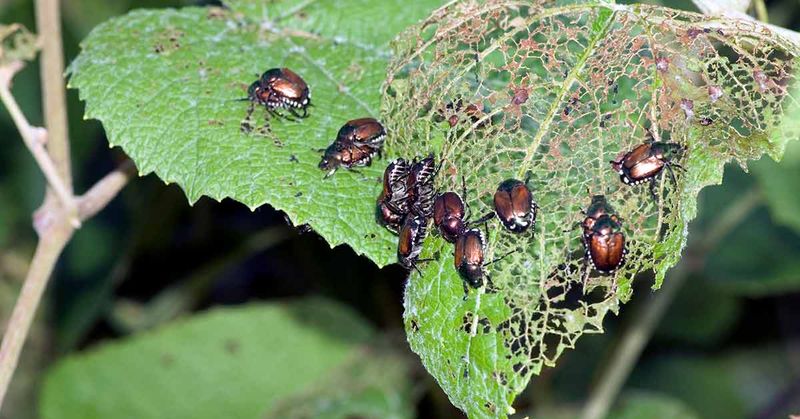
Finding chewed leaves does not automatically mean reaching for a spray bottle. The EPA’s integrated pest management principles outline a sequence that starts with accurate identification and ends with the least disruptive treatment that actually addresses the problem. Applying that sequence to a fall vegetable garden means first figuring out which caterpillar is doing the damage, because imported cabbageworm, cabbage looper, and diamondback moth larvae all look different and may respond differently to available controls.
After identification, inspect the plants systematically rather than relying on a quick glance. Turn leaves over to find egg masses and small larvae before they grow into the instars that cause the most damage. Count larvae per plant and track whether the population is growing, stable, or declining. Many gardens can tolerate a modest level of feeding without losing a meaningful portion of the harvest, and a predator like the green lynx spider may be removing some individuals during that monitoring window.
When monitoring shows that damage is reaching a level worth acting on, move through controls in order of disruption. Hand-picking larvae from small plantings is effective and costs nothing beyond time. Row covers applied at this stage can stop additional egg-laying even if they cannot fix damage already done. Physical removal of egg clusters from leaf undersides reduces the next generation before it starts feeding.
If those steps are not sufficient, a selective biological insecticide becomes the next option. UC IPM identifies Bacillus thuringiensis (Bt) as relatively selective for caterpillars that consume treated foliage and as generally less harmful to many natural enemies than broad-spectrum products. Bt is not automatically safe for every organism simply because it is a naturally derived product. Read the label for the specific crop, follow harvest intervals exactly, and apply when larvae are small and actively feeding for the best results.
Let the spider help without making it carry the harvest
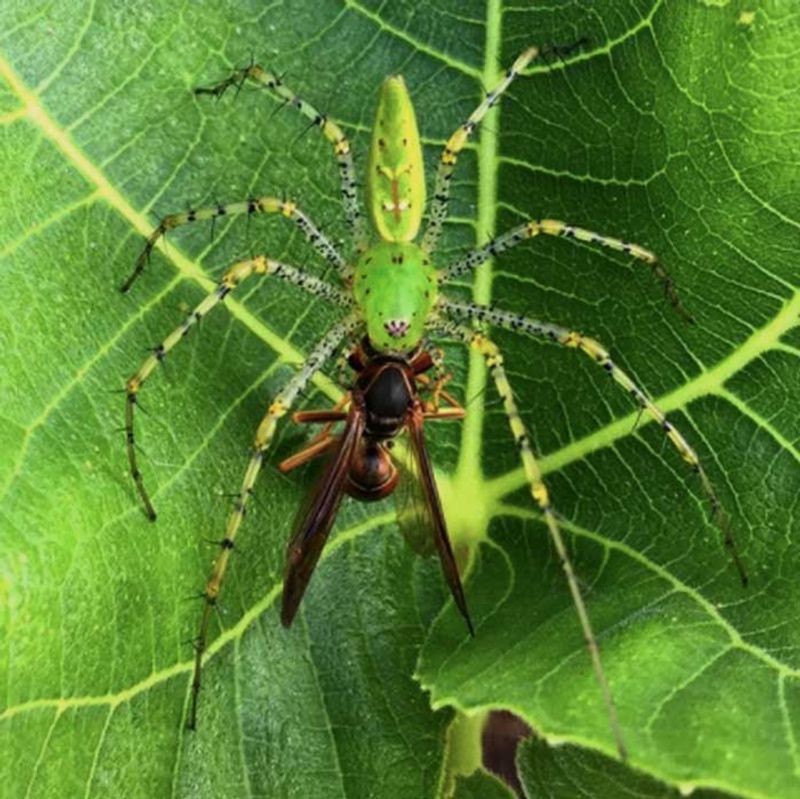
A practical decision rule for the green lynx spider is simpler than it might seem. When you find one on or near your fall vegetables, confirm the identification using body color, spiny legs, and hunting behavior rather than a quick color match. If the location is low-conflict, meaning away from heavily visited flowers and pollinators, leave the spider where it is. The University of Florida’s species profile supports leaving the spider in place as a reasonable response, while acknowledging its generalist diet.
If you find a guarded egg sac in fall, give it a wide berth. Protect it from accidental pruning or spraying, and let the spiderlings emerge on their own schedule. The East Texas feeding-rate research reminds us that each spider’s daily contribution is modest, which is exactly why the next generation matters.
Keep monitoring your vegetables regardless of how many spiders you spot. Row covers, hand-picking, and targeted treatments remain available whenever predator activity alone is not keeping damage at an acceptable level. EPA’s IPM framework pairs predator conservation with these practical tools rather than replacing one with the other. A garden that supports native predators and applies targeted controls when needed is more resilient than one that relies on either approach alone.
The green lynx spider earns its place in that system not by solving the caterpillar problem, but by quietly chipping away at it.