
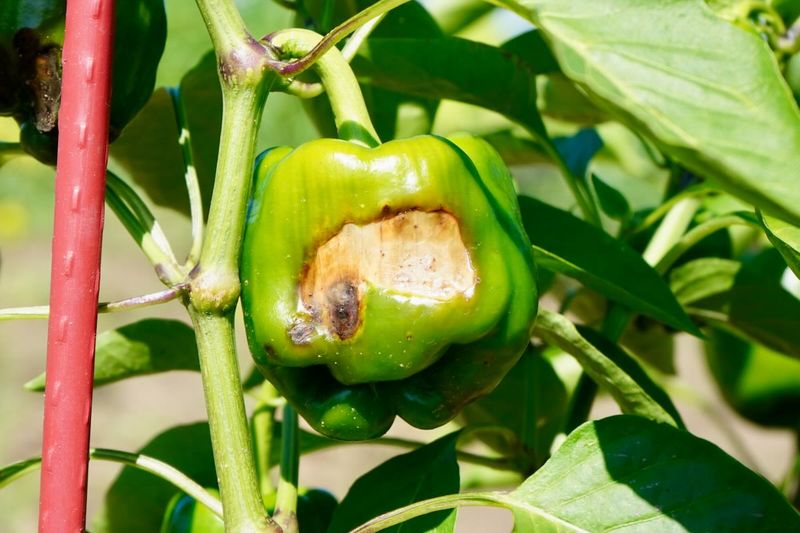
Walking out to your pepper plants and finding pale, papery patches on the fruit can feel alarming, especially when you have been tending them all summer. Those bleached, leathery spots are usually sunscald, an environmental injury that happens when developing fruit gets hit with too much direct sun and heat. Losing leaf cover is what puts peppers at risk, and aggressive pruning is one way that can happen, though it is far from the only way. Understanding what caused the damage and how to protect the fruit still on the plant is the most useful thing you can do right now.
The patch’s position and texture point to sunscald
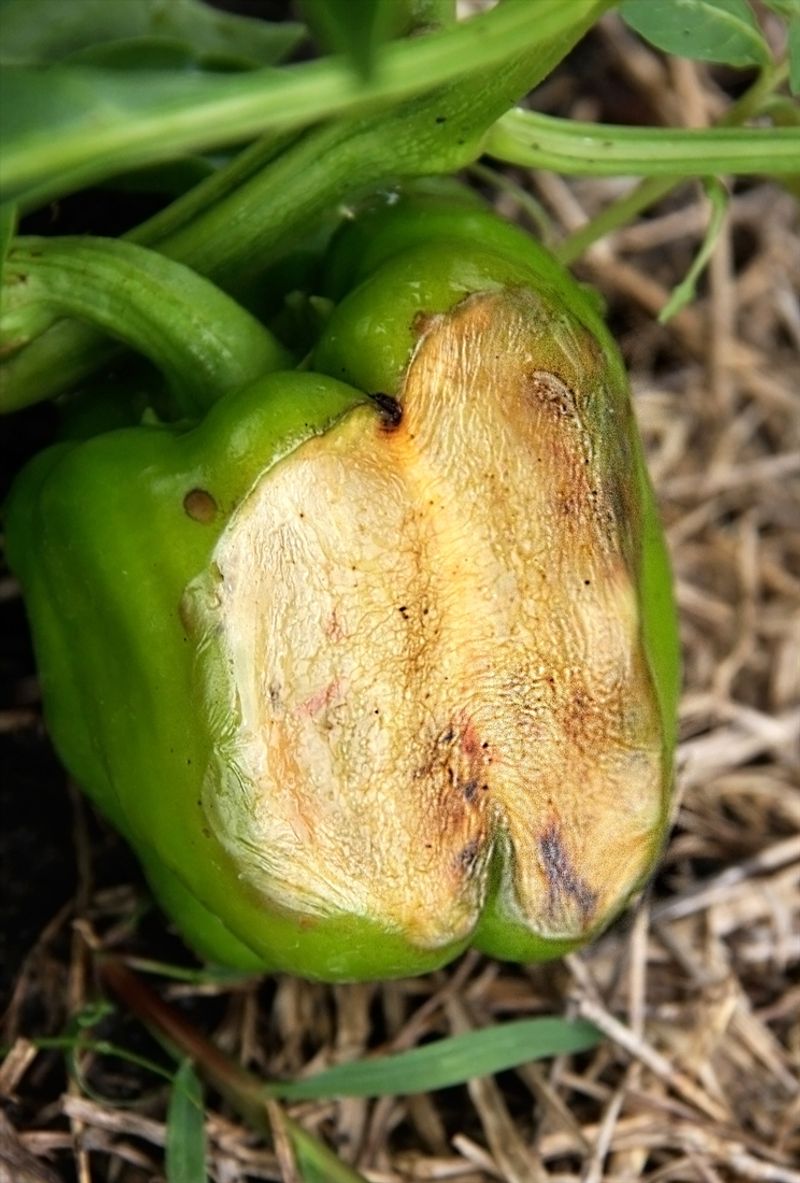
Before changing anything in the garden, take a close look at where the damage sits on the pepper and how the affected area feels. Sunscald almost always shows up on the side of the fruit that faces the sun most directly, not at the bottom tip or near the stem. According to University of Minnesota Extension’s pepper fruit diagnosis tool, the damaged area typically appears tan, white, or bleached and feels dry, papery, wrinkled, leathery, or sunken to the touch.
That specific combination of location and texture is what separates sunscald from several other problems that can leave marks on pepper fruit. A pale patch anywhere else on the surface, or one that feels soft, wet, or mushy, likely points to something different entirely. Position matters more than color alone when you are trying to confirm what you are dealing with.
Sunscald is an environmental injury, not a contagious disease, so it cannot spread from one pepper to another the way fungal or bacterial problems can. UC IPM’s sunscald guidance and University of Maryland Extension both note that the injury results from intense solar radiation and heat reaching unprotected fruit tissue. One caution: once the skin is damaged, fungi or bacteria can move into that weakened area, so a sunscald patch that later turns soft or develops mold is experiencing secondary decay, not spreading sunscald.
Lost foliage exposes developing peppers to intense heat
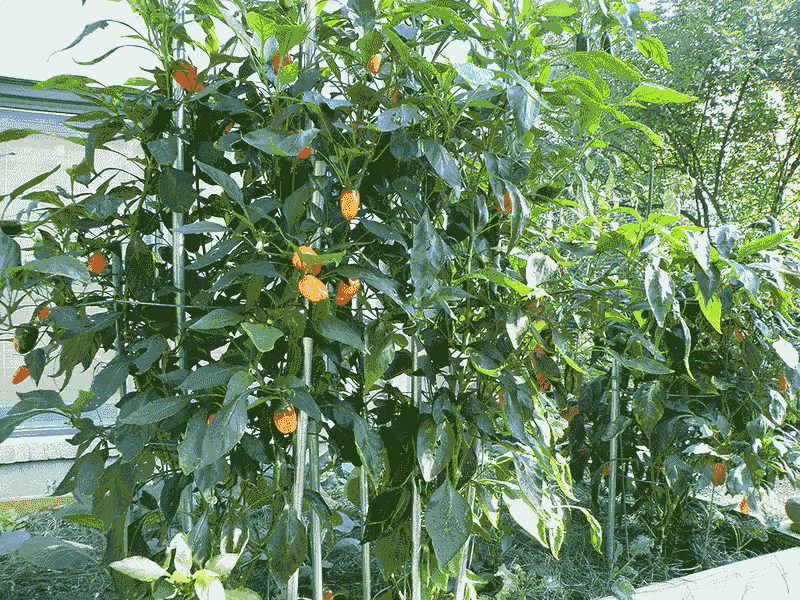
Healthy pepper leaves do more than feed the plant through photosynthesis. They act as a natural sunscreen, shading the developing fruit from the most intense afternoon radiation. Oregon State University Extension’s pepper growing guide explains that a dense, leafy plant protects fruit from direct sunlight and that sunscald is more common when fruit grows outside a thin canopy.
Aggressive pruning is one way that protective cover disappears. Removing too many branches or leaves at once can leave fruit that was previously shaded suddenly sitting in full sun with no buffer. But pruning is not the only path to the same outcome. Natural gaps in the canopy, thin-canopied cultivars, small or slow-growing plants, drought wilt, insect feeding, disease-related defoliation, and wind damage can all strip away the cover that fruit depends on.
UC IPM’s sunburn resource for peppers and eggplants points to fruit exposure after foliage loss or wilt as a consistent factor in sunscald injury.
Peppers genuinely need substantial sunlight for the plant to grow and produce well. The important distinction is between adequate light reaching the leaves and direct, intense afternoon sun hitting the surface of the fruit itself. Colorado State University Extension recommends maintaining sufficient foliage cover rather than deliberately exposing fruit. Pruning more to help peppers ripen faster is a common instinct, but it is the opposite of what the fruit needs during a heat wave.
Pause nonessential pruning during the heat wave
Once you suspect sunscald, the single most immediate thing you can do is put the pruning shears away. Any cosmetic thinning, canopy-shaping, or unnecessary branch removal should stop until the heat wave breaks and the plants have had a chance to recover. University of Arizona Extension’s guidance on drought and extreme heat advises minimizing pruning during periods of excessive heat and drought stress because removing canopy exposes previously shaded tissue and reduces the plant’s photosynthetic capacity at exactly the moment it needs both.
A common reason gardeners prune pepper plants in summer is to improve airflow, expose fruit, or encourage ripening. None of those goals justify stripping healthy leaves when temperatures are already pushing the plant toward stress. Colorado State University Extension and Iowa State University Extension’s pepper guide both support maintaining adequate foliage rather than reducing it for light or air circulation during heat.
There are still valid reasons to cut. If a branch has been clearly killed by disease, is heavily infested, or is broken and dragging on the ground, removing it makes sense. The key is keeping the exception narrow: treat what is genuinely damaged or diseased, and leave every healthy leaf and branch in place to keep shading the fruit that has not yet been injured.
Temporary shade can reduce further sunscald
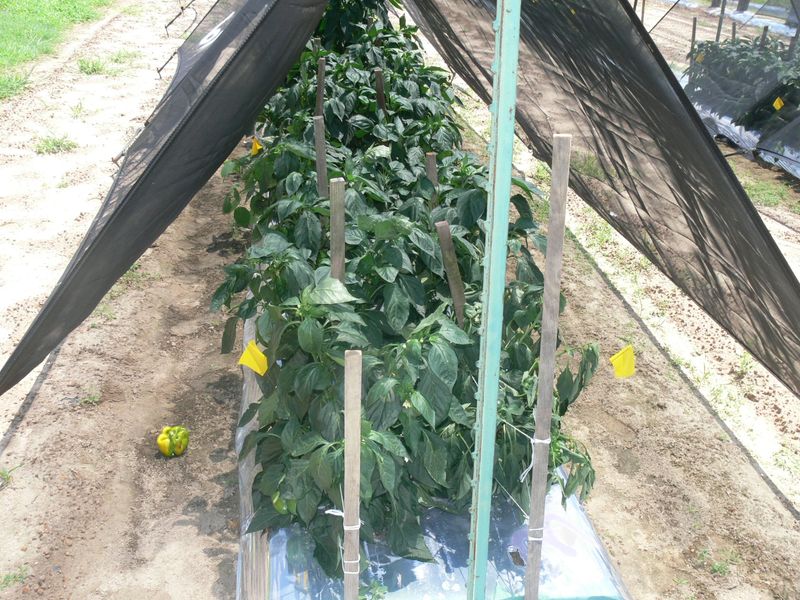
If fruit is already exposed and sitting in direct afternoon sun, adding temporary overhead shade is the most practical next step. The goal is to intercept some of that intense radiation before it reaches the fruit surface, not to block all light from the plant. Install shade cloth or screening on a frame or tent-like structure positioned above and around the plant so air can still move and the cloth does not rest directly on foliage or fruit. UC Agriculture and Natural Resources supports using a tent-like canopy rather than draping material directly onto the plant.
Research gives a reasonable starting point for how much shade to use. A University of Delaware bell-pepper trial found that a 30% shade treatment produced the highest marketable yield, and a University of Georgia study published through ISHS found 30% shade increased marketable yield primarily by reducing sunscald. A peer-reviewed field study in Scientia Horticulturae also found shade treatments reduced sunscald and improved pepper quality under hot conditions. Treat 30% as a useful starting point, not a guaranteed prescription – cultivar, local climate, canopy density, shade orientation, and daily weather all affect how much benefit you see.
Temporary shade protects developing or newly exposed fruit from additional injury. Oregon State University Extension notes that a dense canopy protects fruit from direct sunlight, which is the same principle shade cloth is mimicking when natural cover is missing. What shade cloth cannot do is reverse damage that has already happened – a bleached, leathery patch will not recover once the tissue is injured. The point of shading now is to protect the peppers that are still healthy.
Keep the canopy functional with steady root-zone moisture
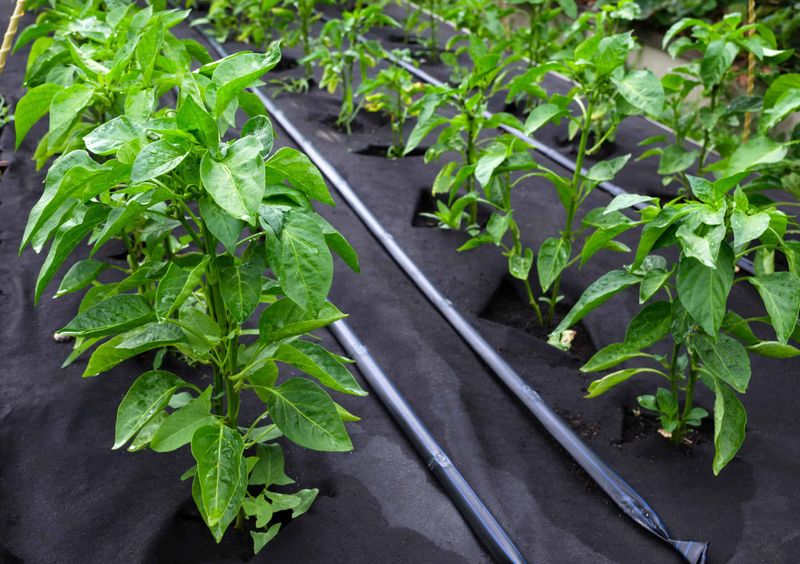
Watering practices connect directly to sunscald risk because drought stress causes foliage to wilt. When leaves droop and curl during peak afternoon heat, the canopy that was shading the fruit effectively shrinks, leaving peppers exposed even if no pruning has taken place. University of Minnesota Extension’s pepper growing guide recommends consistent soil moisture and advises against overhead sprinkling as a routine practice, directing water to the root zone instead.
Deep, thorough watering adjusted for your soil type and the current weather is more effective than frequent shallow sprinkling. Sandy soils drain quickly and may need more frequent watering; clay-heavy soils hold moisture longer but can become waterlogged if overwatered. Oregon State University Extension and Utah State University Extension’s pepper guide both support deep root-zone irrigation over shallow surface watering. A layer of mulch around the base of the plant helps moderate soil temperature and slow moisture loss between waterings.
Two other things are worth clarifying here. Fertilizer, especially high-nitrogen products applied during stress, is not a treatment for sunscald and can create new problems by pushing soft, vulnerable growth. Adding calcium to the soil or spray also does not address sunscald. University of Georgia Extension’s guidance on pepper production explains that calcium management is relevant to blossom-end rot, a separate disorder that affects a different part of the fruit, not the pale, sun-facing patch that sunscald produces.
Check lookalike disorders before blaming the sun
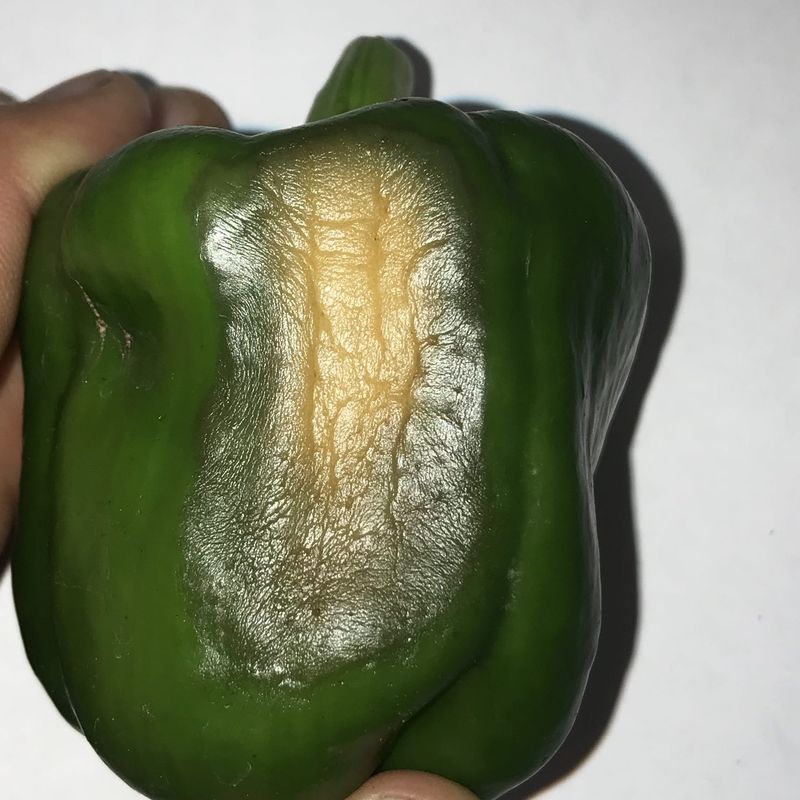
A pale or damaged patch on a pepper does not automatically mean sunscald. Several other disorders produce similar-looking symptoms, and treating the right problem requires telling them apart. The most reliable clue for sunscald is location: the damage sits on the sun-facing side of the fruit and the affected tissue is dry, bleached, tan or white, papery, and wrinkled or sunken.
Blossom-end rot looks superficially similar but appears at the bottom or blossom end of the fruit, not on the side facing the sun. University of New Hampshire Extension’s blossom-end rot fact sheet explains that it is linked to calcium transport problems and inconsistent soil moisture – a different mechanism than sunscald entirely. Anthracnose produces sunken lesions that may develop dark centers and salmon-colored or pink spore masses under moist conditions, which distinguishes it from the dry, bleached surface of sunscald. University of Minnesota’s pepper fruit rot diagnosis tool and their fruit spots tool both walk through these distinctions visually.
Bacterial spot typically produces raised, corky, or scabby lesions and often comes with leaf spotting elsewhere on the plant. Phytophthora blight causes water-soaked, greasy-looking patches on fruit and can cause the whole plant to wilt rapidly. University of Maryland Extension’s sunscald resource notes that sunscald can render fruit inedible, while UC Agriculture and Natural Resources says fruit with limited dry damage may still be usable after removing all affected tissue. The practical rule: trim away small, dry, firm-edged damage if the remaining flesh looks and smells sound, but discard any pepper that is soft, moldy, extensively injured, or showing signs of decomposition.
Protect the next peppers by preserving their shade
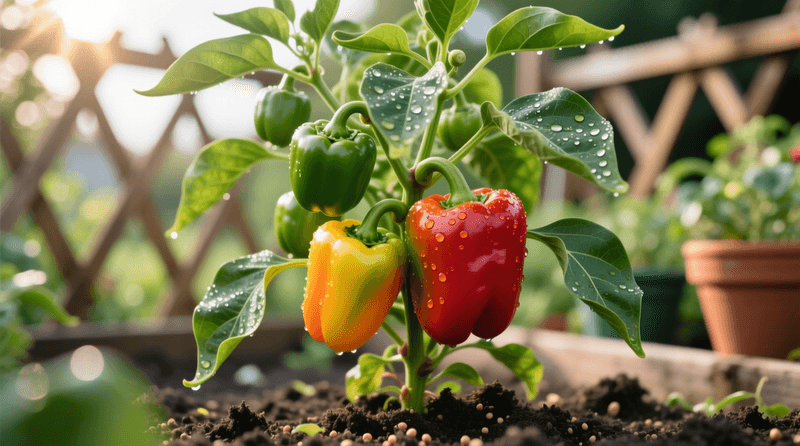
Putting a response plan together now can still protect the peppers developing on the plant, even if the ones already damaged will not recover. Start by confirming that any pale patch sits on the sun-facing side with dry, leathery texture – that placement confirms you are dealing with sunscald rather than a disorder that needs a different fix. From there, stop any pruning that is not clearly necessary, and leave every healthy leaf and branch in place.
If fruit is still sitting in exposed afternoon sun, get a shade cloth frame up as soon as possible, and keep root-zone moisture steady with deep watering and mulch rather than shallow sprinkling. Penn State Extension’s pepper growing guide notes that pepper branches are brittle, so harvest carefully by cutting or snapping fruit rather than pulling, which can strip leaves or break branches that would otherwise keep shading the remaining crop.
Oregon State University Extension’s heat-wave garden guide and University of Maryland Extension’s pepper guide both point out that extreme heat can independently reduce flowering and fruit set, so even after you correct the exposure problem, a prolonged heat wave may still result in fewer peppers setting on the plant. The central risk was never too little sun on the fruit – it was too little shade over it, and keeping that canopy intact is what gives the rest of the season’s crop its best chance.