
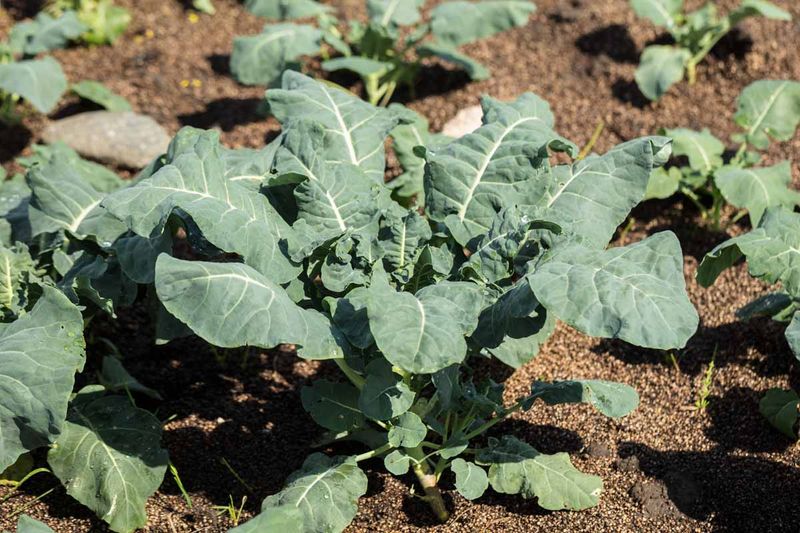
Planting broccoli and cabbage for a fall harvest means starting transplants in some of the hottest weeks of the year, and watching those seedlings wilt can feel alarming. Before pulling plants out or digging them up, though, it helps to know that not every drooping seedling is in serious trouble. Heat, wind, and the stress of moving from a tray to open ground can cause temporary wilting that clears up on its own by evening. Planting depth is one avoidable contributor worth checking, but it is rarely the whole story.
Read the wilt before blaming the planting depth
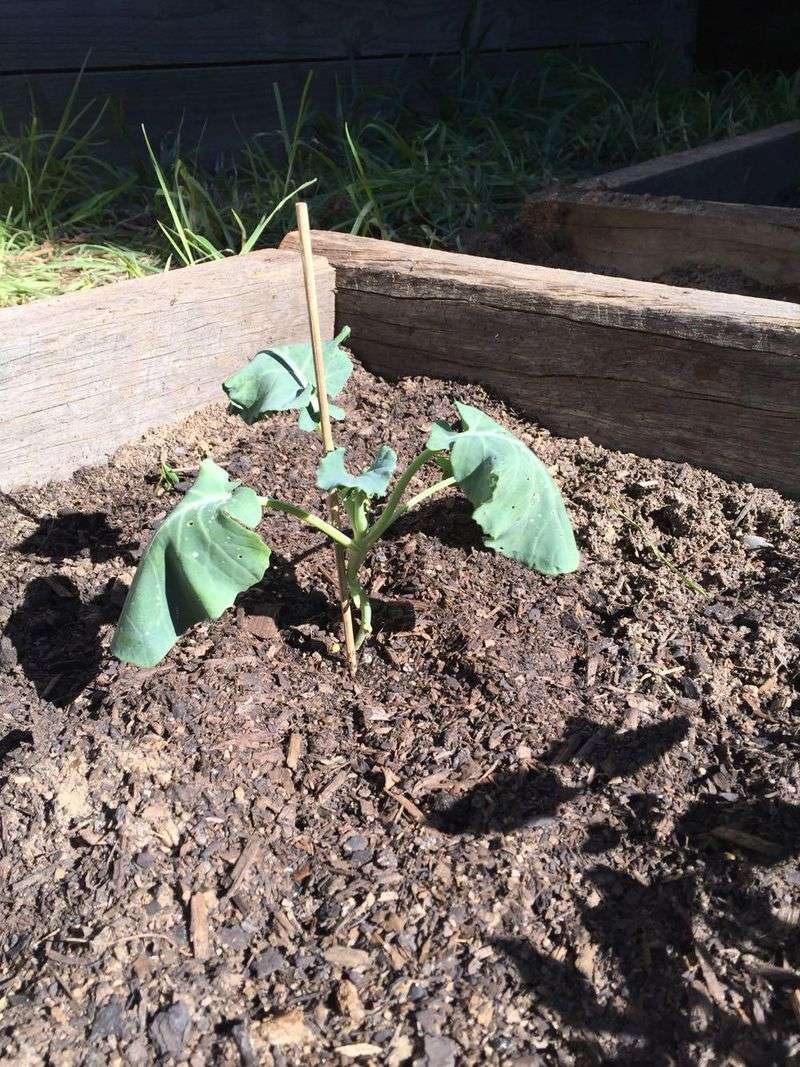
A seedling that droops during the hottest part of the afternoon and then straightens back up once the sun drops is behaving differently from one that stays limp all day or gets worse over several days. Noticing that distinction is the first productive step, because the two patterns point toward very different responses.
Broccoli and cabbage are cool-season crops. Penn State Extension notes that cole crops prefer temperatures around 60-65 degrees Fahrenheit, so an August transplant is already working against those preferences from day one. Fall planting schedules are designed that way on purpose, but the gap between what the plant prefers and what August delivers is real.
Before assuming a depth problem, check a few basics. Did the plant move outdoors recently without much time to adjust? Is the soil around the roots dry, or does it feel soggy? Is the spot exposed to direct afternoon sun, wind, or both?
Oregon State Extension explains that heat stress in plants is compounded by drought, wind, and intense sun, all of which hit newly transplanted seedlings especially hard.
A plant recovering by evening most likely needs shade and consistent moisture, not excavation. One that stays wilted, yellows, collapses, or shows damage at the soil line warrants a closer look at the stem and root zone. That closer look is the next step.
Find the original soil line
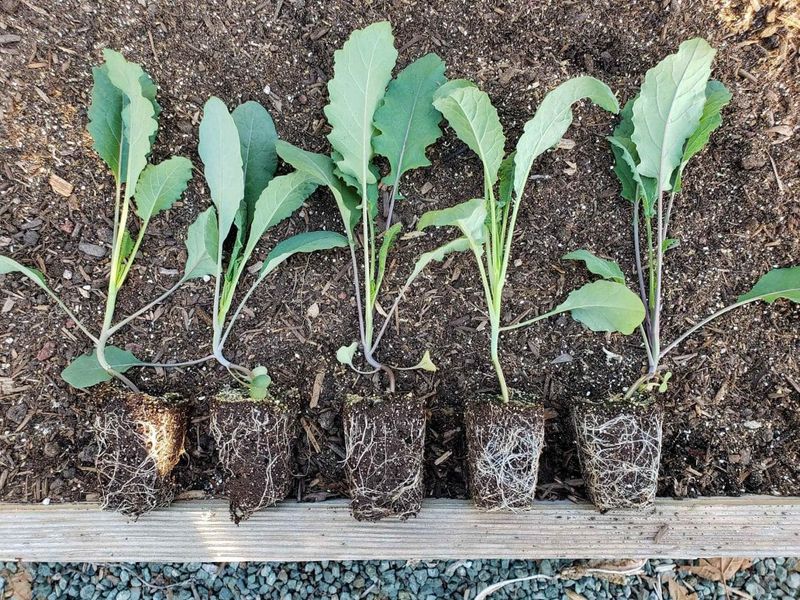
Planting depth is worth examining as one possible, preventable contributor to post-transplant stress, particularly in wet or poorly drained soil. The place to start is finding the original soil line, which is usually visible as a color change or faint ring on the lower stem where the growing medium once sat.
University of Minnesota Extension recommends setting broccoli at approximately the same soil level as it grew in its container, and the University of Georgia offers similar guidance for vegetable transplants generally. If several inches of stem are now buried below the new bed surface, that is worth noting, especially if the soil stays wet.
Burying extra stem tissue is not automatically catastrophic, and extension guidance is not uniform on this point. Illinois Extension notes that broccoli transplants can be set slightly deeper than the original container level, and UC IPM suggests planting as deep as the first true leaf. So a modest difference in depth is not grounds for alarm on its own.
Where deeper planting becomes a real concern is in persistently wet or disease-prone soil. UC ANR’s IPM program identifies deep planting as a factor that raises the risk of Rhizoctonia diseases in cole crops, particularly under wet conditions. When the depth difference is large and the soil is heavy or slow-draining, the original soil line is the safer reference point.
One more thing worth mentioning: the advice to bury tomato stems deeply works because tomatoes can form new roots all along a buried stem. Extension specialists caution against applying tomato-style deep burial automatically to other crops, including brassicas, which do not share that same root-forming ability.
Inspect the stem where it meets the soil
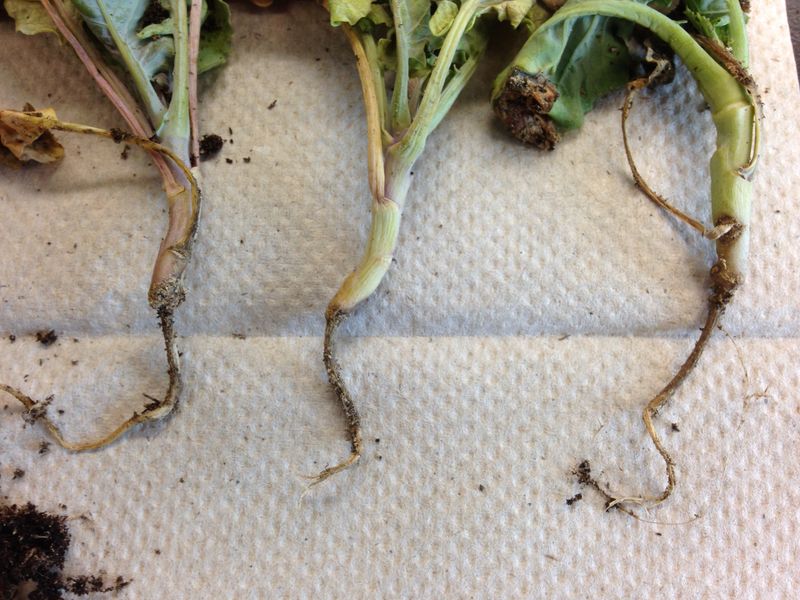
Once the soil line is located, the next check is the stem itself at and just below ground level. Run a finger gently along the base of the plant where the stem enters the soil and look carefully at that zone before assuming the wilt is just heat-related.
Healthy stem tissue at the soil line should be firm and consistent in color. Warning signs look quite different. University of Minnesota’s plant diagnostic tool flags a broccoli seedling that collapses at the soil line as a pattern associated with damping-off and related stem problems. Dark, sunken, constricted, water-soaked, or soft tissue at the base, or a seedling that tips over as if its stem has been pinched or cut, points more toward a stem or root disease than toward ordinary afternoon heat wilt.
Clemson’s Home and Garden Information Center describes wirestem and other cole crop stem diseases as conditions that cause brown, shrunken, or girdled stem tissue at or near the soil surface. These patterns can appear in broccoli and cabbage alike.
Finding one of these symptoms does not confirm a single specific disease. University of Missouri Extension notes that damping-off and stem rot problems are associated with excessive moisture, poor sanitation, contaminated growing media, high temperatures, and weak or poorly lit seedlings, not just planting depth. The cause matters less than the practical outcome: a stem that is already girdled, collapsed, or rotting through is unlikely to recover with more water or by being replanted. That seedling may need to come out and be replaced with a fresh transplant.
Separate heat stress from transplant shock
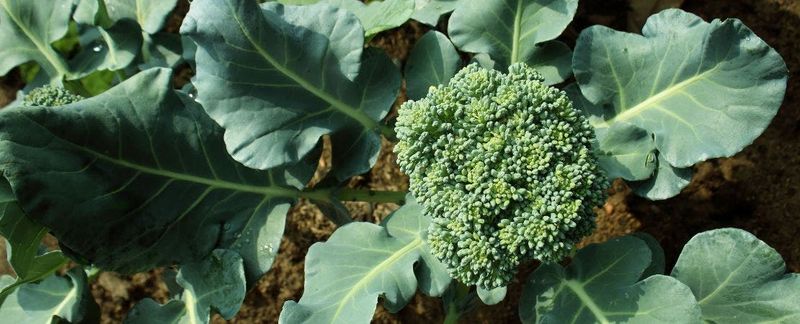
Even a correctly planted seedling at exactly the right depth can wilt badly in August. Heat, intense sun, wind, and the simple fact of being uprooted and moved are enough to send a cool-season plant into visible distress without any depth problem involved at all.
Transplant shock happens because roots are disturbed during the move and the plant temporarily loses more water through its leaves than it can pull up from the soil. Add August sun and wind, and that gap between water lost and water absorbed widens quickly. Oregon State Extension’s heat stress guide explains that plants under heat load may wilt even when soil moisture is adequate, because the rate of evaporation from leaves outpaces water uptake.
Check whether the soil around the roots is actually dry. If it feels moist and the seedling still droops at midday but recovers after the temperature drops in the evening, heat load is the most likely explanation. University of Minnesota notes that seedlings moved outdoors without gradual exposure are especially vulnerable to sun and wind stress, which compounds the shock of transplanting.
Broccoli and cabbage share cool-season preferences, but they do not respond identically. University of Minnesota’s broccoli guide points out that broccoli is particularly sensitive to temperature stress, while cabbage can handle somewhat more weather variation. Hardening seedlings before transplanting reduces shock, but it does not make either crop immune to a stretch of extreme August heat. The goal is to reduce the gap between what the plant can handle and what the weather is throwing at it, not to eliminate risk entirely.
Correct excessive depth only when the transplant can tolerate it
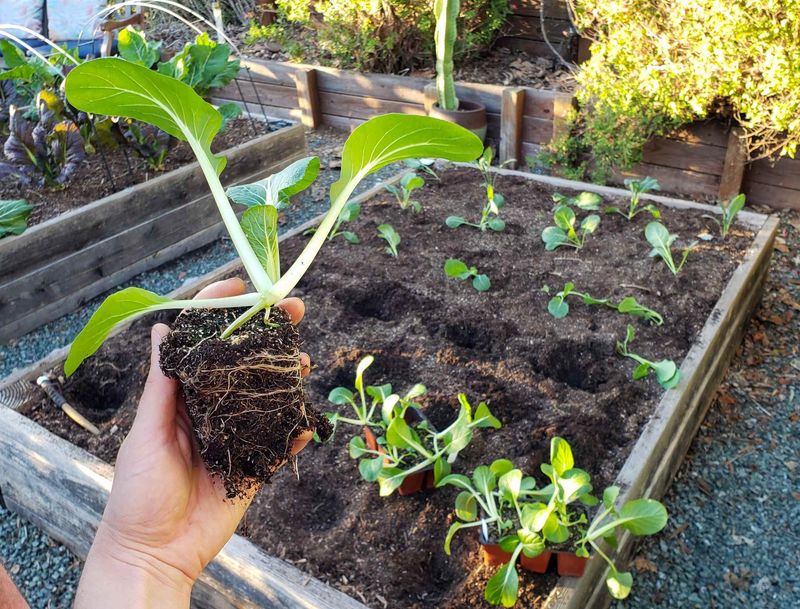
Knowing the original soil line is buried too deep is useful information, but what to do about it depends heavily on timing. Moving a plant that is already under heat stress, or one that has been in the ground for more than a day or two, can cause more harm than leaving it alone.
Consider correction only in a narrow window: immediately after planting, during a cooler part of the day such as late afternoon or evening, and only when the root ball can be lifted intact without breaking apart. University of Minnesota’s vegetable garden planting guide recommends handling transplants by the root ball rather than the stem to avoid crushing or bruising the tissue that connects stem to roots.
When repositioning, set the root ball so the new soil surface sits near the original container line, not several inches up the stem. Firm the soil gently around the base to close air pockets, then water thoroughly at the soil line. University of Georgia Extension advises watering transplants thoroughly right after planting to settle the soil and make sure roots have contact with moist ground.
Do not dig up a plant that is simply drooping at midday. Midday wilt in a recently transplanted brassica is often a heat response, not a sign that repositioning is needed. Oregon State’s vegetable gardening guide emphasizes that newly planted seedlings need stable soil contact and consistent moisture during establishment, both of which are disrupted when a stressed plant is dug up unnecessarily.
If the seedling has been in the ground for several days and is still showing signs of stress, prioritize shade and moisture management over replanting. A plant already struggling with heat and root disturbance is rarely improved by another round of digging.
Reduce heat and moisture stress during establishment
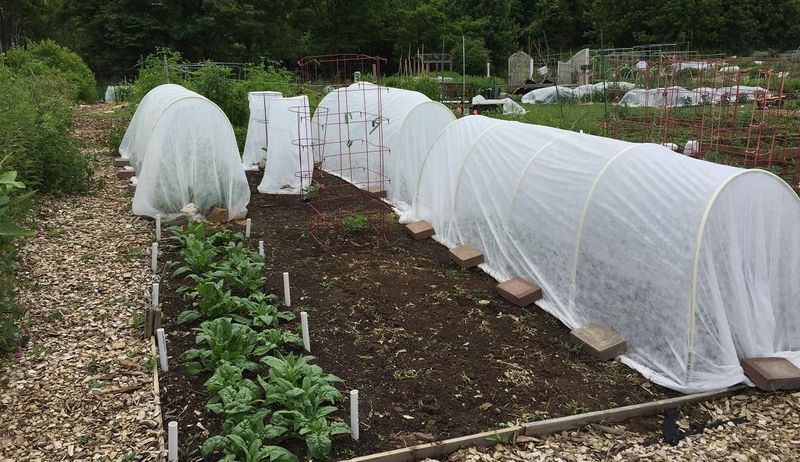
Once a seedling is in the ground at the right depth, or left in place because moving it would cause more harm, the job shifts to managing the conditions around it. August heat is not negotiable, but a few practical measures can close the gap enough to give a transplant a real chance.
Start with water. University of Georgia’s fall vegetable gardening guide notes that newly planted fall crops may need frequent watering checks during the first week, especially when temperatures are high. The root zone should feel consistently moist but never waterlogged. Soggy soil deprives roots of oxygen and raises disease risk, so the goal is even moisture rather than either extreme.
Drip or soaker irrigation delivers water directly to the soil surface, which reduces evaporation and keeps foliage dry.
Shade is the other major lever. Oregon State Extension recommends protecting plants from intense sun and wind during heat events using shade cloth or other breathable covers. The key word is breathable: a cover that traps air against the plant in hot weather can raise temperatures around the leaves rather than lower them. Use lightweight row cover or shade cloth supported on wire hoops or a simple frame so air can circulate freely underneath.
UGA Forsyth County Extension describes frame-supported low hoops as an effective way to hold covers above plants without pressing fabric against tender stems and leaves. Avoid tightly sealed plastic in hot weather under any circumstances.
Hold off on fertilizer until the plant is clearly stable and showing new growth. University of Georgia Extension advises against fertilizing transplants that are showing moisture stress, because fertilizer salts can add further stress to roots that are already struggling to take up water.
Build a lower-stress fall transplant routine
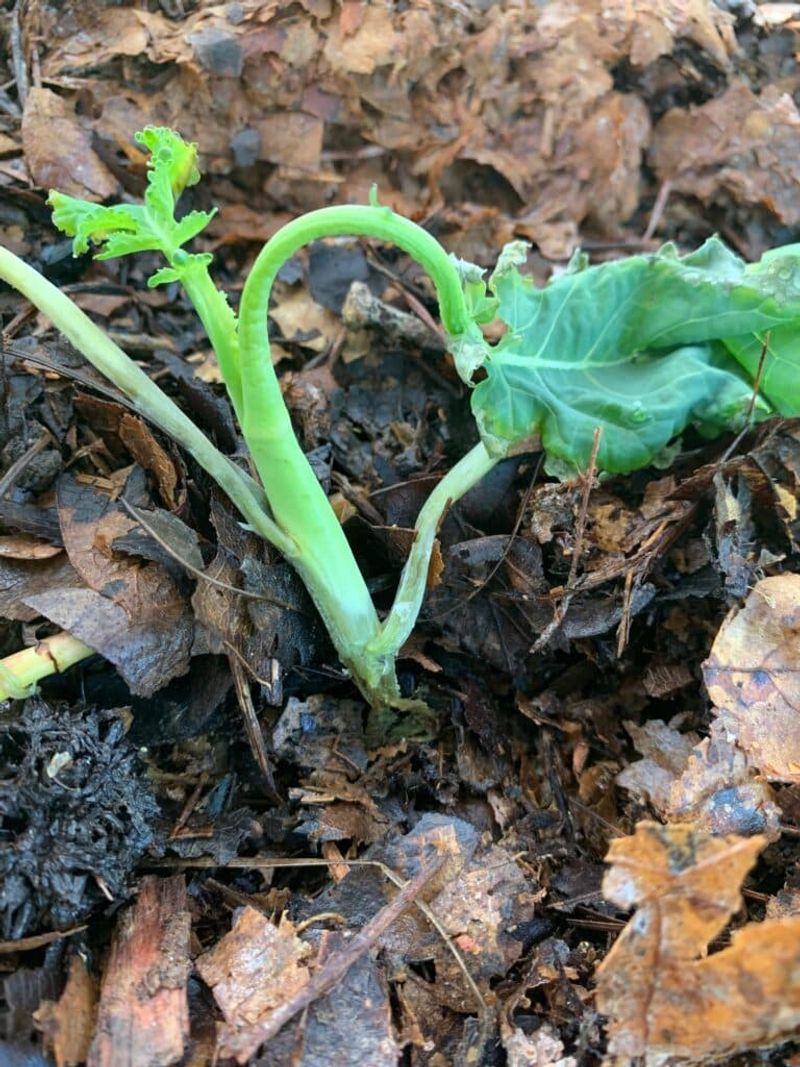
Diagnosing one wilted plant is useful, but turning the experience into a repeatable routine makes the next planting go more smoothly. The steps are straightforward and build on each other.
Start by hardening seedlings before they go into the ground. Oregon State Extension’s vegetable gardening guide recommends gradually increasing outdoor exposure over several days to a week or more, adjusting the pace based on how the plant responds and how extreme the weather is. Begin with a shaded, sheltered spot for an hour or two and work up to direct sun and open air over successive days. Hardening reduces shock, but it does not make a cool-season crop immune to a heat wave.
Water seedlings several hours before moving them so the root ball is fully hydrated. University of Minnesota’s planting guide recommends transplanting in late afternoon, evening, or on a cool, overcast day to reduce immediate water loss after the move. When setting the plant, match the new soil surface to the original container line, handle the root ball rather than the stem, and firm the soil gently to eliminate air pockets.
Water thoroughly right after planting, then provide temporary shade or row cover with airflow. University of Minnesota’s broccoli guide recommends lightweight summer row cover as a way to moderate conditions around newly planted transplants. Keep that protection in place until the plant shows clear signs of new growth and the overnight temperatures begin to moderate.
Close with a decision rule: plants that recover by evening after a hot day are establishing normally and need continued moisture and shade. Plants that worsen, stay collapsed, yellow steadily, or show damaged stems despite reasonable care may have a structural problem that shade and water cannot fix. Those seedlings are candidates for removal and replacement with fresh transplants.
Use the plant’s response to choose the next step
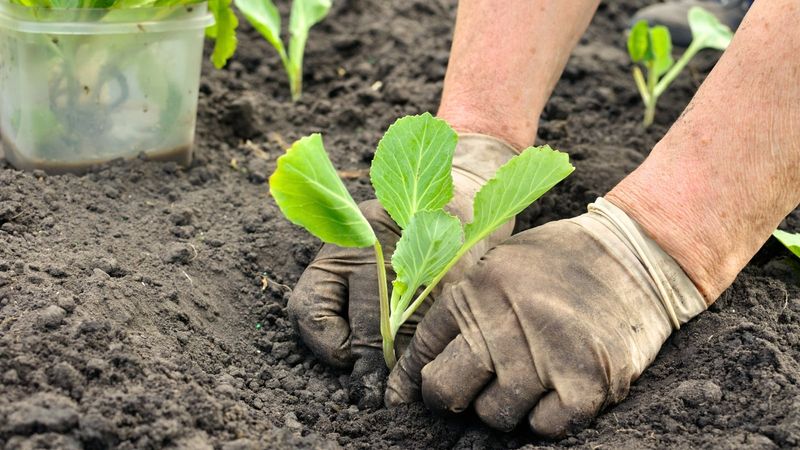
Recovery by evening is the clearest signal a gardener can get. A seedling that droops at noon and stands back up once the temperature drops is responding to heat load, not signaling a structural failure. Keep the soil evenly moist, maintain shade or row cover with airflow, and check again the following morning.
Persistent wilt, steady yellowing, or a stem that looks dark, constricted, or soft at the soil line calls for a different response. Check the original soil line, inspect the base of the stem carefully, and assess whether the root ball was moved recently enough and is intact enough to reposition without causing additional damage. Oregon State Extension distinguishes between plants under temporary heat load and plants experiencing more serious decline, and that distinction shapes every next action.
Planting depth is a real, preventable contributor to post-transplant problems, particularly in wet or disease-prone soil. University of Minnesota recommends preserving the original container depth as the cautious default. But depth alone does not explain every case of August wilting, and a plant showing clear stem damage consistent with damping-off or stem rot may need to be pulled and replaced rather than adjusted or nursed along. A seedling that bounces back after the sun goes down is worth protecting; one that keeps declining is often telling you it needs a fresh start.