
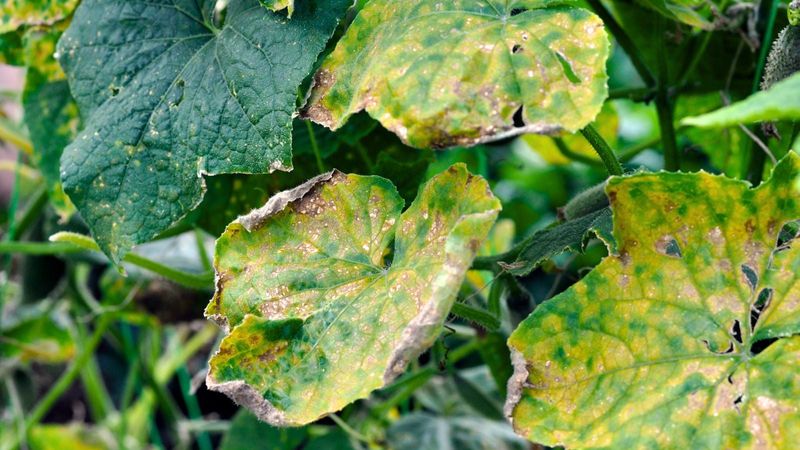
Watching your cucumber vine develop brown, curling, crispy edges on its leaves during August heat is genuinely alarming, especially when the fruit is still sizing up. The good news is that this symptom often points to a water-balance problem that you can address, though it does not always mean you simply forgot to water. Several conditions can produce the same look, so the fastest path to a fix is checking what is actually happening at the root zone before reaching for the hose.
Crispy edges reveal a water-balance problem—but not its cause
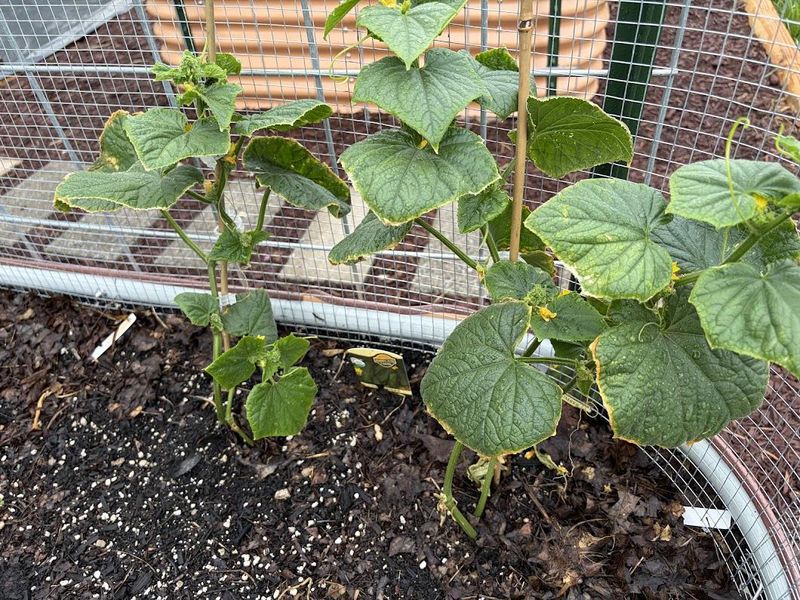
Leaf margins turn dry and brittle when the plant is losing water through its leaves faster than the roots can pull moisture up from the soil. Heat accelerates that loss, and hot wind can push it even faster. The edges and tips of leaves are farthest from the main water-conducting veins, so they show stress before the rest of the leaf does, making them a kind of early warning system for the whole vine.
Several conditions can trigger this imbalance. Low soil moisture is an obvious one, but shallow or damaged roots, poorly draining soil that suffocates root tissue, and even intense wind on an otherwise average day can all produce the same crispy margins. Colorado State University Extension’s leaf scorch guidance explains that rapid water loss from leaf tissue, not just drought, drives the symptom in many plants.
When hot, dry August weather lines up with a dry root zone, water stress becomes a reasonable working hypothesis. But the symptom alone does not confirm it. Wet soil, unusual spot patterns, or other clues on the vine push the diagnosis in a different direction. The University of Minnesota’s cucumber leaf discoloration diagnostic tool lists diseases, spider mites, and other causes that can look nearly identical to heat-related water stress.
Start with observation, not assumptions.
Check the soil before changing the watering schedule

Before adjusting anything, pull back the mulch near the base of the vine and press two fingers about two inches into the soil. Dry, crumbly soil at that depth is a clear signal that the root zone needs water. Soil that still feels cool and damp argues against adding more, even if the leaves look rough.
Afternoon wilt is a common source of confusion. Cucumbers can droop noticeably during the hottest part of the day and then recover on their own by evening as temperatures drop. University of Minnesota Extension’s heat garden guidance recommends checking the plant and soil again in the cooler part of the day rather than reacting to midday appearance alone. A vine that perks back up by late afternoon without any extra water was probably just responding to peak heat, not running out of moisture.
When leaves look stressed but the soil is already moist, the problem may not be a lack of water at all. Damaged or rotting roots cannot move water efficiently, so the foliage can appear drought-stricken even in wet ground. Disease and other causes can produce a similar picture. Use the soil result as your first filter: water if the soil is dry, and investigate deeper if the soil is already wet.
Restore steady moisture at the root zone
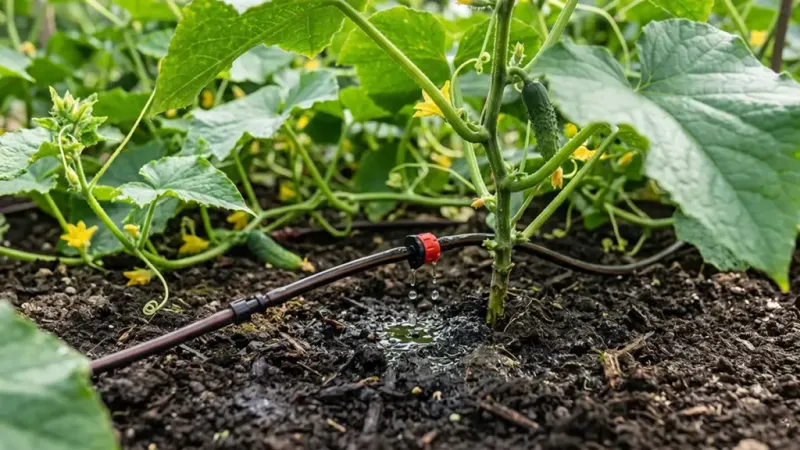
When the soil check confirms a dry root zone, the correction is to water slowly and thoroughly rather than flooding the surface quickly. A fast, heavy pour mostly runs off before it reaches the roots. A drip line, soaker hose, or a regular hose held at a slow trickle near the base of the plant lets water move down into the zone where cucumber roots actually absorb it. University of Minnesota Extension’s vegetable garden watering guide recommends directing water to the root zone and avoiding repeated shallow sprinkles that wet only the top inch of soil.
A starting range of 1 to 2 inches of water per week is commonly cited for cucumbers, but that number needs real-world adjustment. Utah State University Extension’s cucumber growing guide notes that fruit-bearing plants need more water than young vines, and sandy soils drain faster than clay. Heat, wind, rainfall, and whether you are using mulch all shift the actual need up or down.
Consistent moisture matters more than hitting a weekly number. Utah State’s cucurbit irrigation guidance points out that irregular moisture during flowering and fruit set can affect fruit size, shape, flavor, and color. Aim for steady, even soil moisture rather than alternating between bone-dry and soaking wet, and let the soil tell you when to water rather than sticking to a fixed calendar.
Reduce moisture loss during the next heat wave
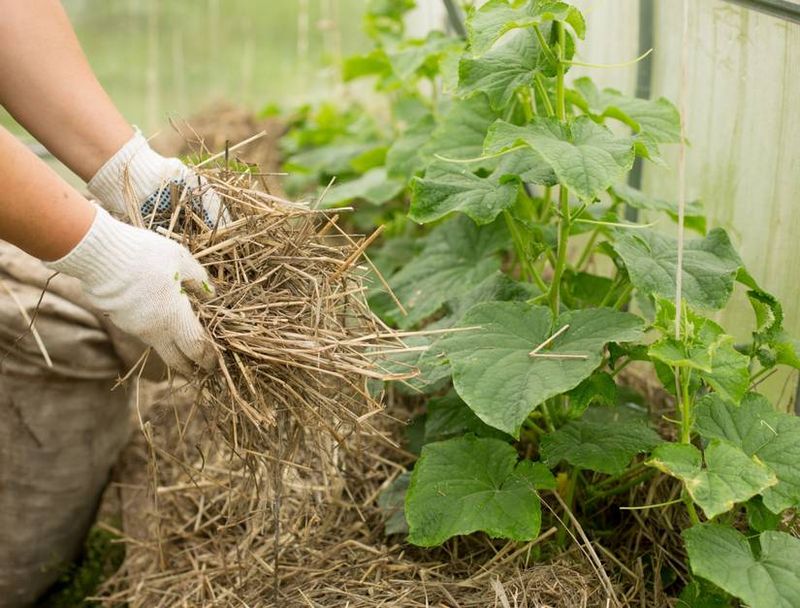
Once the root zone has adequate moisture, the next priority is keeping it that way through the hottest part of the day. Morning watering gives the plant a full supply of water before peak heat arrives, which helps leaves cope with the afternoon temperature spike. University of Minnesota Extension’s water-wisely guidance recommends morning irrigation and also notes that it allows any wet foliage time to dry before evening, reducing disease risk. That said, if a plant is actively wilted and the soil is dry at midday, do not delay watering until the next morning just to follow a schedule.
Mulch is one of the most reliable tools for slowing evaporation from the soil surface. Spread about 2 to 3 inches of organic material such as straw, shredded leaves, or wood chips around the base of the vine, keeping it a few inches away from the stem itself to allow airflow. The layer acts as insulation, moderating root-zone temperature and holding moisture between waterings.
Overhead sprinklers are less ideal than ground-level irrigation during heat waves for two reasons. Wet foliage overnight raises foliar disease risk, and if your irrigation water carries dissolved salts, repeated wetting and drying of the leaf surface can leave salt deposits that contribute to edge burn. Utah State’s cucurbit irrigation page recommends watering at a time that allows foliage to dry before nightfall when overhead systems are used.
Avoid drowning roots or adding stress in extreme heat
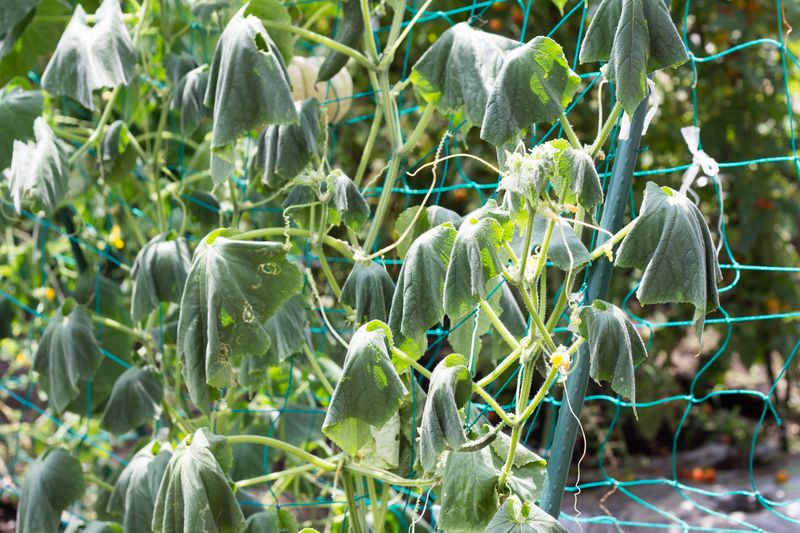
Crispy leaf edges can push a gardener toward the hose, but adding water to soil that is already wet can make things worse. Waterlogged soil squeezes oxygen out of the root zone, and roots that cannot breathe begin to break down. Once root tissue is damaged, the vine cannot move water up to the leaves efficiently, and the foliage starts to look exactly like drought stress, even though the soil is soaking. University of Minnesota Extension warns that overwatering is a common mistake that produces symptoms resembling drought.
Fertilizer and root disturbance are two more things to avoid during a heat event unless there is a specific, confirmed reason to act. Fertilizer salts raise the concentration of dissolved minerals around the roots, making it harder for the plant to absorb water. Oregon State University Extension advises against unnecessary fertilizing during extreme heat because it can intensify stress on an already-struggling plant.
Let the soil test result direct the next action. Dry soil calls for slow, thorough watering. Soil that stays wet after several days without rain is worth examining more closely for drainage problems or signs of root rot. When neither dry nor wet soil seems to explain the leaf symptoms, the cause is likely somewhere else entirely, and a closer look at the plant for disease or pest clues is the right next move.
Use leaf patterns to investigate disease, pests, salts, and nutrients
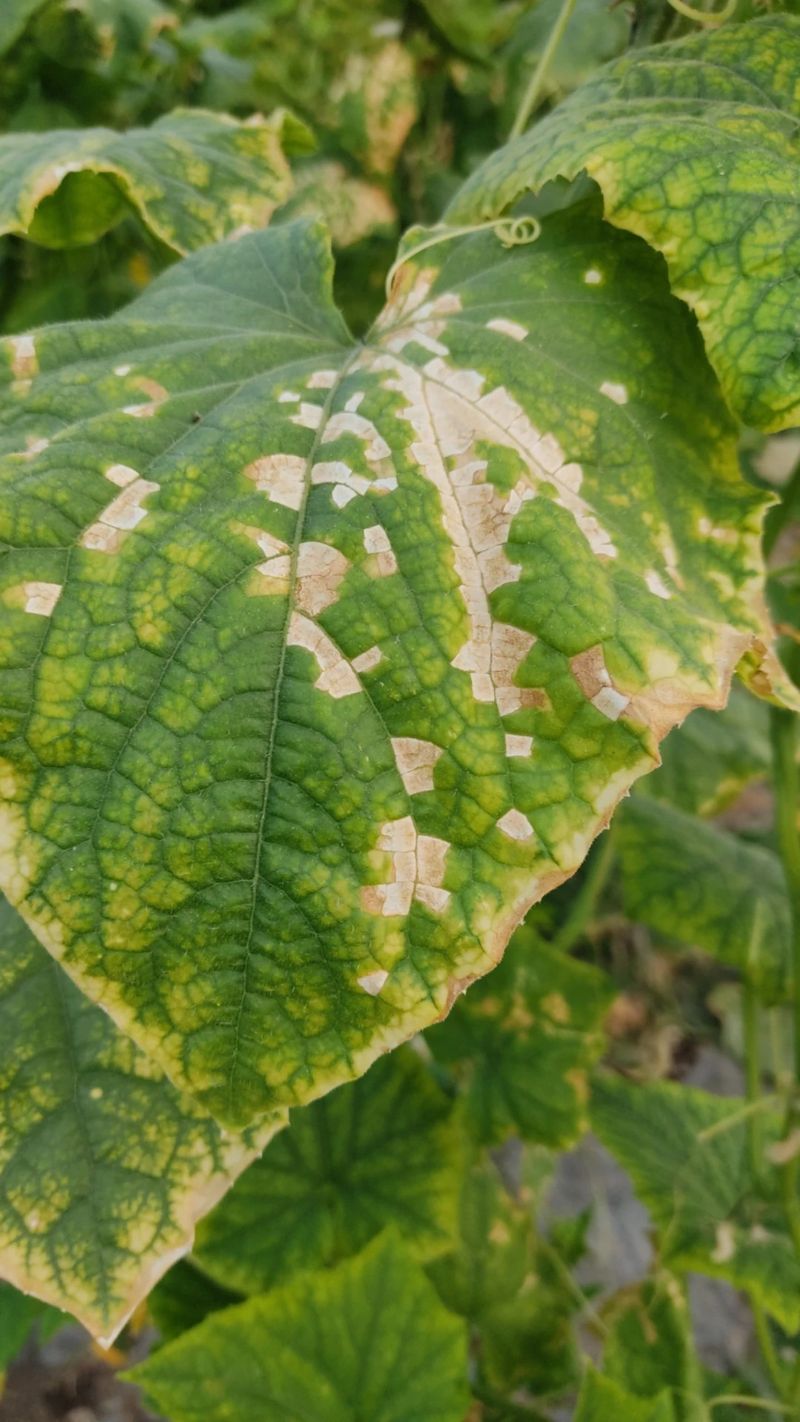
Plain, dry, brittle margins that appear after a stretch of hot and dry weather fit the water-stress picture fairly well. The pattern shifts when the damage takes a different shape. Discrete spots, angular lesions that stop at leaf veins, gray or purple growth on the underside of leaves, water-soaked patches, and rapid wilting that moves vine by vine all point toward a disease rather than a moisture problem. The University of Minnesota cucumber leaf discoloration diagnostic describes these distinguishing features and lists downy mildew, angular leaf spot, and other cucumber diseases as potential causes of leaf browning and discoloration.
Bacterial wilt deserves special attention because it can be mistaken for heat stress early on. The typical clues are leaves that wilt during the day and partially recover overnight, progressive wilting that travels down the vine, and the presence of striped or spotted cucumber beetles. University of Minnesota’s cucumber wilting diagnostic explains that bacterial wilt is carried by cucumber beetles, and correcting watering will not help an infected plant.
Spider mites thrive in hot, dry August conditions. Flip a few affected leaves over and look for pale stippling, bronzing, or fine webbing along the undersides. Mites are small but visible with close inspection.
Margin burn that occurs despite wet soil raises the question of salt injury. Saline irrigation water, fertilizer accumulation, or sprinkler deposits can cause leaf-edge desiccation even when moisture appears adequate, as described in Utah State University Extension’s guidance on saline and sodic soils. Nutrient disorders such as potassium deficiency or boron toxicity can also produce margin discoloration, but Penn State Extension’s cucumber growing resource notes that a soil or tissue test is the appropriate way to confirm a nutrient problem before applying any fertilizer.
Protect healthy tissue and set realistic harvest expectations
Brown, dead leaf tissue will not turn green again, but that does not mean every scorched leaf should come off the vine. Leaves with significant green tissue still standing are actively photosynthesizing and helping the plant produce energy for new growth and fruit sizing. Stripping the vine of partially green leaves removes that working capacity at a time when the plant can least afford to lose it. South Dakota State University Extension’s leaf scorch guidance recommends leaving leaves with functional green tissue in place and removing only those that are completely dead, clearly diseased, or physically blocking access to the plant.
Steady, consistent moisture can improve the vine’s ability to push out new growth and size up fruit that is already forming. What it cannot do is reverse dead tissue, cure bacterial wilt, undo root rot, or eliminate salt toxicity. Framing the watering correction as a support measure rather than a guaranteed rescue keeps expectations grounded. Utah State’s cucurbit irrigation guidance emphasizes consistent moisture for continued fruit development, particularly during the fruiting stage.
Heat itself can reduce cucumber fruit set independently of how well you water. Penn State Extension reports that temperatures above roughly 90 degrees Fahrenheit can reduce reproductive success, with fruit set often improving once temperatures fall. The practical decision rule: check the soil, correct dry conditions carefully, watch new growth and symptom patterns over the following days, and investigate disease or pest clues promptly when they appear. A vine that gets steady moisture and close attention through August heat has a better chance of finishing the season productively than one left to guess on its own.