
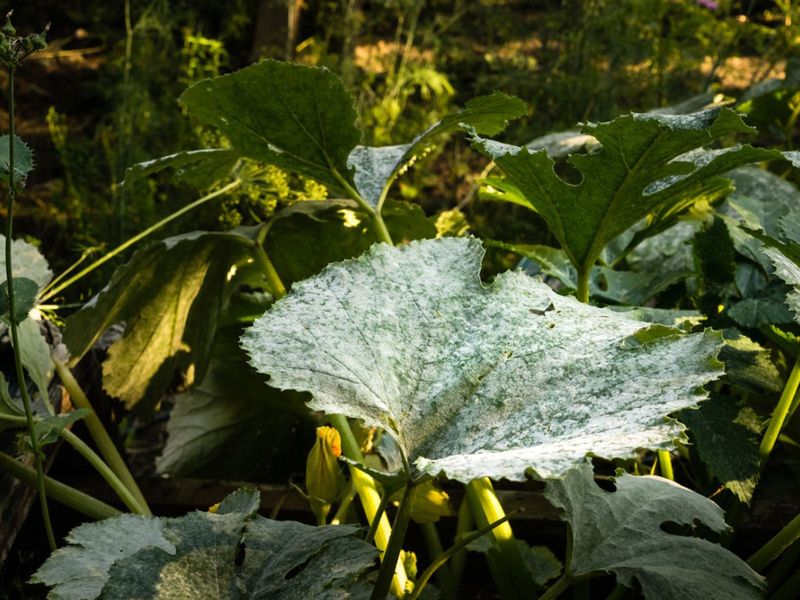
Finding white, flour-like patches spreading across your squash leaves in August is unsettling, especially when the plants were looking fine just days before. Those markings are consistent with cucurbit powdery mildew, a fungal disease that can move fast through a squash planting in late summer. Many gardeners have heard that a particular watering habit is usually to blame, but the full picture is more nuanced and worth understanding before you change anything in your routine. Getting the cause right means you can protect your plants without accidentally making things worse.
White patches provide a clue, not a final diagnosis
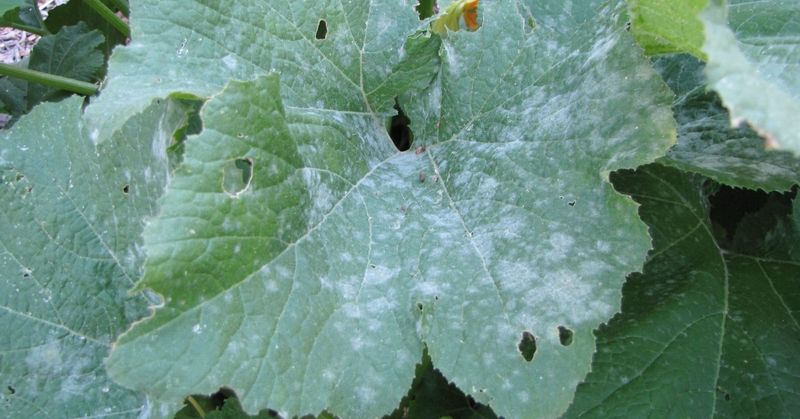
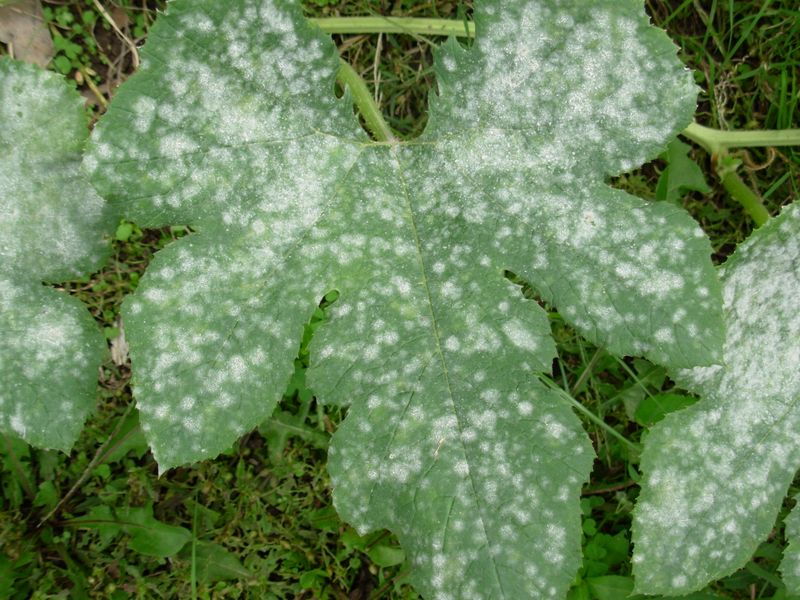
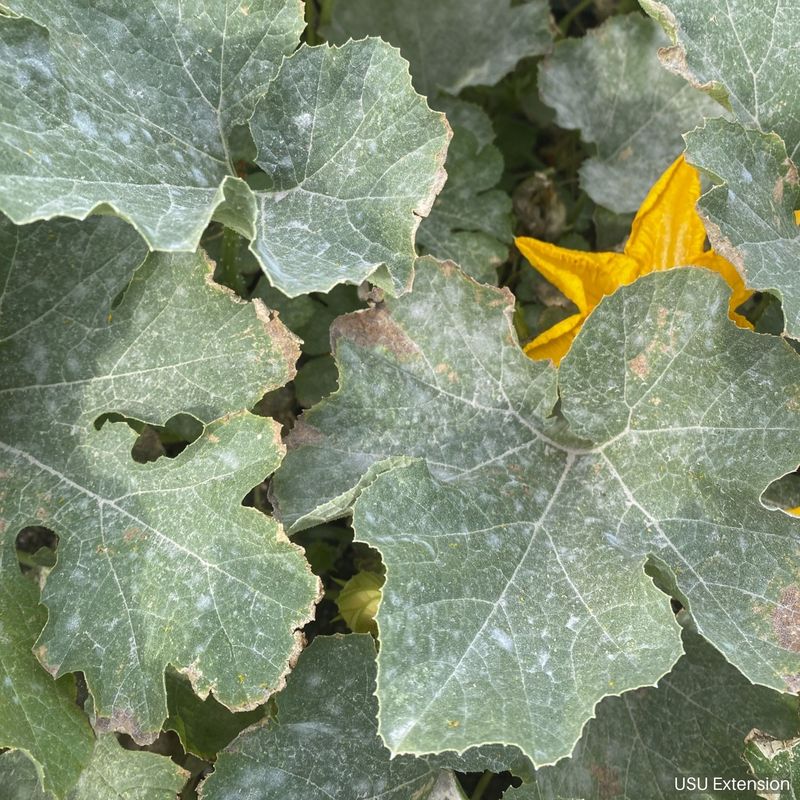
Circular, white or grayish patches that look like someone dusted the leaf surface with flour or talcum powder are the hallmark symptom most closely associated with cucurbit powdery mildew. According to University of Minnesota Extension guidance on cucurbit powdery mildew, these patches typically appear on leaves, stems, and sometimes petioles, and they can expand and merge as the infection advances. Older leaves may yellow, become brittle, and eventually die.
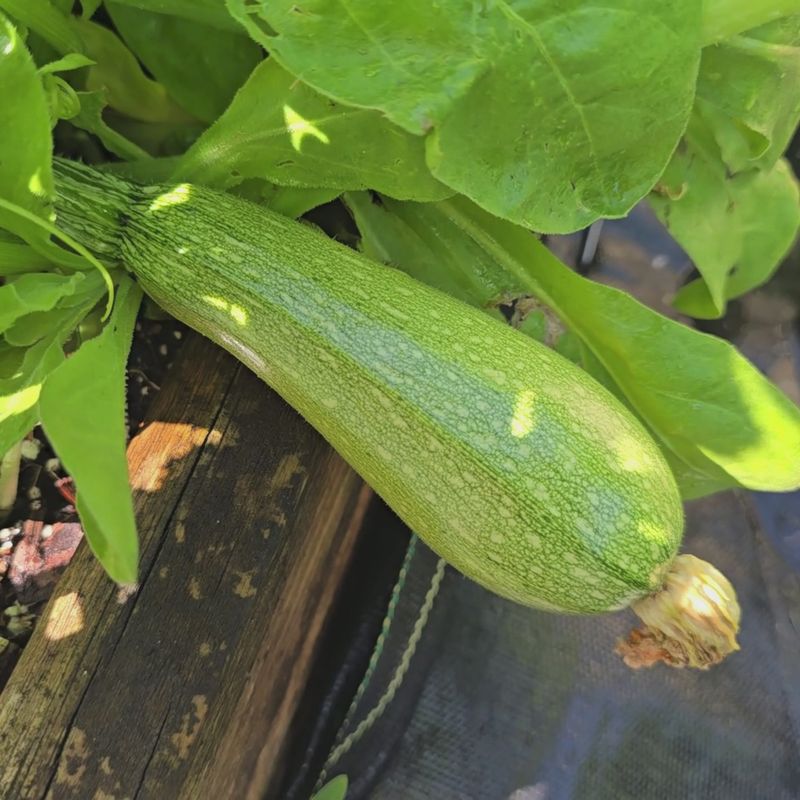
Before assuming the worst, check whether the markings are actually expanding. Some squash and zucchini cultivars naturally carry stable, symmetrical silver or mottled patterns on their leaves, and those markings will look the same week after week. Random patches that grow and spread are far more suspicious than a fixed, uniform sheen that has been there since the plant was young, as Colorado State Extension’s vegetable diagnostic guide points out.
Powdery mildew can also be confused with downy mildew, which is a different disease requiring different management. Penn State Extension’s comparison of the two diseases explains that downy mildew more often begins as angular, vein-bounded yellow lesions on the upper leaf surface and produces grayish, purplish, or fuzzy growth underneath. When you are uncertain which disease you are dealing with, a local Extension office or plant clinic can help confirm the diagnosis before you commit to a management plan.
Why mildew often appears in late summer
Cucurbit powdery mildew has a reliable seasonal rhythm in US temperate gardens: it commonly shows up around midsummer and tends to spread more aggressively as August progresses. Minnesota Extension’s cucurbit disease resource notes that warm, relatively dry daytime conditions can actually help spores form and disperse, while humid nights, shade, crowded canopies, and poor air movement favor infection and disease development. The disease does not need rain to get started.
That last point surprises many gardeners. UC IPM’s powdery mildew overview explains that most powdery mildew species can germinate and infect without free water on the leaf surface, so high nighttime humidity alone, without any rainfall or overhead irrigation, can create favorable conditions. Wet leaves are not a prerequisite.
Local disease pressure also depends on whether mildew spores are already circulating nearby, which cultivar you planted, how dense and shaded the canopy has become, and what the overnight temperatures have been doing. Utah State University Extension’s cucurbit mildew guide reinforces that these factors interact, which is why two neighboring gardens with similar watering habits can have very different disease outcomes in the same August.
Change how you water, not whether you water
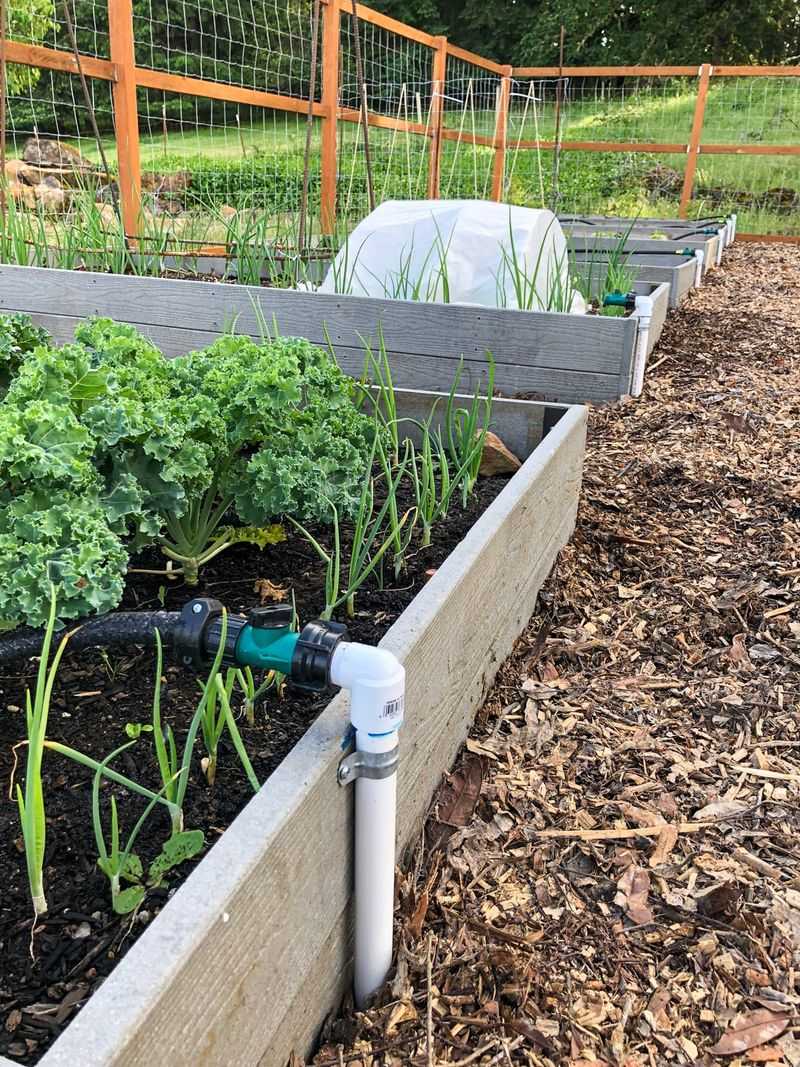
Squash roots still need consistent moisture even after powdery mildew appears on the foliage. Cutting back on irrigation to try to dry out the plant is counterproductive: drought-stressed squash produces less, and stress can make plants more vulnerable to other problems. University of Minnesota Extension’s summer squash growing guide recommends keeping the root zone consistently moist, using about 1 inch of water per week as a general starting point, while adjusting that figure based on rainfall, soil type, heat, and how large your plants have become. Checking the soil before watering gives you a much better read than following a fixed calendar.
Where the watering habit question has real merit is in delivery method. Drip irrigation, a soaker hose, or careful hand watering aimed at the soil level keeps moisture where the roots can use it and avoids repeatedly saturating dense foliage. Minnesota Extension’s vegetable garden watering guidance and Illinois Extension’s master gardener column on garden watering both favor morning irrigation when practical, because any canopy moisture has more time to dry before cooler, humid nighttime air settles in.
That said, Penn State Extension’s powdery mildew resource points out that free water on leaves can actually inhibit some powdery mildew species, and that brief daytime leaf wetting may sometimes suppress infection. Overhead watering is not established as the usual trigger for cucurbit powdery mildew. Reducing routine foliage wetting is still a sensible practice because it can lower canopy humidity and reduce risks from other leaf diseases, but it should not be mistaken for a cure or a guaranteed preventive measure for this particular pathogen.
Open the canopy and remove heavily infected leaves
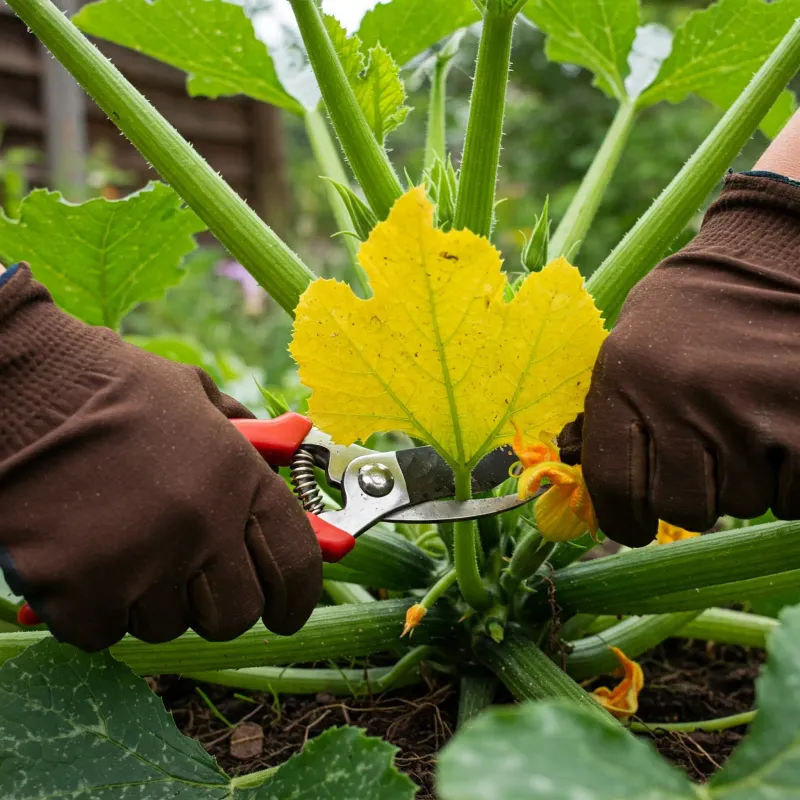
One of the most practical steps after spotting powdery mildew is to make the growing environment less hospitable to the pathogen. UC IPM’s cucurbit powdery mildew page and Minnesota Extension’s cucurbit disease guide both point to improved air movement as a meaningful factor. Appropriate plant spacing, pulling weeds that crowd the base, and selective thinning of interior leaves where the canopy has become very dense can all help reduce the nighttime humidity that favors infection.
Avoid excessive nitrogen fertilization at this stage. Heavy nitrogen pushes lush, soft new growth that is particularly susceptible to powdery mildew. If you have been feeding your squash aggressively, backing off can help the plant produce sturdier tissue. Cornell Cooperative Extension’s cucurbit powdery mildew fact sheet lists nitrogen management alongside spacing and airflow as part of an integrated approach.
Removing heavily infected leaves can reduce the amount of spore-producing tissue in the planting, and clearing away debris after harvest limits the inoculum that carries over into the following season. Utah State University Extension notes that removal will not restore tissue that is already infected, but sanitation still has value. Be selective: pulling too many leaves at once can expose developing fruit to sunscald, so remove the worst-affected material in stages rather than stripping the plant bare.
Decide whether treatment is worth pursuing
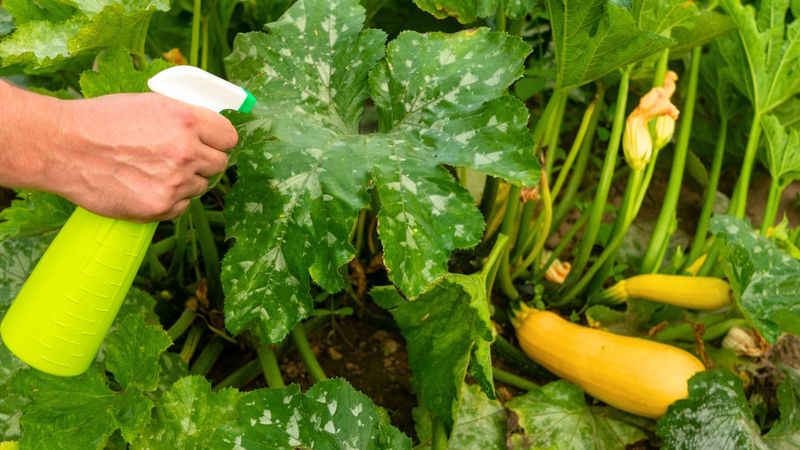
Powdery mildew can yellow and stiffen older leaves, and a severe infection that strips the plant of functioning foliage may reduce fruit size, quality, and the canopy cover that protects developing squash from sunscald. Minnesota Extension’s cucurbit disease resource acknowledges that significant foliage loss affects yield and fruit quality, which is the main reason treatment is sometimes worth considering.
The timing of the infection matters a great deal, though. A plant that has already produced the bulk of its summer harvest and has only a few weeks left in the season may not justify aggressive intervention. If mildew spots are just appearing and the plant still has many fruits to set, acting early gives fungicides the best chance to slow the spread. Utah State University Extension and Colorado State Extension’s powdery mildew guide both note that protective applications started at first symptoms are more effective than trying to treat heavily covered leaves.
Any product you consider must be verified against its current label for the exact squash crop, application interval, temperature restrictions, and pre-harvest interval. The EPA’s introduction to pesticide labels makes clear that the label is a legal document and that using a product inconsistently with its labeling violates federal law. Home remedies such as baking soda, milk, vinegar, or essential-oil sprays are not reliable substitutes; Illinois Extension cautions that some of these mixtures may injure foliage and should not be assumed harmless.
Use resistance and sanitation to lower next season’s pressure
Selecting a resistant or partially resistant squash variety is one of the most reliable ways to reduce powdery mildew severity in future seasons. Cornell Cooperative Extension’s cucurbit powdery mildew fact sheet explains that resistance levels vary by crop type, cultivar, and the local pathogen population, and that some resistant varieties may still develop disease under heavy pressure. Resistance is a useful layer of protection, not a guarantee.
Pairing variety selection with good cultural practices gives you a much stronger foundation. UC IPM’s cucurbit powdery mildew resource and Minnesota Extension both recommend appropriate spacing, consistent weed control, careful nitrogen management, and base-level irrigation as habits that reduce disease-favorable conditions across the whole season. None of these steps eliminates risk, but stacking them together meaningfully lowers the odds of a severe outbreak.
End-of-season cleanup is particularly important. Leaving infected vines, leaves, and stems in the bed over winter gives the pathogen a place to persist and a head start the following spring. Remove and dispose of diseased plant material after the last harvest rather than turning it into the soil. Cornell’s cucurbit crop management resources frame sanitation as a foundational piece of integrated disease management, not an optional finishing step.
Follow a practical order of operations
When white patches appear on your squash, start by looking closely at whether the markings are expanding and whether they match the flour-like texture of powdery mildew rather than the natural silver patterning of your cultivar or the angular yellowing of downy mildew. Keep watering the root zone adequately throughout this process. Minnesota Extension’s squash growing guide and Penn State’s powdery mildew resource both reinforce that the plant still needs consistent soil moisture regardless of what is happening on the foliage.
Move routine irrigation to the base of the plant and to morning hours when practical, open the canopy where possible, remove the most heavily affected leaves, and then weigh whether treatment makes sense given how much of the season remains. Changing overhead or late-day watering can support overall canopy health and may reduce risks from other leaf diseases, but it is not a proven usual trigger for powdery mildew on its own. If the diagnosis stays uncertain after your own inspection, Penn State Extension’s guide to distinguishing downy and powdery mildew and your local Extension office or plant clinic are the most reliable next steps. A correct diagnosis is always the best first tool in the garden.