
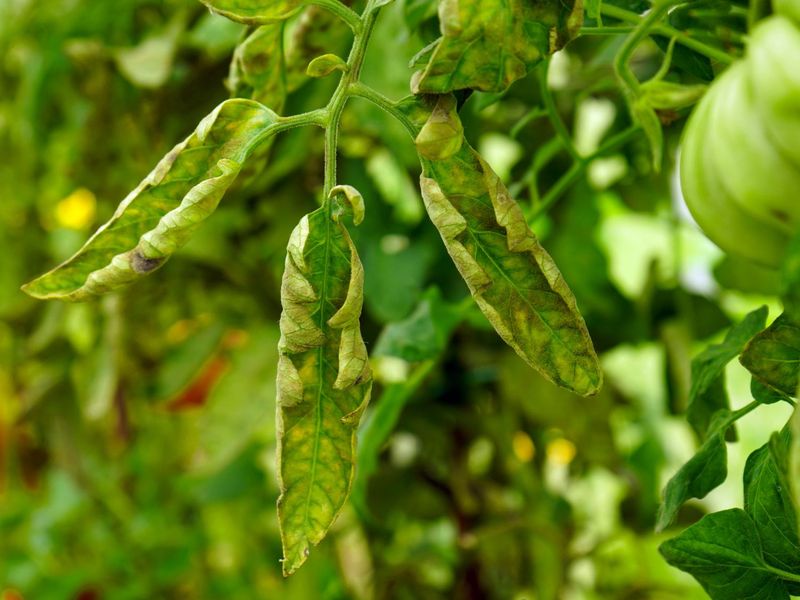
Curled, leathery tomato leaves in August can send any gardener into a panic, but the symptom is far more common than most people realize. What looks alarming is often a noninfectious stress response called physiological leaf roll, and the plant may keep growing and producing fruit just fine. Root-zone stress is one possible contributor, but heat, pruning, rapid growth, and cultivar differences can trigger the same pattern. Understanding what you are actually seeing helps you make a smart, low-risk decision instead of reaching for a watering can or a spray bottle too quickly.
This leaf pattern favors physiological leaf roll—but does not rule out disease
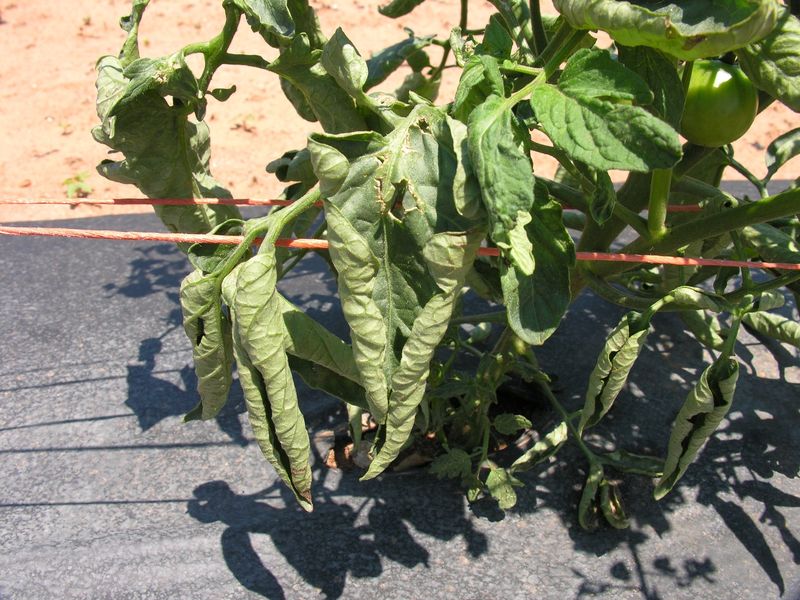
Older leaves on the lower parts of a tomato plant roll upward and inward until their edges nearly touch. They feel thick and firm, almost like stiff paper, and the plant around them looks otherwise healthy: green stems, normal-sized fruit, new growth pushing out at the top. That combination of symptoms, according to University of Minnesota Extension guidance on tomato disorders, most closely fits physiological leaf roll, a noninfectious stress response that generally causes little or no noticeable reduction in growth, yield, or fruit quality.
The reassuring part is that this disorder is not a disease and does not spread from plant to plant. The less reassuring part is that the visual pattern alone cannot rule out every other possibility. Matching the symptom description is a starting point, not a confirmed verdict.
Before settling on physiological leaf roll as your explanation, look beyond the curled leaves. Check whether new growth at the top of the plant appears normal in shape and color. Examine the leaf veins and undersides for discoloration or unusual texture. UC IPM’s overview of physiological leaf roll in vegetables notes that affected leaves may not unroll even after conditions improve, but healthy new growth and continued fruit production are more reliable signs that the plant is recovering than whether old leaves flatten out again.
Inspect neighboring plants too, because a scattered pattern of curling across multiple unrelated plants raises the odds of something beyond ordinary stress.
Root-zone stress can contribute without being the whole explanation
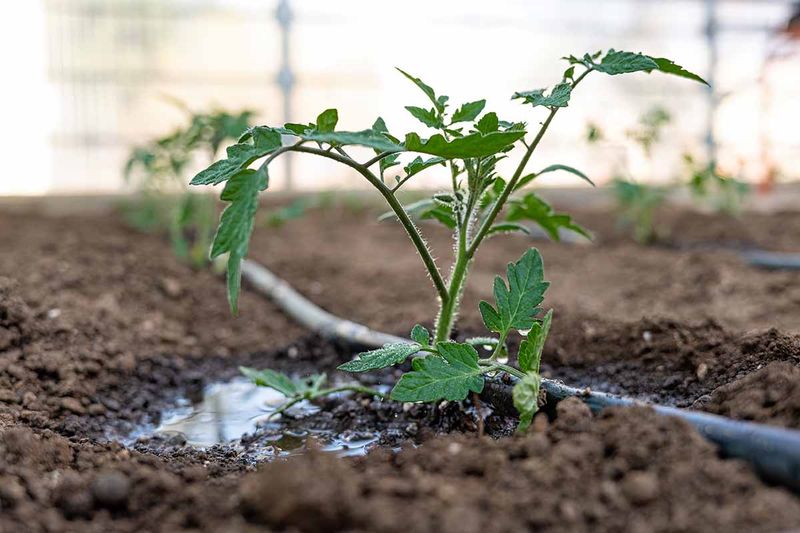
Water has to travel from the soil through the roots and all the way up to every leaf on a tomato plant. When something disrupts that pathway at the root level, leaves can respond by rolling inward to reduce the surface area losing moisture to the air. Research published in a study on tomato root physiology under low water stress confirms that repeated drying cycles can alter how tomato roots transport water, which helps explain why swings between dry and wet soil can be harder on a plant than steady moisture in either direction.
Drought is not the only root-zone problem worth checking. Prolonged wet soil and poor drainage can suffocate roots and reduce their ability to function, producing the same rolling response even when the surface looks moist. Physical root injury from digging, cultivating too close to the plant, or a recent transplant can have a similar effect. Oklahoma State University Extension’s guide to non-infectious tomato diseases notes that leaf roll can occur even when soil is not obviously dry, pointing to wet soil and root damage as underappreciated contributors.
To actually know what you are dealing with, push your finger or a stick several inches below the soil surface near the plant. Dry, crumbly soil suggests a moisture deficit. Soil that feels cold, dense, and waterlogged suggests the opposite problem. Neither situation calls for the same response, which is exactly why inspecting the root zone before adjusting irrigation matters more than reading the leaves alone.
Heat, rapid growth, a heavy fruit load, severe pruning, and cultivar genetics are all documented independent triggers, so the root zone is where to look first, not where to stop looking.
Use a timeline to weigh possible contributors
Running through the last two to three weeks in your head can help you prioritize which checks to make first, even if no single event proves what caused the curling. Start with the weather. Has your area seen multiple days above 90 degrees, strong drying winds, or both? UMN Extension’s heat-stress guidance explains that hot, windy conditions push tomatoes to reduce water loss by curling or folding their leaves, a response that overlaps with physiological leaf roll but is driven primarily by air temperature and evaporation rather than root trouble.
Next, think about water history. Did irrigation get skipped for several days, followed by a heavy soaking? Did a significant rainstorm flood the bed after a dry stretch? Did water pool near the base of the plant for more than a day or two?
The UMN diagnostic tool for curled tomato leaves walks through this kind of event-based review as a practical first step before concluding anything.
Then consider what you did to the plant. Heavy pruning of suckers or foliage during a heat wave, staking that disturbed roots, or rapid vegetative growth following a flush of fertilizer are all worth noting. UMN Extension’s tomato disorders page lists severe pruning alongside heat and moisture swings as recognized contributors to leaf roll. When several of these events overlap in a short window, a stress response becomes more plausible, but August timing on its own does not identify the trigger.
A quiet week with steady irrigation and mild temperatures can still produce curled leaves if the cultivar is prone to it or if roots were disturbed earlier in the season.
Restore consistent moisture without keeping roots constantly wet
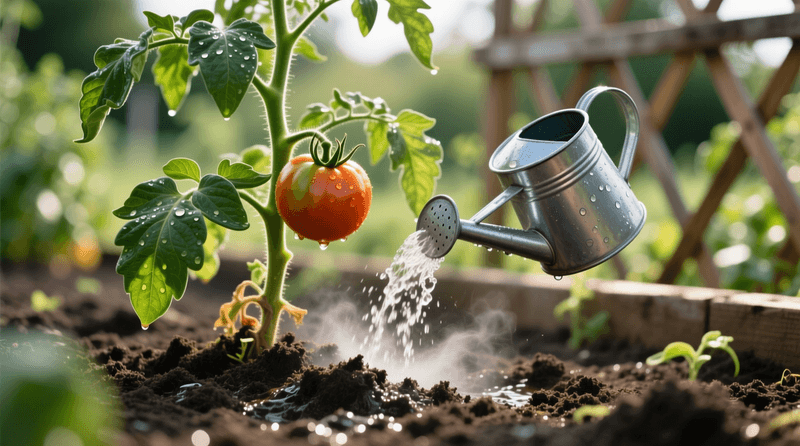
Once you know what the soil actually feels like several inches down, you can make a smarter watering decision. If the root zone is dry, water thoroughly enough to wet the soil at that depth, not just the surface. Light, frequent watering tends to keep moisture near the top, which encourages shallow roots that are more vulnerable to heat and drought. UMN Extension’s tomato growing guide suggests roughly 1 inch of rainfall or irrigation per week as a general starting point, with sandy soils often needing more frequent attention.
Container plants, raised beds, and unusually hot stretches can change that number significantly, so treat it as a reference rather than a rigid schedule.
If the soil already feels evenly moist or waterlogged, adding more water is the wrong move. Saturated roots cannot absorb water effectively, and extra irrigation on top of poor drainage can worsen the very problem you are trying to solve. Check whether water drains away from the bed within a few hours of rain or irrigation, and adjust bed preparation or watering frequency if it does not.
A 3- to 4-inch layer of organic mulch around the plant, kept a few inches away from the stem, can help slow evaporation and moderate soil temperature between waterings. One important caution from the same UMN guide: avoid mulch made from grass clippings if the lawn was treated with a broadleaf herbicide, because residues can move into garden soil and damage tomatoes in ways that can look like a leaf disorder. Consistent moisture, not perpetually wet soil, is the goal.
Protect the canopy and roots from additional stress
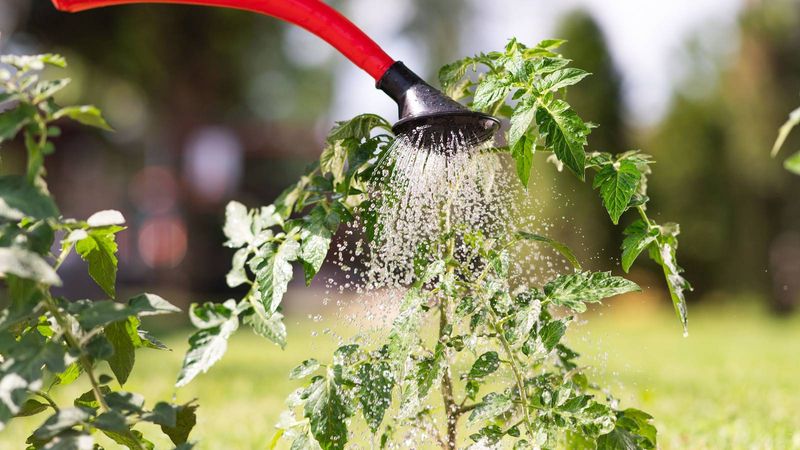
Heavy pruning during hot weather is one of the more avoidable contributors to leaf roll. Removing large amounts of foliage at once reduces the plant’s ability to manage water and can expose developing fruit to direct sun, increasing the risk of sunscald on top of whatever stress already triggered the curling. UMN Extension’s tomato disorders resource specifically associates severe pruning with leaf roll, particularly when it coincides with heat or other stress.
That caution does not mean avoiding every pruning task. Removing a diseased leaf, pinching a small sucker, or tidying up dead tissue is not the same as stripping away a third of the plant’s canopy on a 95-degree afternoon. The distinction matters: the concern is about scale and timing, not the act of pruning itself. Hold off on major canopy reductions until temperatures drop or the plant has clearly stabilized.
At the root level, avoid cultivating the soil within about 1 foot of the plant base. UMN’s growing guide flags close cultivation as a source of root injury that can compound water-management problems. Weeding by hand near the stem is safer than using a hoe. On the fertilizer question, curled leaves alone are not a reason to add nitrogen, calcium, phosphorus, or any specialty product.
Excess nitrogen is actually associated with rapid vegetative growth, which some extension sources link to leaf roll. Base any fertilizer decision on a soil test or a clearly documented nutrient deficiency, not on the appearance of the leaves.
Check for heat scorch, viruses, and herbicide injury
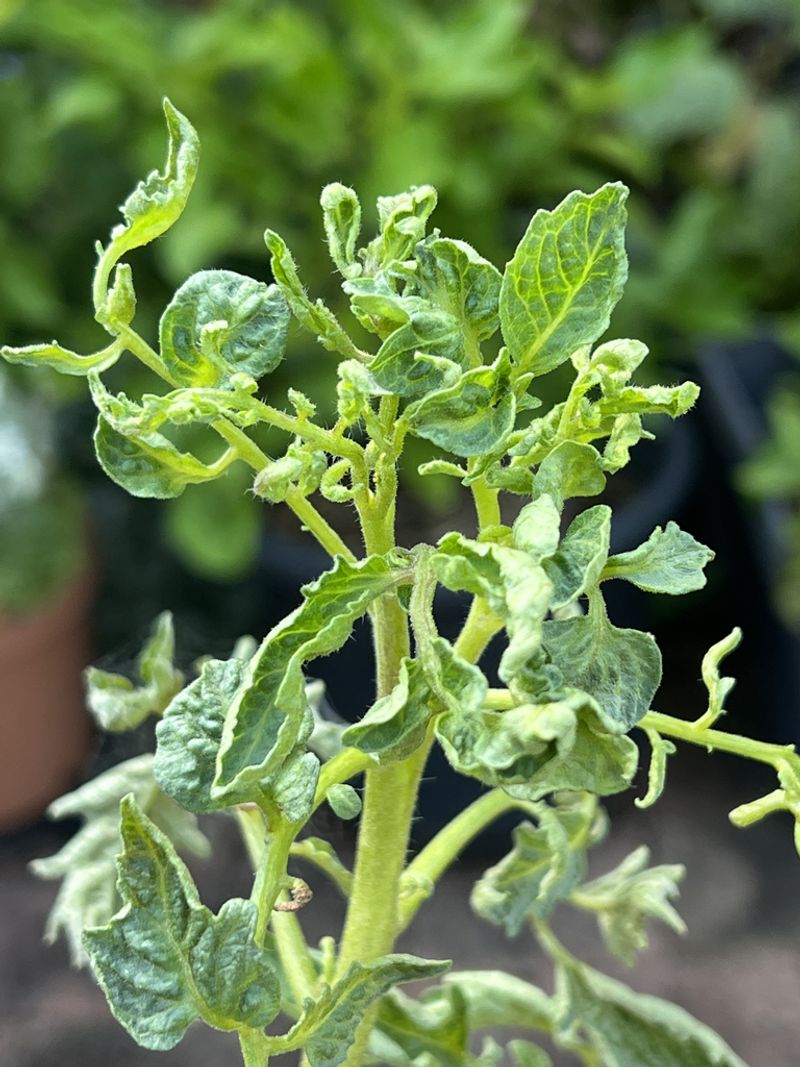
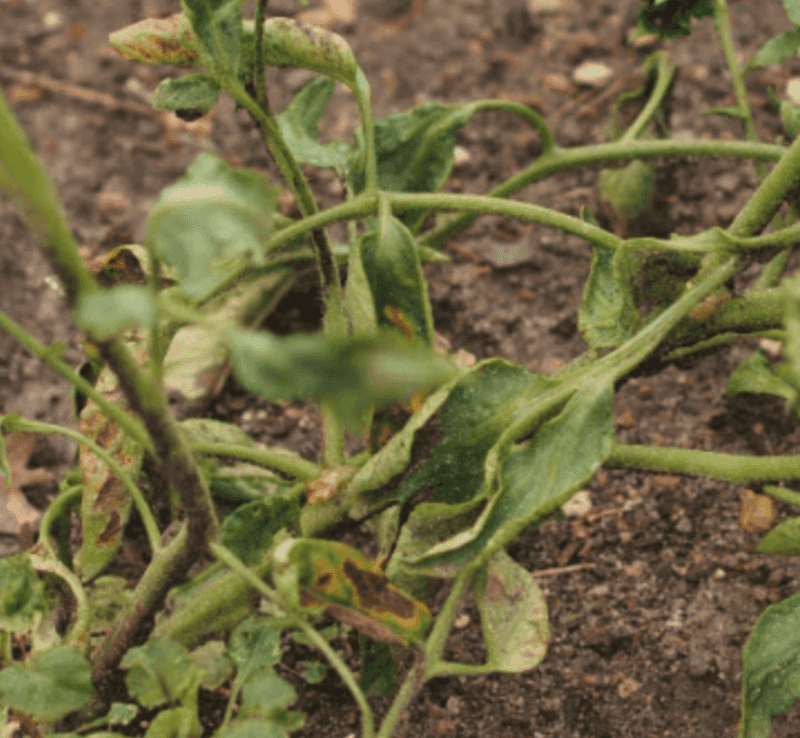
Rolled leaves that stay green on an otherwise productive plant fit the physiological disorder description well. Add brown patches, bleached tissue, or crispy edges and the picture shifts toward heat scorch, which UMN Extension heat guidance distinguishes from simple leaf curling by the presence of actual tissue damage. Scorch most often appears on leaves that are directly exposed to intense afternoon sun, especially after heavy pruning removed the shade they previously had.
Virus becomes a more serious consideration when curling comes with a cluster of additional symptoms. Yellowing, mottled or mosaic coloring, stunted growth, distorted new leaves, purple veins, flower drop, or abnormal fruit ripening all raise concern. A scattered pattern where a few random plants across the garden are affected, rather than one section, is another flag. UC IPM’s tomato yellow leaf curl profile describes that virus as producing small, upright, strongly yellowed curled leaves alongside stunting, flower abortion, and significant yield loss, with whiteflies as the vector.
Those signs together are not ordinary physiological roll.
Utah State University Extension’s curly top resource describes that western-US virus as causing thick, crisp, upward-rolled leaves with dull yellow color, purple veins, stunting, and premature dull fruit. Plants infected with curly top generally do not recover. Herbicide injury adds its own set of clues: narrow or strap-like new leaves, thickened veins, twisted or brittle stems, cupped foliage, and symptoms concentrated on the side of the plant facing a recently treated lawn or bed. UMN’s herbicide injury guide also flags contaminated grass-clipping mulch as a documented risk worth ruling out when the symptom pattern does not clearly fit stress-related roll.
Judge recovery by new growth, not by old leaves flattening
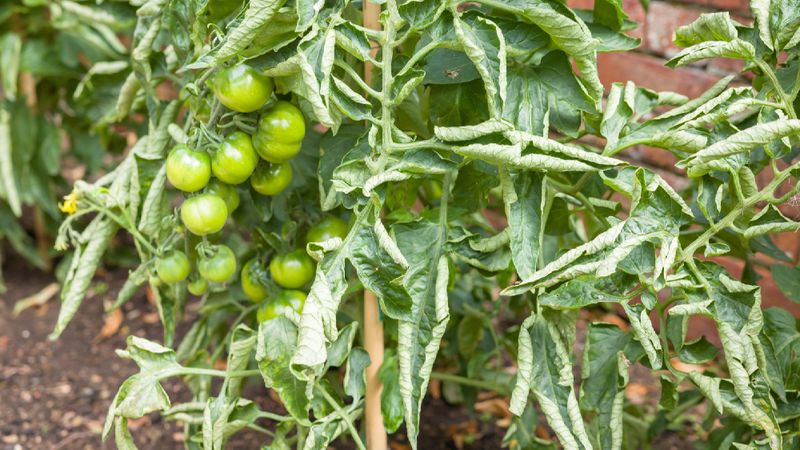
Rolled leaves that developed during a stress event often stay rolled, even after conditions improve. Waiting for old leaves to flatten out is not a reliable way to gauge whether your intervention worked. The better indicators are what happens next: new leaves emerging with a normal shape and color, the plant continuing to grow taller and set flowers, and fruit developing without unusual spotting or deformity. UMN Extension and UC IPM both point to continued healthy growth and productivity as the meaningful recovery signal, not whether the affected leaves return to their original position.
Keep the diagnostic sequence in mind as you monitor. Match the leaf pattern, check the soil and drainage, review recent heat and pruning events, stabilize moisture without overwatering, and protect the root zone from further disturbance. Reassess if new symptoms appear on fresh growth, if neighboring plants start showing similar patterns, or if productivity drops noticeably.
Ordinary physiological leaf roll is a stress signal worth paying attention to, not an automatic reason to remove a productive plant or start applying treatments. A tomato that keeps growing and fruiting through August, even with leathery lower leaves, is telling you something useful: the stress response may be real, but the plant is still doing its job.