
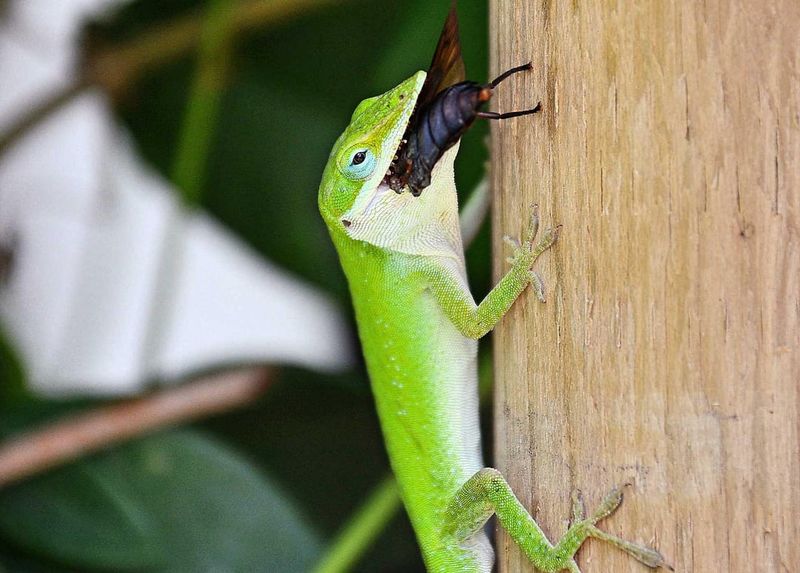
Spotted a quick little lizard darting across your porch railing and wondered if it was doing you a favor? Green anoles are genuine insect hunters, and Central Texas homeowners have good reason to welcome them as backyard neighbors. But before you start rearranging your porch plants expecting a pest-free summer, there are some honest limits worth knowing. This guide covers what anoles actually eat, how to make your yard more inviting to them, and why mosquito and roach control still needs its own plan.
Anoles may eat porch insects, but they are not a pest-control treatment
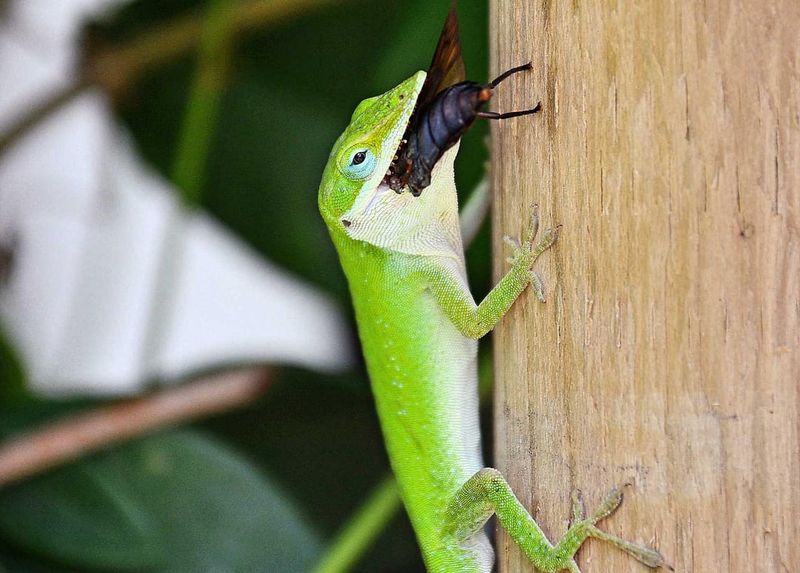
A green anole catching a cricket on your porch rail is a genuinely satisfying sight, and the predation is real. Texas Master Gardener guidance lists crickets, cockroaches, moths, grubs, beetles, flies, and grasshoppers among their documented prey, which means small roaches are legitimately on the menu. That is worth knowing, but it is not the same as saying that lizards on your porch will noticeably shrink an infestation.
One lizard eating occasional insects across its territory is individual predation. Reducing the population of a pest species that breeds quickly and hides in walls, drains, and crawl spaces is a different challenge entirely. Animal Diversity Web describes the green anole as an opportunistic generalist whose prey depends heavily on what is available in its territory, not a specialist tuned to any one pest.
Mosquitoes deserve a separate, direct conversation. An anole may snap up a mosquito resting on a leaf, but UF/IFAS mosquito management guidance makes clear that natural predators cannot consume enough mosquitoes to provide reliable control, and they offer no protection from mosquito-borne disease. Treating anoles as a mosquito solution would give you false confidence while the standing water in your gutters keeps producing thousands more.
What this article will do is walk you through identifying the lizard correctly, building habitat that may support locally occurring anoles, and pairing that habitat work with the direct pest-management steps that actually move the needle on roaches and mosquitoes. Think of anoles as a wildlife benefit that happens to include some opportunistic insect predation, not as a treatment you deploy against a pest problem.
Confirm which porch lizard you are seeing

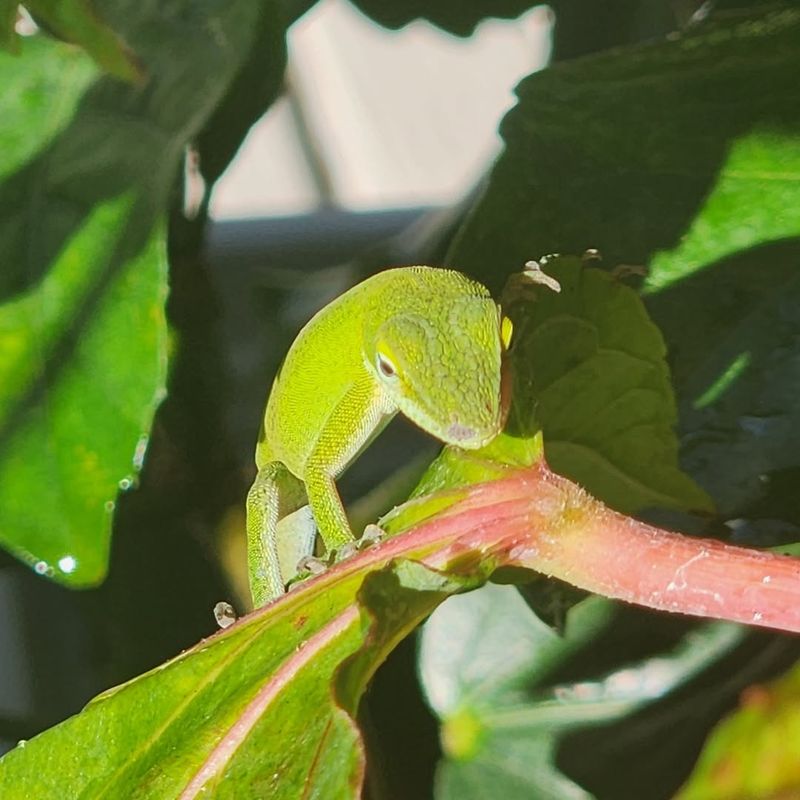
Before rearranging your yard for a lizard you may not actually have, spend a moment confirming what species is visiting. Texas Parks and Wildlife notes that green anoles (Anolis carolinensis) can shift between green, brown, and gray-brown depending on temperature, stress, and background. Color alone will not tell you what you are looking at.
The more reliable field mark is the dewlap, the throat fan males extend during territorial displays and courtship. On a green anole, that fan is pink to reddish-pink. The introduced brown anole (Anolis sagrei) carries an orange or orange-red dewlap with a pale border, and it tends to stay lower to the ground than native green anoles. UF/IFAS research on Florida’s introduced brown anole documents how this species can affect the behavior and habitat use of native green anoles where the two overlap, pushing green anoles higher into the canopy.
Range also matters. TPWD places the green anole’s primary Texas distribution in the eastern third of the state, and while the species is documented in the Austin area, that documentation does not mean every Central Texas property hosts them or will. An Austin environmental assessment confirms local occurrence, but pockets of suitable habitat and proximity to existing populations both factor into whether any individual yard is likely to see them.
If the lizard on your porch stays near the ground, never shows green, and fans an orange-bordered dewlap, you are probably watching a brown anole. Both species eat insects, but the habitat work in this article is aimed at supporting the native green anole, so a confident ID first saves you from optimizing a yard for the wrong animal.
Create a porch edge with cover, perches, sun, and shade
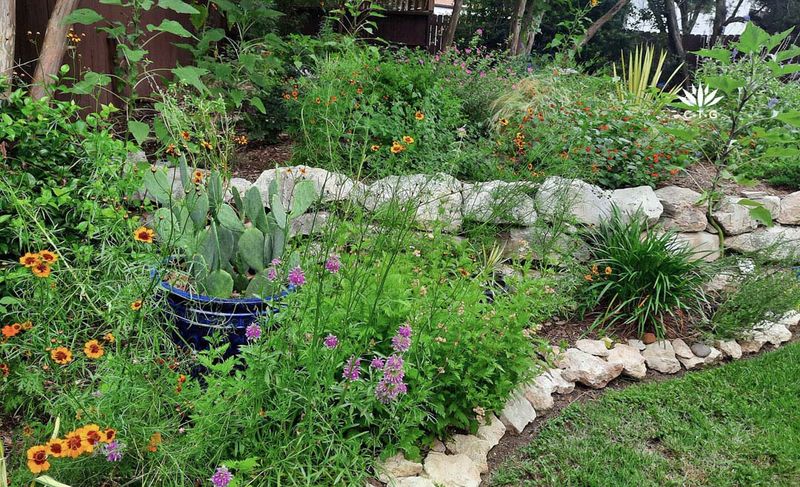
Green anoles are not deep-woods animals. They thrive at edges where sunlit perches sit close to leafy cover, which makes a well-planted porch or patio border genuinely useful habitat. Texas Parks and Wildlife describes their preference for trees and shrubs with occasional shade and a moist environment, and notes that walls and fences work as structural perches when vegetation is nearby.
Layering is the key concept. A single row of clipped shrubs gives a lizard nowhere to retreat, bask, and hunt across the same small area. Aim instead for a mix of heights: a small native tree or tall shrub at the back, a mid-layer of woody shrubs, and groundcover or leafy potted plants at the front. Vines trained on a trellis or fence panel add vertical habitat that anoles use heavily.
Potted plants near a railing can bridge the gap between a bare concrete porch and the planted yard beyond it.
TPWD habitat resources consistently recommend native plants suited to the local ecoregion because they support the insects and structure that wildlife actually use. For Central Texas, that points toward plants such as Texas lantana, Turk’s cap, inland sea oats, and native yaupon, but the goal is layered, varied vegetation, not any single species.
Sun exposure needs deliberate planning in a Texas summer. Anoles are ectotherms that need to warm up in the morning and cool down midday, so a south- or east-facing porch edge that gets direct early sun and dappled afternoon shade fits their schedule well. A flat, fully shaded north wall with no vegetation offers almost nothing. Texas Wildscapes tips reinforce that structure, sun, and shade together define usable wildlife habitat, not any single plant or feature.
One realistic note: improving habitat may support anoles where they already occur or can naturally reach your property. If none are present in your neighborhood, structural changes alone will not summon them from miles away.
Support natural prey without feeding or baiting lizards
Anoles do not need a homeowner to hand them lunch. Their foraging is opportunistic, shaped by what prey is naturally moving through their territory on any given day. The most productive thing you can do is build a yard that produces a steady supply of small insects and arthropods on its own, which is exactly what layered, pesticide-light native plantings do.
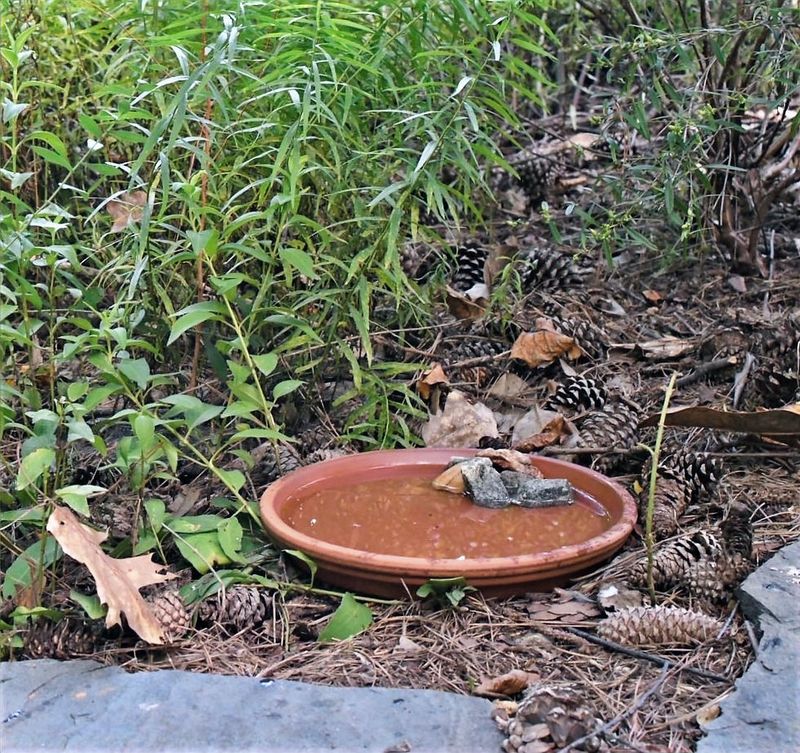
Moisture supports that food web. TPWD notes that green anoles prefer a moist environment, but in Central Texas that does not mean saturating the soil. Consistent, appropriate watering of your plants, plus a shallow water source such as a small ceramic saucer kept clean and refreshed every one to two days, gives anoles access to drinking water without creating a mosquito nursery. Stagnant water in any container, no matter how small, can become a breeding site within days in warm weather.
Skip the mealworms, store-bought roaches, and pet food. TPWD advises keeping wildlife wild rather than conditioning animals to human food sources. Deliberate feeding can alter natural foraging behavior, attract other unwanted wildlife, and expose lizards to prey that may carry pesticide residue from unknown sources.
Pesticide choices matter more than most homeowners realize. Broad-spectrum insecticides applied around the porch do not distinguish between pest species and the small arthropods that form an anole’s diet. EPA guidance on reducing pesticide impacts on wildlife advises following product labels carefully, avoiding spray drift onto non-target vegetation, and choosing targeted treatments over blanket applications when pest control is genuinely needed. A yard treated heavily with broad-spectrum products every few weeks is unlikely to support much wildlife at all, anoles included.
Expect limited outdoor predation, not indoor cockroach control
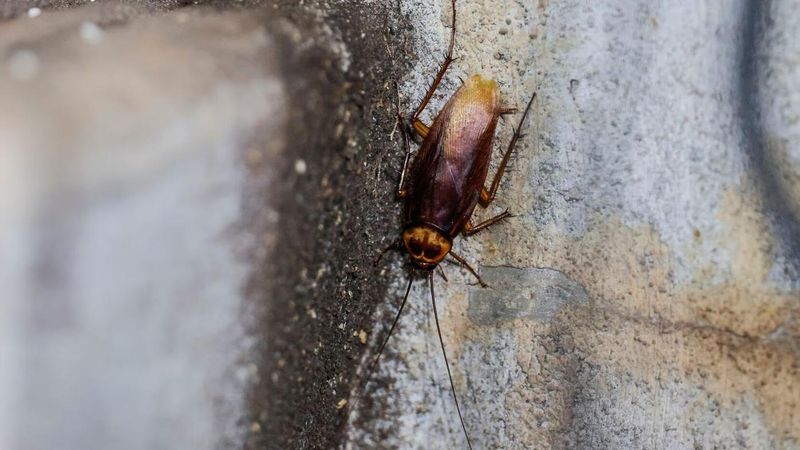
Green anoles hunt during the day, mostly by sitting still and watching for movement before making a short strike. That style of predation works well for exposed, small, active insects crossing a sunny wall, fence, or leaf surface. It does not extend into the places where cockroaches actually live and breed.
Texas Master Gardener prey lists confirm that small cockroaches are possible targets, and that is worth acknowledging. But the roaches most Central Texas homeowners deal with, American cockroaches moving through walls and pipes, German cockroaches colonizing kitchen cabinets, and egg cases tucked behind appliances, exist in spaces a porch lizard will never enter. Animal Diversity Web describes the green anole as a generalist predator of whatever small arthropods are available in its outdoor territory, not an indoor pest hunter.
A prey list shows possibility, not effectiveness. Even if a lizard occasionally catches a small roach that wandered onto the porch at night, that single interaction has no measurable effect on a colony that may number in the hundreds inside the structure. UC IPM’s lizard guidance acknowledges that lizards eat pest insects but stops well short of recommending them as a control strategy.
Persistent cockroach activity calls for direct action: eliminate food and moisture sources, seal entry points around pipes and door sweeps, use gel baits or boric acid in targeted locations, and call a licensed pest management professional if the infestation is established. Those steps address where roaches actually live. Anole habitat on the porch is a welcome addition to your yard’s ecology, but it is running a completely different operation than your pest-control plan needs to run.
Manage mosquitoes directly with water removal and barriers
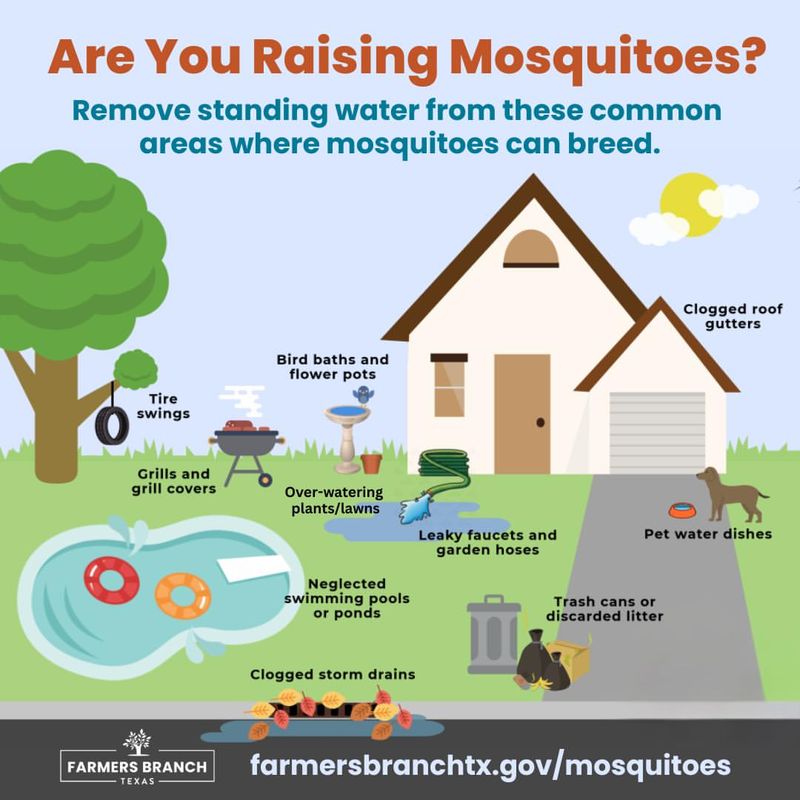
Separating mosquito management from the anole project is not a minor caveat, it is the central point. UF/IFAS integrated pest management guidance for mosquitoes states plainly that natural predators cannot consume every mosquito and should not be relied on for protection from mosquito-borne disease. A green anole may occasionally catch a mosquito resting on a leaf, but adult mosquitoes are not a meaningful part of any lizard’s diet, and treating them as such leaves real risk unaddressed.
The practical priorities for mosquito reduction are well established and have nothing to do with lizards. Remove standing water from every container on your property: flower pot saucers, clogged gutters, birdbaths left unchanged, tarps with pooled rainwater, and any low spots in the yard that hold water for more than a few days. UF/IFAS Sarasota County mosquito FAQs confirm that larval habitat removal is the single most effective community-level tool available to homeowners.
Screens, fans, and physical barriers come next. Repair any torn window or door screens before mosquito season peaks in Central Texas, typically June through September. Outdoor ceiling fans on a covered porch disrupt the low-altitude flight path mosquitoes prefer and make sitting outside genuinely more comfortable. Long sleeves, pants, and EPA-registered repellents containing DEET, picaridin, or oil of lemon eucalyptus provide personal protection when you are working in the yard.
One overlap point with the anole habitat section: if you add a shallow water dish for wildlife, refresh it every one to two days without exception. A ceramic saucer that sits undisturbed for a week in July becomes a mosquito production site, which is the opposite of what any part of this project should accomplish. The anole water source and the mosquito-prevention plan need to be managed together, not treated as separate concerns.
Let local wildlife arrive without turning anoles into pets
Catching an anole off a neighbor’s fence and releasing it on your porch is not a shortcut to better habitat, and it may run into legal complications. TPWD nongame wildlife regulations can apply to the collection and relocation of native species, and moving animals between locations spreads stress, disease risk, and disruption to established territories. The right approach is to improve the habitat and let any local population find the property on its own schedule.
Feeding is off the table for similar reasons. TPWD’s wildlife guidance consistently discourages conditioning wild animals to human food sources. Offering mealworms or live insects may seem harmless, but it can reduce natural foraging behavior, attract lizards into situations where they are more likely to be handled or harassed, and create dependency on a supply you cannot maintain year-round.
Handling is worth addressing directly. UC IPM lizard guidance notes that lizards can be stressed or injured by rough handling and that some will bite defensively. Even gentle, well-intentioned contact is an unnecessary stressor for a wild animal. Observe from a few feet away, move slowly when you are near them, and let them retreat at their own pace.
Pets are a real threat that homeowners often overlook. Cats in particular are efficient lizard hunters, and a cat with outdoor access can eliminate every anole that establishes on a porch within a season. Keeping cats indoors or supervised outdoors is one of the most direct things you can do to support any resident lizard population. Dogs that chase and paw at small animals present a similar problem.
The habitat improvements in this article only pay off if the animals that arrive can actually survive there.
Use anole habitat as a wildlife benefit, not a pest promise

The clearest decision rule for this whole project is straightforward: build the habitat because it is good for local wildlife, then let the pest-control expectations follow the actual evidence rather than the hopeful headline. Layered vegetation, reliable sun and shade, a clean shallow water source, and reduced broad-spectrum pesticide use give locally occurring green anoles a reason to stay. TPWD’s green anole profile confirms that those structural elements, not any single plant or product, define suitable habitat.
Any anoles that do arrive may add genuine ecological value: opportunistic predation on small arthropods, a link in the local food web, and a daily reminder that a well-planted Central Texas yard supports more than just people. That is worth having. What it does not replace is the standing-water removal, gutter cleaning, screen repair, sanitation, and targeted treatment that proven mosquito and roach management actually requires.
EPA wildlife and pesticide guidance frames it well: protecting non-target species and managing pests are both legitimate goals, and the two are compatible when you choose targeted treatments, follow labels, and give native wildlife room to function. Build the habitat, manage the pests directly, and let the lizards do what lizards do. A porch where both goals are running in parallel is a more interesting place to spend a Texas evening than one optimized for only one of them.