
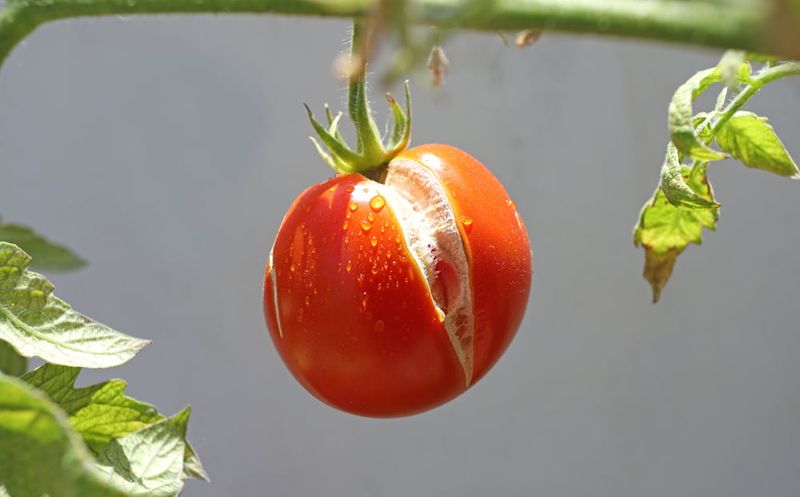
Walking out to the garden and finding a ripe tomato split open is one of the most frustrating sights of late summer. The crack seems to appear out of nowhere, often right when the fruit looks perfect. What usually sets it off is a rapid swing from dry soil to a big dose of water, though heat, the fruit itself, and the variety you planted all play a role. Understanding what is actually happening makes it much easier to protect the tomatoes still on the vine.
Identify a growth crack before changing your routine
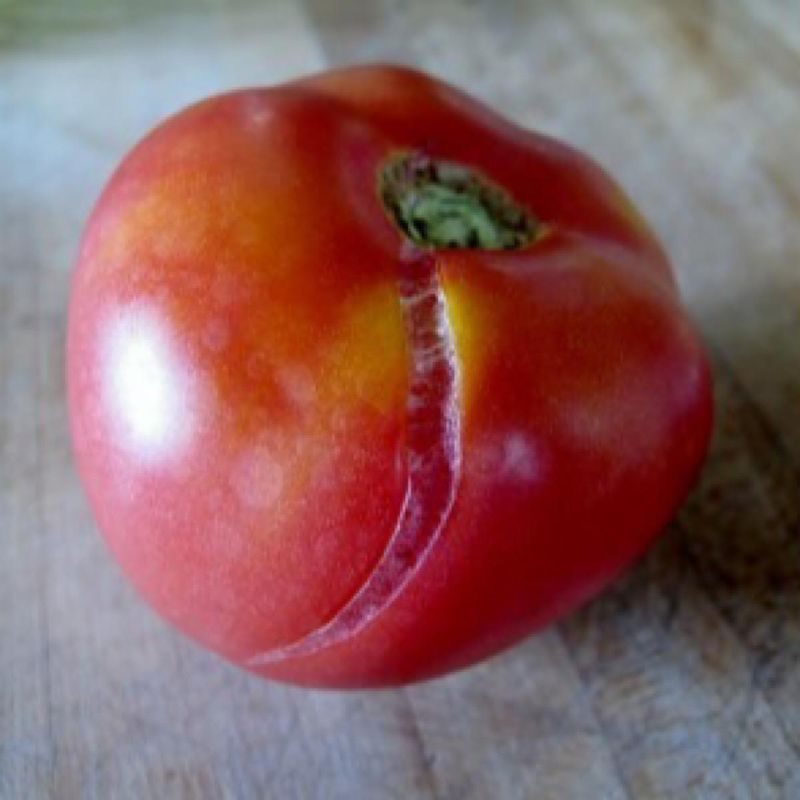
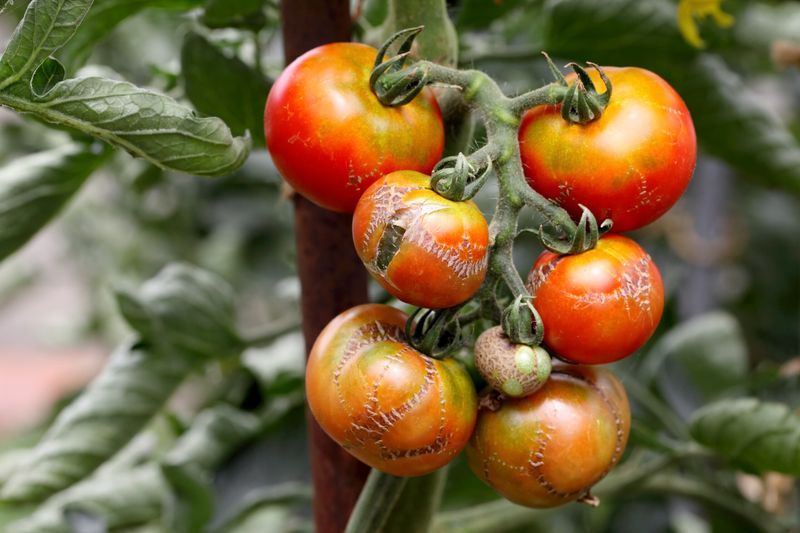
Look closely at where the split begins before assuming you know the cause. Growth cracks fall into two recognizable patterns: radial cracks that run lengthwise from the stem end down toward the blossom end, and concentric cracks that form rings around the stem scar. The University of Minnesota Extension tomato fruit crack diagnostic guide describes both types as dry splits that appear on the fruit itself, which separates them from diseases that usually show up first on leaves or stems.
The edges of a fresh growth crack are typically firm and slightly dried out rather than soft or discolored. That texture tells you the split opened during active fruit growth, not because of rot or a disease moving through the tissue. Checking the edges is a quick way to confirm what you are dealing with before making any changes to your watering schedule.
One practical concern with any open crack is that it creates a path for fungi, bacteria, and insects to reach the interior of the fruit. Damaged tomatoes can deteriorate faster than intact ones, so the pattern you see is also a signal to harvest and assess promptly rather than leaving the fruit on the vine to finish ripening. Using the visible crack type as your starting point keeps you from reacting to the wrong problem.
Rapid moisture changes can outpace the skin
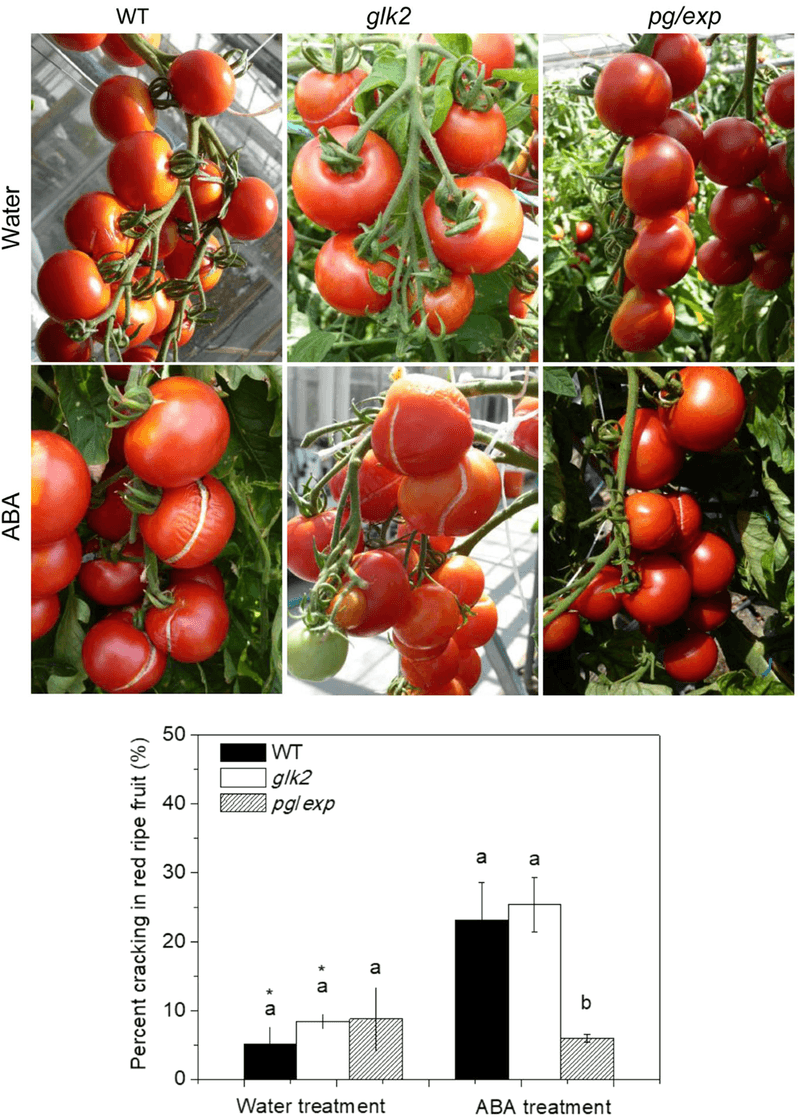
When the soil around tomato roots dries out significantly and then receives a large amount of water, whether from heavy irrigation or a sudden rainstorm, the plant pulls that moisture up quickly. The fruit’s interior can expand faster than the outer skin and cuticle can stretch to keep up, and the result is a split. University of Minnesota Extension guidance on tomato disorders consistently points to uneven moisture availability as the central management target for growth cracks.
The key phrase here is “rapid change.” A single watering session does not automatically cause every crack. What sets the stage is the pattern: a period of dryness that allows internal pressure to drop, followed by a sudden influx of water that raises it again faster than the skin can adapt. The fruit’s own biology plays a role too. Research published in a peer-reviewed plant science journal found that tomato fruit continues to grow even during ripening, which changes cuticle properties and affects crack susceptibility.
Cultivar genetics also matter. Some varieties produce thicker cuticles that tolerate expansion better, while others, often large-fruited or heirloom types, are more vulnerable. Internal water pressure, the stage of ripening, and how quickly the fruit is growing all interact with the moisture swing to determine whether a crack forms. Blaming one irrigation session misses the fuller picture.
Late-summer heat increases the fruit’s vulnerability
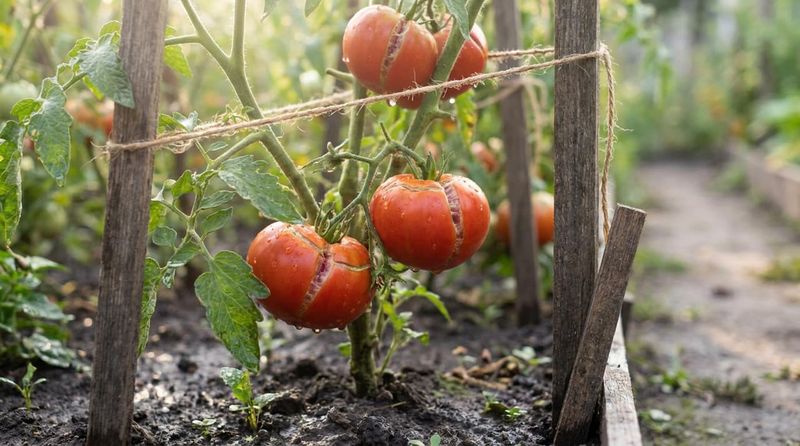
August heat does not crack tomatoes on its own, but it creates conditions that make the fruit less able to handle a moisture swing. High temperatures speed up fruit development, which means the interior can grow faster than the skin has time to adjust. Hot, sunny weather also raises the temperature of the fruit surface itself, and as ripening progresses, the cuticle becomes less flexible and more prone to splitting under pressure. University of Minnesota Extension notes that heat can reduce skin elasticity during ripening, making late-summer fruit more vulnerable than fruit grown in cooler conditions.
Leaf cover matters more than many gardeners realize. A healthy canopy shades developing and ripening fruit, buffering it from the most intense afternoon sun and reducing temperature swings between day and night. When leaves are removed through heavy pruning or lost to disease, fruit sits exposed. Utah State University Extension cautions that exposed fruit experiences stronger temperature swings, which can increase vulnerability to both cracking and sunscald.
Cutting back foliage aggressively in July or August to “open up” the plant may feel productive, but it removes the natural protection ripening tomatoes depend on. Heat is best understood as an amplifier in this situation. It raises the stakes when moisture is uneven, but steady root-zone moisture remains the management step most consistently linked to reducing crack frequency.
Restore steady moisture without flooding a dry plant
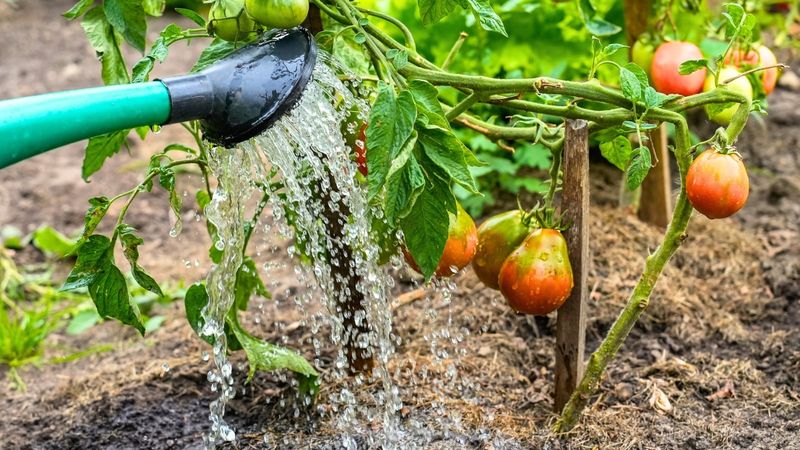
Before adjusting anything, check what the soil is actually doing. Push a trowel or your finger two to three inches below the surface near the root zone. The top inch can look and feel bone dry while the soil deeper down still holds enough moisture for the plant. Watering when the root zone is already moist adds unnecessary stress and can contribute to the very cycle you are trying to break.
If the root zone is genuinely dry or the plant is wilting, water it thoroughly right away. Oregon State University Extension heat-wave guidance advises watering stressed plants as soon as reasonably possible rather than waiting for an ideal time of day. The goal after that first thorough watering is to return to a consistent pattern, not to repeat the drought-and-flood cycle.
For an established in-ground garden, University of Minnesota Extension guidance on growing tomatoes uses roughly one inch of water per week as a starting benchmark. That figure needs real adjustment for your situation. Sandy soil dries faster and may need more frequent watering. Heavy clay holds moisture longer.
Raised beds and containers can dry out in a single hot afternoon and may need daily attention during a heat wave. Mulched beds retain moisture better than bare soil, which can stretch the interval between waterings. Rainfall counts toward the weekly total, so check before irrigating rather than watering on a fixed calendar schedule.
Deep, infrequent watering builds stronger roots than frequent shallow applications. Water at the soil surface and let it soak down to where the roots are actually growing, then let the top few inches partially dry before watering again. That pattern keeps the root zone from swinging between saturated and bone dry, which is exactly the condition that sets up the rapid expansion a cracking tomato does not need.
Use mulch and foliage to soften moisture and heat swings
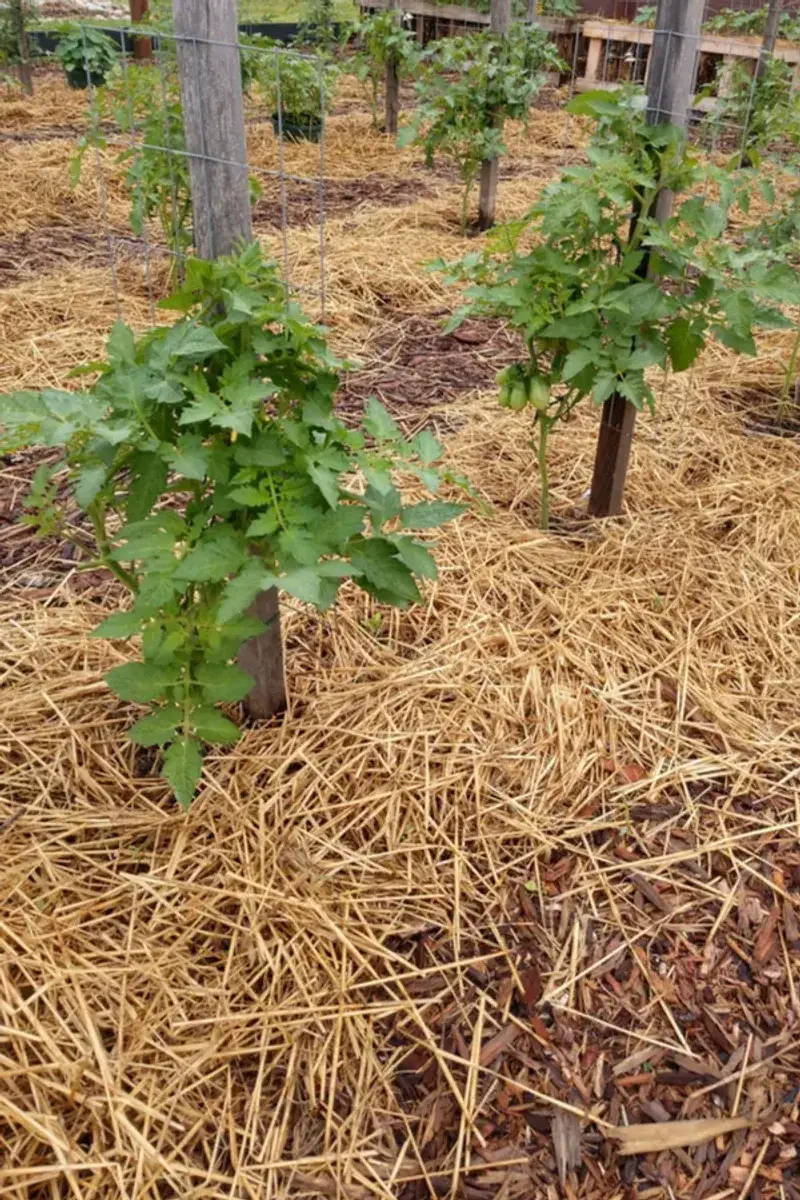
A two-to-three inch layer of organic mulch around the base of each plant does quiet but consistent work. Straw, shredded leaves, and wood chips all slow evaporation from the soil surface, which means the root zone stays moist longer between rain events or irrigation sessions. That slower dry-down reduces the size of the moisture swing the plant experiences. University of Minnesota Extension recommends mulching around but not directly against the stem, since mulch piled against the stem can trap moisture and encourage rot at the base.
Mulch also moderates soil temperature. In August, bare soil can heat up dramatically between waterings, and cooler, more stable soil helps the root zone absorb and distribute water more evenly when irrigation or rain arrives. That steadier uptake is gentler on fruit that is already under expansion pressure.
Leaf cover works alongside mulch from the top down. A full, healthy canopy shades ripening fruit and reduces the temperature swings that can make skin less elastic. Pruning is worth doing in moderation, but removing large sections of foliage during hot weather trades short-term airflow for long-term fruit exposure. Keep enough leaves in place to shade clusters of ripening tomatoes, especially those on the south or west side of the plant where afternoon sun is most intense.
Neither mulch nor foliage cover guarantees crack-free fruit, but both lower the conditions that make cracking more likely.
Water the root zone and limit direct wetting
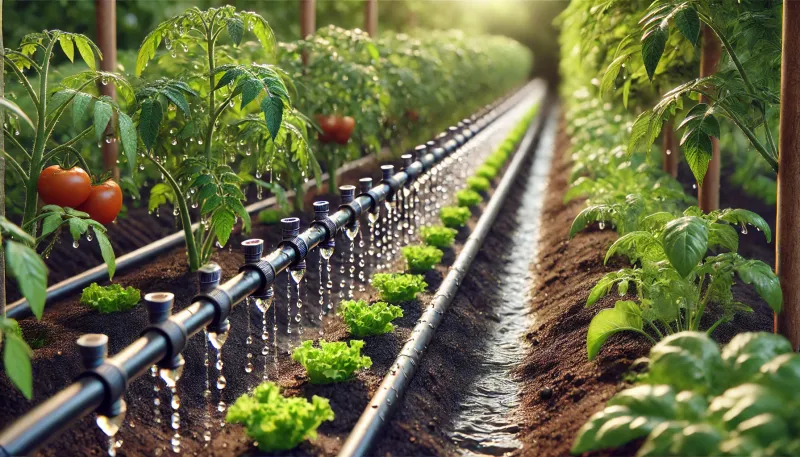
Where water lands matters almost as much as how much you apply. Overhead sprinklers wet the entire plant, and while that alone does not cause every crack, water landing directly on ripening fruit adds another source of moisture stress to skin that is already under pressure. It also keeps foliage wet longer, which creates conditions favorable for fungal diseases like early blight and septoria leaf spot. University of Minnesota Extension growing guidance recommends watering at the soil surface or root zone rather than from above when practical.
Drip irrigation or a soaker hose placed along the base of the plants delivers water where roots can use it without wetting leaves or fruit. If overhead watering is your only option, early morning is the better time because foliage has more daylight hours to dry before nightfall. Avoid watering in the evening when possible, since wet leaves overnight create a longer window for disease to establish.
Deep, thorough applications spaced to match the actual drying rate of your soil work better than brief daily sprinkles. Shallow, frequent watering encourages roots to stay near the surface, where they are more exposed to rapid drying and temperature changes. A trowel check two to three inches down before each watering session tells you whether the root zone actually needs water or whether the top inch is simply dry from surface evaporation. That small habit prevents unnecessary watering and keeps the moisture pattern from swinging wider than it needs to.
Rule out blossom-end rot, sunscald, and catfacing
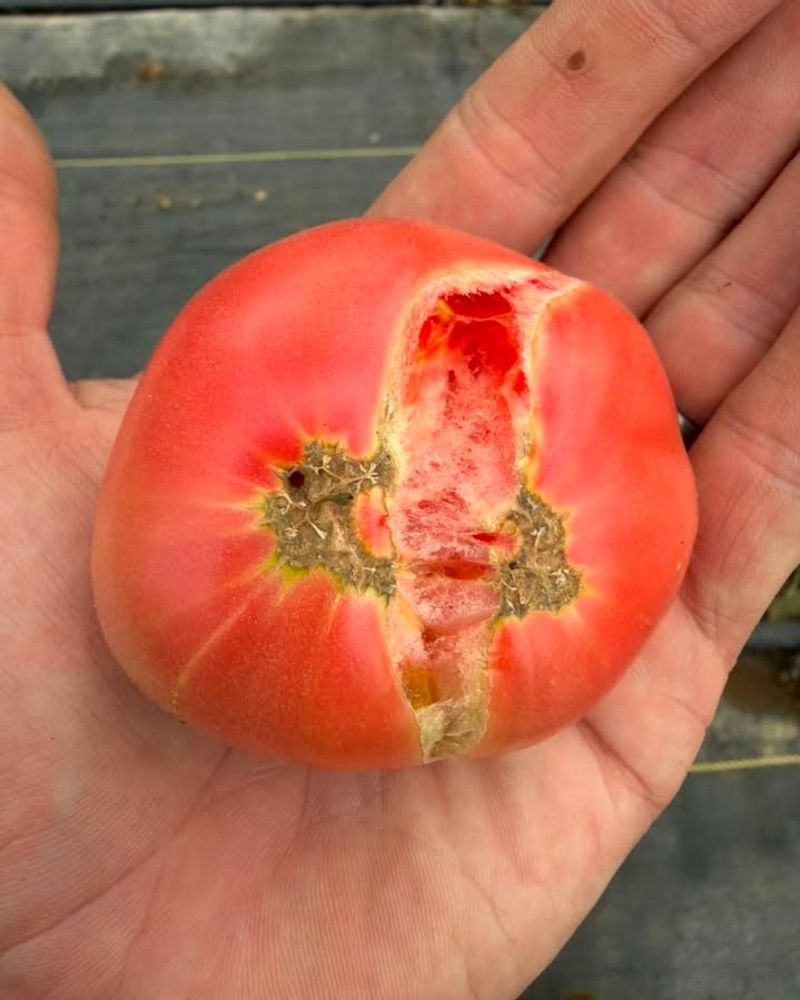
Not every tomato problem calls for the same response, and treating the wrong one can waste time and money. Growth cracks are skin splits, either radiating from the stem end or forming rings around it, and the edges are typically dry and firm. That texture and location set them apart from other common disorders.
Blossom-end rot looks completely different. It shows up as a dark, leathery, or sunken lesion at the blossom end of the fruit, the tip opposite the stem. University of Minnesota Extension’s tomato disorders overview explains that blossom-end rot is linked to disrupted calcium movement within the plant, which is often worsened by uneven moisture, but it is not a skin split. Adding calcium sprays or amendments to treat growth cracks is not supported by evidence and is more relevant to blossom-end rot, which should itself be confirmed by a soil test before amending.
Sunscald appears as a pale yellow, white, gray, or papery patch on the side of the fruit that faces intense sun, usually after leaf loss or heavy pruning. It can look alarming but does not involve a crack in the skin. Catfacing is yet another distinct problem, producing corky scars, puckered skin, and distorted fruit shapes caused by disrupted development early in the season, often during a cold spell at bloom time.
The UMN diagnostic tool for tomato fruit cracks also notes that cracking can occur even when a gardener has been watering consistently, if heavy rain, high humidity, direct water contact, or a genetically susceptible variety is involved. Identifying the disorder correctly before changing your routine prevents unnecessary adjustments.
Harvest split-prone fruit and assess it conservatively
Picking tomatoes at the breaker-to-pink stage and letting them finish ripening indoors is one practical way to reduce late-stage cracking. At that stage, the fruit has already accumulated most of its flavor compounds and will continue ripening on the counter without needing the vine. Oklahoma State University Extension’s home garden tomato guide supports early harvest as a risk-reduction step for crack-prone varieties, though it does not guarantee protection since some cracking can occur before the fruit ever reaches that stage.
For tomatoes that have already cracked on the vine, the right response depends on what the crack actually looks like. A shallow, dry, clean split that opened recently on an otherwise firm tomato is a different situation from a deep crack that has been sitting open long enough to collect soil, attract insects, or develop soft or discolored tissue around the edges.
Handle already-split fruit conservatively. USDA Food and Nutrition Service guidance on fresh produce handling emphasizes that pathogens can enter produce through cracks, cuts, and bruises, so damaged fruit carries a higher contamination risk than intact fruit. A small, clean, dry crack on a sound tomato may be fine after careful trimming of the affected area. Discard any fruit showing deep cracks, wet or mushy tissue, visible mold, a foul smell, insect damage, or contact with soil.
When in doubt, the tomato is not worth the risk.
Lower next season’s risk with steadier care and suitable varieties
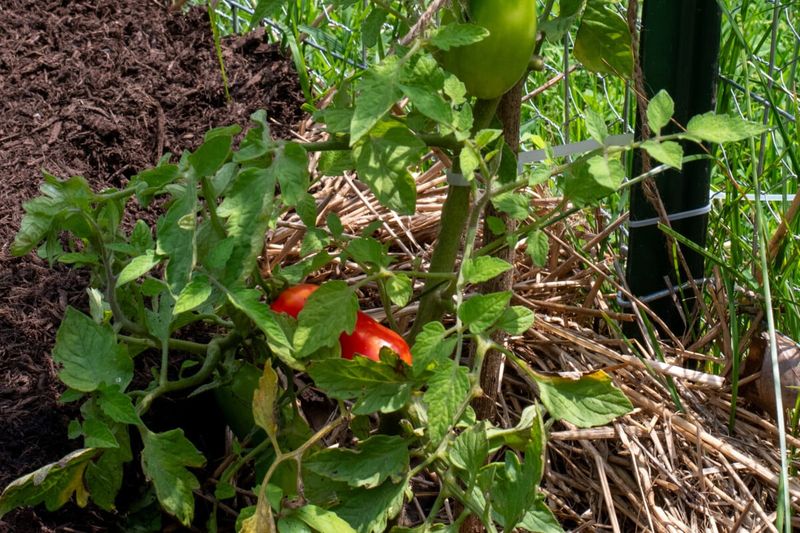
The pattern that leads to cracking, dry soil followed by a surge of water, is easier to break at the start of the season than to correct after fruit has already split. Building consistent root-zone moisture from transplant time forward gives fruit a more stable environment to develop in. Mulching early, before the soil heats up, and keeping irrigation as even as possible across the season reduces the size of the swings that trigger expansion stress.
Variety selection gives you another layer of protection for next year. The UMN tomato diagnostic guide recommends choosing varieties described as crack-resistant or less prone to cracking, while being clear that resistance lowers risk rather than eliminating it. Large-fruited and heirloom cultivars often remain susceptible regardless of how carefully they are watered, so if cracking has been a recurring problem with a specific variety, trying a different one next season is worth considering.
Healthy leaf cover, restrained pruning during heat, and root-zone irrigation all support the same goal: keeping ripening fruit in a stable environment where the skin can keep pace with growth. University of Minnesota Extension frames the whole approach around consistent moisture management rather than any single corrective action. The practical takeaway is straightforward: steady water, protective mulch, and a variety matched to your conditions will do more to prevent splitting than any intervention applied after the crack has already formed.