
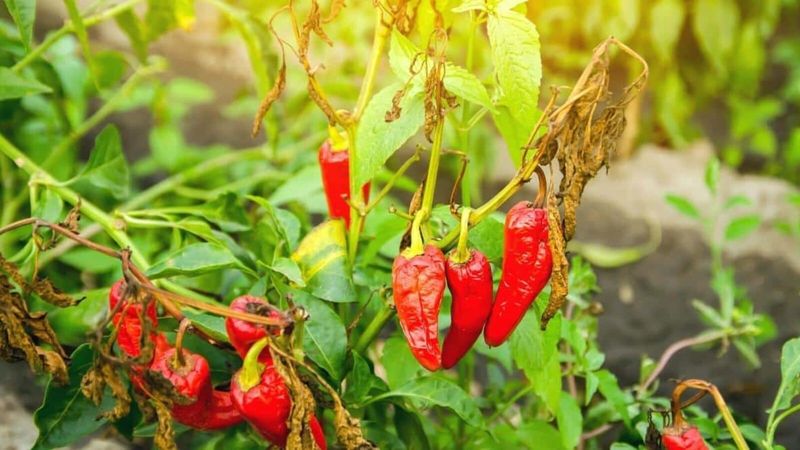
Pulling a pepper off the vine and finding it small and floppy when you expected something thick and blocky is genuinely frustrating, especially in August when the season should be hitting its stride. It’s easy to point the finger at fertilizer, and sometimes that’s the right call – but fruit size and wall thickness alone don’t tell you which problem you’re actually dealing with. Several very different situations can produce the same flimsy result, and treating the wrong one won’t help. Reading your whole plant, not just the fruit, is where a real diagnosis starts.
Small, thin-walled peppers do not identify one culprit
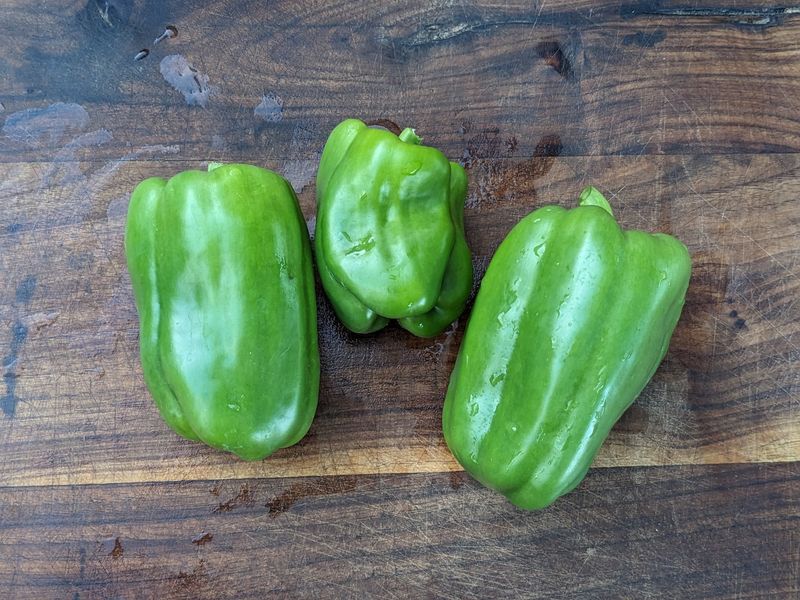
Fruit size and wall thickness are symptoms, not a diagnosis. When a pepper comes off the vine looking small and floppy, it’s tempting to blame the last bag of fertilizer you opened, but several completely different problems can produce that same result. Sorting them out requires looking at the whole plant, not just the harvest.
Excess nitrogen is one possibility, particularly when a plant is unusually leafy and producing very little fruit. However, University of Florida IFAS extension guidance on pepper disorders does not establish excess nitrogen as the usual or singular direct cause of thin pepper walls. Other explanations are just as credible, sometimes more so.
Heat-related pollination failure can cause flowers and small fruits to drop before they develop fully. Drought or fluctuating soil moisture can limit how much a fruit expands. Nitrogen deficiency – the opposite problem – can also produce small fruit on a pale, weak plant. Delaware Cooperative Extension’s crop update on pepper fruit size and shape identifies high or low nighttime temperatures as contributors to small or misshapen fruit, independent of fertility.
Cultivar genetics add another layer. USDA research on pepper fruit traits found very high heritability for pericarp thickness, meaning some varieties are simply bred to produce thinner walls. Assess your plant’s color, growth habit, fruiting pattern, feeding history, and recent weather before settling on any single explanation.
Look for the leafy, fruit-poor pattern before blaming nitrogen
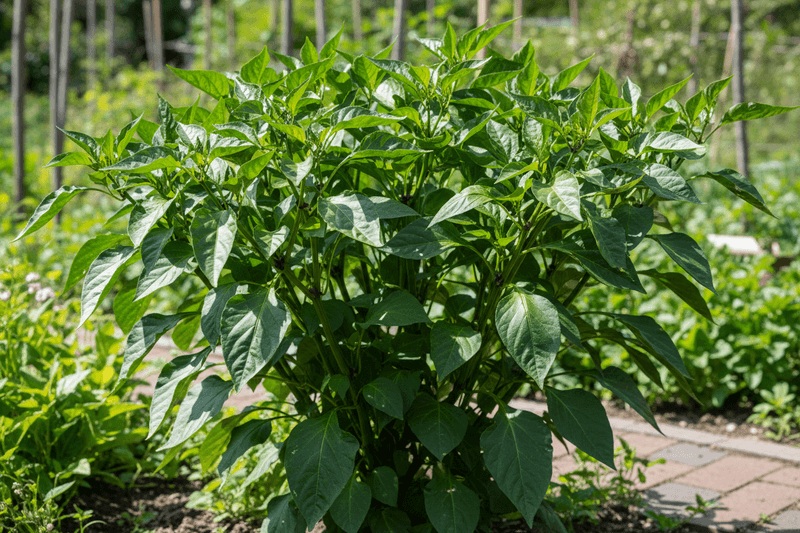
Excess nitrogen earns its reputation as a troublemaker in the pepper patch, but only under a specific set of conditions. When it does cause problems, the plant usually gives clear signals beyond just small fruit.
A pepper plant that has received repeated high-nitrogen fertilizer applications may put most of its energy into leaves and shoots rather than flowers and fruit. University of Minnesota Extension’s pepper-growing guide notes that excess nitrogen commonly drives bushy vegetative growth and can slow or reduce fruit production. The visual clue is a plant that looks unusually lush or dark green, with abundant foliage and noticeably few blooms or set fruit for the time of season.
That pattern is meaningfully different from a plant that is pale, stunted, and uniformly weak across all its growth. A pale, small plant with thin-walled fruit may actually be nitrogen-deficient, and cutting off nitrogen in that situation would make things worse, not better. Published guidance on pepper nutrient disorders confirms that deficiency can also produce small fruit.
Field research from California complicates any simple story. One report found lower nitrogen rates associated with smaller fruit and thinner pericarp, while another found no consistent wall-thickness trend across nitrogen treatments. Illinois Extension specifically cautions that overfertilization is often blamed for poor pepper performance, yet peppers can still fruit well under higher-fertility programs. The leafy, fruit-poor pattern is a reasonable clue pointing toward excess nitrogen – not proof, and not the only explanation.
August heat and uneven moisture can create the same symptom
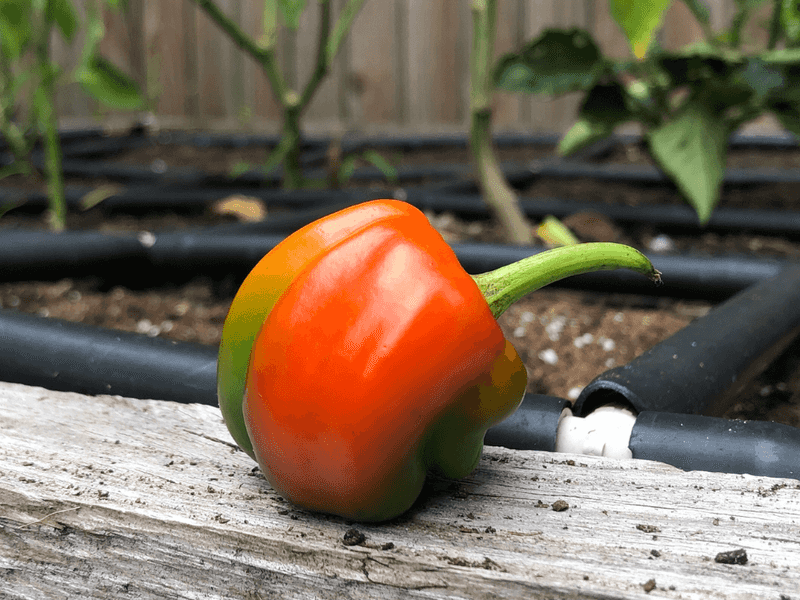
August in most of the US temperate zone is not kind to pepper flowers. High heat can disrupt pollination directly, causing blooms to drop before a fruit ever begins to set, and that means fewer peppers, smaller peppers, or misshapen ones – regardless of what’s in the soil.
University of Maryland Extension’s guidance on poor blossom and fruit set reports that pepper flowers and small fruits may drop when daytime temperatures exceed 95 degrees Fahrenheit or when nighttime temperatures fall below 60 degrees or rise above 75 degrees. These are useful reference points, not hard cutoffs that apply equally to every cultivar or every region, but they explain why a well-fed plant can still produce disappointing fruit during a heat wave.
Soil moisture tells a parallel story. Research published in Scientia Horticulturae on bell pepper water stress found that deficit irrigation reduced plant water status and growth, and more severe water stress reduced fruit yield and marketability. Fruit that sets during a dry spell or experiences boom-and-bust watering simply cannot expand as fully as fruit that develops under steady moisture.
UC IPM cultural tips for peppers highlight that root damage, flooding, and poorly functioning irrigation can also reduce fruit size and calcium delivery to developing fruit. If your August has been hot and dry, or if watering has been irregular, those conditions deserve at least as much attention as your fertilizer routine before you reach for another product.
Pause unnecessary high-nitrogen feeding and test the soil
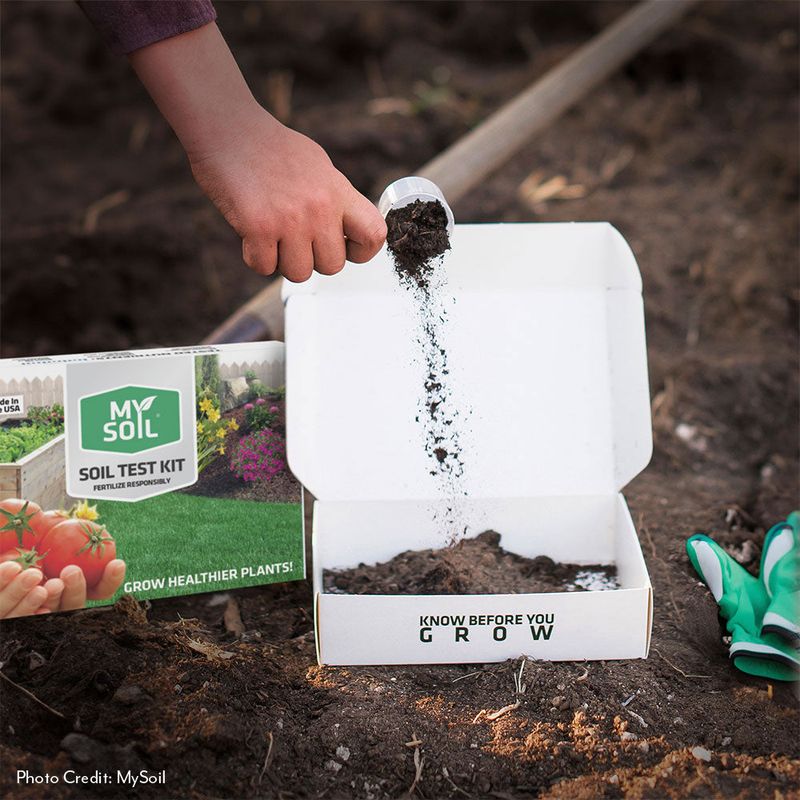
When a pepper plant is dark green, unusually leafy, and setting very little fruit despite adequate growing conditions, stopping routine high-nitrogen applications is a reasonable and low-risk step to take this week. The key word is unnecessary: the goal is not to strip the plant of all nutrition, but to stop adding nitrogen it clearly does not need right now.
Resist the impulse to counterbalance perceived excess nitrogen with a heavy dose of phosphorus, potassium, or calcium. Iowa State University Extension’s guidance on home garden fertilizer rates recommends obtaining a soil test and applying nutrients according to test results and product label directions rather than adding nutrients by instinct. Piling on a different nutrient without knowing what the soil actually contains can create new imbalances rather than fixing the original problem.
Oklahoma State University Extension’s pepper production fact sheet reinforces that fertilizer decisions should follow soil test recommendations. Most cooperative extension offices and many garden centers offer affordable soil testing, and the results give you a factual starting point instead of guesswork.
Some gardeners reach for eggshells, Epsom salts, or other home remedies when peppers underperform. University of Minnesota Extension’s review of common soil amendments cautions that these additions should address a diagnosed need – excess magnesium from Epsom salts, for example, can interfere with calcium uptake. Pause the unnecessary inputs, get the soil tested, and let the results guide what comes next.
Keep moisture steady and recognize blossom-end rot
Any feeding adjustment you make this week will work better if soil moisture is also stable. Peppers that experience cycles of drought and flooding during fruit expansion cannot take up water and nutrients at a consistent rate, and that inconsistency shows up in fruit quality and size.
Mulching around the base of your plants is one of the most practical steps available right now. UC IPM’s cultural tips for peppers point to mulch as a reliable tool for conserving soil moisture between waterings, which helps keep root-zone conditions more even through the hot weeks of August.
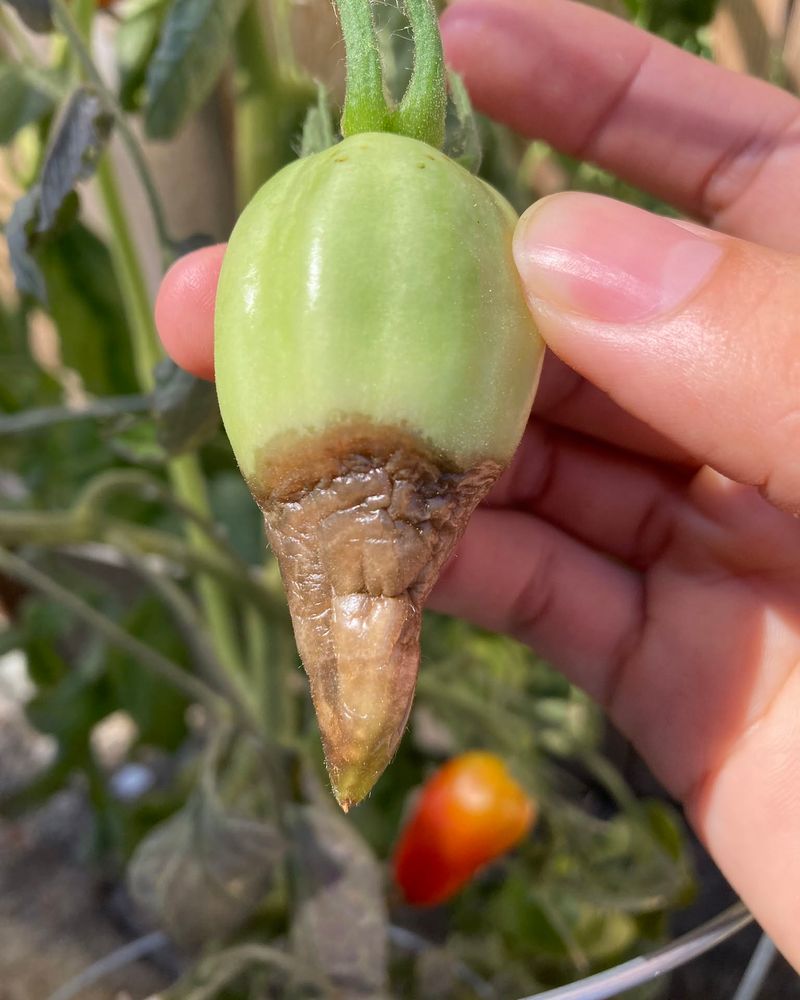
Before you decide your problem is thin walls, take a close look at the blossom end of each affected pepper. Thin walls and blossom-end rot are not the same condition. University of Minnesota Extension’s pepper fruit problem guide describes blossom-end rot as a localized tan, sunken, leathery, or blackened lesion at the blossom end of the fruit – a distinct pattern, not just a generally flimsy pepper.
If you do see that lesion, calcium transport is involved, but spraying calcium on the leaves or adding a Cal-Mag product is unlikely to solve it. University of Florida IFAS guidance on calcium in vegetable production explains that calcium moves primarily with water through the plant, and foliar calcium does not reliably travel from leaves into developing fruit. Steady irrigation is the more effective intervention, and UF IFAS blossom-end rot guidance confirms that consistent soil moisture is central to managing this disorder rather than supplemental calcium sprays.
Check the variety before trying to feed thicker walls
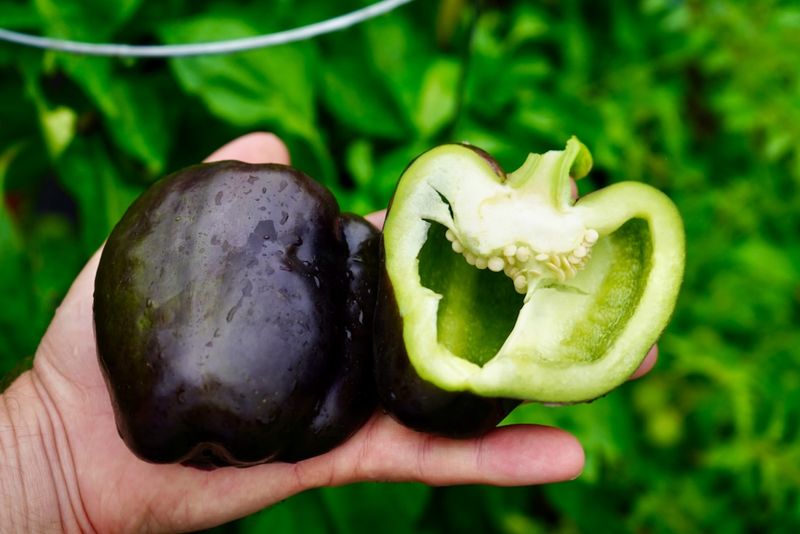
Fertilizer gets blamed for a lot of problems that actually start with seed selection. Pericarp thickness – the scientific term for how thick or thin a pepper’s wall is – is a strongly inherited trait, and no amount of feeding can reliably transform a naturally thin-walled variety into the blocky, thick-walled bell pepper you see on grocery store shelves.
USDA research on genetic differences in pepper fruit traits documented very high heritability for pericarp thickness across pepper varieties. If the seed packet or plant tag did not describe the fruit as thick-walled, blocky, or suitable for stuffing, the variety may simply not have that characteristic built in.
Timing matters too. Recent research on pepper fruit development supports the understanding that wall thickness is shaped by conditions during active fruit development. A pepper that has already formed and is approaching maturity in August is unlikely to gain significant wall mass from a corrective feeding made this week.
A feeding or moisture correction made now is more likely to benefit the flowers and small fruits that are still forming than to reshape what is already nearly done. If thin walls appear consistently on otherwise healthy plants year after year, the most effective fix for next season may be choosing a variety specifically bred for thick walls rather than adjusting the fertilizer program.
Match the plant’s clues to the next step
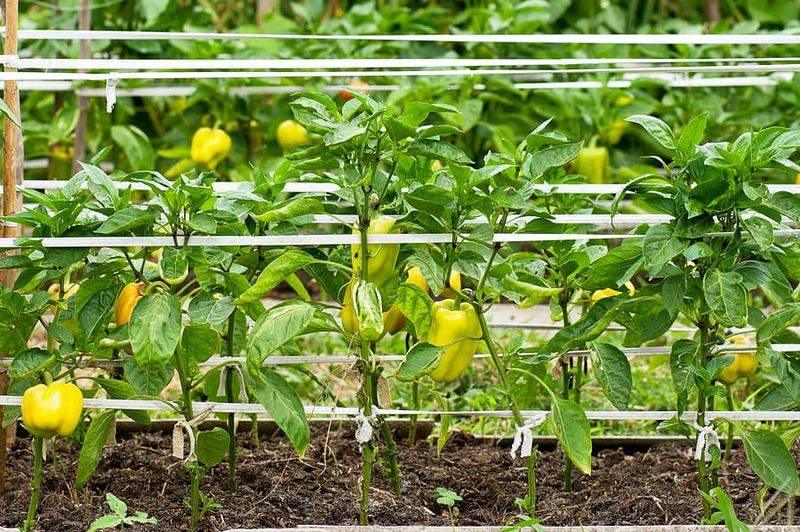
Rather than applying a single fix to every underperforming pepper plant, match what you observe to the action that actually fits. Each pattern points in a different direction, and treating the wrong one wastes time and can make things worse.
A plant that is dark green, excessively leafy, and producing few flowers or fruits despite a history of regular high-nitrogen feeding is the one situation where pausing unnecessary nitrogen applications makes sense. Follow that pause with a soil test, and apply any additional nutrients according to the results and the product label, as Iowa State University Extension recommends for home garden fertility decisions.
A pale, stunted, uniformly weak plant should not be treated as overfertilized. That pattern may indicate nitrogen deficiency, and cutting off fertilizer entirely could deepen the problem. Heat or moisture stress – especially after a stretch of temperatures above 95 degrees or irregular watering – calls for improved growing conditions rather than a nutrient correction. University of Minnesota Extension’s pepper guide emphasizes that consistent moisture and appropriate temperatures are foundational to fruit set.
A localized tan, sunken, or blackened lesion at the blossom end is blossom-end rot and requires its own management approach, not a thin-wall diagnosis. And if fruit on an otherwise healthy plant is consistently thin year after year, the answer may be a variety change for next season rather than any feeding adjustment this one. The peppers already on the vine will be what they are; measured corrections now are most likely to show up in the fruit that comes after them.