
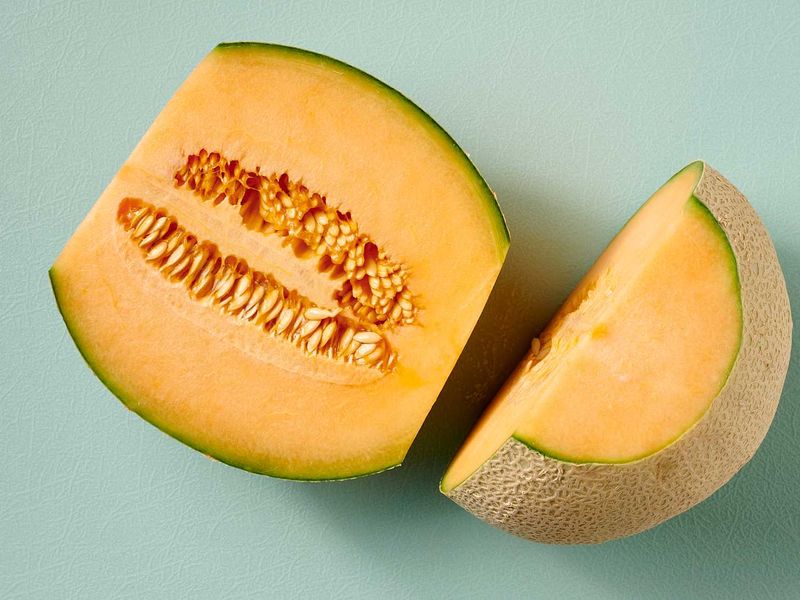
Cutting into a homegrown cantaloupe and finding tasteless, watery flesh is genuinely frustrating, especially after a whole summer of careful tending. Many gardeners suspect their watering is to blame, and in some cases they may be right, but the real picture is more complicated than that. Late-season irrigation or heavy rainfall can sometimes affect fruit quality, yet early harvest, cultivar choice, heat levels, and plant health all play a role too. Understanding what is actually happening inside that melon can help you make smarter adjustments before next year’s crop.
Late moisture may contribute to bland fruit—but it does not prove the cause
Bland, watery cantaloupe flesh in August can feel like a mystery, but pointing the finger at one watering event too quickly can send you chasing the wrong fix. Substantial late-season irrigation or a heavy rain shortly before harvest can, under certain conditions, increase fruit moisture and lower the concentration of soluble solids, the compounds most closely tied to sweetness. UC Davis postharvest research notes that soluble solids, often measured in degrees Brix, serve as an important indicator of cantaloupe quality, with U.S. No. 1 grade fruit starting at 9% and Fancy grade at 11%.
That connection between late water and lower quality is real in some trials, but it is not the usual or proven universal cause of disappointing flavor. Utah State University Extension identifies premature harvest, excessive nitrogen, early disease infection, and poor plant health as separate contributors to bland or misshapen fruit, and any of these can produce the same watery result even when irrigation was perfectly timed.
Early harvest alone is one of the most common explanations for tasteless cantaloupes. Cultivar genetics, inadequate summer heat, reduced sunlight, and declining foliage late in the season can all limit the soluble solids a melon manages to accumulate before you cut it open. Before adjusting your hose schedule, it pays to rule out these competing causes, because the fix for each one is different.
What irrigation can change inside a ripening melon
Soluble solids, commonly expressed as degrees Brix, capture the concentration of dissolved sugars and other compounds in melon flesh. A higher Brix reading generally means a sweeter, more flavorful fruit, and it is the primary measure researchers use when comparing irrigation treatments. A two-year muskmelon study by Lester, Oebker, and Coons found that applying furrow irrigation four days before harvest dropped soluble solids from 12.2% down to 10.8% and produced lower sweetness ratings compared with fruit from vines that received no water after an earlier irrigation event.
That study is the strongest direct evidence linking late irrigation to reduced quality, but it does not represent every situation. Separate muskmelon irrigation research found that water-stressed fruit measured only 8.8% soluble solids compared with 11.2% in adequately watered fruit, showing that going too dry can also hurt quality. Meanwhile, a California drip-irrigation trial comparing several late-season schedules found no measurable soluble-solids difference among the treatments at all.
These contrasting results reflect the reality that cultivar, soil type, irrigation method, climate, and the timing and severity of water changes all affect the outcome. A simpler explanation, that water just dilutes the sugar, misses the fuller picture: excess late moisture can increase fruit size and water content while reducing soluble-solids concentration in some conditions, but insufficient water can impair photosynthesis and limit sugar accumulation too. The practical takeaway from the combined evidence is moderation, not a rigid cutoff date.
Reduce irrigation gradually as maturity approaches
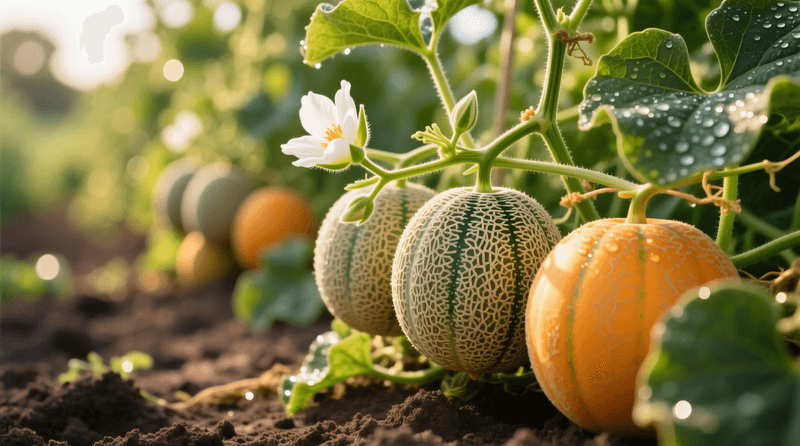
Cantaloupes need steady, consistent moisture during the active stages of growth, especially when vines are spreading, flowers are opening, and young fruit is swelling. Utah State University Extension recommends deep, infrequent irrigation totaling roughly 1 to 2 inches per week during those stages, with the actual amount shifting based on air temperature, soil texture, plant size, and recent rainfall. That range is a working reference for active growth, not a prescription to continue unchanged all the way to harvest.
Pennsylvania State University Extension advises reducing watering as cantaloupes near maturity to support better flavor and help prevent fruit splitting, which can happen when a sudden large water uptake stretches the rind faster than the flesh can expand. The key word is reduce, not stop abruptly. Cutting off all water at once can stress the vines and, as the research above shows, water stress has its own negative effects on quality and fruit weight.
A gradual taper works better than any fixed calendar rule. There is no defensible universal instruction to stop watering exactly seven days or two weeks before harvest because the right timing depends on your soil’s water-holding capacity, your local rainfall, your irrigation method, and the heat your plants are dealing with. Watch the plant and the fruit together rather than counting backward from an assumed harvest date. As the melon develops its netting and the vine slows visible growth, that is the window to begin easing back on supplemental water.
Use rainfall and root-zone moisture to guide each watering
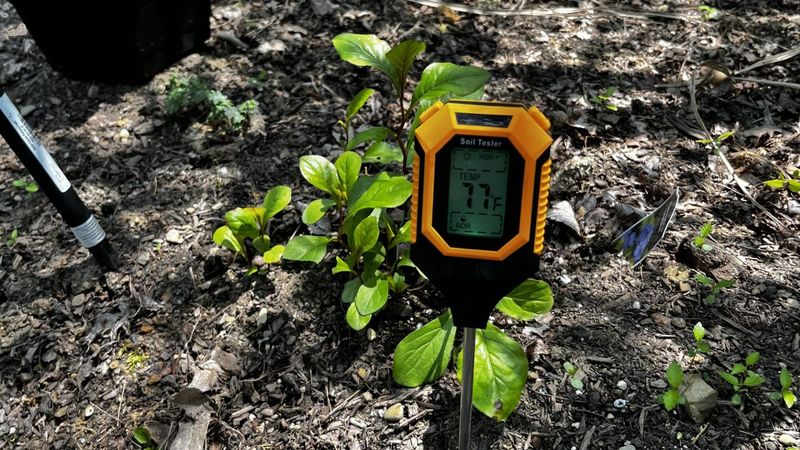
Every watering decision near harvest should start with two questions: how much rain fell recently, and what does the soil feel like a few inches down? Utah State University Extension notes that over-irrigation can delay harvest, reduce fruit quality, and shorten postharvest life, which means adding water on top of a recent rainstorm is exactly the kind of late-season moisture surplus that can push a ripening melon in the wrong direction. A simple finger check or a moisture meter at root depth gives you more useful information than a watering schedule alone.
Cycles of heavy soaking followed by bone-dry soil are particularly harmful. Large moisture swings stress the plant, can crack the fruit, and make it harder for the vine to manage the steady physiological work of concentrating sugars in the flesh. Letting vines wilt repeatedly is not a shortcut to sweeter melons; it is a path to smaller fruit, delayed maturity, and potentially lower soluble solids, as the stress research confirms.
Penn State Extension also recommends watering at the plant base or using drip irrigation rather than overhead watering. Keeping the foliage drier reduces the risk of fungal disease, and keeping the soil surface under the developing fruit less saturated can lower the chance of ground spot and fruit rot. During a heat wave, maintaining adequate root-zone moisture still matters even as you reduce overall irrigation volume, because heat stress on a water-deficient plant can cut photosynthesis and limit the sugars available to the fruit.
Check harvest maturity before changing the watering plan
Premature harvest is one of the most overlooked reasons for bland, watery cantaloupe, and it can produce disappointing flavor even when every irrigation decision was sound. UC Davis postharvest specialists state clearly that sugar content does not increase after cantaloupes are picked. A melon pulled from the vine before it has finished accumulating soluble solids will never taste the way it should, no matter how long it sits on the counter. It may soften and develop more aroma after harvest, but that is not the same as getting sweeter.
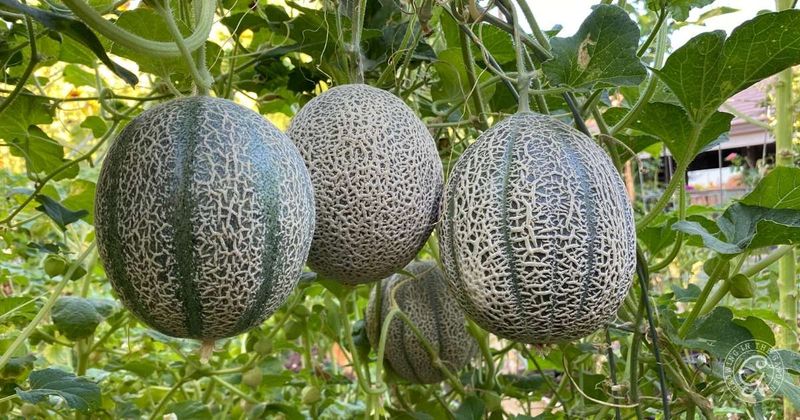
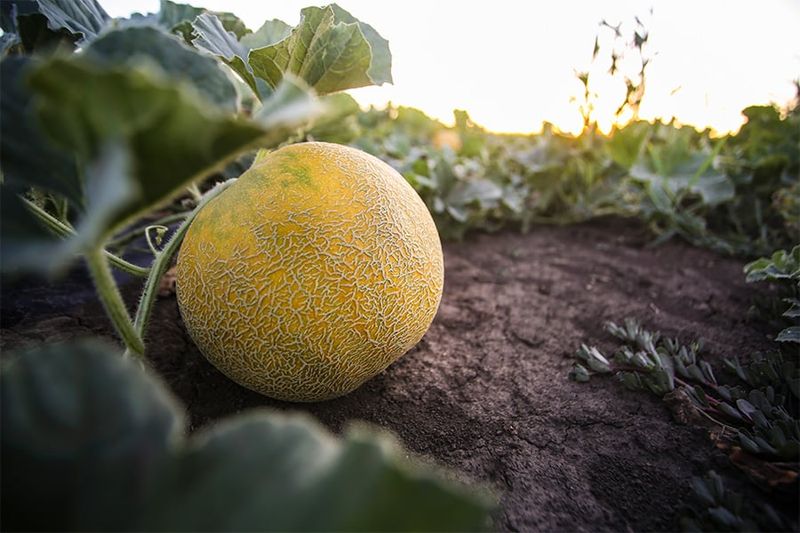
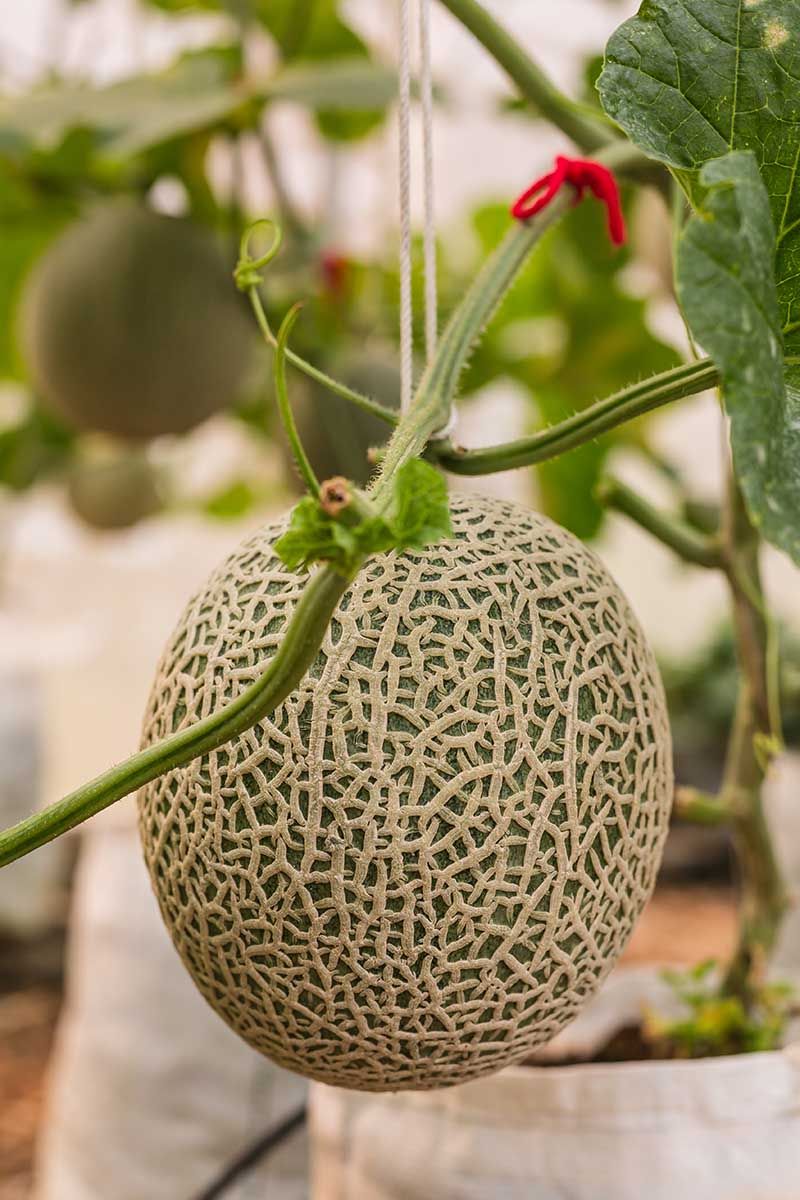
For common netted muskmelons, look for several signs together before deciding to harvest. The netting should be well developed and raised. The background skin color beneath the netting shifts from green toward a lighter tan or yellowish tone. A mature fragrance, detectable at the stem end, often appears as the fruit approaches peak ripeness.
Full slip, the point at which the stem separates cleanly from the fruit with gentle pressure, is a strong maturity indicator for many eastern-type cantaloupes, though not all cultivars use it equally.
Cultivar differences matter here. Some varieties slip cleanly at peak ripeness, while others hold their stems more firmly even when fully mature. Checking your seed packet or variety description for harvest cues specific to what you planted will give you a more reliable target than relying on size or days-from-planting alone. If you are consistently harvesting before these signs appear, adjusting your irrigation schedule will not solve the flavor problem.
Investigate plant health and growing conditions before blaming water
A watery, flavorless melon at the end of August can feel like an obvious sign of overwatering, but several other factors can produce the same result. Utah State University Extension identifies excessive nitrogen fertilization as a factor that delays maturity and can reduce fruit quality, and early disease infection as something that affects both fruit shape and flavor. If you applied a high-nitrogen fertilizer late in the season, or if your vines showed signs of powdery mildew, cucumber beetles, or other disease pressure earlier in summer, those stresses may have limited the plant’s ability to load sugars into the fruit regardless of how you watered.
Cultivar genetics set a ceiling on flavor potential that no irrigation adjustment can raise. A variety bred for shipping durability or uniform appearance rather than sweetness will taste milder than a flavor-focused heirloom, even under ideal conditions. Inadequate summer heat and limited direct sunlight, common in northern gardens or during cloudy August stretches, can also slow sugar accumulation because the plant simply has less energy to work with.
Penn State Extension notes that declining foliage late in the season reduces the photosynthetic capacity the plant needs to finish ripening its fruit. Before making a more aggressive irrigation change, compare the plant’s overall condition, the timing of your harvest, your fertilizer history, and the amount of heat and sun your garden received this summer. A checklist approach helps you identify whether water was actually the weak link or whether something else was limiting flavor all along.
Manage moisture to reduce quality risks, not to guarantee sweetness
A practical late-season moisture plan comes down to a few consistent habits: taper irrigation gradually as fruit matures, account for rainfall before adding supplemental water, keep the root zone adequately moist without saturating it, and avoid large swings between soaking and drought. Penn State Extension’s guidance to reduce watering near maturity reflects the best-supported general approach, while the irrigation research reminds us that severe late drought carries its own quality penalty.
Harvest by maturity signs rather than fruit size, and remember that sugar content is fixed at the moment of harvest, so picking too early cannot be corrected on the counter. For food safety, USDA FSIS recommends washing the whole intact melon under cool running water and scrubbing the rind with a clean produce brush before cutting; do not use soap or detergent. Refrigerate cut pieces promptly.
Managing water carefully through the final weeks of ripening can reduce the risk of watery or lower-quality fruit in some conditions, but it is not a formula that guarantees peak sweetness every season. The gardeners who tend to get the best flavor are the ones who treat moisture as one variable among several, not the only lever worth pulling.