
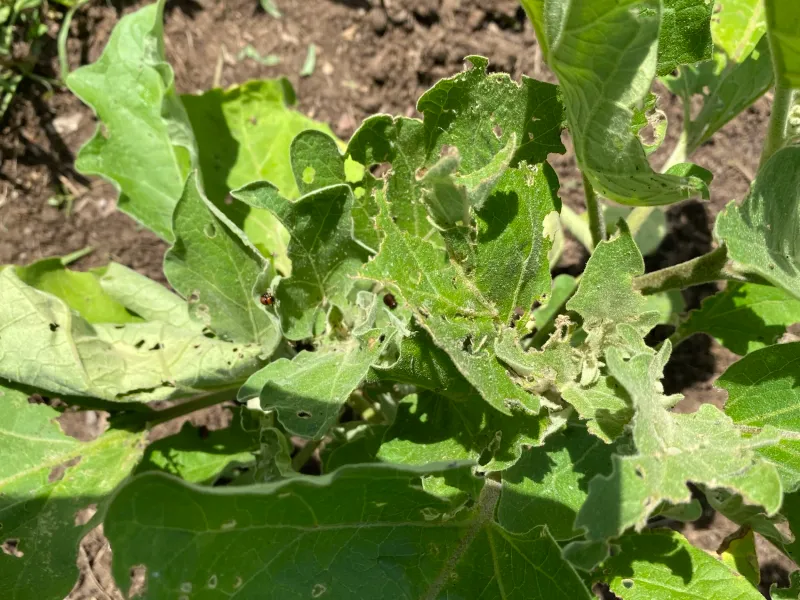
Stepping into the garden and finding your eggplant leaves riddled with tiny holes can feel alarming, like something invisible is quietly destroying your plants. Those peppery, shotgun-like holes are a familiar sight for many home gardeners, and flea beetles are often the first suspect worth investigating. But holes alone do not tell the whole story, and the month on the calendar does not automatically name the culprit. Knowing how to look carefully, identify the actual insect, and judge how much your plant can handle will put you back in control.
Tiny holes point toward flea beetles—but do not prove them
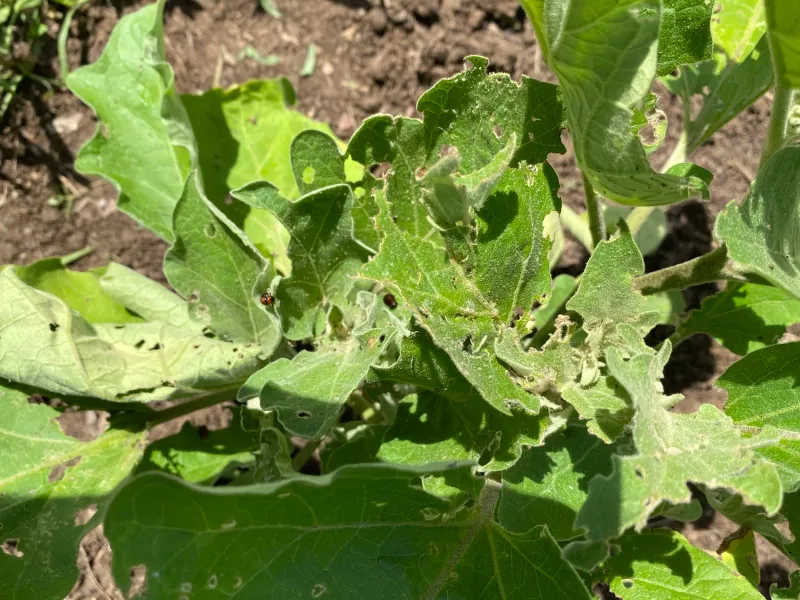
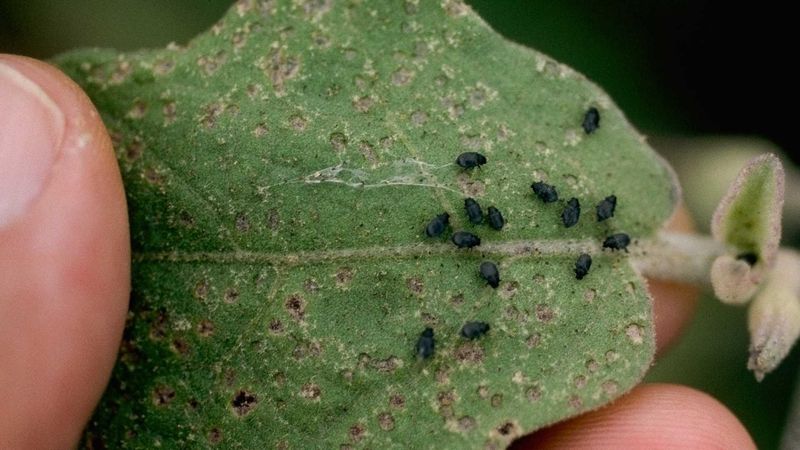
Scattered, shallow pits and small rounded holes covering eggplant foliage have a distinctive look that experienced gardeners recognize almost immediately. The pattern resembles a piece of paper that has been hit with fine buckshot, with dozens of tiny perforations spread unevenly across the leaf surface. That appearance is a strong clue pointing toward flea beetles, but it is a starting point for diagnosis, not a confirmed verdict.
According to University of Minnesota Extension’s eggplant leaf-hole diagnostic tool, flea beetles are among the primary causes of this type of damage on eggplant. The adults are very small, typically dark-colored, and their feeding produces the characteristic shallow pits and holes that rarely exceed one-eighth of an inch across. What makes them distinctive beyond the holes is their behavior: disturb the foliage and they vanish in an instant, springing away with powerful hind legs.
University of Minnesota Extension’s flea beetle guide notes that adults feed on leaf tissue, leaving behind those telltale pits. The UC IPM program similarly describes this injury pattern on eggplant as a flea-beetle signature. Even so, other insects can produce similar-looking holes, so the diagnosis stays provisional until you actually spot the insect responsible.
August changes the scouting question, not the diagnosis
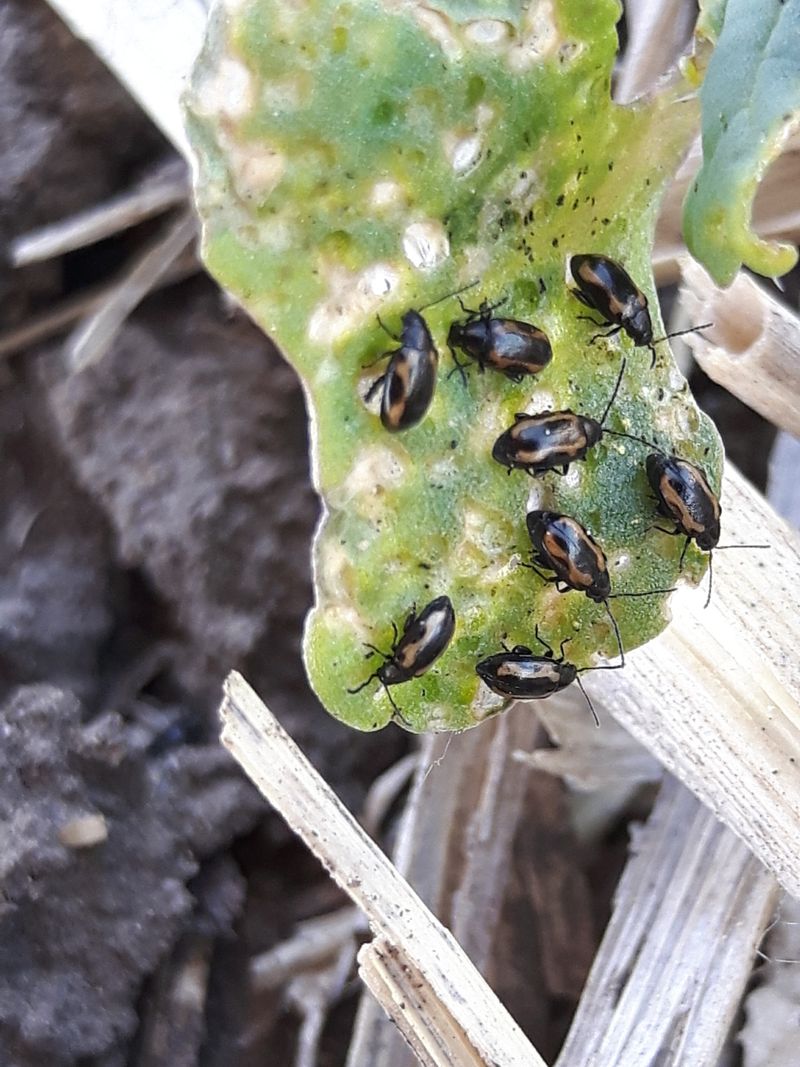
Flea beetles do not wait until August to show up. They can be active throughout the entire growing season, and UC IPM’s eggplant flea beetle guidance identifies the period shortly after transplanting, especially the first month in the ground, as the window of greatest risk. Young plants with limited foliage are most vulnerable then, regardless of the calendar month. August is not a reliable starting point for flea-beetle injury on eggplant as a general rule.
What August does change is the range of beetles worth looking for. By midsummer, Colorado potato beetles are well established and actively feeding on solanaceous crops including eggplant. Three-lined potato beetles, which University of Minnesota Extension describes as active from May through August, add another possibility to the list. Both species can cause leaf damage that might initially be mistaken for flea-beetle feeding.
Treating August as a reason to broaden your scouting rather than narrow it is the more useful approach. The month tells you that multiple species may be present at once, which means the holes on your leaves deserve a careful look rather than an automatic assumption. Identify the insect before deciding how to respond.
Find the insect before choosing a treatment
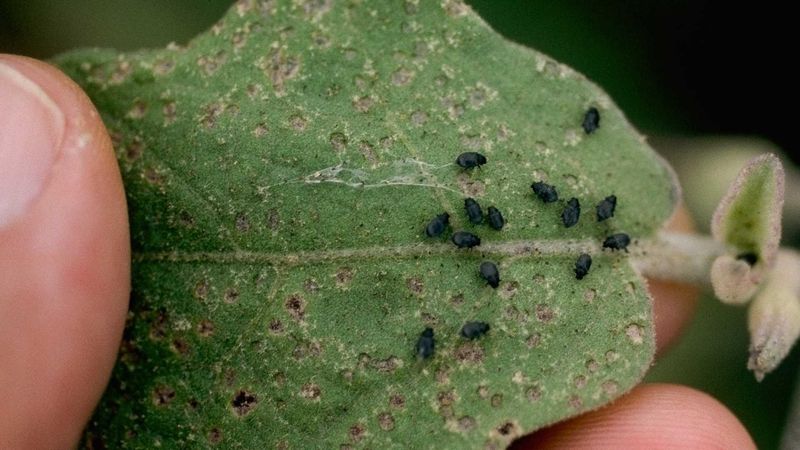
Confirmation comes from finding the insect, not from counting the holes. The most reliable time to check is around dusk, when flea beetles tend to be more active and slightly easier to observe. You can also gently shake or brush the foliage and watch for small insects that jump immediately on contact. That rapid jumping is the clearest behavioral sign that you are dealing with flea beetles rather than another species.
Adult flea beetles are approximately one-sixteenth to one-eighth of an inch long, often dark brown or black, and sometimes with lighter markings depending on the species. University of Minnesota Extension’s flea beetle resource confirms this size range and the jumping behavior as key identifiers. Check both the upper and lower surfaces of leaves, and look at the foliage immediately surrounding the damaged plant as well.
Colorado potato beetles look entirely different and leave a different kind of damage. Their adults are larger, yellow with black stripes, and their larvae are pink or red with rows of black spots. They chew larger, irregular sections from leaves rather than leaving tiny pits, and their yellow-orange egg clusters are usually visible on leaf undersides. Minnesota Extension’s Colorado potato beetle page describes all of these features clearly.
Three-lined potato beetles are a third option worth checking during summer months. Their presence in the garden is another reason to look carefully before reaching for any product. The UMN eggplant leaf-hole diagnostic can help you work through these possibilities step by step.
Plant age and canopy health determine the urgency
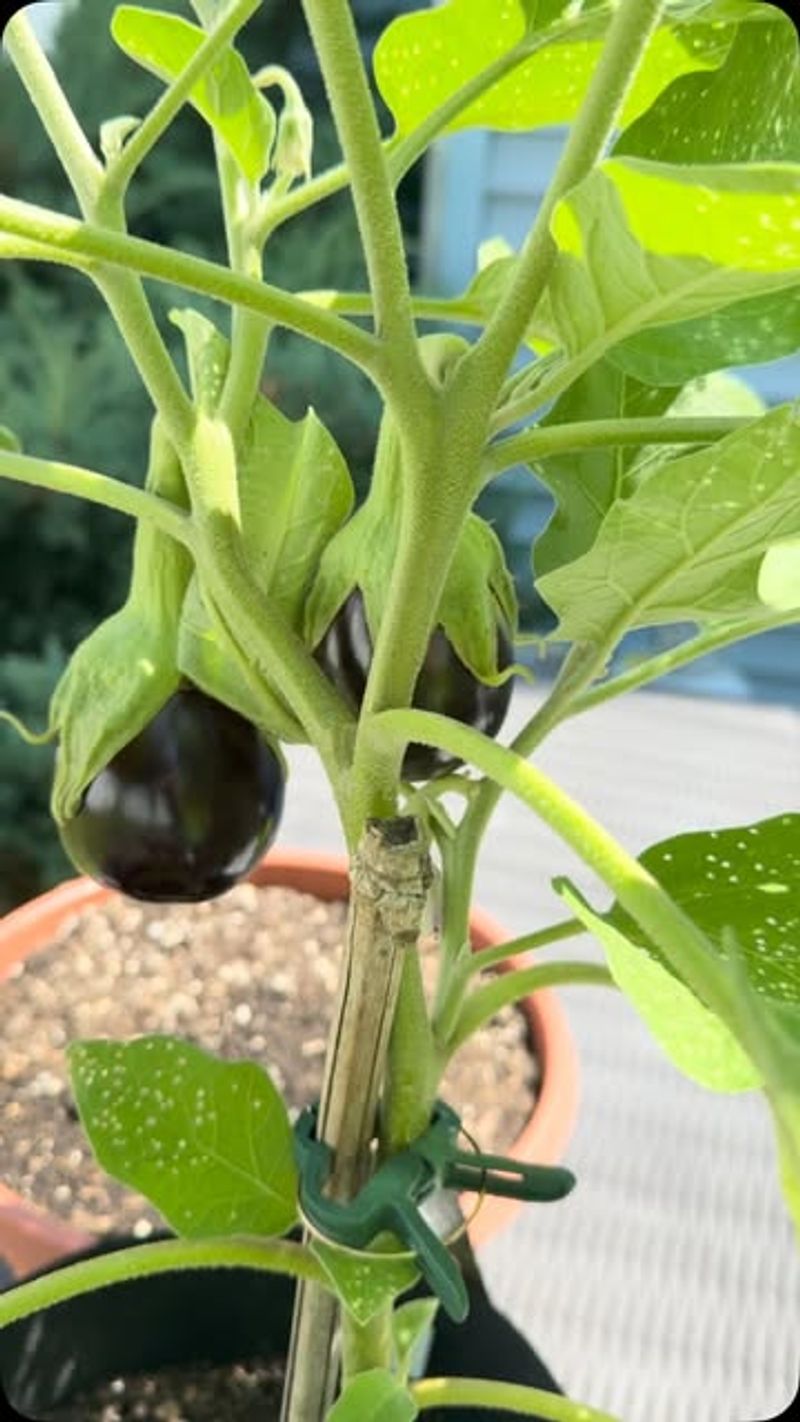
Once you have a reasonable identification, the next question is how much the damage actually matters to this particular plant right now. A seedling or small transplant that has been in the ground for only a few weeks is in a fundamentally different position than a knee-high eggplant already loaded with fruit. The younger plant has fewer leaves to lose and less stored energy to draw on, so injury that would barely register on a mature plant can genuinely set back a young one.
UC IPM’s eggplant flea beetle guidance notes that heavy flea-beetle feeding can weaken plants and reduce growth, with young plants at greatest risk. Utah State University Extension similarly explains that severe feeding can cause wilting and stunting in vulnerable plants. Watch whether the number of holes is staying roughly stable or increasing noticeably over a few days, because escalating injury on a small plant calls for faster action than a static picture does.
Established eggplants with plenty of healthy foliage intact are generally more tolerant, a point supported by both Penn State Extension and Oregon State University Extension growing guidance. One more thing worth keeping in mind: existing holes will not fill back in. The goal from this point forward is protecting new leaf growth and preserving enough canopy for the plant to keep producing, not restoring what is already lost.
Protect new plantings before beetles arrive
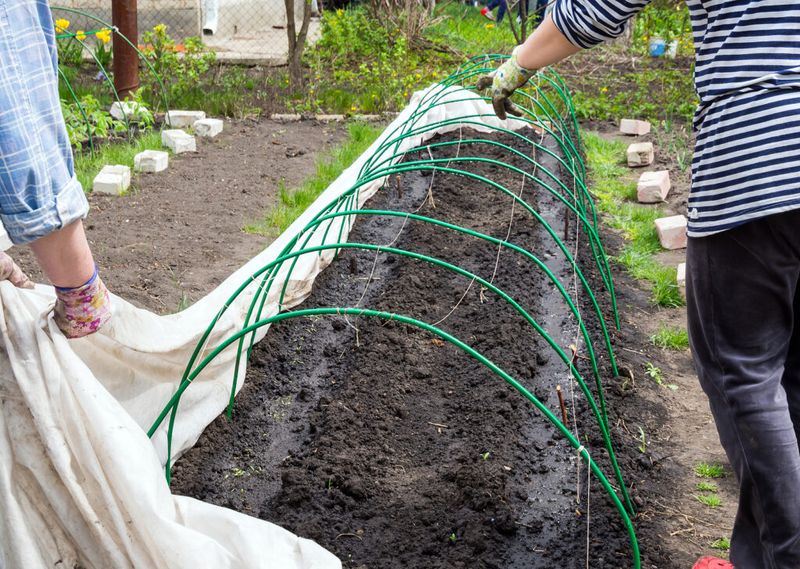
For gardeners starting a new eggplant bed or setting out late-season transplants, floating row cover offers the strongest physical protection available before beetles find the plants. The key word is before. Row cover works by keeping adults from landing on and feeding on your eggplant in the first place, and it cannot reliably eliminate beetles that are already present and feeding beneath it when it goes down.
Colorado State University Extension’s flea beetle resource recommends row cover as a preventive physical control for vulnerable plants. Installation details matter as much as the material itself. The cover needs to be secured tightly at the edges so beetles cannot crawl underneath, and it must be supported by hoops or wire frames so the fabric does not rest directly on the foliage. Flea beetles are small enough to exploit even modest gaps, so loose edges or fabric pooling on the leaves undercut the protection significantly.
Pollination is the other practical consideration. Eggplant flowers need access to pollinators or hand-pollination to set fruit, which means the cover has to come off once plants begin to flower, or you will need to hand-pollinate while it remains in place. University of Minnesota Extension’s guide to common vegetable crop insects acknowledges this trade-off. Plan the timing of removal carefully, and check for beetles when you pull the cover back so you can respond quickly if populations have built up nearby.
Manage established plants without blanket spraying
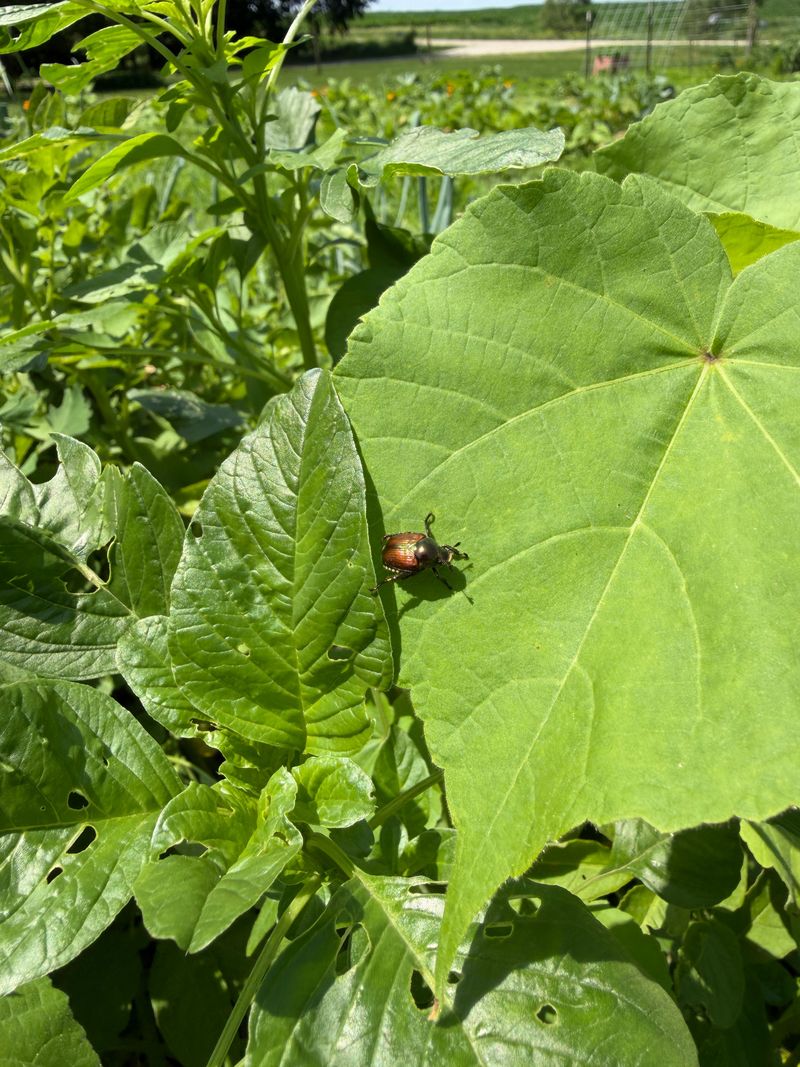
A large eggplant that is already flowering and setting fruit presents a different management picture than a small transplant. Installing row cover at this stage is often impractical because the plant is too big for the fabric to fit easily, and removing it for pollination becomes a recurring chore. The more realistic approach focuses on regular scouting, maintaining plant vigor, and reserving any treatment for situations where injury is genuinely serious or getting worse.
Good cultural practices support the plant’s ability to tolerate moderate feeding. Consistent watering and appropriate fertilization keep growth moving, which matters because a stressed plant handles insect pressure worse than a healthy one. Weed control and removal of old crop debris can reduce food sources and potential shelter near the planting, though UC IPM notes that mobile adult beetles will still move in from surrounding areas regardless of sanitation efforts.
University of Minnesota Extension and Penn State Extension both support the idea that mature plants with substantial intact foliage often tolerate scattered feeding without requiring insecticide. Oregon State University Extension’s integrated pest management guidance reinforces this by recommending that gardeners identify the pest, evaluate the actual damage, and use the least disruptive effective tactic. Spot treatment applied only where injury is concentrated keeps unnecessary pesticide exposure low and preserves beneficial insects that help keep other pest populations in check.
Treat companion plants and home remedies as uncertain tools
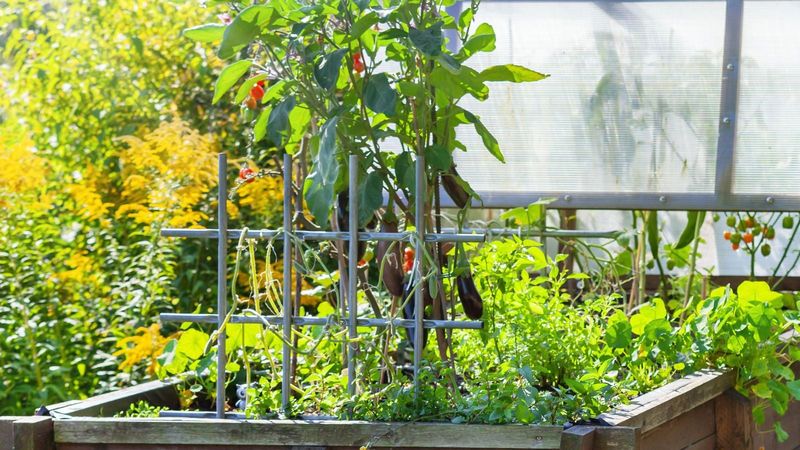
Many gardeners reach for companion planting as a first line of defense, and the appeal is understandable. Planting marigolds, onions, garlic, dill, or basil near eggplant is a low-cost step that feels proactive. The honest reality, though, is that research support for most of these pairings as reliable flea-beetle deterrents is limited and sometimes contradictory. University of Minnesota Extension’s companion planting guide says exactly this: the evidence behind many popular combinations does not consistently hold up under study conditions.
Trap crops are a distinct strategy and worth separating from general companion planting. Radish, mustard, daikon, pac choi, and related brassicas can attract flea beetles strongly and may draw them away from eggplant. But a trap crop only works if it is established ahead of the main crop and then actively managed or removed. A patch of radishes planted at the same time as your eggplant, or left to grow unchecked, can simply add more food nearby and increase the local beetle population rather than reduce pressure on your eggplant.
Colorado State University Extension and Utah State University Extension both note this distinction.
Product-based tactics like kaolin clay and diatomaceous earth fall into the same category of useful-but-uncertain. Their effectiveness depends on formulation, how thoroughly the plant is covered, pest pressure, and weather conditions. Some diatomaceous earth products are not labeled for use on food crops at all, so checking the label before application is not optional.
Use pesticides only when the current label allows them
When scouting confirms a serious infestation and injury is escalating on plants that cannot tolerate further loss, a pesticide application may become the appropriate next step. The requirement that must come before anything else is a current product label that specifically names eggplant as an approved crop and identifies the target pest. Applying any product outside those label terms is a violation of federal law. The EPA’s introduction to pesticide labels explains that the label is a legally enforceable document, not a suggestion.
EPA guidance on reading pesticide labels directs gardeners to follow the specified rate, use the protective equipment listed, observe pollinator precautions, and respect both the restricted-entry interval and the preharvest interval before eating treated produce. These requirements exist regardless of whether the product is labeled organic. Organic certification does not mean a product is automatically safe, effective, or legally appropriate for every crop or pest situation. Pyrethrins, spinosad, and neem-based products all carry label requirements that must be followed.
EPA’s pesticide labeling Q&A addresses common questions about label authority and compliance.
Some extension programs publish scouting thresholds as a guide for timing treatment decisions. University of Maryland Extension’s IPM scouting tips list thresholds that vary with plant size, for example two beetles per plant on early transplants and higher numbers on larger plants. These figures are regional benchmarks developed for specific conditions, not universal rules that apply to every home garden in every state. Use them as a rough frame of reference while weighing your own plant’s size, health, and injury trend.
Oregon State University Extension recommends avoiding routine blanket spraying and instead applying treatment only where actual damage justifies it.
Protect the plant’s future growth, not the damaged leaves
A straightforward decision path helps when you are standing in the garden trying to figure out what to do next. First, find the insect and confirm what you are dealing with. Then look honestly at the plant: how old is it, how much healthy foliage remains, and is the damage holding steady or spreading quickly? Those three observations will tell you more than the calendar date ever could.
Scattered holes on a vigorous, well-established eggplant with plenty of intact leaves do not signal crop failure. UC IPM and Penn State Extension both support the idea that mature plants can tolerate moderate feeding. A young transplant with rapidly worsening injury is a different situation entirely and deserves prompt action, whether that means physical protection, cultural support, or a label-compliant spot treatment. Oregon State University Extension puts it well: managing garden pests effectively starts with identifying the problem accurately and responding proportionately, not reflexively.
The holes already in your leaves will not close up, but new growth can stay clean if you act at the right scale. A plant that keeps most of its canopy will keep producing fruit, and that is the real measure of success.