
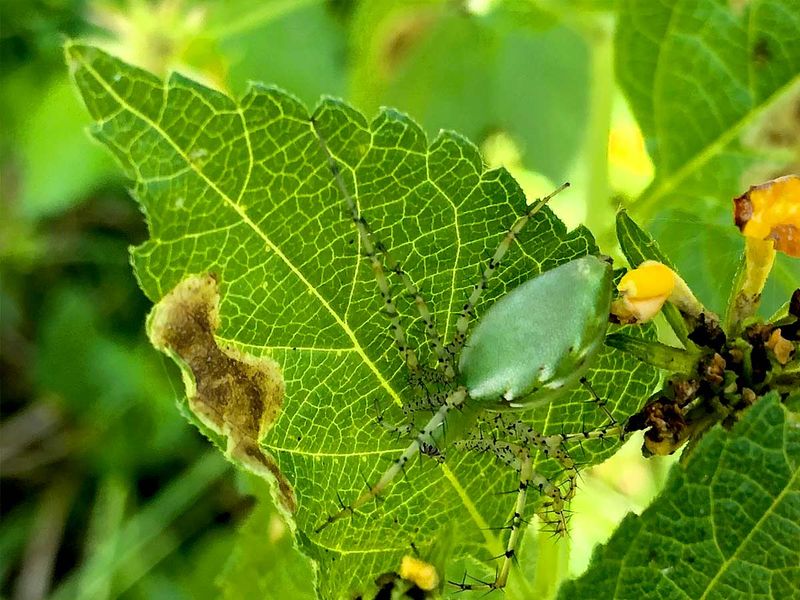
Most Central Texas gardeners who spot a bright-green spider on their tomato plants reach for something to kill it. That quick reaction may be costing them a naturally occurring predator that eats real garden pests. Green lynx spiders are found across Texas, and while they cannot single-handedly clear a caterpillar infestation, they do eat some pest insects and generally deserve a place in a well-managed vegetable bed.
Identify the green lynx spider before you decide what it means
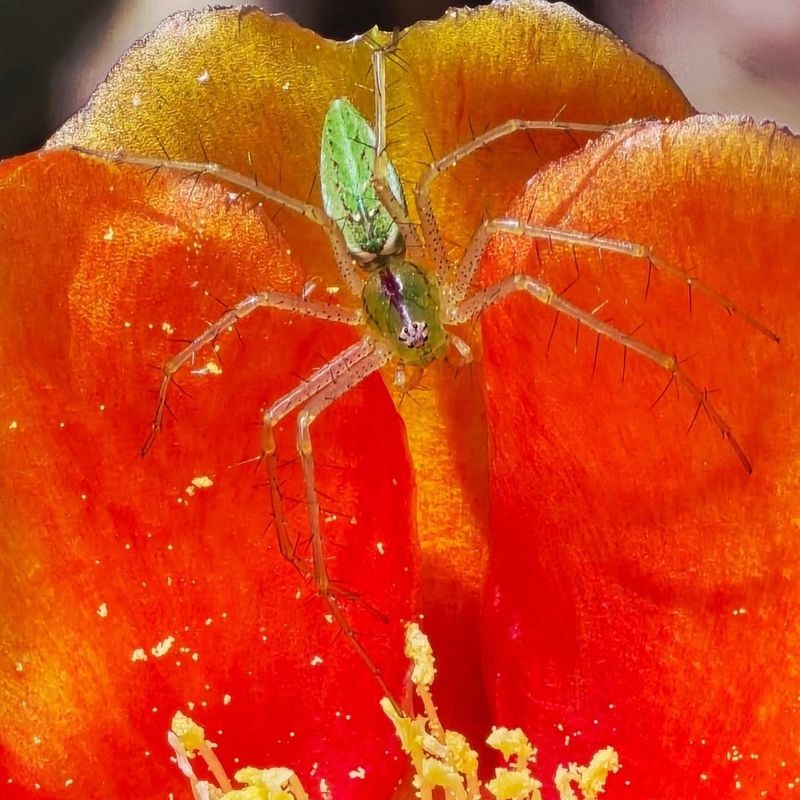
Peucetia viridans stands out the moment you know what to look for. The body is a vivid, almost neon green, and females typically measure between one-half and seven-eighths of an inch long. Long legs covered in conspicuous black spines radiate outward, and variable red or orange markings appear along the sides of the abdomen in many individuals, though the pattern can differ from spider to spider.
Unlike the orb weavers and funnel weavers that build obvious silk traps, the green lynx spider does not construct a prey-catching web. It hunts by waiting motionless on shrubs and herbaceous plants, then pouncing on insects that wander within striking range. That ambush strategy makes it easy to overlook until it moves, which is part of why so many gardeners mistake it for something dangerous and remove it before getting a second look.
According to UF/IFAS entomology guidance on the green lynx spider, the species is found throughout the southern United States on a wide range of plants, and the U.S. Fish and Wildlife Service species map confirms its presence at multiple Texas wildlife refuges, including Balcones Canyonlands near Austin. That range means Central Texas gardeners are genuinely likely to encounter one.
Correct identification matters before any management decision. Not every green spider in the garden is a green lynx spider, and not every spider is beneficial. A striped lynx spider, a crab spider or even a predatory stink bug can look superficially similar to an untrained eye. Spotting this spider does not, by itself, confirm that your garden’s pest situation is under control.
It simply means one generalist predator is present and hunting.
The spider hunts broadly across the plant canopy
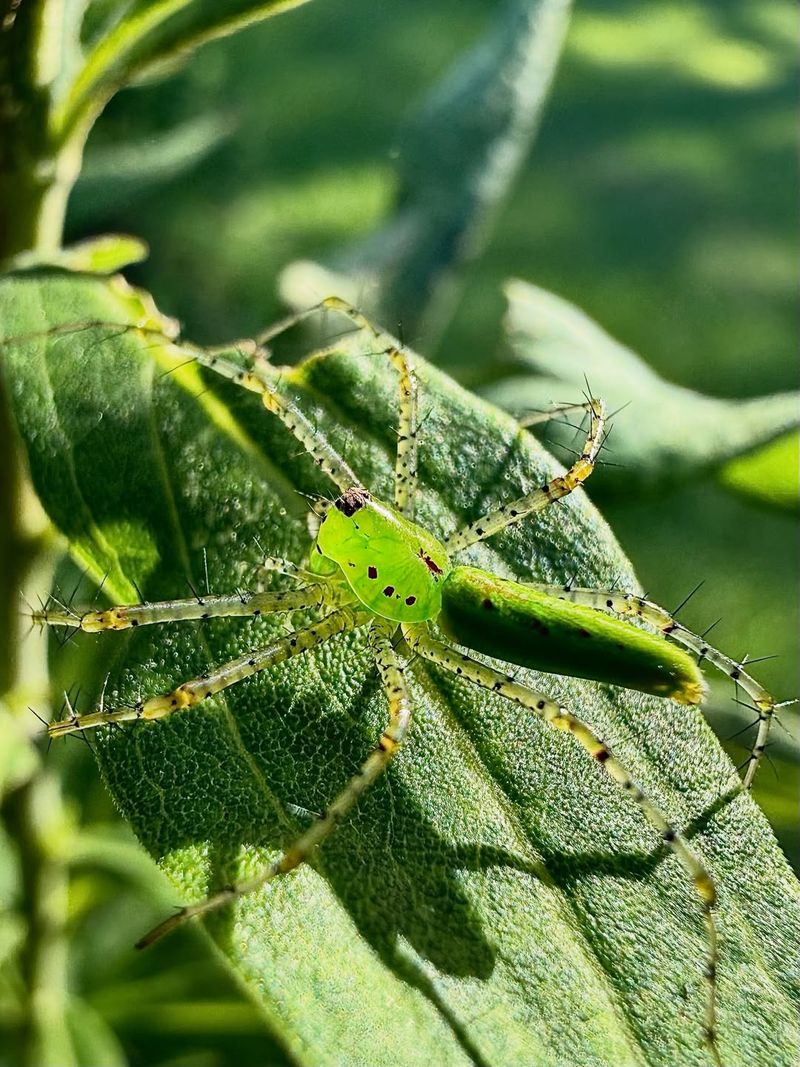
Calling the green lynx spider a caterpillar specialist would be flattering it with a job title it never applied for. The species is a generalist predator, meaning it takes whatever prey it can catch on the plants where it hunts. Documented prey groups include moth larvae, flies, wasps, beetles, true bugs, other spiders and a range of additional arthropods.
Texas cotton guidance from Texas A&M AgriLife’s cotton insect management resource specifically names fleahoppers and bollworm or tobacco budworm larvae among the pest prey taken by lynx spiders in agricultural settings. Those are real pest insects, and their presence on the menu is one reason extension entomologists list the species as a beneficial predator worth protecting.
The catch is that the menu does not stop at pests. UF/IFAS notes explicitly that the green lynx spider’s potential value in pest management is counterbalanced by its willingness to consume beneficial insects, including bees, parasitic wasps and other predatory arthropods. A spider sitting at the center of a flower is just as likely to intercept a pollinator as a pest.
Thinking of this spider as one predator inside a larger garden food web, rather than as a targeted control agent, keeps expectations realistic. A vegetable bed contains dozens of insect species at any given time. The green lynx spider moves through that community opportunistically, occasionally removing a caterpillar or stink bug and occasionally removing something you would rather keep. That is not a reason to eliminate it.
It is a reason to understand what it actually does before assigning it a specific job.
Caterpillars are documented prey, not a guaranteed control target
The best available Texas evidence for caterpillar predation by green lynx spiders comes from a field study conducted on cotton and woolly croton in East Texas, published in Environmental Entomology. Researchers documented spiders taking prey from multiple insect groups, and named caterpillar pests, including bollworm and tobacco budworm larvae, appeared in the diet. That is genuine ecological evidence of predation, and it supports treating the green lynx spider as a beneficial organism.
The same study puts firm limits on how far that conclusion can travel. The Nyffeler and Benz East Texas field research found that each spider captured fewer than one prey item per day on average. Of all recorded prey in cotton, only 8 percent consisted of the two named caterpillar pests. More than half of the total diet was made up of other predatory arthropods, meaning the spiders were eating other beneficial insects as often as they were eating pests.
Those numbers describe feeding behavior, not population suppression. A spider that eats one caterpillar does not clear an infestation, prevent shredded leaves on your squash or improve your tomato yield. Predation and population control are different things, and the East Texas study was not a vegetable-garden trial. It documented what spiders ate in cotton and on woolly croton under those specific conditions, which is relevant ecological background but not a direct test of what happens in a Central Texas backyard bed.
The practical takeaway is precise: green lynx spiders may consume caterpillar pests and can contribute to natural suppression over time. What the evidence does not support is the idea that more spiders in your garden will reliably translate into fewer chewed leaves or a smaller caterpillar population. Treat caterpillar predation as a documented possibility, not a predictable outcome.
Stink-bug effects remain possible but unproven
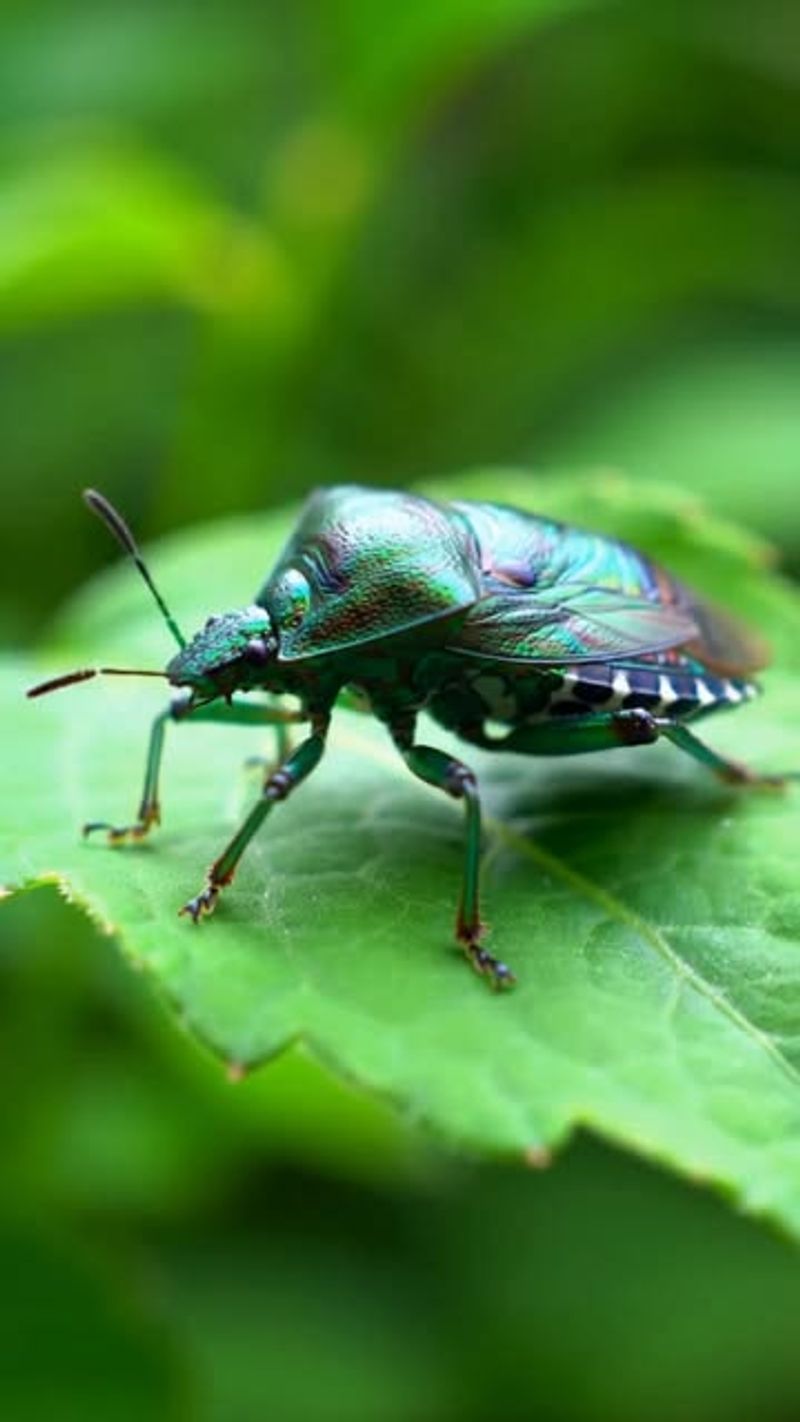
Stink bugs belong to the true-bug order Hemiptera, and green lynx spiders do take some true bugs and heteropterans as prey. That biological overlap makes it reasonable to ask whether this spider might help with the stink-bug pressure that frustrates so many Central Texas vegetable gardeners. The honest answer is: possibly, but not in any way that has been demonstrated for common vegetable stink bugs in home gardens here.
Broader research into stink-bug biological control, such as laboratory and field investigations of biological control for brown marmorated stink bug, explores predator and parasitoid options for managing stink-bug populations, but those findings do not translate cleanly to a claim that the green lynx spider will manage a stink-bug problem in your raised beds. Species-specific evidence for green lynx spiders suppressing the stink bugs most commonly damaging Central Texas vegetable crops remains limited.
Part of the difficulty is that stink bugs are mobile, arrive in waves and cause damage quickly. A single spider hunting one section of the plant canopy is unlikely to intercept enough individuals to measurably reduce feeding injury, even if it occasionally catches one. UF/IFAS guidance acknowledges true bugs as part of the green lynx spider’s diet without claiming that the spider controls stink-bug populations.
If stink bugs are damaging your peppers or beans, the spider’s presence is not a reliable signal that the problem is being handled. Identify the insect causing damage, assess how much feeding injury is actually occurring and make a management decision based on what you observe rather than on what a nearby spider might eventually do.
Why gardeners should usually leave the spider alone
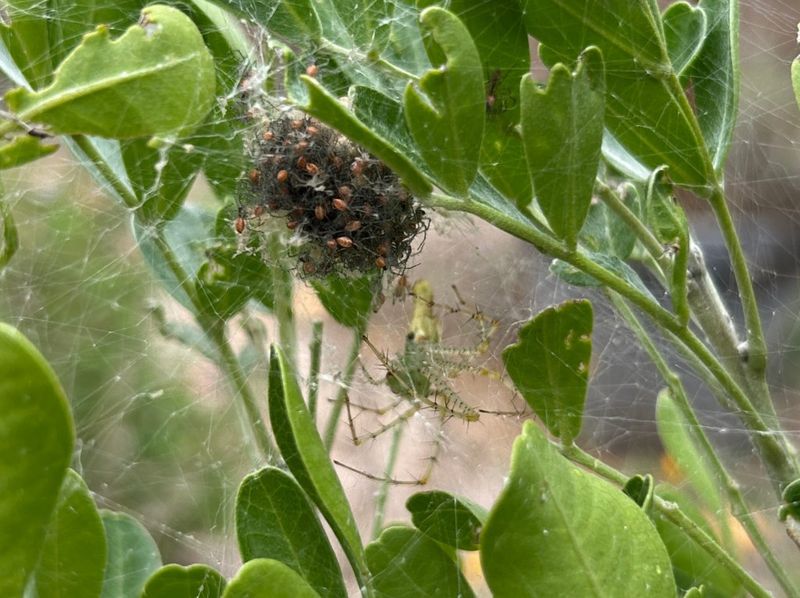
Green lynx spiders very seldom bite people, and when bites do occur they are generally of little medical concern. That said, readers should not handle them, and that caution applies especially to females guarding egg sacs. A female protecting her clutch may behave defensively in ways she would not at other times of year.
Females commonly build and guard straw-colored egg sacs in late summer or early fall. UF/IFAS reports that egg sacs in North American field conditions are typically constructed in September and October, and the Texas A&M AgriLife field guide to predators and parasites describes the female guarding the sac until spiderlings emerge. If you come across one while pruning or harvesting in late summer, the practical move is to work around it rather than remove it. The mother and her offspring represent the next generation of a naturally occurring predator already adapted to your local conditions.
Beyond individual sacs, the broader case for leaving green lynx spiders alone comes down to ecological value and low ordinary risk. Reducing unnecessary broad-spectrum insecticide applications helps keep them and other natural enemies alive in the garden. Maintaining plant diversity and allowing some structural complexity in the canopy, things like flowering herbs, native plants and layered vegetation heights, generally supports a wider community of beneficial arthropods.
No specific Texas plant is proven to reliably increase green lynx spider numbers or guarantee pest control in return. Texas A&M AgriLife guidance on beneficial arthropods frames habitat support as a general practice rather than a formula. The reasonable goal is a garden environment where naturally occurring predators can persist, not one engineered around a single spider species.
Let monitoring—not the spider’s presence—guide treatment
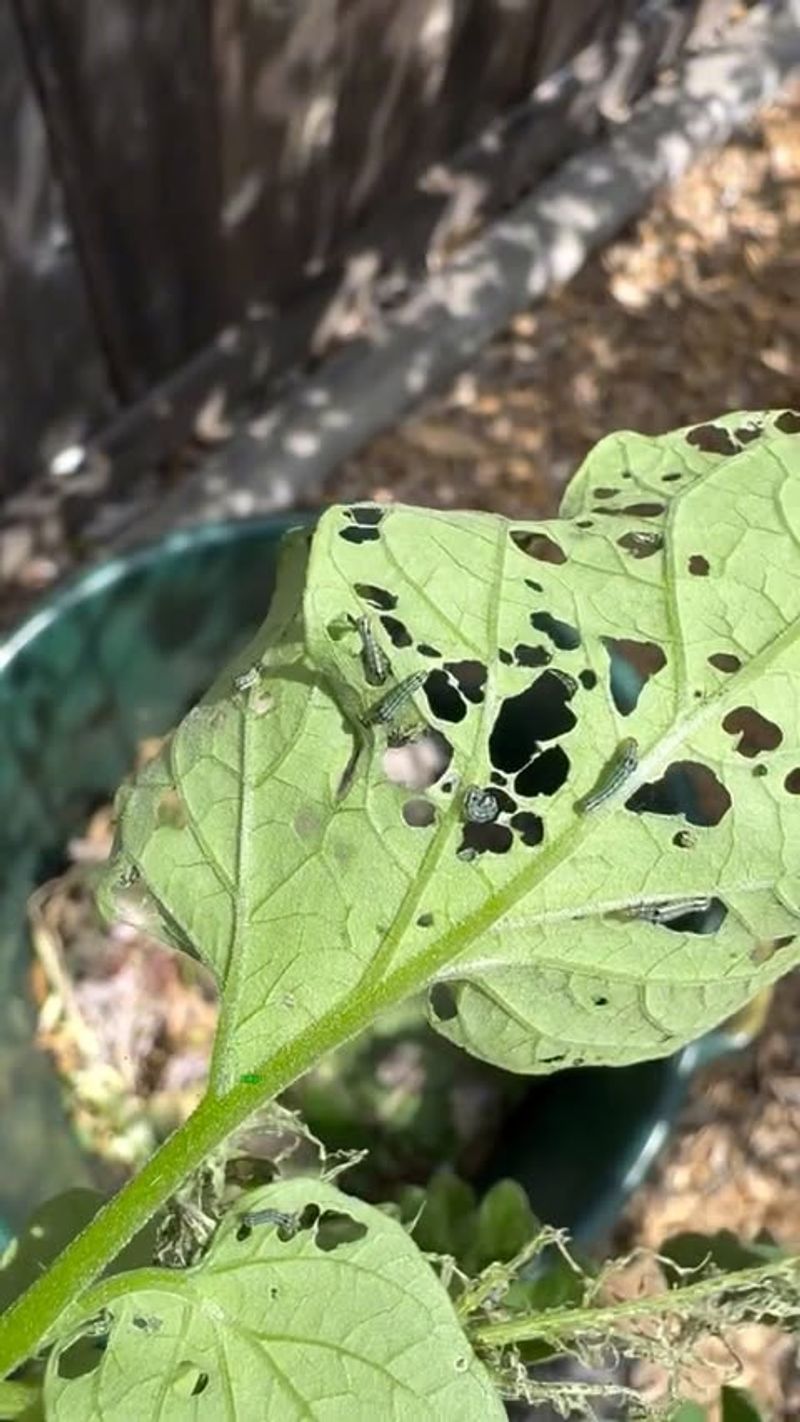
Seeing a green lynx spider in your vegetable bed is not a reason to skip your regular plant inspection. The spider’s presence tells you one predator is hunting there. It does not tell you whether caterpillar numbers are low, whether stink-bug feeding is within a tolerable range or whether your crop is protected. Those answers only come from looking at the plants themselves.
Start by confirming what insect is actually causing the damage. Chewed leaves can come from caterpillars, grasshoppers, flea beetles or several other pests, and the right response differs depending on which one is responsible. The Travis County Texas A&M AgriLife vegetable garden insects field guide covers the common culprits in Central Texas beds and can help with identification before any control decision is made.
Once you know what you are dealing with, assess the extent of damage honestly. A few chewed leaves on a healthy plant rarely threaten a harvest. EPA guidance on integrated pest management principles frames action thresholds as a core concept: the question is not whether any pest is present but whether the level of damage justifies the cost and disruption of treatment.
When action is warranted, work through the least disruptive options first. Hand-picking caterpillars, removing heavily infested leaves, directing a firm water spray at soft-bodied pests and using row covers or other physical barriers are all reasonable starting points. If a targeted treatment becomes necessary, choose the most specific product available, follow the label exactly and apply it in a way that minimizes contact with spiders and other beneficial arthropods. Texas A&M AgriLife’s beneficial arthropod guidance reminds gardeners that broad-spectrum insecticides remove natural enemies along with pests, which can make future outbreaks worse.
Organic or botanical products carry the same risk: spinosad, pyrethrin and similar materials can harm beneficial insects and spiders despite their natural origin, so treating them as automatically safe is a mistake.
Keep the predator, keep inspecting the crop
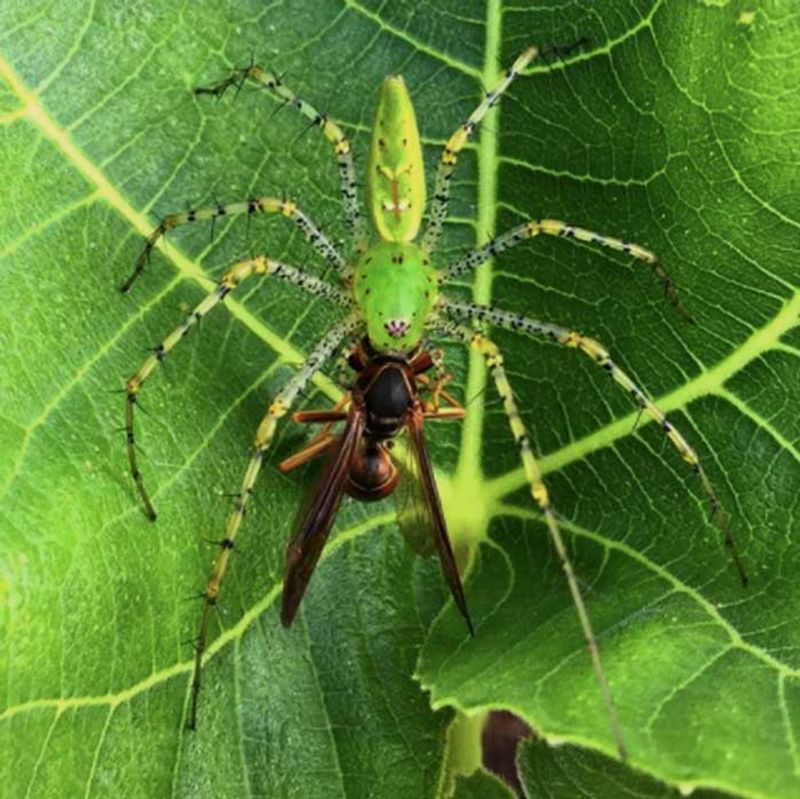
A green lynx spider in your vegetable bed generally warrants tolerance. It is a naturally occurring predator with a documented record of eating pest insects, including caterpillars, and it poses little ordinary risk to people who leave it alone. Texas A&M AgriLife identifies lynx spiders as beneficial predators that contribute to keeping insect pests in check, and that assessment is reasonable as far as it goes.
Where the evidence stops is at the claim that more of these spiders equals less caterpillar damage. Spider abundance may simply reflect that the garden already contains abundant prey. Protecting the spider and continuing to monitor your plants are not competing actions – they work together as part of the same management approach. When integrated pest management principles and the East Texas field research on green lynx spider prey are read together, the defensible conclusion is this: the spider may help, but your own weekly inspection of the plants is still what determines whether any response is needed.
Leave the spider where it hunts, protect egg sacs when you can work around them and keep checking your crops. A garden that supports natural predators and a gardener who monitors it regularly is a harder target for any pest than one relying on either approach alone.