
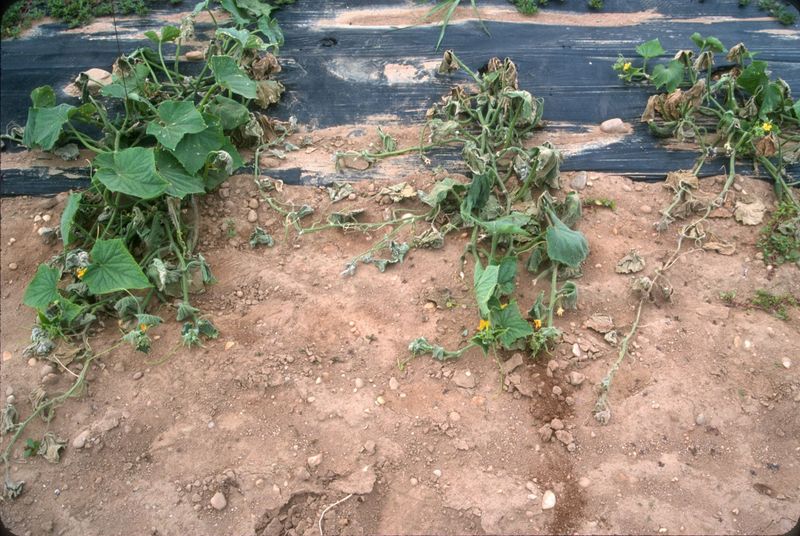
Stepping out to your garden and finding a cucumber vine that looked perfectly healthy yesterday now hanging limp and lifeless is genuinely alarming. August heat gets blamed first, but the real culprit is often a disease called bacterial wilt, spread by tiny beetles that most gardeners barely notice. Knowing how to tell the difference between heat stress and an actual infection can save the rest of your plants. A few quick checks, starting right now, will point you in the right direction.
A cucumber vine can look healthy before it collapses
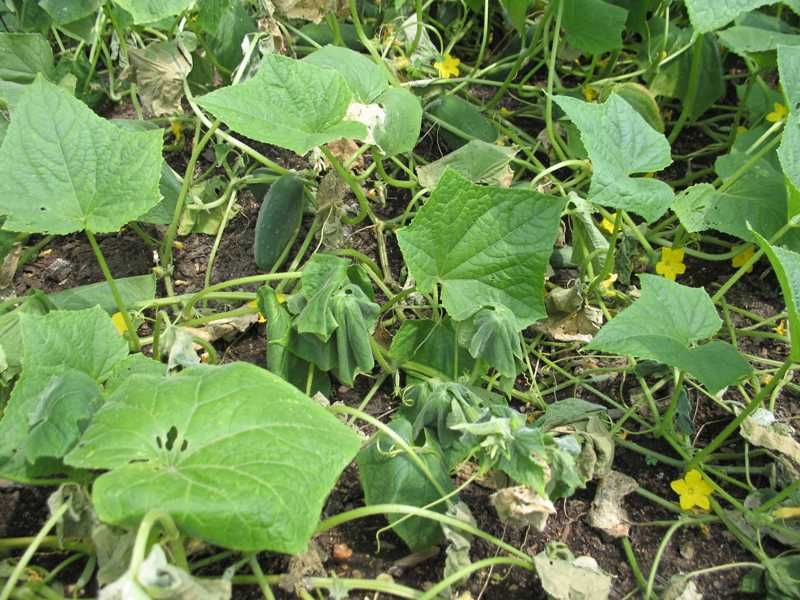
Bacterial wilt has a way of sneaking up on gardeners. Early on, a vine may show leaves that look slightly dull or droop during the warmest part of the day, then seem to perk back up by morning. That brief recovery can make the problem easy to dismiss, but the wilt typically returns the next day and spreads further, moving down individual runners or across the whole vine before leaves yellow, turn brown, and die.
Cucumbers can decline surprisingly fast once the disease takes hold. University of Minnesota Extension guidance on bacterial wilt notes that the pathogen responsible, Erwinia tracheiphila, colonizes vascular tissue and disrupts the plant’s ability to move water, which explains why the collapse can feel sudden even when the infection began much earlier. A vine that falls apart in August may have been infected weeks before any symptom appeared.
That timeline matters because it shapes how you respond. Prompt inspection is worthwhile, but keep other possibilities in mind as you look. University of Illinois Extension emphasizes that the wilt pattern, progressing from one runner outward rather than affecting the whole plant at once, can help distinguish bacterial wilt from stress-related drooping, though no visual clue alone is diagnostic. Check the vine carefully and resist the urge to reach a conclusion before running through the other causes below.
Does the vine recover overnight?
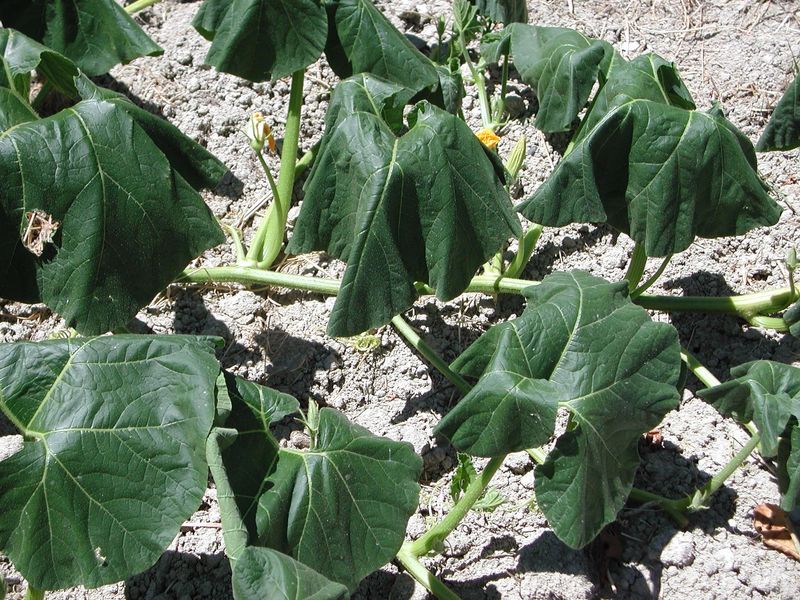
Before assuming disease, step outside first thing in the morning and look at the vine again. A plant that drooped dramatically in the afternoon heat but stands upright with firm leaves by sunrise is showing a very different pattern from one that stays limp from dusk through dawn. That overnight recovery is a meaningful clue.
Hot, dry, windy days can temporarily overwhelm a cucumber’s water uptake even when the roots are reasonably healthy. Leaves lose moisture faster than roots can replace it during peak heat, producing midday droop that looks alarming but resolves on its own. University of Minnesota Extension’s heat-garden guidance confirms that this kind of temporary wilting is common in summer and does not by itself signal disease. Check the soil about four to six inches down: if it is dry and powdery, deep watering is the first step, not diagnosis.
Morning wilt is a different matter. A vine that has not recovered by the time temperatures are still cool, or one that wilts a little more each day regardless of soil moisture, warrants a closer look. Minnesota’s cucumber wilting diagnostic tool lists both disease and environmental stress as possible explanations for drooping leaves, reinforcing that the overnight-recovery check is your first real fork in the road. Heat can expose or intensify a hidden problem, but it does not cause bacterial wilt on its own.
Cucumber beetles can spread the disease
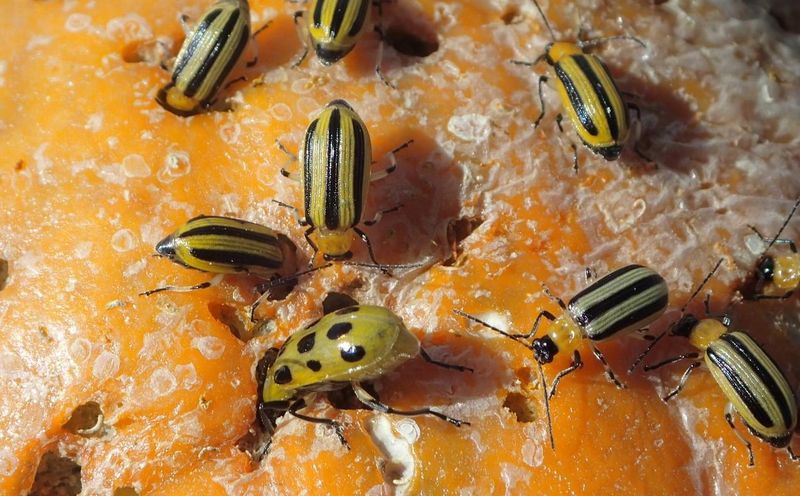
Bacterial wilt does not appear out of thin air. The bacterium Erwinia tracheiphila depends on cucumber beetles to move from plant to plant. Striped and spotted cucumber beetles can pick up the pathogen while feeding on an infected plant, then carry it to a healthy one, where it enters through feeding wounds and begins colonizing the vascular tissue that moves water through the stem.
Spotting beetles on your vine raises suspicion, but it does not prove infection. University of Minnesota Extension’s cucumber beetle page notes that not every beetle carries the bacterium, and beetle feeding alone causes its own direct damage: chewing holes in leaves, scarring fruit, and stressing young plants without introducing disease. Knowing what you are looking at helps you weigh the risk accurately.
Adult striped cucumber beetles are roughly one-quarter inch long, yellow-green with three bold black stripes running the length of their wing covers. Spotted cucumber beetles are similar in size but wear a pattern of black spots instead. Both have notably long, threadlike antennae that help set them apart from beneficial insects like lady beetles, which are rounder and shorter-legged. UC IPM’s cucumber beetle identification resource offers additional comparison details.
Finding either species feeding actively on a wilting vine is a reason to move quickly to the next diagnostic step, not a reason to panic, but also not a reason to ignore what you are seeing.
The cut-stem test takes only seconds
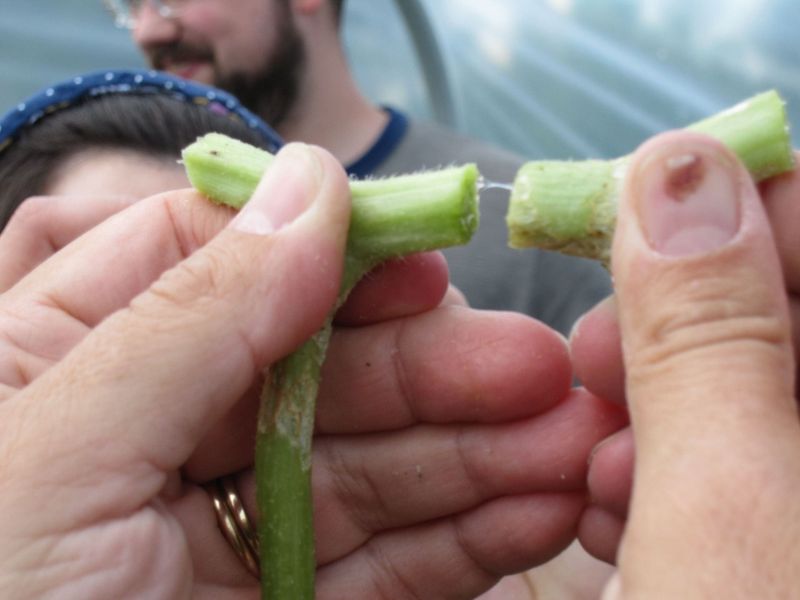
Once you suspect bacterial wilt, a simple field screen can help you decide what to do next. Find a runner that is wilting and cut it cleanly close to the crown with a sharp knife or pruners. Press the two freshly cut surfaces firmly together for about ten seconds, then slowly pull them apart while watching the gap between them.
Sticky, threadlike strands stretching between the cut surfaces as you pull them apart are associated with bacterial wilt. University of Illinois Extension’s bacterial wilt overview describes this ooze test as a useful rapid screen, and Minnesota Extension agrees that visible strands support the diagnosis. The catch is that a negative result does not clear the plant. Strands can be thin and difficult to see, and some infected stems may not produce obvious threads at a particular cut site.
Treat a clear positive as strong supporting evidence, not a confirmed diagnosis. Treat an unclear or negative result the same way: it means you need more information, not that the plant is fine. Laboratory diagnosis is the only method that definitively confirms bacterial wilt, and your state’s cooperative extension plant diagnostic lab can usually walk you through submitting a sample. If the vine is declining fast and other clues point toward bacterial wilt, the practical response may not wait for lab results, but confirmation matters when you want to be certain before pulling healthy-looking plants nearby.
Other problems can collapse a cucumber vine
A positive-looking string test is worth taking seriously, but plenty of other problems produce wilting that looks nearly identical at first glance. Running through a short checklist before acting can prevent you from pulling a plant that might have recovered with water or a different kind of intervention.
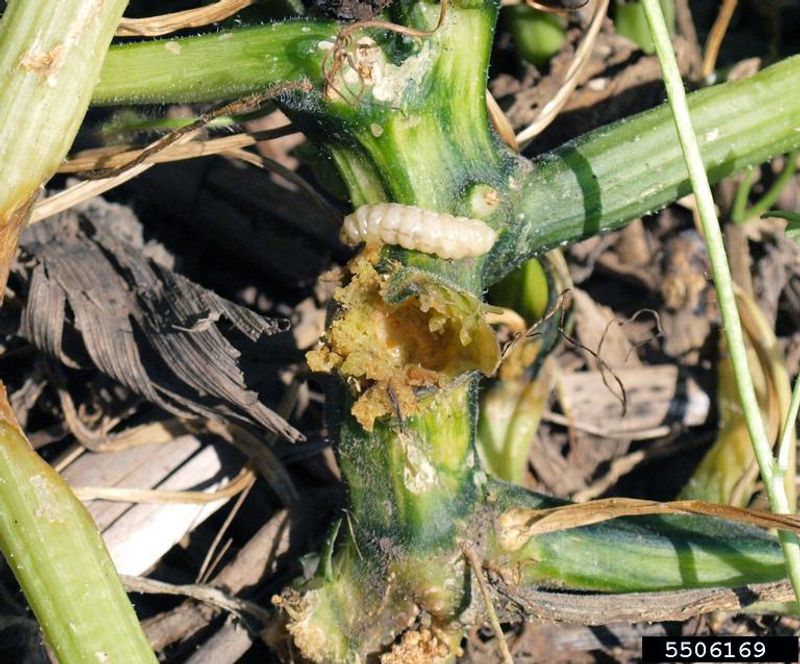
Dry soil is the most common culprit during August. Even a vine with healthy roots can droop dramatically when the top several inches of soil are bone dry. Root damage from aggressive cultivation, heavy foot traffic near the base, or soil compaction can also cut off water uptake without any disease involved. Squash vine borers tunnel into stems at the base of the plant and can cause sudden, dramatic collapse that looks a great deal like bacterial wilt.
Check the base of the stem for entry holes and frass, which looks like coarse sawdust, as a quick screen. UC IPM notes that cucumber beetles cause direct feeding damage separately from any disease transmission, so chewed leaves alongside wilt do not automatically mean the disease is present.
Squash bugs deserve a look too, especially if you grow squash or pumpkins nearby. Colorado State University Extension’s squash bug resource explains that these insects suck plant sap and can cause wilting and death, particularly in squash and pumpkins. Flip leaves over and check the undersides for clusters of bronze-colored eggs or gray-brown adults. The Minnesota cucumber wilting diagnostic lists several of these causes side by side, which makes it a handy reference when you are standing in the garden trying to sort things out.
An infected vine cannot be sprayed back to health
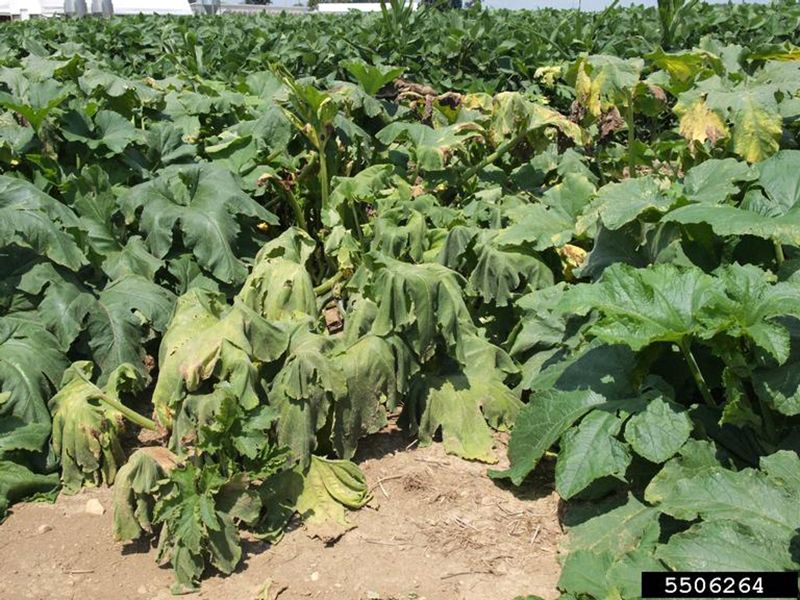
Once bacterial wilt is established inside a plant’s vascular system, there is no spray, soil drench, or home remedy that reverses it. Copper fungicides, neem oil, insecticidal soap, and similar products play no curative role against an active bacterial wilt infection. Applying an insecticide to a vine that is already infected will not restore water flow or save the plant.
The most useful action at that point is removal. Pulling a badly infected plant out of the garden reduces the chance that cucumber beetles will feed on it, acquire the bacterium, and carry it to healthy cucurbits nearby. Minnesota Extension’s bacterial wilt guidance recommends removing infected plants for exactly this reason. Removal is not a guarantee that surrounding plants stay healthy, because beetles may have already spread the pathogen before you noticed the problem, but it is a reasonable step to take promptly.
Watering is a separate conversation. If your soil is dry and the vine’s wilt might be heat or moisture stress rather than disease, deep watering in the morning can help the plant recover. Minnesota Extension’s heat-garden advice recommends morning irrigation so foliage dries before evening, reducing other disease risks. Just keep the purpose clear in your mind: watering addresses drought stress, not bacterial wilt.
If the vine does not respond to adequate moisture and continues to decline, disease or another cause beyond simple dehydration is likely at work.
Protect the next cucumber before beetles find it

Healthy plants nearby deserve protection the moment you identify a problem on one vine. The window that matters most is when plants are young and beetle populations are building. Frequent scouting, checking plants every few days and looking at both leaf surfaces, gives you the best chance of catching beetle activity before it translates into disease spread.
Floating row covers or insect-exclusion fabric placed over transplants or seedlings can physically block beetles from reaching the plants. Iowa State University Extension’s row-cover guidance supports this approach as a way to reduce bacterial wilt risk in cucurbits. The critical limitation is pollination: standard row covers block bees along with beetles, so they must come off once flowers open unless you plan to hand-pollinate or are growing a parthenocarpic variety that sets fruit without pollination. Leaving covers on through flowering will protect leaves but cost you your harvest.
Minnesota Extension’s cucumber-growing guide mentions beetle thresholds as a management reference point, but those figures come from research and production contexts that vary by region, crop stage, and beetle species. Treat published numbers as a general framework rather than a universal rule for your backyard. If you decide to use an insecticide, identify the beetle species first and choose only a product labeled for use on cucumbers against that pest. UC IPM’s agricultural pest management guidelines for cucumber beetles highlight that some registered products are highly hazardous to bees, particularly when applied to flowering plants.
The label is the legal and safety document: follow its application rate, reentry interval, preharvest interval, and pollinator-protection instructions exactly.
Treat fast wilt as a signal, not a verdict
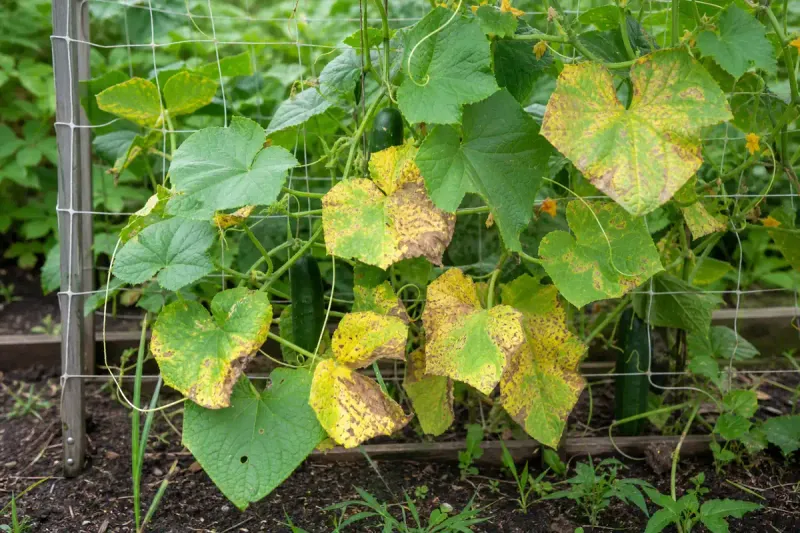
Rapid wilting in a cucumber vine is a reason to investigate, not a reason to immediately assume the worst. Work through the checks in order: press your fingers into the root zone to feel for dry soil, step out at sunrise to see whether the plant has recovered, and scan the leaves and stems for cucumber beetles or signs of other pests like squash bugs or vine-borer frass.
If the vine stays limp overnight and beetles are present, run the cut-stem screen. A positive result, with visible sticky strands, supports bacterial wilt and points toward removing the plant. Minnesota Extension and the cucumber wilting diagnostic both reinforce that no field test replaces laboratory confirmation when certainty matters. A vine that is clearly failing and shows strong evidence of infection is best removed promptly rather than treated with sprays that will not help.
August heat makes everything look more urgent, but the heat itself is rarely where the trouble started. A cucumber vine that collapses quickly is telling you something is wrong; your job is to figure out exactly what.