
Scorpions are a real concern for Texas homeowners, and it is tempting to believe that one well-chosen plant could keep them at bay. A popular idea suggests that a native Texas plant can make your yard less inviting to scorpions as fall approaches, but that claim does not hold up when you look at the actual research. What the evidence does show is more nuanced, and honestly more useful, once you know where to focus your efforts.
The native-plant promise does not hold up
Plenty of gardening content promises that one carefully chosen native plant will send scorpions packing before fall arrives. The honest answer is that no reliable field evidence supports that idea. No study has shown that a single Texas-native plant, whether by scent, ground-cover habit, or any other quality, makes a yard measurably less inviting to scorpions as the seasons shift.
The closest thing to relevant evidence involves rosemary oil, and even that story is more limited than most articles let on. A small laboratory arena study published in the Journal of Arachnology found that 16 striped bark scorpions spent significantly more time on mineral-oil-treated sand than on sand treated with concentrated rosemary oil. That is a meaningful result in a controlled setting, but researchers tested a concentrated oil mixture applied directly to a substrate, not a living rosemary plant, not a garden bed, and not a house perimeter.
The study’s authors said explicitly that large-area effectiveness, persistence, and the possibility of scorpion adaptation all remained open questions. Those are not minor footnotes. They are the exact conditions that matter when a Texas homeowner is trying to protect a yard.
Then there is the native-plant question itself. Texas Tech University’s plant resources database identifies rosemary’s native range as Southern Europe and Southwest Asia. Rosemary grows well in Texas and has real landscape value here, but it is not a Texas native. This article treats the claim as a question worth testing rather than a tip worth repeating, and what follows replaces the unsupported premise with guidance that actually has evidence behind it.
What brings Texas scorpions near homes
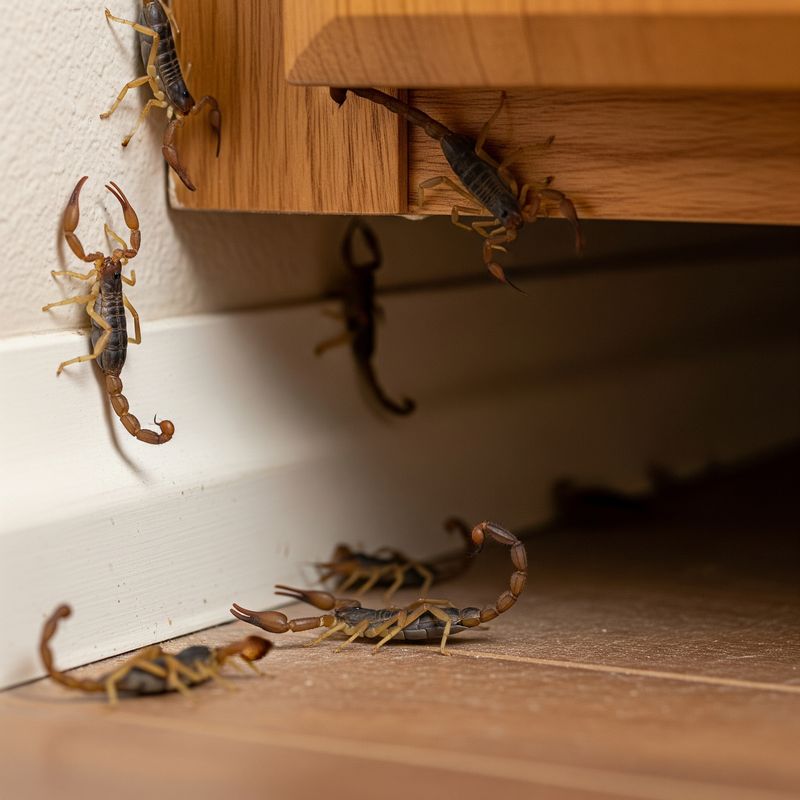
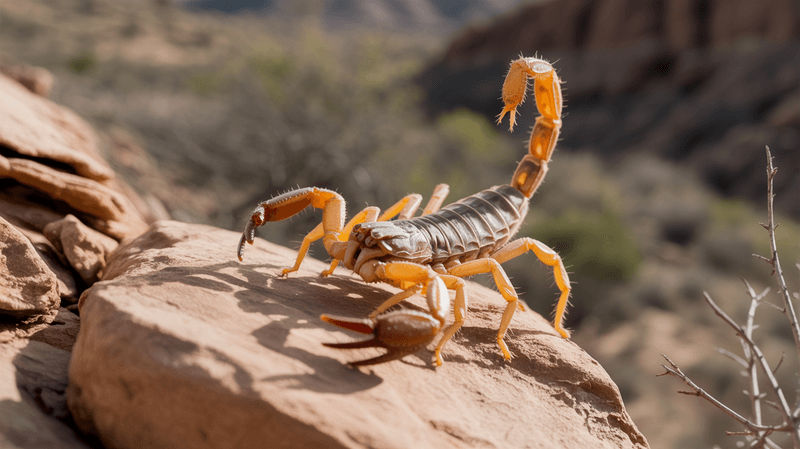
Texas is home to roughly 18 scorpion species, but one shows up more broadly than any other. Texas A&M AgriLife Extension identifies the striped bark scorpion, Centruroides vittatus, as the only scorpion found throughout the entire state, including eastern Texas where other species rarely appear. Understanding what draws this animal close to a house matters far more than hoping a plant will discourage it.
Striped bark scorpions are nocturnal. During the day they hide under stones, loose bark, lumber, debris piles, and other objects that hold moisture and shade. They feed on insects, spiders, centipedes, earthworms, and other scorpions, so a yard with abundant prey and plenty of shelter is genuinely attractive to them. When summer temperatures climb into triple digits, scorpions may also move into living areas from attics or wall voids to escape the heat, which means building structure and insulation gaps matter directly.
Seasonal variation in scorpion activity does exist. A study on striped bark scorpion microhabitat use in Laredo found measurable differences in activity by month and temperature, and also found that smaller scorpions tended to associate with grass while larger ones were more often found near prickly pear or strawberry cactus. That tells us vegetation can be part of scorpion habitat, but it does not tell us that any particular plant repels them.
Texas A&M notes that the striped bark scorpion mates in fall, spring, or early summer. Fall mating activity is real, but it is one reproductive pattern among several, not evidence of a universal fall surge that a plant could intercept. The factors that most directly influence how often scorpions end up near a home are shelter availability, food supply, building openings, and temperature, not whether a specific aromatic plant is growing nearby.
What the rosemary experiment actually tested
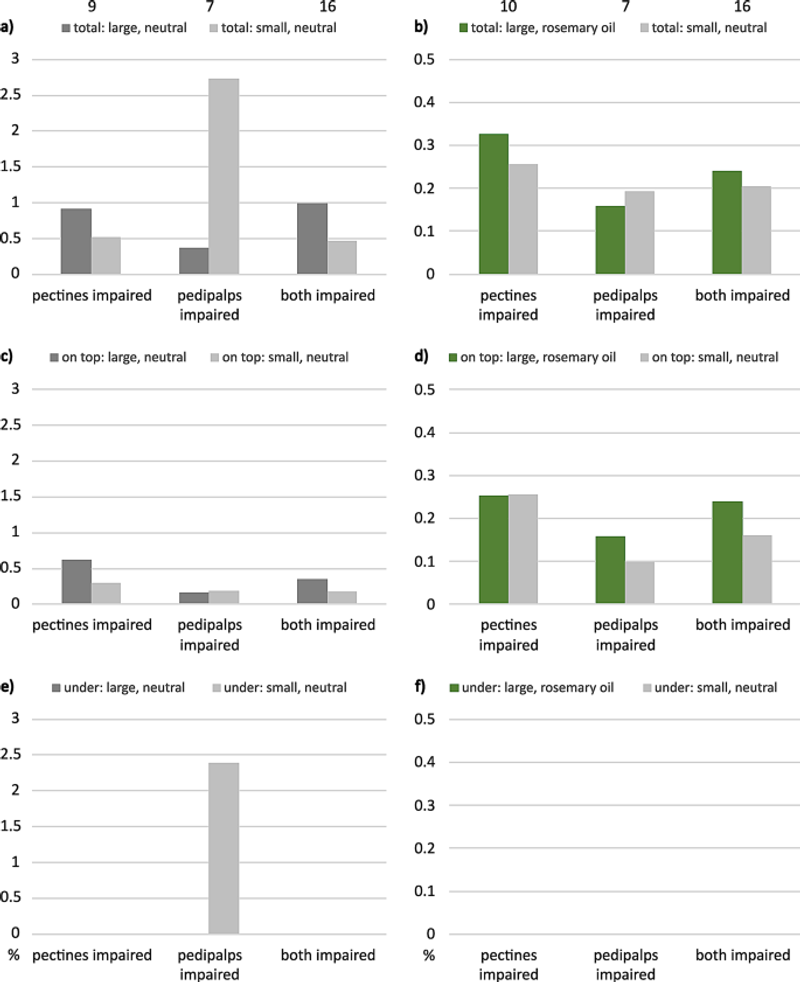
The rosemary study is worth understanding in detail, because the gap between what it tested and what it is often used to claim is significant. Researchers placed 16 striped bark scorpions collected in Oklahoma individually into a small divided arena. One side of the arena held sand treated with 0.8 milliliters of rosemary oil mixed into mineral oil. The other side held sand treated with mineral oil alone.
Scorpions spent significantly more time on the mineral-oil side, which the researchers interpreted as avoidance of the rosemary-oil-treated substrate.
That is a clear result under those specific conditions. What it does not show is equally clear. The study did not test living rosemary plants, rosemary leaves placed in a garden, or any application around a house perimeter. The researchers used a concentrated oil mixture applied directly to sand in a controlled laboratory environment, not the diffuse, variable scent that a growing rosemary plant releases into open air.
Whether a living plant produces enough volatile compounds at enough concentration to produce the same avoidance response in a yard is a completely separate question that this study did not address.
The study’s own authors acknowledged that large-area effectiveness, persistence over time, and the possibility that scorpions could adapt to the scent all remained unresolved. Those are not minor caveats. A scorpion choosing one side of a small arena tells you something interesting about chemical sensitivity, but it does not translate into fewer scorpions near a home, fewer scorpions entering through gaps in a foundation, or a reliable outdoor barrier.
There is also a nuance inside the chemistry itself. The study’s primary tested component, 1,8-cineole, which is a major constituent of rosemary oil, did not produce significant avoidance on its own. The researchers suggested that a combination of compounds in the complete oil mixture might be responsible for the response. That means even the mechanism is not fully understood, which makes it even harder to predict whether a living rosemary plant would replicate the effect.
Rosemary grows well in Texas, but it is not native
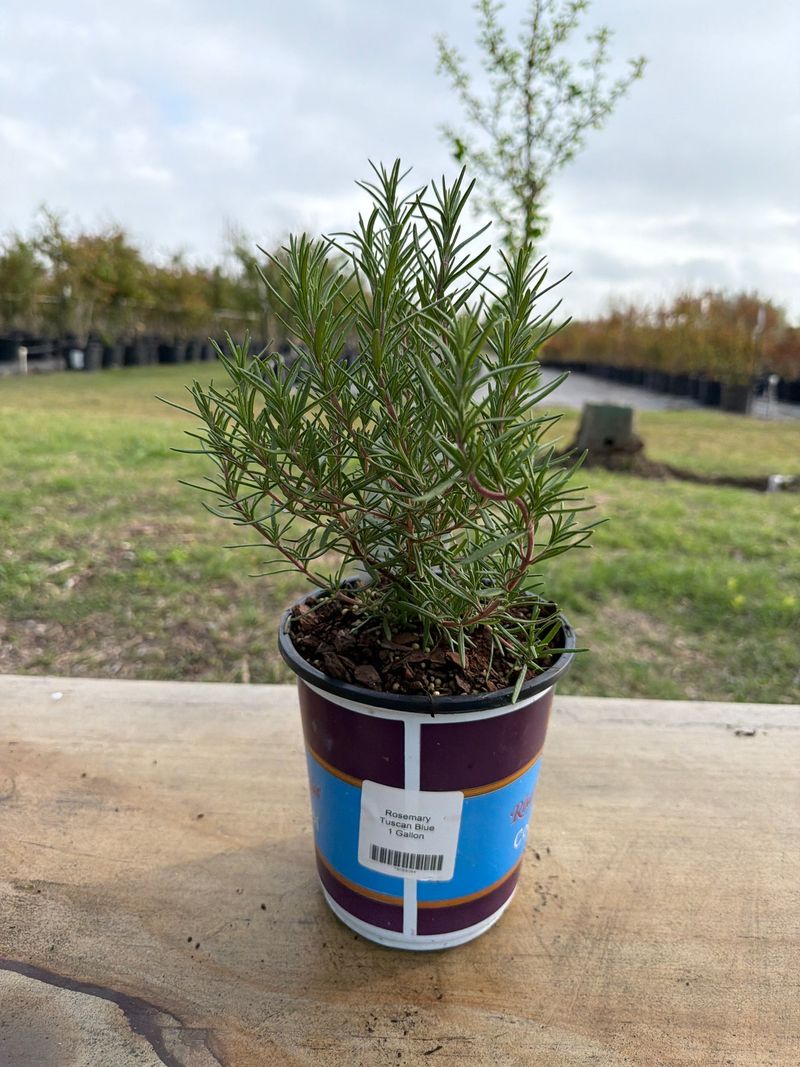
Rosemary has become a familiar sight in Texas landscapes, and for good reason. It handles heat, tolerates drought once established, and works in both culinary and ornamental settings. Texas Tech University’s plant resources profile for rosemary places its native range in Southern Europe and Southwest Asia, specifically the Mediterranean region. Texas Tech describes upright rosemary as a low-water shrub suited to Texas conditions, and trailing forms can function as ground cover in some settings, but those descriptions reflect regional adaptability, not botanical origin.
A common point of confusion involves the cultivar known as ‘Arp.’ This cold-hardy variety was discovered in Arp, Texas, and it performs exceptionally well across much of the state. Being discovered in Texas, however, is not the same as being native to Texas. A cultivar selected for cold hardiness from a Mediterranean species is still a Mediterranean species. The same logic applies to any rosemary plant that thrives in a San Antonio garden or lines a driveway in Austin.
Thriving here and originating here are two different things.
The botanical distinction matters for this article because the original claim rests on the idea that a native Texas plant creates some kind of protective scent zone. Rosemary cannot carry that argument even if the scent evidence were stronger, because it is not native. Adaptability to Texas climate, however real and useful, does not change a plant’s native range or give it properties it has not been shown to possess.
Rosemary still has legitimate reasons to earn a spot in a Texas yard. Water efficiency, culinary use, pollinator support, and year-round structure are all genuine benefits. Those are worth growing it for. Scorpion management is not a documented benefit, and native status is not something rosemary can claim in this state.
Plant-derived chemicals suggest only a limited possibility
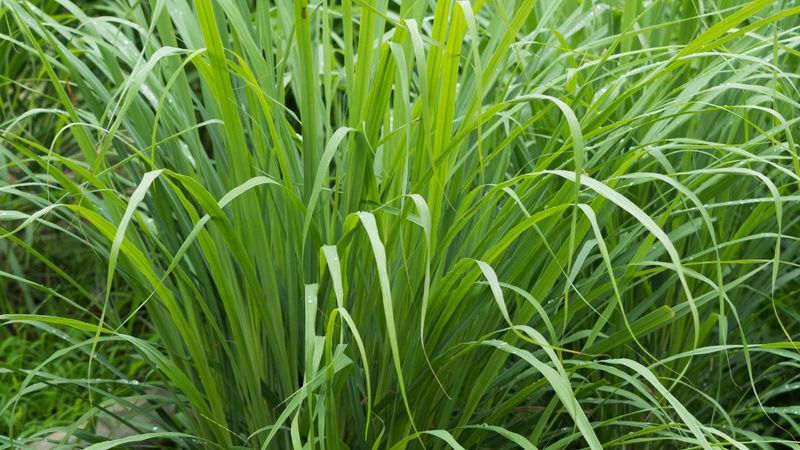
Beyond rosemary, a separate line of research looked at plant-derived compounds and scorpion behavior, and it is worth knowing what that work actually found. A peer-reviewed study published in 2022 identified citronellal and citronellol, compounds derived from Cymbopogon plants such as lemongrass, as triggers for avoidance behavior in the Asian scorpion Mesobuthus martensii. Researchers found a molecular target in the scorpion’s sensory system that responded to these compounds, which is a genuinely interesting finding for understanding how scorpions detect chemical signals.
The species differences here are not a small detail. Mesobuthus martensii is an Asian scorpion studied in a laboratory context. The striped bark scorpion found across Texas is Centruroides vittatus. These are different animals with different sensory systems, different habitats, and different behavioral patterns.
A result from one species under experimental conditions does not automatically transfer to another species in a Texas yard.
The compounds tested also came from Cymbopogon, not from a Texas-native plant, and the study examined molecular and behavioral responses in a controlled setting. There is a meaningful distance between identifying a chemical avoidance response in a lab and recommending that a homeowner plant lemongrass around their foundation to keep Texas scorpions away. The first is a scientific observation. The second is a landscape application that has not been tested at that scale or in that context.
Taken together, the rosemary-oil study and the Cymbopogon-compound study tell us that some scorpion species show chemical avoidance responses to some plant-derived compounds under controlled conditions. That is a reasonable starting point for further research. For Texas homeowners right now, it does not translate into a planted ground cover that protects a home from scorpions.
Make the home perimeter less usable to scorpions
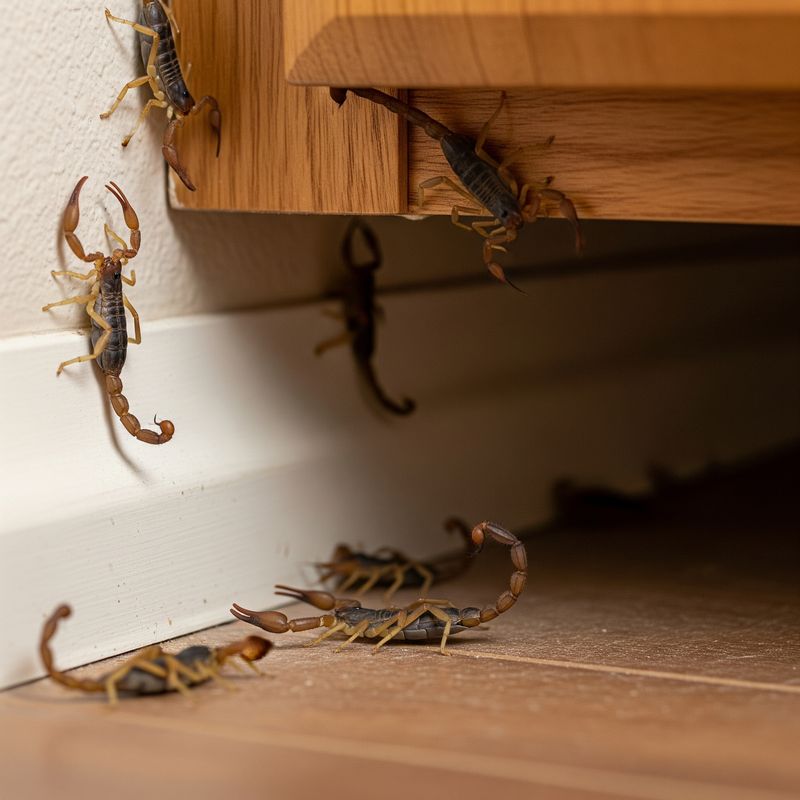
Removing what scorpions actually use is a more direct approach than hoping a plant’s scent will redirect them. Texas A&M AgriLife Extension’s scorpion control guidance centers on habitat and entry-point management, and the steps it outlines address the conditions that make a home perimeter usable to scorpions in the first place.
Start with shelter. Firewood, lumber, stones, boards, and debris piles stored near the foundation give scorpions exactly what they need: shaded, moist hiding spots close to a building. Moving these materials away from the house removes that option. Dead vegetation left against a wall or fence line functions the same way, so clearing it out matters too.
If you store firewood outside, keep it elevated and as far from the house as practical.
UC IPM’s scorpion guidance emphasizes sealing cracks and gaps in the foundation, walls, and around pipes as a core control measure, and repairing screens and door sweeps so that building openings are not available routes. This is where exclusion pays off most directly. A scorpion that cannot find a gap to enter is a scorpion that stays outside regardless of what plants are growing nearby.
Vegetation management near the structure deserves specific attention. Arizona Cooperative Extension advises trimming ground cover and shrubs away from the building so they do not create unmanaged shelter or a contact route to the structure. Dense or overgrown vegetation touching a wall can give scorpions a pathway they would not otherwise have. This applies to rosemary, native ground covers, and any other low-growing plants near the foundation.
Outdoor lighting is another factor that gets overlooked. Bright lights near entry points attract insects, and insects attract scorpions. UC IPM notes that yellow outdoor lighting is generally less attractive to insects than many conventional bulbs, so switching lights near doors and windows to yellow-spectrum bulbs can reduce the insect activity that draws scorpions in close.
Choose native plants for real landscape benefits
Native Texas plants belong in this conversation, just not for the reason the original claim suggested. Texas Parks and Wildlife explains that native species are generally better adapted to local soils, precipitation patterns, and climate, and typically require less water and maintenance than non-natives. In a state where triple-digit summers and municipal watering restrictions are routine facts of life, that adaptability has real practical value.
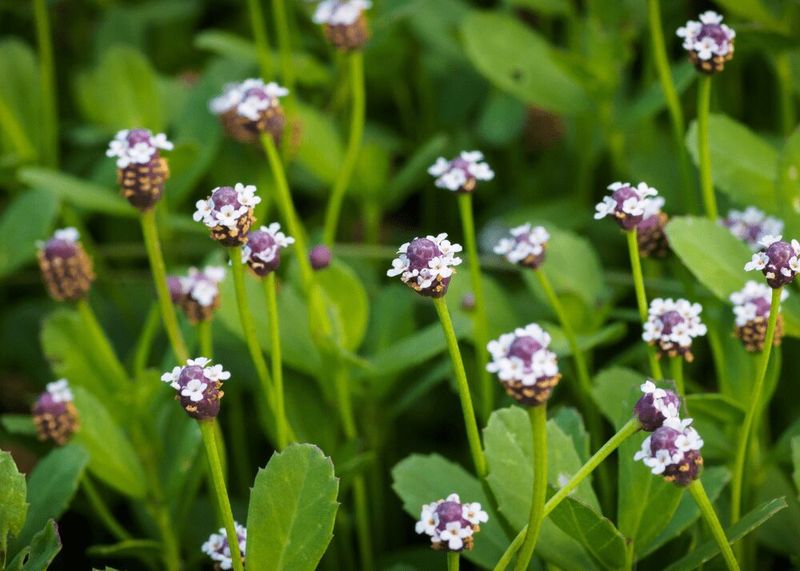
Texas frogfruit, Phyla incisa, is one native ground cover worth considering where site conditions fit. TPWD’s Bayou Planting Guide describes Texas frogfruit as a creeping plant with ground-cover potential, useful for erosion control and as a low-water option in appropriate settings. It also supports pollinators and fits naturally into a Texas-native landscape design. The right reasons to plant it are habitat value, erosion control, and water efficiency, not any claimed effect on scorpions.
Any ground cover planted near a structure should be managed so it does not become dense, unmanaged shelter or grow into contact with the building. The scorpion-habitat concern does not make native ground covers a bad choice; it makes thoughtful placement and occasional trimming a good habit. A well-maintained native planting near a home is a different thing from an overgrown mat of vegetation touching the foundation.
Fall timing can work in favor of native planting in Texas. TPWD’s water-wise yard guidance notes that fall can be a productive planting season for native landscapes in Texas, with cooler temperatures supporting root establishment before winter. Local rainfall totals, soil conditions, current temperatures, and any active municipal watering restrictions should all factor into the decision. Fall is a useful window, not a universal guarantee, and establishment irrigation may still be needed depending on conditions at your specific site.
Use safer habits when scorpions remain a concern
Rosemary is worth growing in Texas for its culinary uses, its drought tolerance, and its ability to hold up through hot summers. Texas-native ground covers like Texas frogfruit are worth planting for habitat, erosion control, and water savings. Neither of these is a scorpion barrier, and treating them as one means skipping the habits that actually reduce risk.
Wear shoes and gloves when doing yard work, and shake out shoes, clothing, and towels that have been left outside before putting them on or picking them up. Texas A&M AgriLife Extension notes that most Texas scorpion stings produce moderate reactions, but severity varies by individual and by species, and allergic reactions are possible. Anyone stung should be monitored carefully. Seek medical help if symptoms go beyond mild local pain, if a child is stung, or if any signs of an allergic reaction appear.
Never handle a scorpion with bare hands.
UC IPM points out that pesticides are not a stand-alone solution for scorpions because these animals hide in cracks and crevices where spray coverage is limited. When pesticides are part of a plan, they work best alongside exclusion and habitat modification, and any product used must be applied according to its label, with attention to safety for children, pets, pollinators, and nearby plants. Licensed pest control professionals are worth consulting when infestations are persistent or severe.
The most durable approach to scorpion management is a combination of sealed entry points, removed shelter, managed vegetation, and careful outdoor habits. A well-chosen plant adds beauty, supports wildlife, and saves water. Those are genuinely good reasons to garden with natives, and they hold up without needing any scorpion claim attached to them.