
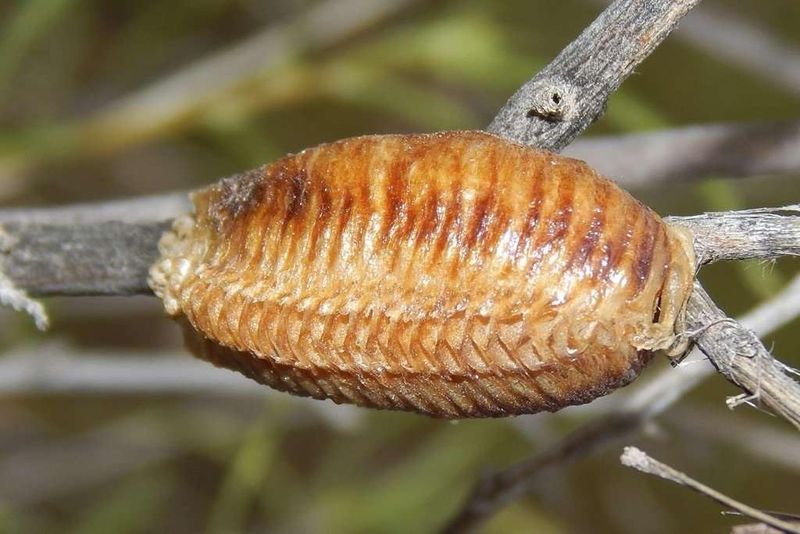
Walk through your yard this fall and you might brush past a small, papery lump stuck to a shrub stem or fence post without giving it a second look. That lumpy mass could be a mantis ootheca, the egg case a female deposited before the season turned, and tossing it during cleanup means losing whatever was inside. California yards host several mantis species, native and introduced alike, and understanding what that case actually is, and what it can and cannot do for your garden, changes how you handle fall yard work.
Several mantis species can occupy a California yard
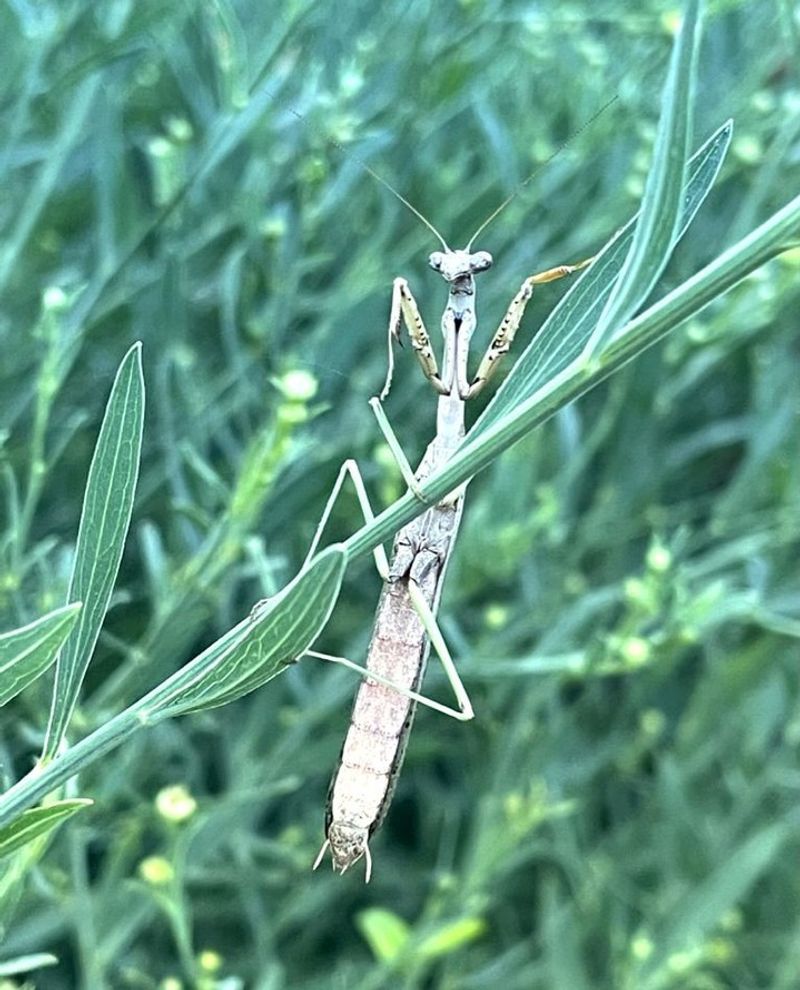
Spotting a praying mantis on a tomato cage or rose cane feels like a small wildlife victory, but the label “California praying mantis” glosses over a surprisingly varied group of insects. UC IPM lists at least nine mantid species in California, spanning both native and introduced groups. Native species include the California mantid (Stagmomantis wheeleri, also treated in some sources as S. californica), the bordered or Arizona mantid (S. limbata), Bistanta mexicana, and several Litaneutria species. Introduced species found in the state include the Chinese mantis, the European mantis, the Mediterranean mantis, and the South African mantis.
Because multiple species share California neighborhoods, a mantis or ootheca found in a yard cannot be confidently assigned to any single species from a casual glance. Shape, color, size, and texture can overlap between native and introduced mantids, and even experts sometimes need specimens or close examination to confirm an identification. Morphological study of mantis structures shows how nuanced species-level identification can be, which means a photograph or a quick outdoor look is rarely enough to settle the question.
This matters when a homeowner finds an ootheca during fall cleanup. A naturally occurring case might belong to a native species or an introduced one, and there is no reliable way to tell without expert help. Buying a commercial egg case from a garden center is a different situation: those products are commonly associated with introduced Chinese or Mediterranean mantises, though the packaging does not always make the species clear. Finding a wild case and purchasing one are separate decisions that deserve separate thinking, and neither one should automatically be treated as a guaranteed native predator waiting to hatch.
An ootheca carries a season’s worth of uncertainty
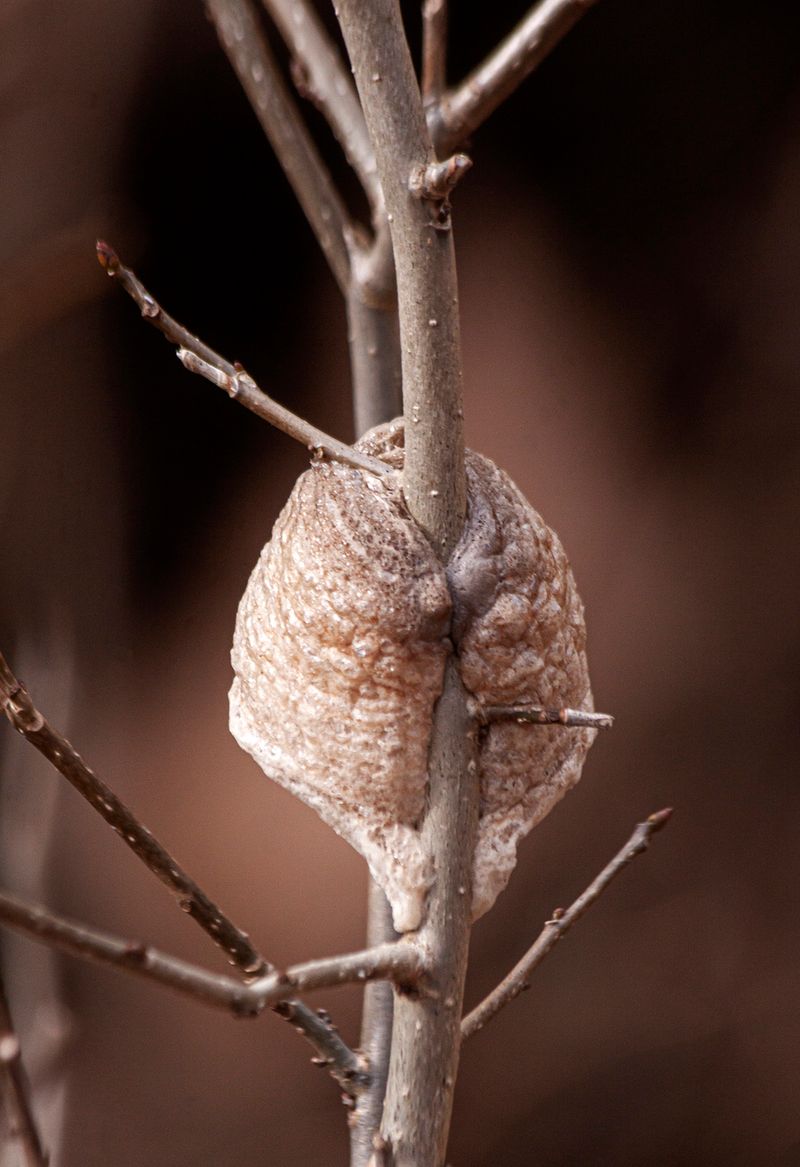
The word ootheca comes from Greek roots meaning egg container, and it describes the hardened, foam-derived case a female mantis produces after mating. Fresh cases have a soft, frothy consistency that hardens into a tough, paperlike or spongy shell within hours of being deposited. Depending on the species, an ootheca may be roughly cylindrical, flattened, or ridged, and can run up to about one and a half inches long, though size varies. UC IPM notes that females deposit egg masses in fall, typically attaching them to twigs, plant stems, fences, walls, or other firm outdoor surfaces where the case can remain undisturbed through winter.
Once deposited, the ootheca does its job quietly. The eggs overwinter inside the protective casing, insulated from cold and moisture, and nymphs generally emerge from late winter through spring when temperatures warm enough to trigger hatching. California mantises typically complete one generation per year, so the case a homeowner spots in October or November represents the only reproductive output that female will produce for the season.
Illinois Extension’s overview of mantis egg cases notes that a single ootheca may contain dozens or even hundreds of eggs, though the actual count varies by species and individual case. Most of those potential nymphs will not survive to adulthood. Starvation hits first because hundreds of tiny predators emerge into a space that cannot support them all. Cannibalism among siblings is common, and birds, spiders, and other predators take additional nymphs before they can grow.
Leaving an ootheca in place preserves the possibility of a few survivors reaching adulthood, not a guarantee of a yard full of mantises by summer.
Leave a safe outdoor ootheca where you found it
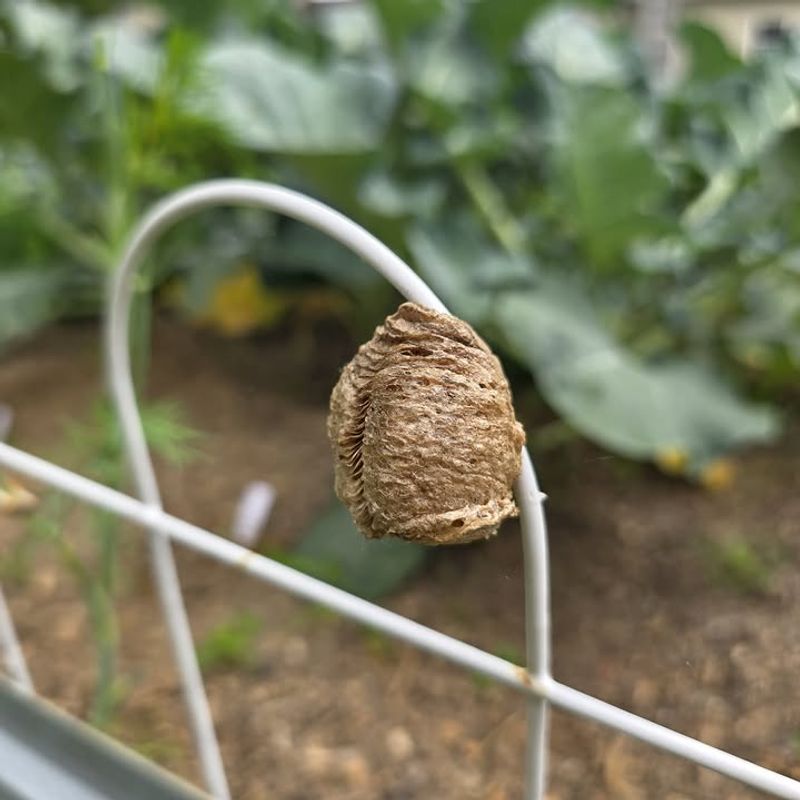
The simplest rule for fall cleanup is also the right one: if an ootheca is outdoors, intact, and not attached to something that will be moved, damaged, or used regularly, leave it exactly where it is. The female chose that spot deliberately, and the case is already oriented and positioned for the conditions it will face through winter. Extension guidance on praying mantis oothecae recommends relocating a case only when it is genuinely at risk of being disturbed, not as a precaution whenever one turns up during yard work.
Relocation makes sense in a handful of specific situations. A case attached to a gate or exterior door gets bumped every time the door swings. One fixed to a piece of patio furniture, a garden tool handle, or movable equipment faces a real chance of being knocked loose or carried inside. If any of those scenarios apply, moving the ootheca to a safer outdoor spot is a reasonable and relatively simple task.
When moving a case, keep a few details in mind. Preserve the original orientation as closely as possible, since the case is structured in a way that relates to how the nymphs will emerge. Attach it to a sheltered spot that gets some protection from direct rain and wind, such as the underside of a branch, a fence rail with an overhang, or the sheltered side of a wall. Tying the case gently with a bit of soft twine or using a staple through the outer edge of the foam works for most surfaces.
Do not set the case on the ground, where ants and ground-level predators can reach it easily.
Bringing the ootheca indoors is one of the more common mistakes well-meaning homeowners make. Warm indoor temperatures can trigger hatching days or weeks ahead of schedule, releasing dozens or hundreds of tiny nymphs into a house where there is nothing for them to eat and no path back outside. Ask Extension’s guidance on disappeared mantis egg cases reinforces that indoor warmth disrupts the overwintering process the ootheca is built around. Keep relocated cases outdoors, and let the natural temperature cycle do what it is designed to do.
A mantis is a generalist predator, not a garden service
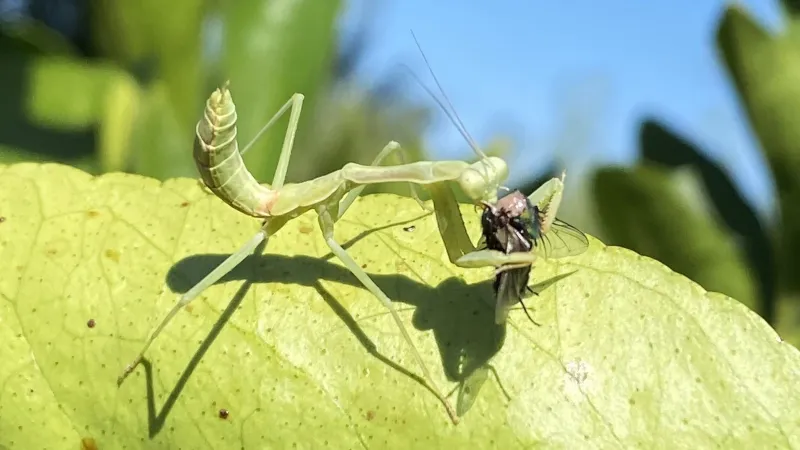
Mantises look like they were designed for pest control. Their raptorial forelegs, swiveling heads, and patient stillness give them the appearance of a specialized hunter zeroing in on the insects damaging your plants. The reality of how they actually feed is more complicated and less convenient for a homeowner hoping to solve a pest problem.
UC IPM states plainly that mantises are of little or no value for biological pest control because they hunt opportunistically rather than targeting specific pests. A mantis perched on a rose stem is equally likely to grab a hoverfly, a honeybee, a small butterfly, or a syrphid fly as it is to catch an aphid or grasshopper. Those non-pest insects include some of the most effective natural aphid predators a California garden can have, so a mantis hunting in the same area is not necessarily adding to pest control, and may occasionally subtract from it.
Each individual mantis also consumes relatively few insects over the course of a day or a season. A single adult may live only a few months, and its feeding rate does not scale to the reproductive speed of an aphid colony or a grasshopper population that has moved into a yard in numbers. Aphids can reproduce parthenogenetically, meaning without mating, and a colony can expand faster than any single generalist predator can reduce it.
None of that makes a mantis unwelcome. A naturally occurring mantis contributes to the biodiversity of a yard, adds an interesting predator to the food web, and will occasionally eat insects that are causing damage. Watching one hunt is genuinely remarkable. The honest framing is that a mantis may contribute to occasional pest predation, but its presence does not mean an infestation is being managed.
Treating it as a yard curiosity and ecological participant, rather than a pest-control contractor, keeps expectations realistic and protects the more specialized natural enemies that actually move the needle on aphid and grasshopper numbers.
Manage aphids and grasshoppers with targeted methods
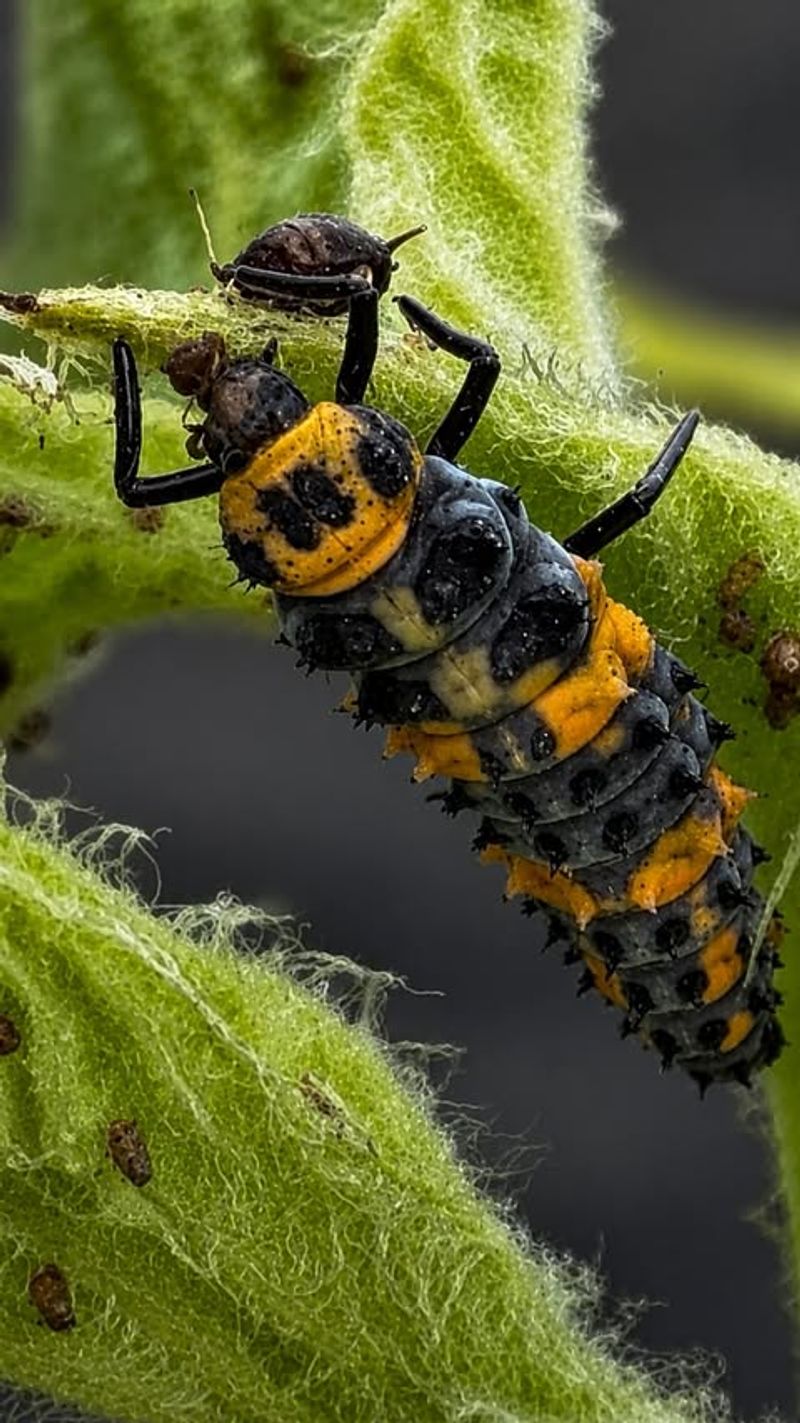
Waiting for a mantis to resolve an aphid outbreak or a grasshopper surge is not a management strategy. Both pests can reach damaging levels faster than any generalist predator can respond, and by the time nymphs from a spring hatch are large enough to take meaningful prey, a colony of aphids may already have stunted new growth across multiple plants.
For aphids, UC IPM’s aphid guidance lays out a practical sequence that works well in California gardens. Start with a strong stream of water directed at infested stems and leaf undersides. Aphids dislodged this way rarely climb back, and the method causes zero collateral harm to beneficial insects. Prune and bag heavily infested growth before the colony spreads.
Manage ants on the plant, because ants actively protect aphid colonies from predators in exchange for the honeydew aphids produce. Reducing ant access, with a sticky barrier on the trunk or stem, removes that protection and lets lady beetles, lacewings, syrphid larvae, and parasitoid wasps do their work more effectively. Those insects are far more specialized aphid predators than any mantis, and conserving them matters more than adding a generalist to the yard.
Grasshoppers present a different challenge. UC IPM notes that California has more than 200 grasshopper species, but only a fraction of them cause the kind of garden damage that warrants intervention. A mantis eating one grasshopper in a yard where dozens are feeding is a minor footnote, not meaningful control. Row covers, physical barriers, and early-season monitoring for egg masses in bare soil patches are more reliable first steps.
When any pest reaches a level that warrants a pesticide, UC IPM’s guidance on protecting natural enemies and pollinators recommends avoiding broad-spectrum, persistent products such as carbamates, organophosphates, pyrethroids, and some systemic neonicotinoids. Those classes of insecticides harm mantises and the more specialized predators a garden depends on. Spot treatment with selective or least-toxic options, applied only where the pest is concentrated and only when the threshold justifies it, protects the rest of the yard’s predator community. Every product label is a legal document, and following it exactly is both a safety requirement and good stewardship practice.
Purchased oothecae require a different decision
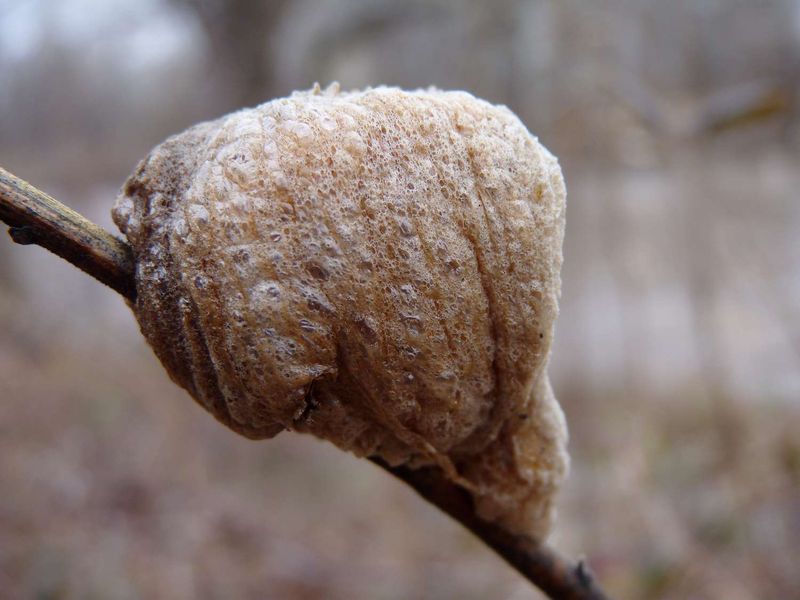
Finding a wild ootheca in your yard and ordering one from a garden center catalog look similar on the surface but involve meaningfully different situations. The wild case got there because a female mantis in your neighborhood completed her life cycle and chose that spot. The purchased case was produced and packaged commercially, and its species origin matters for anyone thinking carefully about their yard’s ecology.
UC IPM identifies commercial egg cases as commonly associated with introduced Chinese or Mediterranean mantises rather than native California species. That association is not universal, and packaging does not always specify the species, so reliable identification may require confirmation from an entomologist or cooperative extension specialist rather than a label claim. What is clear is that buying a case and releasing it is different from finding and protecting one that a local mantis left on its own.
K-State Extension’s entomology newsletter raises concerns that purchased mantises, often nonnative, do not effectively regulate most garden pest populations. The same opportunistic feeding that limits any mantis as a pest-control agent applies equally to a Chinese mantis released into a California yard. Adding nonnative individuals does not improve pest management outcomes and introduces the possibility of increased pressure on native insects, including pollinators and native predators.
Some extension experts and ecologists advocate removing abundant Chinese mantis cases when they can be identified with confidence, particularly in areas where native mantids are present and the introduced population is dense. NC State Extension’s analysis of Chinese mantids frames this as an ongoing ecological management question rather than a settled statewide rule. Removing every case that might be introduced is not a universal California recommendation, and acting on species identity without a confirmed identification risks removing native cases by mistake. The practical framework is straightforward: if you find a wild ootheca and are uncertain of its origin, leave it alone or get it identified before making a decision.
If you are considering purchasing cases for release, the extension consensus does not support that as a dependable pest management investment.
Pause before fall cleanup removes an ootheca
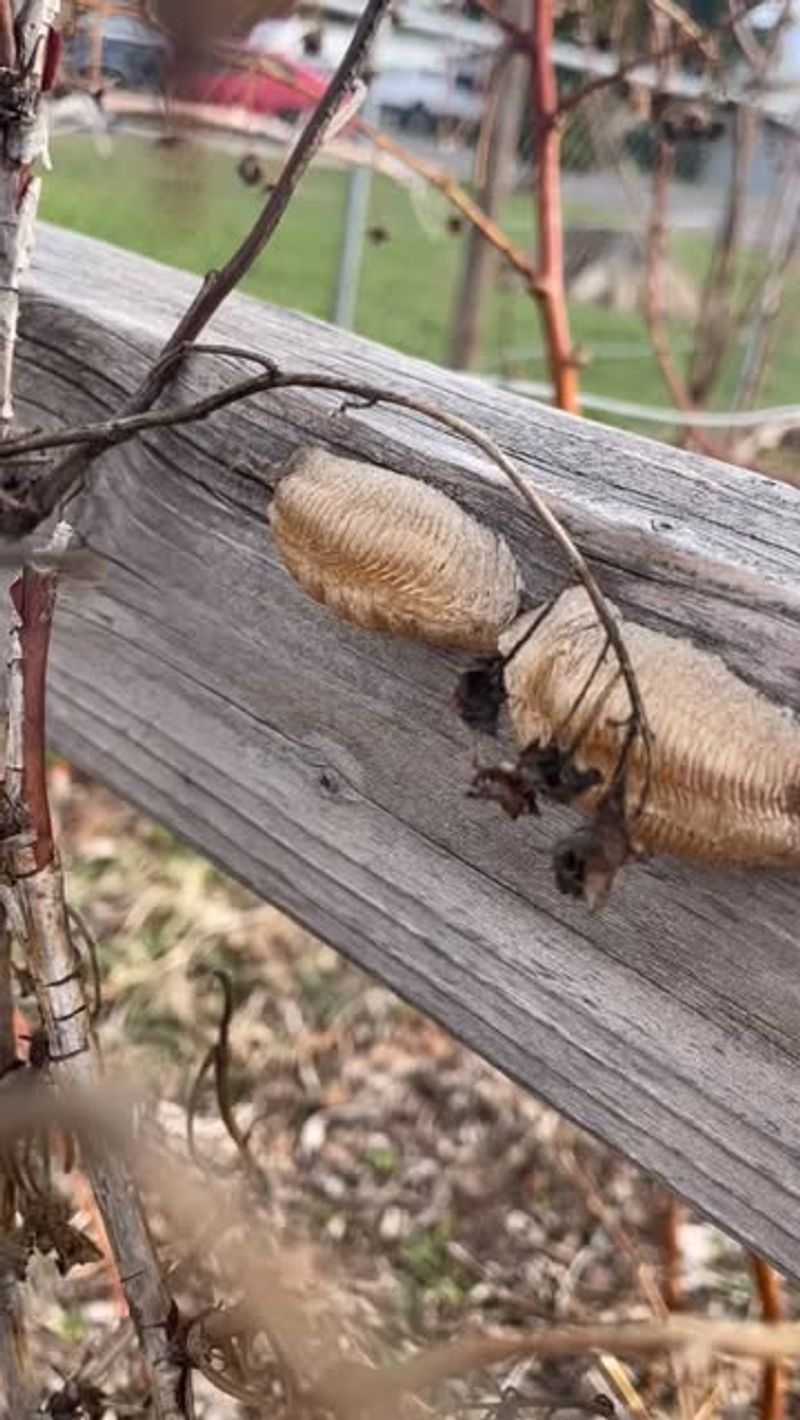
Before the pruning shears close on a dry stem or the clippings go into the green bin, a quick scan of the vegetation can make a real difference. An ootheca is easy to overlook when it is the same tan or beige color as a dead twig, and fall cleanup is exactly when cases are most likely to be cut away or bagged accidentally by homeowners who never knew they were there.
UC IPM’s overview of mantids and extension relocation guidance both point toward the same practical default: an intact, safely placed ootheca can stay where it is. If a case sits on a branch that genuinely needs to come down, cut the stem an inch or two past the attachment point and tie that small section to a sheltered spot on a nearby fence or shrub. That takes less than two minutes and keeps the overwintering eggs in the outdoor conditions they need.
Mantises can add something real to a California yard, a native predator moving through the food web, occasional feeding on pest insects, and a seasonal marker that the garden is supporting more than just the plants. What they cannot do is replace a broader strategy that protects natural enemies and pollinators while using targeted, label-compliant controls when pest pressure genuinely warrants intervention. The ootheca on the fence post is worth a moment of recognition. A yard that notices what it already has tends to take better care of it.