
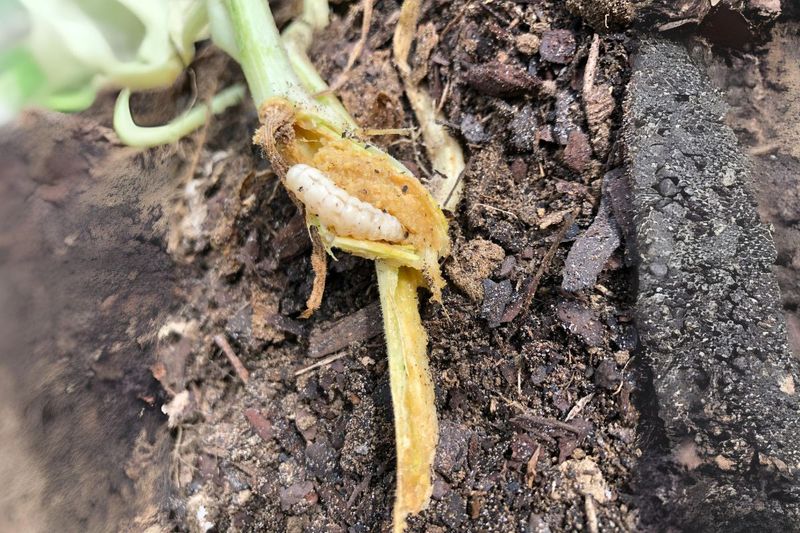
Watching a healthy squash plant go limp overnight is one of the more unsettling surprises a Central Texas garden can deliver in August. The reflexive explanation is the heat, and sometimes that is exactly right, but a small caterpillar tunneling through the lower stem can trigger the same dramatic collapse. Knowing how to tell the difference before reaching for a spray bottle can save a plant that still has a fighting chance, and it can save you time and money on one that does not.
A hidden stem injury can make heat look guilty
Squash vine borers are caterpillars that tunnel into the lower stem of a plant and feed on the vascular tissue inside. That tissue carries water and nutrients upward, so once a larva damages it, the plant above the injury point can no longer meet its water needs, and it wilts. In triple-digit Central Texas heat, even a partial blockage can make a vine collapse far faster than the same injury would in cooler weather.
The article title uses “a borer” as a narrative shorthand, but the biology is more complicated than that phrase suggests. Texas A&M’s southwestern squash vine borer guide notes that Texas has at least two squash vine borer species, and more than one larva can infest a single plant at the same time. A gardener who finds stem damage should expect that multiple larvae or even multiple species may be involved, not just one tidy caterpillar.
Texas A&M also reports that there are probably two broods of squash vine borer in Texas, which means late-summer damage is biologically plausible. However, August is not a universal peak for every Texas location, because timing shifts with weather, geography, and species. Frass emerging from a stem hole is a far more reliable clue than the calendar.
The Texas A&M cucurbit insect guide confirms that larvae tunnel into stems, producing frass and eventual wilt or death. University of Florida IFAS adds that frass at a stem entry hole is more diagnostically useful than the time of year, because heat may simply expose damage that was already present in the vascular tissue. The wilt looks dramatic because the vine can no longer compensate, not necessarily because the injury just occurred.
Check whether heat explains the wilt
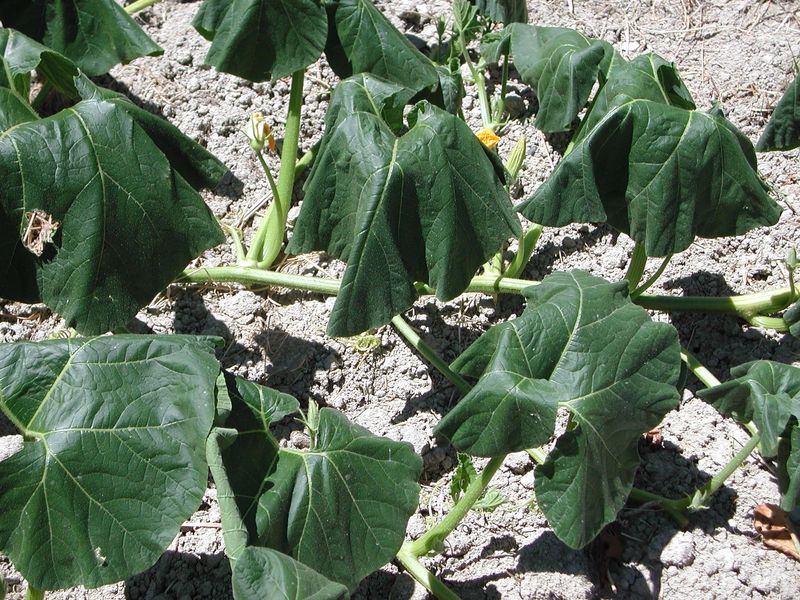
Not every August collapse is an insect problem. Squash plants in Central Texas routinely droop during the hottest part of the afternoon even when they are perfectly healthy and the soil has adequate moisture. University of Minnesota Extension guidance on heat-stressed gardens explains that plants can wilt temporarily when heat-driven water loss outpaces root uptake, even without any pest damage. If the leaves perk back up by evening or early morning, heat stress is the more likely explanation.
Before assuming an infestation, check the soil. Push a finger several inches into the root zone near the crown and confirm whether the soil is genuinely dry or still reasonably moist. Extension guidance on watering vegetable gardens recommends watering slowly and deeply at the root zone rather than overhead, which helps distinguish a drought-stressed plant from one with a structural stem problem. A plant that perks up after a thorough watering most likely needed water, not surgery.
Persistent wilt that does not reverse overnight, even with adequate soil moisture, is a different situation and calls for a closer look at the stem. The University of Minnesota vegetable wilt diagnostic tool lists squash bugs, bacterial wilt, crown rot, and root diseases alongside borer damage as possible explanations for leaves that stay down. Squash bugs feed on plant tissue and can cause wilting, particularly when populations are heavy. University of Minnesota Extension on squash bugs notes that heavy feeding pressure can mimic the sudden collapse that gardeners associate with borers.
Bacterial wilt, though more commonly linked to cucumbers and melons, remains a possibility worth ruling out. The calendar and the thermometer alone cannot confirm a borer infestation.
Inspect the lower stem for the telling clues
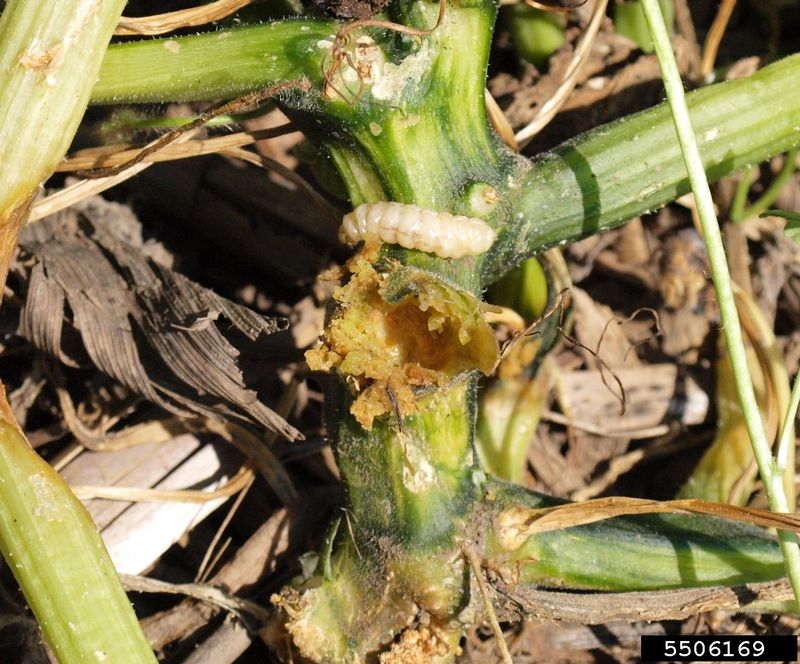
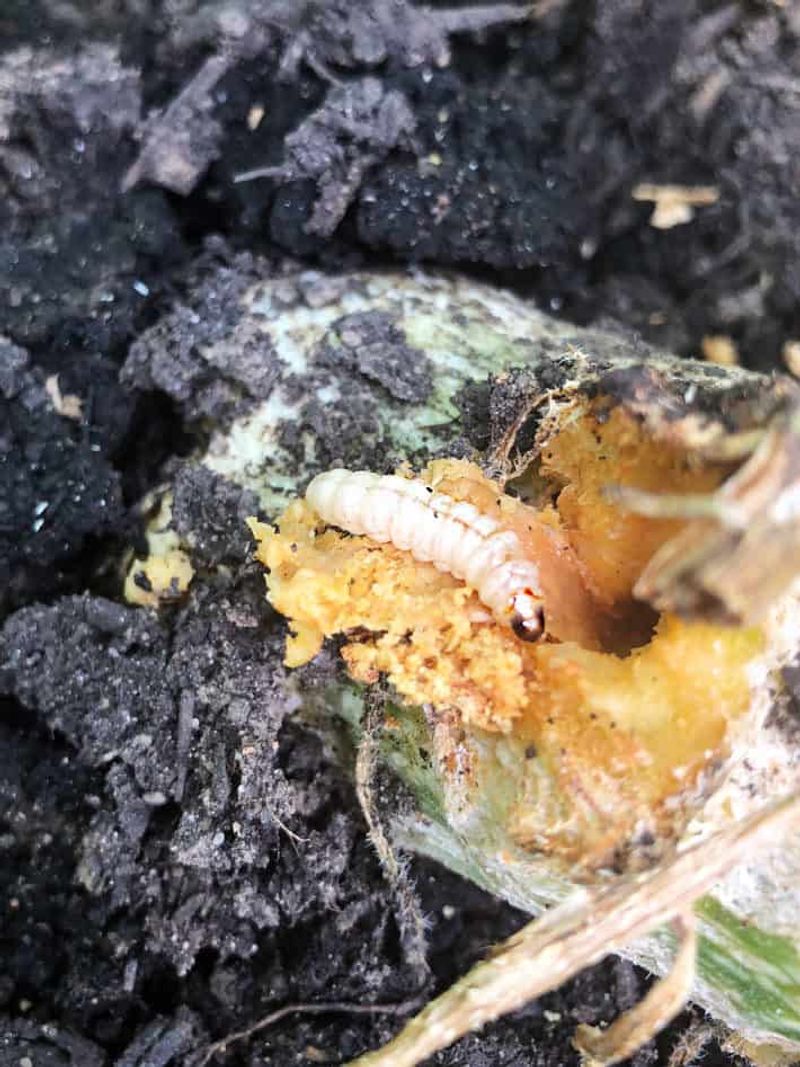
Once a plant stays wilted through the night, start the inspection at the crown and work up the lower six to eight inches of stem. You are looking for three things in combination: a small, round entry hole in the outer stem tissue; tissue that feels soft, mushy, or split near that hole; and frass that looks like wet sawdust ranging in color from orange and green to tan. Finding all three together is much more specific than wilting alone.
Texas A&M’s squash vine borer page describes the frass that larvae push out of the stem as a key identifying feature. University of Illinois Extension’s guide to managing squash vine borer confirms that frass emerging from a hole in the lower stem is the strongest visible clue that a larva is actively tunneling inside. Wilt by itself does not prove a borer is present, but frass at a hole raises the probability considerably.
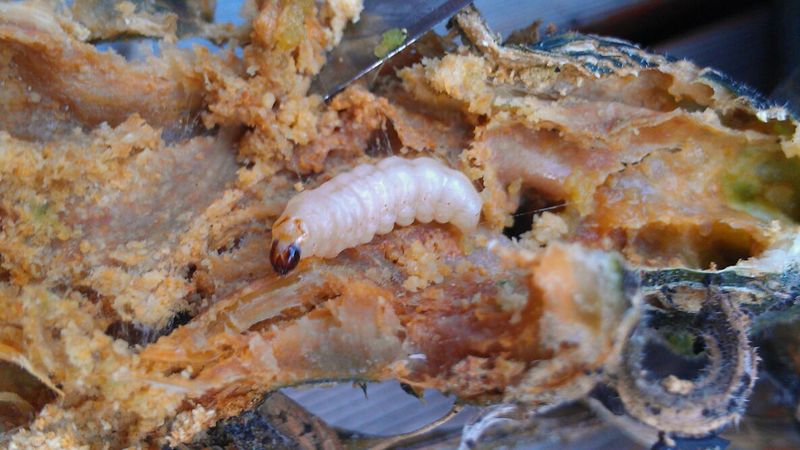
To confirm, use a sharp, clean knife or blade to make a careful lengthwise slit in the stem near the entry hole. You are looking for a cream-colored caterpillar with a brown head, or for the tunneled-out channel the larva leaves behind as it feeds. University of Minnesota Extension on squash vine borers describes this inspection step as the way to confirm the diagnosis before deciding on a response.
Cutting into the stem is not a neutral act. The slit creates a wound that the plant must recover from on top of the existing borer damage, so this step is most worthwhile when you have already found frass at a hole and the stem tissue still looks viable on either side of the suspected entry point. If the stem is already completely collapsed and black or mushy throughout, cutting further is unlikely to help and may confirm that removal is the better choice.
Try a careful rescue while viable tissue remains
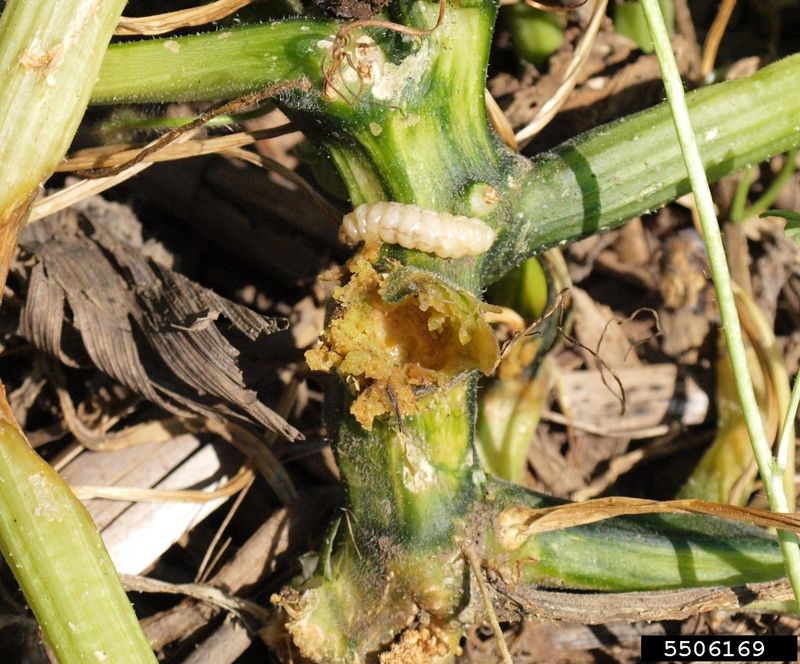
After cutting into the stem and confirming a larva or clear tunneling, the next decision is whether the plant is worth trying to save. A rescue attempt makes the most sense when the damage is caught early, the stem still has healthy tissue on either side of the injury, and the plant has not already collapsed beyond the point of recovery. Removing or killing the larva at that stage stops the active feeding, though the tissue that was already destroyed cannot be repaired.
University of Minnesota Extension and University of Illinois Extension both describe larva removal as a careful early rescue option. Use the tip of a knife, a toothpick, or a wire to extract the larva from the slit you have already made, then kill it rather than dropping it in the garden bed. Check nearby for additional entry holes, because more than one larva may be present in the same stem.
After removal, mound several inches of moist soil over the damaged stem section and press it gently around the wound. Squash can sometimes produce additional roots along buried stem nodes, which may allow the plant to take up water even if the primary vascular pathway is compromised. Keep the soil in that mounded area consistently moist during the days that follow, because a plant trying to regenerate roots in August heat needs reliable moisture at the root zone.
Recovery is genuinely uncertain. The stem wound, the vascular damage from tunneling, and the ongoing heat demand all work against the plant at the same time. Some gardeners succeed with this approach and watch the vine recover; others find that the plant declines anyway over the following week. Treating this as a reasonable attempt rather than a guaranteed fix keeps expectations realistic, and it avoids the disappointment of assuming the intervention should have worked.
Remove plants that cannot reasonably recover
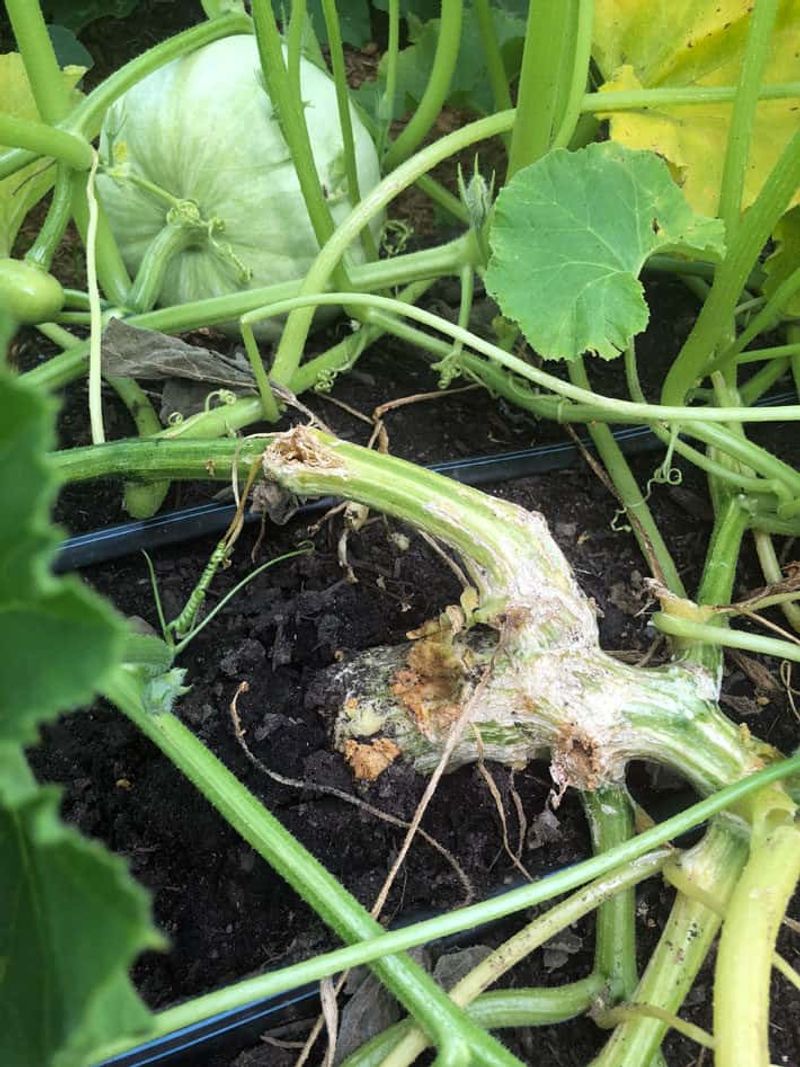
Some plants are too far gone for a rescue attempt to be practical. A stem that is entirely collapsed, black, or mushy from the crown upward, with multiple entry holes and no firm green tissue remaining, is unlikely to recover regardless of what steps follow. Leaving that plant in the bed does not give it a second chance; it gives the larvae inside a chance to finish their development and enter the soil.
Once a borer larva finishes feeding, it exits the stem and pupates in the soil near the host plant. University of Minnesota Extension explains that removing and disposing of badly infested plants reduces the number of pupae that can overwinter or complete their cycle in your garden soil. University of Illinois Extension’s 2024 update on squash vine borer reinforces that prompt plant removal and cleanup are among the more useful steps a home gardener can take once a plant is beyond saving.
Pull the plant at the soil line, bag the stem and leaves rather than composting them, and discard the material. University of Florida IFAS notes that crop cleanup and rotation can reduce local pest carryover, though neither step eliminates future risk entirely. Adult moths can fly into a garden from surrounding areas, so removing a damaged plant helps with local soil populations but does not create a pest-free zone.
After clearing the plant, loosen the top few inches of soil in that spot to expose any pupae to heat and predators. This small step costs little effort and may reduce the number of adults that emerge from that immediate area. It is worth doing even if you plan to replant the same bed later in the season.
Reduce pressure before the next planting
Preventing a repeat infestation is more realistic than eliminating the pest entirely. Adult squash vine borer moths can fly into a small Texas garden from well outside the planting area, so any strategy that reduces local pressure is worthwhile, even if it cannot guarantee a clean season.
Floating row covers, when secured tightly around the edges with soil or staples, physically block adult moths from reaching the stems to lay eggs. University of Minnesota Extension on squash vine borers describes this as one of the more reliable non-chemical barriers available to home gardeners. The critical limitation is pollination: row covers exclude bees along with pests. Extension guidance on growing summer squash and zucchini notes that covers must generally come off when the plants begin to flower so that bees can access the blooms.
The exception is hand-pollination, where the gardener transfers pollen manually each morning using a small brush or by rubbing male and female flowers together, which allows covers to stay on longer.
Rotation is a second tool with real limits. Moving cucurbits to a different bed reduces the number of pupae in the immediate soil, but University of Florida IFAS notes that flying adults can still find new plantings, especially in small gardens where the distances involved are not meaningful to a moth.
Choosing less-susceptible varieties can also lower the odds. Butternut squash and some Cucurbita moschata types are generally less attractive to borers than zucchini, acorn, or Hubbard squash, according to University of Illinois Extension and Penn State Extension. Less susceptible does not mean immune, particularly in Texas where multiple borer species are present, but it can mean fewer larvae and less severe damage in a given season.
If you are considering a preventive insecticide application, the target is adult moths or newly hatched larvae before they bore into the stem. Once larvae are inside, foliar sprays generally cannot reach them. Any product you consider must be registered for use on squash and for this specific pest; the label is the legal document that governs rate, timing, harvest interval, and pollinator restrictions. EPA guidance on pollinator protection and EPA’s introduction to pesticide labels both make clear that the label is legally enforceable and that pollinator restrictions must be followed.
Do not apply any insecticide to open flowers when bees are foraging, and check the specific product label rather than relying on general advice about timing.
Let the stem evidence—not the date—guide the decision
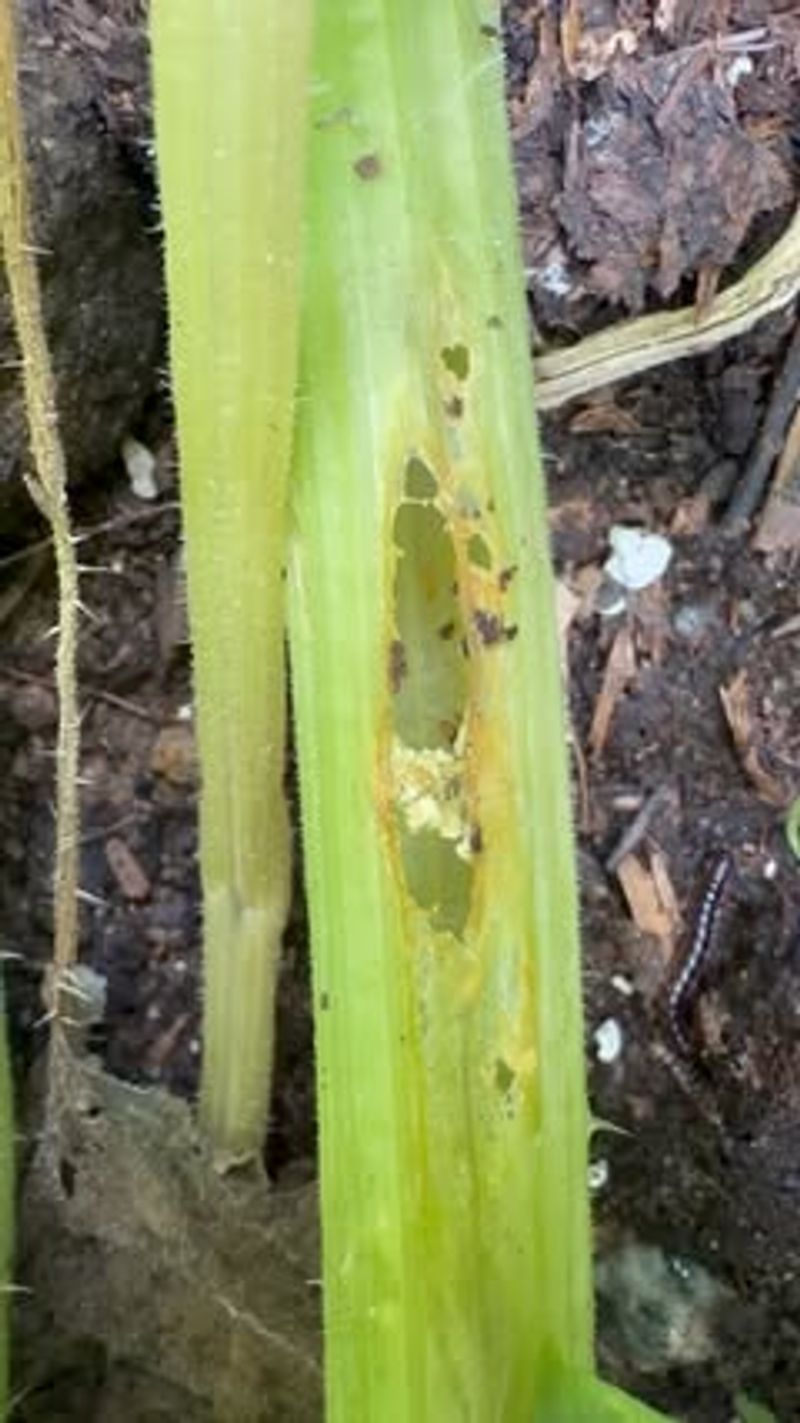
August heat in Central Texas is a real plant stressor, and it can make a vine with partially damaged vascular tissue collapse far more dramatically than the same injury would in cooler weather. But heat cannot be the diagnosis. Extension guidance on heat-stressed gardens is clear that temporary afternoon droop that reverses overnight is a heat response, not proof of insect damage.
The practical sequence is straightforward. Check soil moisture and water if the ground is dry. Watch the plant overnight. If it stays down, move to the lower stem and look for a hole and frass before cutting anything.
Texas A&M’s borer guide and University of Minnesota Extension on squash vine borers both support frass at an entry hole as the most reliable visible clue available to a home gardener.
Confirm before you cut, choose rescue or removal based on what you actually find in the stem, and focus future effort on reducing the conditions that favor infestation rather than reacting to the calendar. A gardener who watches the stem first and sprays last is the one most likely to make a decision that actually helps.