
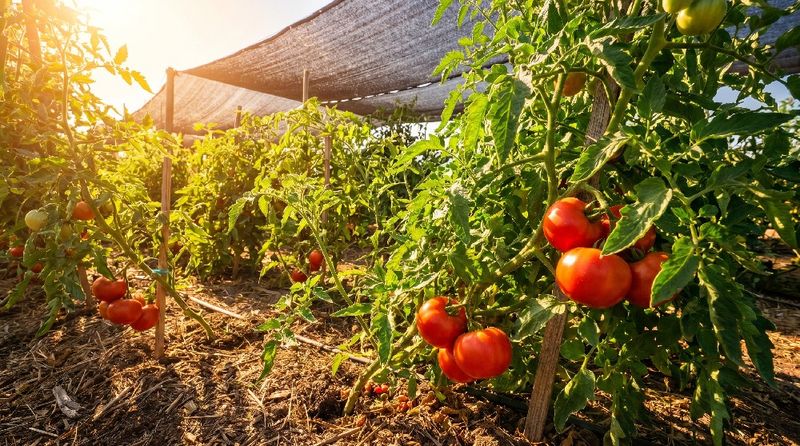
Your tomato plants look healthy, the flowers keep coming, but nothing is turning into fruit. August in Central Texas is the reason, and the answer has everything to do with how warm the nights are staying. Understanding the nighttime temperature range that makes fruit set so difficult gives you a real plan for keeping your plants alive and ready to produce again when conditions improve.
When Warm Nights Reduce Fruit Set
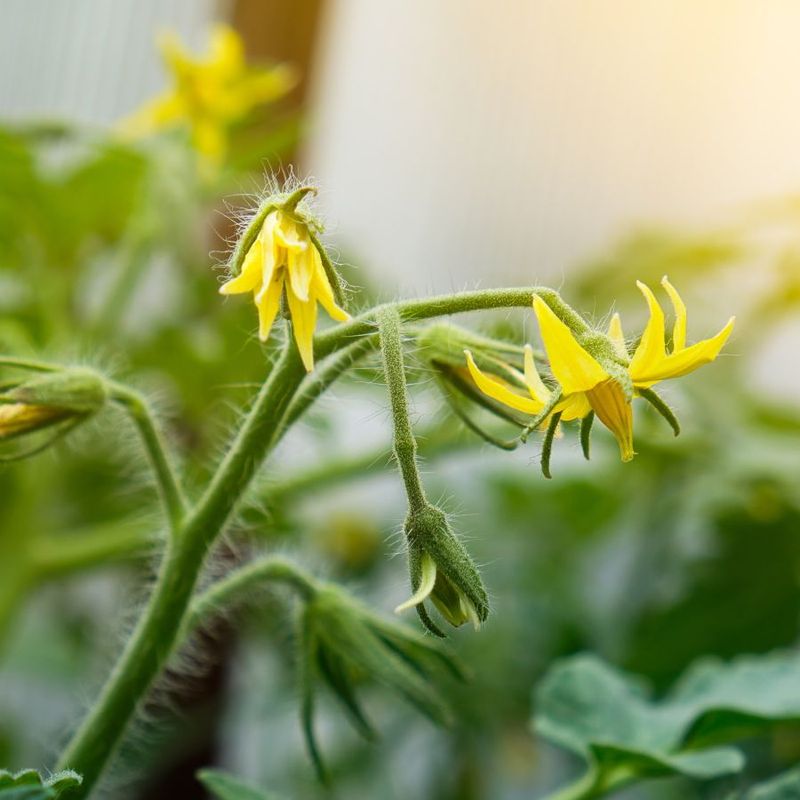
Tomato fruit set often runs into trouble when nighttime lows stay in the range of roughly 70 to 75 degrees Fahrenheit for several nights in a row, especially when daytime temperatures are climbing above about 85 to 92 degrees. Oklahoma State University Extension guidance on home garden tomatoes notes that fruit set is poor when nighttime temperatures exceed about 70 degrees Fahrenheit, while some other extension sources place the upper edge of the useful nighttime range closer to 72 or 75 degrees. The range is a warning zone, not a hard cutoff, and cultivar differences mean some plants handle warmer nights better than others.
What matters most is repeated exposure. One unusually warm night raises the risk, but several consecutive nights at elevated temperatures, paired with scorching daytime highs, are what typically push fruit set into a noticeable decline. Alabama Cooperative Extension’s guidance on blossom drop points out that flowers often abort when days stay above about 85 degrees and nights stay above roughly 72 degrees, underscoring that both halves of the daily temperature cycle contribute to the problem.
Central Texas fits this pattern almost perfectly in August. NWS climate records for the San Antonio and Austin area show that Austin’s 1991 to 2020 normal average August minimum temperature runs around 75 degrees Fahrenheit at Camp Mabry. A separate NWS climate summary puts the normal average August low at Austin-Bergstrom near 72.6 degrees. Those figures place a typical Central Texas August night squarely in the range where fruit set commonly suffers.
Keep in mind that official weather-station readings describe conditions at a specific monitoring site. Your garden may be warmer or cooler depending on soil cover, nearby pavement, walls, or shade. The station data gives you useful regional context, but the temperature around your plants is what shapes the outcome on any given night.
Why Flowers Appear Without Producing Fruit
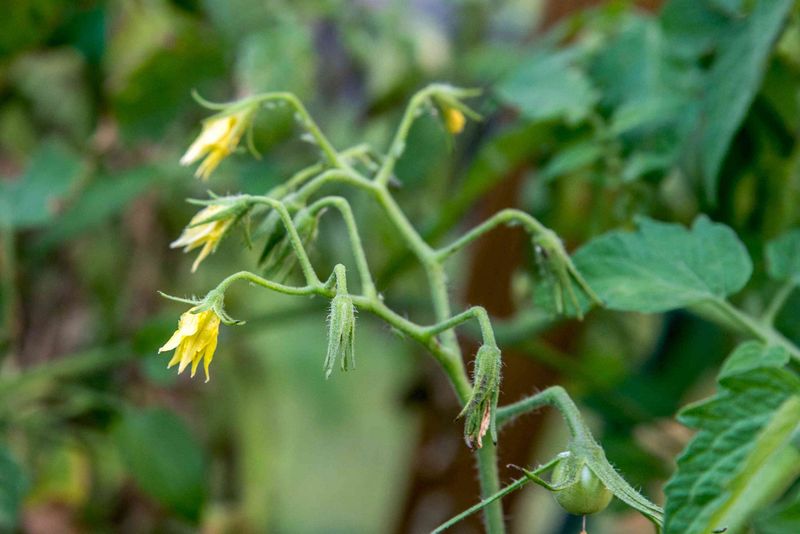
Tomatoes are built to self-pollinate, but the process depends on pollen that is viable, released at the right time, and able to travel down the style to fertilize the ovule. Sustained heat disrupts each of those steps. When temperatures stay elevated through the night and into the following day, pollen can lose viability, fail to release normally from the anthers, or fail to germinate and grow a pollen tube even after landing on the stigma. The result is a flower that looks perfectly normal from the outside but never completes fertilization.
Peer-reviewed research on tomato heat stress and pollen performance found that sustained conditions of roughly 90 degrees Fahrenheit during the day and 79 degrees at night reduced fruit set in heat-sensitive cultivars, with measurable differences in pollen release and germination between varieties. That cultivar variation is an important practical point: not every tomato responds to heat stress in exactly the same way, which is why some plants in the same garden may perform differently during an August heat stretch.
Alabama Extension’s detailed blossom-drop publication explains that the plant continues generating new flower buds even while existing blossoms are aborting, which is why a heat-stressed plant can look full of flowers while producing almost no fruit. The blooms are real, but the conditions for successful pollination and fertilization are not.
Poor pollination does not always mean complete blossom loss. Oklahoma State Extension’s column on tomato blossom drop notes that partial fertilization can produce small, misshapen, or catfaced fruit rather than clean blossom abortion. Seeing a few oddly shaped tomatoes alongside dropped flowers is a sign that heat is interfering with pollination rather than stopping it entirely, and that the plant retains some capacity to set fruit when conditions improve.
What Blossom Drop Looks Like—and What It Is Not
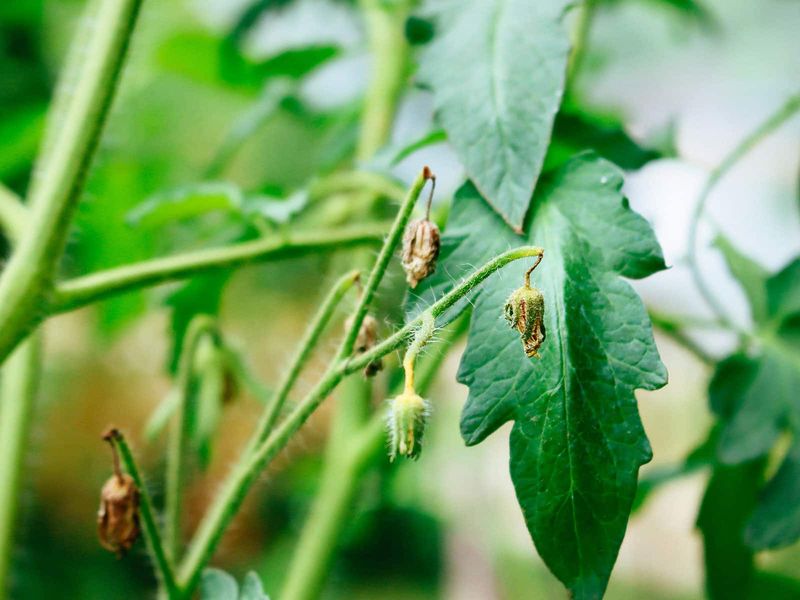
Heat-related blossom drop has a recognizable look once you know what to check. The flower stem yellows or browns near the point where it attaches to the main stem, and the whole blossom dries and falls before any small fruit swells behind it. Oklahoma State’s guide to non-infectious tomato disorders describes this pattern clearly and notes that moisture stress can compound the problem. In some cases the blossom stays attached but the tiny developing fruit behind it shrivels without enlarging.
Blossom drop and blossom-end rot are two entirely different problems, and mixing them up leads to the wrong response. Blossom drop happens before a fruit forms: the flower fails and falls. Blossom-end rot shows up later, on an existing fruit that has already begun growing, as a dark, sunken, leathery patch on the bottom of the tomato. UC’s tomato disorder guide links blossom-end rot to water-uptake problems and calcium movement within the plant, not to the pollination failure that causes blossom drop.
Treating one as though it were the other wastes time and money.
Heat is also not the only reason tomatoes flower without setting fruit. Check for these other possibilities before assuming August temperatures are the whole story: soil that has gone very dry between waterings, large swings between dry and saturated conditions, excess nitrogen that pushes leafy growth at the expense of fruiting, insect feeding or disease on the flowers or stems, insufficient daily sunlight, physical wind damage to blossoms, and any herbicide drift or root injury. Iowa State Extension’s FAQ on tomatoes flowering without fruit lists several of these causes together, a useful reminder that the diagnosis requires looking at the whole plant and its environment.
One common misconception is worth clearing up directly. Outdoor tomatoes do not need honeybees to produce fruit. University of Minnesota Extension guidance on pollination requirements confirms that tomato flowers contain both male and female parts and can self-pollinate, with wind or gentle vibration helping release pollen. UConn IPM’s greenhouse tomato pollination resource notes that bumblebees are used in greenhouse production specifically because there is no natural wind movement indoors.
In your outdoor Central Texas garden, absent bees are almost never the reason flowers are dropping in August.
Read the Plant’s Microclimate, Not Just the Forecast
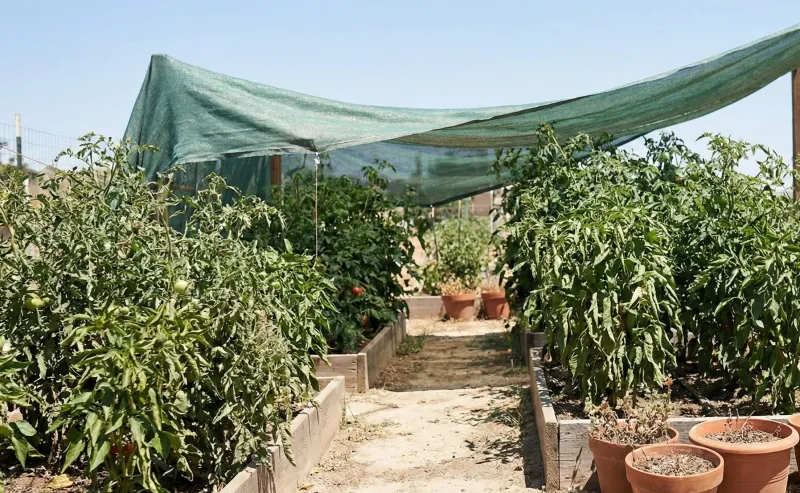
The official low temperature reported for Austin or San Antonio on a given morning reflects conditions at a monitored weather station, usually over grass, away from structures, at a set height above the ground. Your tomato plant may be experiencing something noticeably different. Containers hold and radiate heat longer than in-ground beds. Plants growing near brick walls, concrete patios, or asphalt absorb reflected heat through the night.
A sheltered courtyard with little air movement can stay several degrees warmer than the open-air station reading. Oklahoma State Extension’s column on blossom drop notes that hot, dry winds add another layer of stress on top of ambient temperature, and that the conditions directly around the plant are what drive the outcome.
Rather than relying on a single forecast number, track several consecutive days and nights. Alabama Extension’s blossom-drop overview emphasizes that duration matters: sustained heat over multiple days and nights produces more severe blossom abortion than an isolated spike. If your overnight lows have been sitting near or above 70 degrees for a week while daytime highs stay above 90, the cumulative heat load is the relevant measurement, not any single reading.
Soil moisture is part of the microclimate picture too. Utah State Extension’s tomato-growing guidance points out that drought stress and large moisture swings can worsen blossom drop independently of temperature. Before concluding that heat is the sole cause of your missing fruit, press a finger two inches into the soil. If it comes up dry or if the soil surface has been cycling between bone-dry and soggy, moisture stress may be contributing as much as the thermometer.
Addressing both factors together gives the plant a better foundation when temperatures eventually ease.
Protect Plants While the Heat Persists
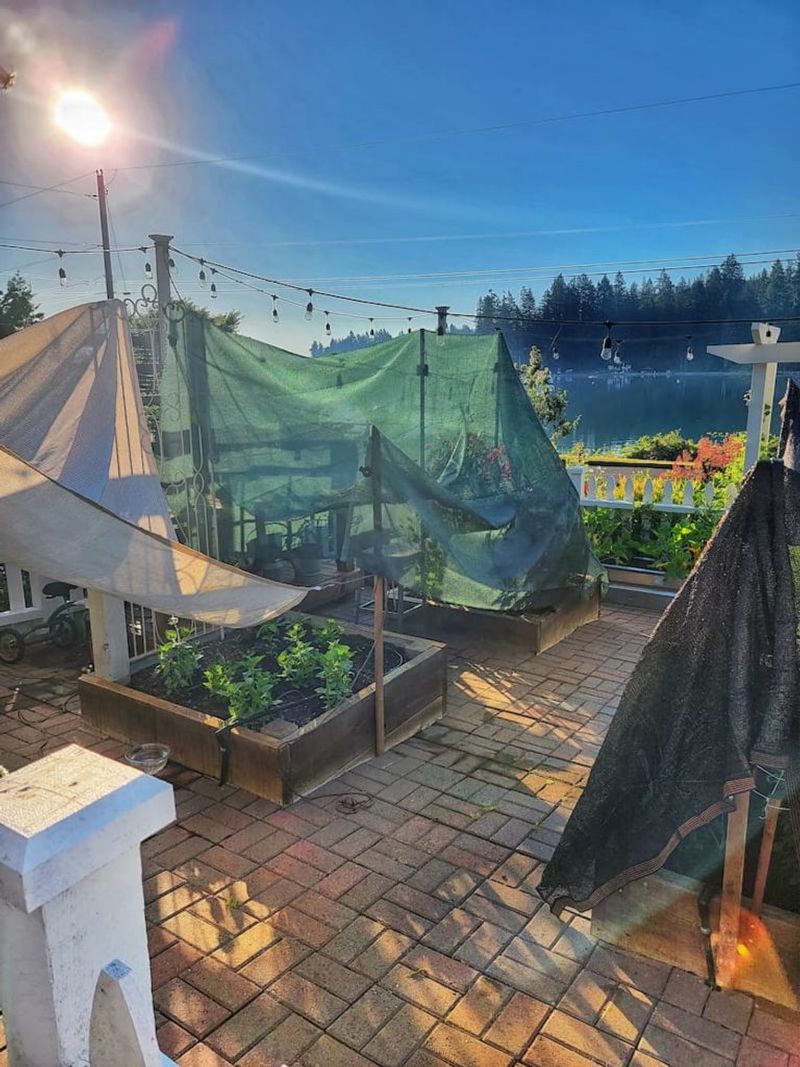
Getting through an August heat stretch without losing the plants entirely is a realistic goal even when fruit set has stalled. The most effective baseline steps focus on reducing secondary stress rather than trying to force pollination in conditions that are working against it. Consistent soil moisture is the starting point. Oklahoma State Extension’s blossom-drop column specifically recommends keeping soil moisture reasonably uniform and avoiding large swings between very dry and very wet conditions, because those swings compound heat stress and can trigger additional blossom abortion on their own.
Apply three to four inches of organic mulch around the base of the plant, keeping it a few inches back from the stem. Mulch slows soil moisture loss, moderates soil temperature, and reduces the wide daily fluctuations that stress roots. Pair it with drip irrigation or a slow, soil-directed soaker hose rather than overhead sprinklers. Oklahoma State’s non-infectious tomato disorders guide cautions that prolonged leaf wetness from overhead watering can encourage fungal disease, which is an additional reason to keep water at the soil level during hot, humid weather.
Utah State Extension’s tomato care resource echoes the value of uniform moisture as a foundation for plant health under stress.
Temporary afternoon shade can reduce the heat load during the hottest hours of the day. UC Master Gardener guidance on protecting tomatoes in heat recommends shading plants during peak heat while making sure they still receive adequate sunlight overall. A 30 to 40 percent shade cloth positioned to block the harshest afternoon sun, then removed or adjusted in the morning, is a practical approach. All-day heavy shade reduces photosynthesis and can weaken the plant over time, so the goal is targeted relief, not darkness.
A few common remedies are not worth pursuing. Applying extra nitrogen because the plant is not fruiting tends to push more leafy growth while delaying flower and fruit development. Texas A&M AgriLife Extension’s fertilizing guidance recommends basing any fertilizer application on a soil test rather than guesswork. Calcium sprays or soil amendments do not correct heat-related pollination failure; they address blossom-end rot, which is a different disorder.
Blossom-set hormone sprays, which are sometimes marketed for blossom drop, are generally more useful under cool-temperature conditions and have little effect on heat-driven failure. Purdue Extension’s publication on tomato disorders notes that these sprays may even produce misshapen fruit when used under high heat.
Choose Varieties That Handle Heat Better
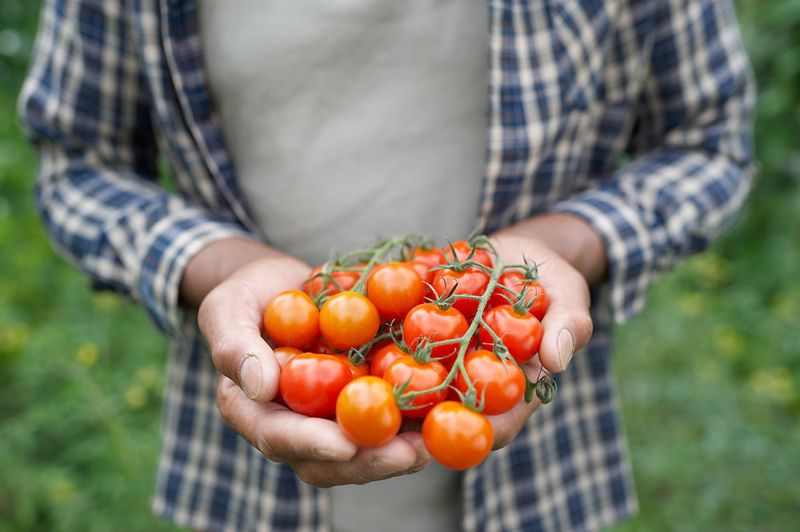
Cultivar selection is one of the most practical tools a Central Texas gardener has against August heat. Heat-tolerant and heat-set tomato varieties are bred to continue setting fruit under warmer conditions than standard cultivars, and choosing them from the start shifts the odds in your favor. Texas A&M AgriLife Extension’s recommended tomato variety list identifies cultivars that have performed well in Texas conditions, including types described as heat tolerant or able to set fruit in heat. That list is a practical starting point for anyone planning a planting or considering what to try next season.
Cherry tomatoes and other small-fruited types tend to tolerate a wider temperature range than many large-fruited varieties. Iowa State Extension’s FAQ on tomatoes flowering without fruit notes that smaller-fruited types generally handle heat better, which helps explain why a cherry tomato in one corner of the garden may keep producing while a large beefsteak type nearby has stalled entirely. If your goal is consistent summer production, smaller-fruited heat-tolerant varieties are a more reliable bet than chasing large-slicer performance through a Central Texas August.
Mississippi State Extension’s late-summer tomato production guidance reinforces that even heat-tolerant varieties are not immune. Extreme heat combined with drought, poor light, disease pressure, or an unfavorable microclimate can push any cultivar past its practical limits. Alabama Extension’s blossom-drop overview makes the same point: variety tolerance reduces risk but does not eliminate it. Think of heat-tolerant cultivars as a better starting position, not a guarantee, and pair variety choice with the moisture management and microclimate awareness described in earlier sections for the best overall result.
Fruit Set May Improve After the Weather Moderates
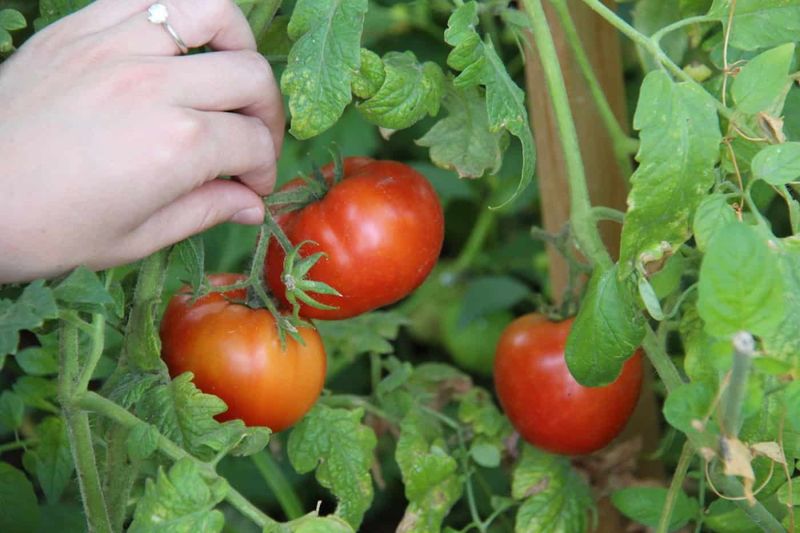
Recovery is genuinely possible once nighttime temperatures ease and stay lower for several consecutive nights, but the timing is conditional on local weather, not a fixed date on the calendar. When both nighttime lows and daytime highs drop into a more favorable range and hold there, the plant’s ability to complete pollination and fertilization typically improves. New fruit can begin setting, though it then needs additional weeks to enlarge and ripen before it reaches the table. Alabama Extension’s blossom-drop guidance describes this pattern: fruit set returns when conditions moderate, but the improvement follows sustained change, not a single cooler night.
Texas A&M AgriLife Extension’s fall vegetable gardening guide for Texas provides regional planting windows and timing benchmarks that are far more useful than any fixed September restart date. The Texas home vegetable gardening guide from AgriLife advises gardeners to plan around the expected first freeze date for their area, because fruit that sets in fall still needs time to develop before cold ends the season. AgriLife’s easy-gardening tomato publication echoes this point, recommending that Central Texas gardeners track local forecasts rather than assume a uniform fall harvest window.
Plant health, cultivar, soil moisture, disease pressure, and your specific microclimate all influence whether recovery actually happens once temperatures moderate. A plant that has been severely stressed, is carrying significant disease, or has lost substantial foliage may respond more slowly than one that was well maintained through the heat. Use local forecast data to watch for a sustained stretch of more favorable temperatures, keep moisture consistent in the meantime, and let the plant show you whether new fruit is forming rather than waiting for a promised date. The plants that survive August in good shape are the ones with the best chance of delivering a fall harvest worth the wait.