
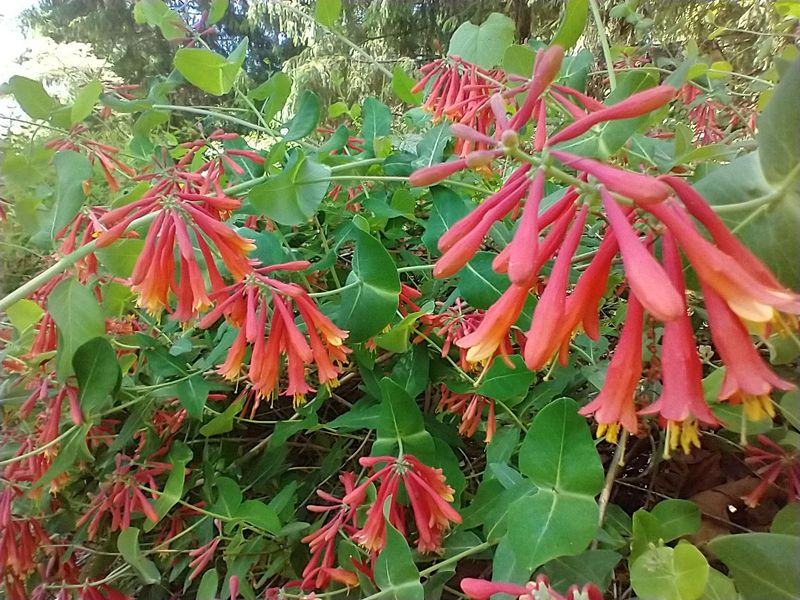
Chain-link fences are practical, but they are not exactly beautiful, and most homeowners would rather look at something alive and green. Coral honeysuckle, known scientifically as Lonicera sempervirens, is a native vine that grows across North Carolina and climbs happily over chain-link while offering flowers for hummingbirds and berries for songbirds from late summer into early fall. It stays manageable, supports local wildlife through multiple seasons, and fits yards from the Coastal Plain to the Mountains. If you have been searching for a native vine that earns its place on a fence without turning into a maintenance nightmare, this one deserves a close look.
Coral honeysuckle fits a North Carolina chain-link fence
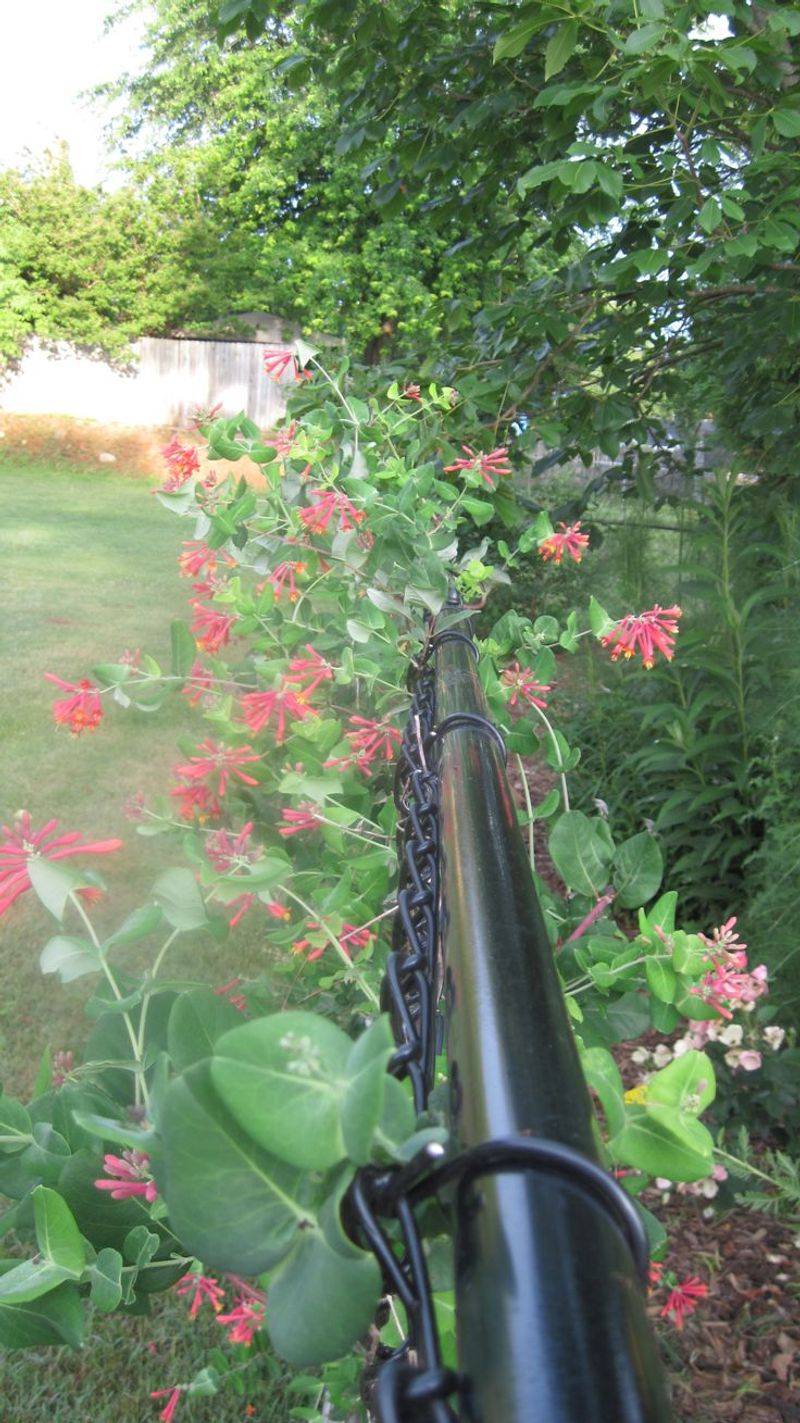
Walk through any native-plant nursery in North Carolina and you may see it labeled coral honeysuckle, trumpet honeysuckle, or scarlet honeysuckle. All three names point to the same plant: Lonicera sempervirens, a twining vine native to the eastern United States and documented by NC State as growing across all three of North Carolina’s major regions, including the Coastal Plain, the Piedmont, and the Mountains.
What makes it a strong match for a chain-link fence is a combination of scale and habit. NC State’s plant profile for Lonicera sempervirens lists a mature length of roughly 10 to 20 feet and describes it as well suited for fences, trellises, and arbors. That scale is manageable for most residential fence lines without the vine overtaking neighboring trees or running across an entire property. It climbs by twining its stems around available supports, which means chain-link mesh gives it exactly the kind of structure it needs to move upward rather than sprawling across the ground.
One point worth setting clearly from the start: this vine creates a living screen, not a guaranteed privacy wall. Coverage will depend on how long the plant has been in the ground, how much sun it receives, and what time of year you are looking at it. In the growing season, a well-established plant can soften a fence line considerably and add real visual interest. Expecting it to function like a solid wood fence panel, however, will lead to disappointment.
Think of it as a seasonal ornamental with genuine wildlife value rather than a structural replacement for fencing material.
NC Sea Grant’s coastal landscaping guide also recognizes coral honeysuckle as a recommended native plant for North Carolina landscapes, which reinforces its regional fit. For homeowners who want a native ornamental vine of moderate size with documented fence suitability, Lonicera sempervirens is a well-supported choice.
Flowers, berries, and foliage offer seasonal wildlife value
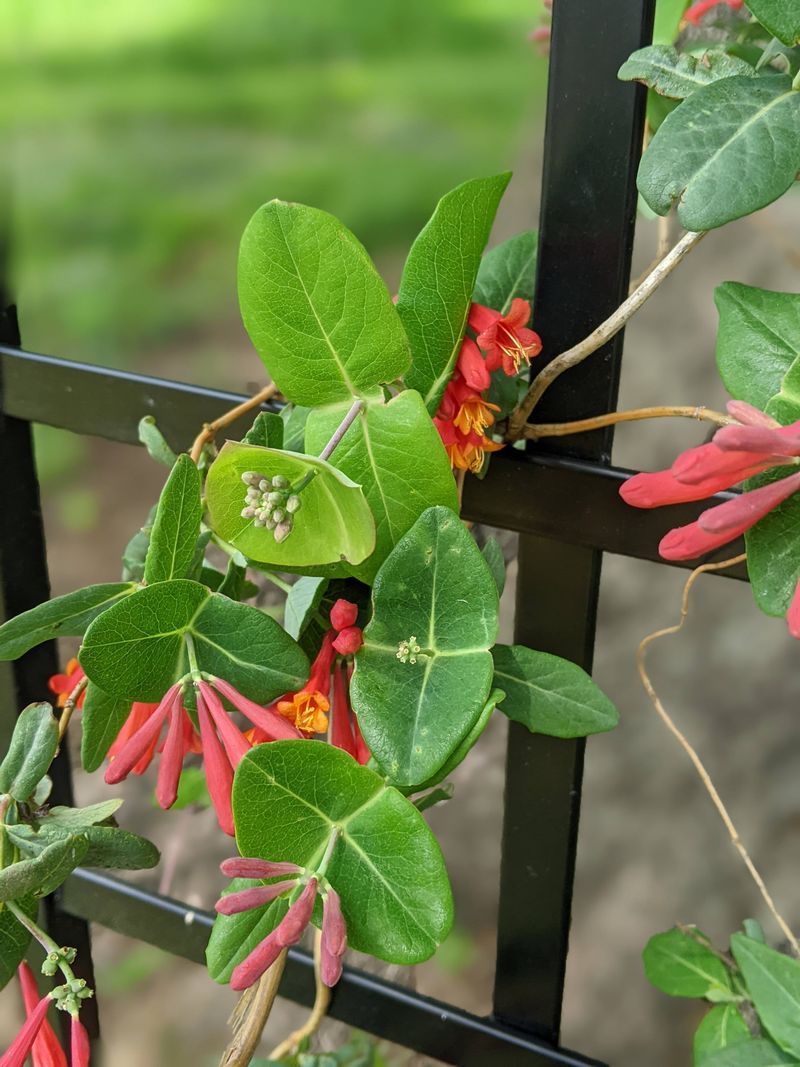
Coral honeysuckle earns its place on a fence through more than just appearance. Its wildlife value moves through the seasons in a logical sequence, starting with flowers in spring and continuing through berries in late summer and early fall.
The tubular red and orange flowers open from spring into summer and are shaped almost perfectly for hummingbirds, whose long bills fit the narrow corolla without difficulty. Bees, butterflies, and other pollinators also visit the blooms, and the North Carolina Wildlife Federation identifies coral honeysuckle as a native pollinator vine worth including in wildlife-friendly yards. The flower display can last several weeks and sometimes restarts in waves through the season depending on conditions.
Once flowering slows, the plant shifts toward fruit production. NC State lists the red berry display from July through September, which places the bulk of fruiting in late summer and the beginning of fall. Songbirds, including thrushes and other species that move through the region during fall migration, will eat the berries during this window. Audubon notes that berries on some native plants may persist into winter in warmer conditions, so fruit could remain available beyond September in favorable years, though that is not guaranteed and will vary with weather, plant maturity, and how quickly birds work through the crop.
The foliage adds one more layer of value that often goes unmentioned. The leaves serve as larval food for spring azure butterflies and snowberry clearwing moths, two native species whose caterpillars feed on the plant without causing the kind of damage that would compromise its appearance or fence coverage. This means the vine supports insects at multiple life stages, not just adult pollinators visiting flowers.
Taken together, the seasonal arc runs from spring pollinator support through summer hummingbird visits to late-summer and early-fall bird feeding. That is a meaningful range of wildlife value from a single moderate-sized vine.
Expect a seasonal screen rather than permanent privacy
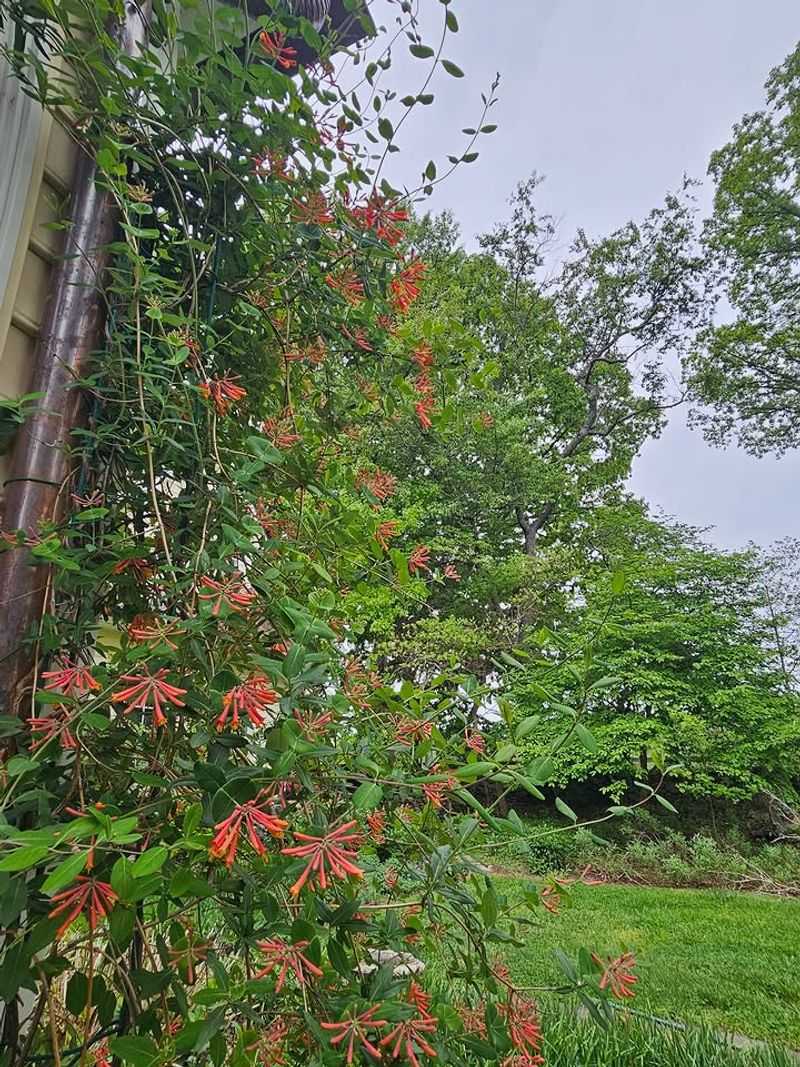
One of the most practical things to understand before planting coral honeysuckle on a fence is what kind of screening it actually provides, and when. The plant is not evergreen across all of North Carolina. NC State describes it as evergreen in warm winter climates but also lists it as deciduous, which means that in the Piedmont and Mountains especially, foliage may thin significantly or disappear during cold months. Winter screening will vary based on your location, the specific cultivar you plant, local exposure, and the severity of any given winter.
During the growing season, a mature, well-placed plant can provide meaningful visual softening along a fence line. NC State records a mature width of approximately 3 to 6 feet for Lonicera sempervirens, so plan to leave that much space between the fence and any structure, pathway, or planting bed that needs to stay clear. The vine will not stay strictly flat against the fence plane; stems will reach sideways and occasionally need to be redirected.
Coverage density also depends on factors that no planting guide can fully predict. Light levels, plant age, pollination success, weather patterns, and how aggressively birds eat the berries all influence how full the vine looks and how long fruit remains visible. A young plant in its first or second year will not fill a fence run the way a three- or four-year-old plant will. Expecting full coverage in a single season sets up frustration, while giving the plant two to three growing seasons to establish sets up a realistic and rewarding result.
For homeowners who need true year-round privacy, a combination approach, such as pairing the vine with a wooden privacy insert or a complementary native shrub in front of the fence, will serve better than relying on the vine alone through winter. Coral honeysuckle is most useful as a seasonal living screen with strong ornamental and wildlife value rather than as a substitute for solid fencing.
Choose a bright, well-drained planting site
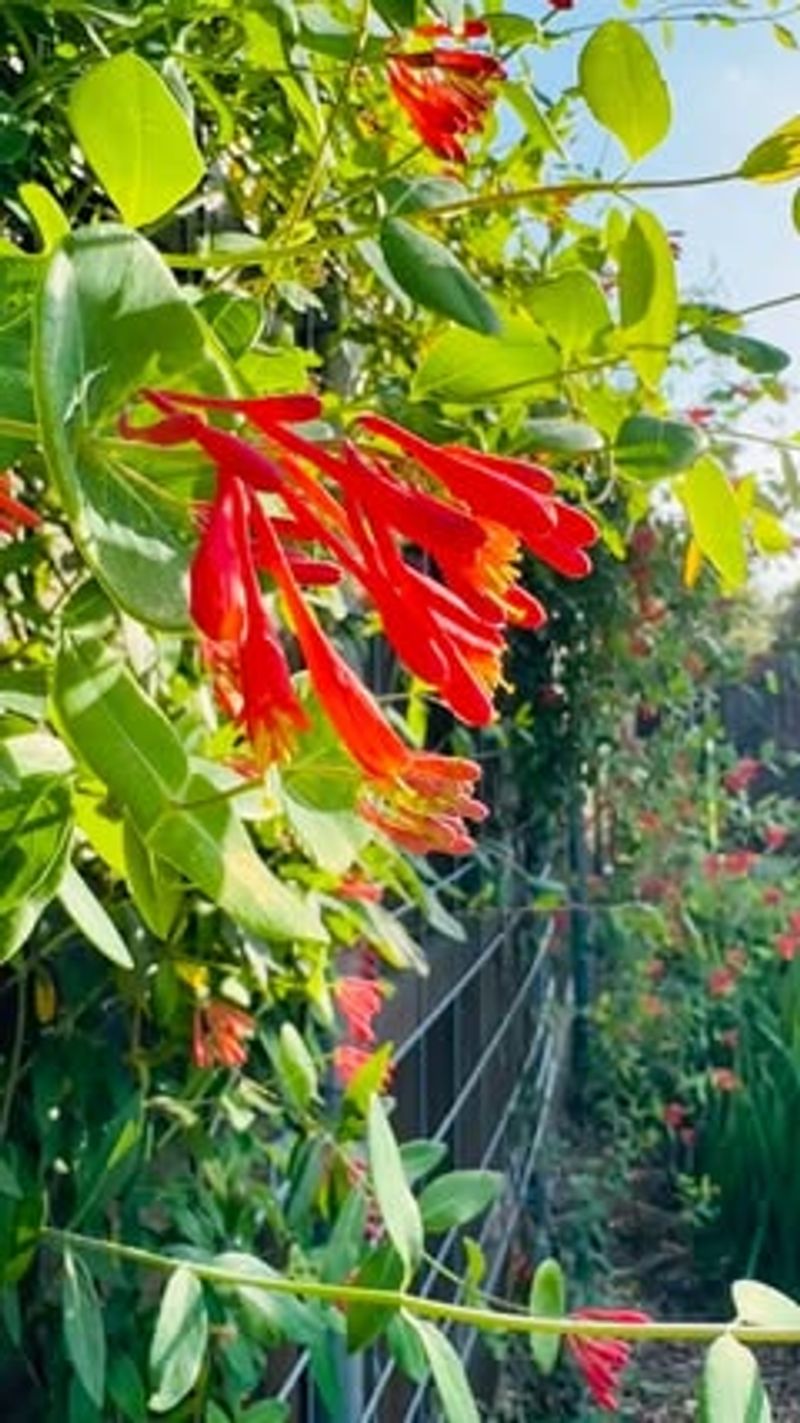
Site selection makes a bigger difference with coral honeysuckle than most people expect. Getting the location right before you plant saves considerably more effort than trying to compensate for a poor site afterward.
Full sun produces the strongest flowering and the most reliable fruit set. NC State recommends full sun for best flowering, though the plant will tolerate partial shade. In shaded spots, expect fewer flowers, reduced berry production, and a less vigorous vine overall. If your fence runs along a property line that receives only morning sun, the vine will grow but may not perform as impressively as one planted where it gets six or more hours of direct light per day.
Soil requirements are reasonably flexible. The plant prefers medium moisture and well-drained conditions, but NC State notes that it can tolerate clay soils and several different soil types. That tolerance is genuinely useful in North Carolina, where heavy red clay is common across the Piedmont. Amending the planting hole with a modest amount of compost can help with drainage and establishment, but you do not need to overhaul the soil or add fertilizer heavily.
Overly rich soil tends to push leafy growth at the expense of flowers.
Regional conditions still matter. In the Coastal Plain, gardeners benefit from the plant’s documented salt tolerance, which makes it a practical option near coastal properties where salt spray or sandy soils would stress less adaptable species. In the Mountains, colder winters increase the likelihood that the vine will behave as deciduous rather than semi-evergreen, so winter privacy expectations should be adjusted accordingly. Piedmont gardeners generally fall in between, with performance varying by elevation and microclimate.
Before you dig, check that the fence section you are planting beside receives adequate sun throughout the day and that the soil drains reasonably well after rain. Those two conditions do more to determine long-term success than any other factor you can control at the time of planting.
Guide the twining stems onto the chain link
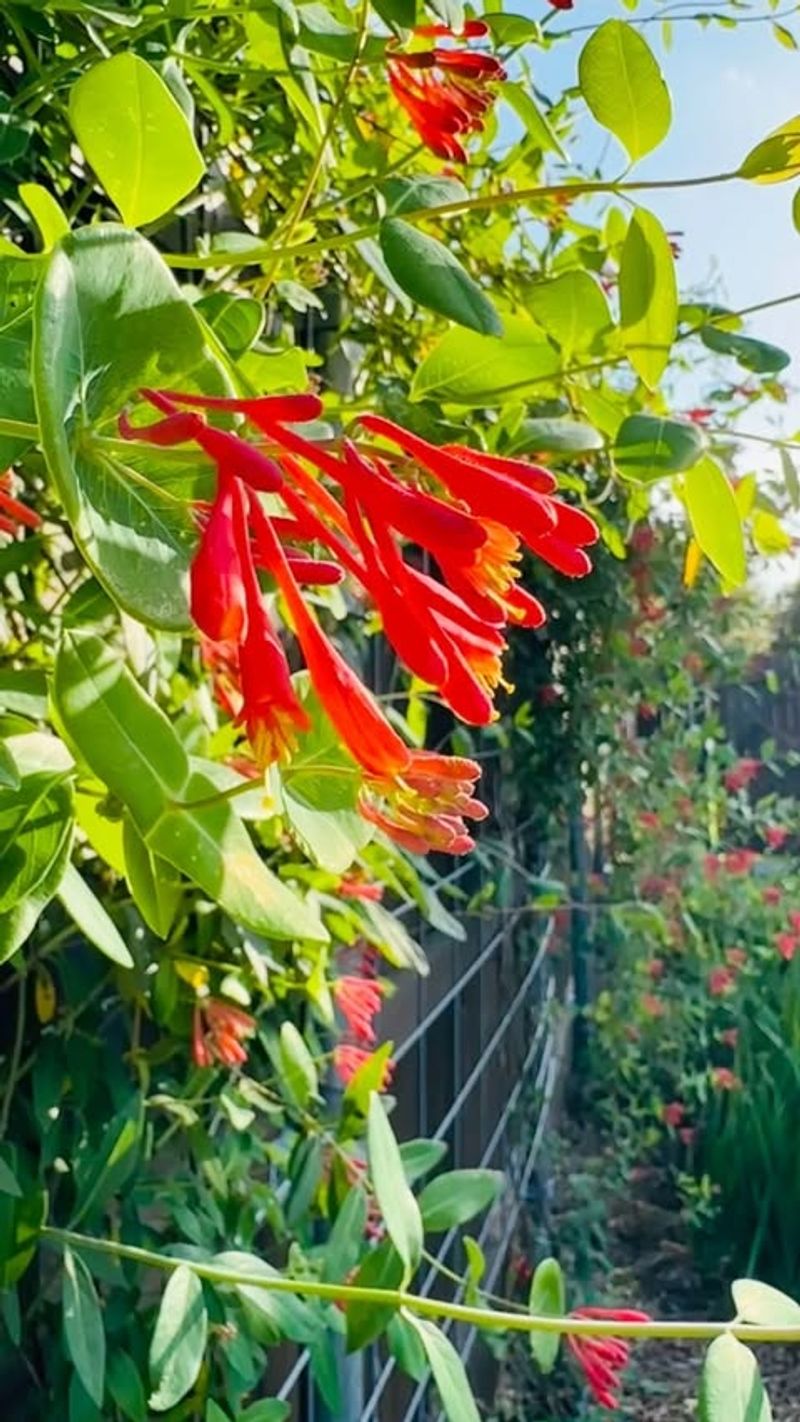
Coral honeysuckle climbs by twining, meaning the stems wrap around whatever support they contact rather than gripping with adhesive pads or attaching with tendrils. Chain-link fencing works well for this habit because the open mesh gives stems plenty of opportunities to wind through and gain a foothold. The vine does not, however, always find that support on its own when it is young and newly planted.
NC State’s Extension Gardener Handbook notes that twining vines generally perform well on chain-link fencing but may need help getting established in the early stages. The practical approach is to loosely guide the first few stems through the mesh openings by hand as the plant begins to grow. Use soft garden ties or strips of fabric rather than wire or rigid fasteners, which can cut into the stem as it thickens. The goal is to point the vine in the right direction, not to bind it tightly in place.
Once the plant has several stems anchored to the fence and growing upward, it will generally continue on its own. Stems that wander away from the fence during the growing season can be redirected by weaving them back through the mesh or trimming them if they are heading somewhere problematic. NC State describes Lonicera sempervirens as reaching approximately 10 to 20 feet at maturity, so a single plant can cover a meaningful section of fence without needing to be spaced densely. If you want coverage across a longer run, planting two or three vines spaced several feet apart and guiding each toward a different section of fence is more reliable than expecting one plant to spread far sideways quickly.
Patience during the first growing season pays off. The plant spends considerable energy establishing its root system before it puts on dramatic top growth, so a vine that looks modest in year one often surprises homeowners with noticeably stronger growth in year two. Avoid the temptation to over-fertilize to speed things up, as that tends to favor leafy stems over the flowers and berries that make the vine worthwhile.
Prune after flowering and protect fence access
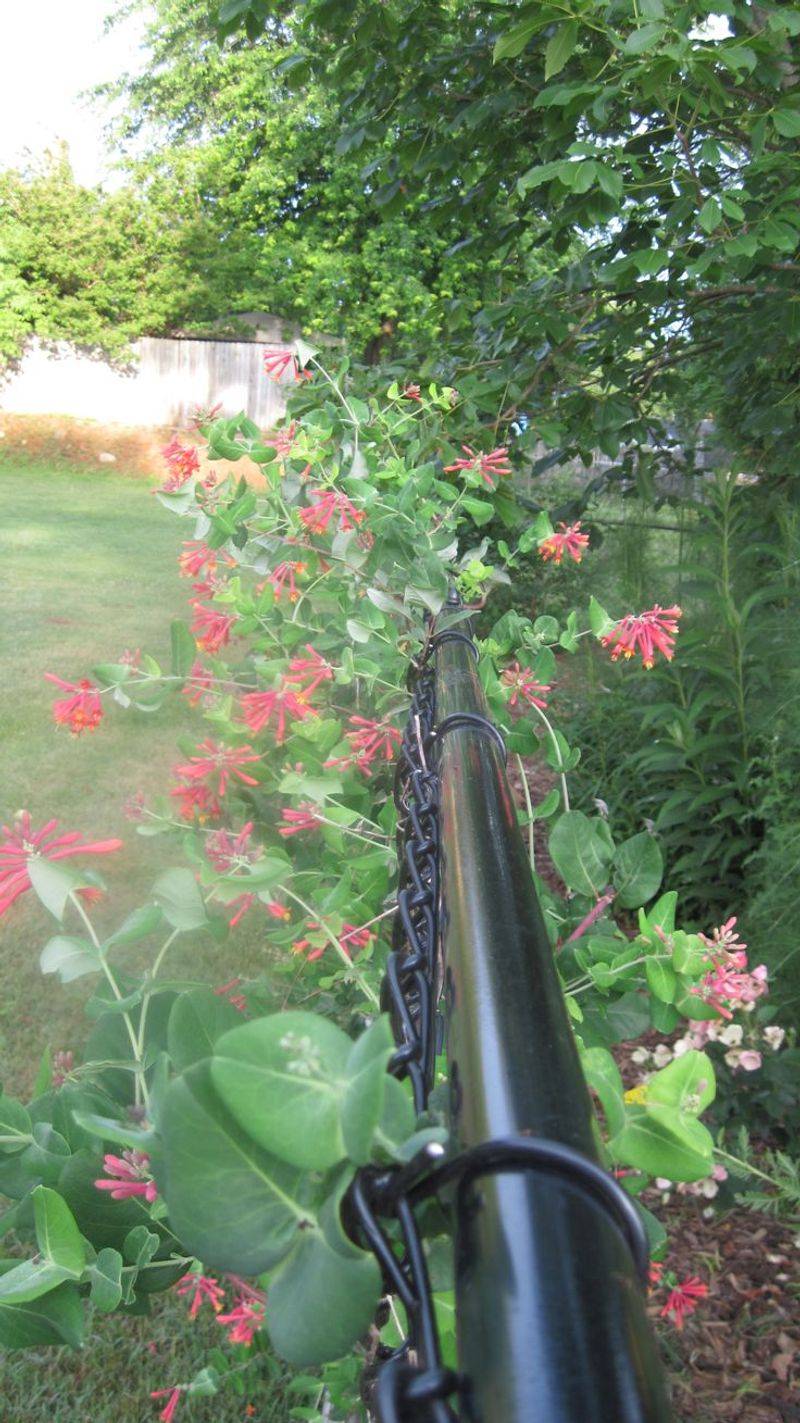
Pruning coral honeysuckle at the wrong time is one of the most common mistakes homeowners make with it. Because the plant flowers on new growth, cutting it back in late winter or early spring before it has had a chance to grow removes the stems that would have produced that season’s flowers and berries. NC State advises waiting until after flowering before pruning, which in practice means holding off on any significant cutback until late spring or early summer when the main bloom flush has finished.
After flowering, light pruning to remove wayward stems, redirect growth, or thin out congested sections is both safe and beneficial. You do not need to do a heavy renovation every year. A few minutes spent redirecting stems that are heading in the wrong direction and removing any that have climbed into an adjacent shrub or tree will keep the vine tidy without compromising next season’s performance. If the plant has grown dense and tangled after several years, a more thorough thinning after bloom is appropriate.
Several specific areas need attention regardless of the overall condition of the plant. Keep growth away from gate hinges, latches, and other fence hardware where stems can work their way into moving parts and eventually cause binding or corrosion. Pull or trim any stems reaching toward utility lines, neighboring trees, or the eaves and gutters of nearby structures. NC State’s woody ornamentals guidance warns that mature vines can trap moisture against buildings and work into cracks, gutters, or frames, so keeping the plant on the fence rather than allowing it to bridge onto a house wall or outbuilding is an important habit to build early.
Maintaining access along the fence line itself also matters practically. Leave enough clearance to reach the fence for repairs, inspections, or gate operation without fighting through a tangle of stems. A vine that is managed with those access needs in mind stays useful and welcome far longer than one that is left to grow without any direction.
Verify the species before you buy
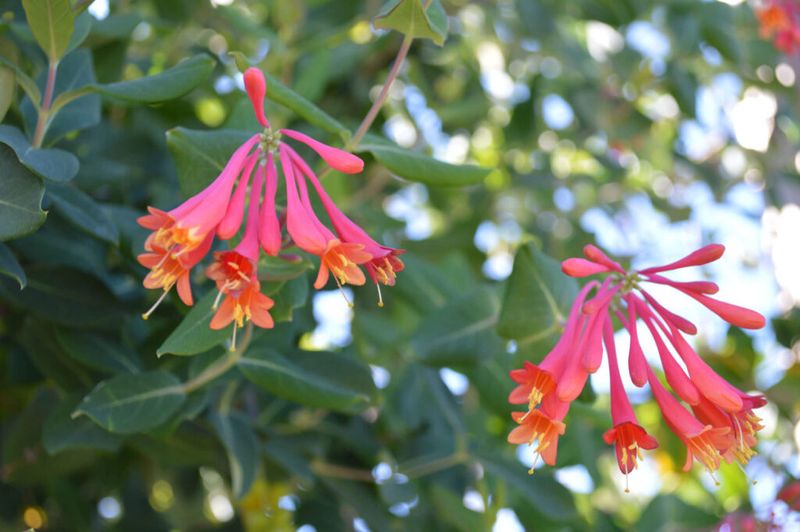
Reading the plant label carefully before purchasing is not optional with honeysuckles. The name alone is not enough to confirm you are buying the right plant, because several species share the common name and they are not interchangeable.
Japanese honeysuckle (Lonicera japonica) is classified by NC State as highly invasive, and NC State’s invasive plants guidance notes that birds and mammals disperse its seeds, which allows it to spread rapidly into forests, roadsides, and natural areas. It is the species that many North Carolinians have seen smothering fence rows and woodland edges. Planting it intentionally would create exactly the problem you are trying to avoid. Ask for Lonicera sempervirens by scientific name, or look for the common names coral honeysuckle, trumpet honeysuckle, or scarlet honeysuckle on the label.
If the nursery cannot confirm the species, shop elsewhere.
Once you have confirmed the species, it is worth knowing how coral honeysuckle compares with two other native vines that also work on chain-link fences. Virginia creeper (Parthenocissus quinquefolia) is listed by NC State as reaching 30 to 50 feet, which is substantially larger than coral honeysuckle, and it offers vivid fall foliage color along with blue-black berries that birds eat. However, NC State lists the berries as toxic to humans, so it requires more caution in yards with young children. It also climbs using adhesive pads that can mark surfaces, making it less ideal for wood structures adjacent to the fence.
Muscadine (Vitis rotundifolia) is another strong native option for fences, and NC State identifies muscadine as suitable for privacy screens and fences, with fruit available in North Carolina from roughly August through October. If substantial fall fruit production for birds and people alike is the primary goal, muscadine may be a better fit. The trade-off is that muscadine grows larger, requires more structural support, and demands more deliberate annual pruning. Many plants are also dioecious, meaning you may need both male and female plants to get fruit.
Coral honeysuckle is a better fit when the priority is a moderate-sized, lower-maintenance native ornamental with flowers and seasonal berries rather than maximum fruit yield.
Match the vine to the site and the goal
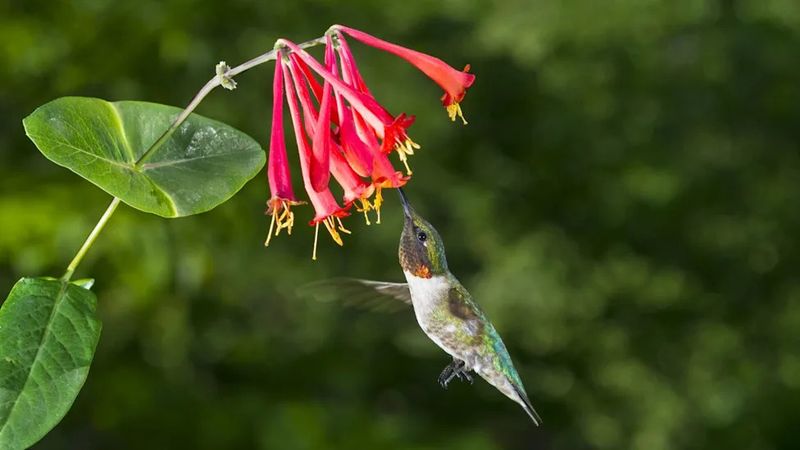
Coral honeysuckle is a well-supported choice for North Carolina homeowners who want a native, wildlife-friendly vine of moderate size on a chain-link fence. Its spring-to-summer flowers support hummingbirds and pollinators, its late-summer and early-fall berries attract songbirds, and its foliage feeds the larvae of native moths and butterflies. That combination of seasonal value from a single manageable plant is genuinely useful in a residential yard.
Three checks determine whether it will succeed in your specific situation. First, verify the species at purchase by asking for Lonicera sempervirens by name and confirming it is not Japanese honeysuckle or another lookalike. Second, provide a sunny, well-drained site with a clear support path on the fence and enough room for the vine to reach its mature 3-to-6-foot width without crowding gates, hardware, or nearby structures. Third, accept that coverage and berry availability are seasonal rather than guaranteed year-round, and plan your expectations accordingly.
One safety consideration applies regardless of site or goal. NC State gives coral honeysuckle a high flammability rating and advises against planting it within a home’s defensible space. Homeowners near wildland-urban interface areas, or anyone planting close to a house wall or outbuilding, should factor that rating into placement decisions. A fence line away from structures is a safer location than one directly against the foundation.
A vine that feeds birds through late summer and softens a fence in the process is a genuine asset, and knowing its limits is what keeps it that way.