
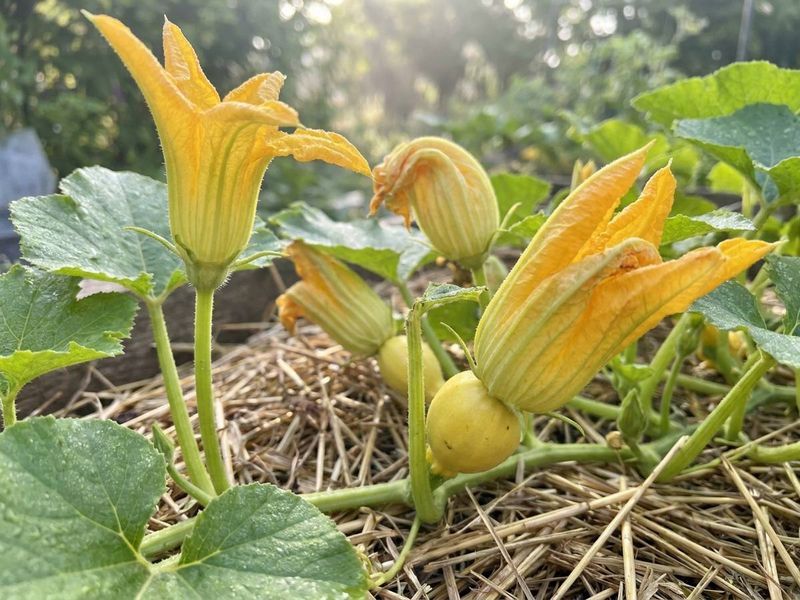
Staring at a zucchini plant loaded with bright yellow flowers and still no squash on the vine is one of the most frustrating puzzles in a summer garden. The blooms look healthy, the plant looks green, but the harvest bowl stays empty.
Understanding why this happens comes down to a few specific things you can check and fix right now, before the season slips away.
Start with the flower, not the flower count
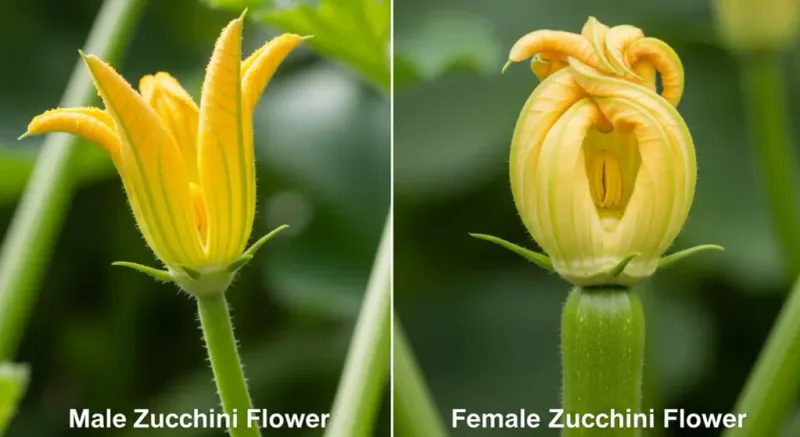
Before blaming the heat or the bees, crouch down and look at the base of each flower. Zucchini produces two distinct flower types on the same plant, and only one of them can ever become squash.
Male flowers grow on long, slender stems with no swelling underneath the petals, while female flowers sit on a shorter, thicker stem and carry a tiny, rounded ovary that looks exactly like a miniature zucchini waiting to grow.
Counting blooms tells you very little on its own. A plant can hold twenty flowers and still produce nothing if every open blossom happens to be male.
UF/IFAS guidance on Cucurbita pollination in Florida confirms that only fertilized female flowers develop into harvestable fruit, so the female blossom is the one worth tracking. Run your fingers along each stem and check the base before drawing any conclusions about what is failing.
Zucchini commonly opens a flush of male flowers before female flowers become plentiful, especially early in a bloom cycle. University of New Hampshire Extension notes that male blossoms naturally drop after opening because they have no ovary to develop, and Colorado State University Extension similarly points out that a short male-heavy phase at the start of flowering is normal plant behavior.
A brief delay before female flowers appear is not proof of plant failure, but it is a clear signal to keep watching rather than give up.
A shrinking baby zucchini points to a different problem
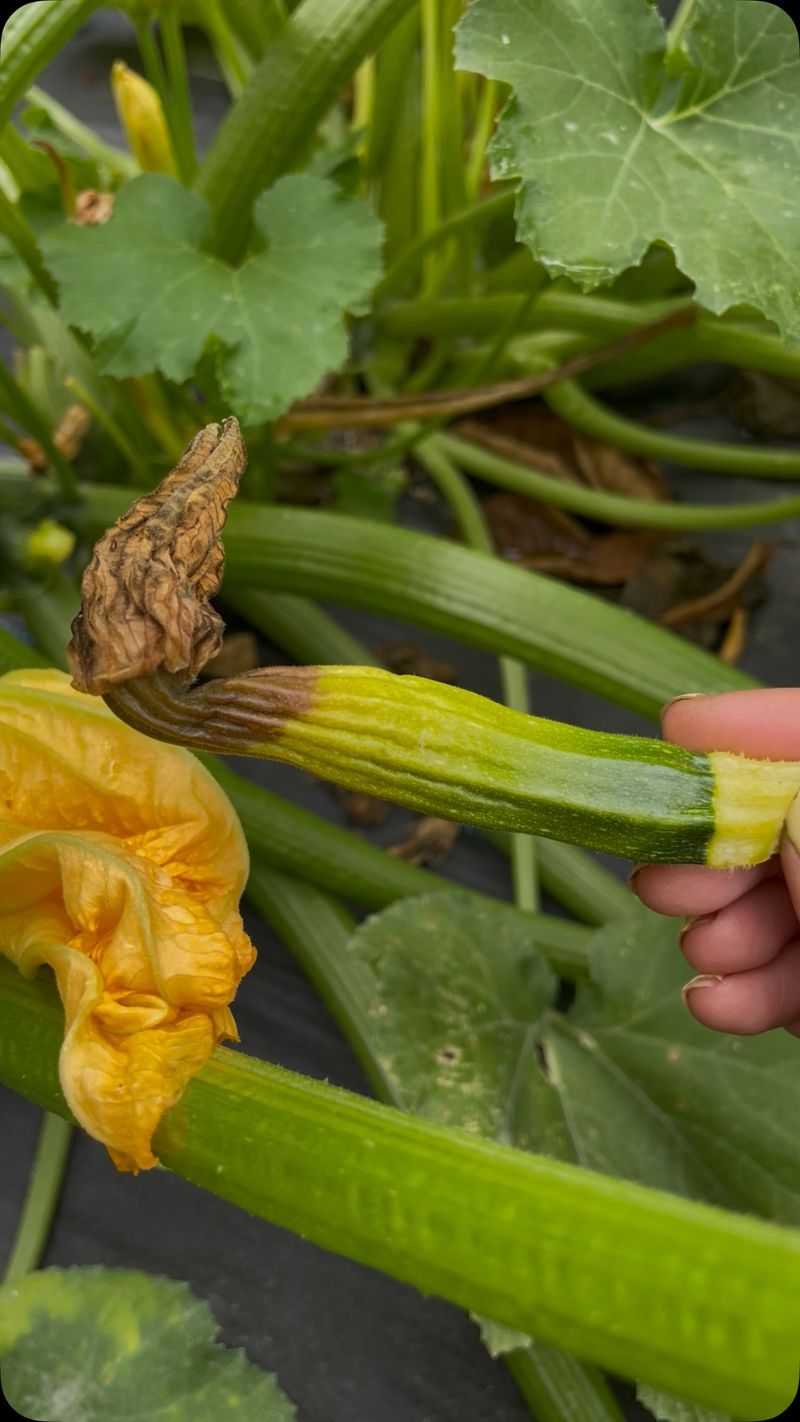
Finding a female flower is encouraging, but the real diagnostic moment comes a day or two later. Once a female flower opens and closes, watch what happens to the small ovary beneath it.
A successfully pollinated ovary will firm up, deepen in color, and begin growing steadily over the next several days.
When that tiny zucchini turns brown, flattens, shrivels, or drops from the plant within a day or two of flowering, poor pollination is a strong possibility. UC IPM’s overview of poor pollination in cucurbits describes how underpollinated fruit often appears small, misshapen, or shriveled, sometimes with very few seeds inside.
The plant may also abort young fruit entirely if the pollen delivery was incomplete.
Water stress can produce nearly identical symptoms and should not be ruled out. UC IPM’s cultural tips for squash connect drought stress to deformed and dropped fruit, so a shriveling baby zucchini is not automatically a pollination failure.
Check soil moisture at the same time you check the flowers. UF/IFAS summer squash guidance reinforces that following each female flower through its early development, rather than counting blooms from a distance, is the most reliable way to pinpoint which problem is actually costing you fruit.
Heat can disrupt several steps before fruit forms
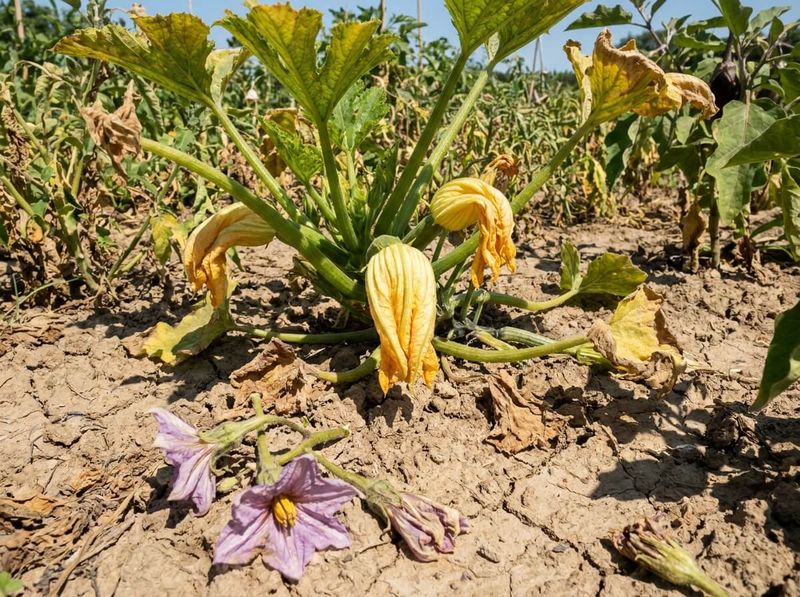
Late-summer heat earns its reputation as a fruit-set disruptor, but it works through several separate mechanisms rather than one single switch. High temperatures may shift flower production toward males or push back the timing of female blooms, so the plant appears to be flowering normally while actually producing very few blossoms that can set fruit.
UF/IFAS pollination research for Florida identifies very high temperatures and high humidity as conditions that can reduce pollinator visitation and affect pollen viability, both of which reduce the chance that a female flower receives adequate pollen during its brief opening window.
Bee activity drops sharply when temperatures climb and humidity rises. Pollinators tend to forage earlier in the morning and retreat during the hottest parts of the day, which compresses the window when natural pollination is even possible.
Heavy rain can also wash pollen away or keep bees grounded during the very hours when flowers are open and receptive.
Water stress adds another layer. Iowa State University Extension’s vegetable garden watering guidance links drought stress to flower and fruit abortion, meaning a plant that wilts repeatedly between waterings may drop flowers or young fruit regardless of how much pollen reaches the stigma.
UNH Extension also cautions that outcomes vary by cultivar, planting time, and local conditions, so no single temperature number reliably predicts failure for every garden. The right response is to check flower sex and young-fruit development first, then consider heat as a contributing factor rather than a guaranteed verdict.
Check the blossoms during their short morning window
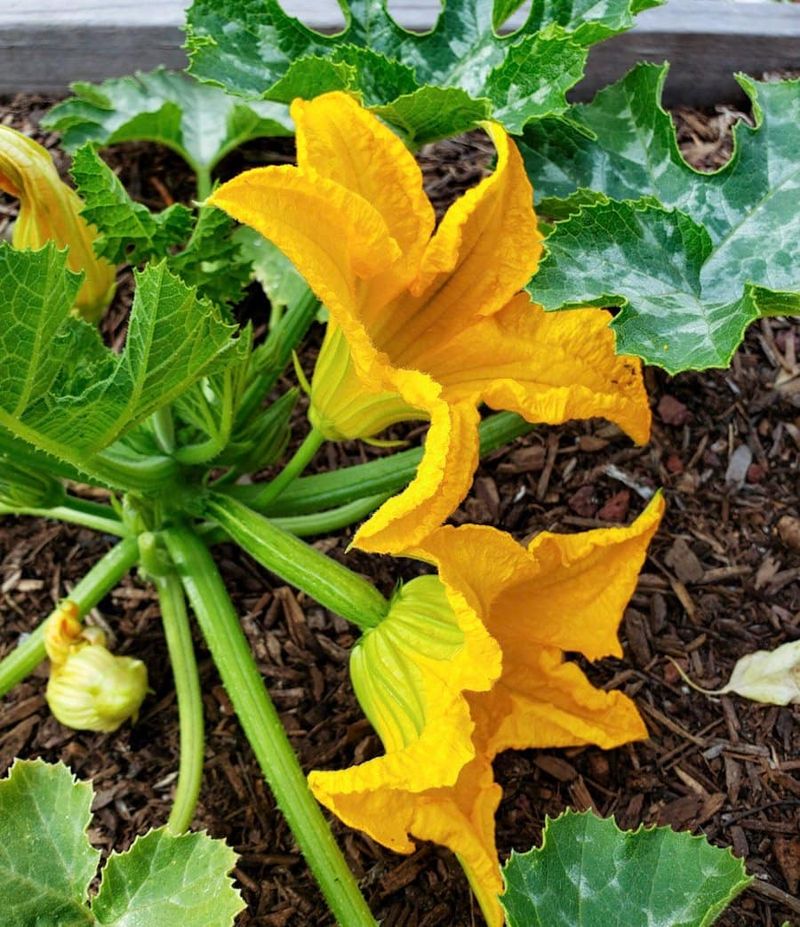
Timing controls both your diagnosis and your ability to act on it. Zucchini flowers generally open in the morning and may close by around noon, which means an afternoon inspection of the plant can show you nothing but shut blossoms and no clear picture of what is happening.
Get outside early, ideally before 9 a.m., and look for flowers that are fully open and showing color.
Natural pollination requires a male and a female flower to be open at roughly the same time and within reach of the same visiting insect. Squash pollen is heavy and sticky, so wind does not move it reliably from one flower to another.
Insects are the necessary bridge. UF/IFAS pollination guidance notes that bees are the primary effective pollinators for Cucurbita crops in Florida, but the category extends well beyond honeybees.
NC State Extension’s guide to squash bees explains that squash bees are specialist pollinators that emerge specifically to forage on cucurbit flowers, often arriving before honeybees do. Bumblebees and sweat bees also visit zucchini regularly.
If you are standing at the plant during the morning window and seeing no insect activity at all, that absence is a useful data point. Hot, humid, rainy, or severely dry mornings can suppress pollinator visits even when bees are present in the area, which connects poor morning activity directly back to late-summer weather stress.
Hand-pollinate an open female flower
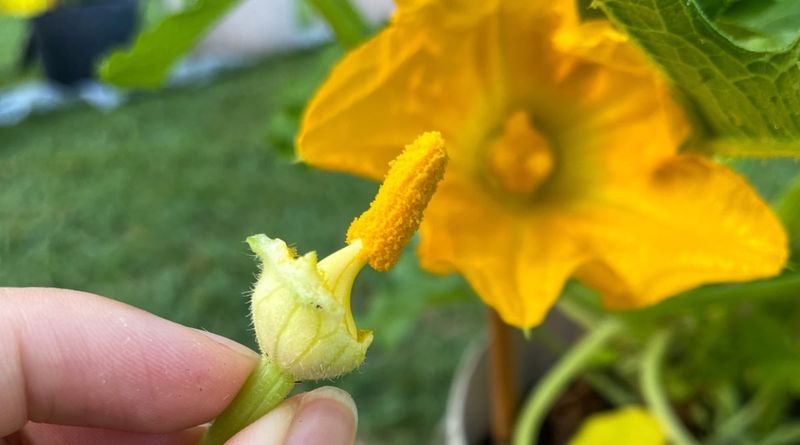
Hand-pollination gives you a direct way to cover for missing or inactive pollinators. The process is straightforward, but it only works during the morning window when both flower types are fully open.
Start by confirming you have at least one male flower shedding yellow pollen and at least one female flower with its stigma exposed and receptive inside.
Use a small, clean paintbrush, a cotton swab, or simply pick a freshly opened male flower and peel back its petals to expose the anther. Gently brush or roll the anther across the sticky, multi-lobed stigma at the center of the female flower, making sure the yellow pollen makes clear contact.
UF/IFAS Sarasota County’s hand-pollination instructions for cucurbits recommend working while both flowers are still fully open, and UNH Extension suggests marking the pollinated flower with a small piece of yarn or tape so you can track whether the ovary grows or shrivels over the next few days.
Pollen from the same plant works fine. Zucchini does not require a second plant or a second variety to set fruit, so you are not missing anything by using the male flower from the same vine.
What hand-pollination cannot do is correct problems that go beyond bee absence. UF/IFAS research makes clear that heat-reduced pollen viability, severe drought stress, flower abortion driven by plant stress, or a shortage of female flowers will limit results even when pollen is physically delivered.
Think of hand-pollination as plugging the pollinator gap, not overriding every other obstacle the plant is facing.
Keep moisture steady and protect the pollinators
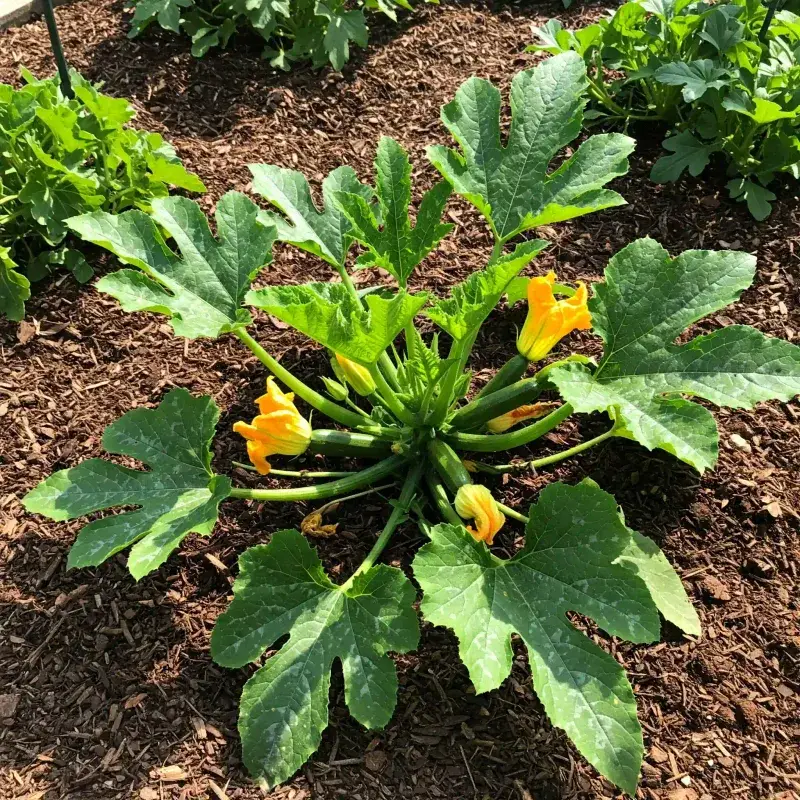
After a female flower is pollinated, the tiny developing zucchini still needs consistent conditions to keep growing. Soil moisture is one of the most controllable factors during hot weather.
Letting the soil swing from bone dry to waterlogged stresses the plant and raises the risk that young fruit aborts before it reaches a harvestable size. Iowa State University Extension’s home garden watering guidance recommends deep, consistent watering that prevents repeated wilting, rather than frequent shallow passes that wet only the surface.
A 2-3 inch layer of mulch around the base of the plant slows evaporation, moderates soil temperature, and reduces how quickly the root zone dries between waterings. UF/IFAS summer squash recommendations include mulching as a basic management step for Florida gardens, where soil can dry rapidly between summer rain events.
The goal is steady moisture, not saturation, since overly wet soil promotes root disease and can be just as damaging as drought.
Pollinator protection deserves equal attention. Avoid spraying any pesticide on or near flowering zucchini whenever possible.
If a pest problem genuinely requires treatment, identify the pest first, read the product label carefully, choose the least pollinator-toxic option approved for that crop and pest, and apply carefully to minimize drift onto open flowers. NC State Extension’s squash bee guide warns that squash bees and other pollinators sometimes sleep inside closed blossoms overnight, so a nighttime spray does not guarantee those bees avoid exposure.
UF/IFAS reinforces that protecting pollinator access to flowers is one of the most direct ways to support fruit set.
Florida’s growing season may explain the pause
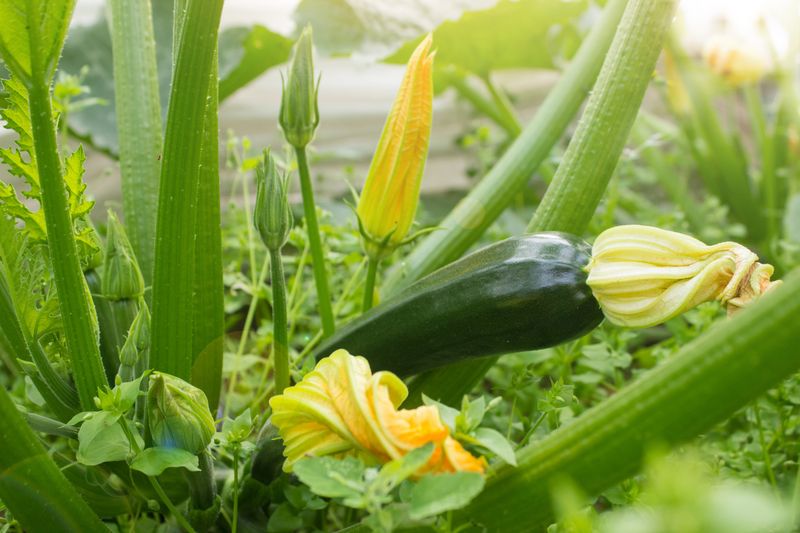
For Florida gardeners specifically, the calendar itself may be part of the diagnosis. UF/IFAS summer squash guidance describes zucchini in Florida as primarily a spring and fall crop, with planting windows that shift toward August and September for much of the state.
Intense midsummer conditions, including sustained heat, heavy humidity, and increased insect and disease pressure, can make fruit production unreliable even on a plant that looks otherwise healthy.
UF/IFAS Duval County’s summer gardening guidance acknowledges that some Florida gardeners find it more practical to pause vegetable production during the peak of summer and restart with a fall planting timed to cooler temperatures. If your flower and fruit checks reveal female flowers are forming but repeatedly failing, the season itself may be working against you more than any single correctable problem.
One secondary possibility worth checking before adding anything to the soil is excess nitrogen. Ohio State University Extension notes that too much nitrogen can push a plant toward leafy growth and delay female flower production.
If you have been fertilizing heavily, hold off on adding more and see whether the flower ratio shifts. Adding fertilizer by default when fruit is missing is rarely the right first move, and it can make the imbalance worse.
Follow each bloom to find the answer
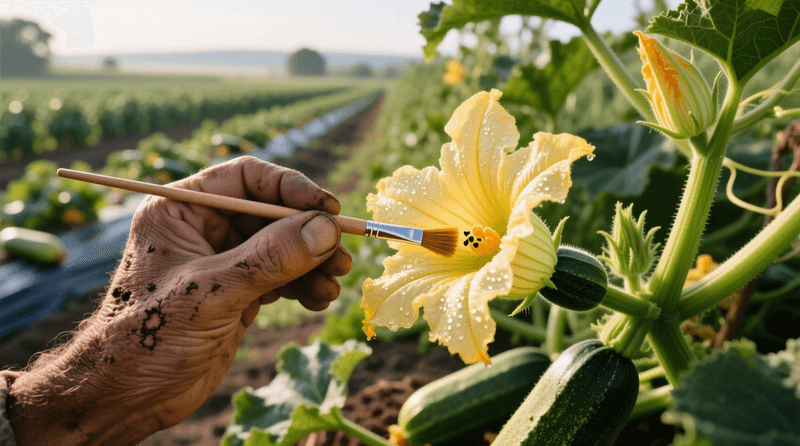
The clearest path forward is a daily morning check, not a one-time inspection. Look for open female flowers at first light, watch whether the tiny ovary beneath each one firms up or shrivels over the next couple of days, and hand-pollinate any open female bloom when a male flower is also releasing pollen.
UC IPM’s cucurbit pollination overview and UF/IFAS pollination guidance both point to this flower-by-flower monitoring as the most reliable way to separate a temporary male-flower phase from a genuine pattern of female-flower failure.
Keep soil moisture consistent, protect pollinators from pesticide exposure, and give the plant a week of careful observation before concluding that nothing can be done. Extreme late-summer conditions can limit results even when every recommended step is followed correctly, but knowing which specific problem is at work puts you in a better position to decide whether to nurse the plant through the heat or plan a better-timed planting.
A zucchini plant full of flowers is not a failure yet – it is a puzzle that rewards a closer look.