
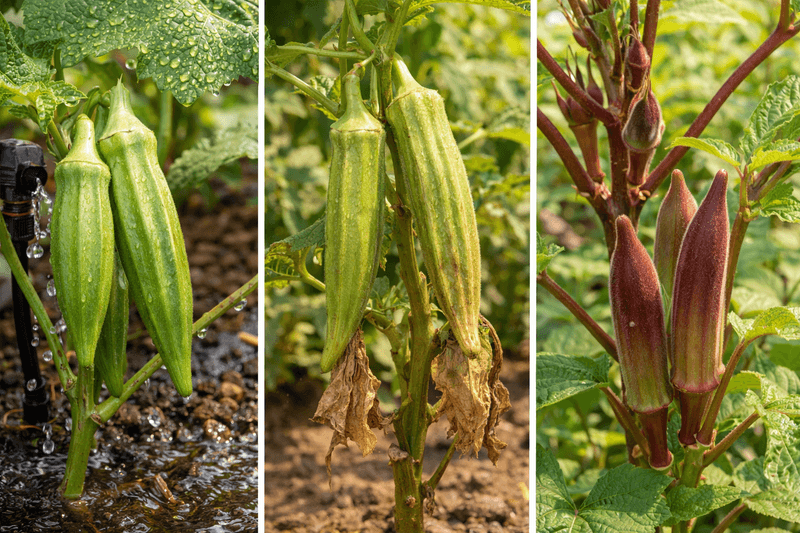
Okra is one of the South’s most reliable summer crops, but August has a way of turning a productive row into a plant full of pods you can barely cut. Many gardeners blame the plant’s height or the scorching heat, when the real problem is simpler and more fixable.
Understanding what actually makes pods tough gives you a clear path to getting tender okra out of the same tall, healthy plants you already have.
Tall okra plants are often normal; overmature pods cause the toughness
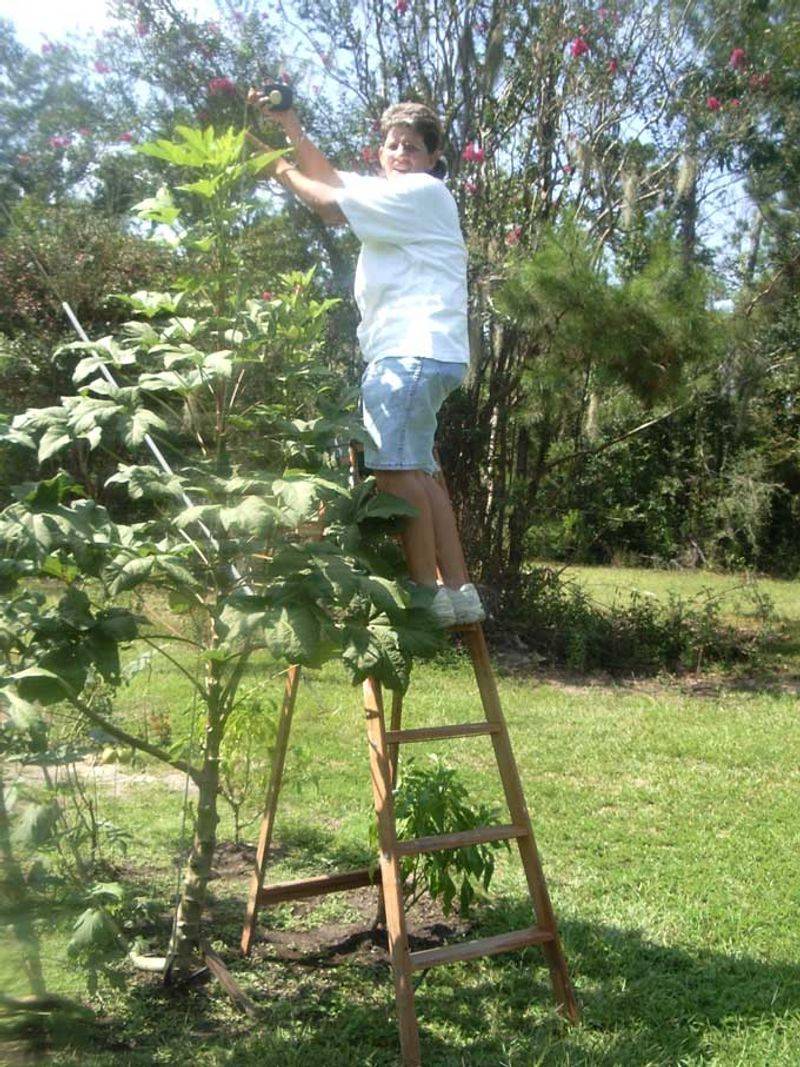
Many Southern gardeners look up at a 5-foot okra plant and assume something has gone wrong. The height itself is not the problem.
Utah State University Extension notes that okra varieties commonly reach 3 to 6 feet, and some recommended cultivars grow even taller under good conditions. A vigorous, upright plant producing new flowers is doing exactly what it should.
The toughness in your pods comes from a separate process entirely: maturation. As a pod ages past its tender stage, it accumulates fiber and structural material that make it pithy, stringy, and woody.
UC Davis Postharvest Research confirms that okra pods must be harvested while they are still immature, fleshy, and brightly colored, with seeds that are still small. Once a pod crosses into overmaturity, that change in texture is not reversible.
Missed harvest timing is the management reason pods are allowed to reach that overmature state. Leaving a pod on the plant a day or two longer than ideal is all it takes.
The fix is not to cut back a healthy tall plant. Redirecting attention from plant height to pod age is the first step toward pulling tender okra off your plants again.
Why late-summer heat shortens the tender harvest window
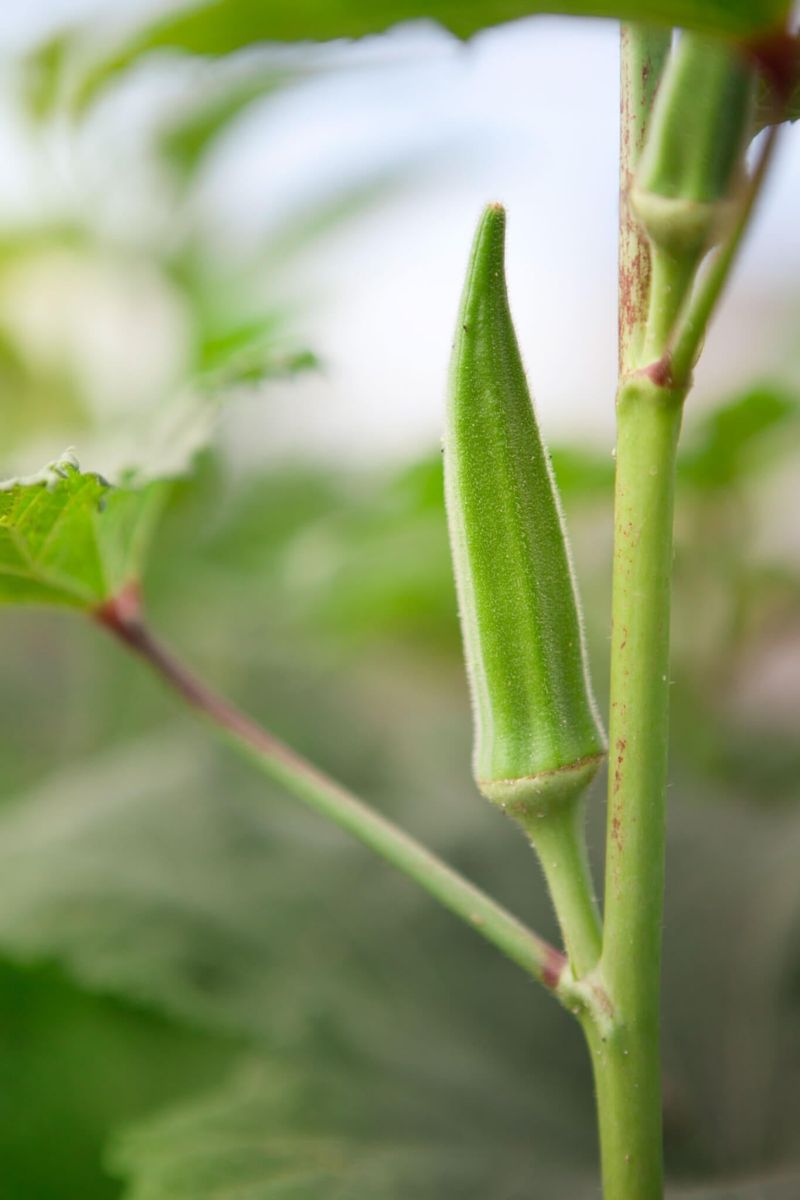
Earlier in the season, you might have checked your okra every few days and still brought in perfectly tender pods. August changes that math.
Hot weather accelerates pod development, so a pod that would have taken a week to reach maturity in June may pass through its entire tender stage in roughly four days or less during peak summer heat. Texas A&M AgriLife Extension reports that in hot conditions, pods can reach harvest maturity roughly four days after flowering, while a broader four-to-six-day window applies depending on temperature, sunlight, and cultivar.
Heat does not directly harden the pod the way frost damages a leaf. What it does is compress the timeline.
The pod is moving through normal maturation stages faster, which means the window when it is still fleshy and tender is shorter than it was in cooler weather. A harvest routine that worked in May is simply too slow for August.
UF/IFAS Extension describes okra as very heat tolerant but still emphasizes harvesting a few days after flower petals fall, before pods become tough and stringy. Heat tolerance in the plant does not eliminate the need for more frequent picking.
Overmaturity becomes far more likely when summer temperatures stay consistently high and inspection intervals stay the same as they were in spring.
Use cultivar and pod condition—not one rigid length—as your harvest guide
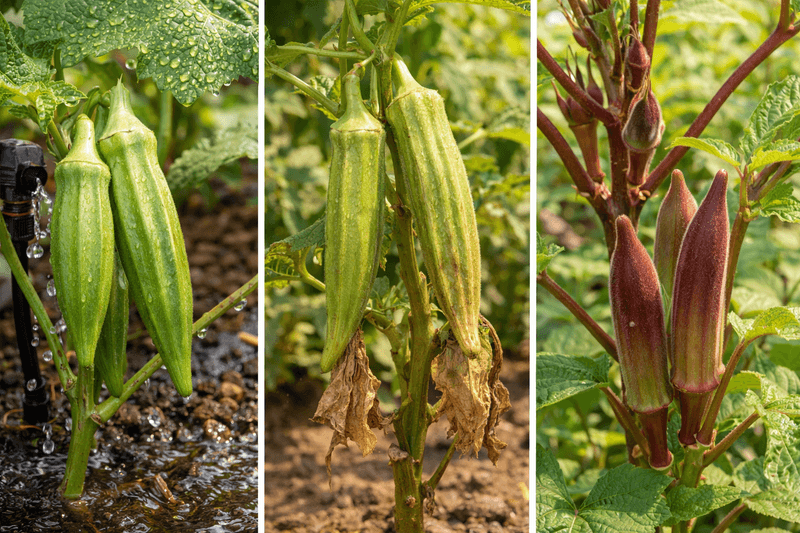
A lot of okra advice stops at “pick them at 3 inches,” but that rule does not fit every plant in every garden. Roughly 2 to 4 inches is a reasonable starting range for home gardeners, and University of Georgia Cooperative Extension gives target sizes ranging from 2 to 3 inches up to 3 to 5 inches depending on the cultivar and intended use.
Forcing every variety into one number will cause you to either pick too early or hold on too long.
Round-podded cultivars like Burgundy or Perkins Long Pod can remain tender at sizes that would indicate overmaturity in a standard ribbed variety. Long-podded types may also stay usable at greater lengths than a shorter cultivar would.
Pod shape and variety matter more than any single measurement. UC Davis Postharvest Research emphasizes looking for pods that are fleshy, bright in color for the cultivar, and still carrying small seeds as the key signs of harvest readiness.
Oklahoma State University Extension reinforces that pod size and tenderness vary by variety. Learn the typical tender-stage size for whichever cultivar you are growing, then combine that knowledge with a quick visual and texture check each time you walk the row.
Frequent checking matters more than memorizing one fixed length.
Test a borderline pod before deciding whether to use it
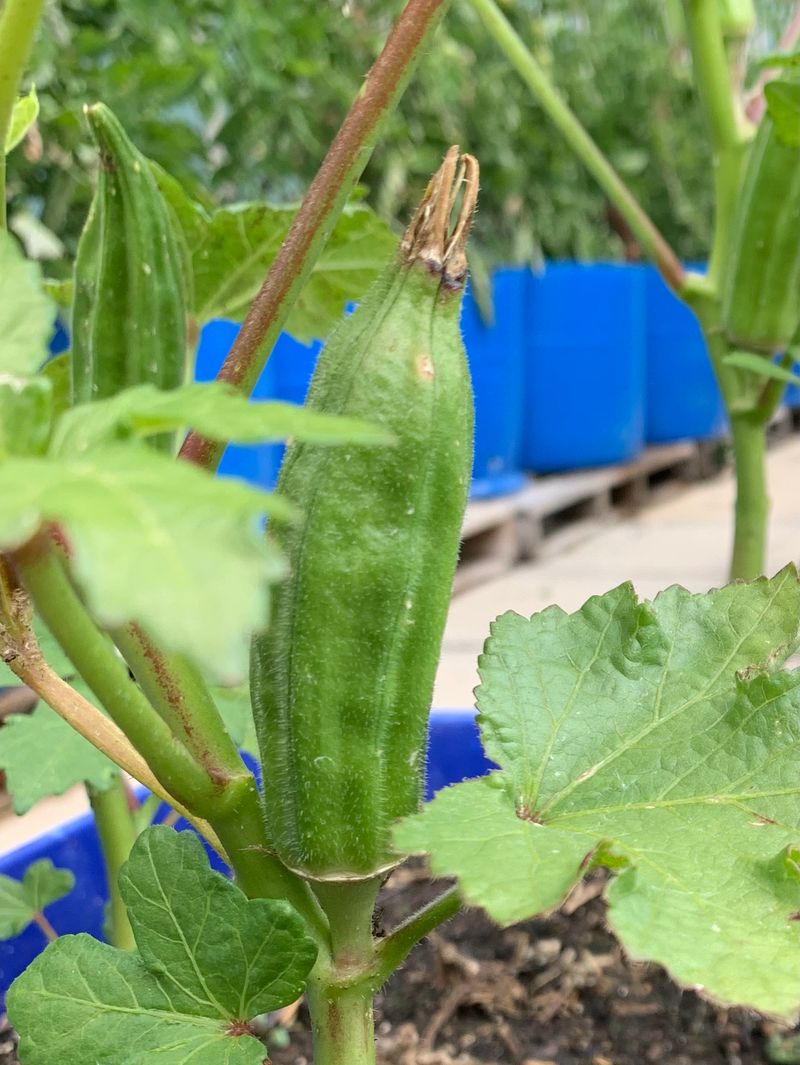
Sometimes a pod looks a little larger than usual but you are not sure whether to keep it or toss it. A quick knife test gives you a practical answer.
Press a sharp blade through the widest part of the pod. Texas A&M AgriLife Extension notes that difficulty cutting through the pod indicates toughness and poor eating quality, while a pod that cuts or snaps easily is more likely to still be usable.
This is a home-kitchen indicator, not a laboratory measurement. A pod that cuts with noticeable resistance has already built up enough fiber and structural material that cooking is unlikely to fully restore its original texture.
Prolonged simmering can soften some of the sliminess and break down a few cell walls, but it will not undo the fundamental change in a fibrous, overmature pod. Treat a tough-cutting pod as a loss and remove it from the plant rather than spending kitchen time on it.
A pod that passes the knife test is still worth using promptly. Plan to cook or refrigerate it the same day you pick it, because quality continues to drop after harvest.
The knife test is most useful as a quick field decision, helping you sort pods into “cook tonight” and “pull and discard” categories without having to guess.
Frequent inspection improves your chances of catching tender August pods
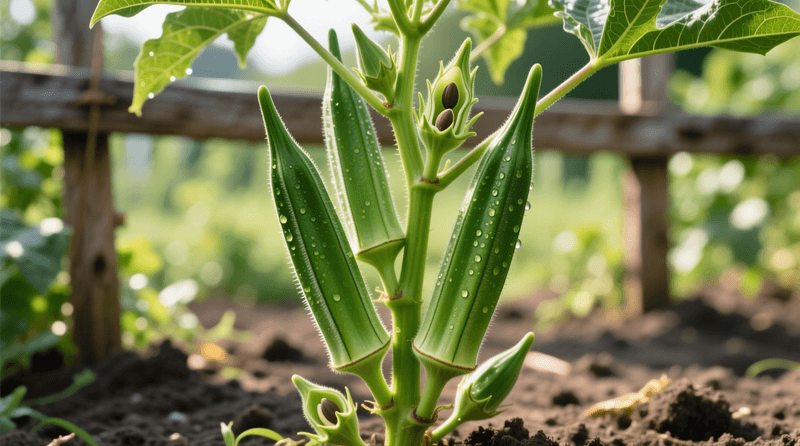
Knowing why pods get tough is useful, but the fix lives in your daily schedule. Frequent inspection helps you harvest August pods while they are still tender.
UGA Commercial Okra Production guidance states that daily picking may be needed when growers want mostly small, fresh-market pods, and every-other-day inspection is the practical minimum during periods of rapid growth. Skipping two or three days in August is often all it takes to find a row of pods that have passed their peak.
When you harvest, use a sharp knife or garden shears rather than yanking pods by hand. Oklahoma State University Extension recommends cutting to reduce stem damage, and Utah State warns that torn branches and damaged leaves can reduce production over time.
Snap-harvesting works if done cleanly, but a blade gives you better control, especially when pods are close to branching points.
If your variety has short, irritating hairs or spines on the stems and pods, wear gloves, long sleeves, and long pants before heading into the row. Okra trichomes can cause real skin irritation, and that discomfort is enough to make some gardeners rush through inspection and miss pods.
Picking in the morning is worth doing because cooler early hours are more comfortable and harvested pods hold quality better before they warm up, though morning timing cannot prevent a pod from becoming woody while it is still on the plant.
Remove missed pods to support production, but do not expect a guaranteed rebound
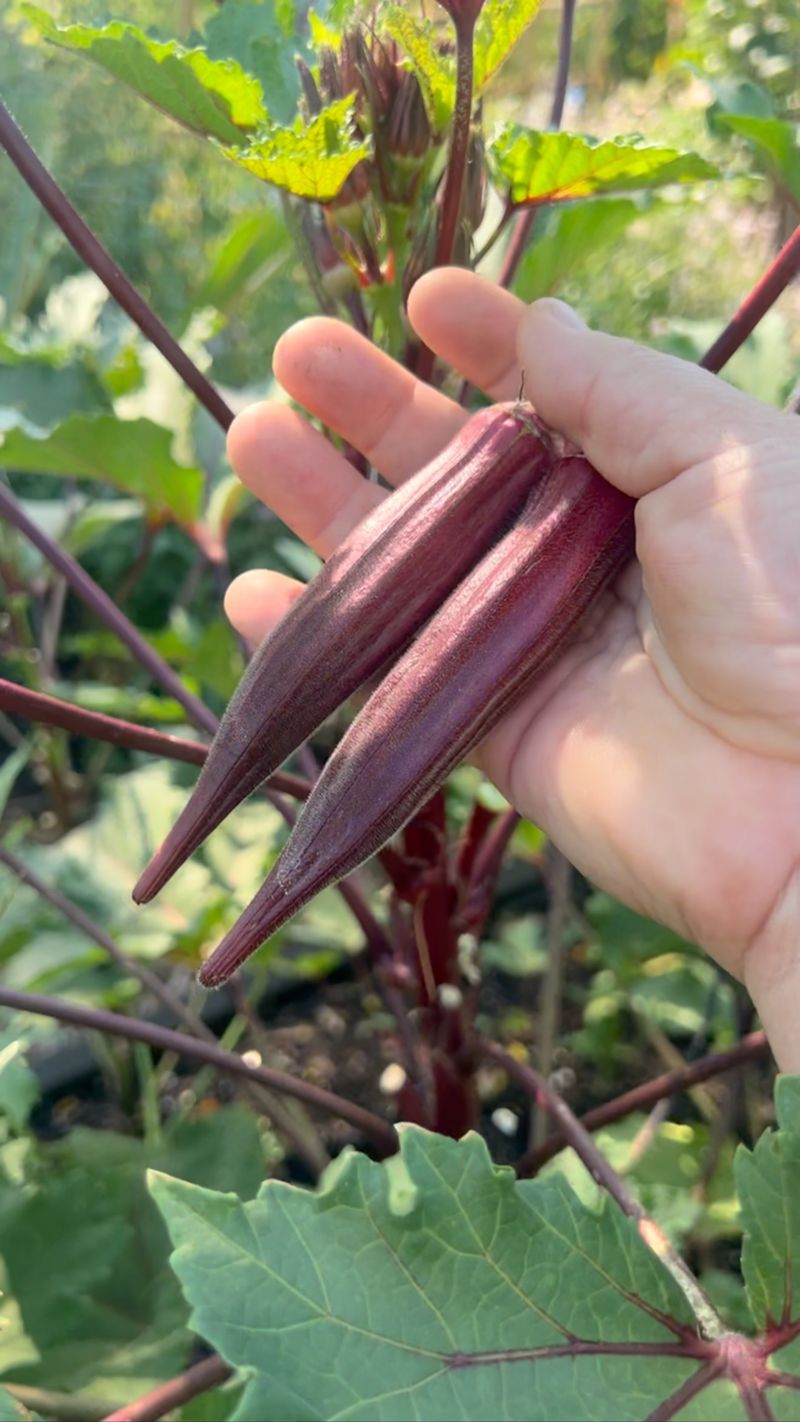
Pods that have grown too large, feel pithy when pressed, or resist the knife test should come off the plant rather than stay on it. Multiple extension sources agree that mature pods left on the plant can slow subsequent flowering, fruiting, or production.
UGA Cooperative Extension confirms that removing old pods is part of keeping the plant productive through the season.
Texas A&M AgriLife Extension also notes that overmature pods can reduce flowering if left in place. Clearing them gives the plant a better chance of setting new pods, but removal will not necessarily restore a full yield if other stresses are at work.
Drought, insect pressure, root-knot nematodes, disease, nutrient shortages, and approaching frost can all limit production regardless of how diligently you pull old pods.
One important distinction: if you are intentionally saving seed, pods left on the plant for that purpose are in a completely different category. University of Arkansas Cooperative Extension describes allowing selected pods to become fully mature and nearly dry before collecting seed.
Those pods should be treated as seed stock only, not as cooking okra. Accidentally missed eating pods and deliberately saved seed pods are two separate things, and confusing them leads to frustration in the kitchen.
Use this simple routine for tall plants and fast-growing pods
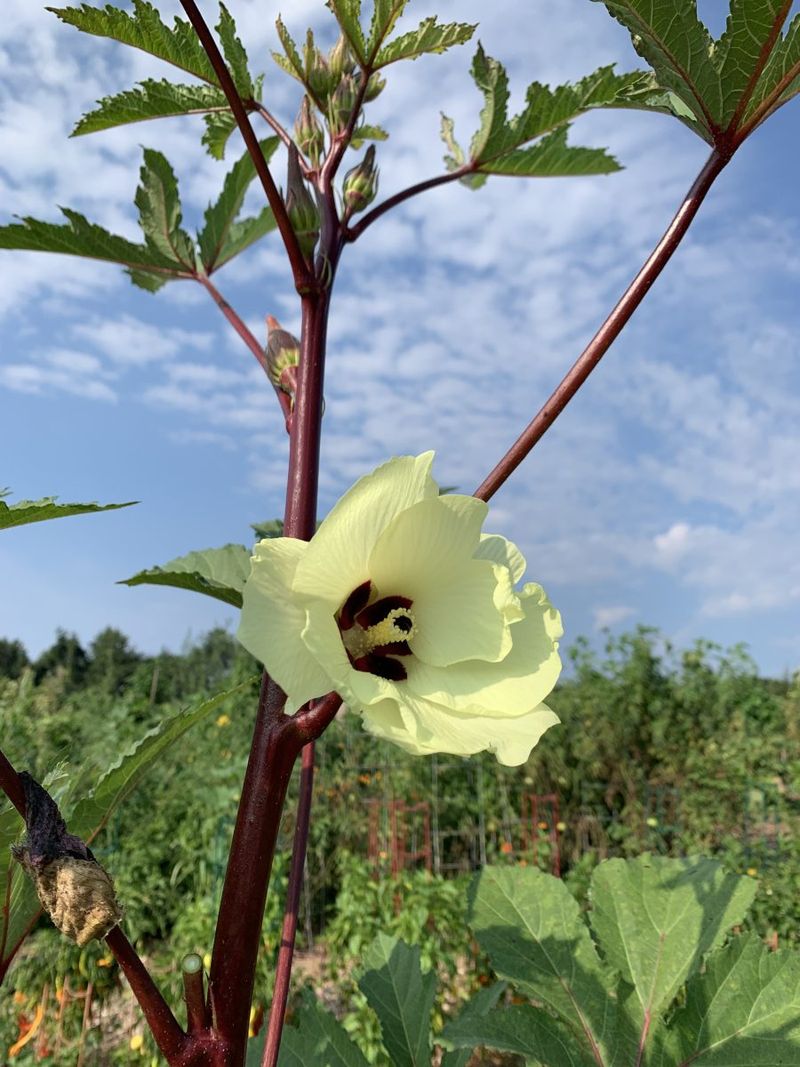
Putting the advice together into a repeatable routine makes it manageable. Check your plants every day or every other day during August, identify pods that match the cultivar’s known tender size and appearance, and use the knife test on any pod that looks borderline.
UGA Cooperative Extension and Texas A&M AgriLife Extension both support frequent picking and prompt removal of overmature pods as the core of a late-summer harvest strategy.
Tall plant height does not call for emergency pruning. Utah State University Extension notes that many varieties simply grow tall, and a healthy upright plant is an asset, not a sign of trouble.
Adequate moisture supports continued growth and new pod set, but watering cannot reverse a pod that is already woody. The goal is getting to pods before they cross that line.
A consistent inspection routine is the most practical tool available. Catching pods a day earlier than you would have otherwise is a real, achievable result – and that one day is often the difference between tender okra and a bucket of pods you cannot use.