
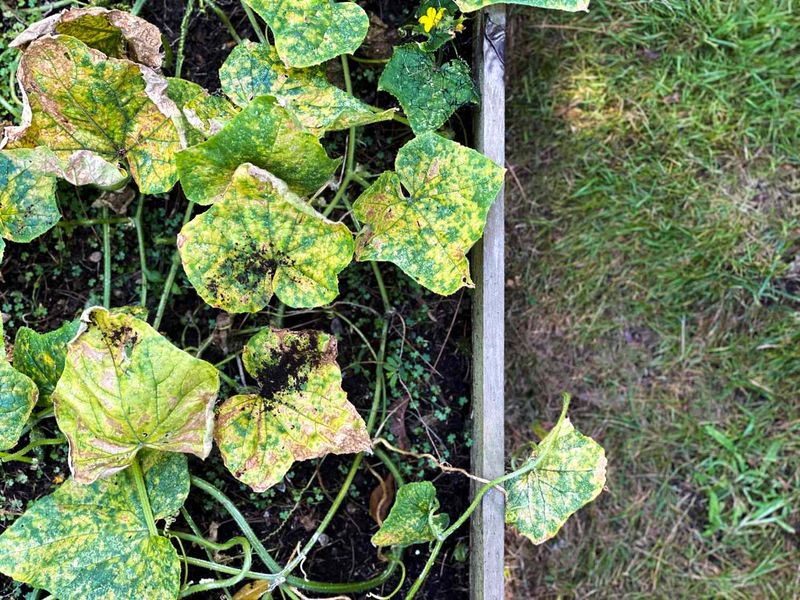
Watching the lower leaves on your cucumber vines go yellow while the rest of the plant looks fine can set off a quiet panic. Before you reach for fertilizer or start pulling leaves, the location of that yellowing tells you where to look, not exactly what went wrong.
A handful of causes, from normal aging to spider mites to moisture stress, can all produce the same bottom-up pattern, and sorting them out takes only a few minutes of careful observation.
Bottom-up yellowing describes a pattern, not a diagnosis
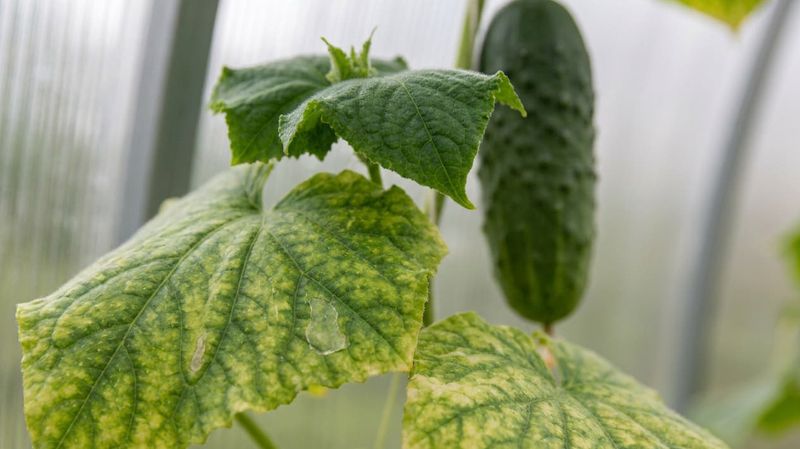
Yellowing that starts at the base of a cucumber vine and works its way up tells you where the problem is showing up, not what caused it. Before treating anything, walk over to the plant and compare the oldest leaves at the bottom with the newest growth at the tips.
That comparison is the single most useful first step you can take.
If the growing tips are still pushing out healthy green leaves and the vine looks vigorous overall, a few yellowing leaves near the soil may simply reflect normal aging. University of Maryland Extension guidance on yellowing vegetable leaves notes that older lower leaves naturally decline as a plant ages, especially when newer growth above them cuts off their sunlight.
A localized lower-canopy problem is far more plausible than whole-plant failure when the rest of the vine is thriving.
The picture changes when yellowing moves upward quickly, spreads across many leaves at once, or shows up alongside weakening new growth. Rapid upward spread, widespread leaf loss, or soft and pale growing tips all make the situation more urgent and point toward causes beyond simple aging.
University of Minnesota’s cucumber leaf discoloration diagnostic tool lists overlapping causes that range from nutrient stress to pests to disease, reinforcing why observation comes before treatment.
Older leaves may be aging normally—or showing nutrient stress
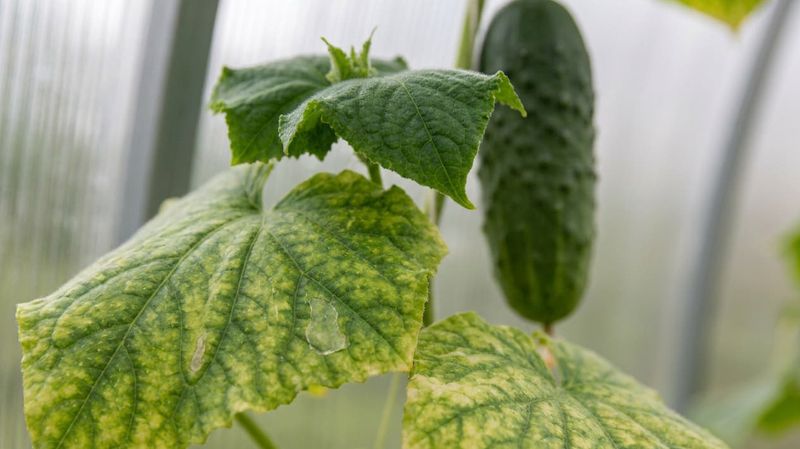
A cucumber vine is not obligated to keep every leaf it ever grew. As the plant matures and upper canopy fills in, the shaded lower leaves get progressively less light and the vine quietly abandons them.
Two or three yellow leaves at the very bottom, on an otherwise productive plant, often fall into this category and rarely need a response beyond removing the fully dead material.
Nitrogen deficiency looks different in scale. Rather than a leaf or two, you tend to see a broader, more general paling that begins in older lower foliage and spreads as the deficiency deepens.
University of Minnesota Extension’s fertilizing guide cautions against diagnosing nutrient problems from leaf color alone, because several disorders produce overlapping symptoms. A UF/IFAS vegetable nutrient deficiency reference supports using site conditions and soil testing rather than visual guessing as the basis for any fertilizer decision.
Potassium deficiency is worth distinguishing here because it can be confused with nitrogen problems. Potassium issues more commonly show up as browning or scorching along the margins of older leaves rather than an overall yellowing of the whole leaf surface.
If you suspect either deficiency, review what you applied at planting, consider whether heavy rain or irrigation may have leached nutrients, and look into a soil test before adding anything. Applying the wrong nutrient, or too much of the right one, can damage roots, delay fruiting, and create salt buildup in the soil.
Late-summer heat makes moisture conditions important to check
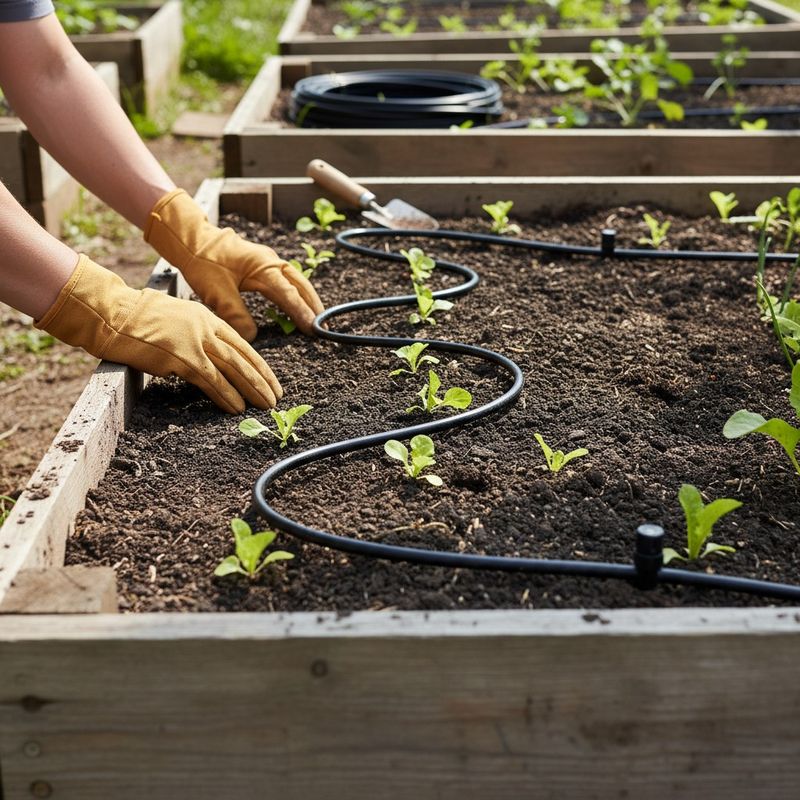
Heat raises a cucumber’s water demand noticeably, and when the root zone dries out repeatedly, the plant struggles to move nutrients as well as water. That combination can stress older leaves first, which is one reason bottom-up yellowing sometimes intensifies during hot spells.
Still, heat by itself does not create a distinctive, guaranteed yellowing pattern, so checking moisture is one part of a broader look that should also include new growth, leaf undersides, and any visible lesions or webbing.
The most reliable way to gauge soil moisture is to push a finger or a wooden dowel about 2 inches below the surface and feel whether the soil is genuinely moist at that depth. University of Minnesota Extension’s vegetable watering guide recommends this direct check rather than watering by calendar or by the appearance of afternoon leaf droop, which can occur even when soil moisture is adequate during extreme heat.
A figure of roughly 1 inch of water per week is a reasonable starting point, but sandy soils, trellised plants, containers, and plants loaded with fruit may need more frequent attention.
When watering is needed, deliver it slowly at the root zone using drip irrigation or a soaker hose. Repeated shallow watering leaves the deeper root zone inconsistently moist and can encourage roots to stay near the surface where they are more vulnerable.
University of Georgia Extension’s heat-wave watering guidance specifically warns against overwatering as a reflexive response to heat, noting that excess moisture reduces root oxygen, can leach nutrients, and stresses plants in its own right. A 2- to 3-inch layer of mulch spread around the plant, kept a few inches away from the stem, can slow evaporation and buffer soil temperature without creating stem-rot conditions.
Fine stippling and webbing suggest spider mites
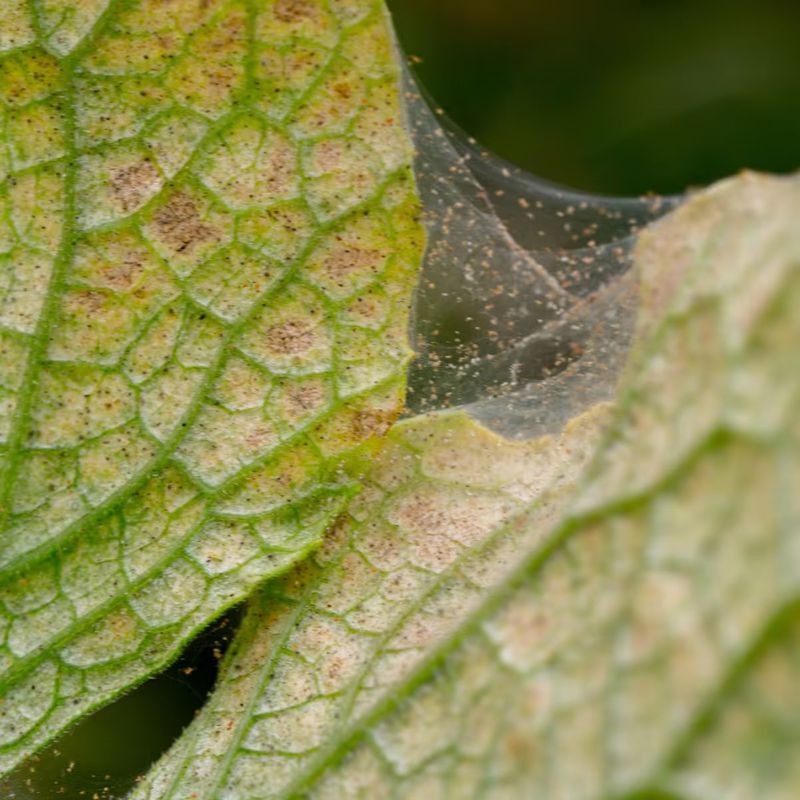
Hot, dry late-summer conditions are prime time for twospotted spider mites, and cucumber plants are a frequent target. The damage pattern can mimic nutrient problems closely enough that growers often miss the real cause until the infestation is well established.
Flipping a leaf over and examining the underside with good light, or even a hand lens, takes about thirty seconds and can save a lot of misdirected effort.
Mite feeding produces fine yellow or white speckling across the leaf surface, sometimes described as stippling or a dusty, washed-out look. As feeding continues, affected leaves may bronze and eventually yellow.
UF/IFAS research on twospotted spider mites notes that damage typically begins in the lower canopy and progresses upward, which makes mites a plausible alternative explanation whenever bottom-up yellowing appears during a dry heat stretch. Fine webbing between leaves or along the midrib is a strong indicator, though not every infestation produces visible webs early on.
Confirm the pest before selecting any control method. University of Minnesota Extension’s cucumber growing guide recommends inspecting both leaf surfaces regularly as part of routine monitoring.
If mites are confirmed, any pesticide or miticide use must follow the current product label exactly, including crop registration, preharvest interval requirements, and instructions about avoiding application while bees are actively foraging on flowers.
Leaf markings can suggest disease without confirming it
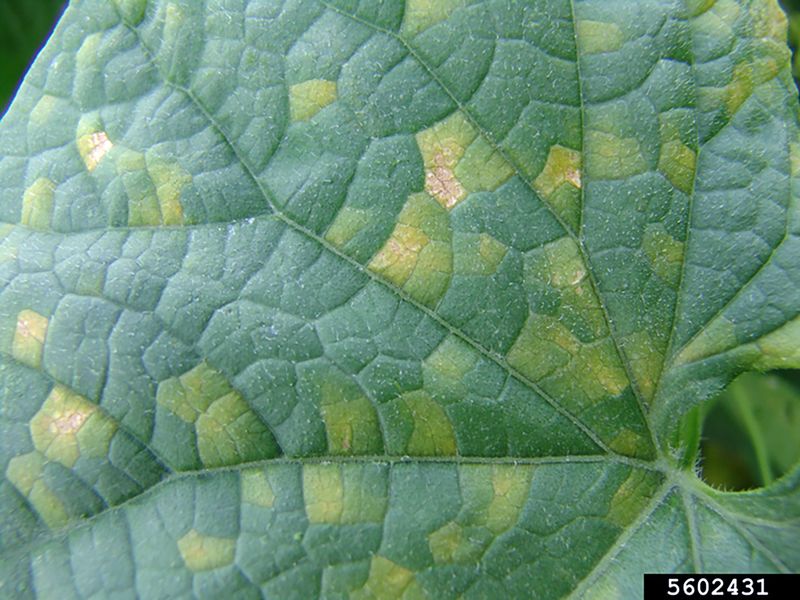
Certain leaf patterns can point toward disease rather than nutrient or moisture problems, and recognizing them early gives you more options. Two cucurbit diseases worth knowing by sight are downy mildew and powdery mildew, and they look quite different from each other despite sharing a name.
Downy mildew produces angular yellow lesions that are visibly bounded by the leaf veins, giving them a blocky or geometric outline. Under humid conditions, you may find gray-to-purple fuzzy growth on the corresponding underside of the leaf.
UF/IFAS cucurbit downy mildew research identifies this disease as a persistent cucurbit problem in warm, humid regions, and related UF/IFAS management guidance emphasizes that accurate identification must come before any fungicide decision. Powdery mildew, by contrast, tends to start as pale yellow patches that are later covered by white powdery growth, and it does not require the same wet conditions to spread.
Wilting that eases noticeably overnight, combined with the presence of cucumber beetles, raises concern about bacterial wilt. Beetles increase the risk of transmission, but their presence alone does not confirm infection.
Rapid collapse of a vine is an urgent signal that warrants further diagnosis, not a diagnosis by itself. Penn State Extension’s cucumber mosaic virus page is a useful reminder that viruses can produce mottling, distortion, and yellowing that closely resembles heat damage, herbicide injury, insect feeding, or nutrient disorders.
No simple home remedy reverses established bacterial wilt or a virus infection, so reaching out to your local cooperative extension service for confirmed diagnosis is the most productive next step when these patterns appear.
Use observation before fertilizer, sprays, or aggressive pruning
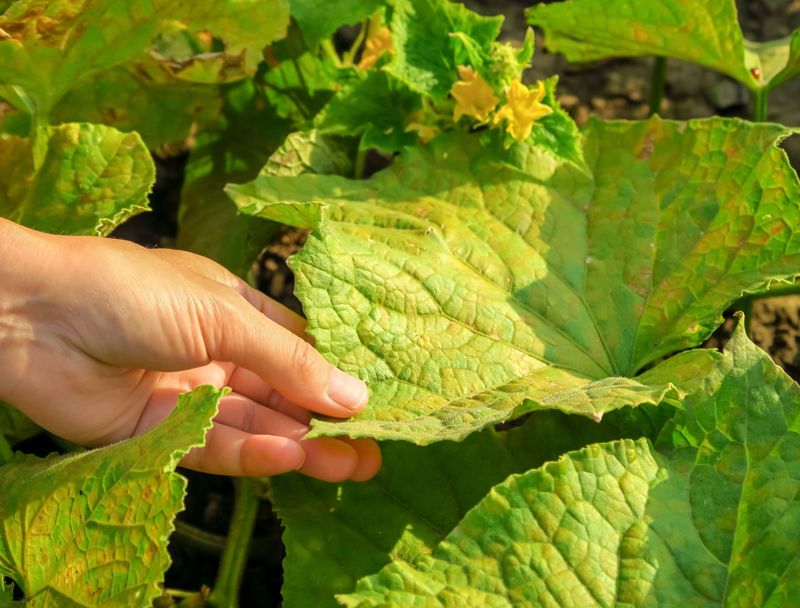
The temptation to do something, anything, when a plant looks sick is understandable. Fertilizer, Epsom salt, heavy irrigation, and unidentified sprays are common first moves, and most of them can make the situation worse when applied without evidence of what the plant actually needs.
A short, methodical look at the plant costs nothing and almost always reveals enough to guide a sensible response.
Start by comparing the oldest lower leaves with the newest growth at the tips. Then check soil moisture about 2 inches below the surface.
After that, flip several leaves and inspect the undersides for stippling, webbing, or unusual textures. Scan the leaf surfaces for angular lesions, powdery growth, or unusual color patterns.
Finally, note whether the plant is wilting, whether beetles are present, and whether any new growth looks pale or distorted. Penn State Extension’s vegetable garden diagnostic guide supports this kind of whole-plant observation before any intervention.
If the evidence points to water stress, correct root-zone watering and mulch practices first. Fully dead leaves and clearly diseased tissue can be removed using clean tools between cuts, but avoid stripping healthy green foliage during extreme heat.
University of Delaware Extension’s cucumber update notes that maintaining adequate green canopy protects developing fruit from sun exposure and supports the photosynthesis the plant needs to recover. If nitrogen deficiency still seems plausible after ruling out other causes, Ask Extension guidance on cucumber yellowing recommends a soil test rather than automatic fertilizer application, because excess nitrogen can push excessive vine growth, delay fruiting, and damage roots through salt buildup.
Let the whole pattern determine the next step
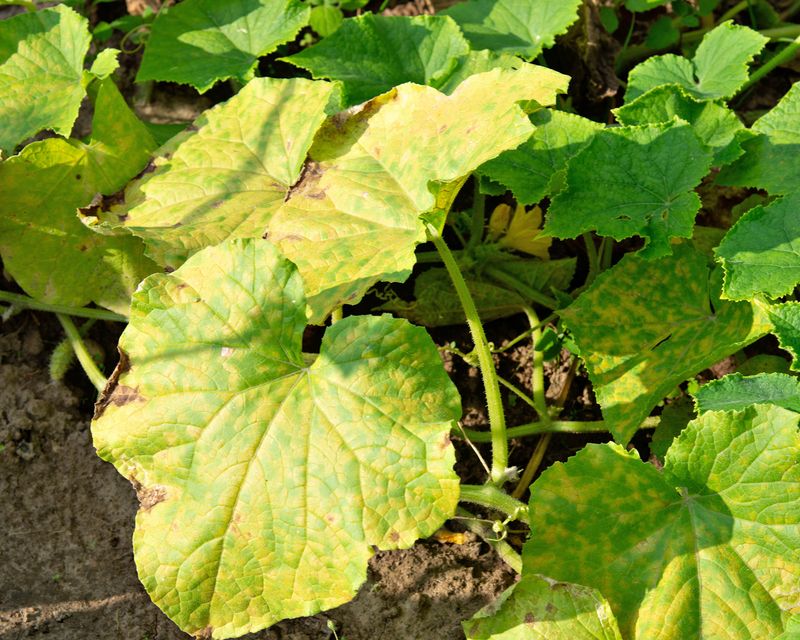
A few yellowing leaves at the very base of a vigorous vine, where older growth is shaded and the growing tips are still green and productive, usually call for consistent root-zone care and patient monitoring rather than an immediate intervention. That pattern is the least alarming version of bottom-up yellowing, and it is also the most common one late in the season.
Widespread paling, yellowing that moves up the plant quickly, stippling or webbing on leaf undersides, angular or powdery lesions, wilting that eases at night, rapid collapse, or clearly weakening new growth all shift the picture toward a targeted diagnosis. University of Minnesota’s cucumber diagnostic tool and University of Maryland Extension’s yellowing-leaf resource both support matching the full symptom pattern to a likely cause before feeding, watering heavily, spraying, or removing substantial foliage.
The plant will tell you a great deal if you read all its signals together rather than reacting to a single yellow leaf.