
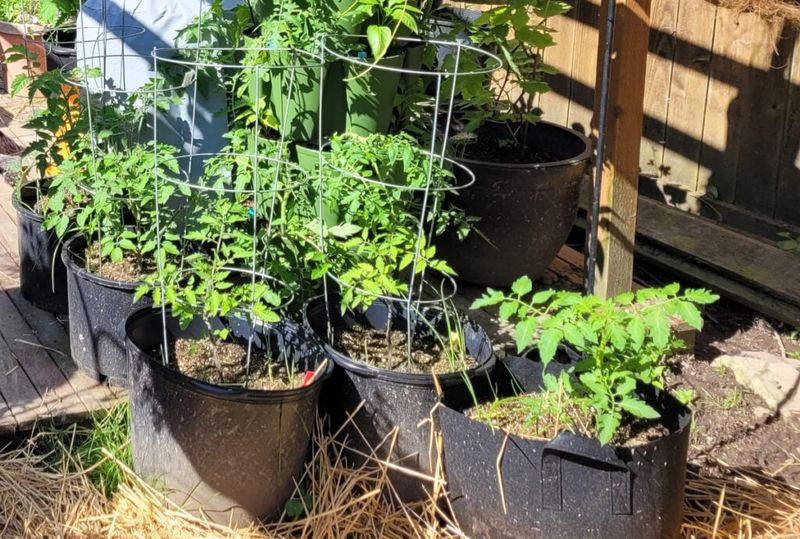
Watching your neighbor’s garden tomatoes shoot up while yours sit in a pot looking pale and tired is genuinely frustrating. A container can be a great place to grow tomatoes, but a small or poorly managed pot can put your plant under stress before the season even gets going.
Root space, heat, water, and nutrition all behave differently in a pot than they do in the ground. Understanding those differences is the first step toward figuring out what your plant actually needs.
Why a container tomato may fall behind an in-ground plant
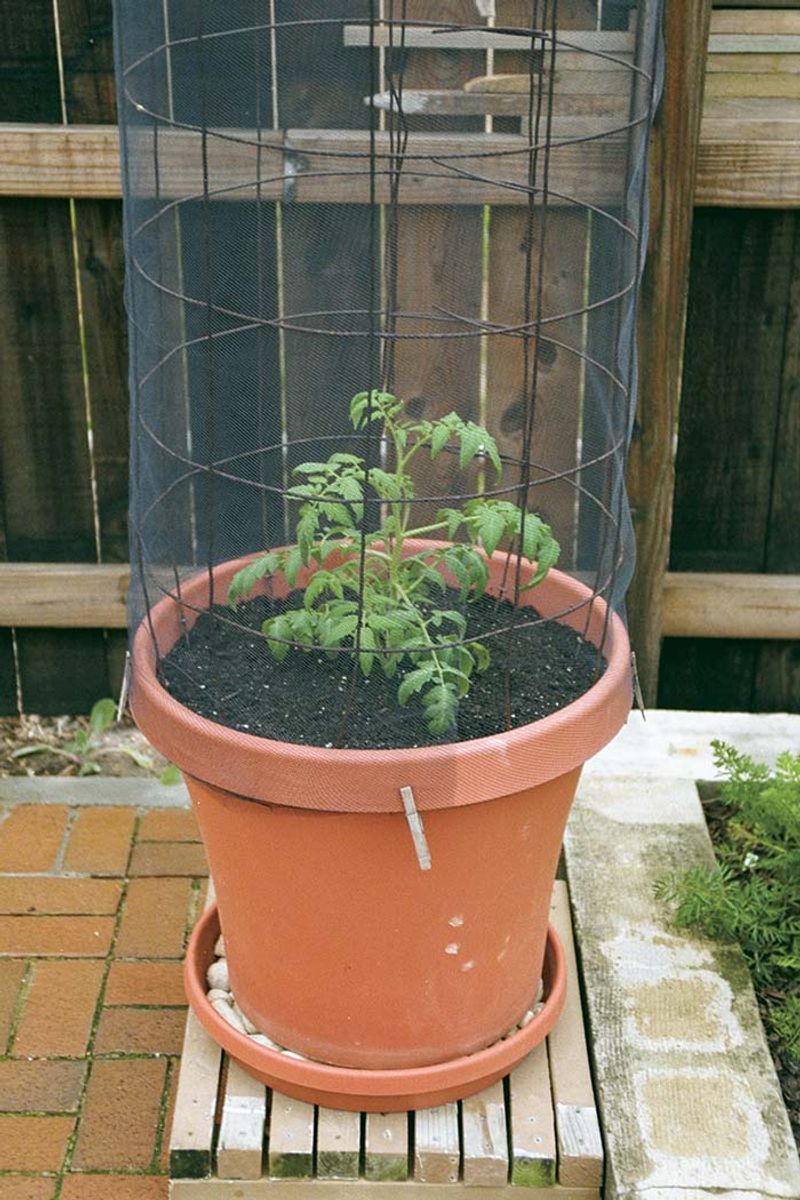
A potted tomato is not automatically destined to underperform. Plenty of container gardeners grow productive, healthy plants season after season.
What a container does change is the environment around the roots: a pot gives the plant a fixed volume of soil, a limited water reserve, and a smaller bank of nutrients than roots spreading through a garden bed would find. Research linking container size to tomato growth, fruit weight, and yield shows that smaller root volumes can reduce plant performance, though variety and management shape the outcome just as much as pot size does.
Small containers also dry out faster and heat up more quickly than in-ground soil. When a pot loses moisture rapidly or its root zone climbs to extreme temperatures, the plant hits stress thresholds sooner than one whose roots can reach cooler, moister ground a foot deeper.
That stress often shows up as slowed growth, wilting, or reduced fruiting rather than a single dramatic symptom.
Oxygen problems are a separate issue. Roots do not automatically suffer from low oxygen just because the container is small.
Oxygen stress develops when the potting mix becomes compacted over time, stays waterlogged after watering, or drains so poorly that air cannot re-enter the pore spaces. Penn State Extension’s container gardening guidance and Colorado State University Extension both point out that good drainage and appropriate media are as important as container size.
Poor light, excessive heat, inconsistent watering, too much nitrogen, an unsuitable variety, root damage, disease, or transplant stress can all produce the same small-and-weak appearance, so those factors deserve a look before you assume the pot alone is the culprit.
Match the variety to the container
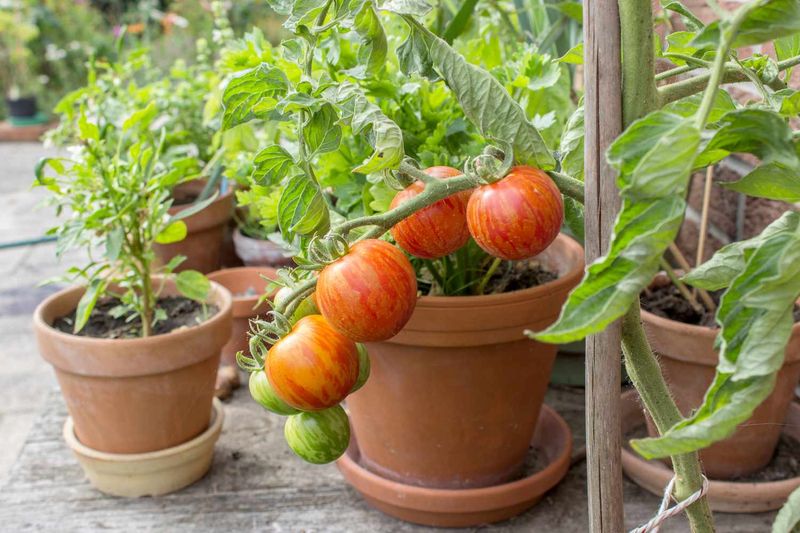
Plant genetics set the ceiling for what any tomato can do, and a variety bred to sprawl six feet in every direction will always fight a container harder than one bred for compact growth. Patio, dwarf, bush, determinate, and cherry types are generally the most practical container choices because their root systems, canopy size, and water demands fit a manageable pot more comfortably.
University of Arizona Cooperative Extension guidance on tomato planting confirms that smaller-statured varieties adapt better to confined growing conditions than large indeterminate types.
Large indeterminate tomatoes can be grown in containers, but they need substantially more root space, a sturdy support structure, more frequent watering, and heavier feeding throughout the season. Crowding a big variety into a small pot almost guarantees the kind of slow, pale growth that makes gardeners wonder what went wrong.
Colorado State University Extension and University of Georgia Extension’s container gardening publication both recommend one plant per appropriately sized container, noting that crowding cuts available root volume and can increase disease pressure.
Common guidance suggests two to five gallons for smaller tomato types and at least five gallons for general use, with Penn State recommending a container at least twenty inches wide for a single tomato plant. Treat those figures as a starting range rather than a guarantee.
A five-gallon pot may suit a compact determinate variety well, while a large indeterminate beefsteak type will likely need considerably more room to produce reliably. Matching the variety to the pot size is one of the most practical steps a container gardener can take before the season starts.
Build a well-drained root environment
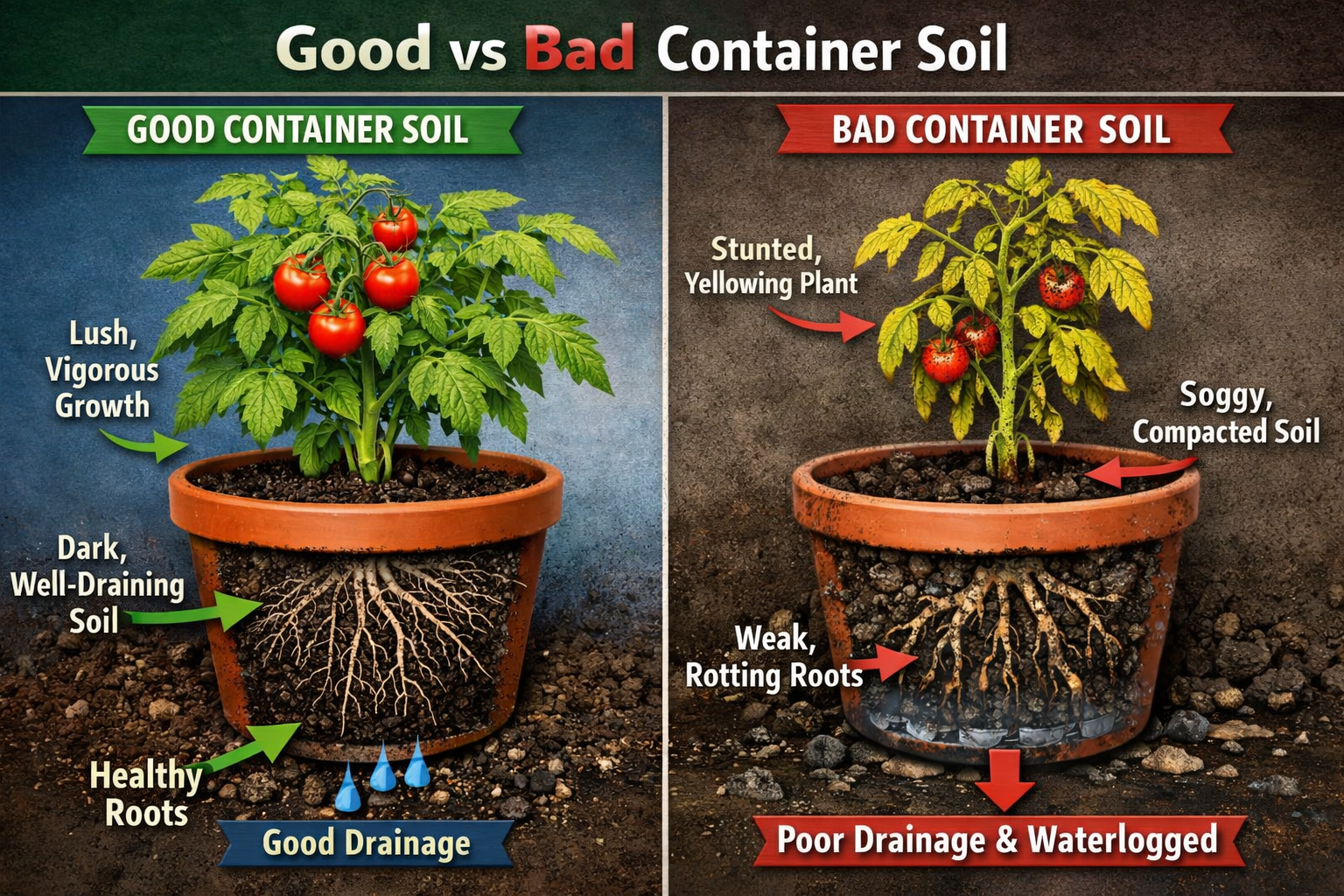
Before adjusting watering frequency or adding fertilizer, check the foundation: the growing medium and the container’s ability to drain. Garden soil pulled straight from the bed is a common mistake in container gardening.
In a pot, it compacts under repeated watering, reduces the air-filled pore space roots need, and can drain so slowly that the root zone stays wet for days. University of Georgia Extension’s container gardening guide recommends a commercial potting mix because those formulations are designed to balance water retention with the drainage and aeration that container roots require.
Drainage holes are non-negotiable. Water that cannot leave the pot accumulates at the bottom, forces air out of the mix, and creates the saturated conditions that deprive roots of oxygen and invite rot.
Check that every drainage hole is open and unobstructed, and avoid leaving the container sitting in a tray that holds standing water. Penn State Extension specifically notes that waterlogged media can contribute to root injury even when the plant appears to be getting enough water.
The opposite problem is also possible. A very lightweight or coarse mix, or a small pot with large drainage holes, may release water so quickly that the root ball dries out between waterings faster than the plant can compensate.
University of Minnesota Extension’s guidance on container plant care points toward a mix that holds enough moisture to buffer the root zone while still allowing excess water to move through freely. Getting that balance right is the foundation every other management step depends on.
Water the whole root zone and watch how fast it dries
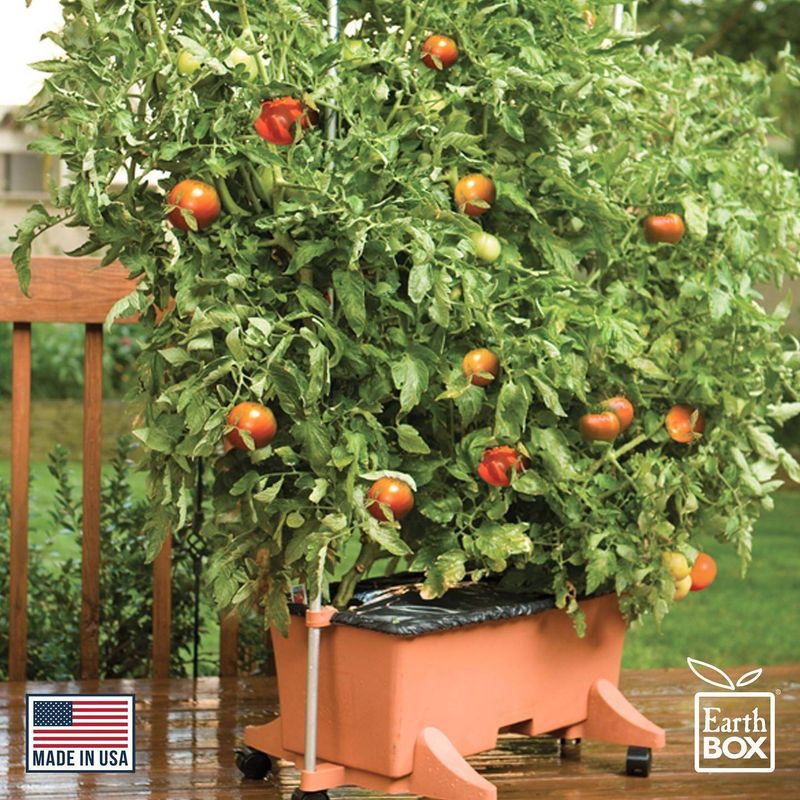
Fixed watering schedules rarely match what a container tomato actually needs. A small clay pot on a Texas patio in July can dry out completely within a day, while a large plastic container in partial shade may stay moist for two or three days after a thorough watering.
The only reliable method is to check the root-zone moisture directly, either by pressing a finger an inch or two into the mix or by lifting the pot to feel its weight, and then water based on what you find rather than what the calendar says.
When the mix does need water, apply enough to wet the entire root zone, not just the surface. Water should move all the way through the container and exit from the drainage holes.
Light sprinkles that wet only the top inch encourage shallow root growth and leave the lower root zone dry even when the surface feels damp. University of Minnesota Extension’s tomato growing guide and their container plant care guidance both emphasize thorough, even moisture over frequent shallow applications.
Southern heat, small containers, porous terracotta, and large actively growing plants all accelerate drying. During hot spells in Florida or Texas, checking containers at least once a day is reasonable, and small pots may need attention more than once.
University of Arizona Cooperative Extension notes that when irrigation produces substantial drainage, some nutrients and salts move out of the pot along with the water. That is worth knowing, but the answer is label-guided feeding, not cutting back on necessary watering to protect nutrients at the cost of the plant’s moisture supply.
Manage Southern heat without cutting essential light
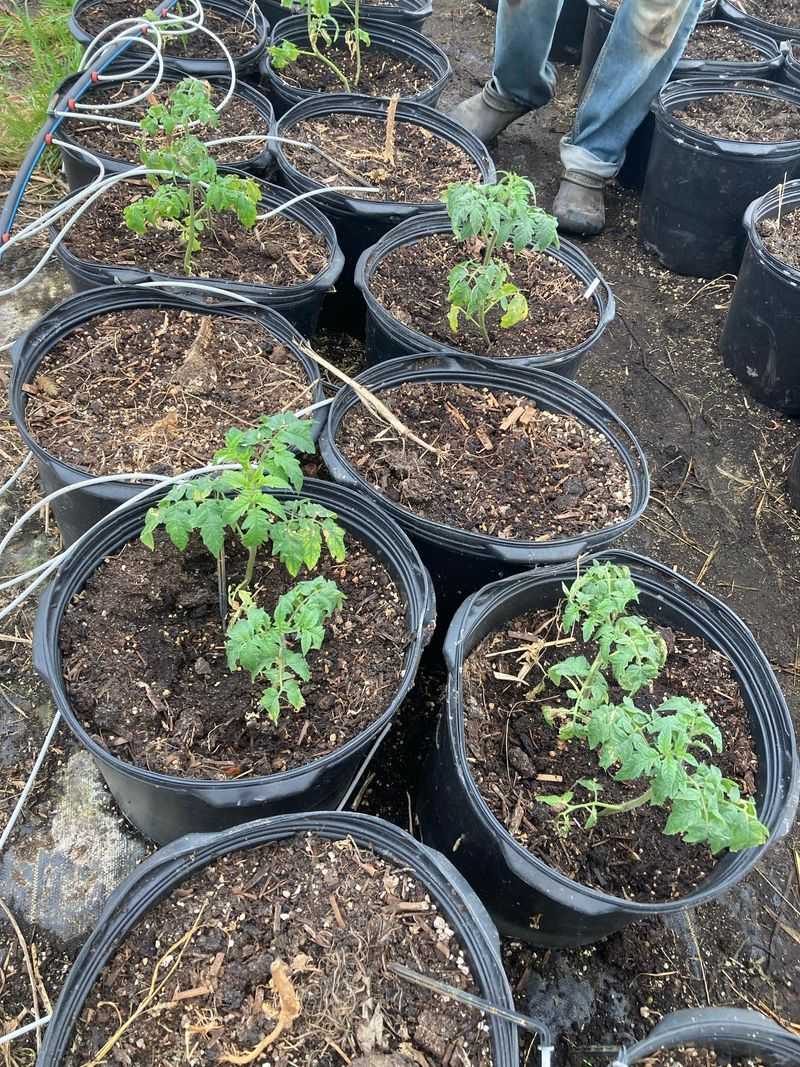
Tomatoes need strong light, typically at least six hours of direct sun per day, and cutting that back too aggressively will slow growth and reduce fruiting regardless of how well everything else is managed. Heat is a separate problem that deserves its own solution.
In Florida, Texas, and similar Southern climates, the root zone inside a dark-colored or thin-walled container can reach temperatures that stress or injure roots long before the air temperature alone would cause visible damage. University of Arizona Cooperative Extension’s desert container gardening guidance recommends lighter-colored containers or placing a smaller pot inside a larger, insulated outer pot to buffer root-zone temperatures during intense afternoon heat.
Heat also affects flowering and fruit set in a way that is distinct from general plant weakness. Prolonged daytime temperatures above roughly 90 degrees Fahrenheit, combined with warm nights, can reduce pollen viability and cause flowers to drop before fruit forms.
University of Arizona Cooperative Extension’s tomato challenges publication and the University of Florida IFAS Florida Vegetable Gardening Guide both describe heat-related blossom drop as a pollination problem, not evidence that the plant’s overall health is failing. A tomato that drops flowers during a heat wave but otherwise looks vigorous is dealing with a different issue than one that is stunted and pale throughout the season.
A practical middle path for Southern gardeners is to protect the container and root zone from intense afternoon sun while keeping the foliage in adequate light. Moving the pot to a spot that gets morning sun and afternoon relief, wrapping the container in a light-colored material, or setting it on a surface that does not radiate heat can all reduce root-zone stress.
University of Georgia Extension’s container gardening tips reinforce that protecting roots from temperature extremes is one of the more overlooked adjustments a Southern container gardener can make.
Feed according to the label, not by appearance alone
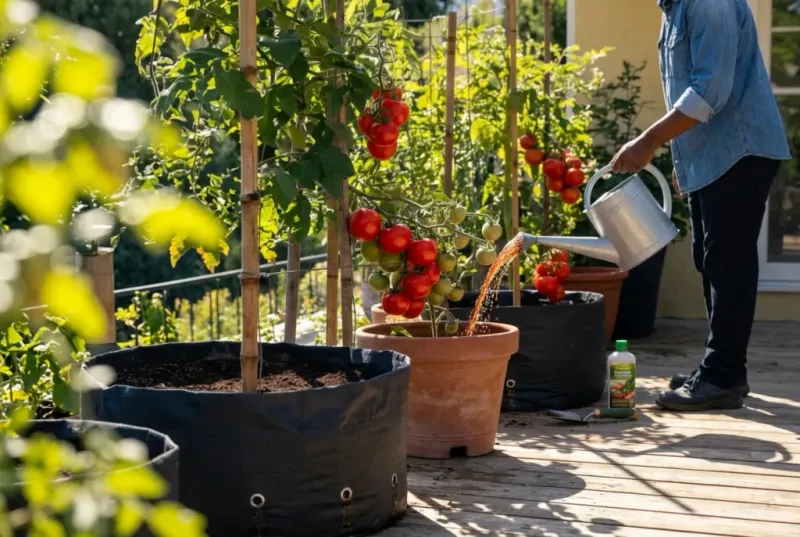
Container tomatoes depend entirely on what is in the pot for their nutrition. Unlike a plant in the ground, they cannot send roots out to find a fresh patch of soil when the immediate zone runs low.
Regular irrigation, especially the thorough kind that wets the full root zone, can carry some nutrients out of the pot along with the water. That makes consistent feeding important, but it does not mean every watering depletes the mix or that more fertilizer is always the answer.
Penn State Extension and University of Minnesota Extension’s container plant nutrition guidance both support a two-part approach: a slow-release fertilizer mixed into the potting medium at planting, followed by supplemental soluble fertilizer during the season at intervals the product label specifies, often every two to four weeks depending on the formula and plant condition. Following the label matters because products vary widely in concentration and release rate.
Resist the temptation to pour on extra nitrogen when a plant looks weak. University of Arizona Cooperative Extension and Texas A&M AgriLife Extension’s tomato production guide both caution that excess nitrogen pushes lush vegetative growth at the expense of flowers and fruit, and can worsen certain fruit disorders.
University of Georgia Extension’s homegrown tomato publication reinforces the same point: check moisture, root health, light, heat exposure, and disease signs before reaching for fertilizer as a fix. A plant that is drought-stressed, root-damaged, or sitting in shade will not respond to fertilizer the way a healthy plant in good conditions will.
Inspect roots before deciding to repot
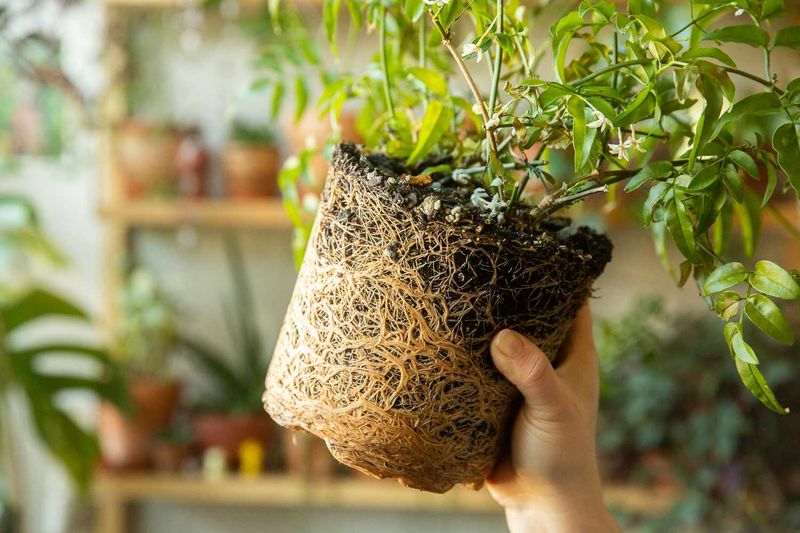
A single root poking out of a drainage hole is easy to spot and easy to misread. That one visible root does not confirm that the plant is root-bound or that repotting will fix whatever problem you are seeing.
The more useful step is to slide the plant out of its container and look at the whole root ball. Pale, firm, well-distributed roots that fill the pot evenly are a sign of a healthy, established plant.
Roots that are tightly circling the outside of the ball, matted together with little visible soil, or packed so densely that water moves through without being absorbed suggest the plant has genuinely outgrown its space.
University of Georgia Extension’s repotting guidance recommends moving up only when roots are substantially circling or filling the container, and University of Minnesota Extension’s transplant care notes remind gardeners that repotting an established or actively fruiting plant adds transplant stress on top of whatever stress the plant is already managing. If you do decide to move up, handle the root ball as gently as possible, disturbing as few roots as you can, and water the plant thoroughly right after settling it into the new container.
For a young, leggy plant that has not yet set fruit, University of Minnesota Extension’s early-season tomato guidance notes that burying part of the stem when repotting can increase the effective root system, since tomatoes form roots along buried stems. University of Arizona Cooperative Extension also recommends installing support structures early, before the plant grows large enough that adding a stake or cage risks damaging the root zone.
Staking keeps foliage off the container rim, improves air circulation, and makes it easier to inspect the plant and water evenly.
Read fruit symptoms separately from weak growth
Small tomatoes on a potted plant are not automatically evidence of a problem. Cherry and patio varieties produce small fruit by design, and even larger-fruited types will size down when the plant carries a heavy crop load, experiences heat stress, or moves through a dry spell.
Fruit size varies by genetics first, then by conditions. Before concluding the plant is sick, confirm what the variety is supposed to produce.
Heat-related blossom drop is one of the most common fruit complaints in Southern container gardens, and it operates differently from general plant weakness. When daytime temperatures stay above roughly 90 degrees Fahrenheit and nights stay warm, pollen viability drops and flowers abort before fruit can set.
University of Arizona Cooperative Extension’s tomato challenges resource describes this as a pollination problem tied to temperature, not a sign that the plant’s foliage or root system is failing. Tomatoes are self-pollinating, and outdoor wind and vibration normally assist pollen release; gently shaking flower clusters may help in still or sheltered spots, but it will not overcome sustained heat that prevents viable pollen from forming.
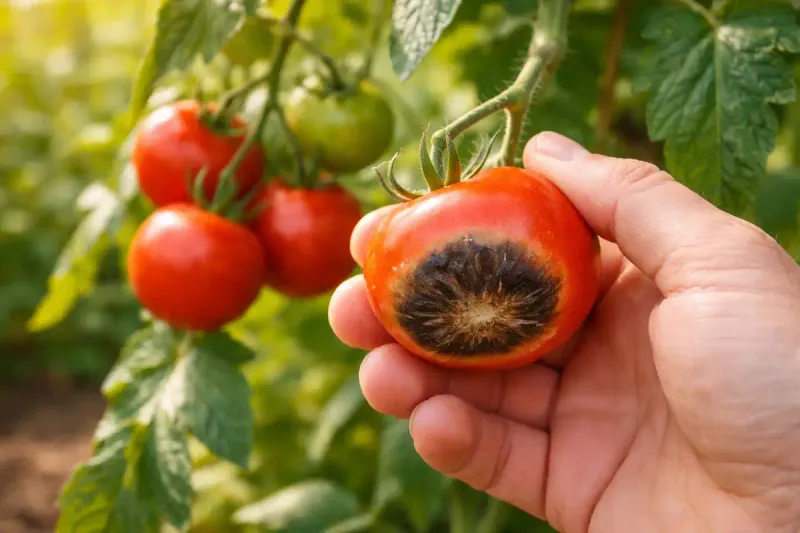
Blossom-end rot, the dark leathery patch that forms on the bottom of developing fruit, is a different issue entirely. University of Minnesota Extension’s tomato disorders guide explains that the disorder reflects inadequate calcium reaching the developing fruit, most often because of fluctuating moisture, root injury, rapid growth, or salt imbalance rather than a simple shortage of calcium in the potting mix.
Steady moisture and healthy roots are the most practical correctives. University of Minnesota Extension specifically notes that Epsom salt, which supplies magnesium and sulfur, does not address blossom-end rot.
University of Georgia Extension’s blossom-end rot guidance and their prevention tips both caution that foliar calcium sprays show little consistent evidence of repairing fruit that already shows symptoms.
Use a staged rescue plan and set realistic expectations
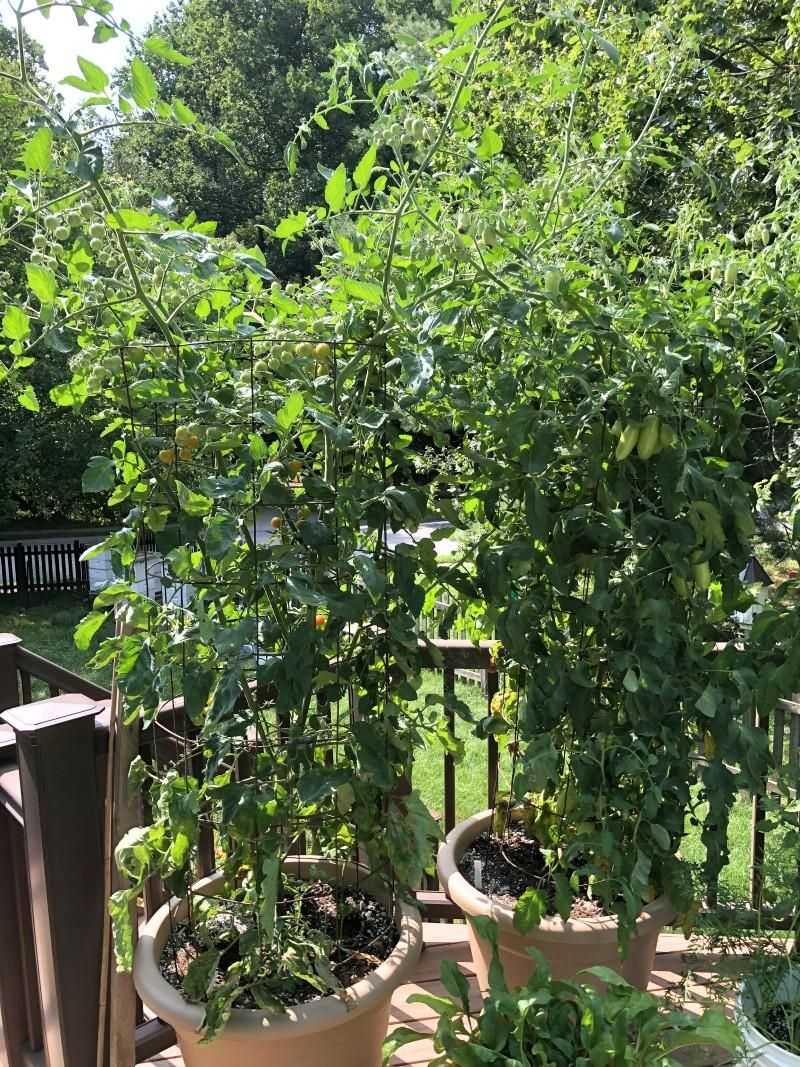
Working through problems in order saves time and avoids making a struggling plant worse. Start with the basics: confirm the variety suits the container size, check that the potting mix drains freely and has not compacted, and make sure drainage holes are open.
Penn State Extension’s container vegetable gardening guidance and Colorado State University Extension both frame those foundational checks as the starting point before adjusting anything else.
Once the root environment is stable, focus on consistent moisture, root-zone heat protection, and adequate light. Feed according to the product label after those conditions are met.
Inspect the root ball before repotting, and acknowledge that moving an established plant adds stress. University of Arizona Cooperative Extension reinforces that a well-matched variety in a properly managed container can produce a genuinely productive plant.
A container tomato should be measured against what its cultivar is designed to do in the conditions it is actually growing in, not against the most vigorous indeterminate plant in a neighbor’s open garden bed. Get the basics right, stay consistent, and the gap between your pot and the garden may shrink considerably.