
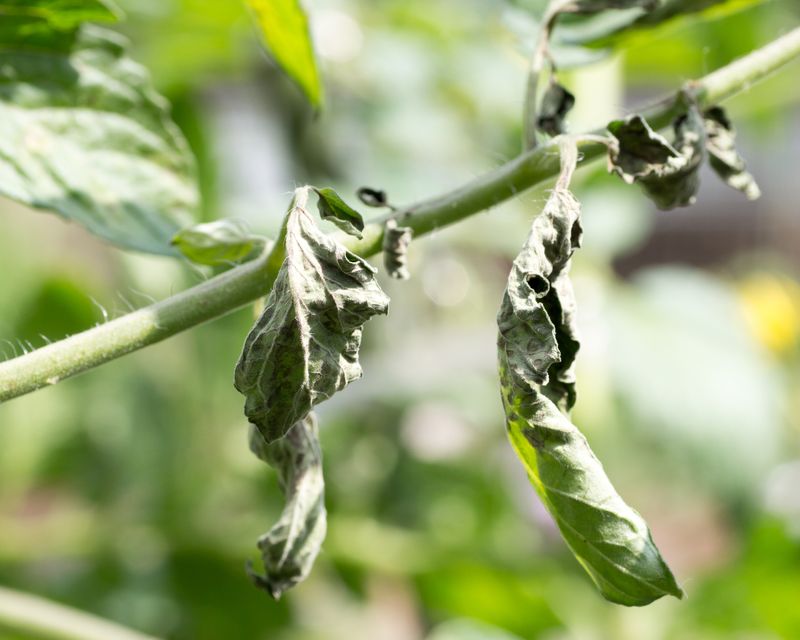
Walking out to your tomato plants on a blazing August morning and finding the leaves curled up tight and feeling stiff as cardboard can send a gardener straight into panic mode. Before you reach for a spray bottle or start pulling leaves off, take a breath, because the most likely explanation is far less alarming than it looks.
Most tomato plants showing upward-curling, leathery leaves in late summer are reacting to stress, not disease, and the plant may still be perfectly capable of giving you a full harvest.
The Upward Curl Fits Physiological Leaf Roll
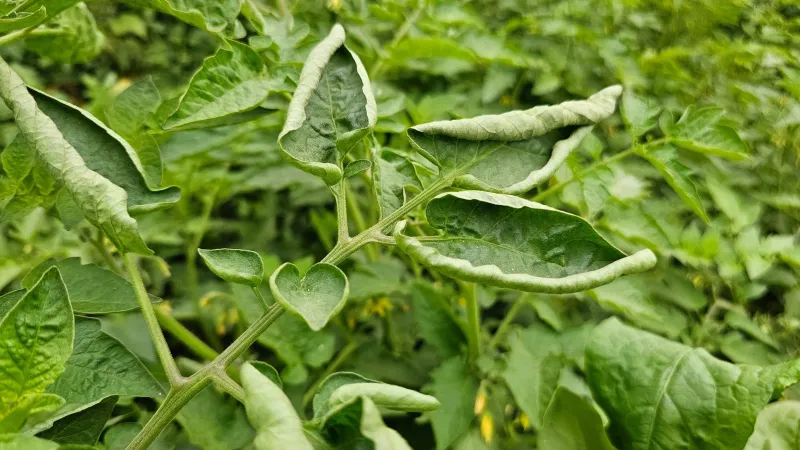
Pay attention to where the curling starts and what it looks like up close. With physiological tomato leaf roll, the leaf margins roll upward and inward, sometimes curling so tightly that the edges nearly touch or overlap.
The affected leaves feel firm, thick, or leathery rather than soft and pliable, and older leaves lower on the plant typically show the pattern before newer growth near the top does.
The rest of the plant can look completely ordinary. Stems stay green and sturdy, new leaves near the top continue to unfurl at a normal size, flowers open, and fruit develops without obvious problems.
University of Minnesota Extension guidance on tomato disorders describes this pattern as physiological leaf roll, a noninfectious response that generally has little effect on overall plant health or yield.
That combination of upward-inward curl, firm texture, older-leaf onset, and otherwise normal plant behavior is most consistent with physiological leaf roll. That said, curled leaves alone are not enough to confirm the diagnosis.
Before changing your watering routine or applying any product, use this symptom picture as a starting baseline and then look for the additional clues covered in the sections ahead.
Late-Summer Heat Is Only One Possible Trigger
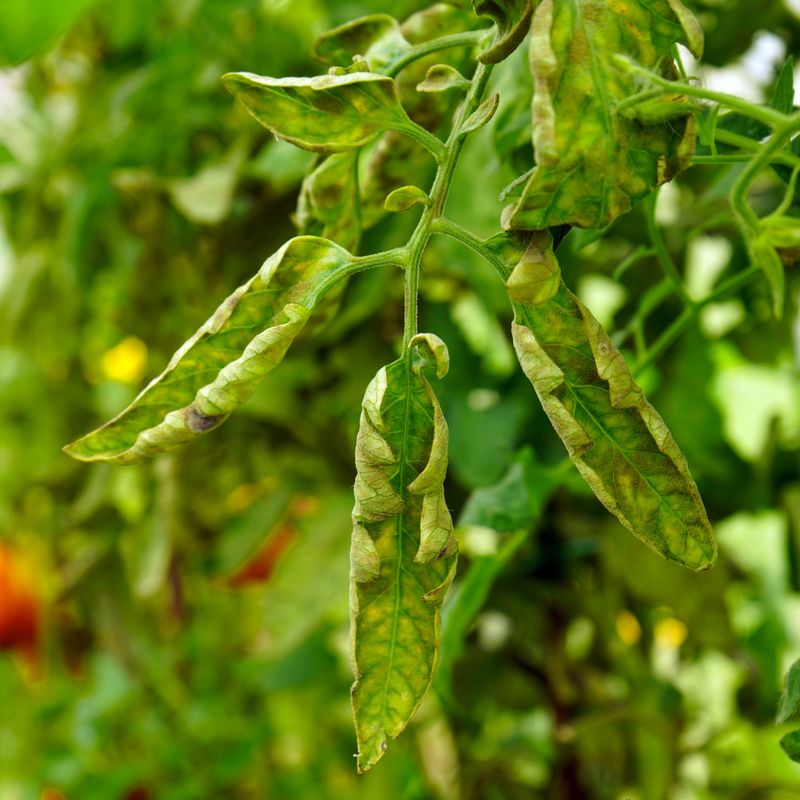
Physiological leaf roll is a noninfectious stress response, meaning no pathogen causes it. The plant is reacting to conditions rather than fighting an infection.
Late-summer heat and hot, drying winds are common contributors, and a leading explanation is that the plant curls its leaves to reduce the surface area exposed to sun and wind, slowing moisture loss. The exact mechanism is not fully settled, but moisture-conservation stress is widely cited as a probable driver.
Heat stress and physiological leaf roll are related but not the same thing. Heat can promote the broader physiological response, yet Oklahoma State University Extension and Texas A&M AgriLife Extension both identify a wider list of possible contributors, including prolonged wet soil, overwatering, a sudden flush of water after a dry spell, root injury, rapid growth spurts, severe pruning, and intense sunlight.
Variety susceptibility also plays a role. Some tomato types curl more readily than others under the same conditions, so two plants growing side by side may not respond identically.
Recognizing that multiple triggers can produce the same visual symptom matters because it changes how you respond. Cutting back on water, for example, could worsen the problem if wet soil is not the cause, while adding more water can make things worse if the soil is already saturated.
A Healthy, Productive Plant Usually Needs Monitoring, Not Treatment
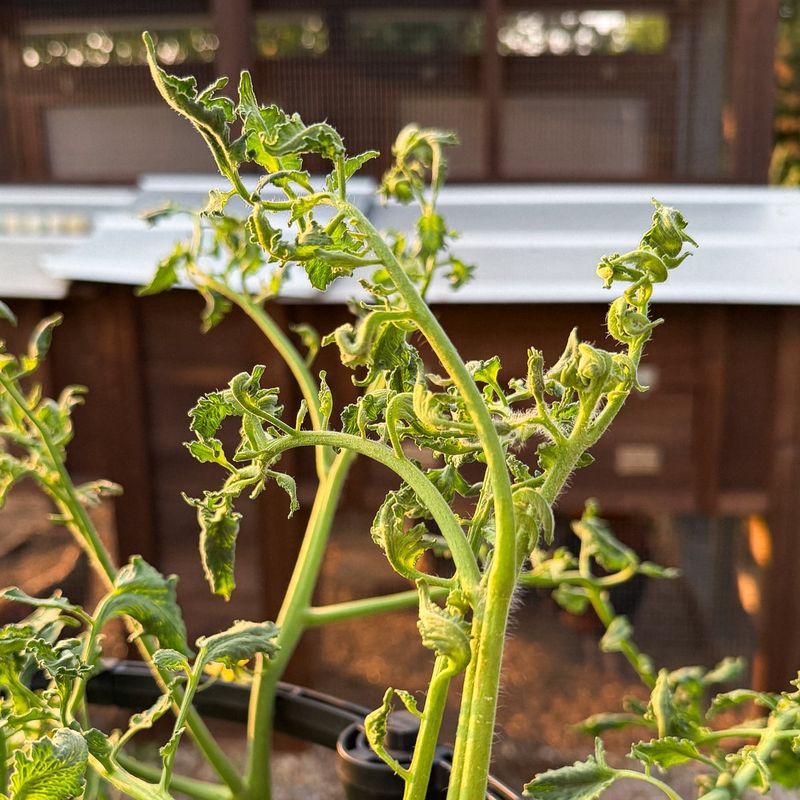
Finding curled leaves on a plant that is still flowering, setting fruit, and pushing out normal new growth at the top is genuinely reassuring. Extension guidance is clear that the classic physiological leaf roll pattern is generally cosmetic and usually has little measurable effect on yield.
The curled leaves are not a sign that the plant is dying, and they do not prove a nutrient deficiency, a calcium shortage, or the need for a pesticide application.
Rather than reacting to the older curled foliage, shift your attention to what the plant is actively doing. OSU Extension notes that when color remains normal and growth continues, the plant is telling you it is managing.
Check whether new leaves are emerging at a typical size with normal color, whether flower clusters are opening, and whether fruit is sizing up on schedule.
Worsening symptoms, abnormal new growth, declining productivity, or new diagnostic signs should prompt a closer look. Persistence of the existing curl alone is not one of those warning signs.
Rolled leaves can stay rolled even after conditions improve, so judging the situation by the old foliage rather than by fresh growth and productivity will give you a misleading picture of how the plant is really doing.
Stabilize the Root Zone Before You Reach for a Spray
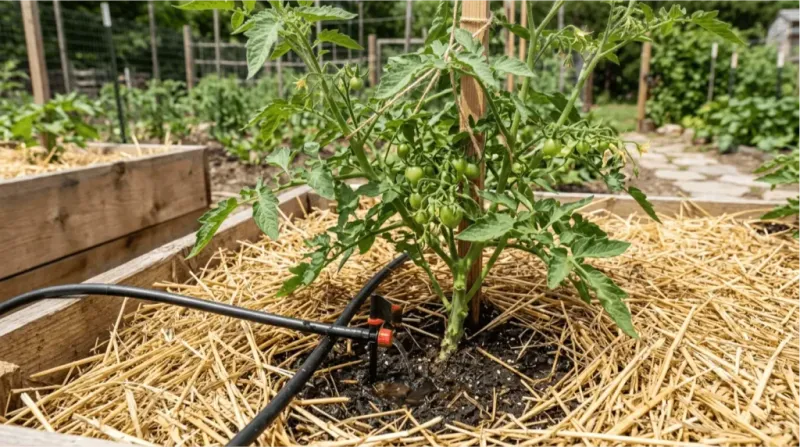
The most useful first step is checking the soil before adding any water. Push a finger or a wooden dowel two to three inches into the ground near the root zone.
Sandy soils common in many Florida gardens dry out faster and may need water sooner, while clay-heavy or organic-rich soils hold moisture longer and can stay wet at the root level even when the surface looks dry. University of Minnesota Extension watering guidance recommends checking actual soil conditions rather than watering on a fixed schedule, because overwatering and prolonged wet soil are also associated with physiological leaf roll.
When the soil does need water, aim for consistent, even moisture rather than swinging between bone-dry and soaking wet. Deliver water at the root zone rather than overhead.
UF/IFAS guidance on irrigation supports drip lines and soaker hoses as efficient options that keep foliage dry and concentrate water where roots can use it. Morning watering, when practical, gives any splashed soil time to dry before evening.
Avoid brief surface-only applications that wet just the top inch without reaching the deeper roots.
Mulch is a practical ally here. A two-to-three-inch layer of organic mulch around the base of each plant reduces evaporation and helps moderate soil temperature during heat waves.
Keep it a few inches away from the stem to avoid trapping excess moisture against the crown. Extension mulching guidance also advises checking the soil beneath the mulch periodically, since a thick layer can make it hard to judge whether the root zone is actually dry or adequately moist.
Reducing stress through steady root-zone conditions is the right goal, but do not expect already-rolled leaves to flatten out as a result.
Protect the Canopy Instead of Cutting It Away
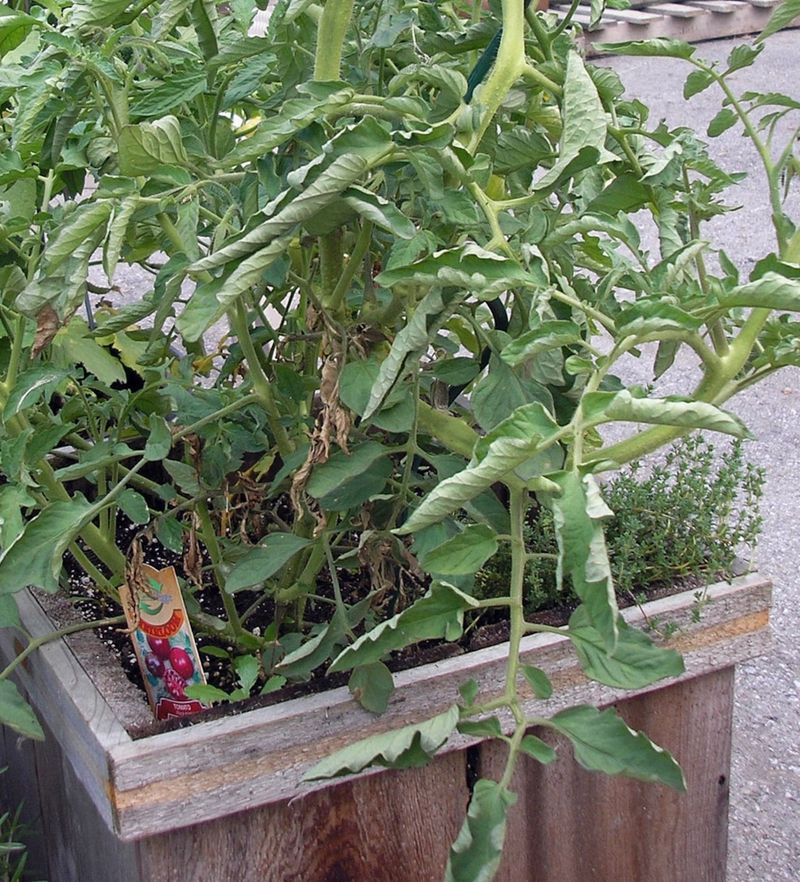
Seeing a plant covered in curled, leathery leaves can trigger the urge to tidy things up by cutting them off. Resist that impulse during a heat wave.
University of Minnesota Extension hot-weather gardening advice cautions that severe pruning and sudden canopy loss increase plant stress and leave developing fruit exposed to direct sun, which causes sunscald, a condition where the fruit skin bleaches and collapses.
Rolled foliage, even when it looks odd, still provides shade for the fruit below it. Removing healthy-looking leaves simply because they have curled upward strips away that protection without addressing the underlying stress.
Extension guidance on tomato disorders supports leaving physiologically rolled foliage in place rather than cutting it away.
The calculus changes when a contagious virus or severe disease is genuinely suspected. In those cases, removal decisions should follow an actual diagnosis rather than a visual guess.
University of Minnesota Extension tomato virus management resources recommend confirming the problem before removing foliage, because unnecessary removal can increase stress while doing nothing to stop the spread of a pathogen that may not even be present.
Inspect New Growth for Clues to Another Problem
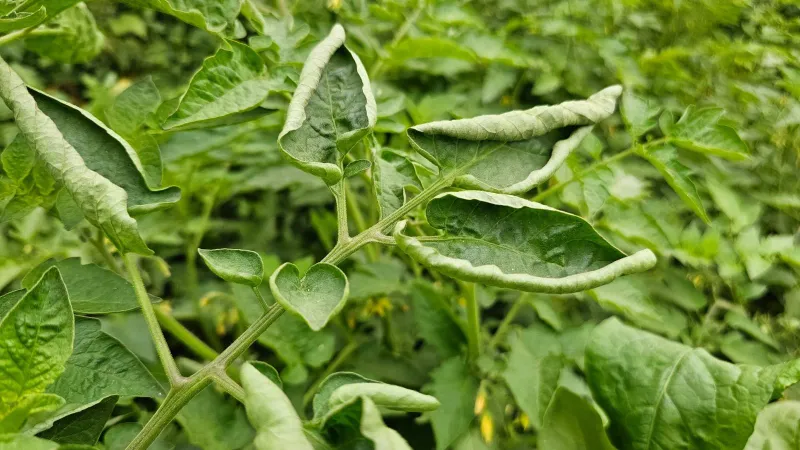
When the symptom picture does not match the classic physiological pattern, a more systematic look at the plant and the surrounding garden is the right move. Flip leaves over and check both surfaces for insects.
University of Minnesota Extension tomato leaf curl diagnostics note that aphids can cause curling, stunting, and wilting when populations build up, and sticky residue or visible clusters of soft-bodied insects on the undersides of leaves support an insect diagnosis rather than a physiological one.
For gardeners in Florida and across the Gulf South, whiteflies and tomato yellow leaf curl virus deserve special attention. TYLCV is a serious concern in these regions, but upward leathery curl alone does not confirm infection.
UF/IFAS guidance on TYLCV and UF/IFAS whitefly management resources describe the more telling signs: new leaves that cup upward and yellow at the margins, leaves that are noticeably smaller than normal, clear stunting of the whole plant, and declining fruit set. Laboratory diagnosis is recommended because these symptoms are not unique to TYLCV.
A completely different pattern, downward curling combined with compact, unusually dark green, thick new growth, can point toward excessive nitrogen or what greenhouse growers call “bullish” growth. UF/IFAS greenhouse tomato resources describe this as a separate condition distinguishable from the typical upward roll by the direction of the curl and the lush, dense new foliage.
Herbicide injury is another possibility worth ruling out. Clues include narrow, strap-like, or otherwise distorted new leaves, unusually prominent veins, brittle or split stems, bleached or browned tissue, and symptoms that appear more severe on the side of the plant facing a nearby lawn or treated area.
UGA Extension plant pest guidance also flags herbicide-contaminated grass clippings used as mulch as a possible injury source. Scout the plant and the garden thoroughly before treating anything, because treating curl alone without knowing the cause can mask symptoms and complicate a later diagnosis.
Judge Recovery by What the Plant Does Next
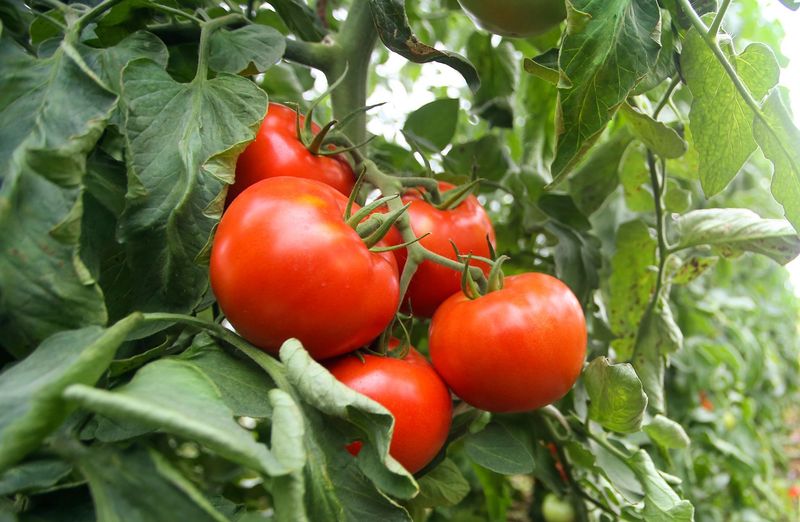
Expecting the rolled leaves to flatten back out once temperatures drop is a reasonable hope, but not a reliable one. University of Minnesota Extension is explicit that leaves may remain rolled even after conditions improve, so the old foliage is not a useful gauge of whether the plant has recovered.
Look instead at what the plant produces going forward. Healthy new leaves emerging at a normal size with good green color, flower clusters continuing to open, and fruit sizing up without unusual markings are the real indicators that the plant is handling the stress.
When the plant matches the classic physiological leaf roll pattern and keeps performing, the right response is to stabilize root-zone moisture and leave the foliage alone.
When the plant declines, new growth looks distorted or discolored, productivity drops noticeably, or a new set of diagnostic clues appears, that is when to investigate a specific alternative cause rather than waiting. A tomato that keeps flowering and fruiting through August heat, even with a few curled lower leaves, is doing its job.
The curl is a stress response, not a verdict.