
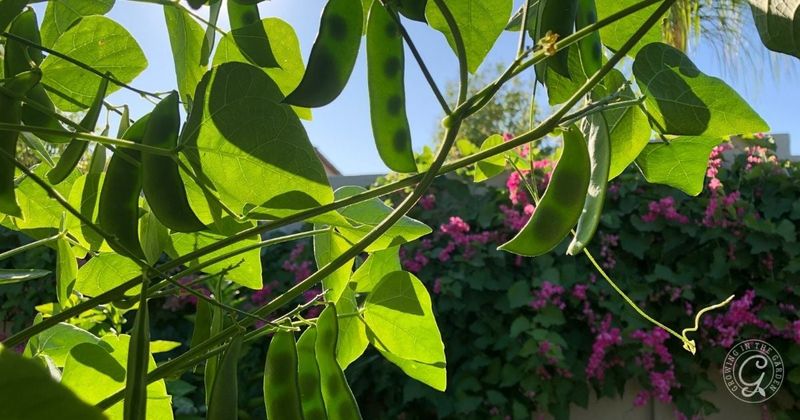
You walk out to the garden expecting a big harvest, and instead you find a tangle of vines covered in blossoms with almost nothing to show for it. The pods are flat, tiny, or simply missing, even though the plant looks perfectly healthy.
Late-summer heat is often the culprit, and understanding exactly what is happening can help you decide whether to rescue the current crop or plan a smarter fall planting.
Flat pods are not always a failed crop
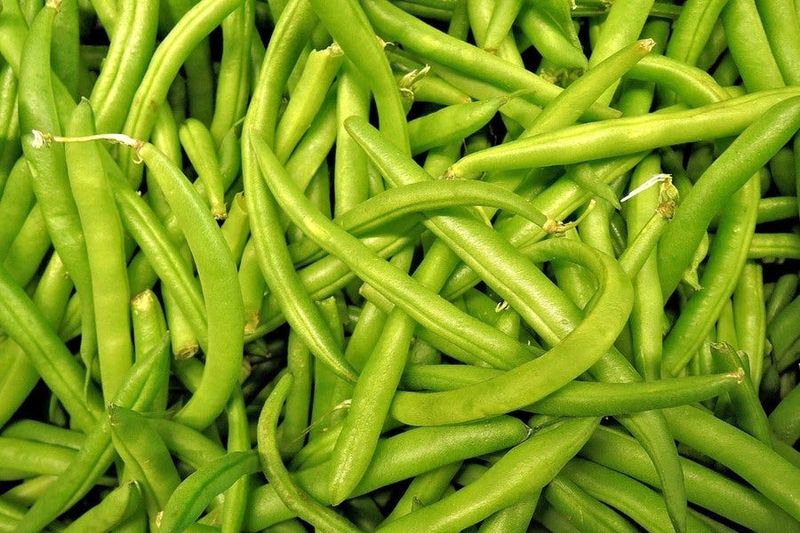
Before sounding the alarm, take a closer look at what you are actually harvesting. Snap beans are routinely picked while the seeds inside are still small and immature, which means a flat, tender pod is exactly what you want at the right stage.
University of Minnesota Extension guidance on growing beans notes that snap beans should be harvested before the seeds bulge noticeably, so a slim pod is not automatically a sign of failure.
The situation changes if pods stop growing altogether, show visible empty pockets along their length, or fall off the plant before reaching a usable size. If you are growing shell beans or dry beans and expecting plump, seed-filled pods, then flat or underdeveloped pods genuinely reflect a problem worth diagnosing.
Bean type and harvest purpose matter a great deal here. A flat pod on a snap bean at the right picking stage is a success.
That same flat appearance on a lima bean meant for shelling, or on a dry bean left to mature fully, signals that something disrupted seed development. Utah State University Extension’s overview of legume abiotic disorders distinguishes between aborted flowers, pods that form but stay small, and pods that fail to fill, which are related but separate problems.
Knowing which pattern you are seeing keeps the diagnosis accurate from the start.
How heat disrupts flowering and pod development
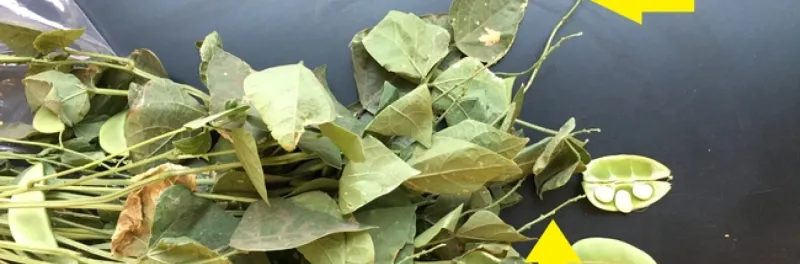
Common garden beans look vigorous right up until heat quietly dismantles their ability to reproduce. When temperatures stay elevated for extended periods, the plant can keep producing flowers while the reproductive process breaks down at the cellular level.
Utah State University Extension explains that heat stress can trigger flower abortion, reduce pod set, and interfere with seed development, even on plants that otherwise appear healthy and leafy.
The mechanism is specific: prolonged heat can reduce pollen viability, slow or stop pollen-tube growth, and damage the reproductive tissues inside the flower before fertilization completes. Research published in Plant, Cell and Environment on heat effects in Phaseolus vulgaris found that some developmental stages before the flower even opens are particularly sensitive to high temperatures, meaning damage can occur before you see a single blossom drop.
Common beans are self-pollinating, so the problem is not a lack of bees. Heat can impair pollen function or the flower itself before pollination has a chance to succeed.
Texas A&M AgriLife Extension’s bean production guide identifies temperatures above roughly 90 to 95 degrees Fahrenheit, especially combined with warm nights, as conditions that favor flower drop and poor pod set, though these are approximate ranges rather than hard cutoffs. Bean type adds another layer: University of Minnesota Extension’s seed-saving guidance confirms common beans are self-pollinating, but lima, butter, runner, dry, bush, and pole beans do not share identical heat responses.
Lima and butter beans can be especially sensitive, while pole beans may continue producing somewhat longer, though no bean type is heat-proof.
Uneven moisture can compound heat stress
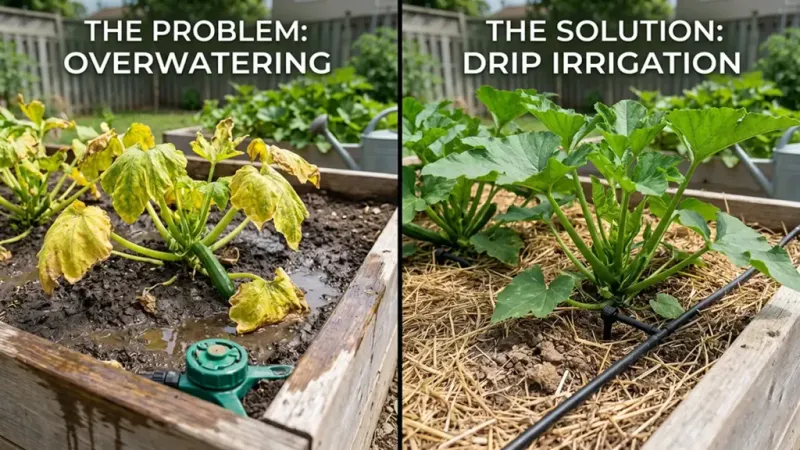
Water management becomes even more critical when temperatures are already pushing beans toward reproductive failure. Drought during flowering and pod development can increase blossom drop and reduce seed fill on its own, and when heat stress is already present, dry soil makes the situation noticeably worse.
Utah State University Extension’s irrigation guidance for legumes recommends maintaining consistent soil moisture through the flowering and pod-fill stages, with the emphasis on evenness rather than volume.
Sharp swings from dry to wet are just as problematic as steady drought. Inconsistent watering can lead to poor seed fill, misshapen pods, splitting, and stringiness, according to Mississippi State University Extension’s bean-growing guidance.
The goal is to moisten the root zone thoroughly, then allow excess water to drain before watering again, rather than alternating between bone-dry and flooded conditions.
Waterlogged soil creates a different but equally damaging problem. Roots sitting in saturated soil can suffocate, develop disease, and lose their ability to supply the water and nutrients the plant needs to set pods.
USU Extension’s abiotic disorder overview lists both drought and excessive moisture as factors that can increase blossom and small-pod loss. Watering frequency depends on your soil type, drainage, local weather, and whether you are using raised beds or in-ground rows, so there is no single schedule that fits every Southern garden.
Check the plant before blaming every pod on heat
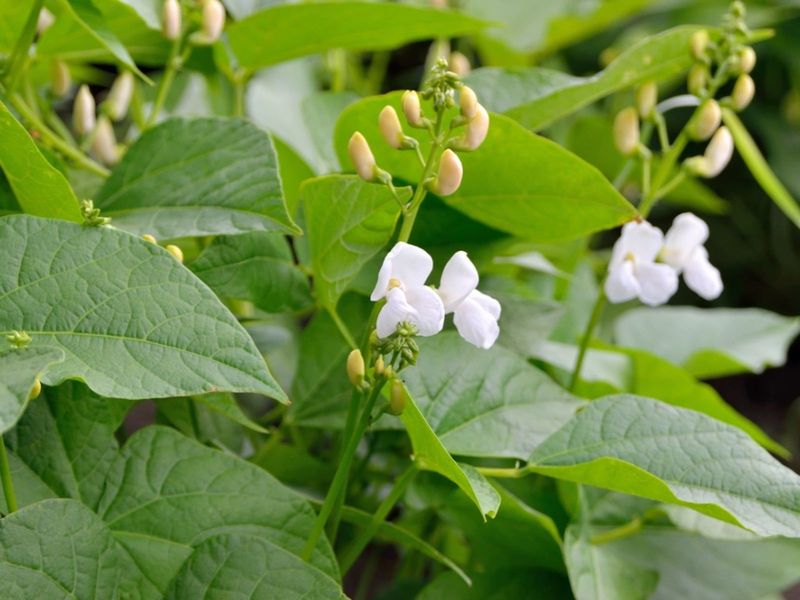
Heat is the most common explanation when Southern beans bloom heavily and set almost nothing during late summer, but it is not the only one. A quick look at the whole plant before settling on a diagnosis can save a lot of wasted effort.
Ask whether the poor pod set followed a stretch of genuinely hot weather while the foliage otherwise stayed green and relatively healthy. If the answer is yes and no other symptoms are present, heat stress is the most likely driver.
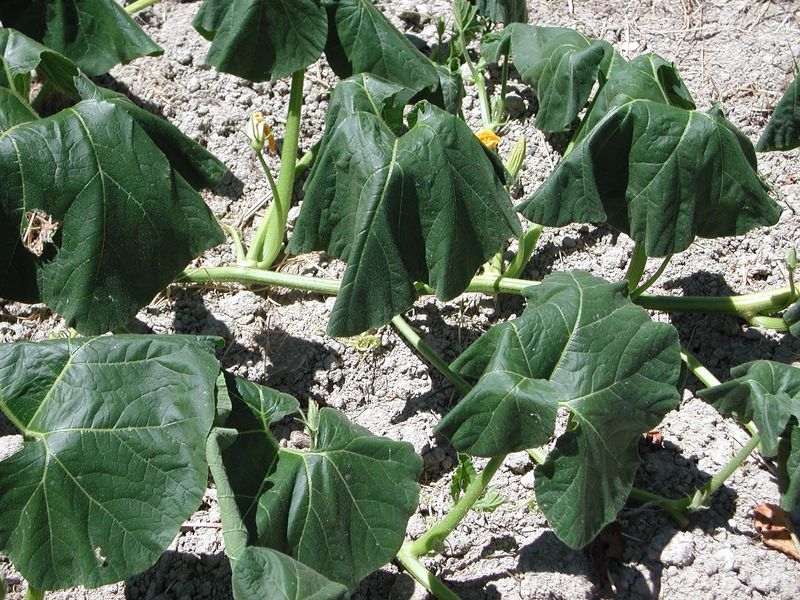
Lush, dark-green vines with almost no pods are a classic sign of excess nitrogen or nitrogen-rich soil. Beans are legumes that fix their own nitrogen through soil bacteria, and adding extra nitrogen can push the plant toward leafy growth at the expense of pod production.
Oklahoma State University Extension’s vegetable FAQ cautions against automatically applying nitrogen to beans without a soil test to justify it.
Other problems can mimic or worsen heat-related pod loss. Poor drainage, compacted or waterlogged soil, and root damage from cultivation can all reduce pod set independently of temperature.
Nematodes, which are microscopic soil organisms, can attack roots and create symptoms that look like water or heat stress from above ground. University of Minnesota Extension’s bean-growing guide notes that mosaic patterns, yellow halos around leaf spots, severe bronzing, major wilting, or obvious root lesions should prompt a pest, disease, or root-health investigation rather than a heat-only conclusion.
Bean type also shapes the diagnosis. Lima and butter beans can be especially heat-sensitive, as Mississippi State University Extension’s butter bean pod-drop page explains, with temperatures above about 86 degrees Fahrenheit cited as a risk for bloom and pod drop in those types.
MSU Extension’s general bean guidance describes pole beans as more heat-tolerant and longer-producing than bush beans, while still noting that extreme heat and dry soil can cause pod loss in pole types as well.
Reduce stress instead of trying to repair damaged blossoms
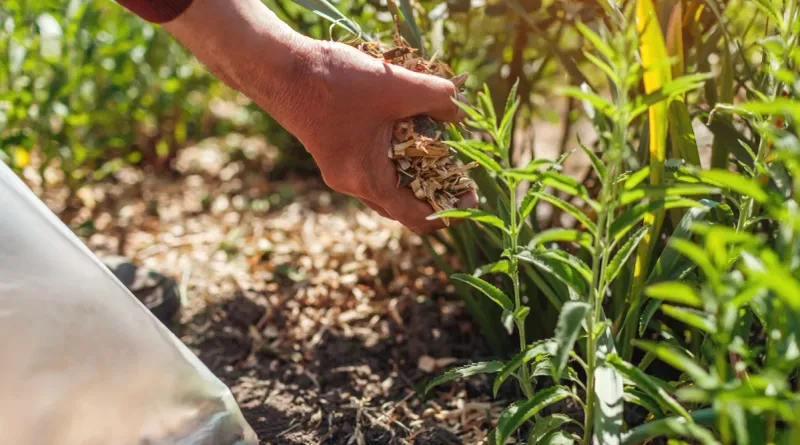
Once heat has damaged a flower or caused a young pod to abort, there is no way to reverse that loss. The practical goal during a hot spell is to reduce the stress load on the plant so that new flowers forming over the coming days have a better chance of setting successfully.
Heat-damaged blossoms cannot be repaired by watering, hand pollination, or any spray, but a plant under less stress is better positioned to respond when conditions improve.
Maintaining consistent root-zone moisture is the most important immediate step. USU Extension’s legume irrigation guidance supports watering deeply enough to reach the root zone, then allowing the soil to drain before the next application, rather than keeping the bed constantly saturated.
Improving drainage in a bed that stays wet after rain is equally important, since waterlogged roots cannot take up water effectively even when it is available.
Applying organic mulch can help stabilize the environment around the roots. Oklahoma State University Extension’s mulching guide recommends roughly 2 to 3 inches of organic mulch, kept a few inches away from the plant stem, to reduce evaporation, moderate soil temperature, and smooth out moisture swings.
Temporary afternoon shade or shade cloth may lower the temperature around the plant in some situations, but beans still require adequate light to flower and set pods. OSU Extension’s guidance on row covers and plastic mulch focuses primarily on season extension and moisture retention rather than shade as a heat remedy.
The strongest evidence supports moisture management, mulch, cultivar selection, and planting timing rather than heavy shading. University of Georgia Extension’s July gardening tips note that beans may resume flowering after summer heat eases, which is the most realistic outcome to plan for.
Protect the next flush with careful management
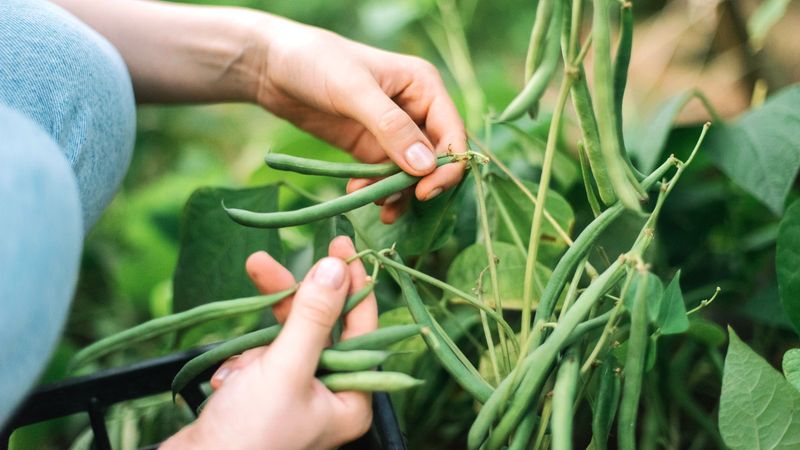
Keeping the plant productive through a hot stretch requires a few follow-through habits beyond moisture and mulch. Prompt harvesting is one of the most overlooked.
On continuously producing types like pole beans, leaving mature pods on the vine signals the plant that its reproductive work is done, which can slow or stop new flower and pod formation. Mississippi State University Extension’s bean guidance specifically recommends picking regularly to keep pole beans and other continuous producers flowering and setting new pods.
Resist the temptation to fertilize when vines look lush but pods are sparse. Adding nitrogen to already nitrogen-rich soil pushes the plant toward more leaf and stem growth at the direct expense of pod set.
Oklahoma State University Extension recommends basing any fertilizer decisions on a soil test or established local recommendation rather than applying nutrients by guesswork. Phosphorus, potassium, and other amendments are not reliable universal fixes for poor pod set and should not be added without a specific reason.
Pole beans may offer longer production than bush beans during a hot summer because they keep setting new growth over a longer period, but that advantage disappears under extreme and prolonged heat combined with dry soil. Expecting pole beans to power through the worst of a Southern August without any management support is asking too much of even the most heat-tolerant cultivar.
Consistent moisture, clean beds, and regular picking give them the best shot at producing into fall.
Use local timing and bean type when replanting
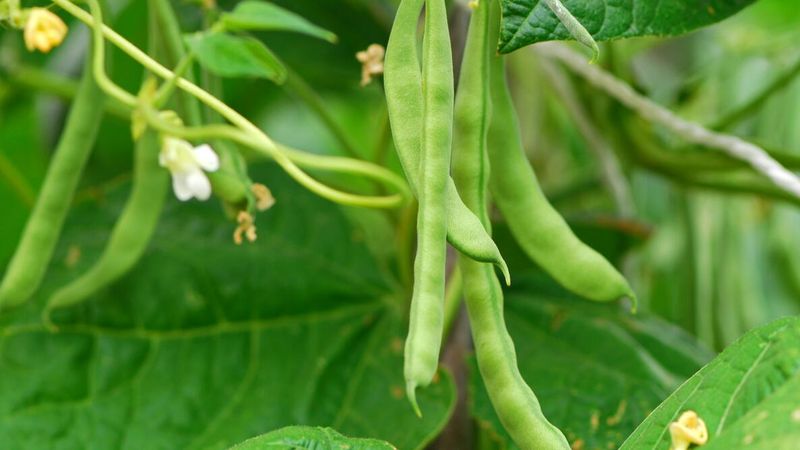
Sometimes the most effective move is not rescuing the current planting but positioning the next one to avoid the worst heat entirely. Beans may resume flowering on their own once temperatures moderate, particularly on pole or indeterminate types, but a well-timed fall crop planted at the right moment can outperform a stressed summer planting by a wide margin.
Planting windows vary considerably across the South, and a date that works in north Georgia will not necessarily work in central Florida or the Texas Hill Country. University of Florida IFAS Extension’s planting date guide lists August through September windows for many northern and central Florida areas, while Texas A&M AgriLife Extension’s bean crop guide identifies a similar late-summer fall-planting window for Central Texas.
Mississippi State University Extension’s planting date calendar and University of Georgia Extension’s fall garden guidance provide region-specific windows for those states. Your local extension office is the right place to confirm the exact dates for your county.
Bean type should be part of the replanting decision. UGA Extension’s July tips mention that beans can resume production after summer heat passes, which favors keeping established pole beans going where possible.
Lima and butter beans require particularly careful timing because of their sensitivity to heat at flowering, so scheduling them to avoid the hottest weeks is more important than it is for snap beans. Pole beans offer longer production windows, making them a reasonable choice for fall crops that need to bridge warm and cooler weather.
Let the weather guide the final diagnosis
Running through a quick checklist before drawing conclusions keeps the diagnosis honest. Confirm that the pods are genuinely failing for their bean type and intended harvest stage, not simply being picked at the right flat-pod snap-bean stage.
Stabilize moisture and the root zone, stop any unneeded nitrogen, and harvest whatever is ready to keep continuously producing types moving forward.
USU Extension’s abiotic disorder guidance and University of Minnesota Extension’s bean-growing resource both support watching for unusual foliage symptoms – mosaic patterns, yellow halos, severe bronzing, or root damage – that call for a pest or disease investigation rather than a heat-only conclusion. Heat is the leading explanation when the timing and symptoms fit a prolonged hot spell on otherwise healthy plants.
Watch for new flower set after temperatures moderate. UGA Extension’s July gardening tips note that recovery is possible, especially on pole beans, but it is not guaranteed.
Your local extension planting calendar, not a single date from this article, should guide the decision to replant. A patient gardener who reads the weather and the plant together usually ends up with more beans than one who tries to force a crop through the worst of summer.