
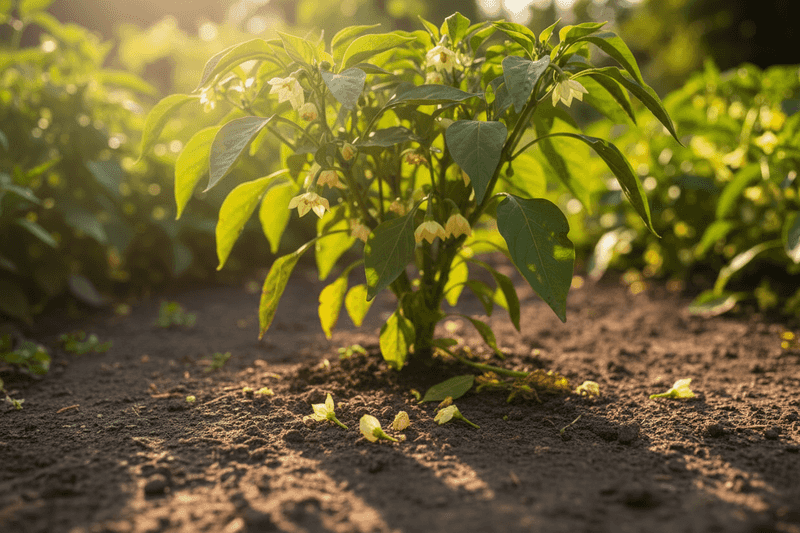
You walk out to your pepper bed expecting to find tiny fruits forming under all those pretty white flowers, and instead the ground is littered with dropped blooms again. Warm nights are a strong clue that heat stress may be at work, but they are one piece of a bigger picture that includes daytime temperatures, soil moisture, and the cultivar you planted.
Getting to the real cause is the first step toward saving your crop, and this guide walks through exactly how to do that.
Persistent heat can trigger pepper blossom drop
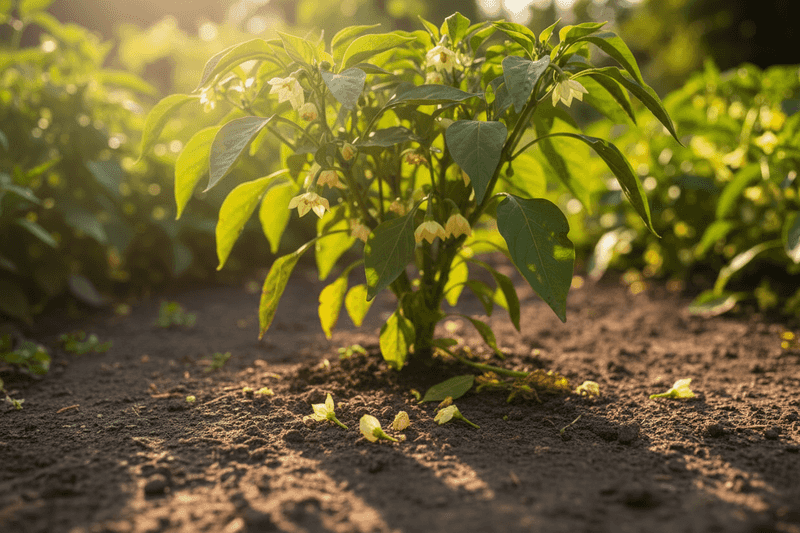
A pepper plant loaded with flowers but producing no fruit is one of the more frustrating sights in a summer garden. Each blossom that falls before a tiny pepper can form represents a missed opportunity, and when the pattern repeats across the entire plant over several weeks, heat stress moves to the top of the suspect list.
Sustained high temperatures are a well-documented cause of pepper blossom drop. Texas A&M Aggie Horticulture guidance on pepper production notes that most peppers drop their blooms when daytime temperatures climb much above 90 degrees F while nights stay above about 75 degrees F.
Maryland Extension puts a similar practical threshold at nights above 75 degrees F or daytime highs above 95 degrees F. These numbers are useful starting points, not guaranteed cutoffs for every cultivar or every garden.
Warm nights matter because the plant never gets a chance to recover from the heat it absorbed during the day. That sustained heat load, across both day and night, is what disrupts fruit set.
The good news is that pepper plants are resilient: fruit set often improves noticeably when temperatures moderate, so a hot spell does not mean a permanent loss of the crop. Warm nights are a strong and evidence-backed clue, but confirming the diagnosis means checking daytime highs, soil moisture, and plant condition alongside overnight lows.
Why the full temperature pattern affects fruit set
Peppers do not simply shut down when it gets hot outside. The failure happens at a much more specific level: inside the flower itself.
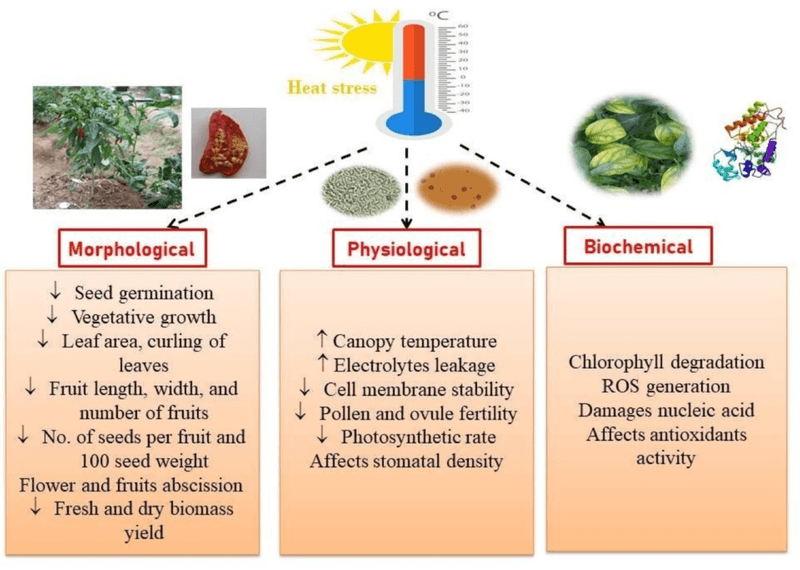
High temperatures can reduce pollen viability, distort pollen tube growth, impair fertilization, and interfere with the development of the ovule that would eventually become a seed anchoring the fruit to the plant.
Early research on pepper reproductive physiology identified temperature as a key factor controlling fruit set, and later work on heat effects on pepper pollen and flower development showed that pollen germination and tube growth decline measurably when temperatures stay elevated. Fruit that does manage to set under extreme heat may come out small or misshapen because seed development is also compromised.
Night temperature is a real contributor to this problem, but it works alongside daytime heat rather than acting as a separate hidden trigger. Research examining day and night temperature interactions in pepper fruit set found that the full 24-hour temperature pattern, including how long the plant is exposed and what developmental stage the flower is in, shapes the outcome.
A single warm night after a mild day is less damaging than a string of warm nights following days well above 90 degrees F. Cultivar also matters: some pepper types tolerate heat better than others, which is why two plants side by side can respond differently to the same weather.
Check for heat and its look-alike causes
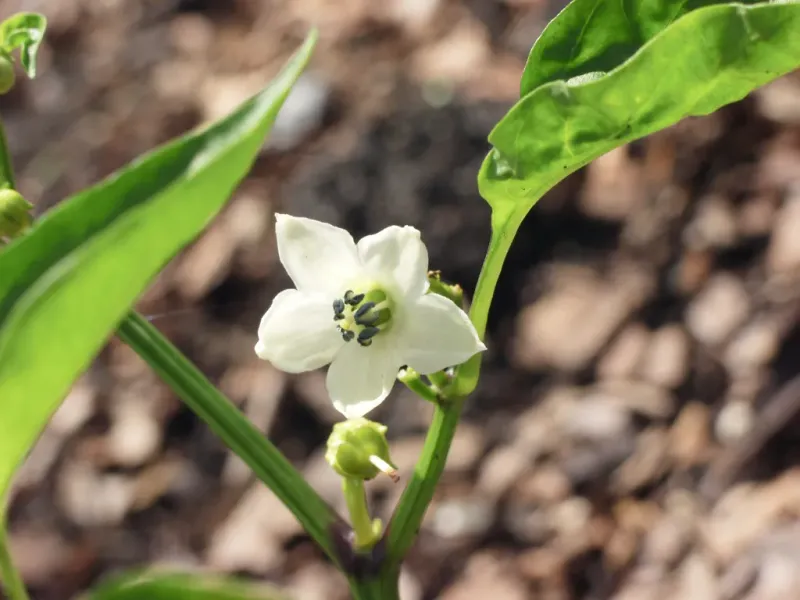
Before assuming heat is the only culprit, run through a quick inspection so you are not missing something that has an easier fix. Start with your thermometer records: are overnight lows consistently above 75 degrees F, and are daytime highs pushing past 90 degrees F during the same period the flowers started dropping?
A close match between the heat spike and the onset of blossom drop is a meaningful signal.
Next, check soil moisture by pushing a finger two inches into the root zone. Drought stress and wildly uneven watering can independently trigger flower and small-fruit abortion, and the symptom looks identical to heat-driven drop.
North Carolina State Extension’s blossom drop resource and Maryland Extension’s guide to poor fruit set both list moisture stress as a primary cause alongside temperature. Hot, dry wind can compound heat stress by pulling moisture from flowers and foliage faster than roots can replace it.
Examine the plant for other clues: yellowing foliage can point to a nutrient imbalance or disease, while stippled or distorted leaves suggest insect feeding. New Mexico State Extension’s pepper production guide lists excess nitrogen as a cause of heavy vegetative growth with poor fruit set.
On pollination: Maryland Extension’s home pepper guide confirms that peppers are largely self-fertile, so the presence or absence of bees does not settle the diagnosis. If flowers look healthy but still drop, heat and moisture are more likely explanations than a pollination gap.
Reduce heat stress while the weather stays hot
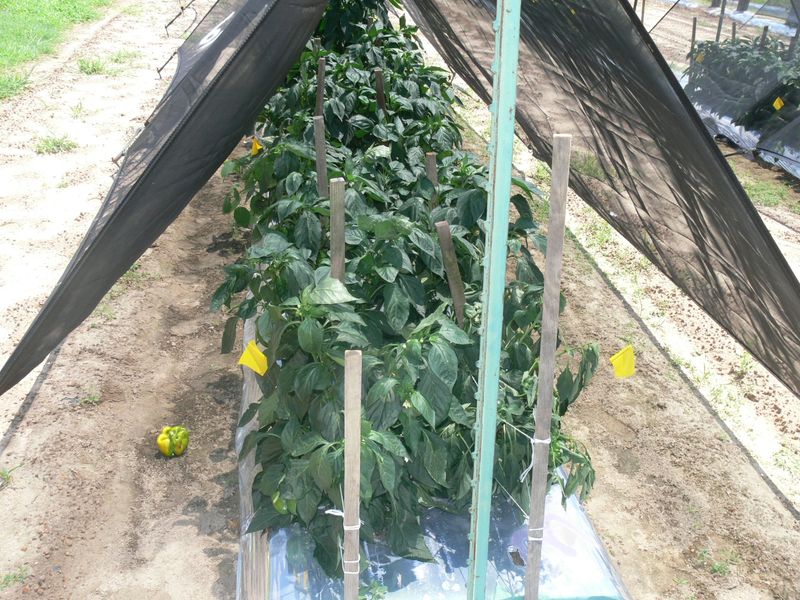
Once you have confirmed that heat is a likely contributor, the practical response is to reduce the stress load on the plant rather than try to force fruit to set. Start with moisture: consistent root-zone hydration is the single most accessible lever you have during a hot spell, and it costs nothing extra if you are already watering.
Add a two-to-three-inch layer of organic mulch, such as straw or wood chips, around the base of each plant. Mulch slows evaporation from the soil surface, helps moderate soil temperature, and reduces the swings between wet and dry that compound stress.
University of Connecticut Extension guidance on vegetables under drought and heat and University of Georgia gardening tips for July heat both recommend mulching as a first-line response to summer heat stress in vegetable beds.
Temporary shade is the next step. University of Delaware Extension’s heat-stress protection guidance recommends approximately 30 percent shade cloth for many vegetables, including peppers, during peak heat.
The key word is ventilated: drape or prop the cloth so air can still move around the plant. Dense, poorly aired coverage can trap humidity and reduce light more than it reduces temperature, which trades one problem for another.
Remove or raise the shade cloth once overnight lows drop back below 75 degrees F and daytime highs ease off, and give the plant time to resume normal flowering.
Water and feed the plant without adding stress
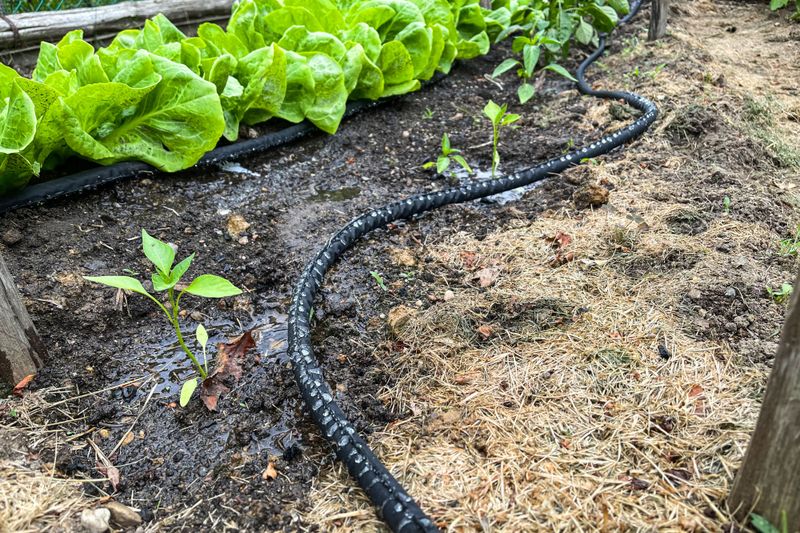
Keeping moisture consistent is not the same as keeping soil constantly wet. Saturated soil drives out oxygen and creates conditions where root pathogens thrive, so the goal is steady, even hydration rather than daily flooding.
University of Minnesota Extension’s pepper growing guide recommends watering at the soil surface to deliver moisture directly to the root zone without wetting foliage unnecessarily.
Drip irrigation or a soaker hose is the most reliable method for home gardeners because it delivers water slowly and consistently at ground level. UF/IFAS guidance on pepper irrigation and disease management notes that overhead irrigation can spread foliar pathogens and leave foliage wet for extended periods, raising the risk of fungal disease.
If you have no alternative to overhead watering during a heat event, apply it in the morning so leaves dry before evening.
Fertilizer choices also matter during a hot spell. Excess nitrogen pushes the plant toward lush leaf and stem growth at the expense of flowering and fruit development.
Oregon State Extension’s pepper production guide advises balanced fertilization rather than heavy nitrogen applications once plants are in the flowering stage. If your soil test shows adequate nutrients, hold off on additional feeding until temperatures moderate and the plant begins setting fruit again.
Adding more fertilizer during peak heat stress rarely improves the situation and can make it worse.
Avoid remedies that target the wrong symptom
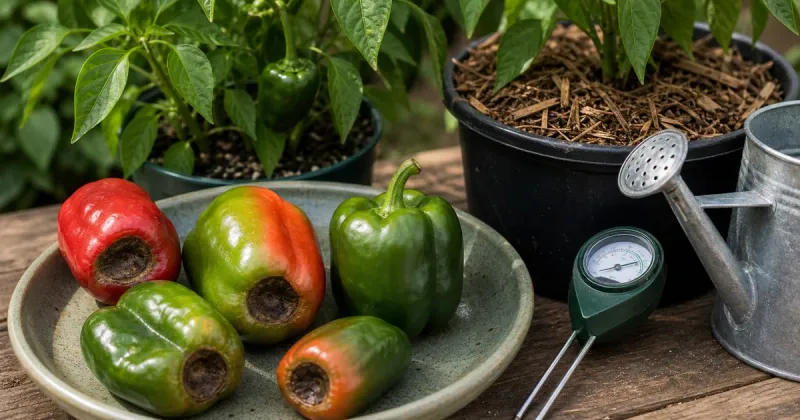
Blossom drop and blossom-end rot are two different problems that are easy to confuse if you have not seen both. Blossom drop happens before any fruit develops: the flower simply detaches and falls.
Blossom-end rot appears later, as a dark, leathery, sunken patch on the bottom of an existing pepper that is already developing on the plant. UF/IFAS guidance on blossom-end rot in peppers and University of Georgia Extension’s blossom-end rot publication both explain that calcium and moisture management are the relevant factors for blossom-end rot.
Calcium sprays are not a general treatment for flowers that fall before fruit even begins to form.
Hand pollination is sometimes suggested as a fix for blossom drop, but its usefulness depends on the actual cause. If pollination is genuinely inadequate, such as in a screened greenhouse where insects cannot enter, gently vibrating open flowers can help move pollen.
UC Marin Master Gardeners’ pepper resource and Rutgers NJAES pepper production guidance acknowledge that mechanical pollination can assist in protected structures. However, research on heat effects on pepper pollen viability makes clear that repeated hand pollination is unlikely to correct and cannot reliably overcome heat-damaged pollen or compromised flower development.
Other popular remedies also fall short here. Oklahoma State Extension’s blossom-drop column explains that hormone-type blossom-set sprays are associated with low-temperature tomato problems and show little benefit under high-heat conditions.
Repeated daytime misting raises disease risk without reliably cooling the root zone. Removing every flower from the plant is not an established heat remedy for home gardens.
Save your energy for moisture management and temporary shade instead.
Use cooler timing and suitable cultivars
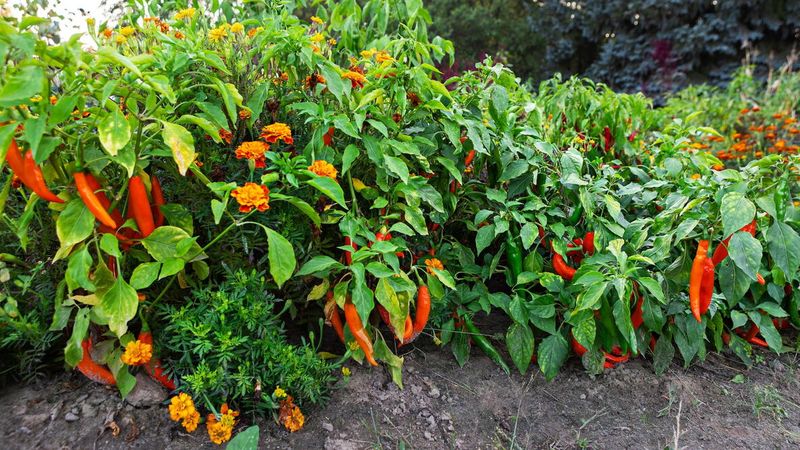
When a heat spell drags on for weeks with no relief, the most honest answer is that the current window may simply not support reliable pepper fruit set, regardless of how well you manage moisture and shade. That is not a failure of technique; it is a climate reality that experienced Southern gardeners plan around.
In Florida and Texas, the practical solution is often timing. UF/IFAS pepper cultivar recommendations for Florida and UF/IFAS guidance on pepper production in Florida describe spring and fall production windows as the most favorable, with summer heat often pushing fruit set below acceptable levels even on well-managed plants.
Shifting your main planting to target harvest before the peak of summer, or after temperatures begin to ease in early fall, can be more productive than fighting mid-summer heat.
Cultivar selection is the other lever worth pulling. Texas A&M’s pepper production guidance notes that some hot peppers, including jalapeños, tend to tolerate heat better than bell peppers during fruit set.
Certain cultivars are specifically selected for hot-set performance, meaning they are bred to set fruit under conditions that would cause standard varieties to drop every bloom. Results still depend on the specific cultivar, your local conditions, and how extreme the heat becomes, so treat hot-set claims as a meaningful advantage rather than a guarantee.
Ask your local extension office or a regional seed supplier which varieties have performed well in your area during summer.
Treat dropped flowers as a warning and reassess
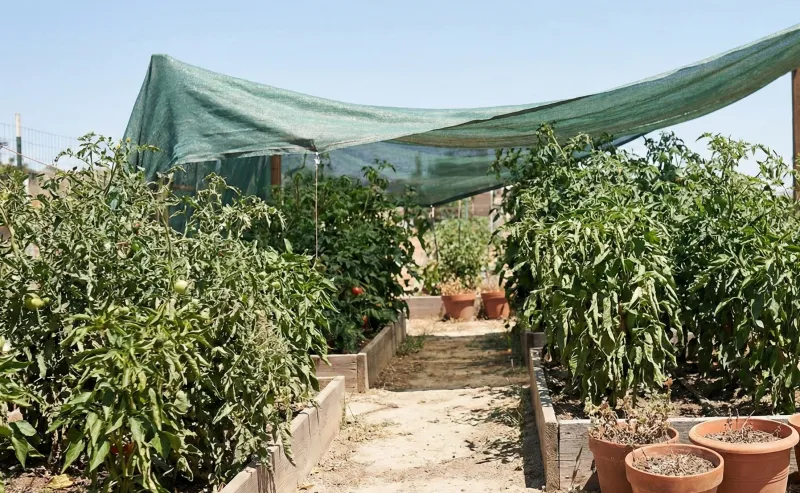
Dropped blossoms are a signal worth taking seriously, but they are a starting point for diagnosis rather than a final verdict. Confirm the temperature pattern with actual records, stabilize root-zone moisture, add mulch, and put up temporary ventilated shade if daytime highs are consistently above 90 degrees F.
Then step back and let the plant respond rather than layering on additional treatments.
Oklahoma State Extension’s pepper production fact sheet and Maryland Extension’s poor fruit set resource both note that fruit set often improves when temperatures moderate, though neither promises recovery in every situation. If blossom drop continues after overnight lows fall below 75 degrees F and daytime highs ease off, go back to the inspection checklist and look harder at moisture consistency, nitrogen levels, pest pressure, and disease.
A pepper plant that survives a brutal Southern summer with its roots intact and its canopy healthy is already positioned to flush new flowers when conditions improve. The dropped blossoms were not wasted growth; they were the plant’s way of protecting its resources until the odds of success improve.
That is a system worth working with rather than against.