
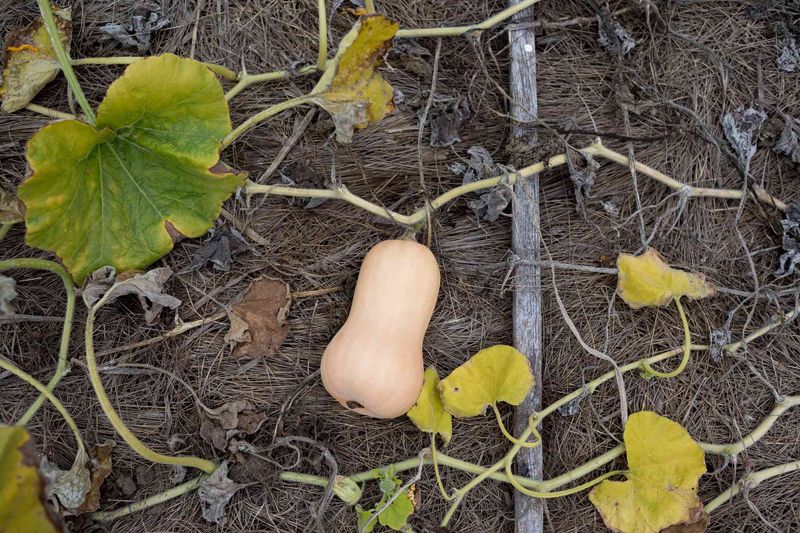
Walking out to your garden and finding a squash vine lying flat on the ground is one of the more unsettling moments in summer gardening. The fruit looks perfectly fine, the soil seems okay, and you are left wondering what happened overnight.
This kind of sudden collapse does not always have one clear cause, and blaming the heat right away can send you in the wrong direction. Understanding what to look for at the base of the stem, and what questions to ask before watering or spraying, can make the difference between saving your garden bed and losing it entirely.
Recovery offers a clue, not a diagnosis
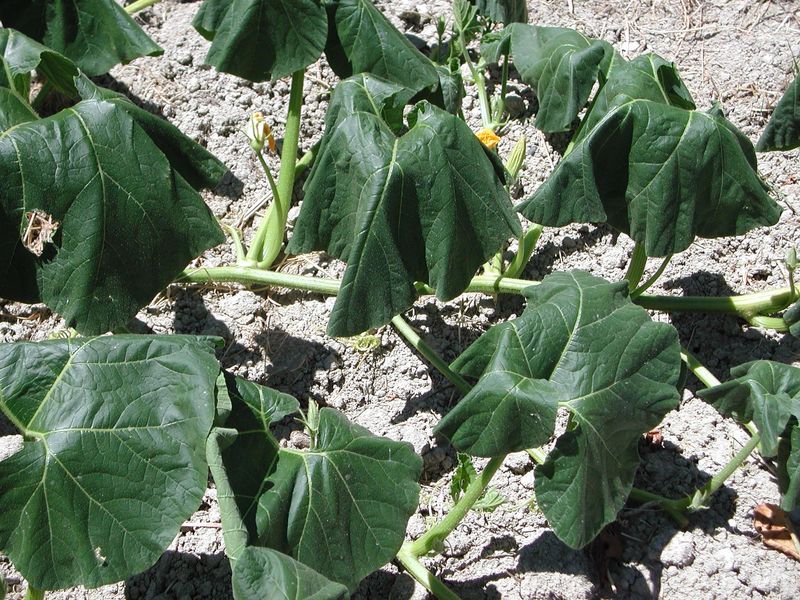
Afternoon wilt in squash and pumpkin is genuinely common during Southern summers. Large-leaved cucurbits lose water through their leaves faster than roots can replace it during the hottest part of the day, so a plant that looks collapsed at 2 p.m. may stand upright again by early evening.
OSU Extension guidance on heat stress in garden plants confirms that temporary wilting followed by recovery as temperatures drop is a recognized heat-stress response, not necessarily a sign of structural damage.
The problem is that recovery alone does not settle the question. University of Maryland Extension’s bacterial wilt resource notes that bacterial wilt can also cause leaves to droop during the day and improve temporarily at night before the plant eventually declines runner by runner.
So a squash that perks up by morning has not necessarily cleared itself of disease or pest damage.
Before reaching for the hose, check soil moisture near the root zone and compare the affected plant with its neighbors. A vine that wilts while nearby plants stand firm deserves a closer look at the stem base and crown.
Persistent morning wilt, especially when the soil is not bone dry, is the signal to inspect rather than irrigate.
A borer can interrupt water movement inside the vine
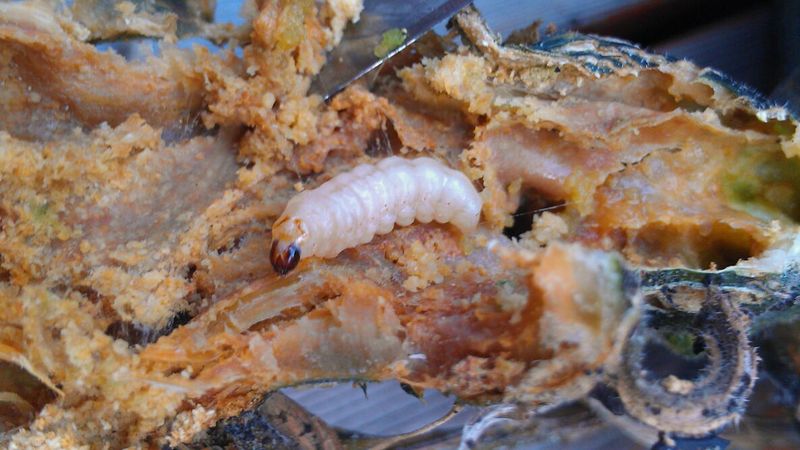
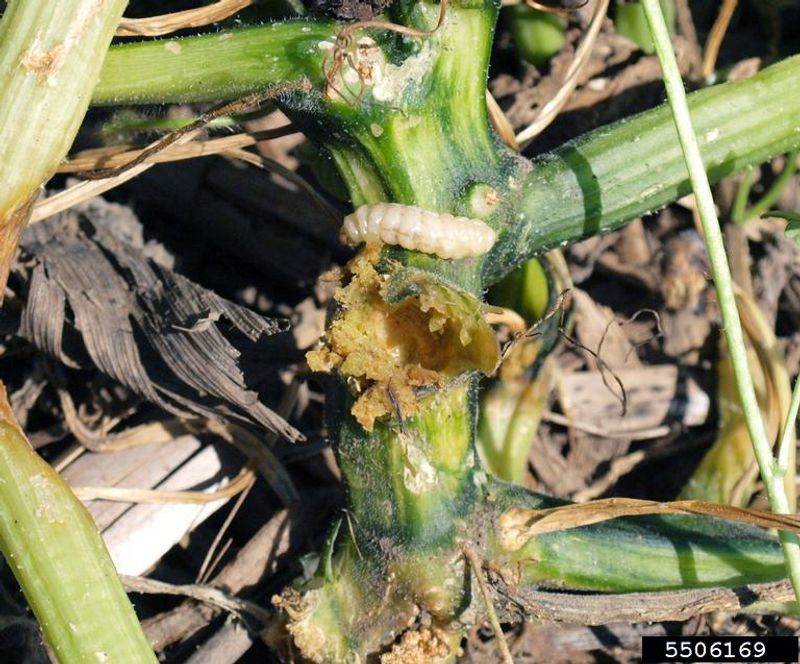
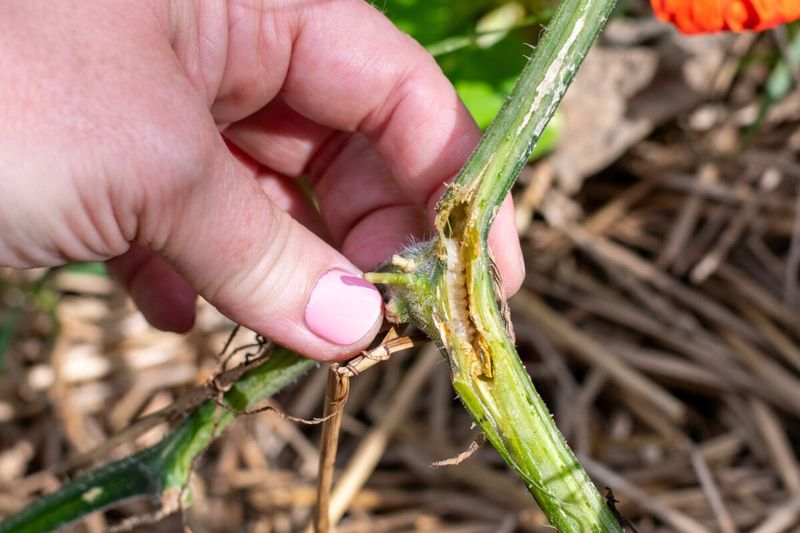
The squash vine borer, Melittia cucurbitae, lays eggs near the base of the stem, and once a larva hatches it tunnels into the vine and feeds on the tissue that moves water and nutrients through the plant. According to UF/IFAS documentation on squash vine borer, this internal feeding disrupts vascular function, which is why a heavily infested vine can wilt dramatically even when the surrounding soil has adequate moisture.
The larva stays hidden inside the stem, so the first visible sign is often the wilt itself rather than anything obviously wrong on the surface.
Hot weather makes the injury more apparent because high temperatures increase how much water the plant needs to move. A vine that was managing with partially damaged tissue may suddenly fail when afternoon heat pushes demand beyond what the compromised stem can supply.
This is why collapse can feel sudden even when the damage has been building over several days.
Fruit may still look normal for a time after the vine begins to fail. Vascular damage at the stem base interrupts flow to the whole plant, but fruit that was already developing can hold its appearance longer than the leaves.
That lag does not mean the fruit is unaffected or that it is necessarily safe to eat from a severely damaged plant. Treat apparently normal fruit as a timing observation, not a clearance.
Inspect the stem base before reaching for the hose
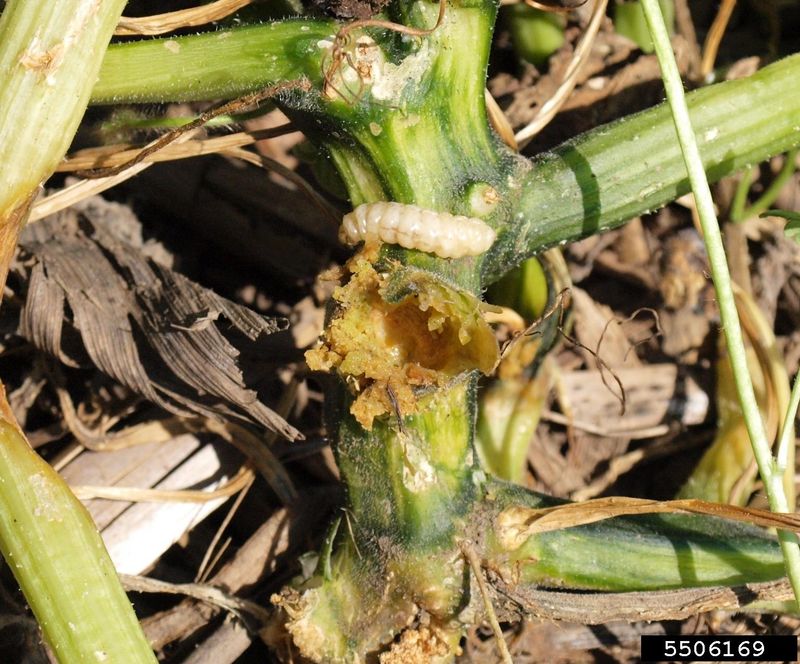
Start the inspection at the lowest part of the stem, right at or just above soil level. You are looking for a small, round entry hole, often surrounded by moist greenish or orange material that looks like wet sawdust.
That material is frass, the waste produced by a feeding larva, and its presence at the stem base is one of the most useful physical clues in the entire diagnostic process. Iowa State University Extension’s squash vine borer guidance identifies frass and entry holes as key exterior indicators to check before any other action.
Also feel the stem tissue. Soft, mushy, or split tissue near the base suggests something is wrong inside, while a firm stem with no visible hole points toward other causes.
Compare the affected vine with any healthy plants nearby. Borer damage often affects one runner or one plant while its neighbors remain upright and firm, which is a pattern that dry soil or heat stress alone would not produce.
Resist the urge to cut into the stem immediately. Exterior clues carry real diagnostic weight, and cutting damages tissue that the plant may still need.
Reserve dissection for situations where finding a larva or seeing internal tunneling will actually change what you do next, such as deciding whether to remove the plant entirely or attempt a supportive measure.
Several problems can mimic borer damage
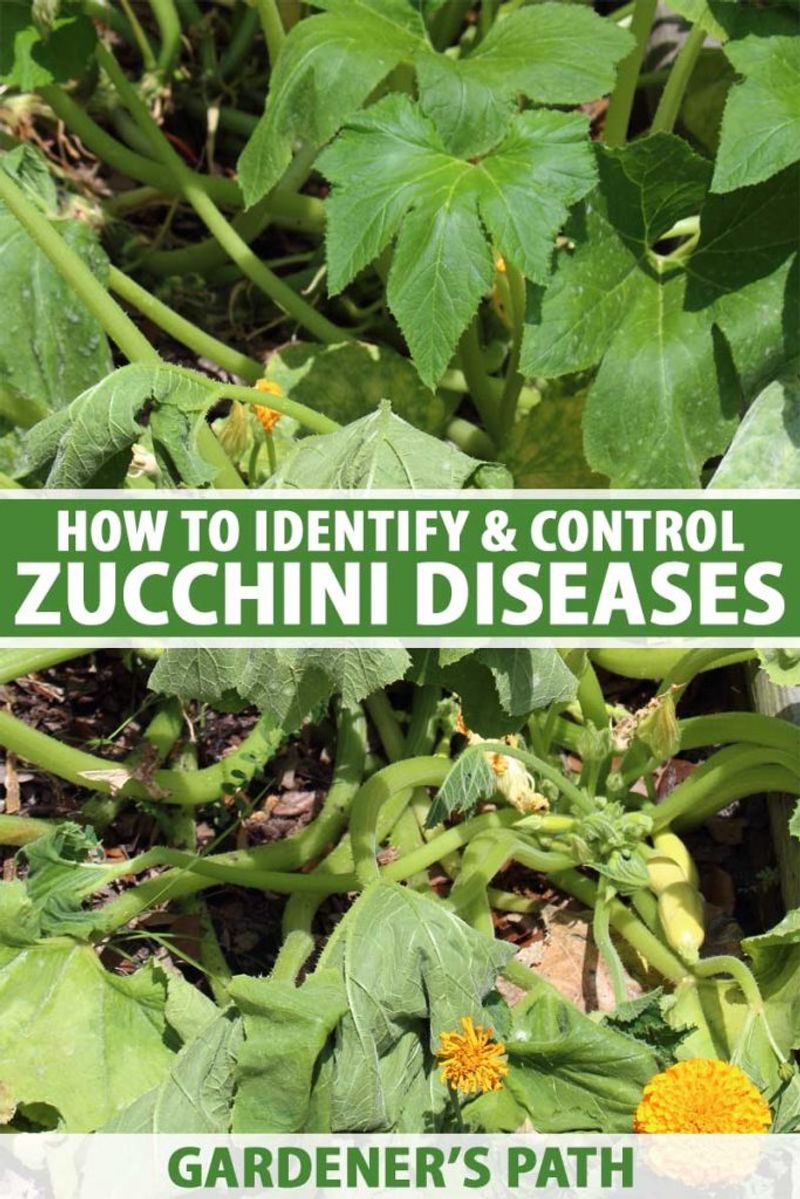
Bacterial wilt causes wilting that can look nearly identical to borer damage from a distance. The disease spreads through cucumber beetle feeding, and University of Maryland Extension’s bacterial wilt overview describes a pattern of daytime drooping, temporary nighttime improvement, and progressive decline that moves runner by runner through the plant.
Cucumber beetles on or near the plant are an important additional clue. Bacterial wilt is more typical of cucumbers and melons, but it can affect squash as well, so it belongs in the differential when borer evidence is absent.
Crown and foot rots point in a different direction. Cornell Vegetables’ summer squash wilt and decline key describes dark, soft, water-soaked, or decayed tissue at the crown as the characteristic sign, and these rots are more common after saturated soil or extended wet conditions.
Some also produce fruit rot, which a straightforward borer attack typically does not.
Dry soil and root damage are worth considering too. A plant that wilts persistently in the morning and has dry soil near the root zone may simply be under water stress, while root damage from cultivation or soil compaction can restrict uptake in ways that resemble vascular disease.
Adding water without checking the cause is not a neutral action. Extra irrigation cannot reopen a tunneled or rotted stem, and it can worsen crown rot when the soil is already saturated.
A careful cut can add evidence without proving every diagnosis
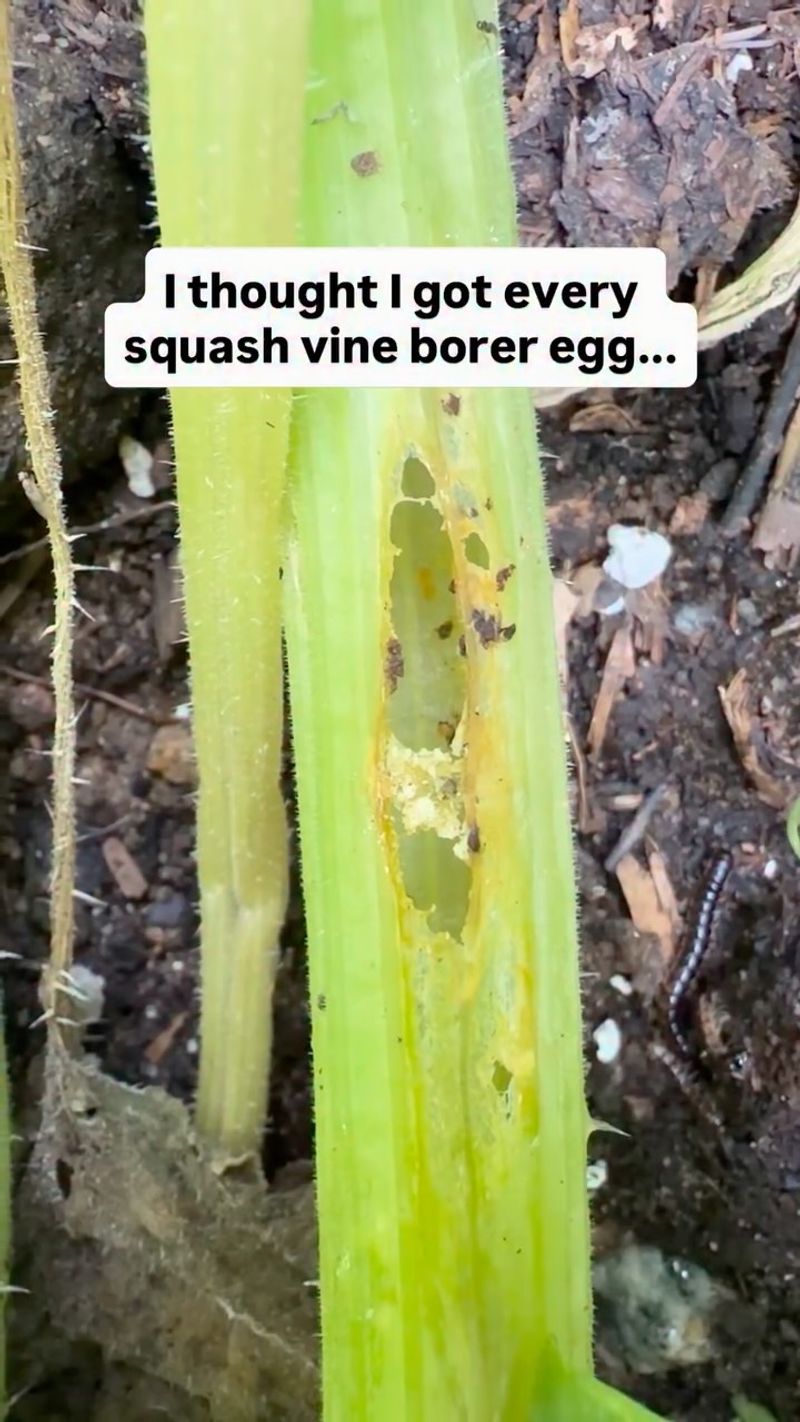
Cutting into the stem makes the most sense when exterior clues already suggest a borer and the result will influence your next decision, such as whether to remove the plant or try to support it. If you find a pale, cream-colored larva or see the characteristic hollowed, discolored tunneling inside the vine, that supports a borer diagnosis and justifies removal.
Finding either one is more informative than the cut alone.
A separate test can provide a clue about bacterial wilt. Cut a wilted stem, then slowly pull the two cut surfaces apart or draw a knife blade between them.
Sticky white strands stretching between the surfaces suggest bacterial wilt. University of Maryland Extension notes that this test is suggestive rather than definitive, and it works less reliably on squash than on cucumber or melon.
Strands may be absent even when the disease is present, so a negative result does not rule the condition out.
The distinction between gathering evidence and establishing certainty matters here. A cut that reveals clean, firm tissue with no larva and no obvious tunneling shifts attention back toward disease or environmental causes, but it does not confirm them either.
Use the cut as one more data point alongside what you found on the exterior, the soil condition, and the pattern of wilting across the plant and its neighbors. Avoid cutting every wilted stem reflexively, especially when the plant recovers cleanly by morning.
Triage a failing vine instead of watering by reflex
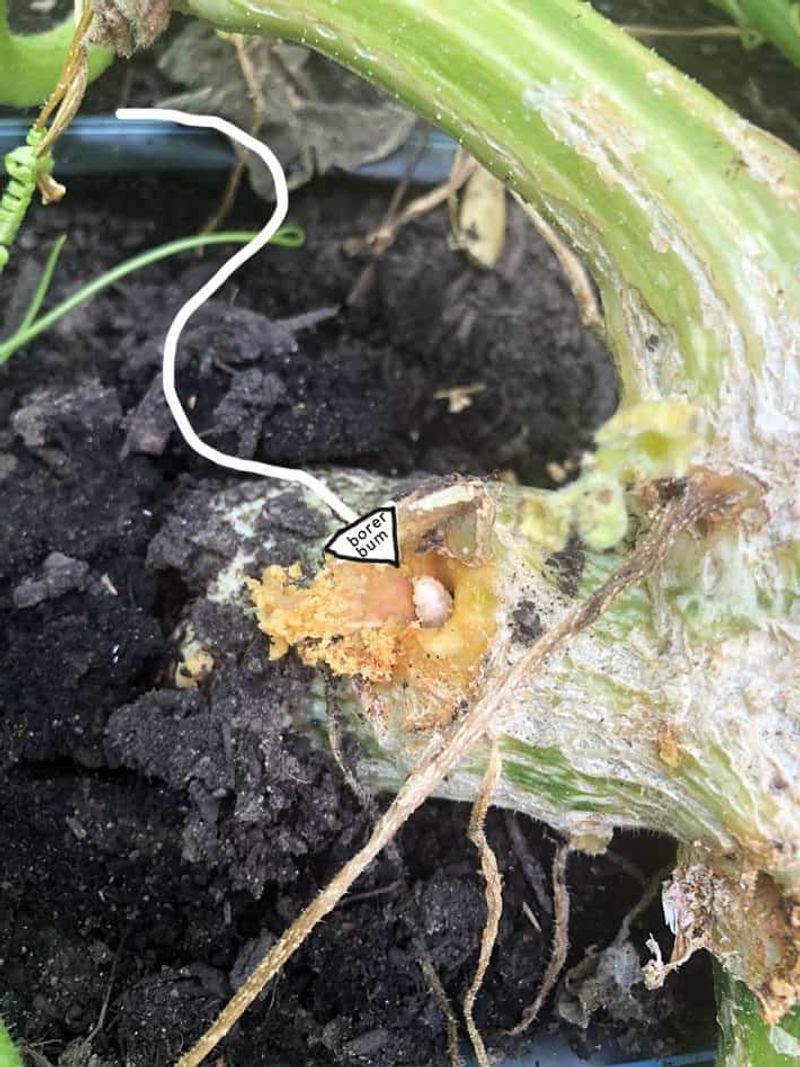
When inspection confirms a borer or when the vine has collapsed and shows no sign of recovery, removing the plant from the bed is the more protective choice. UF/IFAS squash vine borer documentation explains that removing infested vines can prevent larvae from completing their development inside the stem and dropping into the soil, where they would overwinter and produce adults the following season.
Bag the plant and dispose of it away from the garden rather than composting it.
Watering more heavily is not a reliable response to a vine that has lost vascular function. Extra moisture cannot reopen a tunneled stem or reverse rotted crown tissue.
When soil near the crown is already wet or when drainage is poor, additional irrigation can actively worsen crown and foot rot conditions, as described in Cornell Vegetables’ squash wilt and decline guide.
For running varieties that still have healthy nodes along the vine beyond the damaged section, placing moist soil over those nodes may encourage additional roots to form. Iowa State University Extension describes this as a supportive tactic that can help the plant access water through new roots, not a guaranteed fix.
When the rest of the planting is at risk, protecting healthy plants takes priority over prolonging a vine that is already severely compromised.
Prevent infestations before larvae enter the stem
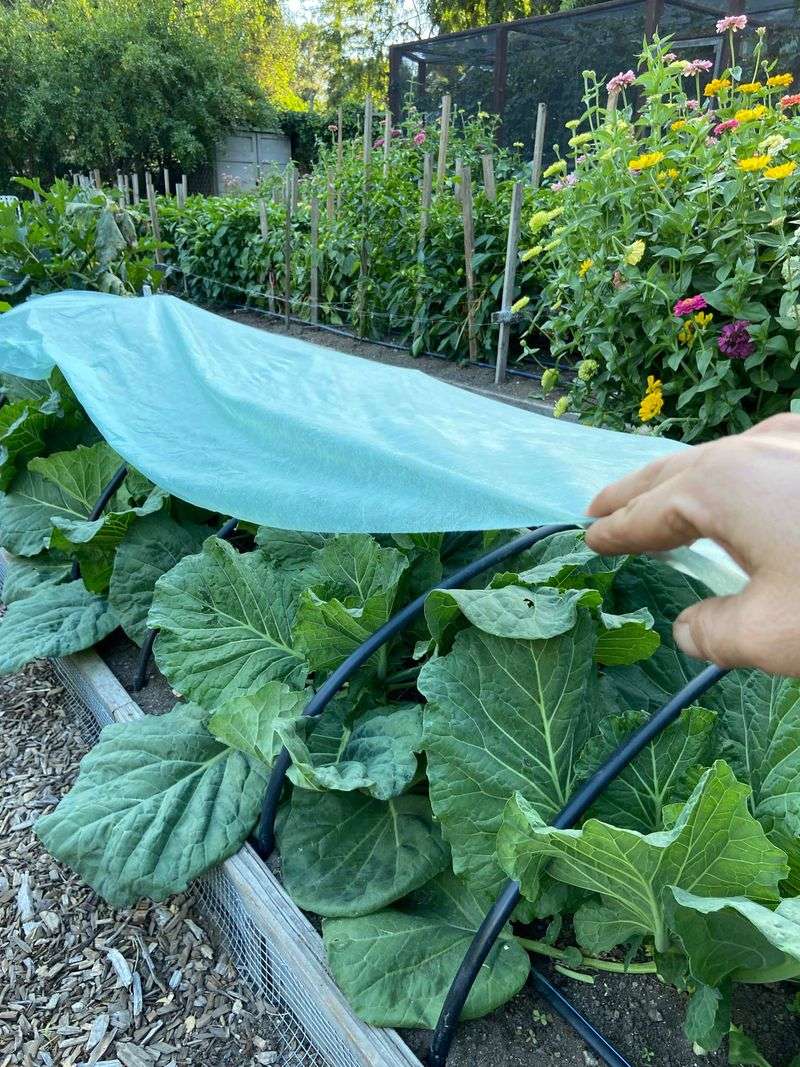
Floating row covers placed over young squash plants before adults have a chance to lay eggs are one of the most reliable tools available to home gardeners. The fabric needs to be secured at the edges so moths cannot crawl underneath.
The critical detail is timing: covers must come off when flowers open, because squash requires insect pollination to set fruit. Leaving covers in place through flowering will protect the plant from borers while preventing the bees that make a harvest possible.
UF/IFAS guidance on squash vine borer supports row covers as a preventive measure with this same pollination caveat.
Crop rotation can reduce risk by moving cucurbits away from soil where pupae may be overwintering. Iowa State University Extension notes that rotation is a useful practice but not a complete solution, since adult moths are capable fliers and can move between garden areas.
Choosing less-susceptible varieties adds another layer of protection. Many Cucurbita moschata types, including a number of butternut varieties, are substantially less preferred by the pest.
Virginia Cooperative Extension’s squash vine borer fact sheet uses terms like less preferred and resistant rather than immune, so growers should treat these varieties as lower-risk choices, not guarantees.
Scouting windows vary by region. In Florida, UF/IFAS documents adult activity from approximately mid-May through late October, with more than one generation possible.
Gardeners in Texas and other Southern states should follow local extension alerts for their area rather than relying on a single national calendar date.
Sprays work before tunneling and carry pollinator responsibilities
Foliar insecticides aimed at squash vine borer are most useful as a preventive measure, applied to target newly hatching larvae before they tunnel into the stem. Once a larva is inside the vine, the stem walls protect it from most sprays applied to the outside of the plant.
University of Minnesota Extension’s squash vine borer guidance makes clear that treatment timing is critical and that sprays applied after collapse are generally ineffective at reaching protected larvae.
Choosing a product requires reading the current label, not a general gardening article. Active ingredients, permitted crops, application sites, preharvest intervals, and pollinator restrictions can change, and EPA guidance on reading pesticide labels is clear that the label is the legal document governing use.
This applies to organic products as well as conventional ones. Bt, neem oil, insecticidal soap, and similar materials are not automatically safe or effective in every situation.
Efficacy depends on the pest, formulation, timing, temperature, and how the product is applied. Some treatments can injure plants when temperatures are extreme.
Squash flowers require bee pollination, and any spray applied to or near flowering plants carries risk to pollinators. EPA pollinator protection resources outline the importance of following label restrictions around flowering crops.
Where a label permits treatment, applications are generally timed when pollinators are least active, such as early morning or evening, and never directed onto flowers where bees are actively foraging.
Use the combined clues to choose the next step
Afternoon wilt that reverses by morning, combined with heat and dry soil, points toward checking growing conditions before anything else. Persistent collapse that does not improve overnight, paired with a hole, frass, or internal tunneling at the stem base, makes squash vine borer the more likely explanation.
Neither pattern is a guarantee, and UF/IFAS squash vine borer documentation reinforces that exterior stem evidence is what moves borer from a possibility to a working diagnosis.
Bacterial wilt and crown or foot rot remain plausible when their own clues appear, including cucumber beetle activity, progressive runner decline, or dark decayed tissue at the crown. Apparently normal fruit does not settle questions about food safety from a severely diseased or infested plant.
Inspect the stem base first, avoid reflexive watering or spraying, remove confirmed or severely failing plants promptly, and focus protective measures on healthy plants that have not yet been attacked. The vine that collapses in August is rarely the last lesson the garden offers on this pest.