
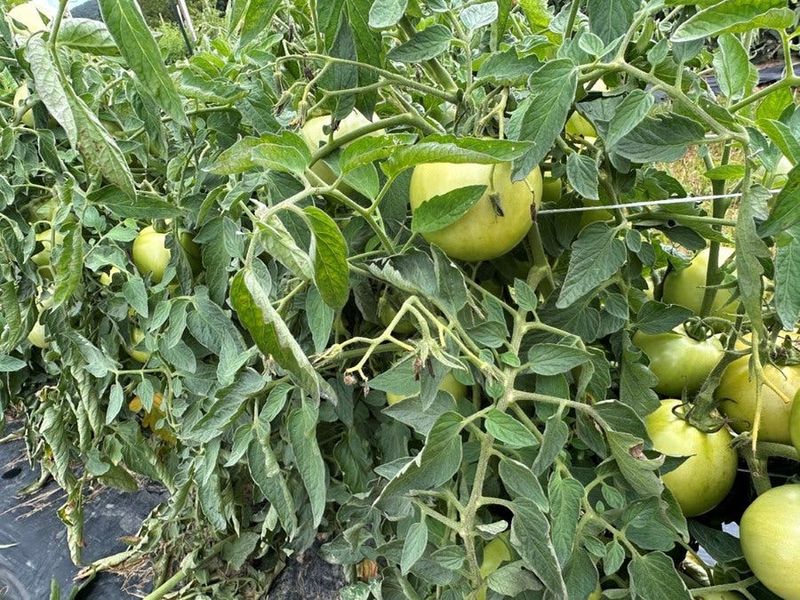
Standing in front of a tomato plant with curled, yellowing leaves and fruit that refuses to turn red is one of the most frustrating moments in a summer garden. Late-season heat in the South can push plants hard, and two separate problems often show up at the same time: leaves that roll to protect themselves and fruit that stalls on color.
Knowing why each happens, and whether heat is actually the cause, can save you from making the wrong fix at the wrong moment.
Heat can curl leaves and delay red coloration
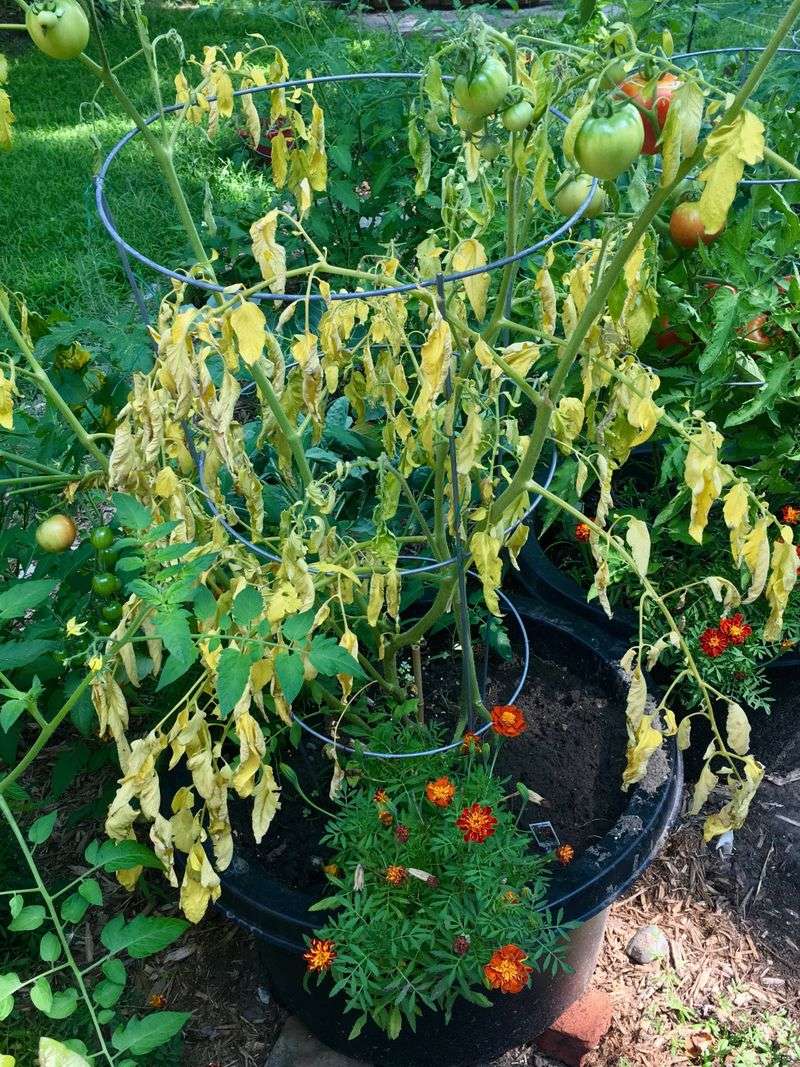
Southern summers can push tomato plants into survival mode, and two effects sometimes arrive together: leaves that curl to limit water loss, and fruit that stalls before it turns red. University of Minnesota Extension guidance on heat and vegetable gardens identifies roughly 68 to 77 degrees Fahrenheit as the optimum range for tomato maturation and notes that the pigments responsible for red color are not produced well above approximately 85 degrees Fahrenheit.
That temperature threshold is a general reference, not a universal cutoff, because variety, maturity stage, and whether nights cool down all affect how a plant responds.
When sustained heat inhibits lycopene production or accumulation, fruit can sit at a full or near-full size for days without gaining much color. That slowdown is a temperature limitation, not necessarily a sign of fertilizer deficiency or permanent crop loss.
A full-sized green tomato with developed seeds may still be viable and capable of ripening once conditions improve.
Utah State University Extension IPM guidance describes physiological leaf roll as a heat and water-stress response in which leaves curl upward or inward to reduce surface area exposed to sun and dry air. This is a plausible explanation when conditions are persistently hot, but curling and yellowing together cannot rank heat as the certain diagnosis without examining the plant more closely.
Recognize the pattern of physiological leaf roll
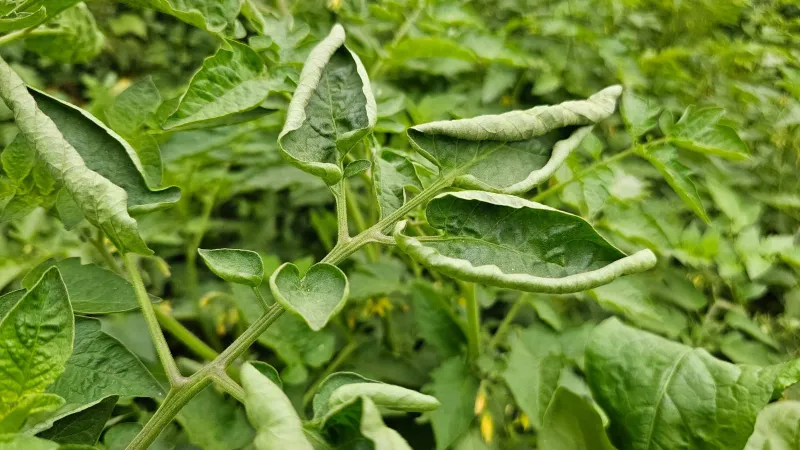
Physiological leaf roll has a recognizable look once you know what to check. University of Minnesota Extension’s tomato disorders guide describes it as upward or inward curling that typically begins on lower or older leaves, leaving the foliage thick, firm, and leathery rather than soft, spotted, or discolored along the veins.
There are no lesions, no webbing, and no unusual streaking on the leaf surface.
Timing matters as much as appearance. A plant that curls noticeably at midday but looks more relaxed in the cooler morning and evening hours is showing temporary heat stress, which is different from persistent distress that stays visible around the clock.
Minnesota Extension’s tomato leaf-curl diagnostic tool confirms that physiological leaf roll alone generally does not reduce yield when the rest of the plant remains healthy.
The critical point is that yellowing is not a defining feature of harmless physiological roll. Rolled leaves that stay green and firm support a heat explanation; rolled leaves that are also turning yellow, especially on young growth, call for a closer look.
Use the firm, older-leaf pattern to support a heat reading, not to prove it, and keep checking the rest of the plant before settling on any single cause.
Check the root zone before watering
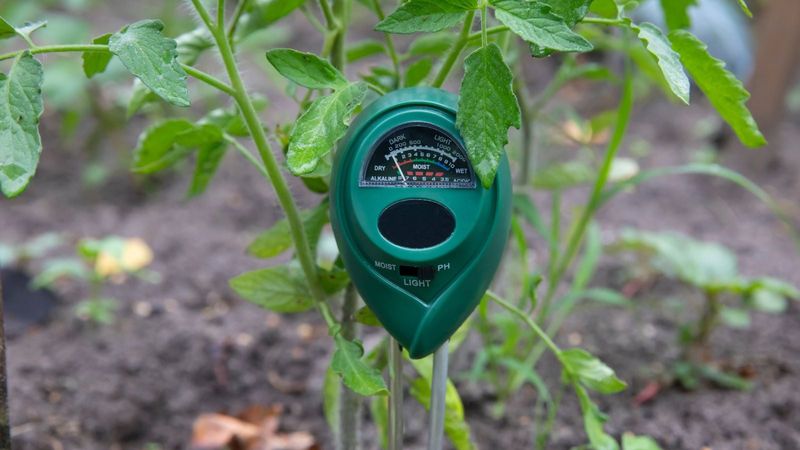
Curled leaves on a hot afternoon feel like an obvious signal to water, but reacting before checking the soil can make things worse. University of Georgia Extension’s watering guidance explains that overwatering is just as damaging as drought, causing root injury, yellowing, and wilting that can look nearly identical to what a thirsty plant shows.
The only reliable way to tell the difference is to push a finger or a narrow trowel several inches below the surface and feel whether the root zone is actually dry.
Hot afternoons can cause temporary midday stress even when the soil holds plenty of moisture. A plant that droops or curls at two in the afternoon but looks recovered by early evening is likely responding to air temperature and vapor pressure, not to a water deficit.
University of Minnesota Extension heat-garden guidance recommends evaluating plants in the morning and evening rather than at the hottest point of the day to get a more accurate picture of their condition.
UGA Fulton County Extension’s tomato watering advice reinforces that both drought and waterlogged soil can produce yellowing and stress symptoms. Check the root zone first, compare the plant at different times of day, and note whether it recovers after temperatures ease before reaching for the hose.
Protect roots and fruit during the heat
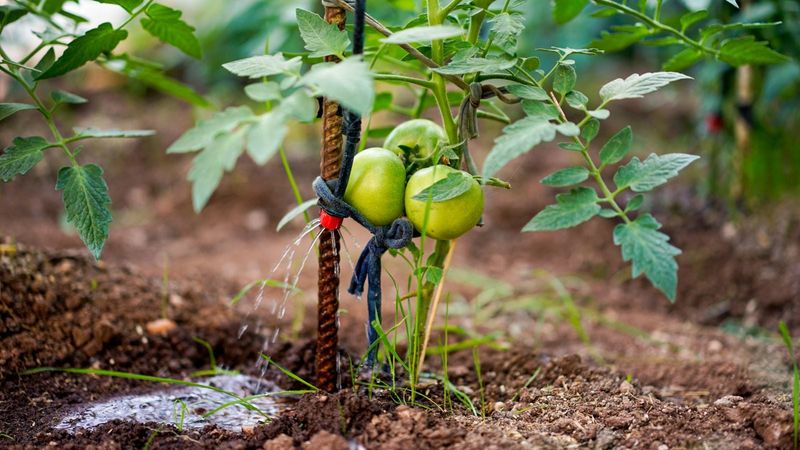
When the root zone is genuinely dry or the plant has been dealing with sustained heat for several days, a few low-risk steps can reduce stress without compounding the problem. UGA Fulton County Extension recommends watering deeply at the base of the plant rather than giving frequent shallow applications.
Drip irrigation or a soaker hose is preferable because it delivers water directly to the root zone and keeps foliage dry, which lowers the risk of fungal problems.
Water early in the day when possible so the root zone can absorb moisture before afternoon heat peaks. How often you need to water depends on your soil type, recent rainfall, plant size, and whether the tomato is growing in a container.
Containers dry out much faster than in-ground beds, especially in full sun. UGA Camden-ANR Extension and Utah State University Extension’s tomato guide both recommend roughly 2 to 4 inches of organic mulch pulled back from direct stem contact to slow evaporation and moderate root-zone temperature.
Resist the urge to prune heavily during a heat wave. UGA Extension’s tomato production guide warns that removing too much foliage exposes developing fruit to intense sunlight, increasing the risk of sunscald.
Preserve healthy leaves that shade the fruit. Temporary afternoon shade cloth can reduce heat and sun exposure on badly exposed plants or those in reflected heat from walls or fences, but USU Extension’s shade use guide notes that excessive shade reduces light and can delay ripening, so use it selectively and only as long as conditions justify it.
Let favorable temperatures finish the fruit
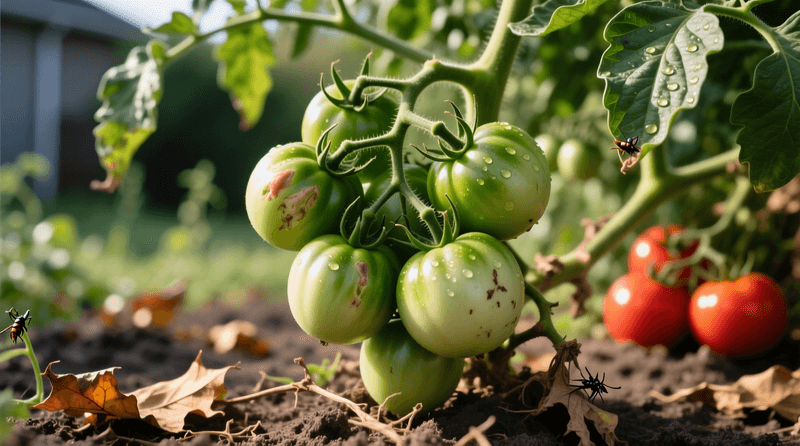
Once moisture is stable and extreme sun exposure is reduced, patience becomes the most useful tool. University of Minnesota Extension explains that sustained hot days and nights slow fruit development and red coloration, and that cooler conditions generally allow ripening to resume.
Adding fertilizer or pruning aggressively will not speed up a process that is waiting on temperature, and excess nitrogen in particular can delay maturity while pushing the plant toward more foliage instead of finished fruit.
If a tomato is full-sized and has reached the mature-green stage, with developed seeds and a jelly-like gel forming around them inside, it can often be harvested and ripened indoors at room temperature. University of Minnesota Extension’s tomato growing guide and Oregon State University Extension’s tomato guide both note that truly immature green fruit may not ripen well off the vine, so size and interior maturity matter before you pick.
Separate heat-delayed coloration from yellow shoulders or hard yellow-green areas that remain on the fruit surface. University of Minnesota’s tomato disorders resource identifies yellow shoulders as a distinct ripening disorder associated with hot weather, variety, and other factors.
Those patches may not resolve simply by leaving the tomato on the vine longer, so they require a different assessment than ordinary slow coloring driven by temperature. Published research on tomato pigment and temperature confirms that the relationship between heat and lycopene accumulation varies by variety and growing conditions.
Yellowing patterns can point beyond heat
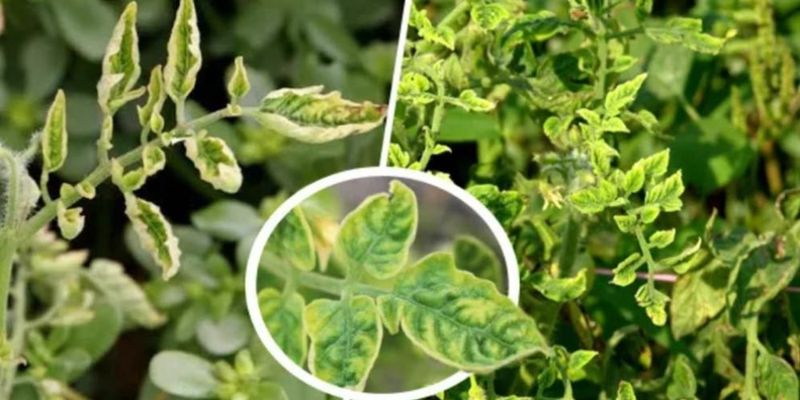
Widespread yellowing, especially when it concentrates on young growth rather than older leaves, is a signal to look past heat as the explanation. Tomato yellow leaf curl virus is one of the most important look-alikes for Southern gardeners, particularly in Florida, Texas, and other Gulf Coast states where whitefly populations stay active late into the season.
NC State Extension’s tomato yellow leaf curl virus resource describes the disease as causing yellowing between or along the veins of young leaves, upward or inward curl, crumpled and thickened foliage, shortened internodes, bushy or stunted growth, flower drop, and sharply reduced fruit production.
The virus is transmitted by silverleaf whiteflies, so checking the undersides of leaves for small, white, moth-like insects is a key diagnostic step. University of Florida IFAS Extension and UGA Extension’s disease guide both note that infected plants generally do not recover.
Improving water or fertilizer will not reverse the infection.
Herbicide drift or contamination produces a different but equally alarming picture. Minnesota Extension’s tomato leaf-curl diagnostic and UGA Extension’s tomato problem guide both flag twisted, cupped, distorted, bleached, or browned new growth as characteristic of herbicide injury, especially when the worst symptoms appear on the side of the plant facing a recently treated lawn or neighboring property.
Contact a county Extension office or plant-disease clinic promptly if you suspect either virus or herbicide injury, and follow local guidance on isolation or removal rather than waiting indefinitely for laboratory confirmation.
Avoid treatments that mask the real problem
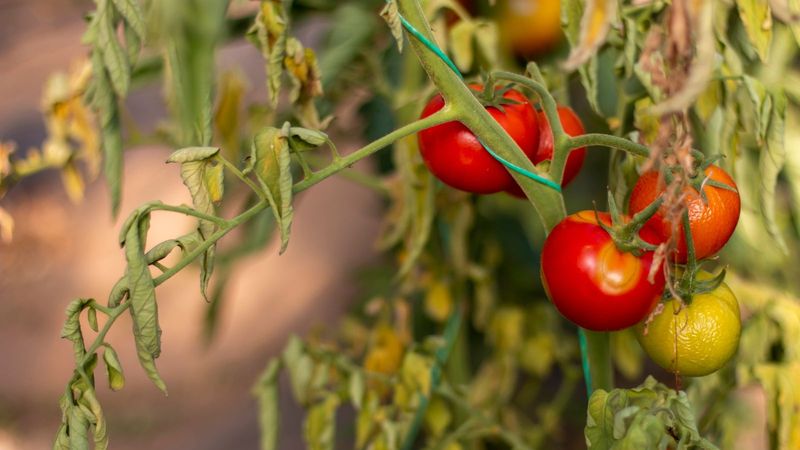
Nutrient problems have distinct patterns worth knowing before reaching for any product. UGA Extension’s comprehensive tomato problem guide describes nitrogen deficiency as pale yellowing that begins on older, lower leaves and moves upward; iron deficiency more often shows up on young leaves where the tissue between green veins turns yellow; and potassium problems can produce marginal browning or pale, blotchy areas on the fruit.
These patterns overlap heavily with disease and root injury, which is why soil testing is a safer starting point than guessing at a deficiency and applying a product that may not help.
Adding nitrogen as a first response to yellow leaves carries real risk. University of Minnesota Extension and Utah State University Extension both caution that excess nitrogen promotes lush foliage at the expense of fruit production and can delay maturity, which is the opposite of what most gardeners want in late summer.
Calcium applications are not a reliable general fix either. UGA Extension’s blossom-end rot guidance explains that many calcium-related disorders stem from water-uptake and root-stress problems rather than a straightforward soil calcium shortage.
UGA Extension’s tomato production bulletin reinforces that automatic insecticide sprays are also a poor response to curled leaves. Scout the undersides of leaves for whiteflies, aphids, or spider mites, confirm what you are seeing, and use labeled products only when a specific pest is identified.
Escalate when the plant keeps declining
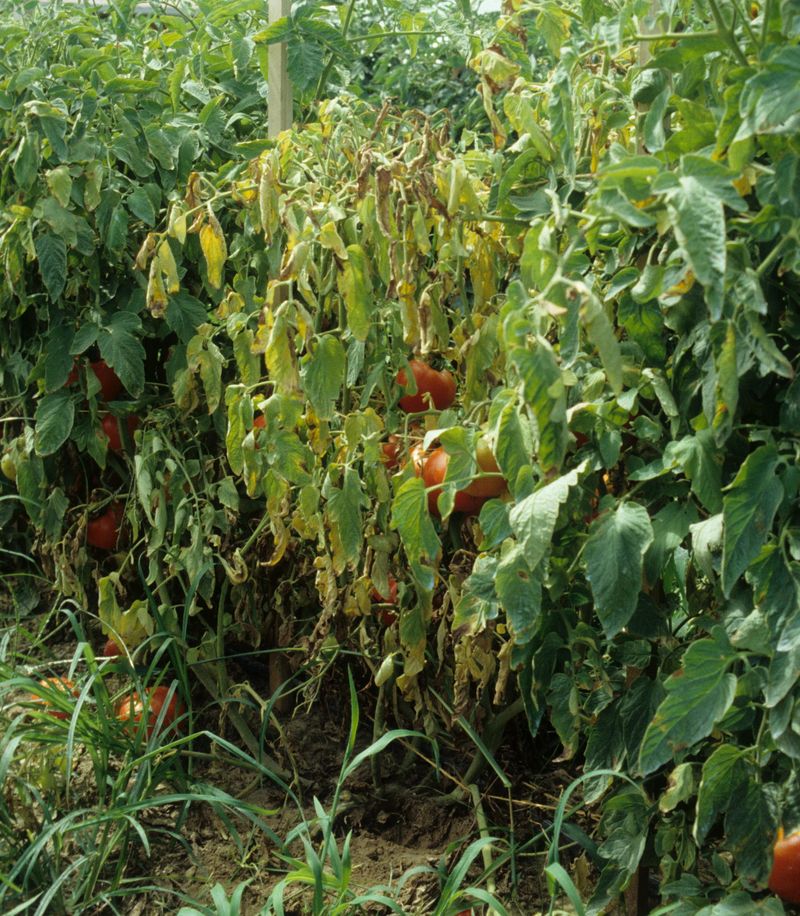
A plant with firm, rolled older leaves and slowly coloring fruit that otherwise looks vigorous is a very different picture from one that keeps getting worse. Leaf spots or lesions, premature leaf drop, one-sided wilt, vascular discoloration inside a cut stem, rapid whole-plant decline, or foliage that fails to recover after overnight temperatures ease are signs that do not fit a straightforward heat response.
UGA Extension’s tomato production guide and UGA Madison County Extension’s tomato troubleshooting resource both flag these patterns as reasons to pursue a closer diagnosis rather than continuing to manage for heat.
Utah State University Extension’s wilt disease guide explains that fungal vascular diseases like Fusarium and Verticillium wilt can produce yellowing, one-sided decline, and wilting that does not improve with watering. These require a different response than anything on the heat-management checklist.
When the pattern worsens or remains unexplained after a few days of stable moisture, appropriate mulch, and protected foliage, contact your county Extension office or a university plant-disease clinic. The action sequence is straightforward: check soil moisture, stabilize watering, mulch the root zone, protect exposed fruit without heavy pruning, monitor new growth and pest activity, and get diagnostic support when symptoms escalate.
University of Minnesota Extension’s tomato disorders guide is a useful reference throughout that process. A tomato plant still carrying healthy fruit is worth protecting carefully, and the best protection starts with an honest read of what is actually wrong.