
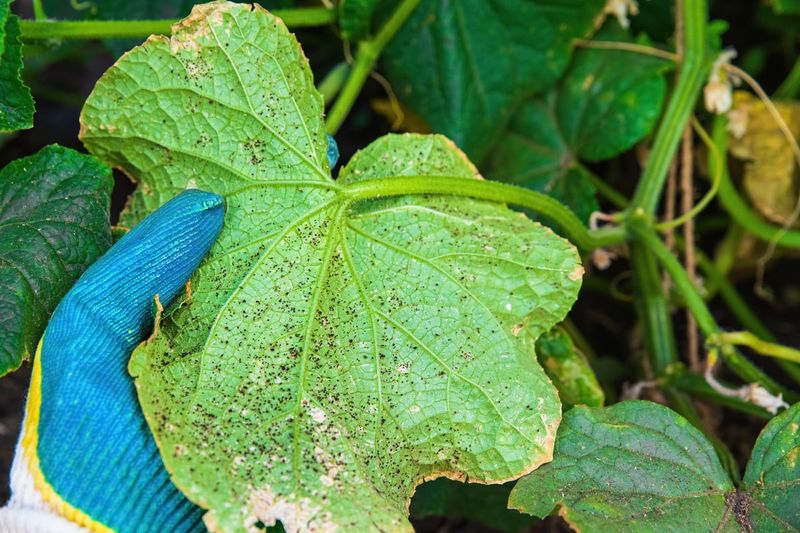
Walk out to your cucumber bed on a sweltering August morning and you might notice the leaves looking washed out, pale, and oddly shimmery in the heat. That silvery, speckled look can stop a gardener cold, especially when the vine seems to be slowing down at the same time.
Several problems can cause this kind of discoloration, but hot, dry weather points most strongly toward spider mites as the culprit. Knowing how to confirm the cause before you reach for any spray can save your crop and protect the helpful insects already working in your garden.
Silver stippling suggests mites, but it does not prove them
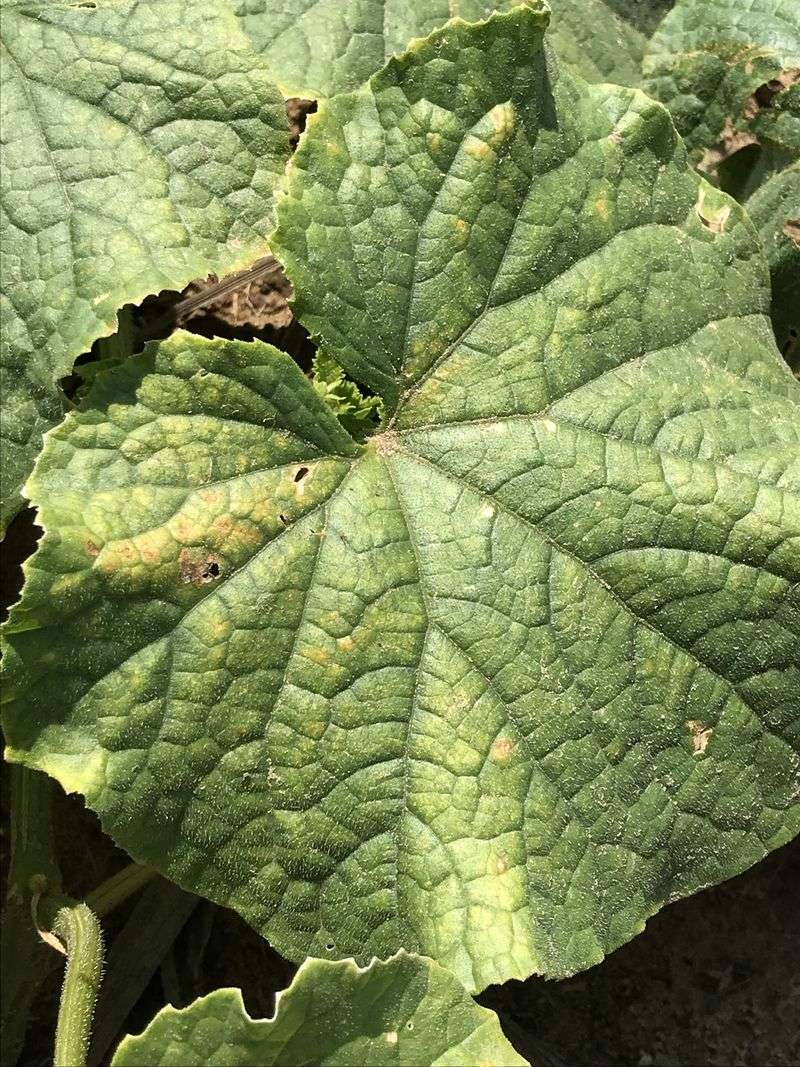
Pale, silvery, or finely speckled cucumber leaves are easy to write off as sun scorch, especially when temperatures are pushing past 95 degrees and the garden soil is dry and cracked. The pattern worth paying attention to is fine, widespread stippling scattered across the leaf surface in tiny white, yellow, or gray dots rather than a single brown scorch patch or a few isolated spots.
When that kind of uniform flecking shows up on multiple leaves and the vine seems to be stalling, UC ANR’s cucurbit spider mite guidance lists this type of mottling as a common sign of sap-feeding mite activity.
As feeding continues, affected leaves may shift from pale stippling to a bronzed or yellowish tone, and heavily damaged foliage can eventually drop. A vine carrying widespread leaf loss will slow noticeably, and severe cases can cut into fruit production.
That progression is real, but none of it is proof on its own.
Silvering and stippling are not exclusive to spider mites. Whiteflies, thrips, and certain fungal diseases can all produce overlapping symptoms on cucumber foliage.
University of Minnesota Extension frames spider mites as a strong possibility under hot, dry, or dusty conditions, not a certainty based on leaf color alone. The appearance of the leaves gives you a reason to look closer, not a finished diagnosis.
Hot, dry conditions can help spider mites build quickly
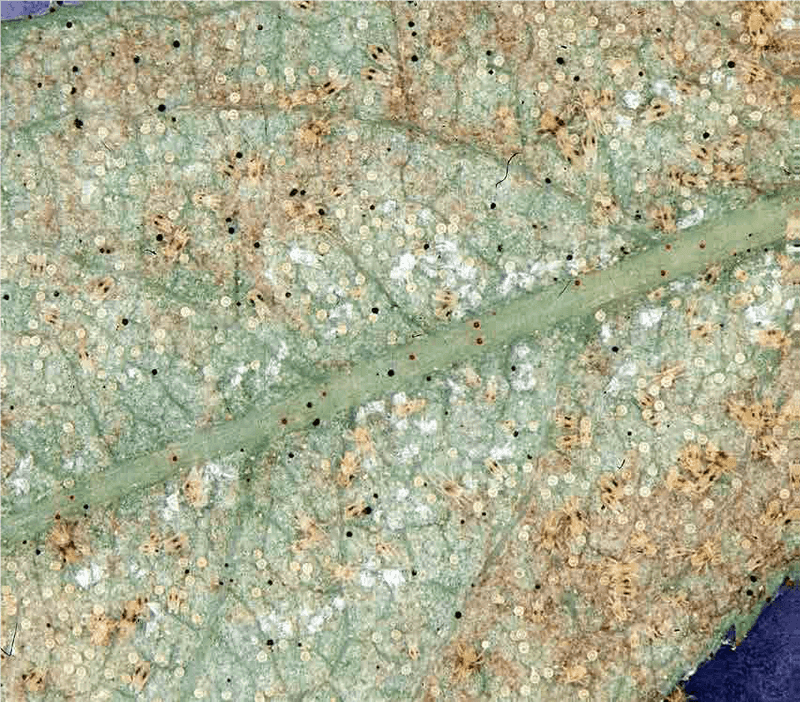
Spider mites are not insects. They are arachnids, closely related to ticks and spiders, and they operate on a very different biological schedule than most garden pests.
Tiny enough to be nearly invisible without a hand lens, they cluster on the undersides of leaves and pierce individual plant cells to feed on sap. Each feeding site loses its chlorophyll, leaving a small pale dot, and thousands of those dots together create the stippled or silvery appearance that catches a gardener’s eye.
Heat accelerates their life cycle considerably. University of Minnesota Extension notes that spider mite populations can build rapidly during warm weather, and drought stress makes the situation worse by weakening plant defenses.
A cucumber vine that is already struggling to pull water through its roots during a dry stretch tolerates mite feeding less well than a well-hydrated, healthy plant. Dusty conditions can also favor mites by coating leaves in a way that interferes with natural predators.
That said, hot weather alone does not guarantee an outbreak. UC IPM’s spider mite resource points out that natural enemies, rainfall, humidity, and the pesticide history of a garden all shape whether a mite population actually surges.
In Florida and other humid parts of the South, periodic rain can knock mite numbers back, and University of Florida IFAS guidance on cucurbit mites treats late-season mite pressure as a real risk without suggesting it is inevitable in every warm spell.
Inspect the leaf undersides before you treat
Before any spray bottle comes out of the shed, spend five minutes actually looking at the plant. Flip over a few of the most discolored leaves and examine the undersides in good light.
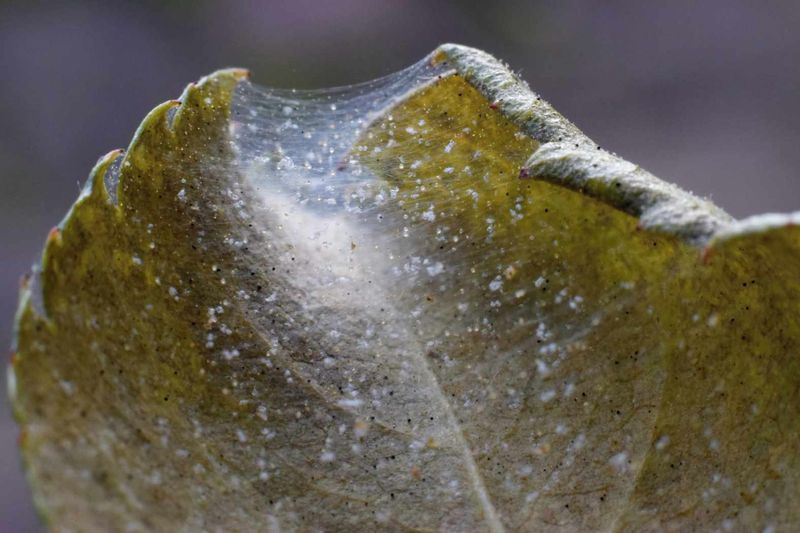
A basic 10x hand lens makes a real difference here because spider mites are roughly the size of a period at the end of a sentence. You are looking for tiny oval bodies, often pale yellow, green, or orange-red, and possibly fine silky webbing stretched between leaf veins or along the stem.
University of Minnesota Extension describes a simple field test that works well even without a lens: hold a discolored leaf over a sheet of white paper and give it a firm tap or shake. If tiny dots fall onto the paper and some of them begin moving, you are almost certainly looking at mites.
Static particles from dust or soil will not move. Utah State University Extension and UC IPM’s quick-tip mite card both recommend this movement test as a reliable way to separate mites from environmental debris.
One check is rarely enough during a heat wave. UC IPM and Minnesota Extension both suggest returning every three to five days during hot, dry weather because a population that looks light on Monday can be well established by the weekend.
Checking repeatedly also helps you catch whether the damage is spreading to new leaves or holding steady, which matters when deciding how to respond.
Compare the pattern with whiteflies, thrips, and downy mildew
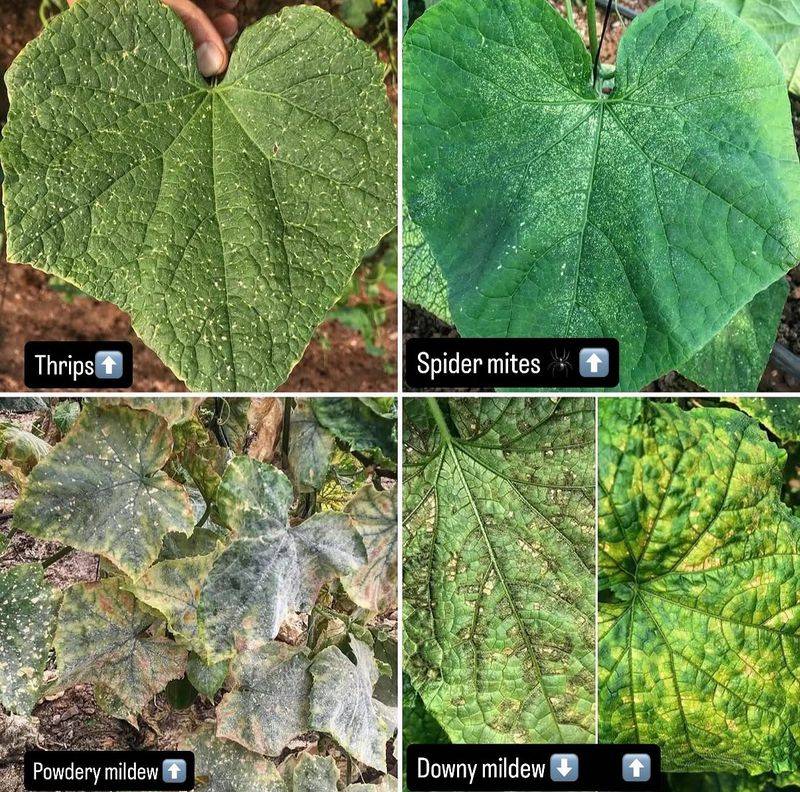
Silvery or mottled cucumber leaves can have more than one explanation, and treating the wrong problem wastes time while the real one keeps spreading. Three look-alikes come up often enough in Southern gardens to be worth separating clearly before you commit to any response.
Whiteflies are worth checking first if you see an overall whitish or silvery cast on leaves. UC ANR’s cucurbit whitefly resource explains that silverleaf and sweetpotato whiteflies can cause cucurbit foliage to turn whitish or pale.
The difference is in what else you find: UC IPM’s whitefly page notes that adult whiteflies typically fly up in a small cloud when you brush the foliage, and infested leaves may also show sticky honeydew residue and black sooty mold growing on top of it. Spider mites do not produce honeydew or sooty mold.
Thrips produce a different kind of silvering. UC IPM’s thrips guidance describes silver-gray scarred patches, often accompanied by shiny black fecal flecks visible on the leaf surface.
Thrips may also distort young leaves and flowers, which is less common with mite feeding alone.
Downy mildew is the most important alternative diagnosis for Florida gardeners and others in humid regions. Rather than fine, evenly distributed stippling, UC IPM’s downy mildew resource describes pale green or yellow angular lesions that are bounded by leaf veins, with gray, purple, or whitish fuzzy growth appearing on the leaf underside during wet or humid conditions.
University of Florida IFAS downy mildew guidance treats this disease as a recurring and serious concern in Florida, where late-season mottling cannot be attributed to mites without a proper look at the leaf underside for mite evidence.
Reduce stress and use a targeted water spray first

Once you have confirmed mites or have strong reason to suspect a light infestation, the first practical step is not a spray product. Start by looking at what the plant is dealing with beyond the mites themselves.
A cucumber vine in dry, hot soil is already under pressure, and reducing that stress gives the plant a better chance of tolerating feeding while you work on suppression.
Consistent irrigation matters here, but the goal is steady soil moisture rather than soaking the garden on an irregular schedule. Mulching around the base of the vine helps hold that moisture between waterings and keeps the root zone cooler.
Where dusty conditions are contributing to mite buildup, rinsing down nearby pathways or bare soil can make a modest difference. University of Minnesota Extension and UC IPM both point to drought stress as a factor that makes plants more vulnerable to mite damage and harder to treat effectively.
A forceful stream of water aimed specifically at the undersides of leaves can dislodge mites and break up webbing. UC IPM’s mite quick-tip card lists this as a useful suppression tactic for light infestations, though it is not a guaranteed fix and may need to be repeated.
Avoid turning this into a routine overhead misting of the foliage. UC IPM’s downy mildew guidance specifically discourages frequent wetting of cucumber leaves because it raises the risk of fungal disease, especially in humid Southern climates.
Keep natural enemies in mind, too: predatory mites, lacewings, and minute pirate bugs can suppress mite populations on their own if broad-spectrum sprays have not already wiped them out.
Use labeled soap or oil carefully if mites persist
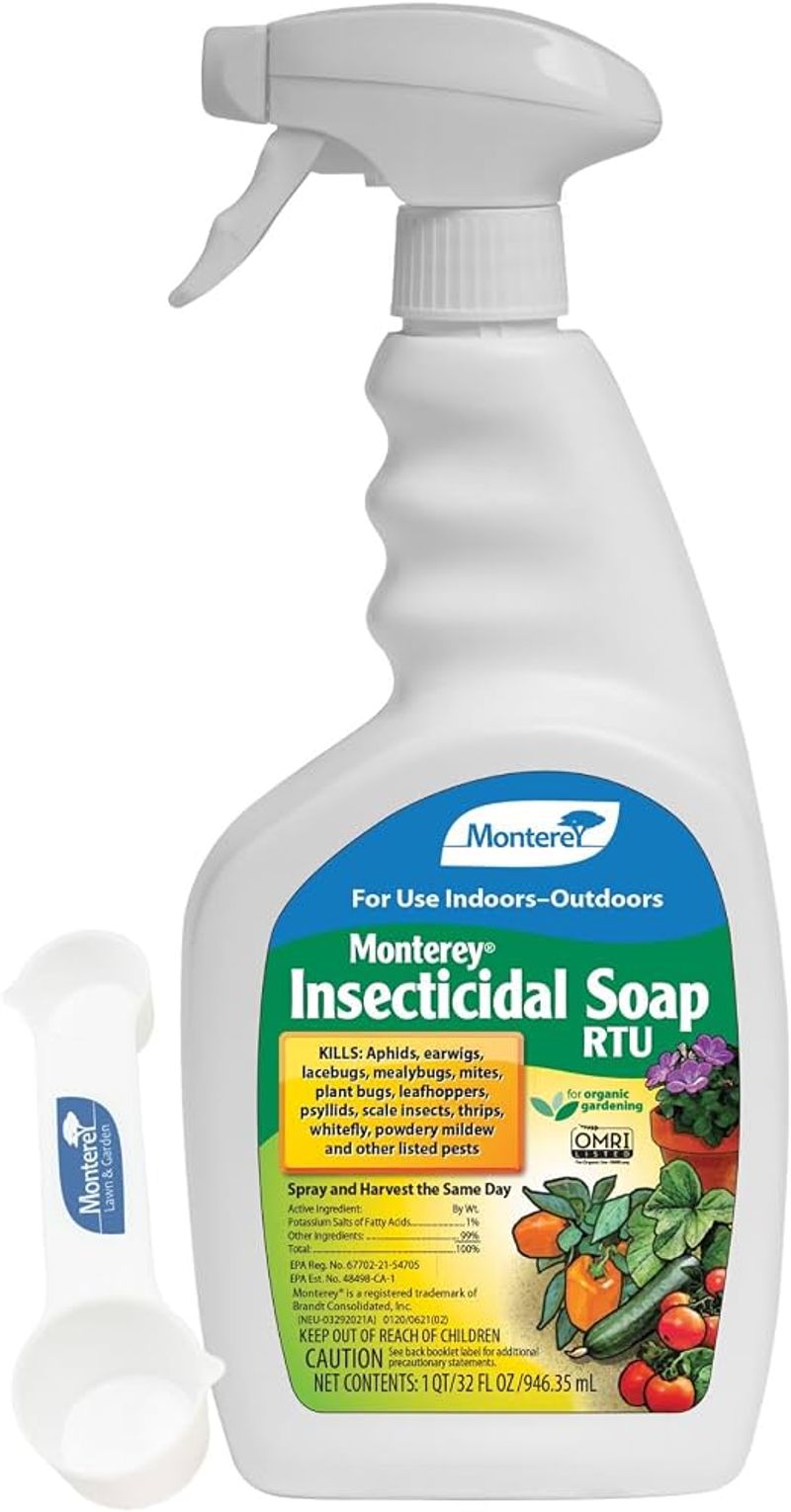
If mites are confirmed, stress reduction and water sprays have not brought the population under control, and fresh stippling keeps spreading to new leaves, a labeled product may be a reasonable next step. The options most commonly cited by extension services for home gardens are insecticidal soap and horticultural oil.
Both work through direct contact, meaning the product has to physically reach the mites to affect them. That requires thorough coverage of the leaf undersides, which is where the mites actually live and feed.
University of Minnesota Extension and UC IPM both note that repeat applications are usually necessary because these products do not leave a residue that keeps killing after the spray dries. A single treatment rarely eliminates a population.
Before applying anything, water the plant adequately so it is not already under moisture stress. Test a small area of foliage first and wait a day or two to check for phytotoxicity before treating the whole plant.
Avoid spraying during the hottest part of the day or when temperatures are extreme, and follow the product label for the specific crop, pest, application rate, timing, and pre-harvest interval.
University of Florida IFAS guidance on pesticide use in home gardens reinforces that label compliance is not optional: use only products explicitly labeled for cucumbers and for mites. Homemade dish-soap mixtures are not substitutes for labeled insecticidal soap and can burn plant tissue.
Broad-spectrum insecticides are a separate concern: they can kill predatory mites and beneficial insects that were already working to suppress the infestation, and some have been associated with mite outbreaks getting worse after application rather than better.
Measure recovery by healthy new growth, not perfect old leaves
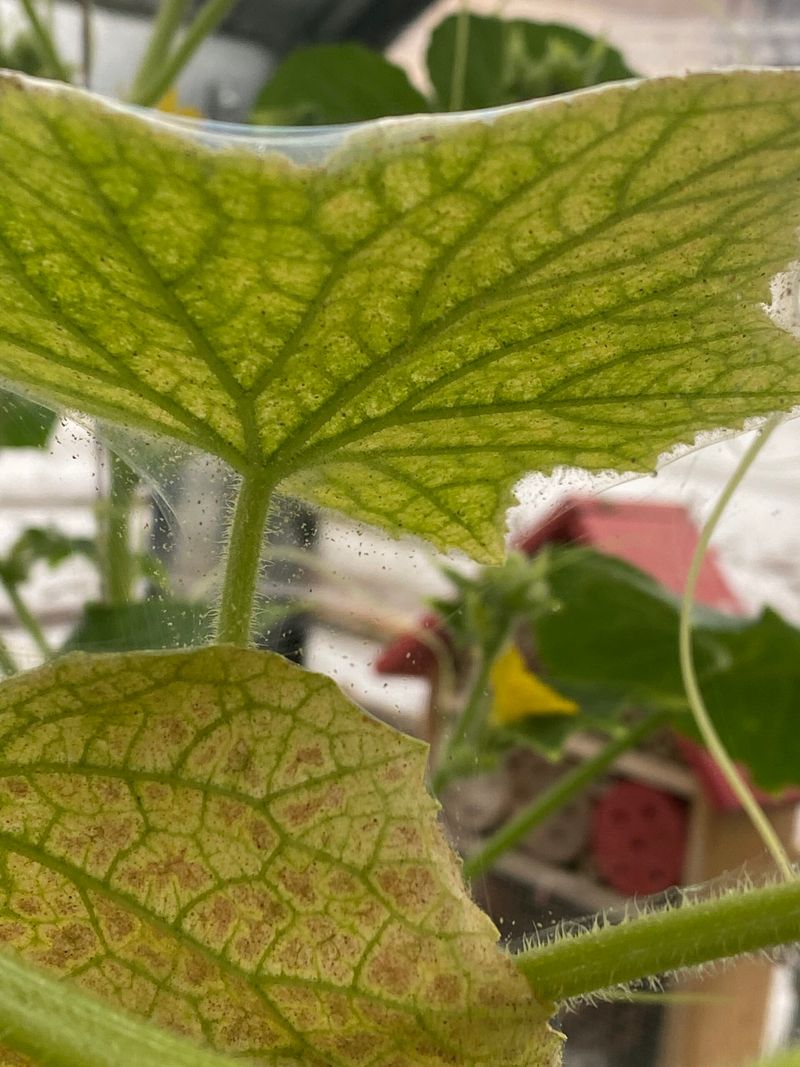
After you have worked through the inspection, stress reduction, and any suppression steps, the question becomes how to tell whether things are actually improving. Damaged leaves will not recover their original color.
Mite feeding destroys individual leaf cells, and that pale or bronzed stippling is permanent on the tissue where it formed. Expecting those leaves to turn green again sets an unrealistic standard and can push a gardener toward unnecessary repeat treatments.
The practical signs of progress are different. UC ANR’s cucurbit spider mite resource and University of Minnesota Extension point to the absence of live mites on repeated checks, a slowdown in the spread of fresh stippling to new leaves, and the appearance of healthy new growth as the meaningful indicators.
A vine putting out undamaged new foliage is generally on a better path than one where every new leaf immediately shows fresh speckling.
Keep the full sequence in mind as you close out the season: inspect first, account for the weather and competing diagnoses, use the least disruptive response that fits the situation, and keep checking the plant every few days. A vine that carries some mite damage but still produces cucumbers is not a failure.
The goal was always to protect what the plant can still give you, not to restore what the mites already took.