
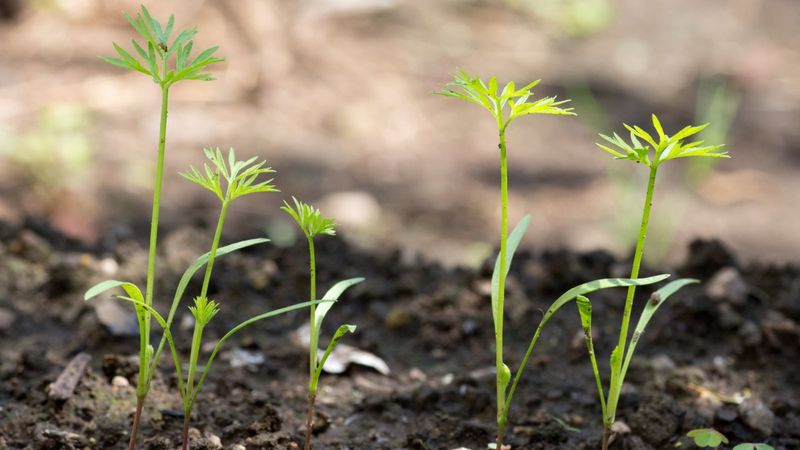
Planting carrot seeds in late summer and watching half the row never come up is one of the more discouraging moments in the fall garden. Before you toss the seed packet and order a replacement, the real trouble may be hiding just beneath the soil surface, where heat, dryness, and a hardened crust can quietly stop even good seed from breaking through.
Southern gardeners in Florida and Texas face some of the toughest late-summer seedbed conditions anywhere in the country, and understanding what actually went wrong is the first step toward fixing it.
A patchy carrot row can signal uneven seed-zone conditions
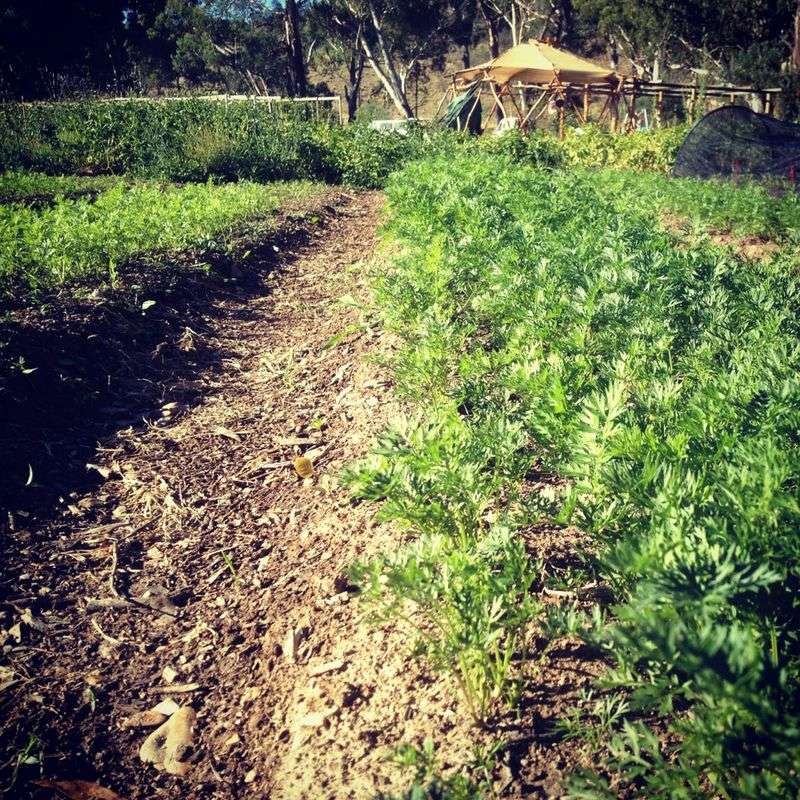
Blank stretches in a carrot row are genuinely frustrating, especially after you watered carefully and planted on schedule. The temptation is to blame the seed packet, but the visible pattern of the failure often tells a more complicated story before you ever open a new bag.
Scattered emergence, where some sections come up fine and others stay bare, can point to differences in moisture, soil temperature, planting depth, surface crusting, seed quality, or disease that varied from one end of the row to the other. UC IPM’s guidance on high soil temperature and crusting in carrots identifies excessive heat and a sealed soil surface as conditions that can physically block small, weak seedlings from reaching daylight.
That makes late-summer heat combined with rapid drying and crusting an important suspect, though not the only one.
Mississippi State Extension’s carrot guide also lists old seed, uneven planting depth, compacted soil, hard rain, and weed competition as causes of poor stands. Any of those can produce the same patchy look.
One distinction matters before you start troubleshooting: seeds that never appear and seedlings that emerge but then collapse or disappear are different problems requiring different solutions. Penn State Extension’s overview of damping-off explains that seedlings which thin out, fall over, or vanish after sprouting may be dealing with a soilborne disease rather than a germination failure.
Separating those two symptoms early keeps you from applying the wrong fix.
Late-summer soil can make carrot germination slow and uneven
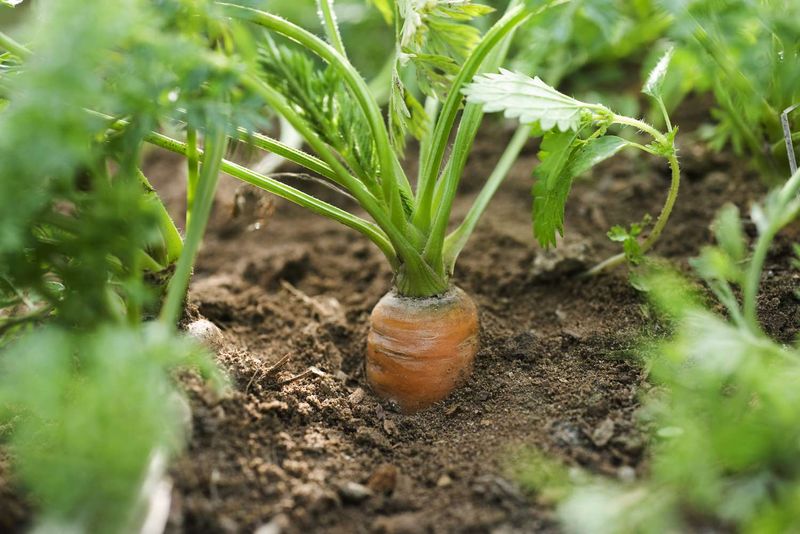
Carrots are cool-season crops, and their preferred growing conditions sit well below what a Southern August typically delivers. UF/IFAS research on carrot production in North Florida puts optimum air temperatures for carrot growth at roughly 61 to 75 degrees Fahrenheit, while Texas A&M describes ideal conditions as approximately 75-degree days paired with 55-degree nights.
High heat can reduce root quality and make establishment noticeably harder.
The seed-zone temperature is what actually governs germination, and that number can be far higher than the air temperature on a sunny afternoon. Bare soil in direct sun absorbs heat rapidly, and the shallow layer where carrot seed sits can become significantly hotter than the reading on a shaded thermometer nearby.
Alabama Extension’s germination temperature table lists a general optimum range of roughly 45 to 85 degrees Fahrenheit for carrots, with 95 degrees as the upper limit. Those figures are useful as general guidance, not rigid cutoffs that apply equally to every cultivar or garden condition.
Heat becomes more disruptive when seed cannot stay in contact with moisture. UC IPM’s carrot soil temperature resource notes that shallow seed can lose access to water quickly as the upper soil dries in hot weather, which slows or stops imbibition before germination can begin.
Mulch, shade, bed orientation, and soil type all change how hot the seed zone actually gets, so the same calendar date can produce very different conditions across different gardens. Texas A&M AgriLife Extension’s carrot page notes that fall heat can be managed with adequate water, which means the problem is often inconsistent moisture rather than heat acting alone.
Inspect the row before you blame the seed
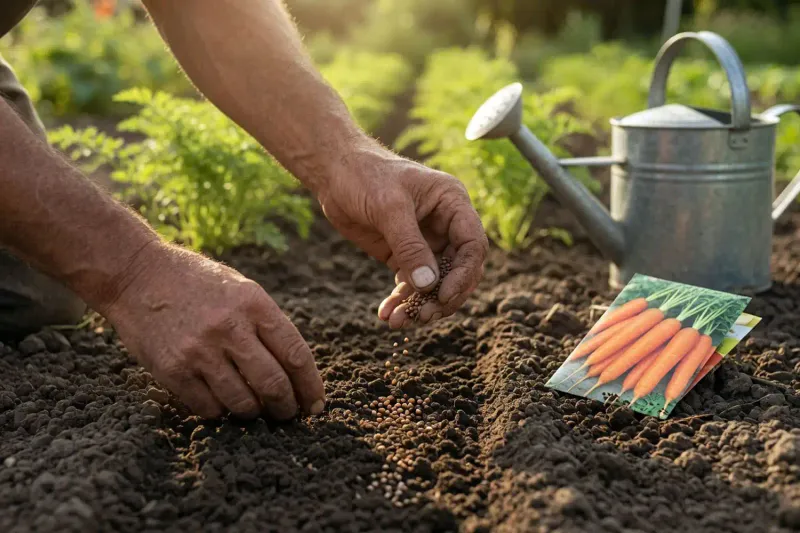
Walking the row with a critical eye before replanting can save you from repeating the same mistake with a fresh packet. Start at the soil surface: press your palm across the seedbed and feel for a hard, sealed layer that resists easy crumbling.
University of Minnesota Extension’s soil crusting guide explains that a sealed surface can trap small seedlings just below the crust, sometimes with the shoot bent or stalled rather than absent entirely.
After checking the surface, scrape away the top quarter-inch of soil in a bare section and see whether the ground underneath is bone-dry. Dry soil at seed depth in a section that never emerged is a meaningful clue pointing toward moisture loss rather than seed failure.
University of Minnesota’s tillage and soil health resource reinforces that uneven surface conditions across a bed can produce exactly the kind of alternating bare and populated sections that gardeners often misread as batch-level seed problems.
Look also for washed-out depressions where seeds may have pooled and rotted, or for sections where soil was pushed deeper than intended and seeds sit too far below the surface to reach air in time. If some areas emerged normally while others stayed blank, that pattern makes uneven moisture, crusting, or planting depth more plausible than a uniformly bad seed lot, though it is a clue rather than proof.
Two signs should shift your attention elsewhere. If germination was consistently poor across the entire row with no healthy patches at all, Illinois Extension’s seed viability guide suggests that old or poorly stored seed is a legitimate suspect.
If seedlings appeared but then thinned, collapsed, or vanished, UC IPM’s damping-off resource points toward disease rather than a seedbed problem.
Keep the shallow seed zone evenly moist
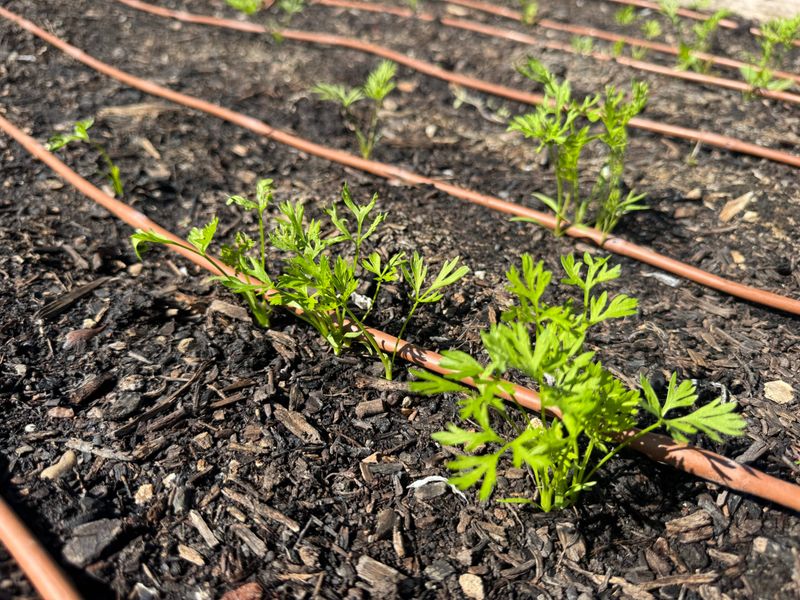
Carrot seed sits only about a quarter-inch below the surface, which puts it in the zone most vulnerable to rapid drying on a hot afternoon. UF/IFAS Gardening Solutions specifically warns against letting the surface dry out before carrot seeds germinate, and in hot, dry weather that can mean watering more than once a day rather than on a standard schedule.
The goal is consistently moist, well-drained soil from the moment you sow until seedlings are up and growing. A single deep watering that soaks the bed and then allows the surface to dry completely before the next pass is not the right approach for shallow carrot seed.
University of Minnesota Extension’s irrigation strategies for vegetables reinforces the principle that shallow-rooted seedlings need moisture maintained at their actual depth, not just deeper in the profile.
Consistent moisture does not mean saturated soil. Waterlogged conditions around newly germinated seed create a different problem: they encourage the soilborne fungi responsible for damping-off.
UC IPM’s damping-off guide lists excessive soil moisture as a primary condition that favors those pathogens, so the target is moist and draining, not wet and standing.
Once seedlings are up and roots begin to push deeper, you can shift toward less frequent and slightly deeper watering. Improved watering technique can help a future sowing succeed, but it cannot revive seed that has already failed to germinate or rescue seedlings that have already collapsed from disease.
Give carrot seed a shallow, fine, noncrusting bed

Physical barriers in the seedbed can turn an already-difficult late-summer sowing into a near-certain failure. Carrot seedlings are small and fragile at emergence, and anything that seals or blocks the surface adds a hurdle they may not have the strength to clear.
Shallow sowing is the starting point. UF/IFAS recommends sowing carrot seed at approximately one-quarter inch depth, and Texas A&M AgriLife Extension similarly calls for a light covering in a shallow furrow.
Burying seed deeper than that forces already-weak seedlings to travel farther before they reach light, which raises the odds of failure in hot conditions.
The seedbed surface itself needs attention before you sow. Break up large clods so seed makes good contact with soil, but avoid working the ground so finely that it turns powdery, since overworked soil can seal into a hard crust after watering.
A smooth, moderately firm surface strikes the right balance.
Covering the seed row with a light layer of fine sand, vermiculite, or sifted compost rather than native topsoil can reduce surface crusting meaningfully. Mississippi State Extension recommends these noncrusting materials specifically for small-seeded crops, and Oregon State University research on anticrustants for small-seeded vegetables supports their role in keeping the surface open.
Avoid thick or coarse mulch directly over newly sown seed, since heavy material can interfere with emergence and make it hard to see what is happening below.
If seedlings are just beginning to push through, resist the urge to hoe directly over the row. University of Minnesota Extension’s garden tillage guidance cautions that aggressive cultivation near shallow seedlings can damage them before they are established.
Prevention through a well-prepared, noncrusting surface is far safer than trying to break a crust after the seed is already in the ground.
Use shade, covers, and local timing carefully
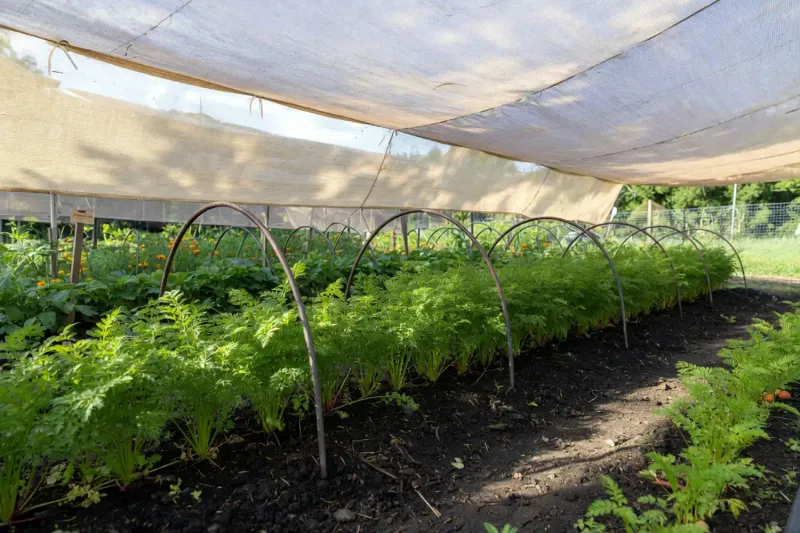
Reducing evaporation and protecting the seedbed from the worst of late-summer heat sounds straightforward, but the tools available to home gardeners work in different ways, and confusing them can make conditions worse rather than better.
Shade cloth or a temporary physical shade structure is the right tool when the goal is cooling the seed zone. Blocking direct sun lowers the soil surface temperature and slows moisture loss, which is exactly the combination that stressed carrot seed needs during a hot August sowing.
Mississippi State Extension recommends shade as a way to protect newly sown carrot rows during hot weather.
Floating row cover serves a different purpose. It can conserve moisture and protect seedlings from insects or wind, but it also traps heat, and in a Southern summer that retained warmth can push seed-zone temperatures in the wrong direction.
University of Maryland Extension’s row cover guide makes clear that covers must be monitored and adjusted as conditions change, not left in place without attention. Clear plastic over a row is especially risky without regular checks, since it can overheat the seedbed rapidly on a sunny day.
Timing is the other variable that gardeners in Florida and Texas should treat carefully. UF/IFAS lists August through March for North and Central Florida but generally September onward for South Florida, and a UF/IFAS Northwest District note on vegetable garden success acknowledges that August can still be too hot in parts of North Florida despite the calendar window.
Texas A&M AgriLife’s fall vegetable gardening guide shows that planting windows vary substantially by Texas region. Heat raises the difficulty of achieving a uniform stand; it does not make carrot planting universally impossible, but checking your local extension’s current recommendations alongside actual seed-zone conditions gives you a more reliable starting point than the calendar alone.
Rule out old seed and damping-off before replanting
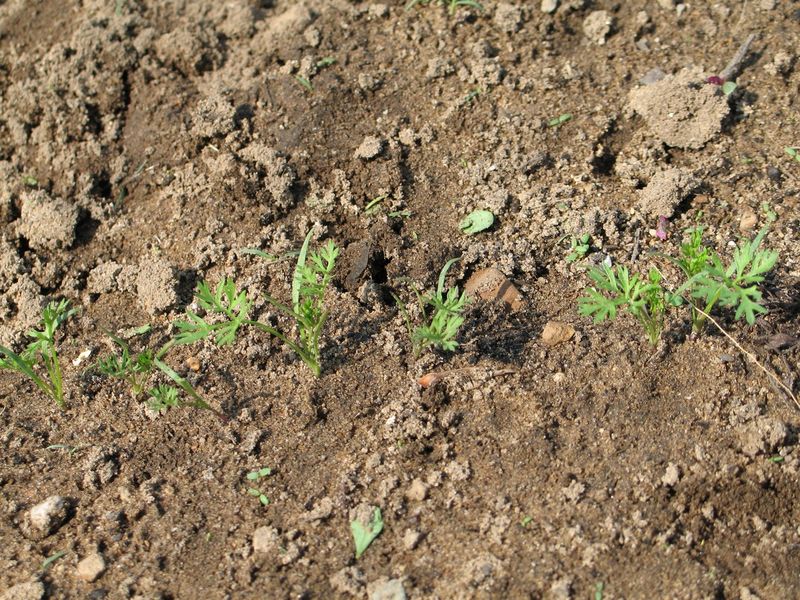
Heat and crusting are important suspects in a patchy carrot stand, but they cannot account for every failure. Two other causes, old seed and damping-off, produce symptoms that look similar on the surface and require completely different responses.
Seed viability declines with age and worsens with poor storage conditions such as heat, humidity, or fluctuating temperatures. Illinois Extension’s seed viability and storage guide recommends a simple germination test: count out ten seeds from the packet, place them between moist paper towels, keep them warm, and check after the expected germination period.
If fewer than six or seven sprout, low viability is a likely contributor to the outdoor failure. Washington State University Extension’s seed propagation resource reinforces that testing a sample indoors gives you a controlled baseline to compare against the outdoor bed.
Damping-off tells a different story. Seedlings affected by this soilborne fungal disease typically emerge looking normal, then become thin at the base, fall over, and disappear within days.
Penn State Extension’s damping-off overview distinguishes pre-emergence damping-off, where seed rots before it sprouts, from post-emergence collapse, where seedlings fall after they appear. UC IPM’s damping-off guide identifies waterlogged soil, high humidity, and overfertilization with nitrogen as conditions that favor the disease.
Fertilizing weak seedlings is not a first-line remedy for poor emergence; it cannot correct temperature, moisture, or disease problems, and excess nitrogen near shallow seed can injure the very seedlings you are trying to save.
The Southeastern Vegetable Crop Handbook supports the principle that consistently moist, well-drained soil is the target during germination, not saturated ground. Matching your diagnosis to the actual symptom, whether seed never emerged, seedlings collapsed, or the row was uniformly poor, points you toward the right correction before you sow again.
Correct the seed-zone problem before sowing again
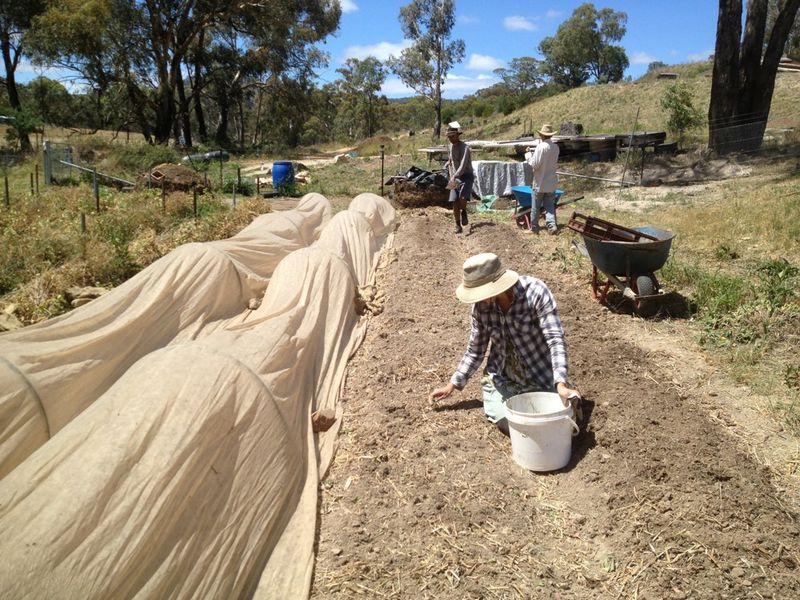
Before dropping fresh seed into the same row, spend a few minutes matching your evidence to a cause. A hard surface crust, dry soil at seed depth, or alternating bare and populated sections all point toward heat, drying, or crusting as the primary problem.
Washed-out sections, deeply buried seed, or a uniformly poor stand across the entire row suggest depth, washout, or seed quality. Seedlings that emerged and then collapsed point toward damping-off or excessive moisture rather than a seedbed preparation issue.
Fix the specific problem you identified: adjust irrigation frequency, switch to a noncrusting seed covering, correct planting depth, test the seed lot, or reconsider the timing against your local extension window. UC IPM’s carrot soil temperature and crusting resource, UF/IFAS Gardening Solutions, and Alabama Extension’s germination temperature guidance all support the same core goal: a shallow, evenly moist, fine, noncrusting seed zone gives fall carrots a better chance at uniform emergence.
No single fix guarantees a perfect stand, but diagnosing accurately before replanting puts the odds considerably more in your favor.