
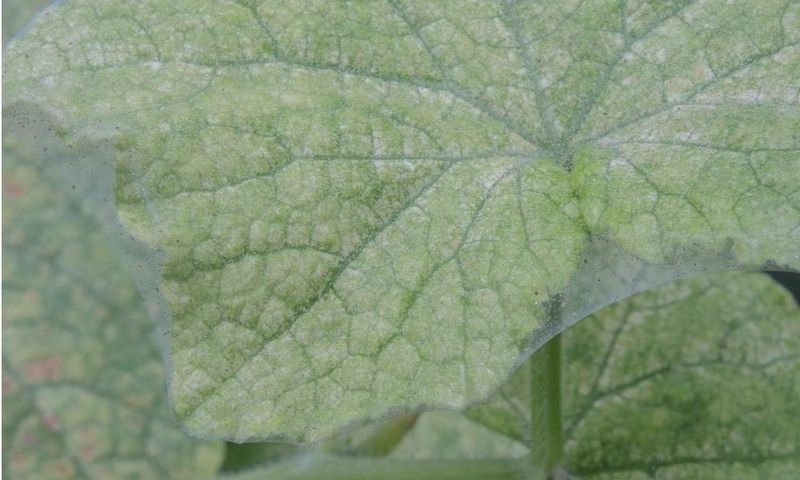
Walking out to your cucumber vines on a scorching August afternoon and finding the leaves looking washed-out, speckled, or almost metallic can send a gardener straight into panic mode. That strange silvery look is one of the most common distress signals cucumber plants send during the hottest, driest stretch of summer in Florida and Texas.
Knowing what is most likely causing it, and what to check before you reach for any spray, can save your harvest and keep your plants healthier through the rest of the season.
Late-summer silvering makes spider mites a leading suspect
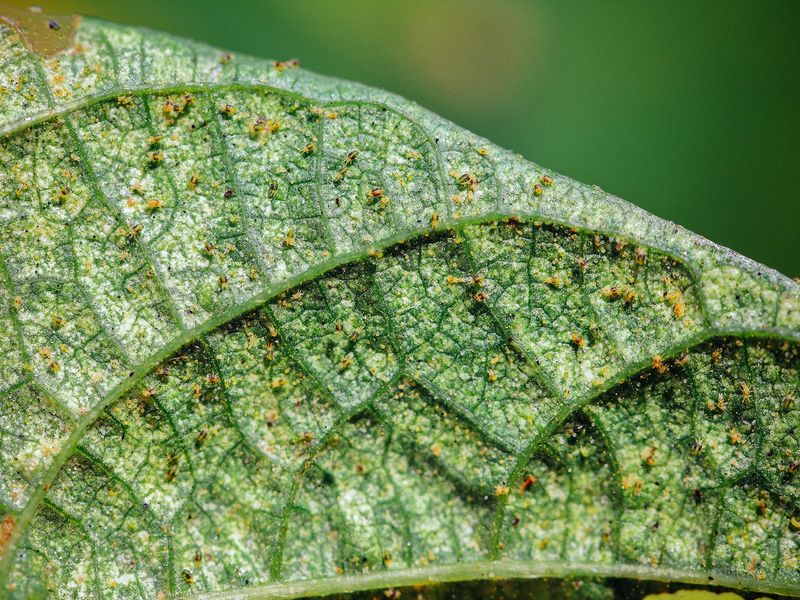
Fine silvery, pale, or bronze speckles appearing on cucumber leaves during August heat are a pattern worth taking seriously. Texas A&M AgriLife Extension identifies twospotted spider mites as a common culprit behind this kind of damage on cucurbit crops, especially when conditions turn hot, dry, and dusty.
These are tiny arthropods, not insects, and they are easy to miss with the naked eye.
Hot, dry, and drought-stressed conditions favor faster mite development and larger populations. That does not mean heat itself creates mites.
Mites can arrive on wind currents, transplants, nearby weeds, or plants from a nursery. What the heat and dryness do is speed up their life cycle and allow numbers to climb quickly before a gardener notices anything wrong.
When feeding is heavy, the damage can progress well beyond a few pale spots. UF/IFAS guidance on cucurbit mites describes how severe infestations can lead to bronzing of the leaf surface, drying and curling of tissue, and eventually defoliation that weakens the plant and reduces fruit production.
That progression makes early detection genuinely useful. Still, silvery stippling alone does not confirm spider mites as the cause.
Several other problems can produce a similar look, so the symptom is a reason to investigate further, not a reason to treat immediately.
What spider-mite feeding can do to cucumber leaves
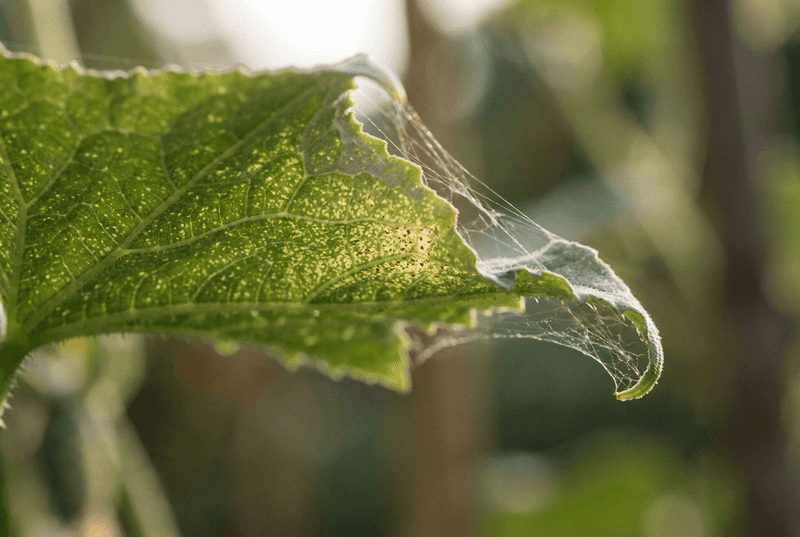
Spider mites feed primarily on the undersides of leaves, piercing individual plant cells and removing the contents. Each feeding puncture leaves behind a tiny pale dot where the cell has been emptied.
University of Minnesota Extension explains that this repeated cell-by-cell feeding across a large area of leaf surface is what creates the characteristic stippled appearance, with pale yellow, silver, or bronze speckling covering what was once solid green tissue.
As feeding continues and mite numbers grow, those individual dots begin to merge. The leaf may shift from speckled to broadly bronzed, then start to dry at the edges or curl.
This pattern differs from a surface coating like powdery mildew or a single large lesion caused by disease. The stippling from mite feeding tends to be numerous, scattered, and concentrated where the mites have been active, but it is not uniquely diagnostic on its own.
One practical reality that surprises many gardeners: leaf tissue that has already been damaged will not turn green again after mites are controlled. UC IPM’s cucurbit pest-damage guide documents how feeding injury can lead to visible discoloration and leaf death that persists even after mite numbers drop.
The goal of any response is to protect the healthy newer growth still coming in at the tips and upper canopy, not to restore leaves that are already badly stippled or bronzed.
Inspect the undersides before choosing a treatment
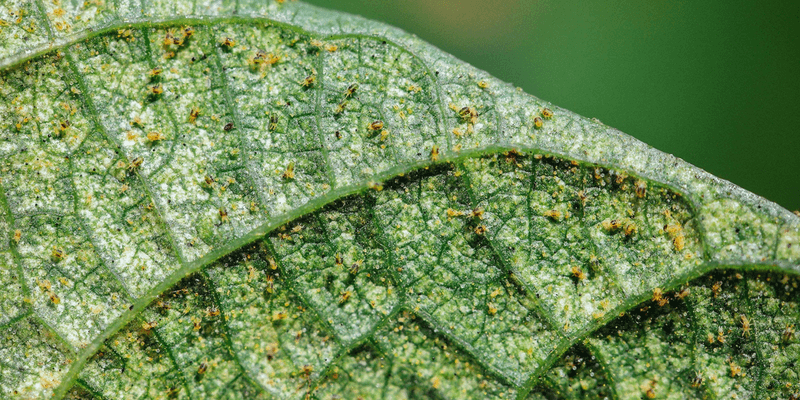
Before deciding on any course of action, turn a few leaves over and look at what is actually there. Spider mites prefer the undersides of leaves, so that is where the evidence tends to be strongest.
A hand lens or magnifying glass makes the job much easier. You are looking for tiny moving specks, small oval eggs, or fine silky webbing stretched across the leaf surface and along the veins.
A practical field test recommended by UMass Extension’s spider-mite fact sheet is to hold a sheet of white paper under a leaf and tap or shake the leaf firmly. If tiny dots fall onto the paper and then begin to move, those are likely mites.
Check leaves from different parts of the plant, including older lower leaves and newer growth closer to the tips, since mite distribution can vary across the vine.
Scouting every few days during hot, dry stretches matters because populations can rise quickly. UF/IFAS notes that under favorable conditions the egg-to-adult life cycle can complete in roughly five to seven days, which means a small population can become a large one in less than two weeks.
Finding mites, eggs, or webbing on the undersides supports spider mites as the leading working explanation for the silvery stippling. That said, always compare the full symptom picture across the plant.
If the evidence remains unclear or the damage pattern does not match, contact your local cooperative extension office or a plant-diagnostic lab rather than guessing at a treatment. University of Delaware Extension’s diagnostic guidance recommends gathering as much symptom information as possible before committing to a management strategy.
Several cucumber problems can mimic silver stippling
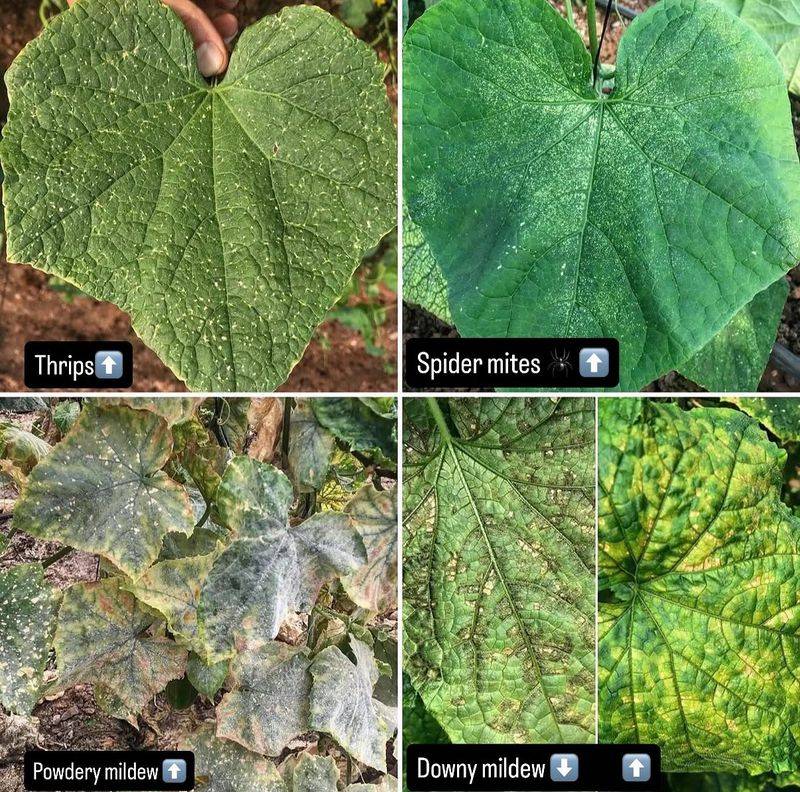
Not every silvery or pale-speckled cucumber leaf has spider mites behind it. UC IPM’s cucurbit pest-damage comparison points out that silverleaf whitefly feeding can cause cucurbit leaves to turn whitish or silver in a way that resembles mite stippling at a glance.
Checking the undersides for tiny white wedge-shaped insects or their flat, scale-like nymphs can help separate this cause from mite damage, since the two problems call for different responses.
Fungal diseases add more complexity. Powdery mildew typically shows up as white, powdery fungal growth on the leaf surface, often starting on older, shaded, or lower leaves.
NC State Extension’s cucurbit powdery-mildew resource describes the powdery coating as the clearest distinguishing feature. Downy mildew behaves differently: it tends to produce pale yellow or green angular lesions that are bounded by leaf veins, and under humid conditions it may show dark, fuzzy sporulation on the underside of those same areas.
NC State Plant Pathology’s downy-mildew diagnostic guidance emphasizes that the angular, vein-bounded shape of downy-mildew lesions is a key clue that separates it from mite stippling.
Thrips feeding, nutrient deficiencies, and chemical injury from herbicide drift or misapplied pesticides can also produce pale, speckled, or distorted leaf tissue that looks superficially similar. Cornell’s cucurbit disease-identification key walks through how different causes produce different patterns, shapes, and locations of discoloration.
Each of these problems requires a different management approach, so applying a mite treatment when a fungal disease or nutrient issue is actually the cause wastes time and may make things worse. When the evidence is genuinely mixed, reach out to your local extension office or send a sample to a university plant-diagnostic lab before treating.
Reduce stress and suppress light infestations first
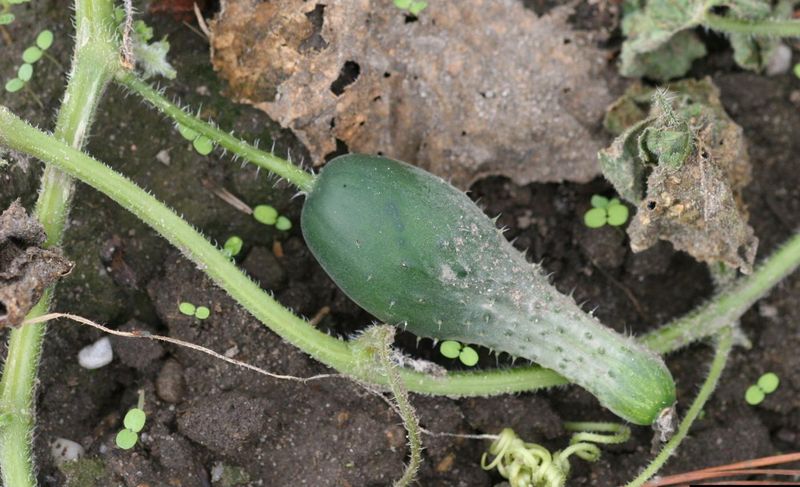
Once the evidence points toward spider mites as the most likely explanation, the lowest-risk first step is addressing plant stress. Consistent irrigation that keeps the root zone evenly moist helps prevent the water-stress conditions that favor rapid mite buildup.
UC IPM’s home-and-landscape spider-mite guidance recommends keeping plants well watered as part of a broader mite-management approach. That said, watering more is not a cure for an established infestation.
Mites already on the plant will not disappear because the soil moisture improved.
A firm spray of plain water directed specifically at the undersides of leaves can dislodge mites and potentially reduce a light infestation. University of Maryland Extension’s mite resource for home gardens describes this physical removal as a useful suppression measure for smaller populations.
The water pressure knocks mites off the leaf surface, and mites that land in the soil generally cannot find their way back to the plant. Repeat this step every few days if mite numbers appear low and the infestation has not spread widely.
Treating this as suppression rather than eradication is the right framing. A heavy, well-established infestation is unlikely to collapse from water sprays alone.
Avoid setting up overhead sprinklers or misting programs as a routine response. UF/IFAS specifically warns that supplementary sprinkler irrigation can delay mite buildup in some situations but also raises the risk of plant diseases by keeping foliage wet for extended periods.
In Florida and Texas, where fungal diseases are already a concern in humid late-summer conditions, prolonged leaf wetness is a trade-off worth taking seriously.
Use labeled contact products with precise timing and coverage
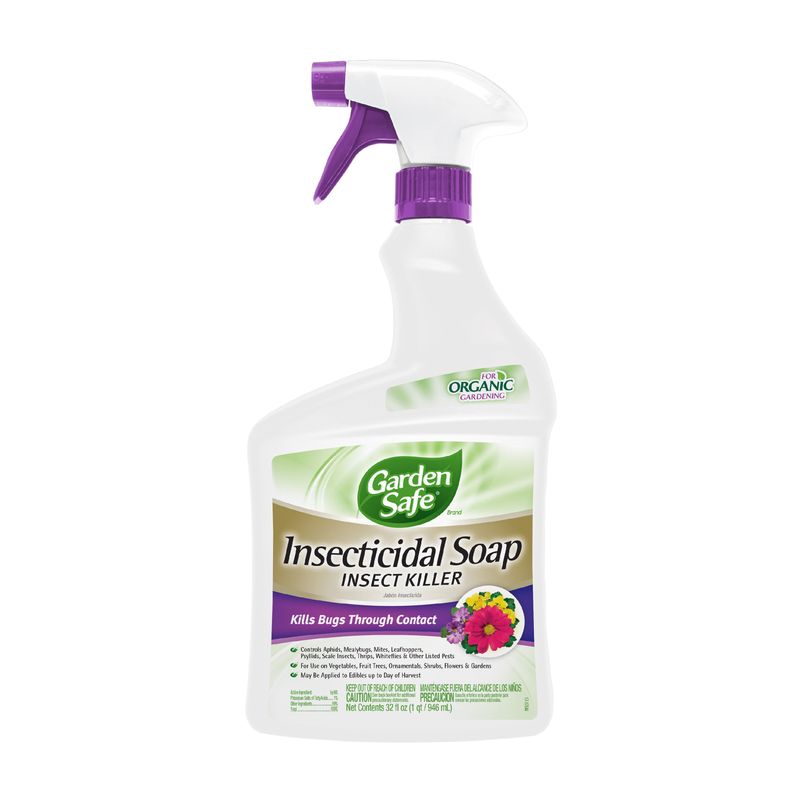
When water sprays and irrigation adjustments are not enough to bring mite numbers down, labeled insecticidal soap or horticultural oil may be appropriate next steps. Both products work by direct contact with the mites, so coverage of the leaf undersides is not optional.
University of Minnesota Extension notes that these materials have little to no residual activity, meaning they kill mites present at the time of application but do not protect against new arrivals. Repeat applications following the label’s reapplication interval are usually necessary.
Label compliance is the non-negotiable starting point. The product’s current label must explicitly allow use on cucumbers.
EPA guidance on reading pesticide labels is direct: using any pesticide in a manner inconsistent with its label is a violation of federal law. Follow the stated rate, observe the pre-harvest interval before picking fruit, and wear any protective equipment the label requires.
Several common mistakes are worth avoiding specifically. Homemade dish-soap mixtures are not a safe substitute for labeled insecticidal soap.
University of Minnesota warns that homemade soap solutions can burn plant tissue in ways that commercially formulated products are designed to avoid. Do not apply oils or soaps to plants that are already water-stressed, and avoid spraying during the hottest part of the day or when temperatures are at their peak.
UC IPM cautions against treating water-stressed plants or applying these materials in very hot conditions because phytotoxicity risk rises sharply. Sulfur-based products carry an additional caution: UC IPM’s agricultural cucurbit guidance warns against sulfur applications when temperatures exceed 95 degrees F, and notes that some cucumber varieties are sulfur-sensitive.
Routine pyrethroid or carbaryl use is not a sound first response to spider mites in a backyard garden. Virginia Cooperative Extension and Alabama Cooperative Extension both describe how some broad-spectrum insecticides can kill the predatory mites and beneficial insects that naturally suppress spider-mite populations, and Alabama Extension notes that pyrethroids have been associated with increased mite reproduction in some situations.
Reaching for a broad-spectrum product first can make the infestation worse, not better.
Keep scouting and preserve natural enemies
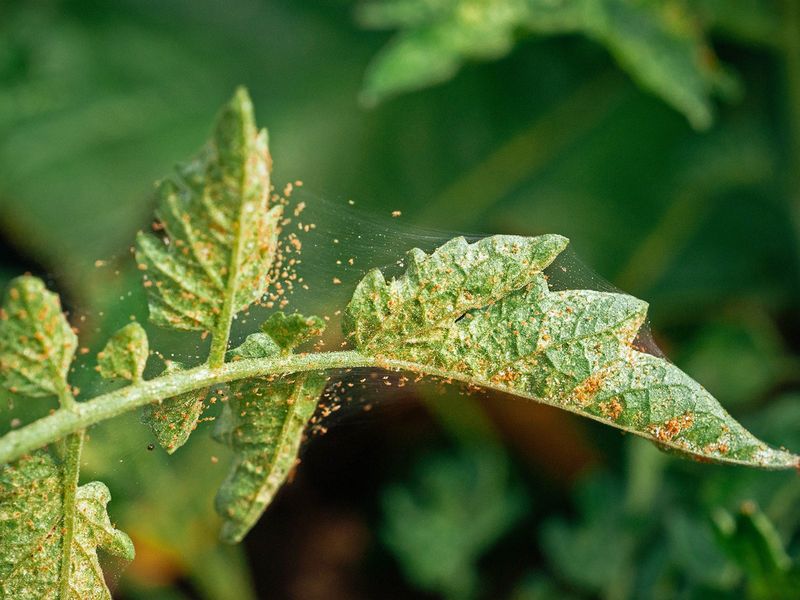
After taking any control step, the way to judge progress is not by looking at already-damaged leaves. Stippled or bronzed tissue will not regain its original color regardless of how well the treatment works.
The more useful thing to watch is whether fresh stippling is appearing on newer growth near the vine tips. Checking every few days, turning leaves over, and looking for active mites, eggs, or new webbing gives a clearer picture of whether the population is still growing or beginning to level off.
Natural enemies play a genuine role in keeping spider-mite populations in check. Predatory mites, predatory thrips, and certain lady beetles feed on spider mites and can suppress populations under the right conditions.
UC IPM’s agricultural cucurbit mite page and Virginia Cooperative Extension both identify these beneficial arthropods as meaningful contributors to natural mite control. Applying broad-spectrum insecticides unnecessarily removes these allies from the garden, which can actually allow spider-mite populations to rebound faster after treatment.
No single treatment threshold applies universally to backyard cucumber vines. Alabama Extension’s vegetable-crop mite guidance mentions figures sometimes used in production systems, but those thresholds are tied to commercial contexts with different equipment, economic pressures, and crop-specific considerations.
For a home gardener with one or two vines, the more practical guide is the overall trajectory: are mite numbers and fresh stippling increasing, holding steady, or declining? Severe damage may not reverse quickly even when control improves, but protecting the healthy canopy still coming in is a realistic and worthwhile goal.
Use a confirm-then-respond decision path
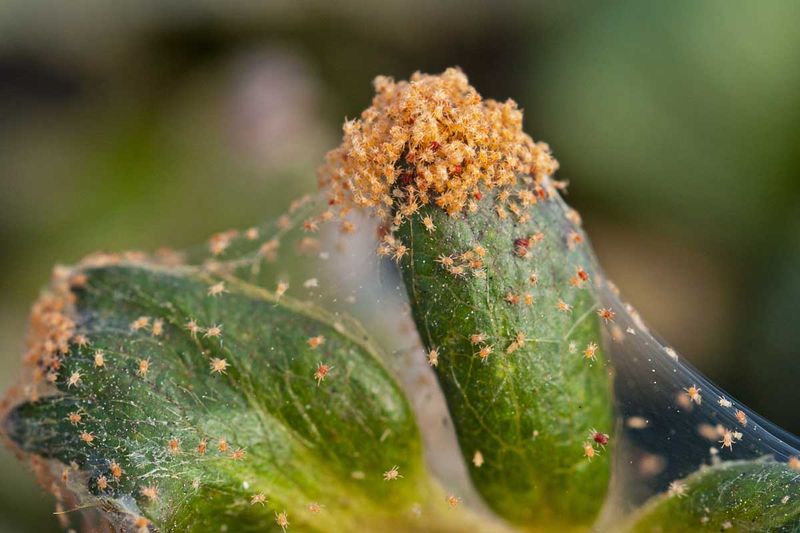
Silvery or speckled cucumber leaves in late summer are a reason to investigate, not an automatic signal to spray. Start by inspecting the leaf undersides for tiny moving specks, eggs, or fine webbing.
Compare the full symptom pattern across the plant and weigh it against the look-alikes covered earlier. Finding mites or webbing on the undersides supports spider mites as the leading working explanation, but it does not guarantee that mites caused every area of discoloration.
University of Minnesota Extension and UC IPM both emphasize direct observation as the foundation of any effective response.
From there, work through the lowest-risk steps first: consistent irrigation to reduce plant stress, followed by targeted water sprays at the leaf undersides for lighter infestations. Move to labeled insecticidal soap or horticultural oil only when the evidence supports it and the label permits cucumber use.
Protect the healthy newer growth still coming in rather than trying to restore leaves that are already damaged. The vines that survive late summer with their newer canopy intact are the ones most likely to keep producing before the season ends.