
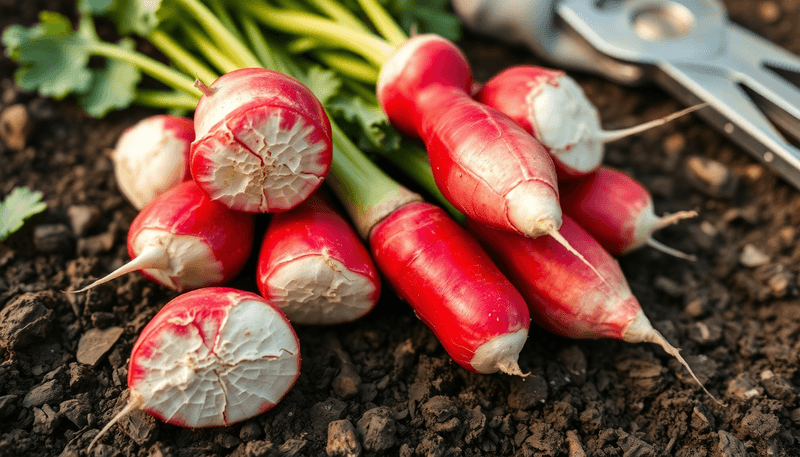
Pulling a radish from the garden only to find it cracked open or tough as a stick is one of the more frustrating surprises in a fall vegetable bed. Gardeners in the South often blame the heat, and warmth does play a role, but the real story involves several stresses working together underground.
Understanding what actually causes splitting versus woodiness helps you protect the next crop instead of repeating the same disappointing harvest.
Split and woody roots signal several stresses, not one heat injury
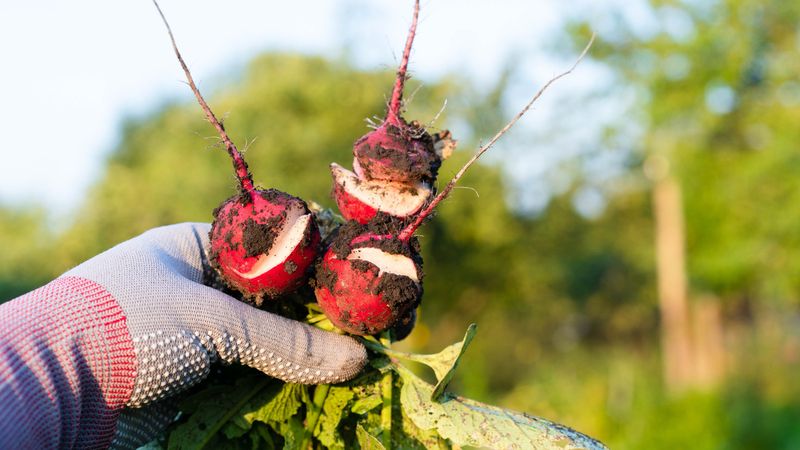
Blame is easy to place on late-summer heat, but split and woody radishes are rarely the result of one single problem. Two distinct symptoms often show up at the same time, and treating them as the same issue makes diagnosis harder.
Splitting refers to the longitudinal cracks that open along the root as it expands, while woodiness describes a tough, fibrous texture that makes the radish unpleasant to eat raw or cooked.
Those two symptoms share some overlapping causes but differ in their most direct triggers. A review of abiotic factors in pre-harvest radish disorders confirms that splitting most strongly reflects rapid or uneven expansion under changing moisture conditions, while woodiness is more commonly tied to heat stress, drought, slow growth, or leaving the root in the ground past its usable stage.
Heat can contribute to both, but it is rarely the whole explanation.
Other factors also belong on the diagnostic list: cultivar susceptibility, compact or rocky soil that restricts root growth, excessive nitrogen that pushes leafy growth at the expense of the root, and secondary disease or insect damage that mimics or worsens the symptoms. Keeping splitting and woodiness distinct gives you a clearer path to the right fix.
The sections that follow work through each stress in turn, so you can match what you are seeing in your garden to the most likely cause.
Warm weather can reduce quality when fall radishes grow out of season
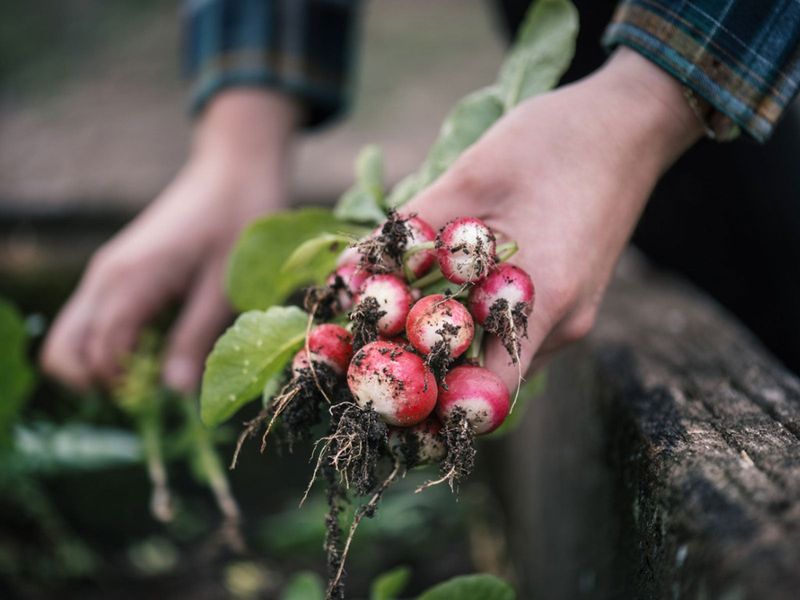
Radishes are a cool-season crop, and they show it quickly when temperatures climb. University of Minnesota Extension guidance on growing radishes notes that radishes thrive in cooler conditions and that warm weather can slow root development, increase pungency, and push plants toward bolting rather than producing a usable root.
When the root does form under warm conditions, the texture is often tougher than roots grown during a genuine cool spell.
Temperature thresholds vary by cultivar and microclimate, so no single number applies everywhere. Oklahoma State Extension notes that radishes can struggle to bulb properly when they mature in very warm conditions, while UF/IFAS lists a cooler optimal range for daikon specifically.
Treat those figures as directional guidance rather than a precise cutoff for every variety you might grow.
Timing also differs significantly across the South. Texas A&M AgriLife Extension points to September as the ideal fall planting month for Central Texas, with harvest running from October through December.
UGA Cooperative Extension lists August 15 through October 15 for Georgia but notes that local temperatures and region affect timing. UF/IFAS recommends September through March for daikon in north Florida and October through March for central and south Florida.
Sowing before your area’s reliable cool-down arrives is one of the fastest ways to end up with poor-quality roots, regardless of how well you manage water or soil.
Small round salad radishes mature in roughly three to five weeks, while daikon and storage types can take several weeks longer and are more sensitive to deep soil preparation, spacing, and cultivar selection. Choosing the right type for your planting window matters as much as choosing the right date.
A dry spell followed by heavy water is the clearest cracking pattern
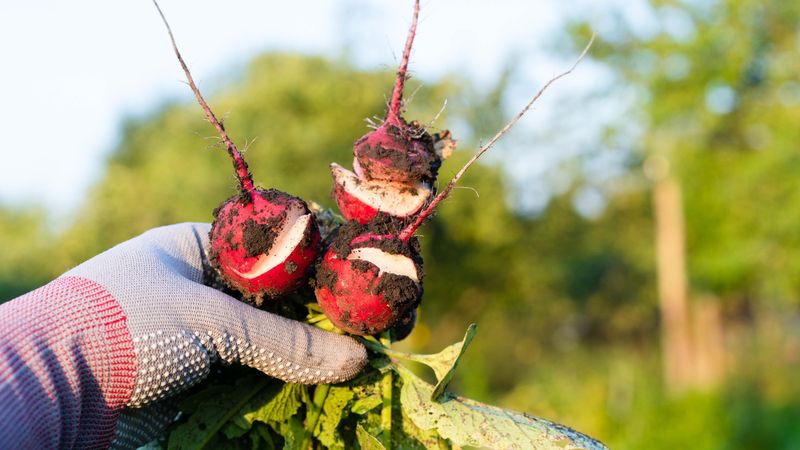
Of all the stresses that can crack a radish root, uneven moisture is the most consistent culprit. The mechanism works like this: during a dry period, the root’s growth slows as the plant conserves water.
When heavy rain or a generous irrigation session follows, the inner tissues of the root take up water and expand quickly, faster than the outer skin can stretch. The result is a longitudinal crack running along the root’s length.
UMN Extension irrigation guidance for vegetables identifies root enlargement as a critical period for consistent watering, recommending deep watering when rainfall is insufficient rather than frequent shallow applications. The risk of cracking rises sharply when the bed swings from bone-dry to saturated during this stage.
Leaving roots in the ground past their usable size adds to the risk because a larger, more mature root has had more time to experience these moisture swings.
A common mistake is overcorrecting after noticing dry soil by flooding the bed. Saturated soil creates its own problems: poor oxygen levels in the root zone, surface crusting that can harm seedlings in the next sowing, increased disease pressure, and, in some cases, additional cracking rather than less.
UF/IFAS guidance on daikon cultivation reinforces the value of adequate drainage alongside consistent moisture. The practical target is steady, even moisture with a well-drained bed, not alternating extremes in either direction.
Woodiness develops when heat, stress, or harvest delay lowers eating quality
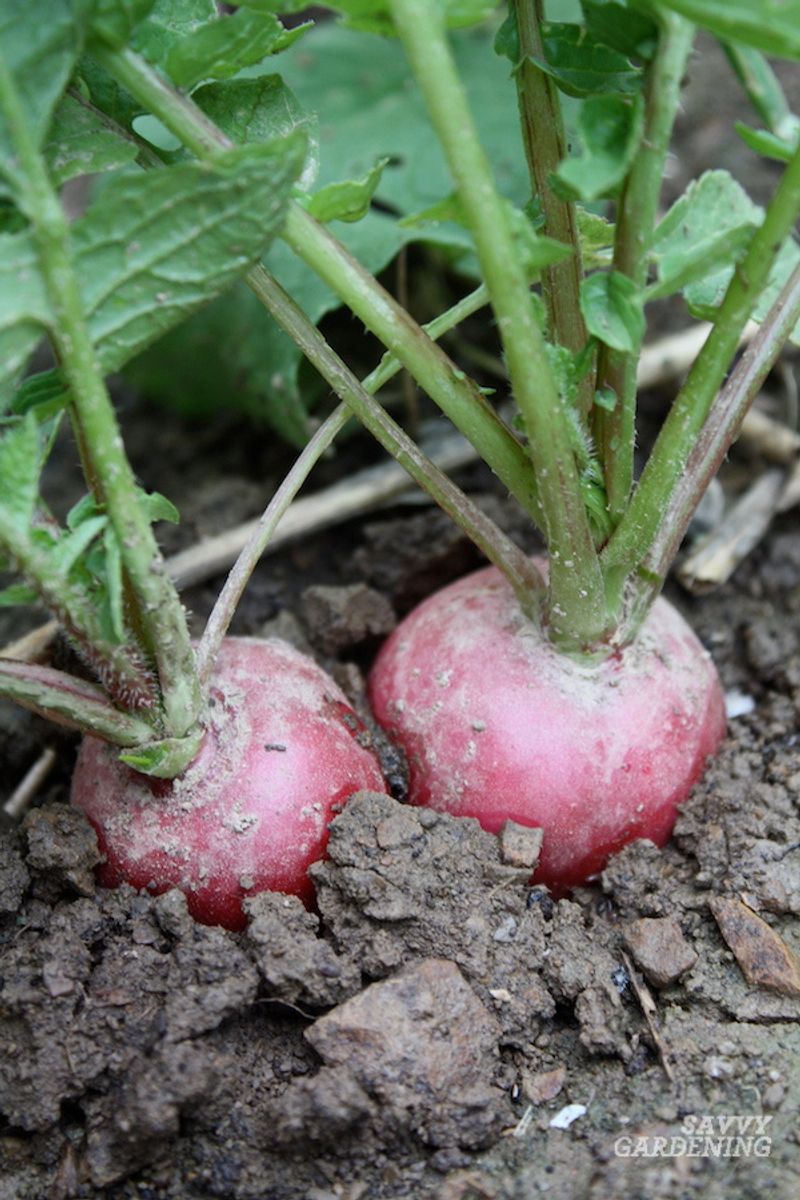
A tough, woody radish is a different problem from a cracked one, and the fix starts with understanding what caused the texture change. Heat and drought can slow root growth to the point where the root develops more fibrous tissue than water-rich cells, producing a dense, chewy interior that no amount of cooking fully corrects.
Slow growth under stress essentially gives the root time to toughen before it reaches usable size.
Leaving roots in the ground too long is one of the most common contributors to woodiness that gardeners can directly control. UMN Extension notes that small garden radishes are often ready within three to five weeks and that staying in the ground beyond their usable window produces fibrous texture, stronger flavor, and a greater chance of cracking.
Daikon varieties have longer maturity windows but are not immune to the same over-maturity problem if left unattended.
Seed-packet maturity dates are useful starting points, not guarantees. Cultivar, root size, soil temperature, and seasonal conditions all shift the real harvest window.
A radish maturing in cooler fall weather may take slightly longer than the packet suggests; one pushed through warm late-summer soil may reach edible size faster but deteriorate quickly if not pulled. The better approach is to check roots by gently brushing soil away from the top of the root as it approaches the expected size, then harvesting promptly rather than waiting for maximum diameter.
Early pulling beats a woody, pithy root every time.
Prepare loose soil and balanced fertility before sowing again
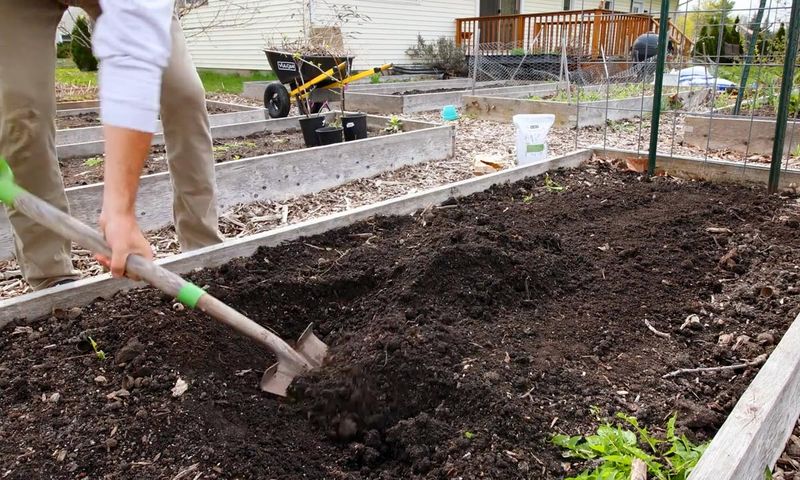
Good soil preparation before sowing is one of the most reliable ways to avoid malformed, split, or woody radishes in the next crop. Radish roots need room to expand evenly, and anything that restricts that expansion, whether rocks, clods, heavy clay, or compacted layers, can produce forked, rough, or misshapen roots that are more prone to quality problems.
For small round radishes, loosening the top several inches is usually enough. Daikon and storage types, which can grow a foot or more in length, need deeper preparation, sometimes twelve inches or more depending on the variety.
Spacing matters just as much as soil texture. Crowded plants compete for space underground, and the roots that result are often poorly formed.
UMN Extension recommends roughly 2 inches between ordinary radishes and 4 to 6 inches for larger daikon types; UGA’s fall planting chart lists approximately three-quarters to one inch between radish plants within rows spaced 8 to 12 inches apart. When recommendations differ across sources, follow the spacing on your variety’s seed packet since cultivars vary in root width.
UF/IFAS specifically advises against fresh manure for daikon because the high nitrogen content can stimulate unwanted lateral root branching. Excessive nitrogen from any source can push leafy top growth at the expense of clean root development.
Research on pre-harvest physiological disorders in radish also associates high nitrogen or organic fertilization with cracking under some conditions. If you suspect a nutrient deficiency such as low calcium or boron is contributing to problems, run a soil test before applying anything.
Blanket applications of lime, gypsum, calcium, or boron without a confirmed deficiency are not supported as a reliable fix and can create new imbalances.
Stabilize the current crop without expecting damaged roots to recover
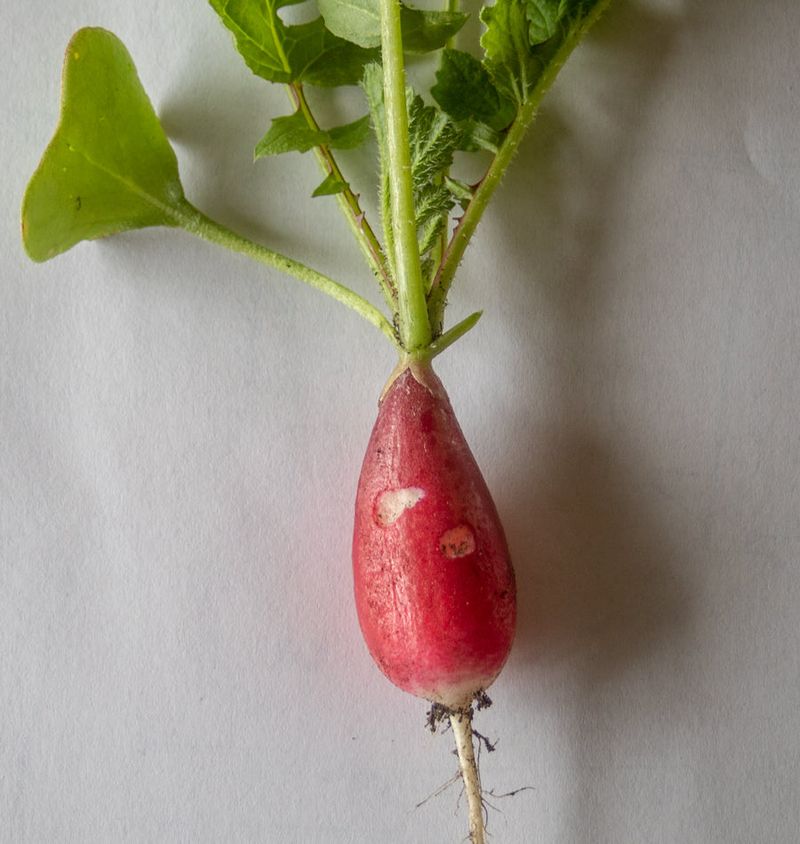
When a bed is already showing split or woody roots, the most useful action is an honest assessment of what you can still save and what needs to go. Start by checking soil moisture at root depth, pressing a finger several inches into the bed or using a soil moisture meter.
If the soil is dry well below the surface, water thoroughly at the root zone rather than applying a light sprinkle across the top. UMN Extension irrigation guidance recommends deep watering when rainfall is insufficient, targeting the root zone rather than the foliage.
How often you water depends on soil texture, whether you are growing in containers or ground beds, recent rainfall, and current temperatures. Sandy soils dry faster than clay-heavy ones.
Morning watering at soil level is generally preferable because it reduces the time foliage stays wet, which can lower disease pressure. There is no universal schedule that works across every Southern garden, so use soil condition as your guide rather than a fixed number of days between waterings.
Before assuming moisture is the only issue, look closely at the cracks themselves. UMN Extension’s radish root diagnosis tool notes that rough, corky cracks paired with leaf spots or fuzzy growth on the foliage may indicate a disease such as downy mildew rather than ordinary moisture cracking.
Tunnels or holes in the root flesh point toward root-feeding insects like wireworms or other soil-dwelling larvae instead. Those problems need different responses than a simple irrigation adjustment.
One point is worth stating plainly: once a root has become woody or split, changing your watering habits will not restore its texture or close the cracks. The intervention at that stage is to harvest roots that are still usable and focus improvements on the next planting.
Use sound roots promptly and reset the next planting window
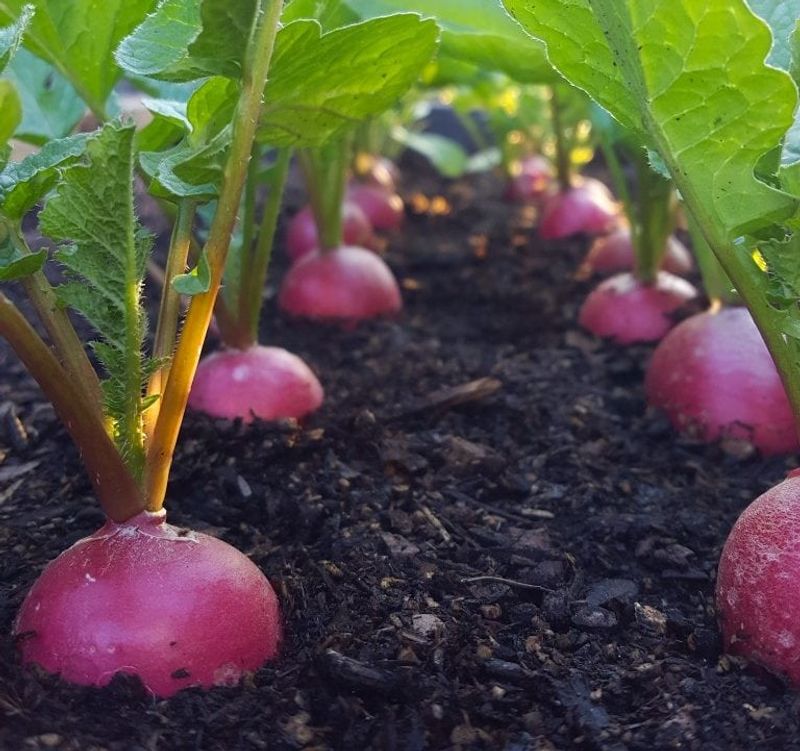
Cracking in a radish root primarily reduces quality and shortens storage life. Cracks can also create openings for secondary fungal or bacterial infections that make the root unsafe to eat, but a crack alone does not automatically make a radish poisonous, nor does a firm, clean appearance confirm that it is safe to store.
The two questions, edibility and storability, are separate.
A lightly cracked root that is firm throughout, free of soft spots, and shows no slime, mold, foul odor, or discoloration can be used promptly as a cautious quality judgment. Prompt use is the key phrase; cracked roots should not go into long-term storage where deterioration can progress unnoticed.
Research on pre-harvest physiological disorders in radish documents how cracks create pathogen entry points that reduce storage potential. Discard any root with soft rot, slime, foul odor, deep deterioration, mold, or any feature that raises doubt.
When in doubt, throw it out.
The repeatable prevention sequence for the next sowing is straightforward: choose a planting date that aligns with your local cool-season window rather than the calendar date another region uses, select a cultivar suited to your fall conditions, prepare loose and well-drained soil to the appropriate depth, thin seedlings to the correct spacing for your variety, maintain reasonably even root-zone moisture while avoiding saturation, skip fresh manure and excess nitrogen, and pull roots at usable size rather than waiting for maximum growth. UMN Extension’s radish growing guide sums it up well: radishes reward attentive, timely care more than any single correction applied after problems appear.
A well-timed harvest is still the most dependable quality insurance you have.