
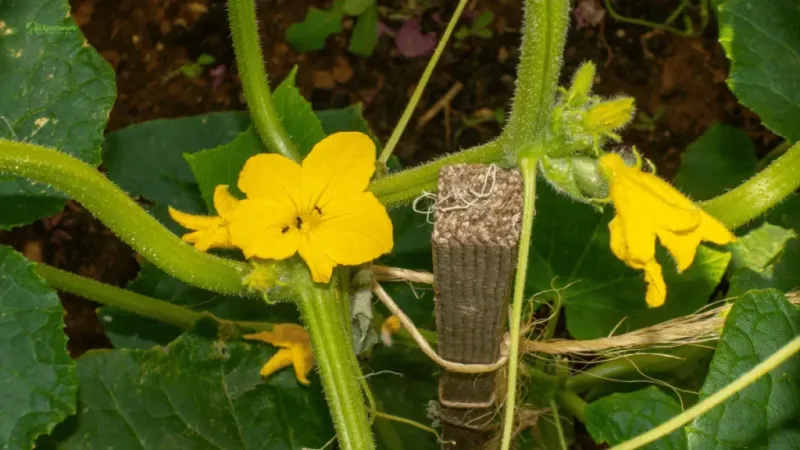
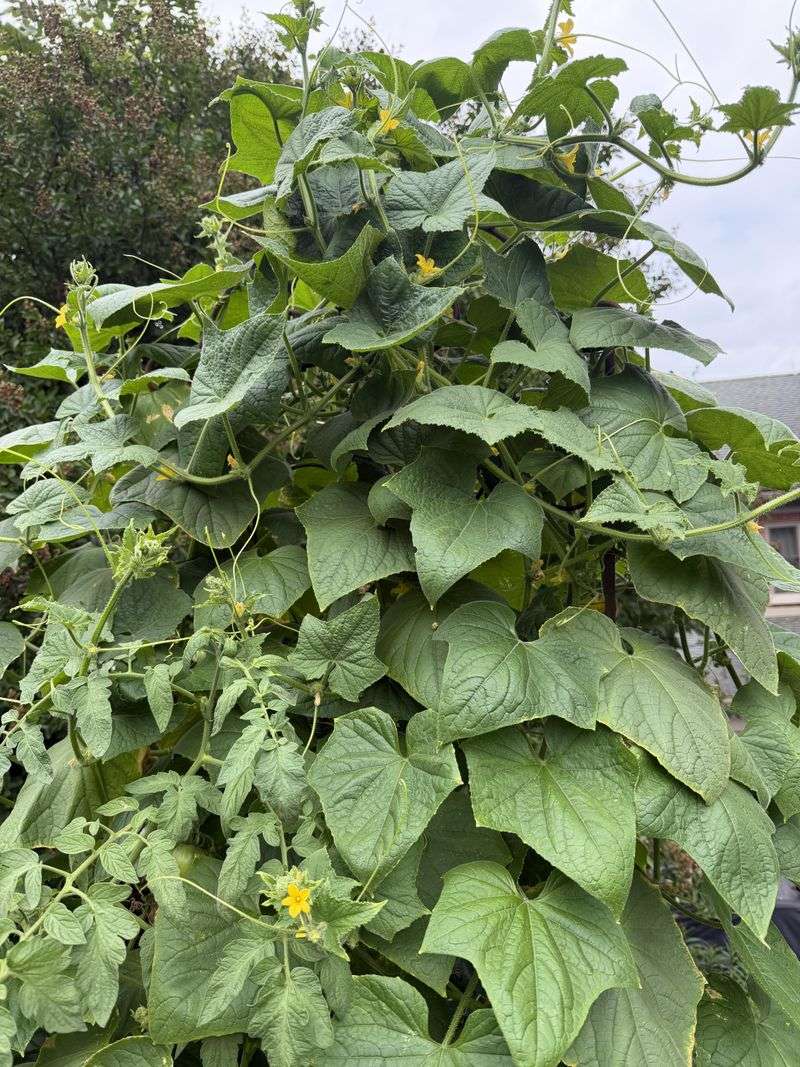
You step outside on a sweltering August morning, and your cucumber vines are absolutely loaded with yellow blossoms – yet not a single cucumber is forming. That gap between flowering and fruiting is one of the most frustrating puzzles a Southern gardener can face, especially when you planted specifically for a fall harvest.
Late-summer heat can play a role, but it is rarely the whole story, and the fix depends on figuring out which part of the process has broken down.
Start by checking whether the blossoms can make cucumbers
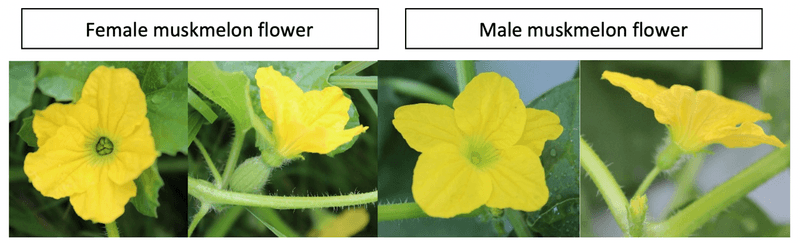
Before blaming heat or bees or anything else, grab a closer look at those flowers. University of Minnesota Extension guidance on growing cucumbers explains that female flowers carry a small, swollen bump directly behind the petals – that bump is the immature cucumber itself.
Male flowers sit on a slender, straight stem with no such swelling at the base. Only female flowers can develop into fruit, so a vine covered entirely in male flowers will not produce cucumbers no matter how many blossoms open.
The timing of flower types matters, too. University of Georgia Extension’s cucumber production guide notes that male flowers commonly appear first and naturally drop after opening, which is completely normal.
A gardener who checks the vine during this early-male phase may see dozens of blossoms falling off and assume something is terribly wrong, when the plant is simply following its natural sequence.
Check your flowers in the morning, when they are freshest and most clearly formed. Count how many have the swollen ovary and how many do not.
If nearly every flower is male, the primary issue is flower-sex expression rather than pollination failure, and hand-pollination will not help until female flowers arrive. This single observation is the most important diagnostic step you can take before doing anything else.
Heat can disrupt fruit set in several ways
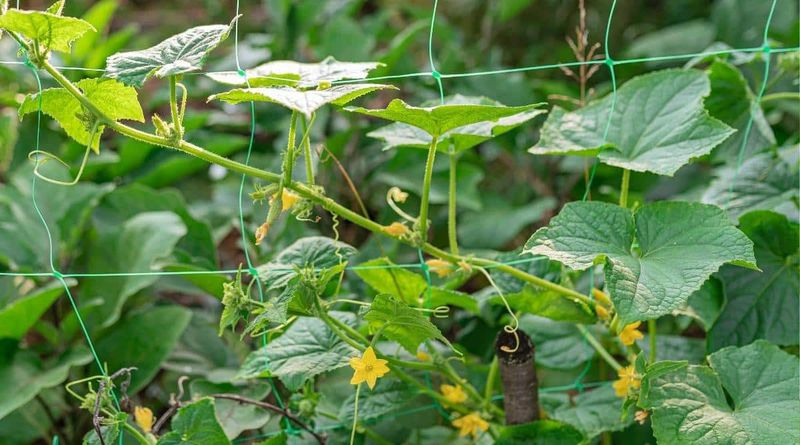
Standard cucumbers are monoecious, meaning they produce separate male and female flowers on the same plant, and they generally depend on bees and other insects to carry pollen from one flower to the other. Penn State Extension’s cucumber pollination resource confirms that without adequate insect-mediated pollen transfer, flowers may abort or produce small, misshapen, or undeveloped fruit.
Excessive heat can interfere with this process through several different pathways. University of Minnesota Extension’s guide on heat effects in the vegetable garden describes reduced pollinator activity during very hot weather, along with pollen damage and increased flower abortion.
Texas A&M AgriLife Extension identifies hot temperatures as a possible cause of pollen damage, while also noting that poor fruit set can result from insufficient bee visits, timing mismatches between male and female flowers, flower abortion, or plant stress.
A peer-reviewed study on cucumber heat responses found that high temperature can suppress female-flower formation, though the degree of impact varies considerably by genotype. No single temperature acts as a universal cutoff for every cultivar or every Southern location – night temperatures, humidity, drought, reflected heat from pavement, plant age, and how long the heat lasts all factor in.
Heat is a credible and common contributor to poor fruit set in late-summer cucumbers, but it is a starting hypothesis, not an automatic verdict.
Use a morning inspection to test whether pollination is limiting fruit set
Morning is the right time to run your inspection. Cucumber flowers open early and are most receptive to pollination in the first few hours after sunrise, and pollinators tend to be most active during that cooler window.
Walk the vine slowly and watch for bees, bumble bees, or other insects moving between flowers. Note whether female flowers have tiny fruitlets forming behind them, and then track those fruitlets over the next day or two.
UF/IFAS guidance on garden pollination points out that fruitlets that yellow, shrivel, and drop shortly after the flower closes are a sign that pollination may not have been completed successfully. University of Minnesota’s vining vegetable growing guide also describes how inadequate pollen transfer can produce aborted, undersized, or misshapen fruit.
That said, Penn State’s high-tunnel cucumber guide is clear that fruit abortion is not proof of pollination failure on its own. Environmental stress, moisture problems, disease, and root damage can all cause a plant to drop developing fruit even when pollination occurred.
The morning check helps you build evidence: if female flowers are present, if bees seem absent or rare, and if multiple fruitlets are consistently shriveling, hand-pollination becomes a reasonable next move.
Try hand-pollination as a practical diagnostic
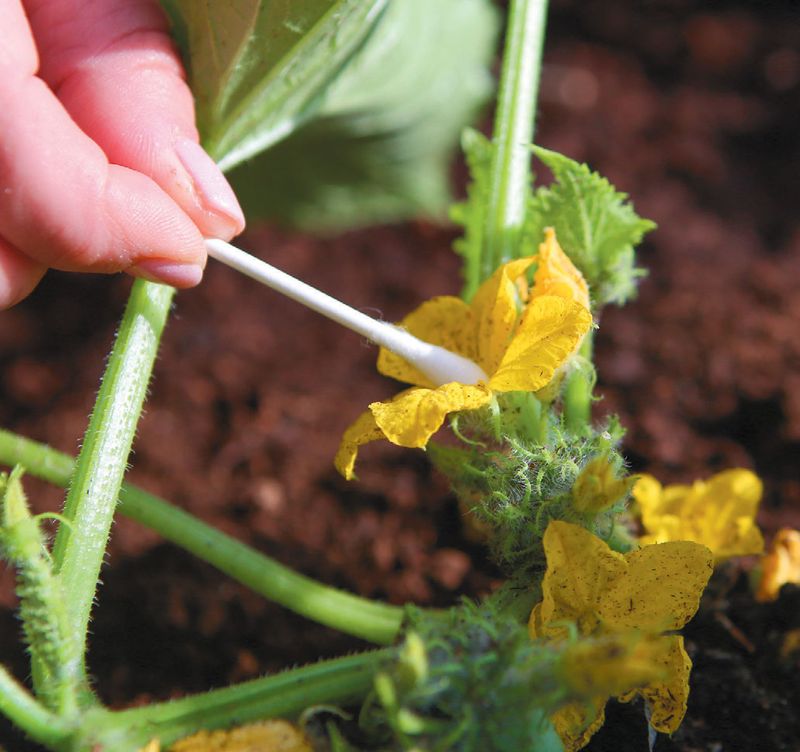
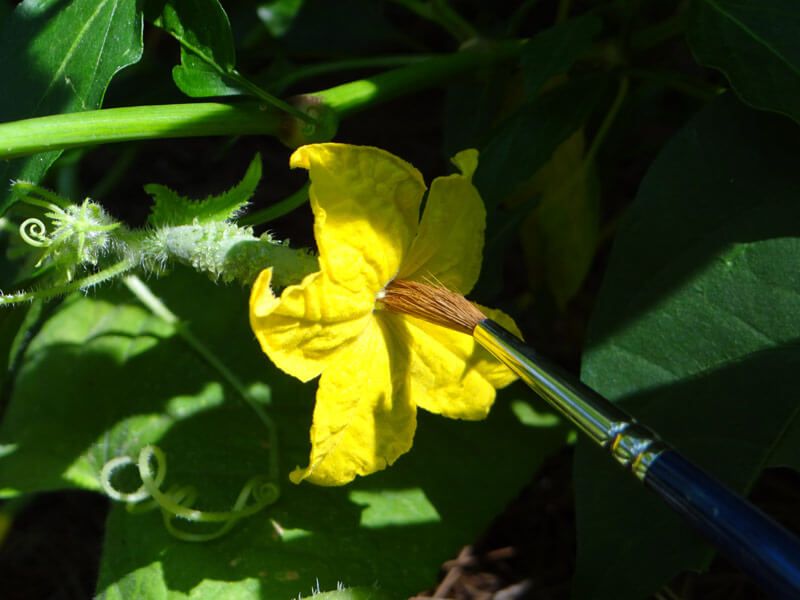
Hand-pollination works best as a test and a rescue measure, not a guarantee. Gather a small, clean paintbrush or cotton swab – or simply pick a freshly opened male flower and use it directly.
UF/IFAS pollination guidance recommends working in the morning when flowers are newly opened and pollen is most viable.
Gently brush or press the tip of your tool against the yellow anthers inside a male flower to pick up pollen, then carefully dab that pollen onto the sticky stigma at the center of a freshly opened female flower. Use cucumber pollen on cucumber flowers only.
Ask Extension’s hand-pollination resource advises selecting flowers that opened that same morning for the best results, since older flowers lose receptivity quickly in warm weather.
Over the next several days, watch the tiny cucumber behind the flower you treated. Continued, steady enlargement is a good sign that development is underway.
Shriveling and yellowing within 48 to 72 hours suggests that something beyond pollen transfer – heat, drought, disease, root damage, or a cultivar-specific behavior – is still interfering. West Virginia University Extension’s pollinator activity guide reinforces that hand-pollination is a useful tool but cannot create female flowers where the plant is producing none, and it will not override the other stresses that cause fruit to abort.
Stabilize moisture and avoid adding new stress
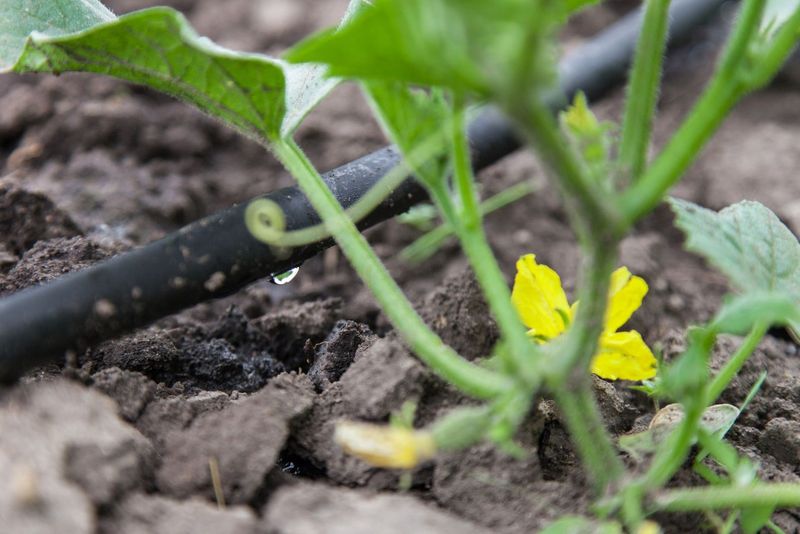
Consistent soil moisture is one of the most controllable factors during cucumber flowering and early fruit development. University of Georgia Extension’s cucumber guide connects moisture stress directly to reduced yield, fruit abortion, and misshapen cucumbers.
Letting plants wilt repeatedly between waterings during this critical window puts the whole fruit-set process at risk, even when pollination is working fine.
Water at the root zone rather than overhead, and water deeply enough that the soil stays reasonably uniform between sessions rather than cycling through wet and bone-dry extremes. Texas A&M AgriLife Extension and Oklahoma State University Extension’s cucumber production fact sheet both highlight the importance of steady moisture for cucurbit production in hot-weather regions.
A 2-to-3-inch layer of organic mulch over the root zone slows evaporation and buffers soil temperature swings, which helps keep the plant from experiencing repeated heat and drought spikes at the roots.
Two shortcuts are worth avoiding. Wetting foliage as a way to cool the plant is not supported by the available guidance and can increase the risk of fungal disease when leaves stay damp.
Shade cloth can reduce heat load in some protected settings, but Utah State University Extension’s high-tunnel production guidance makes clear that excessive shade reduces plant growth and flowering, so it is not a universal fix for every outdoor cucumber planting. Focus first on what you can control directly: reliable root-zone moisture and a good mulch layer.
According to UGA Extension’s integrated pest management guide, keeping plants as stress-free as possible also reduces vulnerability to secondary problems.
Rule out cultivar, nutrition, disease, and insect problems
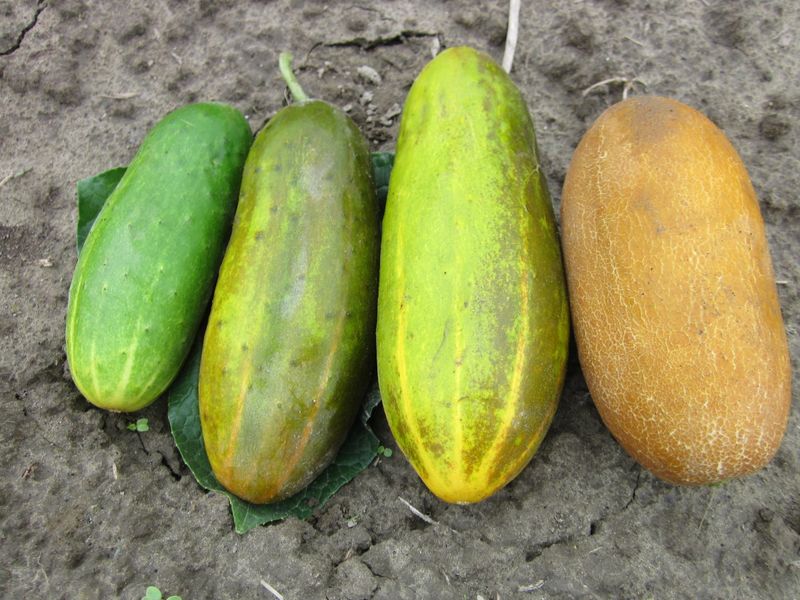
Not every no-fruit cucumber vine has a pollination problem. Before concluding that heat or bees are to blame, check the plant itself for other explanations.
Penn State’s high-tunnel cucumber guide notes that fruit abortion can result from environmental stress, disease, root damage, or insect injury even when pollination has occurred normally. Look for cucumber beetle feeding on leaves and flowers, signs of fungal disease on foliage, or stunted root growth from compacted soil or overwatering.
University of Minnesota Extension lists excessive fertilization as one possible cause of poor yields, and UGA Extension’s Murray County blog echoes that excess nitrogen can push the plant toward lush foliage at the expense of fruit production. A soil test is a far safer first step than adding fertilizer based on symptoms alone.
Cultivar choice also matters more than many gardeners realize. Penn State Extension’s cucumber pollination resource and UF/IFAS cucumber variety guidance explain the distinction clearly: parthenocarpic cucumbers can develop fruit without any pollination and are often used in protected growing environments, while gynoecious cucumbers produce mostly female flowers but may still require a compatible pollen-producing companion variety unless the cultivar is also parthenocarpic.
These two traits describe different things and should not be treated as interchangeable. If you planted a gynoecious variety without a pollinizer and your garden has no other cucumbers nearby producing male flowers, the vine may have plenty of female blossoms and still set no fruit.
Hand-pollination cannot solve a cultivar mismatch or correct disease and insect damage already affecting the plant.
Protect the pollinators already working in the garden
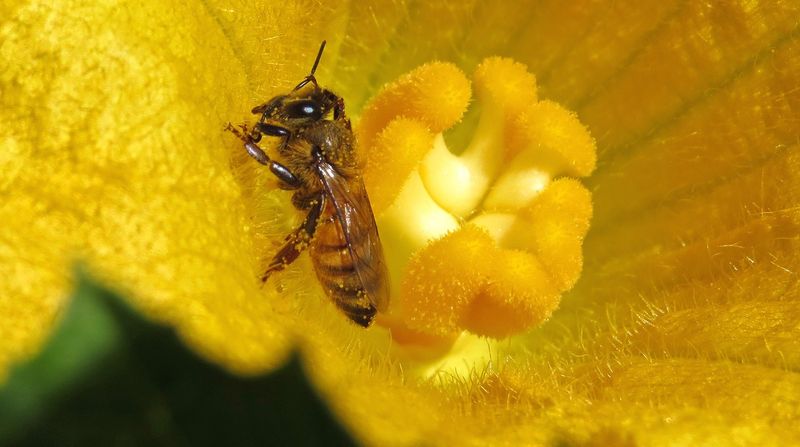
Before reaching for any spray, spend a few mornings watching who actually visits your cucumber flowers. Honey bees, bumble bees, squash bees, and other wild insects may already be working the patch.
Penn State Extension makes the point that home gardens are often already served by existing bee populations, and buying or introducing bees is not an automatic remedy for poor fruit set. The appropriate response depends on what you actually observe visiting the flowers.
If you do need to treat for a pest problem while cucumbers are flowering, timing and product choice matter. Utah State University Extension’s pollination guide advises against spraying insecticides directly on open flowers or while bees are actively foraging.
When treatment becomes necessary, follow the product label precisely, choose the least hazardous effective option available, and follow all required precautions. The label is the legal document and the controlling guide for application.
UGA Extension’s integrated pest management resource also cautions that some residues and systemic products can pose risks beyond the spray window, so avoiding open-bloom applications whenever possible is the most protective approach for the pollinators that your crop depends on.
Choose the next planting for its cultivar and local season
Getting ahead of the problem starts at the seed rack. Read cultivar descriptions carefully before buying.
Penn State’s high-tunnel cucumber guide clarifies that a parthenocarpic variety sets fruit without pollination, while a gynoecious variety produces mostly female flowers but may still need a pollen-producing companion unless it is also parthenocarpic. Knowing which type you have before planting prevents confusion later when flowers appear but fruit does not.
Timing is equally location-specific. UF/IFAS planting guidance for Florida extends outdoor cucumber windows into August and September in parts of the state, and Texas A&M AgriLife’s small-acreage cucumber guide recognizes both spring and fall cucumber seasons for Texas growers.
A late-summer planting can be reasonable in both states, but the crop still needs enough warm growing time to reach productive flowering before cold weather or disease pressure ends the season. UGA Extension’s fall vegetable gardening guide reinforces that timing windows in the South vary by location and year, so checking local frost dates and disease calendars is worth the effort.
The decision path for this season and the next is straightforward: confirm that female flowers are present, observe morning pollinator activity, hand-pollinate a few eligible flowers as a test, keep soil moisture steady, protect the insects already visiting your vines, and investigate other stresses if fruit still fails to develop. A vine full of blossoms is telling you the plant wants to produce – your job is to find which step in the chain is missing.