
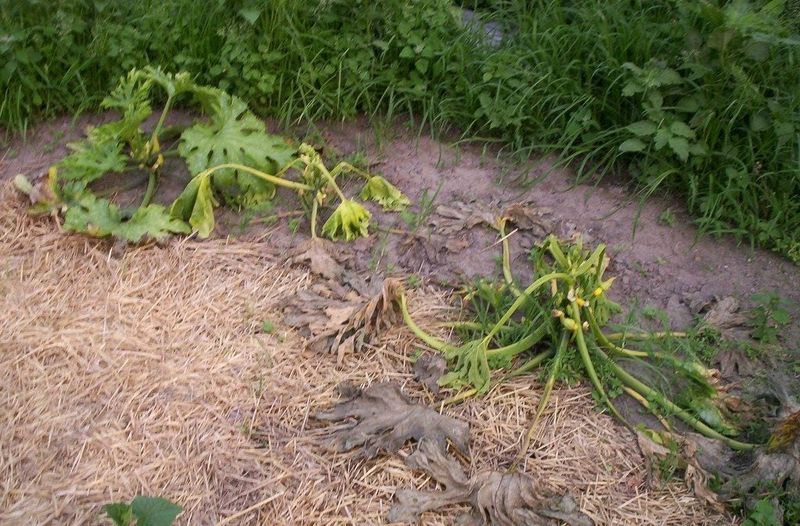
Few things are more alarming than walking out to your garden on a hot August morning and finding your squash or zucchini plants collapsed flat, even though the soil is soaking wet. Many Southern gardeners immediately reach for the hose, but adding more water will not fix a stem blocked by a borer larva or a plant poisoned by bacterial wilt.
Wet soil does not guarantee that your plant can actually move that water where it needs to go. Knowing why the wilt happened, and which crop you are growing, is what determines your next step.
Use the morning check as a clue, not a verdict
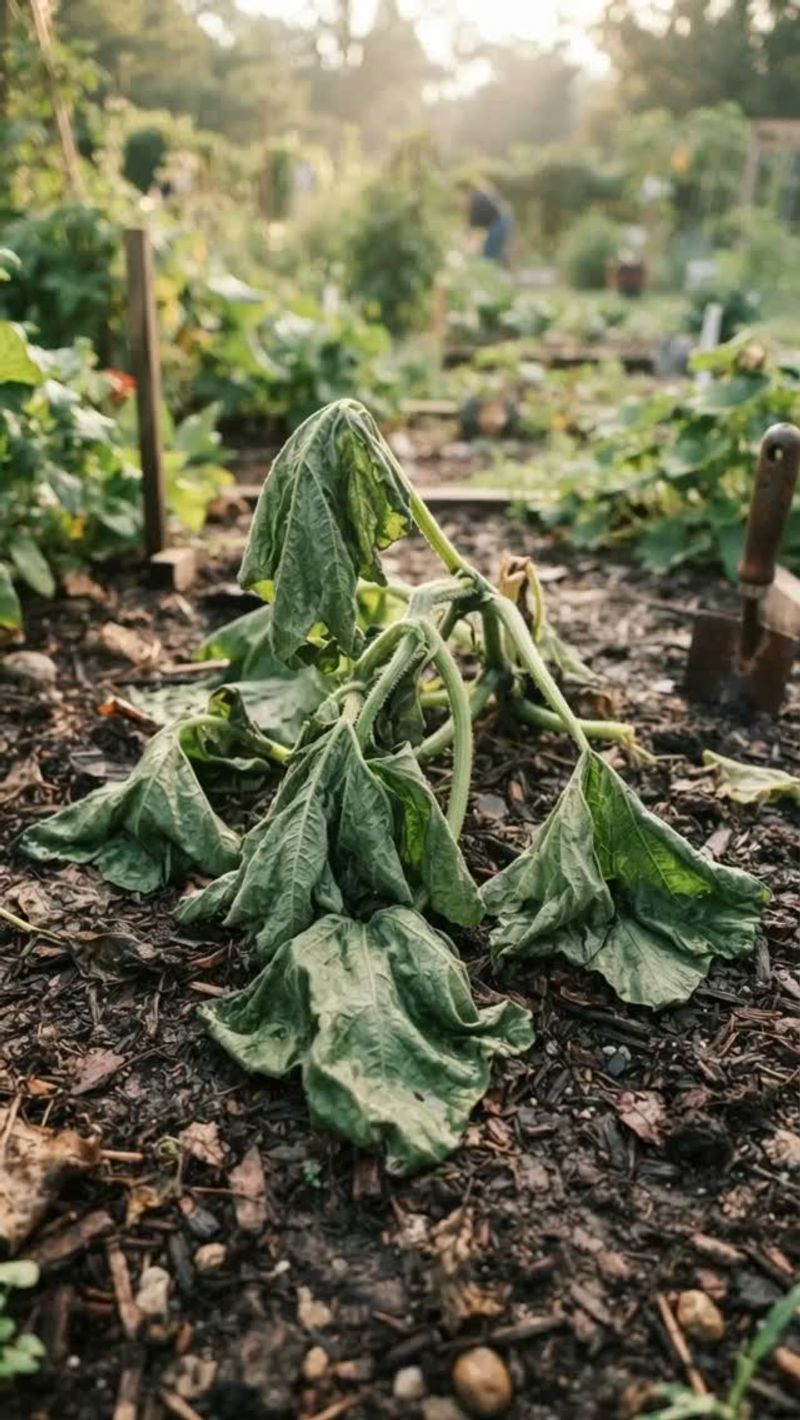
Squash plants can wilt for reasons that have nothing to do with how much water is in the soil. Damaged vascular tissue, dying roots, or a larva tunneling through the crown can all prevent a plant from moving available moisture upward, even when the ground feels wet or soggy to the touch.
The best first step is a two-part observation. Check the plant during the hottest part of the afternoon, then go back the next morning before temperatures climb.
University of Minnesota Extension guidance on heat stress notes that cucurbit leaves can wilt during very hot afternoons even when soil moisture is adequate, then recover as temperatures cool overnight. If the plant has fully perked up by morning, heat stress is a reasonable possibility.
However, morning recovery does not confirm heat as the only cause. Early bacterial wilt can also cause daytime wilting followed by apparent overnight recovery, only to worsen over the following days.
Minnesota Extension’s bacterial wilt resource describes how wilt may begin in individual leaves or runners before spreading through the whole plant.
Persistent morning wilt means something is preventing the plant from using the water around it. Before adding more water, crouch down and examine the lower stem and crown.
The morning check helps narrow the possibilities, but it does not replace a hands-on inspection of the crop itself.
Match the likely cause to the crop you planted
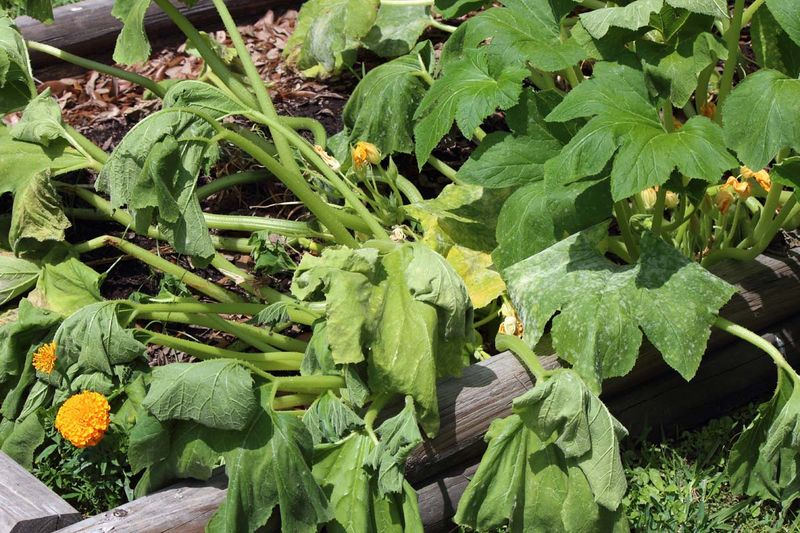
Not every cucurbit faces the same threats, and starting with the right suspect for your specific crop saves time and prevents misdiagnosis. The crop you planted is one of the most useful clues you have before you even touch the plant.
Summer squash, zucchini, pumpkins, and some winter squash are the primary targets of squash vine borer. University of Minnesota Extension’s squash vine borer page confirms that cucumbers and melons are rarely or much less commonly attacked, making borer a lower priority when those crops collapse.
If you grow cucumbers or muskmelons and see sudden wilt, bacterial wilt deserves more of your attention from the start.
Bacterial wilt, caused by the bacterium Erwinia tracheiphila and spread by cucumber beetles, is especially damaging in cucumbers and muskmelons. Squash and pumpkins can be affected, but the disease is generally less severe in those crops.
UF/IFAS Extension’s squash vine borer publication reinforces that host preference matters when building a diagnosis.
Even with a clear host match, persistent wilt still has a broader list of possible causes. Root or crown rot, nematodes, squash bugs, vascular diseases, and herbicide injury can all produce overlapping symptoms.
Oklahoma State Extension’s cucurbit disease guide is a useful reminder that no single timing pattern by itself identifies the cause. Use the crop as your starting point, then inspect the plant for physical evidence before settling on an explanation.
Inspect the crown for squash vine borer evidence
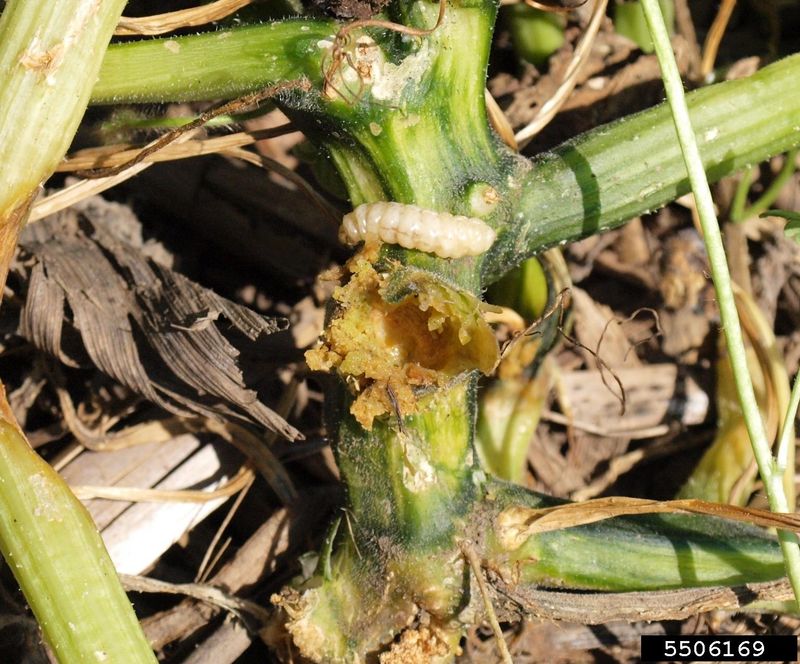
Squash vine borer larvae do their damage from the inside out. The adult moth lays eggs near the base of susceptible plants, and once the larvae hatch they tunnel into the lower stem or crown, chewing through the tissue that carries water and nutrients upward.
The surrounding soil can be perfectly moist and the roots still alive, yet the plant collapses because the pipeline is blocked.
The place to look is the point where the plant emerges from the soil. Kneel down and examine the crown and the first few inches of the main stem carefully.
The most telling sign is a small entry hole, often no bigger than a pencil tip, surrounded by moist greenish, orange, or sawdust-like material called frass. University of Minnesota Extension describes this frass as one of the strongest physical clues that a larva is present.
Wilt that begins or worsens during strong sun and then fails to fully recover is another pattern worth noting, though not by itself diagnostic.
Southern gardeners need to keep squash vine borer on their radar for a longer stretch of the calendar than gardeners in northern states. UF/IFAS Extension reports that adult moths in Florida can be active from roughly mid-May through late October, and southern states may experience two overlapping generations in a single season.
That means a fall squash planting in Florida or Texas can face borer pressure well into the season, unlike a single summer window farther north.
A hole with frass is strong evidence, but treat it as a strong clue rather than a closed case. Consider the full picture: the crop, the timing, and the pattern of decline together.
Look for the cucumber-beetle pattern behind bacterial wilt
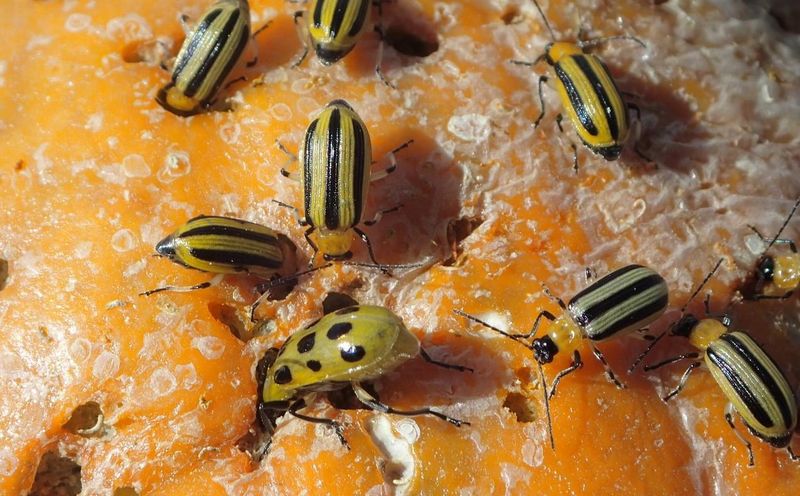
Bacterial wilt follows a different pathway than squash vine borer, and recognizing its pattern early matters most on cucumbers and muskmelons, where the disease can move fast. The bacterium Erwinia tracheiphila does not arrive on its own.
It travels inside striped and spotted cucumber beetles, which deposit it into plant tissue while feeding on leaves and stems.
Early wilt from bacterial wilt often starts in one leaf or a single runner rather than collapsing the whole plant at once. That runner may droop during the day and partially recover overnight, mimicking heat stress, before the wilt spreads progressively to more of the plant.
Minnesota Extension’s bacterial wilt overview describes this gradual progression and notes that the disease is generally more serious in cucumbers and muskmelons than in squash or pumpkins. If you also notice small yellow-and-black striped or spotted beetles actively feeding on your plants, that beetle activity raises the suspicion further.
A cautious field test can add a piece of evidence, though not a definitive answer. Cut a wilted stem close to the crown, press the two cut surfaces together firmly, then slowly pull them apart.
Thin, thread-like bacterial strands stretching between the surfaces may support a bacterial wilt diagnosis. However, a negative result does not rule the disease out, because the strands can be difficult to see and the test is not perfectly reliable.
Minnesota Extension’s cucumber beetle resource provides helpful context on beetle identification alongside the disease they carry.
When the pattern is ambiguous after the stem test and beetle check, do not guess. Submit a plant sample to a university or state plant-disease diagnostic service for a more reliable answer.
Keep wet soil, root damage, and heat stress in the differential
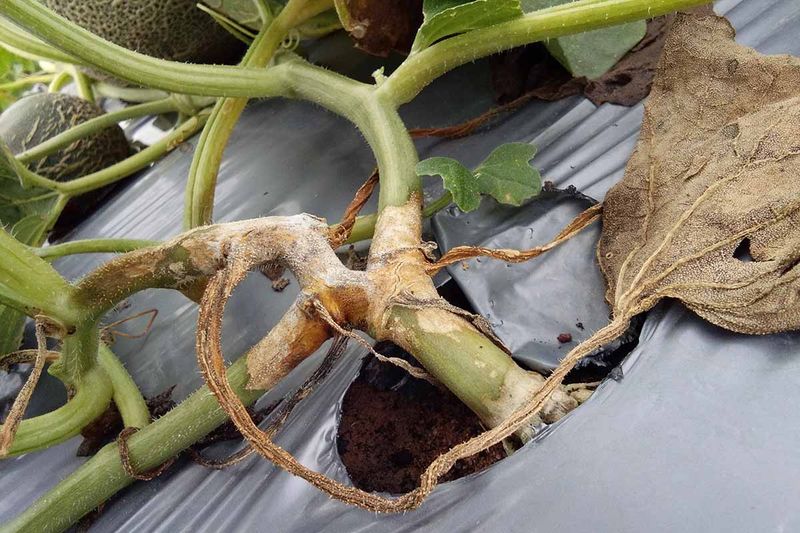
Pest and disease explanations get most of the attention, but some squash collapses have simpler or harder-to-see causes. Extreme afternoon heat can cause temporary wilt in cucurbits even when soil moisture is fine, and the plant recovers on its own as evening temperatures drop.
That pattern, wilt only during the hottest hours with full recovery by morning and no progression over days, is less likely to involve a borer or a pathogen, though it warrants continued monitoring.
Saturated soil creates a different problem. Constantly wet soil can deprive roots of oxygen, weakening them and setting the stage for root rot or crown rot caused by soilborne pathogens.
UGA Cooperative Extension’s home vegetable garden disease guide includes root and crown rots among the disorders that can produce wilt symptoms. Adding more water to a plant already sitting in saturated soil can make root damage worse rather than better.
UGA Extension’s water conservation guide recommends checking moisture in the root zone directly rather than judging by how the leaves look. Push a finger or a probe several inches into the soil near the roots.
Water deeply when the root zone is actually dry, and hold off when it is already moist.
Nematodes, squash bugs feeding on stems, vascular diseases, and herbicide drift or residue can all produce wilt that looks similar to borer damage or bacterial wilt. Oklahoma State’s cucurbit disease fact sheet covers several of these overlapping disorders.
When the crown, stem, crop type, and recovery pattern do not add up to a clear answer, a university or state plant diagnostic lab can identify what home inspection cannot.
Choose a realistic response to squash vine borer damage
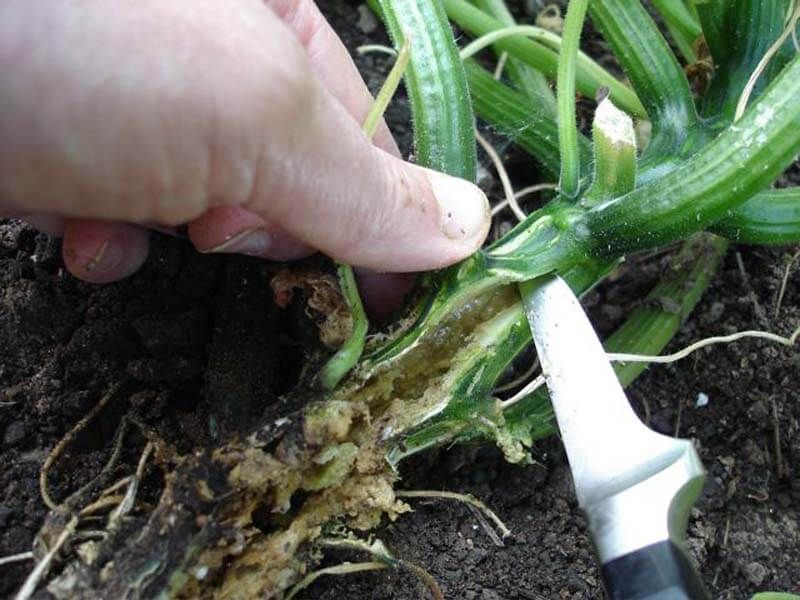
Finding a borer entry hole does not automatically mean the plant is lost, but it also does not guarantee a rescue will work. The honest answer depends on how much of the stem and crown has already been damaged by the time you find it.
On a small plant with limited damage, a careful repair attempt is sometimes worth trying. Use a sharp, clean blade to make a lengthwise slit along the affected section of stem, locate the larva or larvae inside, and remove them.
Then press the slit closed, mound moist soil over the injured section, and keep the area consistently moist. Minnesota Extension notes that new roots may form along the buried stem, giving the plant a chance to recover.
However, the plant may not survive even with careful work, especially if the crown itself is badly chewed or if multiple larvae are present.
When the main stem or crown shows extensive tunneling or soft, rotting tissue, removal is the more realistic option. Pull the entire plant, roots and all, and dispose of it away from the garden.
Do not compost infested vines. UF/IFAS Extension explains that destroying infested plant material reduces the chance that larvae complete their development in the soil and contribute to the next generation of moths.
Illinois Extension’s squash vine borer page reinforces that once a plant is severely damaged at the crown, saving it is unlikely. Removing it promptly and clearing the debris is a practical step that protects future plantings more than a prolonged rescue attempt on a failing plant.
Remove suspected bacterial wilt and protect the next plants
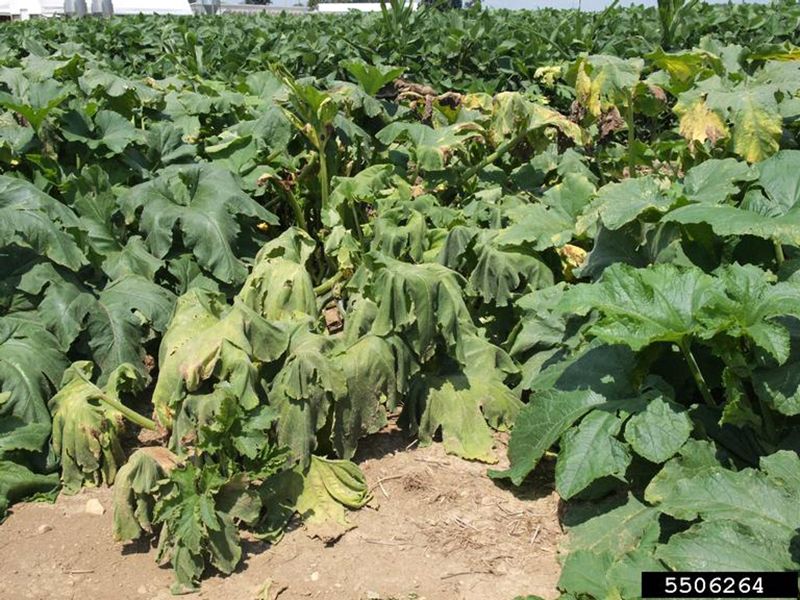
Once a plant is infected with bacterial wilt, there is no spray or treatment that will cure it. The bacterium has already moved into the vascular system, and the plant will continue to decline.
Removing and discarding the symptomatic plant as soon as possible reduces the chance that cucumber beetles feeding on it will pick up the bacterium and carry it to healthy plants nearby.
The real leverage against bacterial wilt is managing cucumber beetles before they infect young plants. Scouting regularly and acting early matters most during the seedling and early-growth stages, when plants are most vulnerable to beetle feeding.
Minnesota Extension’s bacterial wilt guidance recommends physical exclusion on young plants as a front-line tool. Floating row covers can reduce beetle access, but they must be removed when flowers open so that pollination can occur, or the gardener must hand-pollinate.
Crop rotation also helps by breaking the cycle of beetles finding the same host plants in the same location season after season.
Resistant or tolerant varieties are available for some cucurbit crops and are worth seeking out when bacterial wilt has been a recurring problem. Penn State Extension’s cucumber beetle management resource covers scouting, exclusion, and variety selection across both conventional and organic production approaches.
If pesticides seem warranted, the product must be labeled for the specific crop and pest, and the directions must be followed exactly. The EPA states that pesticide labels are legally enforceable, and using a product in a way that conflicts with its label violates federal law.
Do not spray open flowers or apply insecticides while bees are actively foraging. Pollinator precautions are part of responsible label compliance, not optional suggestions.
Prevent another collapse without overwatering
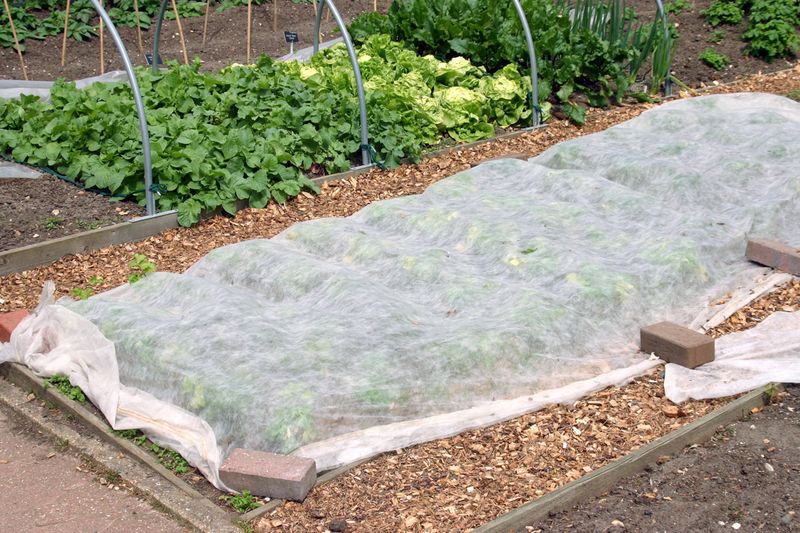
A few consistent habits can lower the odds of another sudden collapse in your fall cucurbit garden. Rotating cucurbits to a different part of the garden each season disrupts both squash vine borer populations, which overwinter in the soil, and cucumber beetle pressure tied to the same planting areas.
Floating row covers placed over transplants or seedlings before flowering can physically block squash vine borer moths from laying eggs and slow cucumber beetle access to young plants. Minnesota Extension notes that row covers must be removed at flowering unless the gardener hand-pollinates, because squash and related crops depend on insect pollination for fruit set.
Covers are a useful temporary tool, not a season-long solution. If you are considering less-susceptible crops or varieties specifically to reduce squash vine borer risk, options such as butternut squash, some Cucurbita moschata types, cucumber, and muskmelon are often cited.
Keep in mind that cucumbers and muskmelons remain important bacterial wilt hosts, so switching away from squash does not make those crops broadly safer.
For watering, UGA Extension recommends deep, soil-level watering only when the root zone actually needs it, paired with mulch to hold moisture and moderate soil temperature. Judging when to water by leaf appearance alone, especially during afternoon heat, can lead to overwatering a root zone that is already saturated.
When a plant collapses and the cause is unclear after checking the stem, crown, crop, and recovery pattern, a university or state plant diagnostic lab is the right next call. Getting the diagnosis right is what makes every other prevention step worthwhile.