
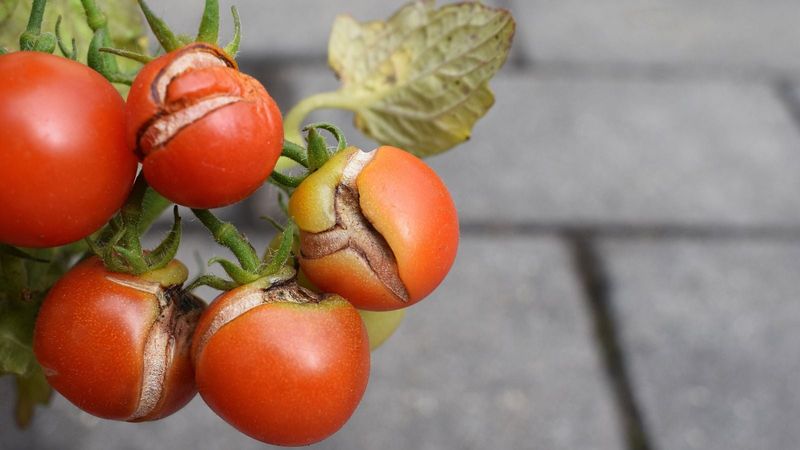
Picking a ripe tomato and finding a deep ring cracked around the stem end is one of the most frustrating moments in a late-summer garden. Southern growers know this feeling well, especially after a heavy rain or a good soaking that followed a hot, dry stretch.
The crack looks sudden, but the conditions behind it built up long before water ever hit the soil. Understanding what actually triggers shoulder splitting can help you protect the tomatoes still on the vine.
A Ring Around the Stem End Often Indicates a Concentric Growth Crack
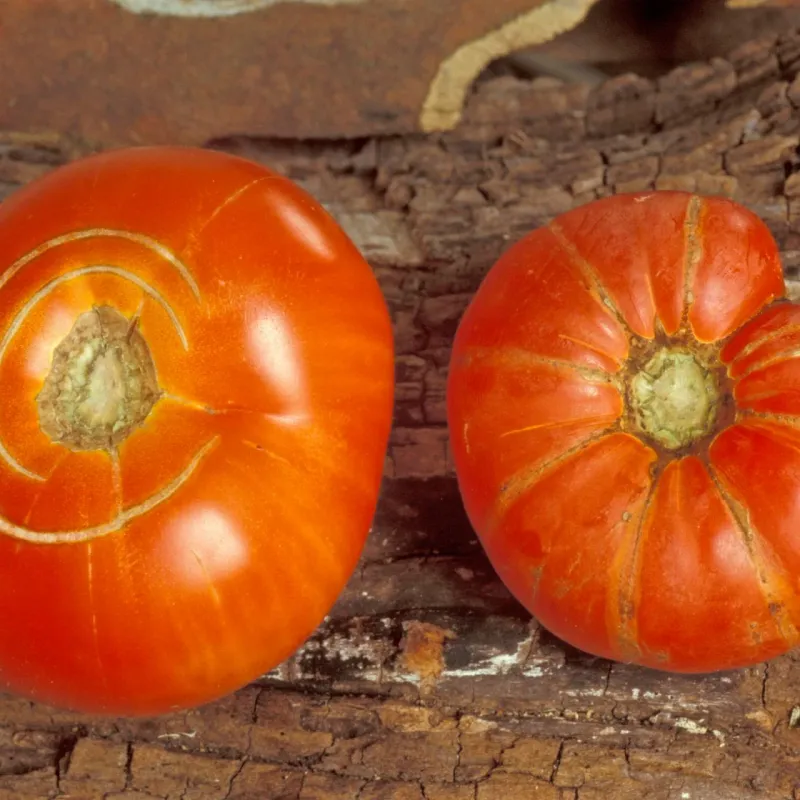
Broad rings curving around the stem scar or upper shoulders of a tomato often indicate a concentric growth crack. These are different from radial cracks, which run outward from the stem scar like spokes on a wheel.
University of Minnesota Extension’s tomato fruit crack diagnosis notes that both concentric and radial patterns commonly accompany rapid fruit growth and uneven water availability, and both reflect a physiological growth disorder rather than a bacterial or fungal infection.
The split forms when the inner flesh expands faster than the outer skin can stretch. This most often happens while the fruit is enlarging or approaching ripeness, which is exactly the stage when late-summer tomatoes tend to be when a heavy rain or deep watering arrives after a dry spell.
Before you settle on a diagnosis, take a closer look at the texture and size of the damage. A broad, smooth-edged opening around the shoulder points toward a growth crack.
Fine, rough, leathery micro-cracks scattered across the shoulder area may instead suggest rain check or russetting, a separate condition described by UMN Extension’s tomato disorders guide whose exact cause is not fully settled but appears linked to rainfall and cultivar susceptibility. Knowing which pattern you are looking at keeps you from reaching for the wrong solution.
A Dry Root Zone Makes Heavy Rain or Irrigation More Risky
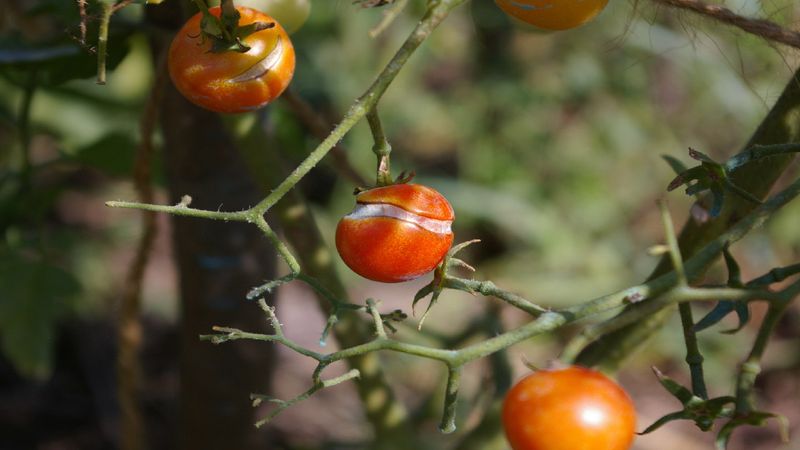
When the soil around your tomato roots has become substantially dry, a sudden rush of water can accelerate fruit expansion faster than the skin can keep pace. The inner flesh takes up water quickly, swells, and the outer skin tears at the weakest point, which is usually near the stem end where the tissue is thinnest.
Ordinary watering is not the problem by itself. The risk rises sharply when the shift from dry to wet happens fast, especially while the fruit is already growing or ripening.
A late-summer watering may be the moment the crack appears, but it is rarely the only reason it happened. Texas A&M AgriLife Extension’s tomato cracking guidance identifies the abrupt change in water availability as the key factor, not the watering event itself.
By the time you pick up the hose, prior soil dryness, fruit maturity, heat, and canopy conditions have already shaped how vulnerable that fruit is.
Several factors raise the odds that a given fruit will crack. Large-fruited varieties and many heirlooms tend to have thinner or less elastic skins, making them more susceptible.
Fruit that is close to full ripeness has less room to flex. Direct sun exposure raises fruit surface temperature, and limited leaf cover removes natural shading that would otherwise moderate that heat.
Penn State Extension’s cracking overview confirms that cultivar, fruit maturity, and growing conditions all modify risk alongside irrigation patterns, which is why two plants side by side can respond very differently to the same rainfall.
Build a Steadier Watering Rhythm Instead of Following a Calendar
The most useful shift you can make is moving away from a fixed watering schedule and toward reading your actual conditions. Press your fingers into the upper 1 to 2 inches of soil near the root zone.
When that layer feels dry, water deeply enough to wet the full root area rather than applying a quick, shallow sprinkle. A moisture sensor can make this check even faster.
UF/IFAS guidance on efficient irrigation for edible landscapes recommends adjusting irrigation for soil type, season, plant size, and rainfall rather than following a universal schedule, because sandy soils in Florida drain very differently from heavy clay soils common in parts of Texas.
Southern heat adds another layer of complexity. A tomato plant in August in Houston or Central Florida may need water more often than the same plant in October when temperatures drop and evaporation slows.
Containers and raised beds dry out faster than in-ground beds, sometimes needing attention every day during a heat wave. Texas A&M AgriLife’s water-efficiency guidance points out that even rainfall must factor into your calculation: if a good rain fell two days ago, the soil may still hold enough moisture that skipping a scheduled watering is the right call.
Consistent moisture does not mean waterlogged soil, and that distinction matters. Saturated soil pushes oxygen out of the root zone, which can damage roots, increase disease pressure, and leach nutrients.
The goal is keeping moisture reasonably steady, not keeping the bed soaking wet. That middle ground is what reduces the sharp dry-to-wet swings that set up shoulder cracking in the first place.
Use Mulch and Root-Zone Irrigation to Buffer Swings
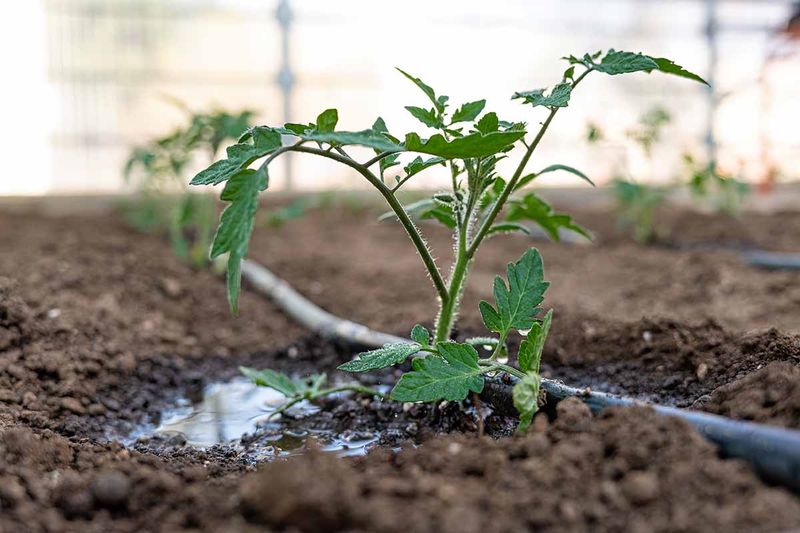
Mulch is one of the simplest tools for keeping root-zone moisture more stable between waterings. Apply a 2 to 3 inch layer of organic mulch such as straw, wood chips, or shredded leaves around each plant, and leave a few inches of clear space right at the stem so moisture does not collect against it.
UMN Extension’s tomato disorders resource specifically recommends mulch as a way to slow the repeated drying-and-rewetting cycle that raises cracking risk. Plastic mulch works too, especially in beds where soil temperatures are already well managed.
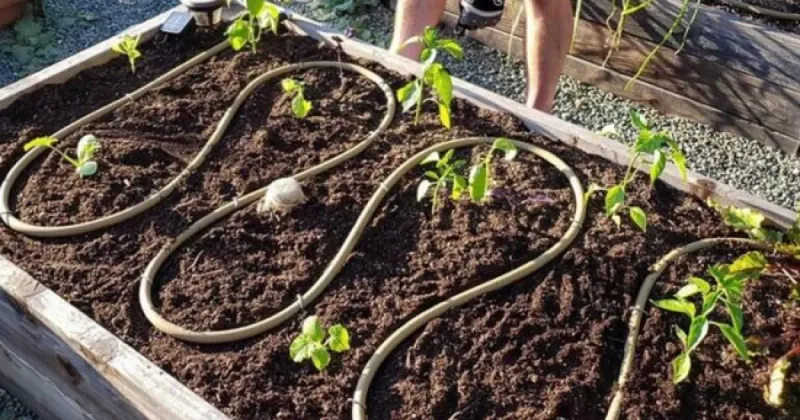
Pair mulch with a delivery method that puts water at the root zone rather than on the fruit or foliage. Drip irrigation lines, soaker hoses, or careful hand watering at the soil surface can all achieve this.
UF/IFAS irrigation guidance notes that microirrigation systems can reduce foliar wetness and disease risk compared with overhead sprinklers, which wet both leaves and fruit. That matters in the humid South, where wet foliage during warm weather can encourage fungal problems.
Overhead rain is harder to control, and it contributes to cracking through more than one pathway. A downpour can abruptly raise soil moisture and simultaneously leave water sitting on ripening fruit.
Penn State Extension notes that the relative importance of those two pathways varies with weather, cultivar, fruit stage, and canopy cover. Mulch and drip irrigation reduce the soil-moisture swing portion of that equation, even if they cannot stop a summer storm from hitting the fruit directly.
Canopy, Cultivar, and Harvest Timing Change the Odds
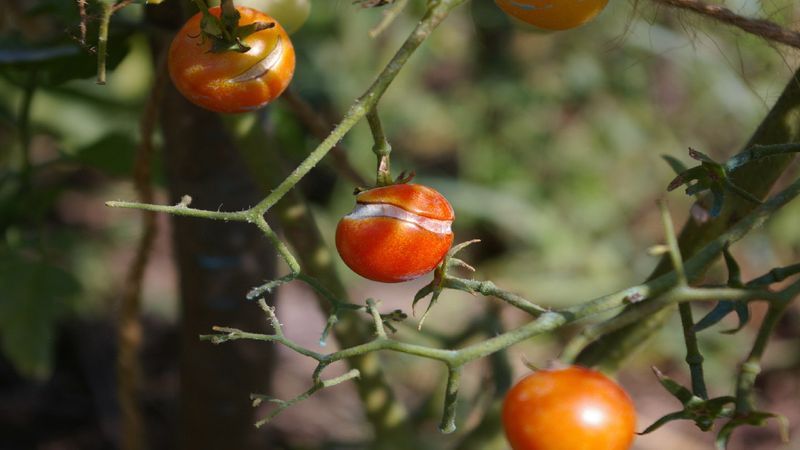
Two tomato plants receiving nearly the same amount of water can crack at very different rates, and canopy coverage is part of the reason. A healthy, full set of leaves shades the fruit from direct sun, moderates fruit surface temperature, and reduces the kind of heat stress that makes skin less flexible.
Removing too many leaves through aggressive pruning, or losing foliage to disease, can leave fruit more exposed and more vulnerable. UC IPM’s fruit crack guidance identifies maintaining healthy leaf cover as a practical way to reduce cracking risk, though it is not a guarantee.
Cultivar choice matters more than many gardeners realize. Large slicers and heirloom varieties tend to crack more often because of their skin characteristics and fruit size.
If the same varieties keep splitting season after season, trying cultivars described as crack-tolerant under your local conditions is worth the experiment. Penn State Extension notes that genetic tolerance depends on growing conditions and is not absolute, so a crack-resistant label does not mean a crack-free harvest in every situation.
Harvest timing offers another lever. Fruit that has reached the breaker-to-pink stage has already begun ripening and will continue to color indoors at room temperature.
University of Minnesota Extension supports pulling susceptible fruit before full vine-ripeness as a risk-reduction tactic when cracking has become frequent. Picking earlier will not fix your watering habits, but it can salvage tomatoes that might otherwise split during the next rain cycle.
Separate Shoulder Cracks From Sunscald, Blossom-End Rot, and Rain Check
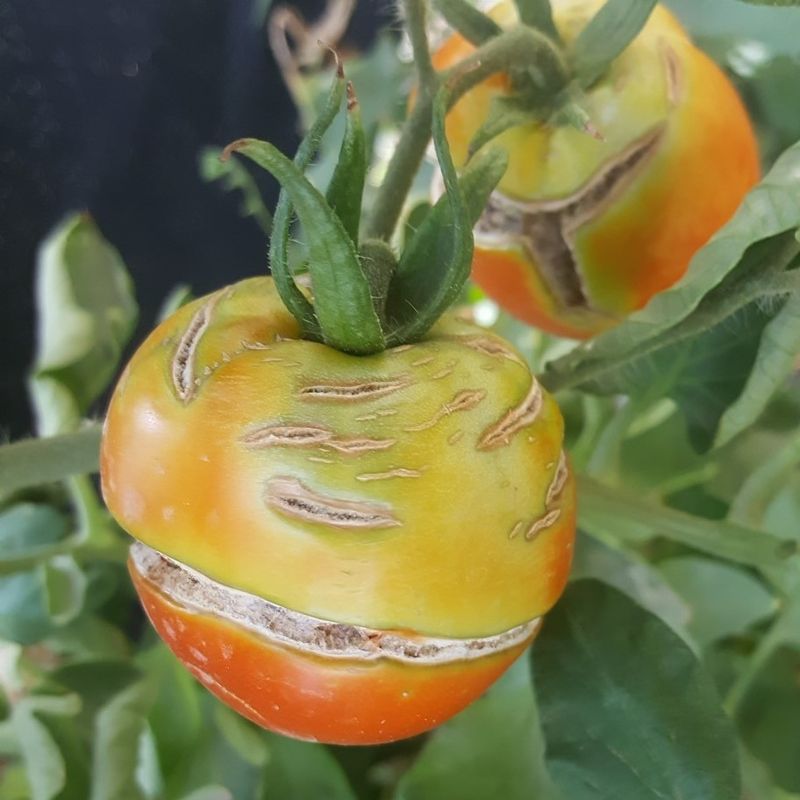
Getting the diagnosis right matters because the wrong fix wastes time and money. Broad, smooth-edged rings around the stem end or shoulders often indicate a concentric growth crack related to moisture swings.
That is a different problem from sunscald, which produces pale, whitish, or papery damage on the side of the fruit facing the sun. Sunscald follows sun exposure, not watering patterns, and the damaged area typically feels soft or leathery.
UMN Extension’s tomato disorders guide distinguishes these clearly and is worth bookmarking for visual comparisons.
Blossom-end rot appears as a dark, sunken, often dry lesion on the bottom of the fruit, opposite the stem. It is associated with calcium uptake problems connected to uneven watering, but adding calcium fertilizer or sprays without a soil-test basis is not an established fix for growth cracking.
If your damage is at the stem end in a broad ring, calcium is not the answer. Penn State Extension’s blossom-end rot and rain check resource explains that rain check or russetting produces many fine, rough, leathery micro-cracks on the shoulders, not the wide splits of a growth crack.
Two common remedies also need correction. Deliberately allowing severe drought before rewatering can actually increase the moisture swings that trigger cracking, as Oregon State Extension’s tomato growing guide makes clear.
Nighttime watering is not established as a direct cause of cracking in ordinary backyard beds. Morning watering is recommended mainly to reduce how long foliage stays wet, which limits disease duration.
A caution about nighttime irrigation and cracking found in some references applies specifically to greenhouse hydroponic systems with warm growing media and cool nights, not to raised beds or in-ground gardens.
Cracks Can Invite Decay, So Handle Damaged Fruit Carefully
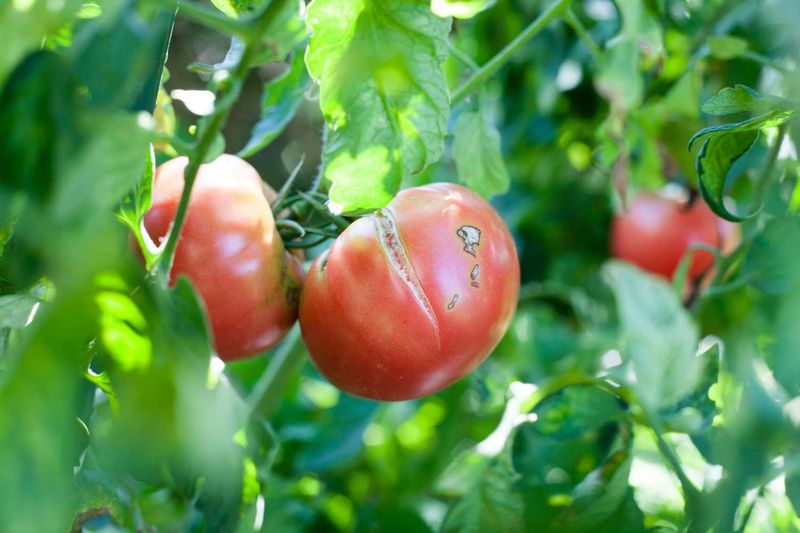
An open crack is not just a cosmetic problem. Texas A&M AgriLife Extension specifically notes that fungal fruit rots can develop at crack sites, and bacteria, insects, and general decay can also enter through the opening.
In Southern summer heat, that deterioration can move quickly once the skin is broken.
Food safety and garden prevention are separate decisions, and both deserve attention. USDA/NIFA consumer guidance on tomato safe handling recommends discarding produce that is bruised, holed, or damaged because microbes can enter through those areas.
The guidance also instructs consumers to wash tomatoes under cool running tap water before preparation and to avoid using soap or detergent, which can leave residues.
Timing matters for any tomato you do prepare. Fresh-cut tomatoes should go into the refrigerator within two hours at ordinary temperatures.
When the temperature is above 90 degrees Fahrenheit, that window shortens to one hour. On a hot Southern afternoon, that limit arrives faster than most people expect, so cut and refrigerate promptly rather than leaving prepared tomatoes sitting on the counter.
Keep the Root Zone Even Before the Next Storm
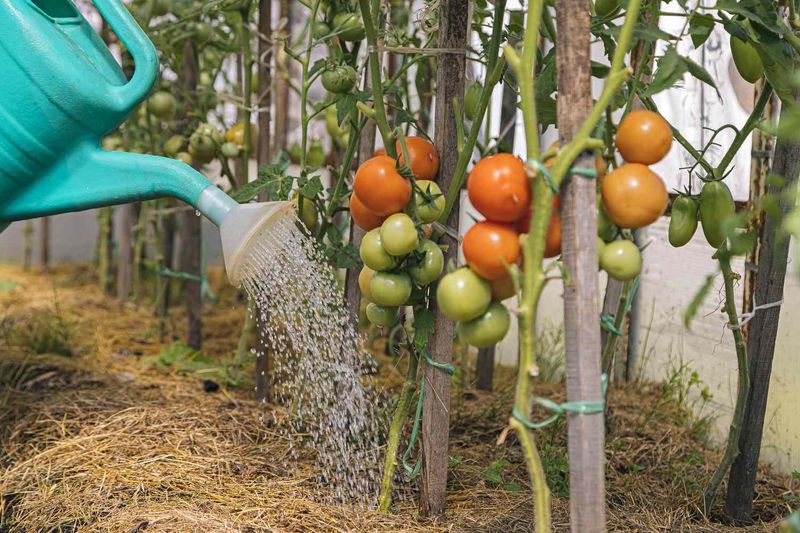
Start with the crack pattern: broad rings near the stem point toward a growth crack, while fine rough micro-cracks or pale sunken spots suggest a different problem. Once you know what you are dealing with, focus on keeping the root zone from swinging between very dry and very wet.
Check rainfall and feel the soil before you water, apply enough to reach the full root zone when the surface layer is dry, and use mulch to slow evaporation between rain events. UF/IFAS irrigation guidance and UMN Extension’s tomato disorders resource both support this steady-moisture approach as the most practical way to lower cracking risk.
Preserve useful leaf cover, consider crack-tolerant cultivars if large slicers keep failing, and pull susceptible fruit at the breaker-to-pink stage when splitting becomes frequent. UC IPM’s tomato fruit crack guidance frames these steps as risk reduction rather than a cure, because weather, cultivar, fruit maturity, and exposure still influence outcomes no matter how carefully you water.
The goal is a repeatable moisture routine you can maintain through the rest of the fall season, not a one-time rescue. Tomatoes grown in the South will always face heat, unpredictable rain, and a long ripening window, and a gardener who keeps the soil steady through all of it will lose fewer fruits than one chasing a perfect schedule.