
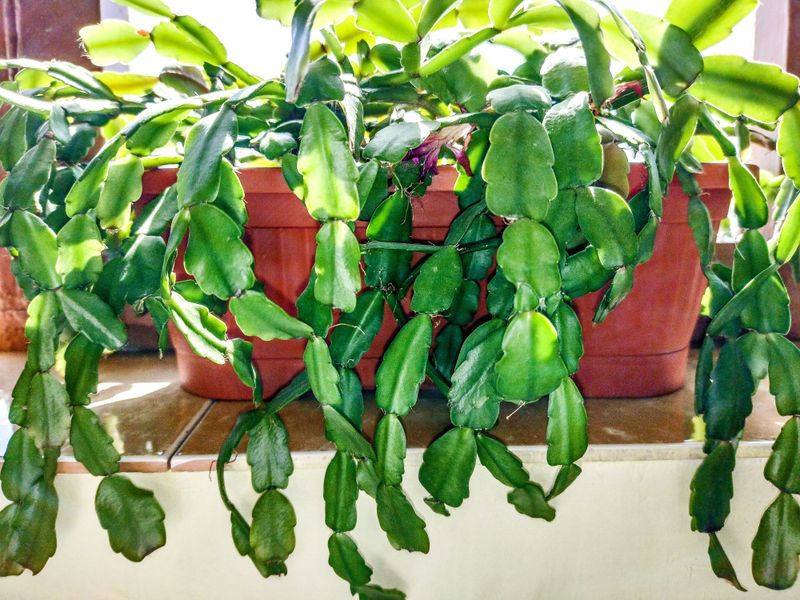
Few things are more unsettling than watching your Christmas cactus slowly go limp when it looked perfectly fine just days ago. Those soft, sagging sections can mean several different things, and jumping to the wrong fix can actually make the problem worse.
Before you water again or reach for any treatment, the most useful thing you can do is check what is happening below the surface of the potting mix.
Limp segments signal a problem, not a diagnosis
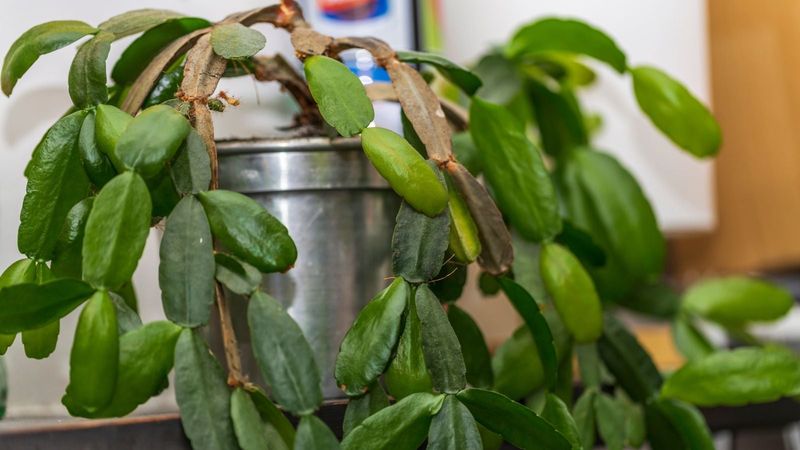
Soft or sagging sections on a Christmas cactus are easy to spot but hard to read at first glance. Those flattened structures that most people call “leaves” are technically modified stem segments, not true leaves at all.
NC State Extension’s holiday cactus guide explains that what we casually call leaves are actually flattened stem segments, a distinction that matters when you start tracing symptoms back to a cause.
Appearance alone cannot tell you why the segments have gone limp. Drought stress, root damage, compacted potting mix, light problems and stem disease can all produce a similar droopy look.
Treating the plant based on guesswork rather than evidence risks adding water to an already saturated root zone or withholding it from a plant that is simply thirsty.
The most reliable first step is to feel the potting mix before doing anything else. Cornell University’s holiday cactus timing guide notes that wrinkled or shriveled segments in dry mix point more toward drought stress, while segments that wilt even though the mix is still wet point toward a different problem entirely.
That single observation, dry versus wet soil, sets up the rest of the diagnostic process and keeps you from making the situation worse on the very first try.
Wet soil makes the root zone the first place to look
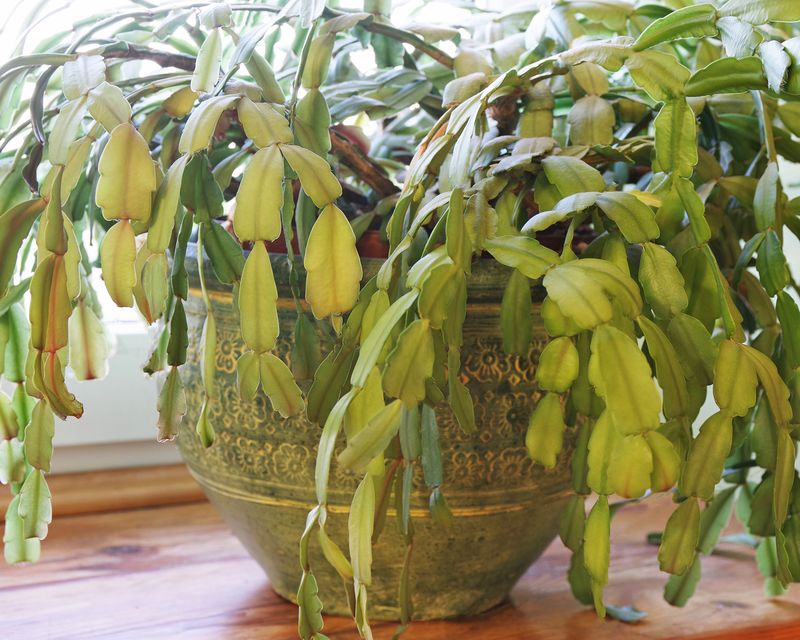
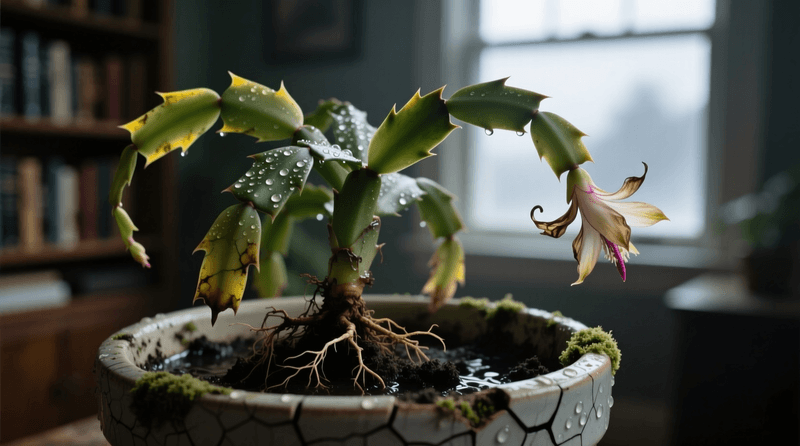
When a Christmas cactus hangs limp and the potting mix still feels wet, the root zone deserves your attention before anything else. Roots need both moisture and air to function.
When a pot stays saturated for too long, oxygen gets squeezed out of the spaces between soil particles, and roots begin to suffocate and break down rather than absorb water and nutrients.
That breakdown is what creates the frustrating contradiction of a wilting plant sitting in wet soil. University of Minnesota Extension’s holiday cactus resource specifically associates wilting with excess water and links saturated conditions to root rot, noting that affected plants may show gray-green foliage alongside the drooping.
The roots lose their ability to deliver water to the stems, so the plant wilts even though plenty of moisture surrounds it.
Poor drainage makes the problem worse. Water that pools in a saucer, sits in a decorative cachepot or cannot escape through blocked drainage holes keeps the root zone wet long after watering.
Ask Extension’s Christmas cactus guidance reinforces that limp segments combined with wet soil call for investigating the root zone rather than adding more water. Adding water at that point only deepens the saturation and gives damaged roots even less chance to recover.
Inspect the container, roots and stem base
Start the inspection outside the plant itself. Flip the pot over and confirm that the drainage holes are open and unobstructed.
If the plant sits in a saucer, cachepot or decorative tray, check whether water has been collecting there without draining away. Trapped standing water is one of the most common and fixable contributors to a soggy root zone.
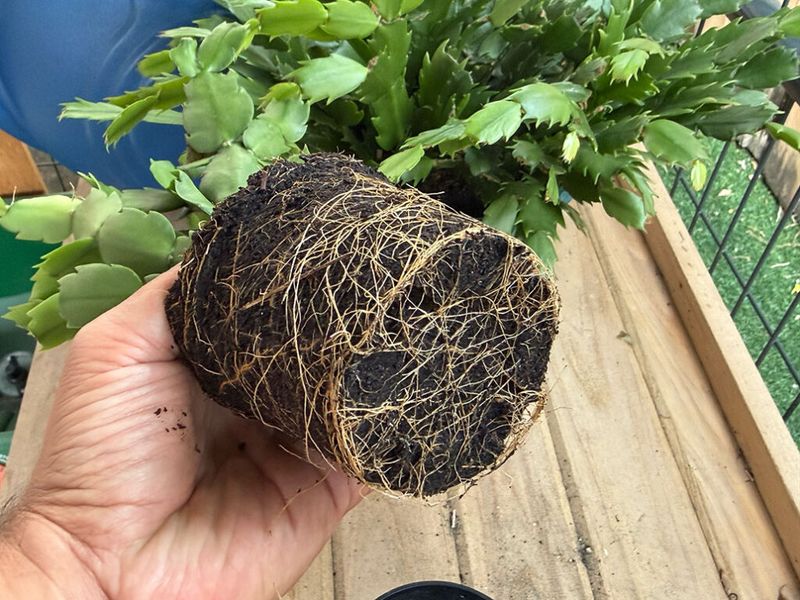
Once you have confirmed or ruled out a drainage problem, gently slide the plant out of its container to look at the roots directly. Healthy roots are firm and typically light-colored or tan.
Ask Extension’s Christmas cactus health problems guide describes dark, mushy, water-soaked or disintegrating roots as warning signs of root damage, often accompanied by gray-green foliage or soft tissue at the soil line. These are clues worth taking seriously, though they still require judgment rather than an automatic diagnosis.
Pay attention to what you see at the very base of the stems, but do not overinterpret a brown or corky base. University of Minnesota Extension notes that some browning and corking at the base is a normal part of aging in holiday cacti.
What looks different and more concerning is black, wet or slimy tissue that begins right at the soil line, which can suggest bacterial soft rot rather than simple aging. Penn State Extension’s Christmas cactus disease guide keeps root rot and stem diseases as separate diagnoses, and that distinction matters when deciding how to respond.
Repair drainage and remove damaged roots
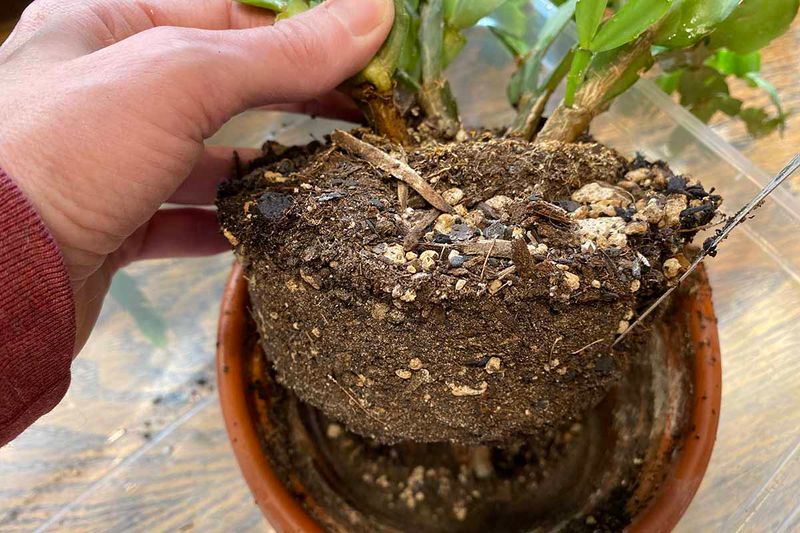
Finding root damage is not a reason to panic, but it does call for a deliberate, step-by-step response. First, make absolutely sure the container can drain.
If the pot has no drainage holes, or if the holes are blocked by compacted mix or debris, water will continue to pool no matter how carefully you water afterward.
Once drainage is confirmed, use a clean pair of scissors or pruners to remove any roots that are black, mushy or falling apart. Cut back to tissue that looks and feels firm.
After trimming, set the plant aside for an hour or two so the cut surfaces can dry slightly before being placed in fresh mix. University of Wisconsin Horticulture’s holiday cactus guide supports removing damaged tissue and repotting into well-drained mix as the practical path forward, rather than relying on chemical treatments.
Use a porous, aerated potting medium when you repot. University of Minnesota Extension suggests sterile potting soil combined with peat moss and perlite or sharp sand as one workable option.
Simply watering less will not fix a blocked drain, a mix that has broken down into dense clumps, or roots that are already gone. The Wisconsin Plant Disease Diagnostic Clinic’s houseplant root rot fact sheet does not recommend broad consumer fungicide use as a general solution; improving drainage and removing damaged tissue are the safer, more reliable steps for home gardeners.
If the root system is severely damaged, take a few healthy stem cuttings as a backup, since holiday cactus segments root readily and can carry the plant’s genetics forward even if the parent plant does not fully recover.
Water according to drying speed, not a weekly schedule
A fixed watering schedule is one of the most common reasons holiday cacti end up in trouble. The same pot can dry out in three days during a hot, sunny stretch and take ten days to dry in cool, overcast weather.
Pot size, light intensity, indoor temperature, humidity and the growth stage of the plant all affect how fast the mix dries.
A more reliable approach is to check the upper inch of the potting mix with your finger before watering. UF/IFAS Gardening Solutions’ Christmas cactus page recommends watering when the top inch begins to feel dry, then watering thoroughly so that excess drains out of the bottom of the pot.
Draining that excess water right away, rather than letting the pot sit in a wet saucer, is just as important as the watering itself.
Iowa State University Extension’s holiday cactus guide points out that the right interval shifts with the season and should be adjusted as conditions change. Christmas cactus is a tropical, epiphytic plant with roots adapted to cycle between moderate moisture and brief drying, not the prolonged drought that suits desert cacti.
University of Wisconsin Horticulture notes that keeping the plant bone-dry indefinitely creates its own set of stress problems, so the goal is avoiding both extremes rather than simply watering as little as possible.
Drought, light stress and stem disease can look similar
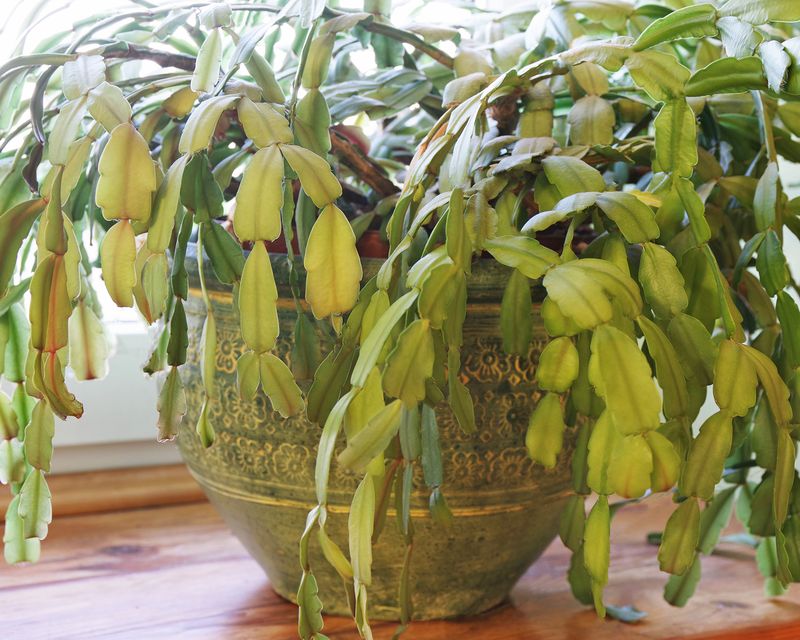
Not every limp or soft Christmas cactus has a saturated root zone. Prolonged dryness can produce wrinkled, shriveled or soft segments that look a lot like the wilt caused by root damage.
When the potting mix has become so compacted or degraded over time that it pulls away from the sides of the pot and water runs straight through without being absorbed, the plant can suffer drought stress even if you are watering regularly.
Light conditions matter more than many gardeners expect. Cornell University’s Christmas cactus bloom guide notes that strong direct sunlight can stress or scorch the segmented stems, particularly outdoors or through south- or west-facing glass during summer.
Insufficient light can also weaken the plant over time, making segments less firm and less capable of supporting themselves. Bright, indirect or filtered light is the safer target for most indoor placements.
Stem and bacterial diseases add another layer of complexity. Penn State Extension’s Christmas cactus diseases page describes lesions that may appear on individual segments or at the soil line as signs that a stem disease could be involved, separate from root rot.
University of Minnesota Extension reinforces that observable conditions, dry mix, compacted media, direct sun exposure, or visible lesions on segments, are the cues that point toward each alternative cause. No single symptom closes the case on its own, which is why checking the soil and inspecting the roots remains the most reliable starting point.
Choose the right-size pot and safer Southern location
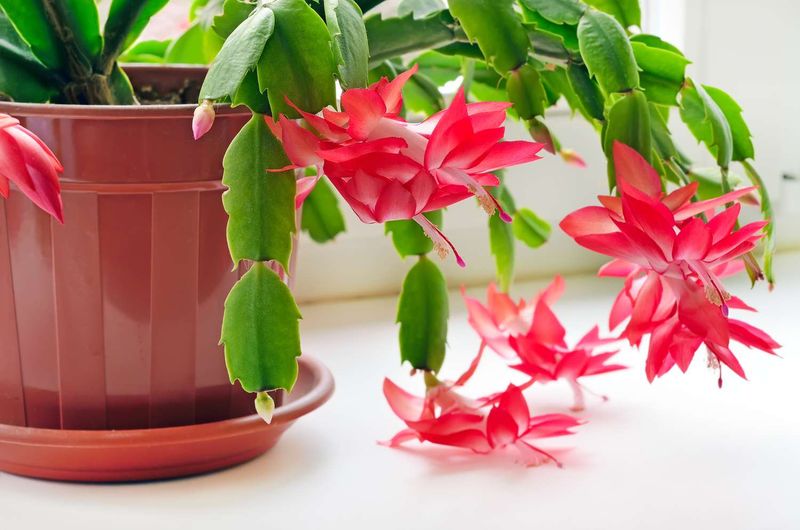
Holiday cacti generally do well when they are somewhat pot-bound, meaning the roots fill most of the container without a large amount of excess soil around them. Repotting is not an automatic treatment for a struggling plant.
University of Minnesota Extension notes that holiday cacti prefer to be a little snug in their containers, and moving a plant into a substantially oversized pot can leave a large volume of wet mix surrounding a relatively small root system, which increases the risk of saturation rather than reducing it.
When repotting is genuinely warranted, because the plant has clearly outgrown its container or the potting mix has broken down and compacted, choose a container only slightly larger than the current one and make sure it has open drainage holes. A modest step up in size gives the roots room to expand without creating a swamp of excess soil.
For gardeners in Florida, Texas and other parts of the South, outdoor placement during warm months can work well, but the conditions need to match what the plant actually needs. UF/IFAS Extension Osceola County’s Christmas cactus guide recommends bright indirect light and protection from freezes for Florida gardeners.
UF/IFAS Extension Nassau County also cautions about protecting the plant from intense direct sun and heavy rain outdoors. Outdoor placement is not a year-round guarantee anywhere in the South; freezing temperatures, intense afternoon sun and heavy downpours can all damage the plant quickly.
Let the soil check guide the next step
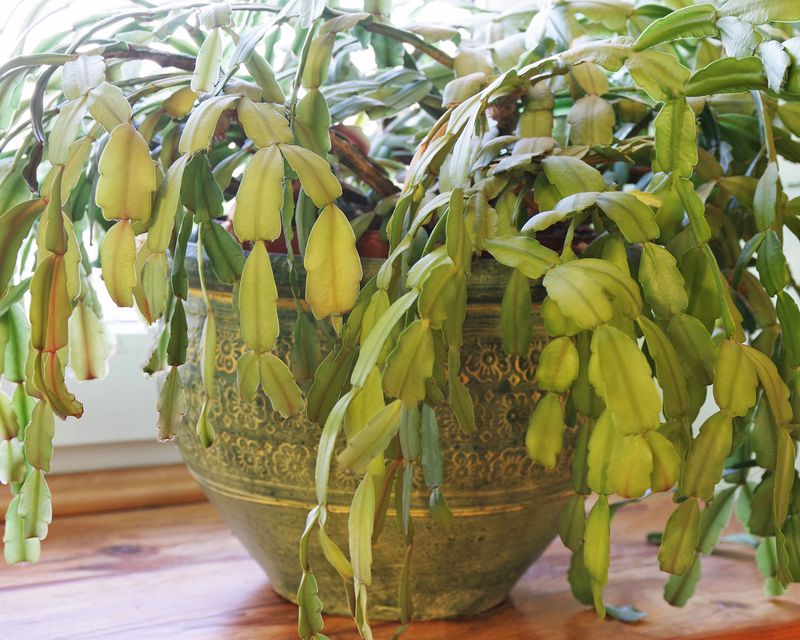
Three different conditions call for three different responses, and the soil check is what separates them. Dry mix paired with wrinkled or shriveled segments points toward drought stress; the fix is careful, thorough watering followed by monitoring, not a rushed flood of water all at once.
Wet mix paired with limp or sagging segments calls for checking the drainage setup and examining the roots before adding any more water. University of Minnesota Extension and Ask Extension’s Christmas cactus guidance both support this sequence as the safer starting point.
Visible lesions on the segments or black, slimy tissue at the soil line suggest stem or bacterial disease, which is a separate concern from root rot and deserves its own evaluation rather than the same response. Assessing what the root environment is actually doing, before watering again, switching containers or applying any treatment, keeps each step grounded in what you can actually observe.
A plant that tells you what it needs through the condition of its soil and roots is one you can genuinely help.