
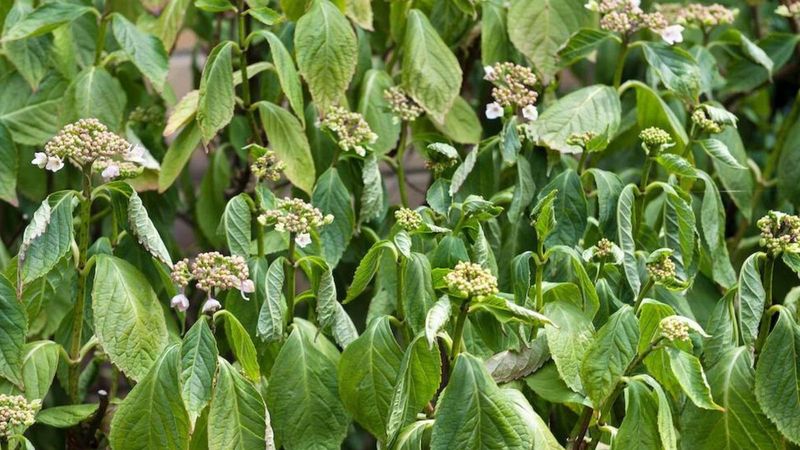
Watching your hydrangeas collapse into a limp heap on a hot summer afternoon is genuinely alarming, especially when you watered just yesterday. The good news is that a drooping hydrangea is not always a dying one, and reaching for the hose is not always the right response.
This guide walks you through a soil-first approach to figuring out whether your plant actually needs water, what to do when it does not, and which warning signs call for a closer look at something other than irrigation.
Afternoon Wilt Does Not Prove Your Hydrangea Is Thirsty
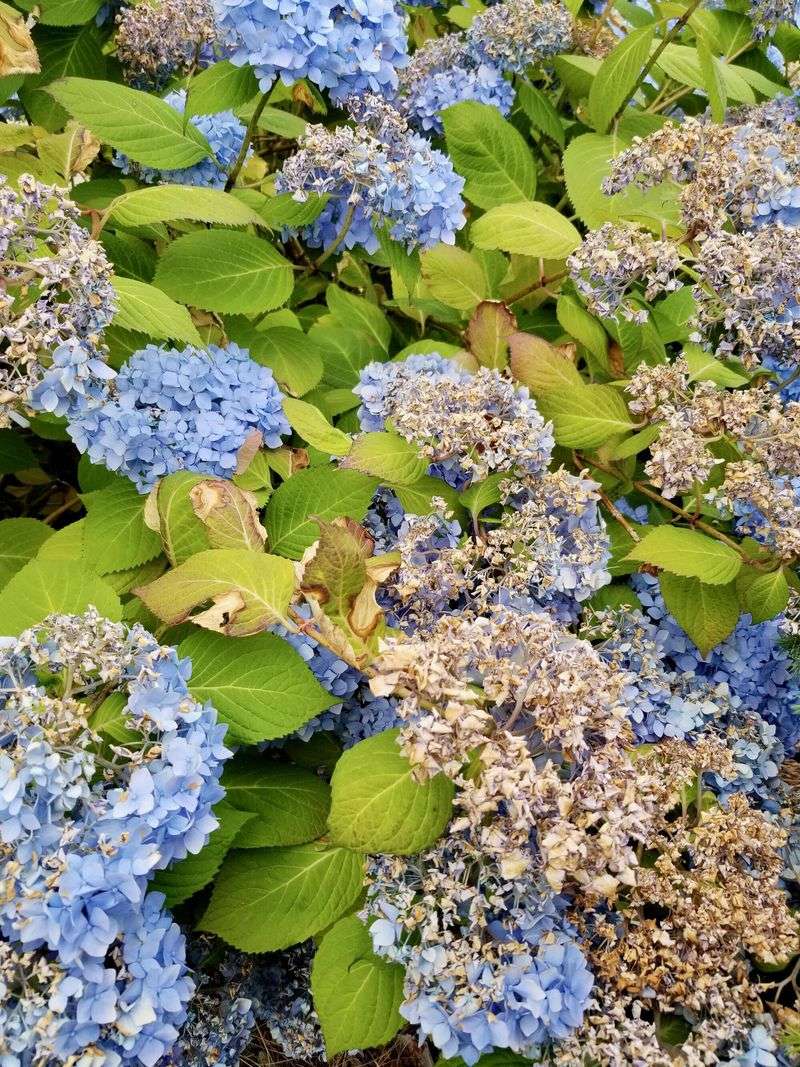
Seeing a hydrangea flop over in the afternoon heat is unsettling, but the droop itself is not a reliable signal that the plant needs more water. Bigleaf and smooth hydrangeas can wilt dramatically during intense heat even when the root zone holds plenty of moisture, because leaves lose water through transpiration faster than roots can pull it back up from the soil.
University of Georgia Extension specifically warns that late-afternoon wilting is a poor standalone signal for irrigation decisions.
The key distinction to watch for is recovery. A plant that droops during the hottest part of the day but looks normal again by evening or the following morning is most likely responding to heat and transpiration stress, not drought.
That temporary droop does not mean the plant is failing; it means the heat is intense enough to outpace the root system’s delivery speed.
Persistent droop that does not improve overnight, along with crispy leaf edges, browning, or stunted new growth, is a different story and warrants closer investigation. Oregon State Extension notes that severely heat-damaged foliage may not recover even if the plant survives.
The goal of this guide is to help you decide whether watering is the right move, not to promise that water will restore every wilted leaf.
Let Root-Zone Moisture Decide Whether to Water
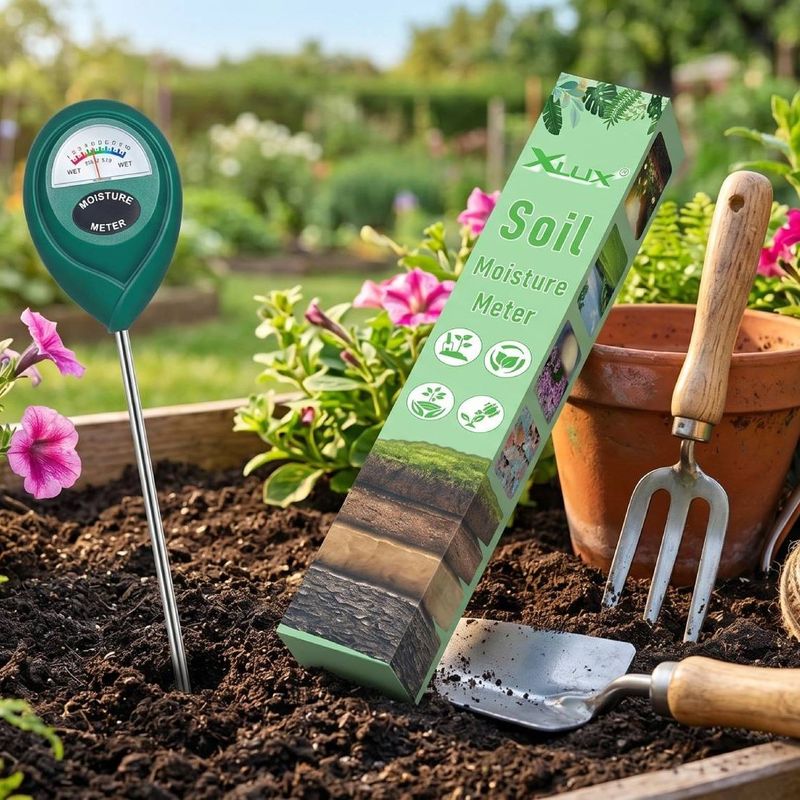
Rather than watching the leaves, make the soil your primary decision tool. Push a finger or a wooden dowel several inches into the root zone, aiming for roughly 6 to 9 inches deep for established shrubs, though the right depth can vary depending on how the plant was installed and what the surrounding soil is like.
University of Minnesota Extension recommends checking the top 6 to 9 inches of the root zone before deciding whether to irrigate. If that area feels cool and moist, hold off on watering even if the leaves are flopped; if it feels dry or barely damp, that is your cue to irrigate.
How often you check depends on your specific situation. During a heat wave, checking every couple of days makes sense for most established shrubs in average garden soil.
New plantings, containers, beds in sandy soil, and plants in full sun or windy spots can dry out much faster and may need monitoring every day or every other day. Soil moisture monitoring guidance from Oregon State reinforces that checking actual conditions is far more reliable than sticking to a fixed calendar schedule.
Florida Extension advises checking soil moisture before irrigating bigleaf hydrangeas because hot-afternoon wilting can occur without any real drought stress at the root level. That habit, checking before watering rather than watering on reflex, is the single most useful shift a Southern gardener can make.
Water Slowly and Deeply at the Root Zone
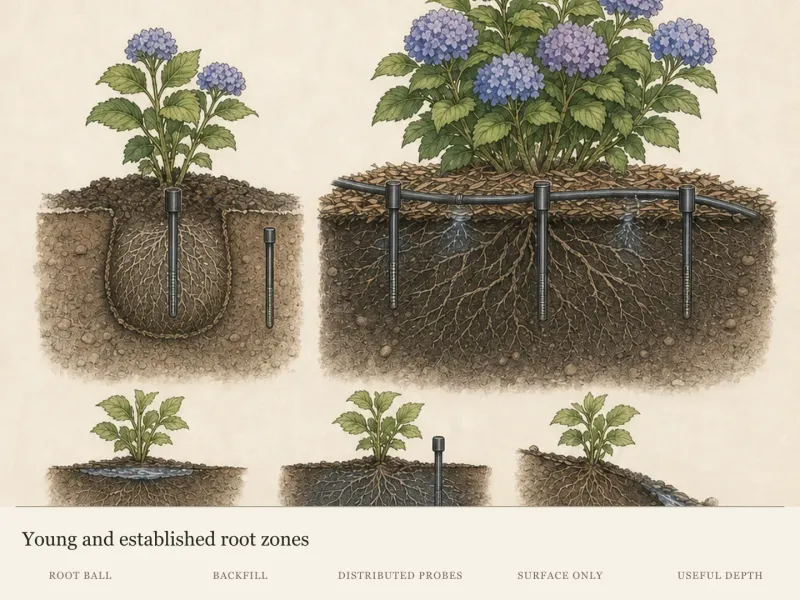
Once you confirm the root zone is dry, the method you use to water matters as much as the timing. A quick splash from a hose nozzle may wet only the top inch or two of soil, leaving the deeper roots dry and encouraging shallow root growth over time.
The better approach is to apply water slowly across the entire root zone rather than concentrating it at the stem, giving moisture a chance to move down through the soil profile where roots can actually reach it.
Soaker hoses and drip irrigation are well-suited to this job because they deliver water directly to the ground at a pace the soil can absorb. Oregon State Extension recommends slow, deep watering as a heat-wave strategy for hydrangeas, and University of Minnesota Extension advises against short, frequent watering that stays in the top few inches of the root zone.
A slow trickle from a hose laid on the soil surface works too, as long as you give it enough time to penetrate.
Early morning is the preferred window for watering because evaporation losses are lower and foliage has time to dry before temperatures climb. UGA’s landscape best management practices support morning irrigation for exactly this reason.
Early evening can work as a secondary option when water is directed to the soil and leaves dry before nightfall, but UF/IFAS guidance for Florida gardeners recommends watering before 10 a.m. or after 4 p.m. and avoiding overhead irrigation that leaves foliage wet overnight.
Use Weekly Amounts as Starting Guidance Only
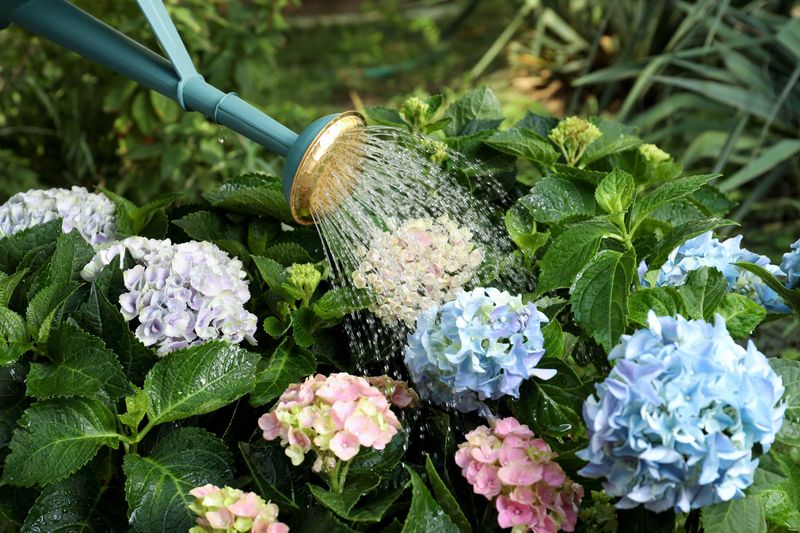
Gardeners often want a precise number to work from, and that instinct is reasonable. Alabama Extension suggests approximately 1 inch of water per week from rainfall or irrigation as a general starting point for hydrangeas.
UConn Extension puts the range at about 1 inch in normal conditions and up to 2 inches during hot, dry stretches. Those figures are useful anchors, but they are not prescriptions that apply equally to every plant in every yard.
Soil type changes everything. Sandy soil in Florida can drain through an inch of water in a fraction of the time it takes heavy clay soil in a shadier Texas bed to do the same.
A large, established shrub with an extensive root system needs more total water than a small new transplant, even though the new plant requires more frequent checking. Rainfall totals, afternoon shade, wind exposure, and whether the plant is in a raised bed or a low-lying spot all pull the real number in different directions.
Fixed claims like two gallons per session or a set number of hose minutes are not reliable without knowing your emitter flow rate, soil type, and drainage situation. Soil moisture monitoring guidance from Oregon State and Colorado State’s drip irrigation resource both emphasize using actual moisture readings to calibrate irrigation rather than relying on volume targets alone.
Treat the 1-to-2-inch range as a starting estimate, then let root-zone checks tell you whether to adjust up or down.
Adjust the Routine for New Plantings
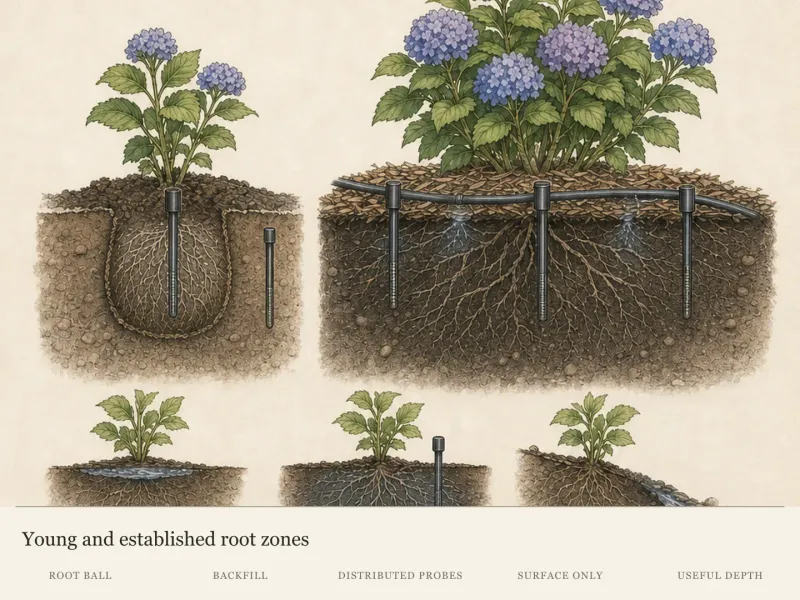
A hydrangea planted last spring needs a completely different level of attention than one that has been growing in the same spot for five years. New plantings have not yet extended their roots into the surrounding soil, so they depend heavily on whatever moisture exists in that small original root ball and the few inches directly around it.
That zone can dry out surprisingly fast, especially in summer heat.
University of Minnesota Extension recommends frequent watering during the first weeks after planting, followed by a gradual taper as roots begin to spread into native soil. The key word is gradual; cutting back too fast leaves young roots scrambling during a heat spell.
Check the soil in the root ball itself, not just the surrounding ground, because the two can have very different moisture levels depending on how the plant was grown before you bought it.
Established shrubs, by contrast, benefit from deeper, less frequent watering that encourages roots to reach down rather than staying near the surface. UMN’s guidance on watering established trees and shrubs specifically cautions against short, frequent watering for mature plants.
Every adjustment should be driven by what you actually find when you check the soil, combined with recent rainfall, container size if applicable, and how exposed the planting site is to afternoon sun and wind.
When the Soil Is Moist, Reduce Afternoon Heat
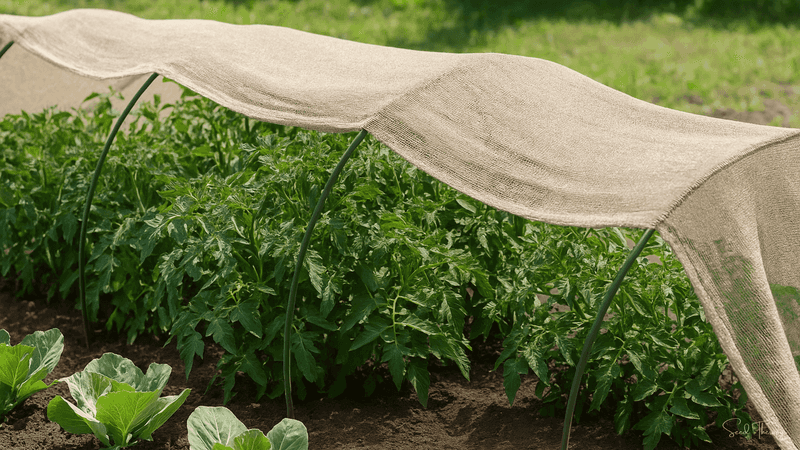
Finding adequate moisture at the root zone while the leaves still droop is a clear sign that more water is not what the plant needs. The problem in that case is heat load, and the practical response is to reduce how much direct afternoon sun reaches the plant.
Oregon State Extension recommends temporary shade cloth as a heat-wave tool for hydrangeas, and it can make a meaningful difference for plants sitting in full western or southern exposure during the hottest hours.
For container plants, moving the pot to a spot that gets morning sun and afternoon shade is often the most straightforward fix. Florida Extension recommends morning sun or partial shade as the ideal exposure for bigleaf hydrangeas, which are among the most heat-sensitive types commonly grown in the South.
The goal is not to eliminate light entirely; UGA’s hydrangea publication and UConn’s hydrangea factsheet both note that most hydrangeas need some light for healthy growth and flowering. Cutting off the harshest afternoon sun while preserving morning light is the practical middle ground.
Organic mulch is a useful partner in this effort. A layer of roughly 2 to 4 inches of wood chips, shredded bark, or similar material over the root zone can slow evaporation and moderate soil temperature on hot days.
UMN’s mulching guidance cautions against excessive depth and stresses keeping mulch pulled back from the stems to avoid rot and pest problems. Deeper is not always better; a consistent, moderate layer applied correctly does the job.
Species, Soil, and Drainage Change the Watering Rhythm
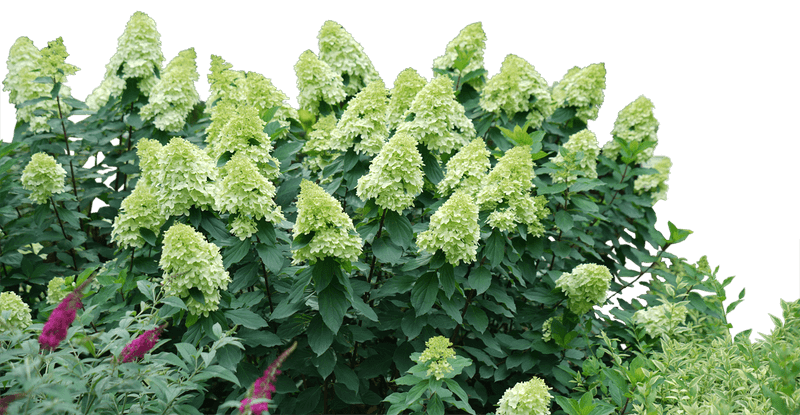
Treating every hydrangea as though it has identical water needs is one of the most common mistakes Southern gardeners make. Alabama Extension notes that bigleaf hydrangeas and smooth hydrangeas generally need more consistent moisture and benefit from afternoon protection, making them the most demanding types to manage through a Southern summer.
They are also the most commonly planted, which is why wilting complaints tend to center on them.
Oakleaf hydrangea, a native species well-suited to the South, handles heat and drought somewhat better than bigleaf types, though it still prefers moist, well-drained soil and can struggle in poorly drained spots. UF/IFAS describes oakleaf hydrangea as more adaptable to dry conditions once established.
Panicle hydrangea is generally the most sun-tolerant of the group, but that does not make it immune to drought stress or drainage problems. UF/IFAS also highlights panicle types as better choices for hotter, sunnier Florida sites.
Soil and drainage shape the watering rhythm as much as species identity does. Sandy soil drains quickly and can leave roots dry within a day or two of watering, while clay or compacted soil holds moisture longer but raises root-rot risk if irrigation is applied too frequently.
Oregon State’s soil moisture monitoring guidance and UMN’s planting guidance both emphasize adjusting irrigation to match actual drainage behavior at the specific site. Knowing your species and your soil together is what makes a watering rhythm work.
Persistent Wilt Requires Diagnosis, Not More Water
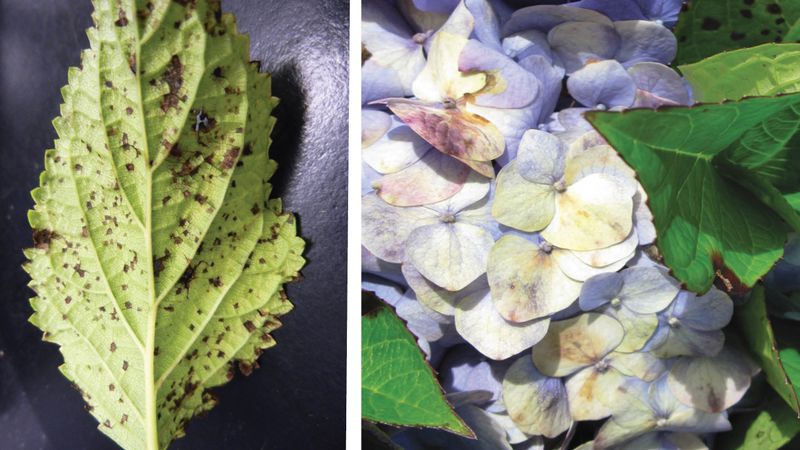
Temporary afternoon droop that clears up by evening is one thing. A hydrangea that stays limp for days, develops yellowing leaves, brown patches, stunted new growth, or continues to decline despite moist soil is telling you something different.
UMN Extension notes that persistent wilt in adequately moist soil points toward problems beyond irrigation, including poor drainage, root damage, or disease.
Poor drainage is one of the most common culprits. Soil that stays waterlogged after rain or watering can suffocate roots and create conditions where root rot takes hold, and adding more water to that situation makes things worse rather than better.
UGA Extension warns explicitly against overwatering during heat waves, pointing out that saturated soil is a real risk when gardeners assume every wilt signal means thirst. Excessive sun exposure, physical root damage from digging or compaction, and fungal diseases are also worth investigating before adjusting irrigation.
Penn State Extension’s hydrangea disease resource covers several fungal problems, including leaf spots, powdery mildew, and Botrytis, that can cause foliage decline. Overhead watering and leaf spraying as rescue tactics can make these problems worse, not better, because prolonged wet foliage creates the conditions these pathogens prefer.
Florida Extension advises avoiding overhead irrigation for exactly this reason. Watering is a tool for meeting real moisture needs, not a remedy for every form of stress; some heat damage is simply beyond what a good watering routine can undo.