
Plenty of Southern gardeners have stood in front of a hydrangea that looks perfectly healthy, full of deep green leaves, and wondered why there is not a single bloom in sight. The plant is not dying; it may actually be thriving, which makes the missing flowers even more confusing.
For many old-wood hydrangeas, a pruning cut made at the wrong time of year is one of the most common reasons flowers disappear while foliage keeps growing strong. Knowing which type of hydrangea you have, and when its buds form, is the first step toward getting those blooms back.
Healthy leaves do not prove the flower buds survived
A hydrangea covered in glossy, healthy-looking leaves can still have lost every flower bud it was carrying. Foliage and flower buds do not always respond to stress in the same way, and a plant can push out vigorous new growth even after the structures that would have produced flowers are gone.
When an old-wood hydrangea loses its flower buds, the most common culprit is a pruning cut made at the wrong time of year. University of Maryland Extension guidance on hydrangea problems identifies mistimed pruning as one of the leading explanations for a plant that leafs out well but fails to bloom, especially in bigleaf and other old-wood types.
That said, pruning is not the only possibility.
Late freezes, deer browsing, drought, excessive shade, intense afternoon heat, poor drainage, and high-nitrogen fertilizer can all destroy flower buds or suppress flowering while the rest of the plant looks fine. Before picking up the pruners again, check whether any of those conditions affected the plant recently.
Inspecting pruning history alongside plant identity gives you a much clearer picture than either clue alone.
Old-wood hydrangeas set buds before winter
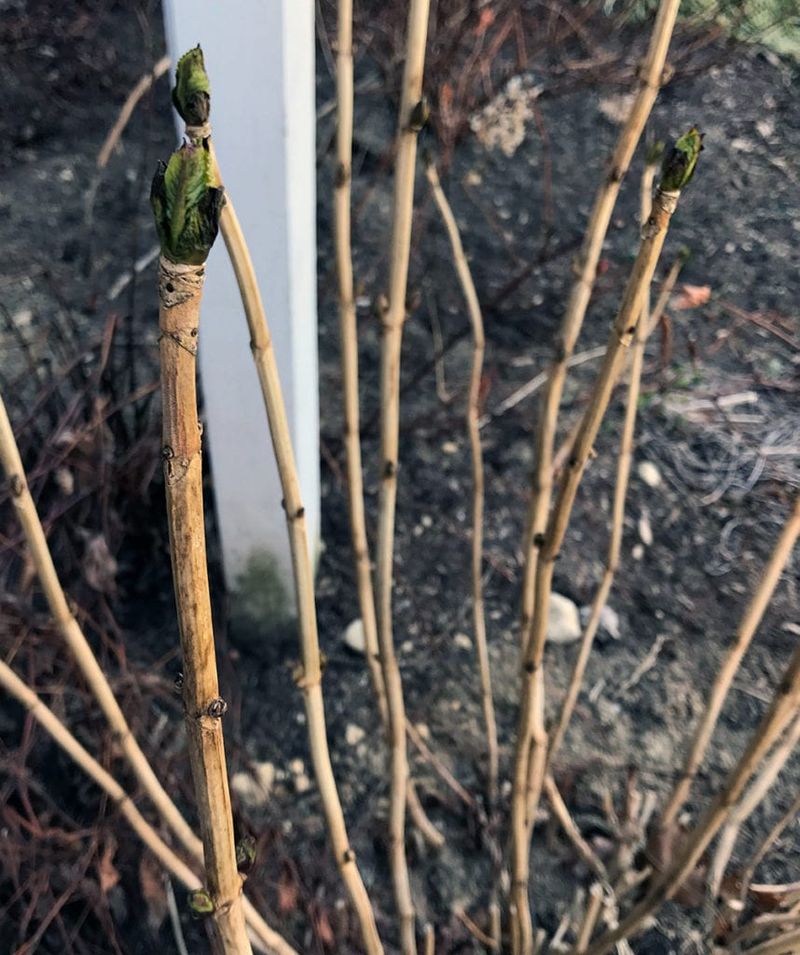
Old wood simply means stems that grew during the previous season or earlier. For hydrangeas that bloom on old wood, the flower buds are not formed in spring alongside the new leaves; they form during summer and fall, sitting quietly on last year’s stems through the cold months, waiting to open the following season.
Cut those stems in fall, winter, or early spring, and you remove the buds along with them. The plant’s root system and remaining live tissue are perfectly capable of pushing out a flush of new leafy growth, which is exactly why the shrub looks so healthy the following summer with no flowers to show for it.
University of Maryland Extension pruning guidance explains this mechanism clearly for old-wood species, noting that removing those previous-season stems before bloom eliminates that year’s flower potential.
This biology applies specifically to bigleaf hydrangeas (Hydrangea macrophylla), oakleaf hydrangeas (H. quercifolia), mountain hydrangeas (H. serrata), and climbing hydrangeas. Smooth hydrangea (H. arborescens) and panicle hydrangea (H. paniculata) follow a different pattern entirely, forming their flowers on new growth each season.
Penn State Extension’s species-by-species pruning guide makes this distinction clear, and it matters enormously before you decide when to cut. Some bigleaf and mountain cultivars can flower on both old and new wood, which adds one more reason to identify your plant before acting.
Identify the hydrangea before choosing a pruning date
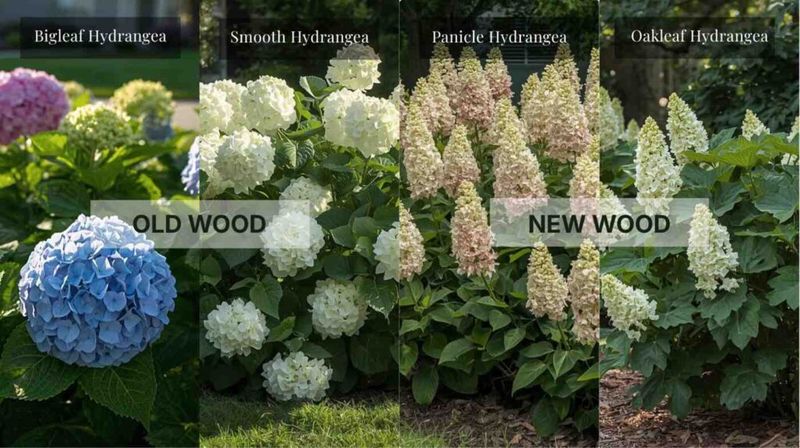
Leaf shape and flower-cluster form are your fastest field clues. Large, rounded mophead blooms or flat lacecap flowers paired with broad, coarse leaves generally point to bigleaf hydrangea (H. macrophylla), an old-wood bloomer that is extremely common in Southern gardens.
Deeply lobed, oak-shaped leaves with peeling cinnamon-colored bark indicate oakleaf hydrangea (H. quercifolia), also an old-wood type.
Conical or cone-shaped flower clusters, sometimes called panicles, are the signature of panicle hydrangea (H. paniculata), which includes popular varieties like ‘Limelight’ and many so-called PeeGee types. Panicle hydrangeas bloom on new wood and follow a completely different pruning schedule.
Smooth hydrangea, best known through the cultivar ‘Annabelle,’ produces large rounded white clusters on new growth each year and is also a new-wood bloomer. NC State Extension’s profile of Hydrangea arborescens confirms this, noting that it flowers reliably on current-season growth.
Reblooming or remontant cultivars, sometimes sold under names like ‘Endless Summer,’ are a separate category that can flower on both old and new wood. They are more forgiving of pruning mistakes than a standard bigleaf, but they are not immune to them.
UGA Extension’s identification guide recommends relying on plant tags and botanical names rather than common names, since the same nickname can refer to plants with very different pruning needs. If you still cannot confirm the type, treat the plant as an old-wood bloomer until proven otherwise.
Match the pruning window to the flowering habit
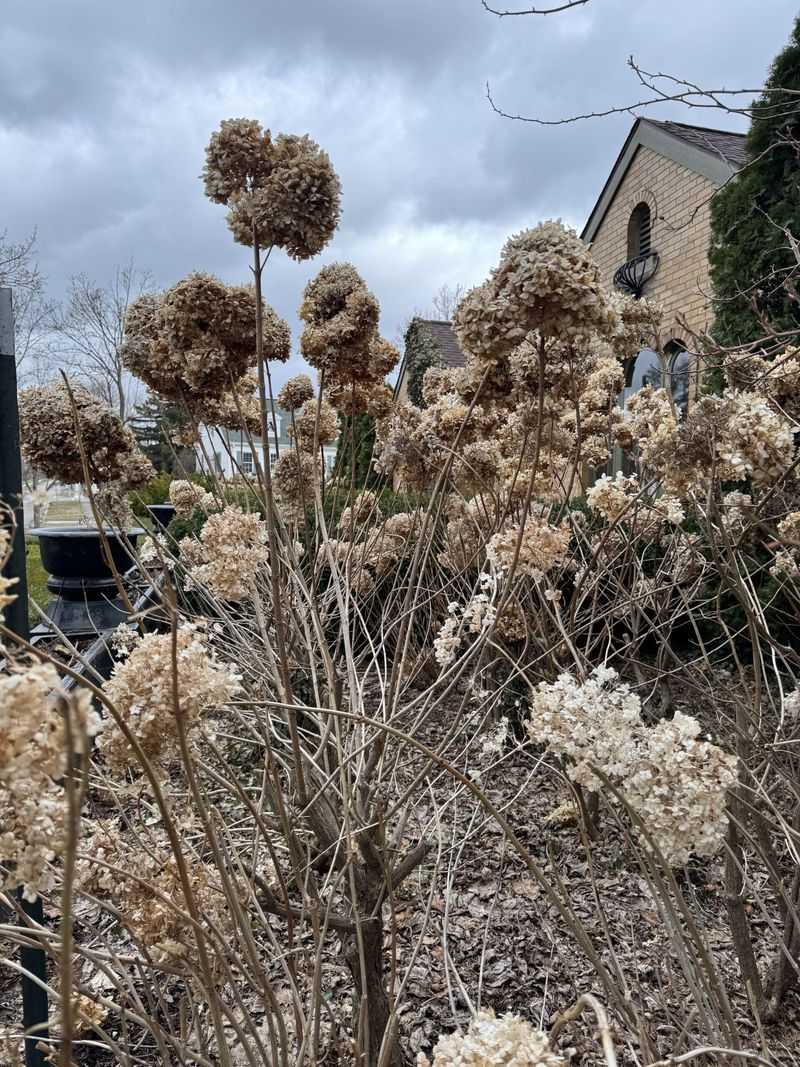
Bigleaf hydrangeas should be pruned after flowering rather than in fall or early spring. The goal is light shaping or selective removal of spent stems, not a hard reset.
University of Minnesota Extension guidance on pruning for best bloom notes that some sources recommend finishing this work before late summer, when the next season’s buds begin to form on bigleaf types. Waiting until fall or winter to tidy up a bigleaf hydrangea is one of the most reliable ways to accidentally remove those developing buds.
Oakleaf hydrangeas are also old-wood bloomers, and selective pruning after flowering is the right approach when shaping is needed. UF/IFAS guidance on oakleaf hydrangea specifically advises pruning after bloom for gardeners who want to encourage a denser form.
Unlike bigleaf types, oakleaf hydrangeas do not carry the same universal late-summer deadline in the literature, so the practical advice is simply to complete any shaping soon after the flowers fade rather than letting it drift into fall.
Smooth and panicle hydrangeas work on an opposite schedule. Both bloom on new wood, so pruning them in late winter or early spring, before new growth begins, does not cost you any flower buds.
Penn State Extension’s species pruning chart confirms that late-winter pruning is appropriate for new-wood bloomers. Southern gardeners should follow the plant’s flowering biology rather than a single seasonal rule that lumps all hydrangeas together.
Make a cautious cut when the plant needs pruning
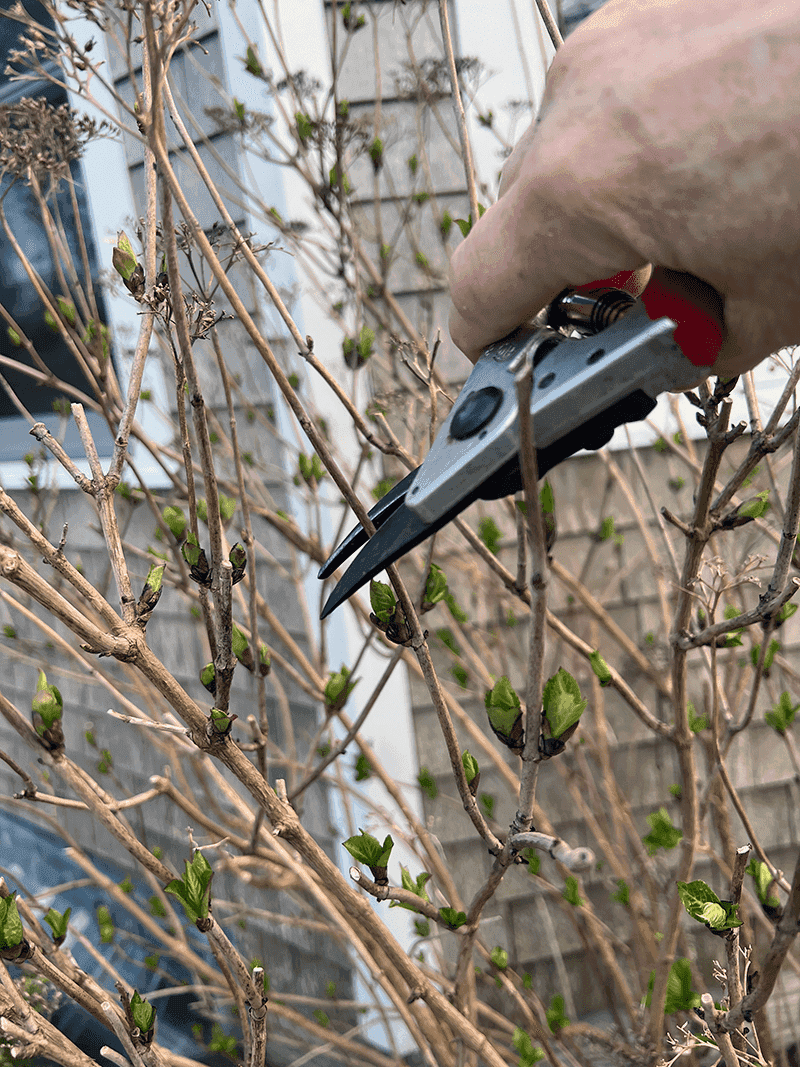
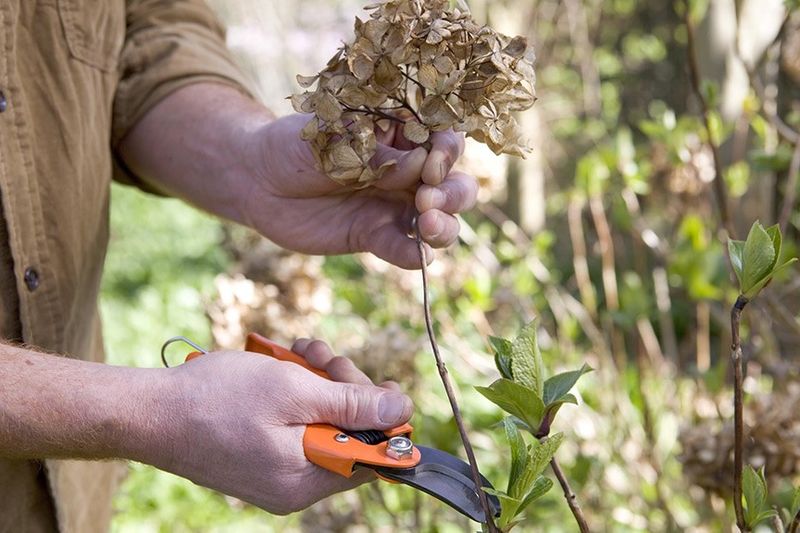
For old-wood hydrangeas, selective pruning beats shearing every time. The goal is to remove clearly dead, broken, or diseased wood and to shape the plant lightly, not to cut it back hard in hopes of refreshing it.
Minnesota Extension’s best-bloom pruning guide recommends cutting just above a healthy bud when shortening a stem, using clean, sharp bypass pruners rather than hedge shears.
Tool hygiene matters more than most gardeners realize. When removing diseased tissue, disinfect pruners between cuts or between plants to avoid spreading pathogens.
Penn State Extension’s grooming guidance reinforces this practice as a basic step in preventing disease spread during routine pruning sessions.
When the variety is unknown, the safest path is to remove only dead, broken, or obviously diseased stems and postpone any major shaping until you can confirm how the plant flowers. Cutting an unidentified hydrangea back hard risks stripping it of its entire bloom potential for the coming season.
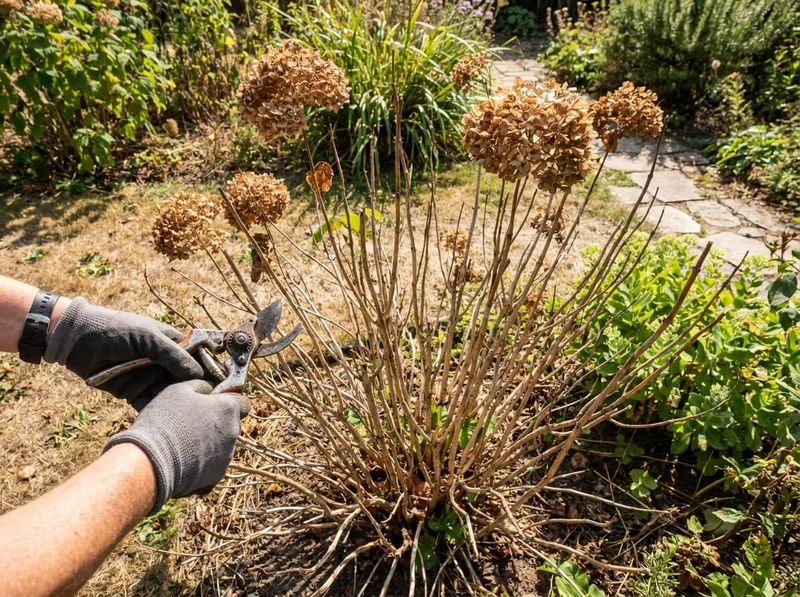
One more distinction worth keeping clear: removing spent flower heads, sometimes called deadheading, is optional for plant health and is not the same as cutting back the stems that may be carrying next year’s buds. Deadheading the old blooms will not cost you flowers next season; cutting the stems beneath them might.
Reblooming cultivars reduce risk but do not erase it
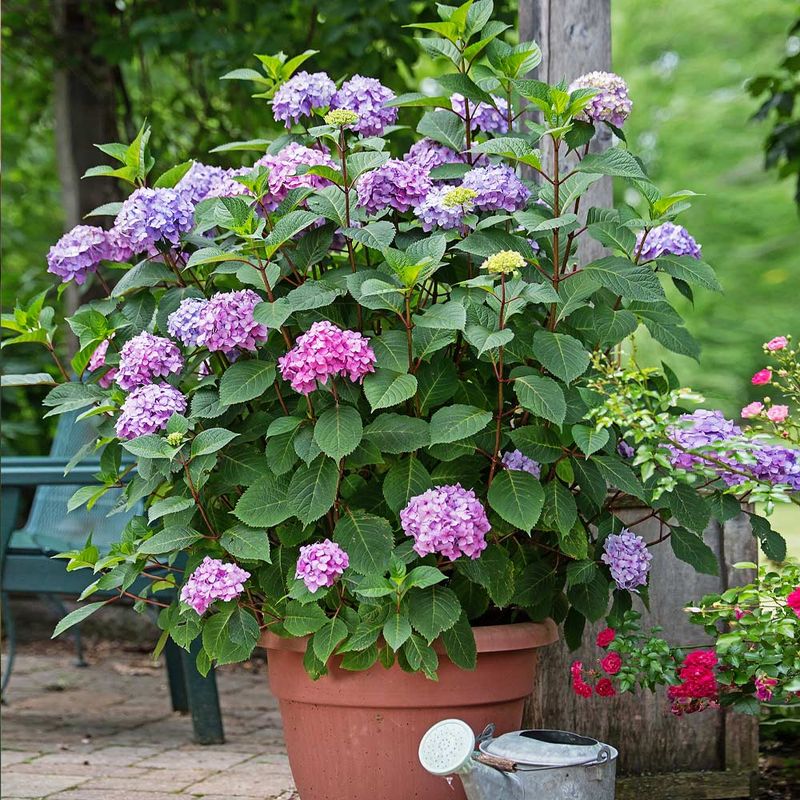
Remontant cultivars, commonly sold under names like ‘Endless Summer,’ ‘BloomStruck,’ or ‘Let’s Dance,’ can produce flowers on both old and new wood. That flexibility means they can still push out some blooms even after a winter that killed the previous season’s stems, or after a pruning cut that removed them.
The practical limit of that flexibility is easy to underestimate. A heavy or poorly timed cut can still remove the first old-wood flush, which is often the earliest and most abundant wave of blooms.
University of Illinois Extension’s timing article notes that reblooming types may still flower after pruning but that the total bloom period and first-flush timing can be affected. The plant may eventually produce new-wood flowers later in the season, but the overall display is shorter and less full than it would have been with the old-wood buds intact.
A reblooming label is not permission for indiscriminate pruning. University of Maryland Extension treats remontant cultivars as more forgiving, not as a different set of rules.
If preserving the earliest and longest possible bloom window matters to you, protect the old-wood stems on reblooming types the same way you would on a standard bigleaf, and save major cuts for right after the first flush fades.
Check Southern stresses before blaming the pruners
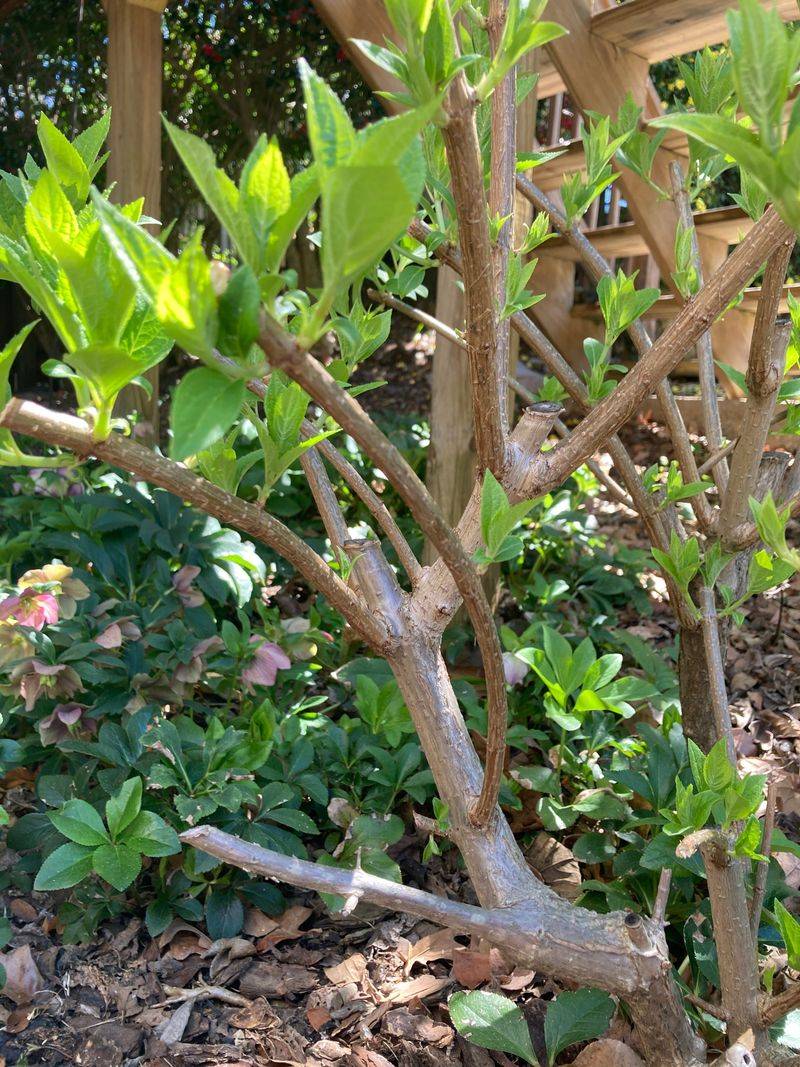
Pruning history is only one thread to pull. Before concluding that a misplaced cut is responsible for missing blooms, run through the other common causes that affect Southern gardens specifically.
Late freezes in the upper South can kill flower buds on bigleaf hydrangeas even when the stems themselves survive, leaving the plant leafy but flowerless. Deer can browse developing buds cleanly off the stems overnight, leaving no obvious sign beyond bare stem tips.
Florida and Texas gardeners face a different set of pressures. Intense afternoon sun and high summer heat can stress hydrangeas enough to suppress flowering, and UF/IFAS guidance on Florida shade landscaping notes that afternoon shade is often critical for plant health in the deep South.
Poor drainage, inconsistent irrigation, and drought can all damage roots and reduce bloom even when the foliage appears normal. UGA Extension’s bigleaf hydrangea publication recommends consistent moisture and well-drained soil as baseline requirements for reliable flowering.
Excess nitrogen is another quiet bloom-killer. A high-nitrogen fertilizer applied in good faith can push the plant into producing more leaves at the expense of flowers.
UGA Extension’s soil-testing FAQ recommends testing the soil before correcting any nutrient imbalance rather than adding fertilizer as a reflex. Automatic extra watering whenever leaves wilt is also worth questioning; heat-stressed leaves can droop even when the soil holds adequate moisture, and overwatering a poorly drained site can cause root damage that mimics drought stress.
Protect the next bloom instead of cutting harder
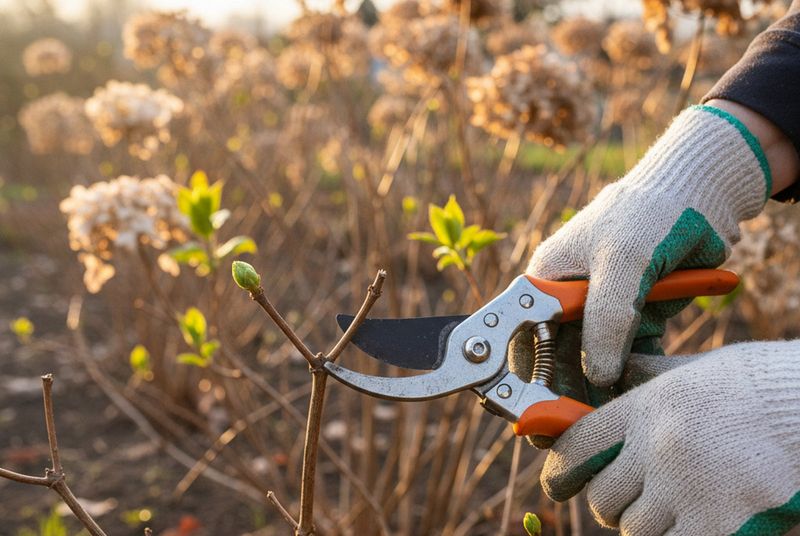
The most reliable path forward starts with identification. Confirm whether your hydrangea flowers on old wood, new wood, or both, then review the past season for any pruning, frost, browsing, or drought that could have cost you buds.
University of Maryland Extension’s pruning resource and Penn State Extension’s species guide both frame identification as the necessary first step before any cut is made.
For old-wood types, the main job between now and the correct pruning window is to leave the existing stems alone. Smooth and panicle hydrangeas follow their own late-winter schedule and do not need the same restraint.
If confirmed site or nutrition problems turned up during your diagnosis, address those directly rather than reaching for a blanket cut, extra fertilizer, or a heavier watering schedule.
A hydrangea that skipped its flowers this year still has everything it needs to bloom well next season, as long as the stems carrying those future buds stay intact. The pruners are not the enemy; the timing is.