
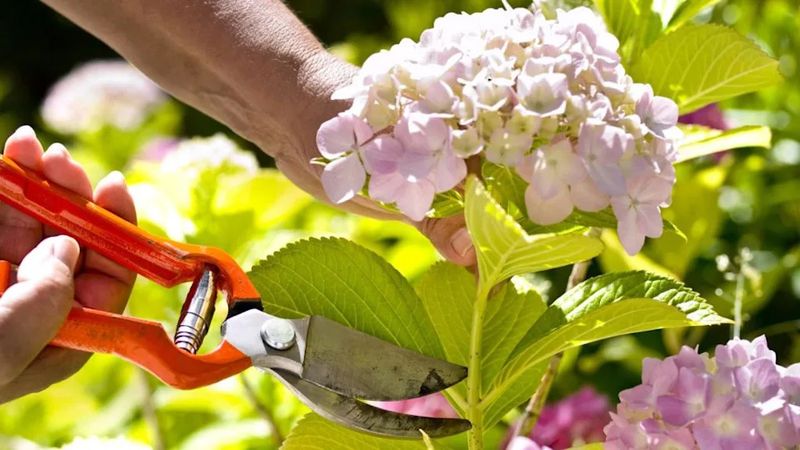
Few things are more puzzling than a hydrangea full of healthy green leaves that refuses to put out a single flower. For many Southern gardeners growing traditional bigleaf, oakleaf, or mountain hydrangeas, one overlooked care habit – pruning at the wrong time of year – can quietly wipe out next season’s blooms before they ever get started.
Understanding why this happens, and knowing which plants it actually affects, puts you back in control of your yard without a lot of guesswork.
Untimely pruning can leave an old-wood hydrangea leafy but flowerless
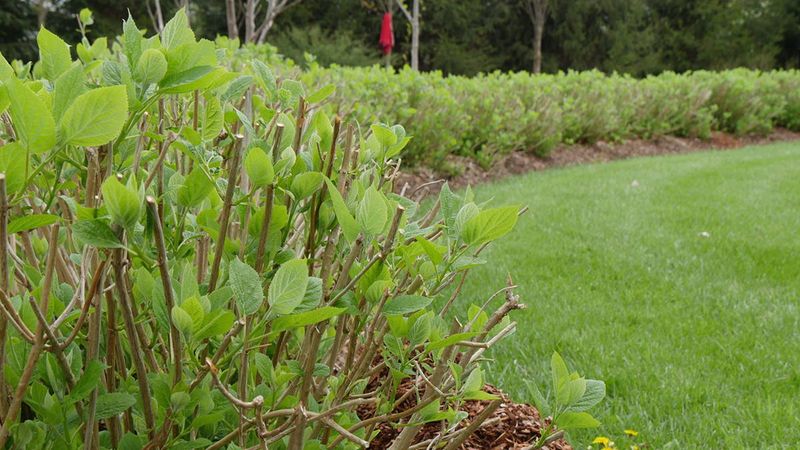
Healthy leaves and zero blooms is one of the most frustrating sights in a Southern garden, and for many traditional bigleaf, oakleaf, and mountain hydrangeas, untimely pruning is a common reason it happens. When gardeners cut these shrubs at the wrong point in the season, they can unknowingly remove the stems that were already carrying next year’s flower buds.
The plant leafs out beautifully because the roots and crown are fine – but the flowering wood is gone.
That said, wrong-time pruning is an important possibility to consider, not a guaranteed explanation for every flowerless hydrangea. Illinois Extension guidance on hydrangea care points out that inadequate sunlight is another significant factor worth checking before blaming the shears.
Light, moisture, cold injury, and excess nitrogen can all produce the same leafy-but-flowerless result.
Before reaching any conclusion, the first step is figuring out exactly which hydrangea is growing in the yard. Species and cultivar identity determines whether pruning timing even matters for bloom production, and it shapes every corrective decision that follows.
Old wood carries next year’s flower buds
The key to understanding why timing matters so much comes down to where hydrangeas actually build their flower buds. Traditional bigleaf hydrangeas – both the round mophead and flat lacecap types – along with oakleaf hydrangeas and mountain hydrangeas generally set their flower buds on stems produced during the previous growing season.
Gardeners call this blooming on “old wood,” and it changes everything about when these plants can safely be cut.
Bud formation on those old stems begins in late summer. Mississippi State University Extension’s hydrangea guide specifically identifies August as when this process gets underway.
Once buds have started forming, any hard cut made from late summer through the following spring can remove them entirely, leaving the plant with nothing to open come flowering season.
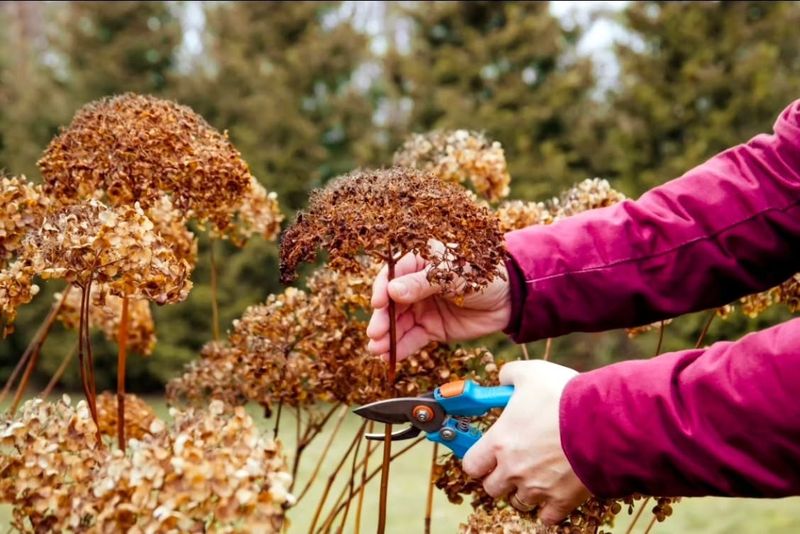
One distinction worth making clearly: removing spent flower heads after blooms fade is not the same thing as cutting into the old stems that carry future buds. Deadheading the dry, papery flower clusters left from the current season is generally safe.
The risk comes from deeper cuts into the live stems below, particularly once late summer bud formation has begun. University of Georgia Extension’s bigleaf hydrangea guide reinforces this distinction, advising that pruning should happen as flowers fade and not after the late-summer bud-setting window closes.
Identify the species or cultivar before choosing a pruning date
Not every hydrangea plays by the same rules, which is exactly why a universal pruning calendar can cause real damage. The safest move before picking up pruners is identifying what species or cultivar is actually growing in the yard.
Penn State Extension’s species-specific pruning guide makes this point directly: the same winter cut that is perfectly appropriate for one hydrangea type can strip the flower buds from another.
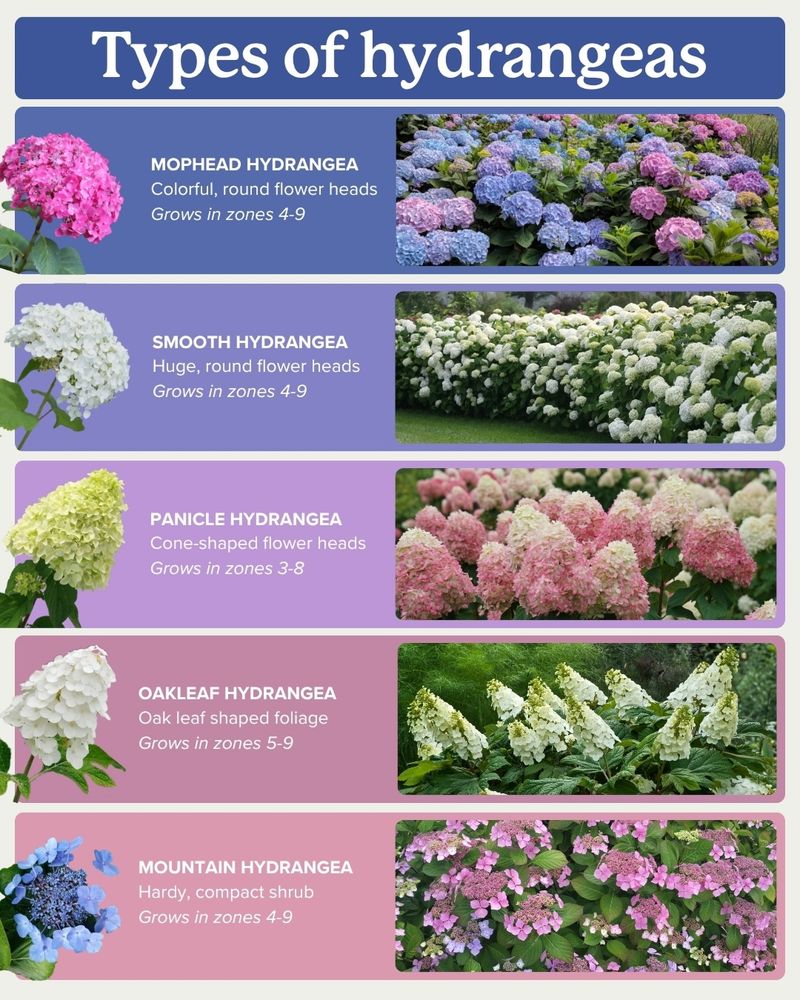
Old-wood types include traditional bigleaf hydrangeas (Hydrangea macrophylla), oakleaf hydrangeas (H. quercifolia), and mountain hydrangeas (H. serrata). These need pruning only after flowering, while the old stems from the previous year are still intact and carrying developing buds.
Smooth hydrangeas such as ‘Annabelle’ (H. arborescens) and panicle hydrangeas such as ‘Limelight’ (H. paniculata) belong to the opposite category – they bloom on new wood grown in the current season and tolerate late-winter or early-spring pruning without losing their flowers.
There is also a middle category worth knowing. Reblooming or remontant bigleaf cultivars, including the widely sold Endless Summer series, can flower on both old and new wood.
Mississippi State’s Southern Gardening column on hydrangea care explains that pruning these cultivars at the wrong time may reduce the early flush of blooms from old wood without eliminating every flower, since new wood can still produce later in the season. Checking the plant tag, the cultivar name, or a reliable extension publication is the most reliable way to sort out which category applies before making any cut.
University of Minnesota Extension’s pruning guide also emphasizes that species identification is the essential first step, noting that panicle and smooth hydrangeas are the types that can handle dormant-season pruning without sacrificing the bloom.
After flowering, make selective cuts that preserve old wood
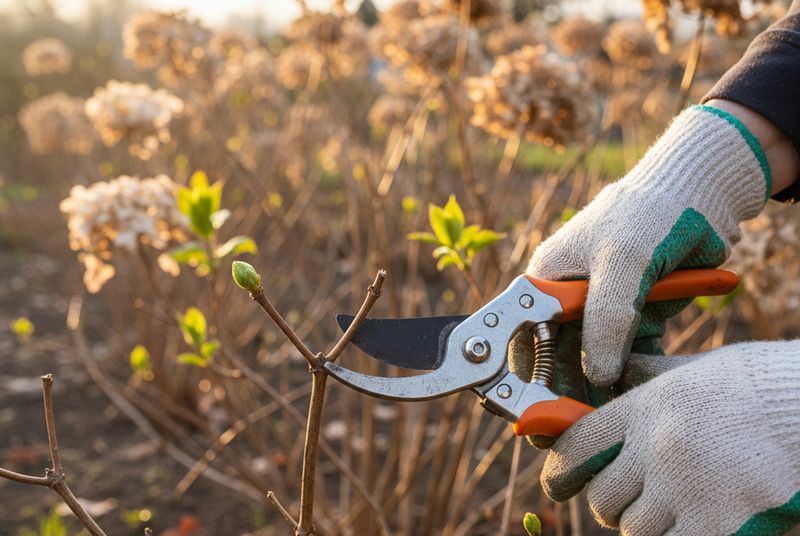
For old-wood hydrangeas, the safest pruning window opens right after the flowers fade and closes well before late summer bud formation begins. During that window, removing spent flower heads and any stems that are visibly dead or damaged is appropriate and helpful.
What to avoid is shearing the entire shrub down or making deep cuts into healthy stems that may already be developing next season’s buds.
University of Georgia Extension advises pruning bigleaf hydrangea as the flowers fade and cautions against pruning after August 1, framing that date as a guideline for when bud formation for the following year typically begins in the Southeast. That date is a useful benchmark for many traditional bigleaf hydrangeas in the region, though species, cultivar, local bloom timing, and climate can shift the window.
The practical takeaway is to finish any cuts early rather than late.
Dead or damaged wood is a different matter. Stems that are hollow, brittle, or show no signs of life can be removed at any point in the season without sacrificing flower buds, since those stems were not going to produce blooms anyway.
The key is distinguishing dead wood from healthy old wood that looks unremarkable but is carrying future buds.
When an established old-wood shrub genuinely needs rejuvenation rather than routine cleanup, Mississippi State University Extension recommends removing roughly one-third of the oldest stems to the ground as a selective renewal approach. That is different from shearing the whole plant, and it should be treated as an occasional corrective measure rather than a routine annual habit.
Illinois Extension’s hydrangea pruning guide similarly emphasizes selective cuts over wholesale removal for plants that bloom on old wood.
New-wood hydrangeas can use a later pruning window
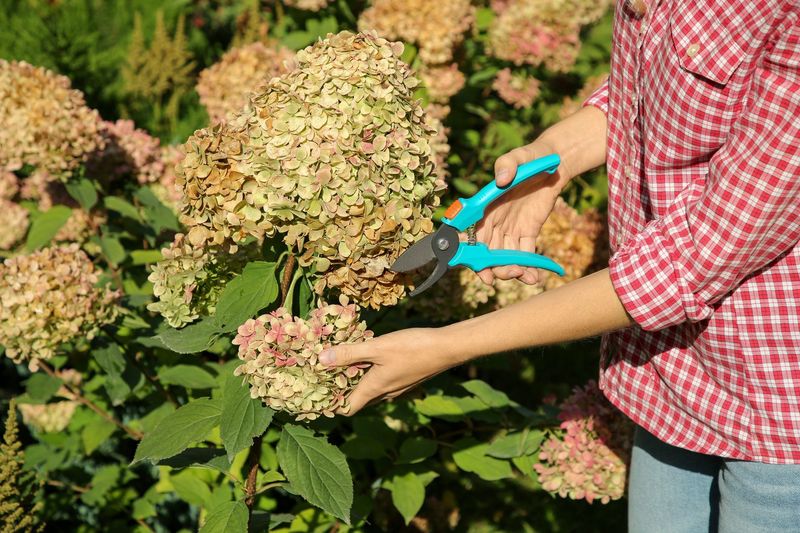
Smooth and panicle hydrangeas operate on a completely different schedule, and that difference gives gardeners a lot more flexibility with timing. Because both types flower on new growth produced in the current season, cutting them back in late winter or early spring before new growth emerges does not remove any flower buds.
The buds haven’t formed yet – they will develop on the fresh stems that push out after pruning.
University of Minnesota Extension confirms that panicle hydrangeas, including cultivars like ‘Limelight,’ and smooth hydrangeas such as ‘Annabelle’ can be pruned in late winter or early spring before new growth begins. For established plants that are getting too large or leggy, harder cuts are generally tolerated.
Some gardeners do cut certain established smooth hydrangeas quite low to encourage larger flower heads on strong new stems.
What this schedule does not do is transfer to the rest of the hydrangea world. Cutting a traditional bigleaf, oakleaf, or mountain hydrangea in late winter using the same approach that works perfectly for a panicle hydrangea can eliminate an entire season of flowers.
Penn State Extension reinforces that species identity must drive the pruning decision, not a one-size-fits-all calendar. Blanket advice to cut every hydrangea to the ground each spring is particularly risky for old-wood types and should be set aside in favor of species-specific guidance.
Check light, moisture, cold injury, and nitrogen when pruning does not fit
Sometimes the pruning calendar checks out – the cuts were made at the right time, the old wood was preserved – and the hydrangea still does not bloom. When that happens, the investigation needs to move beyond shears and timing.
Several other documented conditions can produce the same flowerless result, and sorting through them requires looking at the plant’s environment rather than its pruning history.
Sunlight is a logical starting point. A hydrangea planted under deepening tree canopy or pushed into shade by a growing structure may simply not be getting enough light to trigger flowering.
Illinois Extension identifies insufficient sunlight as an important factor to evaluate before attributing bloom failure to pruning alone. Most hydrangeas need several hours of direct sun daily, even the types that prefer afternoon shade.
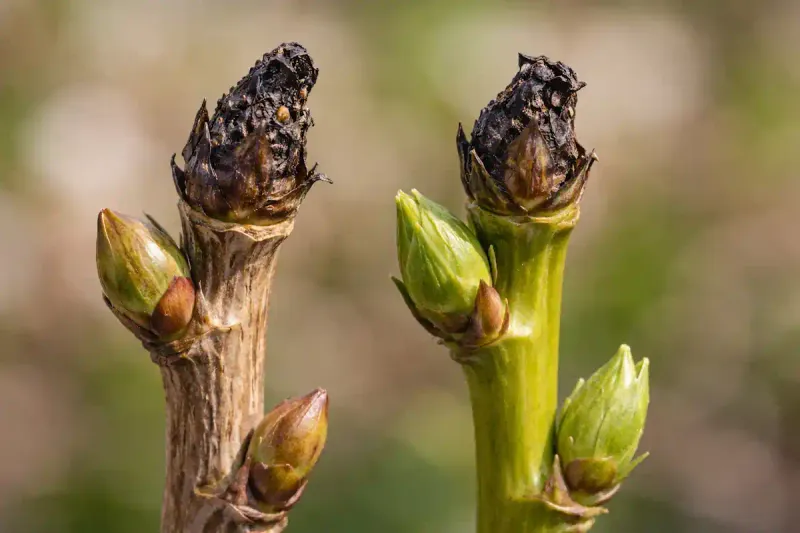
Cold injury is another possibility worth examining, especially in areas where late freezes arrive after buds have already formed on old wood. A hard frost in early spring can kill those buds without leaving obvious damage to the stems, so the plant looks healthy but has nothing to open.
Mississippi State’s hydrangea publication lists winter and late-spring cold injury among the documented causes of poor flowering in old-wood types.
Excess nitrogen is a less obvious culprit but a real one. Fertilizers heavy in nitrogen push lush vegetative growth at the expense of flowers, so a plant fed with a high-nitrogen lawn product or over-fertilized bed can produce impressive foliage while putting out few or no blooms.
Drought and inconsistent watering also stress the plant in ways that can reduce flowering. Penn State Extension’s guide on hydrangea bloom failure covers these factors alongside pruning as parallel explanations worth ruling out.
Addressing light, moisture, and fertilizer habits can improve plant health going forward, but none of those corrections can recreate buds that were already removed by pruning or killed by frost.
Adapt moisture, shade, and mulch to Southern growing conditions
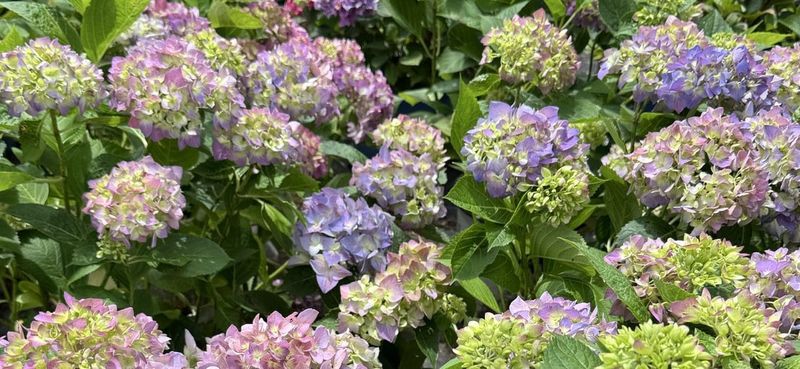
Southern gardeners face a wider range of growing conditions than a single care schedule can address. Heat, drought, sandy coastal soil, heavy clay, and the timing of late freezes vary considerably across Florida, Texas, and the broader Southeast.
Treating the region as one uniform climate leads to advice that works in one yard and fails in another just a few counties away.
For bigleaf hydrangeas in particular, siting the plant correctly makes a meaningful difference in how well it performs through long Southern summers. Morning sun with afternoon shade is the generally recommended exposure, protecting the plant from the most intense heat of the day while still providing enough light for good flowering.
University of Georgia Extension describes bigleaf hydrangea as water-demanding and recommends watering when the plant begins to wilt if rain has been absent, along with applying 3 to 5 inches of organic mulch to help conserve soil moisture and moderate root-zone temperatures. Mulch should be kept back from the stems to avoid creating rot conditions at the base.
Mississippi State’s hydrangea publication offers roughly 1 inch of water per week from rain or irrigation as a general benchmark for plant health, while making clear that actual needs depend on soil type, drainage, temperature, and the specific plant. Sandy soils drain faster and may need more frequent watering, while heavy clay holds moisture longer and can create root problems if drainage is poor.
Florida gardeners growing oakleaf hydrangea have a regionally relevant example to work from. UF/IFAS identifies oakleaf hydrangea as native to Florida and suitable for USDA Zones 5B through 9, recommending pruning after flowering when a denser shrub shape is desired.
That timing advice is specific to oakleaf hydrangea in that region and should not be applied as a universal schedule for every hydrangea type across the entire South.
Protect the next bloom cycle instead of chasing an instant fix
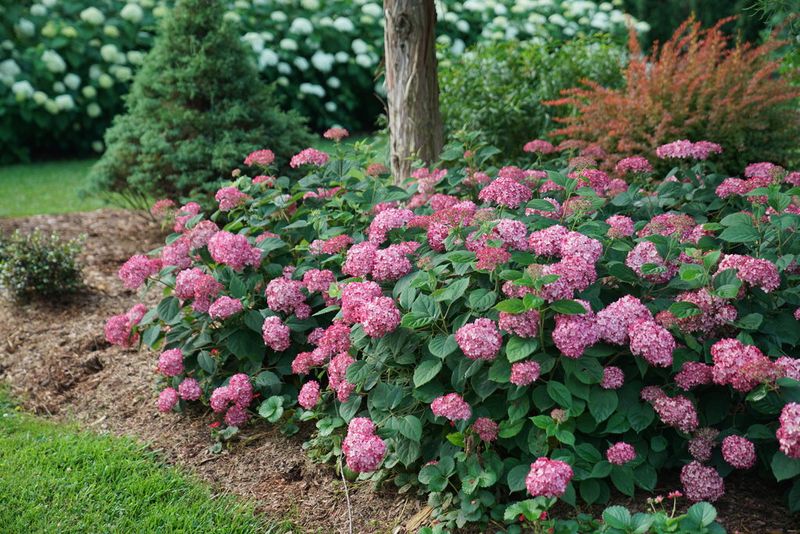
Recovering from a missed bloom season starts with a clear-eyed look at what actually happened. Begin by identifying the hydrangea species or cultivar, then determine whether it flowers on old wood or new wood.
That single piece of information drives every other decision about pruning timing, how aggressively to cut, and what to preserve going into the next season.
From there, work through the other variables. Check how much direct sunlight the plant receives, whether moisture has been consistent, and whether a late freeze might have killed buds that formed correctly on old wood.
Review fertilizer habits – if high-nitrogen products have been used near the plant, scaling back or switching to a balanced formula may help shift energy toward flowering rather than foliage. Mississippi State’s hydrangea guide covers these factors as parallel possibilities rather than a ranked checklist, which is the right way to approach a plant that is not cooperating.
When buds were removed by pruning or killed by frost, no fertilizer, amendment, or watering schedule will bring them back for the current season. Waiting for the next bloom cycle is sometimes the honest answer.
On the topic of flower color, soil pH adjustments affect color in bigleaf and mountain hydrangeas but do not replace missing buds. Mississippi State explicitly rejects folk remedies like rusty nails as a reliable way to shift bloom color, and casual use of aluminum sulfate, lime, or extra fertilizer without a soil test can create more problems than it solves.
Getting the timing right this season is the most reliable path to flowers next year.