
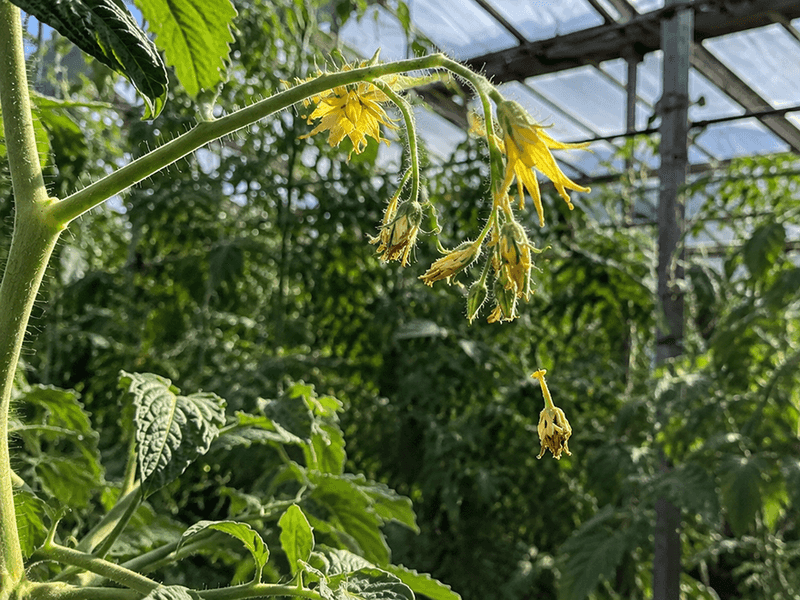
Watching tomato flowers open and then simply fall off without forming any fruit is one of the most frustrating things a summer gardener can face. For growers in Florida, Texas, and across the South, this problem often gets worse as temperatures climb through July and August.
Heat can interfere with pollen in ways that no amount of watering or fertilizer will fix on its own. Understanding exactly what is happening inside those flowers – and what you can realistically do about it – makes all the difference between a wasted season and a recovering plant.
Check the Ovary Before You Call It Blossom Drop
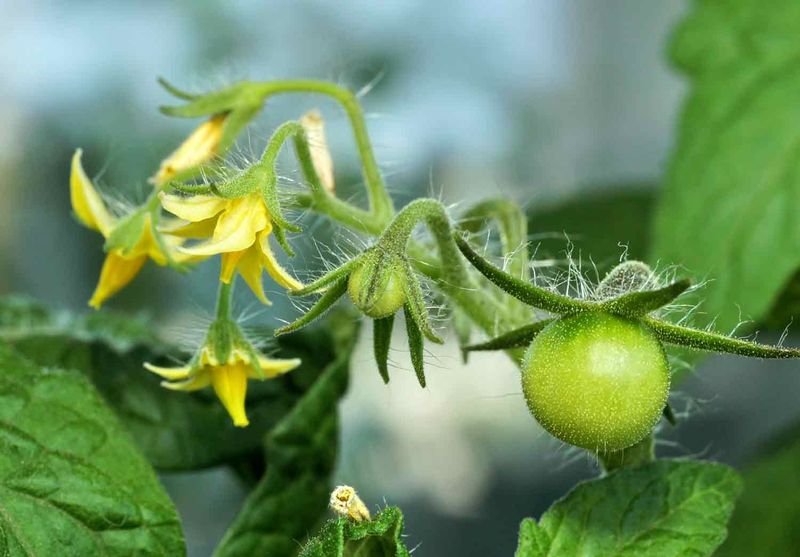
Dried petals scattered under your tomato plants can look alarming, but they do not automatically mean something went wrong. Tomato flowers naturally shed their petals and other floral parts after successful pollination, so the first thing to do is look past the petals and focus on the flower base.
If the small green ovary at the base of the flower is swelling and the base remains attached to the stem, pollination likely succeeded and a tiny tomato is forming.
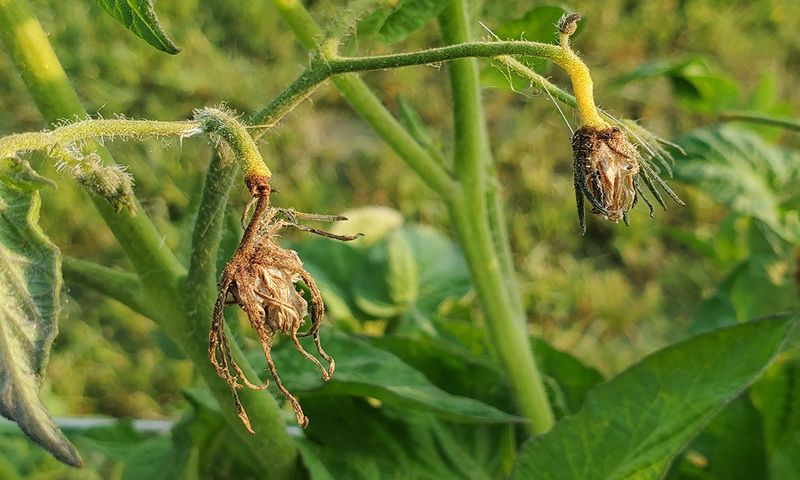
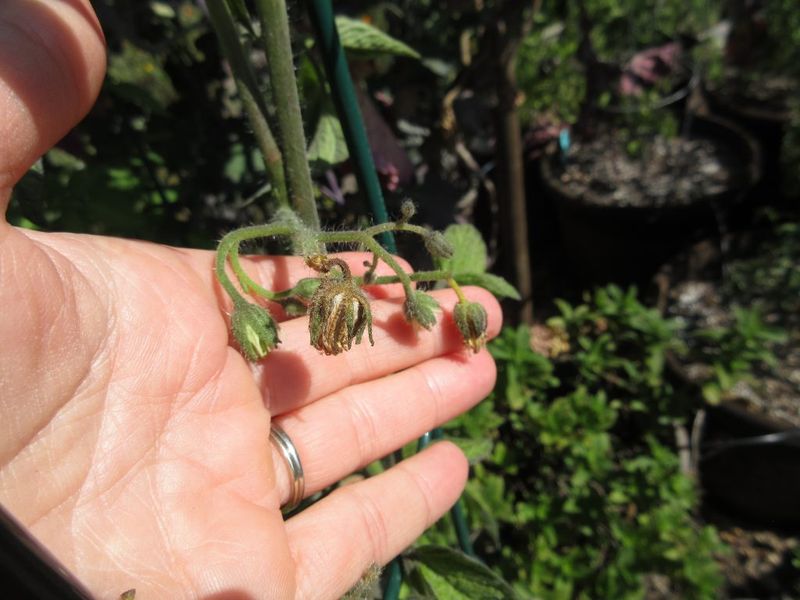
The clearer sign of failure is when the entire flower or its base detaches from the stem without any swelling behind it. UMass Extension vegetable notes confirm that incomplete pollination can also produce small, misshapen, or catfaced fruit rather than a complete absence of fruit, so check both for missing tomatoes and for oddly shaped ones forming near the stem.
A flower that drops cleanly, base and all, with nothing swelling behind it, is the stronger diagnostic clue.
Heat is a common explanation for this pattern in Southern gardens, especially when daytime temperatures push into the mid-to-upper 80s or higher and nights stay warm. Alabama Cooperative Extension notes that drought stress, excess nitrogen, high or low humidity, wind, shade, and poorly adapted varieties can all contribute to blossom drop, so heat is not the only possibility.
Treat temperature as a warning signal worth investigating rather than an automatic verdict, and look for other stressors before drawing conclusions.
Heat Can Damage Pollen Before Flowers Open
One reason vibration alone cannot solve every heat-related fruit-set failure is that the damage often happens before a flower ever opens. Pollen develops inside the flower bud during a sensitive window before anthesis, and prolonged high temperatures during that period can reduce pollen production, lower pollen viability, and interfere with pollen-tube growth.
Research published in the Journal of Experimental Botany identified reduced pollen viability and germination as key mechanisms behind heat-related fruit-set failure in tomatoes.
Warm nights compound the problem. A study in Frontiers in Plant Science found that elevated nighttime temperatures can be as disruptive to reproductive development as high daytime heat, affecting how flowers form and whether pollen functions normally once the flower opens.
A plant can look perfectly healthy above ground, with full green foliage and no visible wilting, while its reproductive tissues are quietly failing under that same heat load.
Knowing this distinction matters for how you respond. If flowers are opening during a stretch of sustained extreme heat, the pollen inside many of those flowers may already be compromised.
Additional heat-stress research reinforces that vibration cannot repair pollen that heat has already rendered nonviable. The practical contrast is this: in a sheltered raised bed, container, or greenhouse where air movement is minimal, viable pollen may simply need a little vibration to release and reach the stigma.
In an outdoor garden baking through a prolonged heat wave, the pollen itself may be the limiting factor, and cooling strategies become more urgent than any mechanical technique.
Vibrate the Truss, Not the Flower
Tomato flowers are self-fertile, meaning pollen from a flower can fertilize that same flower without any help from a second plant. UF/IFAS pollination guidance explains that what tomatoes need is movement – something to dislodge pollen from the anther cone so it falls onto the stigma below.
Wind, incidental brushing against the plant, or a vibrating tool can all provide that movement. A paintbrush transfer between separate flowers is generally unnecessary for home gardens.
The practical sequence is straightforward. Select a flower cluster where at least one flower is fully open and the petals look dry rather than wet or sticky.
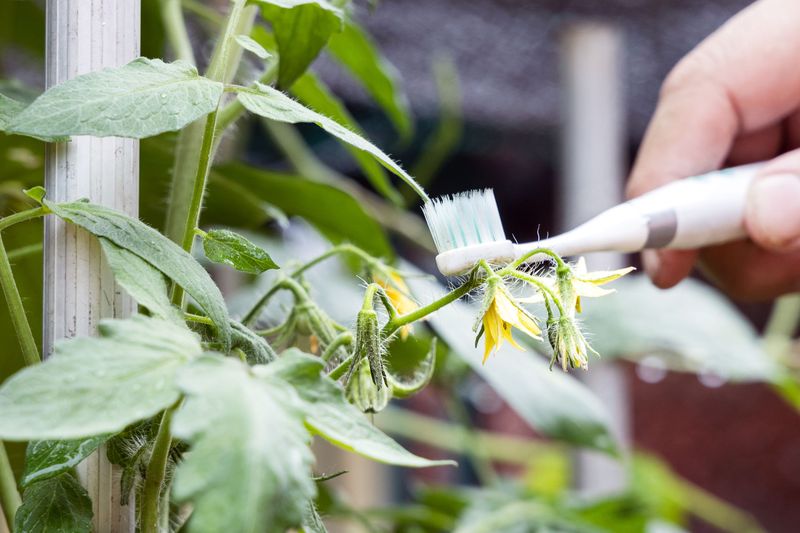
Then gently tap the flower cluster or the supporting stem just behind it, or hold a battery-operated toothbrush or dedicated tomato pollinator against the stem for a few seconds. UConn IPM greenhouse pollination guidance recommends vibrating the flower truss or the supporting stem rather than pressing the tool directly against individual flowers or developing fruit.
Keeping the tool off the flowers and fruit matters more than most gardeners realize. Direct contact between a vibrating device and a flower or small developing tomato can cause physical scars or surface damage that marks the fruit.
UF/IFAS extension guidance on tomato pollination advises a light touch applied to the stem for a few seconds per cluster, which is enough to send vibration through the flower without risking contact injury. Move through the plant cluster by cluster rather than returning repeatedly to the same spot, and skip any clusters where flowers have already dropped without forming an ovary.
Work on Fresh, Dry Flowers and Watch for Set
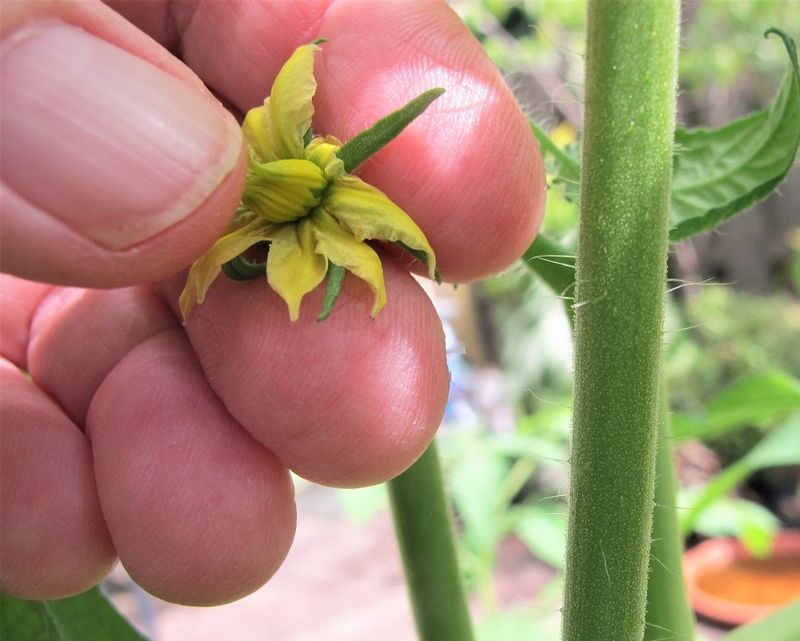
Timing affects whether vibration does any good at all. Pollen sheds most freely when flowers are fully open, the air is dry, and the sun has warmed the plant, which commonly falls somewhere between mid-morning and early afternoon on a sunny day.
UF/IFAS tomato pollination guidance points to this window as the most productive time to work. Wet flowers, visibly clumped or sticky pollen, and very humid conditions all inhibit pollen release, so hold off if the plant is still damp from irrigation or overnight humidity.
How often to repeat the process is a common question. Alabama Extension greenhouse tomato production recommendations and Oregon State University greenhouse guidance both support vibrating flower clusters every other day or roughly three times per week while new flowers are opening.
Daily shaking offers no proven advantage and may disturb developing fruit unnecessarily. Skip clusters where flowers have already detached without leaving an attached ovary behind, because those flowers are past the point where vibration helps.
Watching for the first sign of fruit set keeps expectations grounded. Success shows up as an attached flower base with a small green bump swelling behind it over the next several days.
UC ANR tomato fruit-set guidance notes that a dried petal on the ground is not evidence of failure on its own. The ovary is the part to watch, and a swelling one confirms the flower did its job even if the petals are long gone.
Cool the Root Zone and Give Heat a Temporary Break
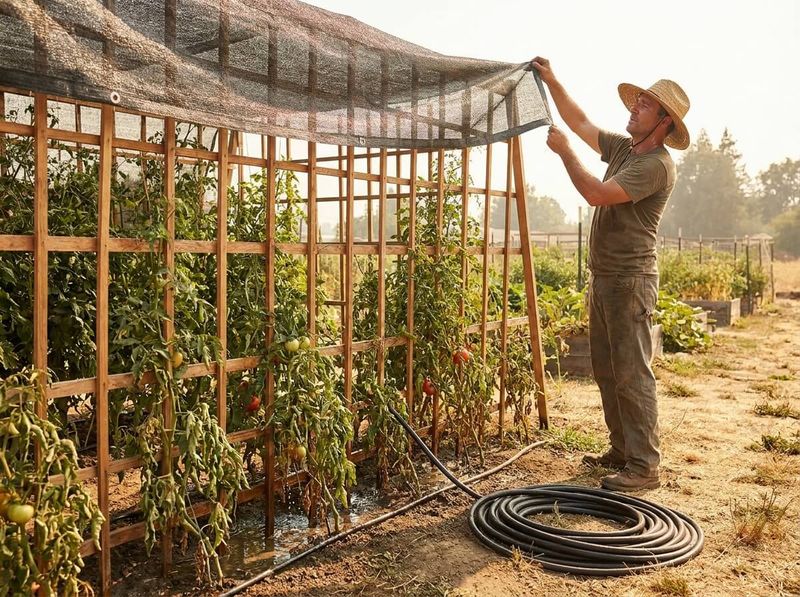
When sustained heat has likely damaged pollen before flowers open, cooling and soil moisture matter more than any mechanical technique. Even root-zone moisture is a foundation the plant needs to handle heat without compounding stress on reproductive tissues.
UF/IFAS tomato growing guidance and Iowa State Extension watering recommendations both support watering deeply at the soil surface rather than relying on frequent shallow sprinkles, with amounts adjusted for rainfall, soil type, container size, and local heat. A common extension target falls around 1 to 1.5 inches per week, but Southern summer heat often demands more attention to soil moisture than that number implies.
Mulch is one of the most practical tools available. A 2- to 3-inch layer of straw, wood chips, or similar organic material over the root zone slows evaporation, buffers soil temperature swings, and reduces the moisture stress that can compound heat damage.
Cornell Garden-Based Learning tomato guidance includes mulching as a standard heat and moisture management step.
Temporary afternoon shade is one more option for severe heat stretches. University of Delaware Cooperative Extension and University of Maryland Extension both reference shade cloth as a heat-management tool for vegetable gardens.
Roughly 30% shade cloth is one extension-supported option; support it above or beside the plant on stakes or a simple frame rather than laying it directly on foliage, so air can still move through. Remove or adjust the cloth once extreme heat passes, because blocking light for prolonged periods creates its own problems for fruit development.
Patience with the plant while temperatures stay high is not giving up; it is the most realistic strategy when pollen viability is the limiting factor.
Do Not Add Fertilizer, Calcium, or Spray by Default
Reaching for a bag of fertilizer when blossoms fall is a natural impulse, but it can make the situation worse. Excess nitrogen pushes the plant toward producing lush foliage at the expense of flowers and fruit, which is the opposite of what a struggling plant needs during a heat wave.
Cornell Garden-Based Learning advises against heavy nitrogen applications during blossom and fruit-set periods, and the same caution applies to fertilizing simply because flowers are dropping. A soil test or clear crop symptoms, such as yellowing from a confirmed deficiency, should guide any nutrient treatment.
Calcium sprays are another common but often misapplied response. Blossom-end rot, which is a calcium-related disorder, affects developing fruit by causing a dark, sunken patch on the bottom of the tomato.
Oklahoma State Extension distinguishes blossom drop clearly from blossom-end rot: flowers that fall before any fruit forms are a separate problem from fruit that forms and then develops end rot. Adding calcium when flowers are simply dropping, without evidence of end rot, addresses the wrong disorder.
Blossom-set sprays deserve the same skepticism during high-heat conditions. Purdue Extension notes that hormone sprays may provide some benefit during cool-temperature blossom drop but are generally not effective during high-temperature failure and can produce seedless or misshapen fruit.
Any product used in the garden must be applied exactly according to its current label under EPA pesticide registration requirements. Humidity, drought, wind, shade, disease, and variety differences can all produce fruit-set problems that look identical to heat-related blossom drop, so a single quick fix rarely covers every case.
Let Cooler Weather or Better Varieties Extend the Season
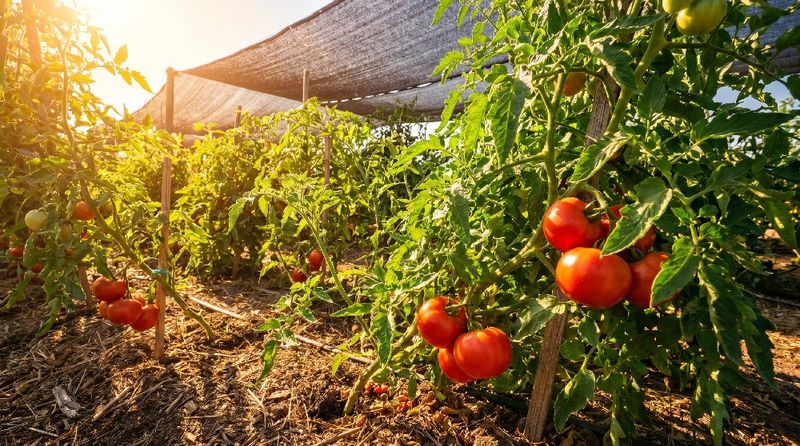
Sometimes the most productive thing a gardener can do during a prolonged Southern heat wave is shift focus from forcing fruit to keeping the plant healthy for when temperatures ease. Large-fruited tomatoes often pause reproductive growth during the hottest stretches and resume setting fruit when daytime and nighttime temperatures moderate.
Oklahoma State Extension frames late-summer rescue partly as a waiting strategy: preserve root health, maintain moisture, and let the plant recover its reproductive capacity as conditions improve.
For Florida and Texas gardeners planning ahead or considering a replacement planting, variety selection carries real weight. UF/IFAS hot-set tomato variety guidance identifies cultivars bred or selected to set fruit at higher temperatures, and Texas A&M water resources tomato guidance similarly recommends heat-set hybrids or heat-tolerant heirlooms for summer planting.
Neither source claims that any variety defeats every heat wave, but starting with a cultivar that was developed for warm-season performance gives the plant a better baseline. Additional UF/IFAS cultivar recommendations for Florida provide specific variety names suited to the state’s conditions.
Cherry and grape tomatoes are worth considering as a bridge during extreme heat. UF/IFAS cherry tomato guidance notes that smaller-fruited types generally set across a wider temperature range than many large-fruited varieties, making them a more reliable choice when summer refuses to let up.
The right order of operations stays the same regardless of variety: inspect fresh flowers for a swelling ovary, vibrate viable blooms gently at the stem, protect root moisture and moderate soil temperature, and wait out the heat when pollen viability is the real obstacle. A plant that survives the summer in good health is already set up for a productive fall flush.