
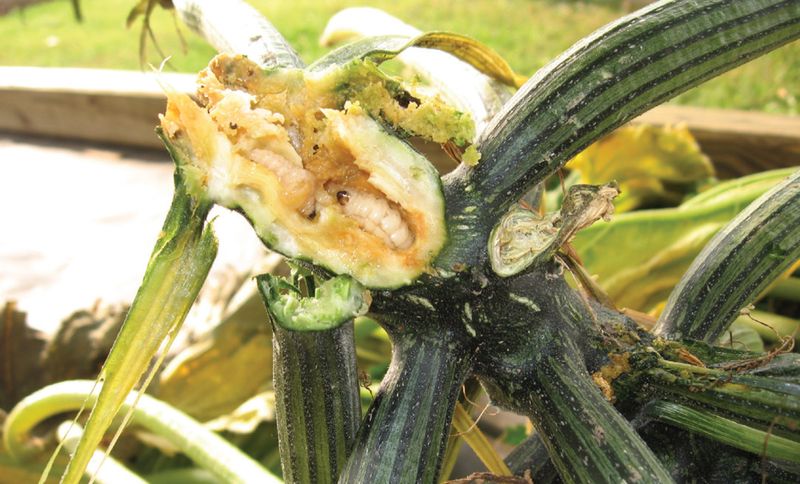
A zucchini that looks perfectly healthy at breakfast and is flat on the ground by dinner is one of the most alarming sights in a summer garden. Wet soil makes the collapse even more confusing, because the obvious explanation – not enough water – clearly does not apply.
The likely culprit is a hidden larva tunneling through the stem and cutting off the plant’s water supply from the inside. Knowing what to look for, and what else could cause the same symptom, puts you back in control.
Check the lower stem—and the soil—before naming the culprit
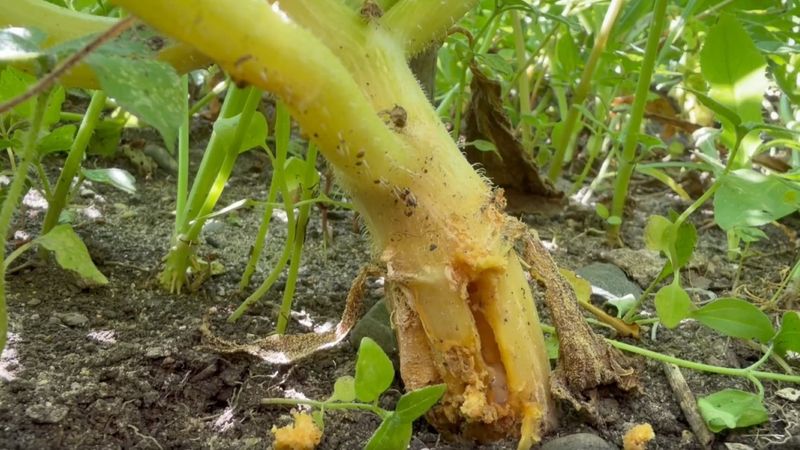
Sudden wilt in a zucchini can stop you cold, especially when the soil around the roots is clearly moist. Before settling on any single cause, take a breath and remember that several problems can produce this exact picture, and the right response depends on which one is actually present.
Squash vine borer is the leading suspect when wilt appears alongside physical damage at the base of the plant, but wilt alone is not enough to confirm it. University of Minnesota’s diagnostic guide for wilting squash and pumpkins lists squash vine borer alongside squash bugs, bacterial wilt, and crown or root diseases as causes worth investigating before drawing conclusions.
Wet soil adds an important wrinkle. A larva feeding inside the stem can destroy the tissue that moves water upward, leaving the plant unable to hydrate even when roots sit in moist ground.
At the same time, saturated or poorly drained soil can promote Phytophthora and other crown problems that also cause collapse, so wet conditions are not proof of a borer and are not proof of overwatering either. The inspection that follows – checking both the lower stem and the drainage situation – is the step that separates a strong borer suspicion from something else entirely.
A hidden larva can block water inside the vine
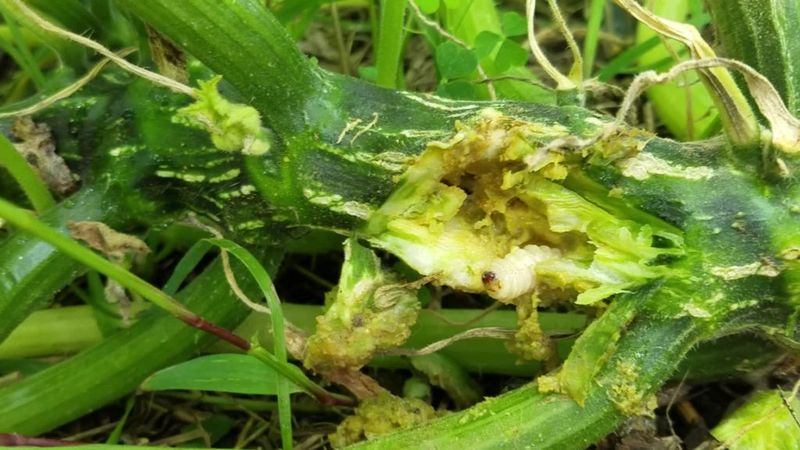
The squash vine borer, Melittia cucurbitae, spends most of its destructive life completely out of sight. The adult is a daytime-flying clearwing moth that many gardeners mistake for a wasp – it has clear wings, metallic green forewings, and an orange abdomen marked with black dots.
Females land near the lower stems, crowns, or leaf petioles of susceptible squash and pumpkin plants and lay eggs one at a time, often without attracting much notice.
Once an egg hatches, the young larva bores directly into the stem and begins feeding from the inside. University of Minnesota Extension explains that larvae tunnel inside the stem for roughly four to six weeks, steadily damaging the vascular tissue that carries water and nutrients upward through the plant.
That internal damage is why the symptom is so confusing. The roots may be sitting in perfectly moist soil, but the pathway that delivers that moisture to the leaves has been compromised or destroyed.
The plant wilts during the day because its leaves are losing water faster than the damaged stem can replace it. As feeding continues, the vine collapses entirely.
UF/IFAS research on squash vine borer confirms this vascular disruption as the mechanism behind the dramatic and often rapid decline gardeners witness.
Basal holes and wet frass provide the strongest evidence
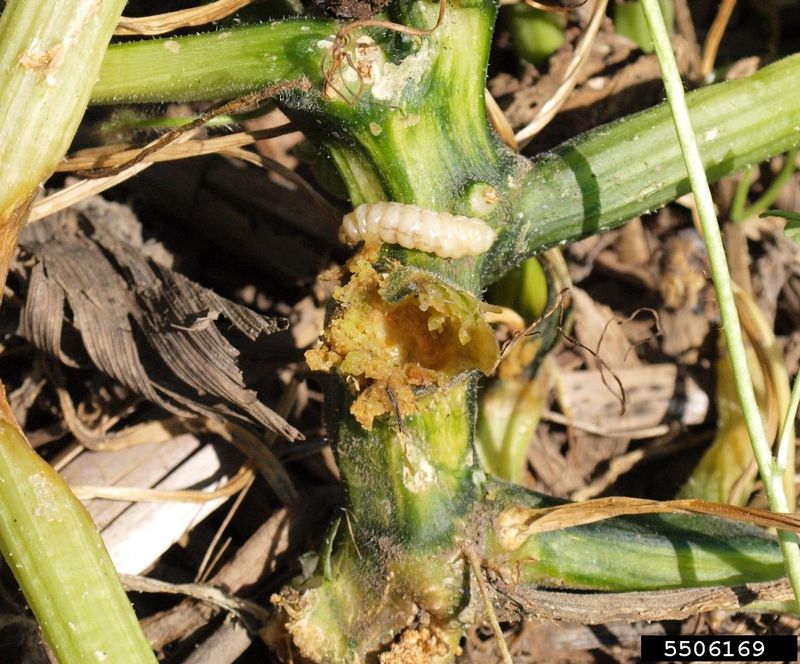
Wilt is a symptom shared by several problems, so the lower stem is where a real diagnosis begins. Start at the crown – the point where the stem meets the soil – and work upward a few inches, looking carefully at the entire circumference of the stem.
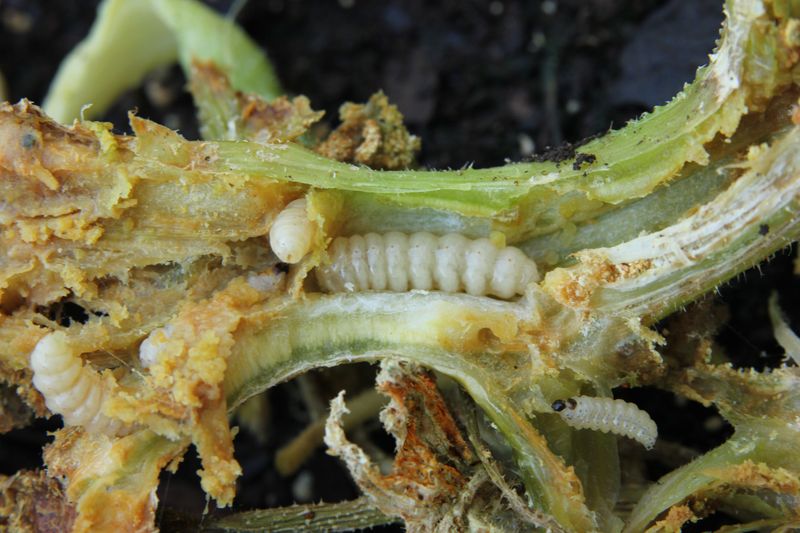
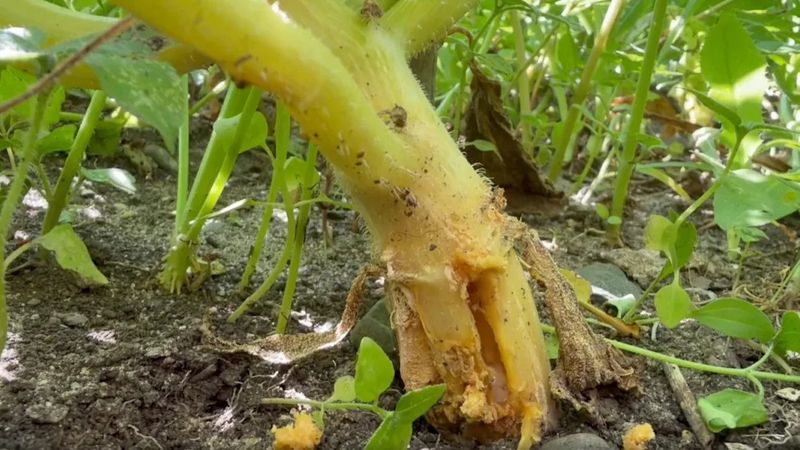
The clues that point most strongly toward squash vine borer are small entry holes in the stem surface, wet frass that looks like green or orange sawdust packed around or oozing from those holes, and a stem base that feels soft or mushy when gently pressed. If you carefully open the stem along its length with a clean sharp knife, you may find a cream-colored larva with a brown head inside the tunnel.
University of Minnesota Extension describes this combination of entry holes, wet frass, and a visible larva as the field evidence that distinguishes borer damage from other causes of wilt.
A single soft spot or some discoloration on the stem does not automatically confirm the pest. Crown rot, mechanical injury, and other issues can produce superficially similar damage.
The combination of a distinct entry hole packed with that characteristic wet, greenish-orange frass is what makes the borer diagnosis credible. If you find that combination, you have strong reason to treat the situation as a borer problem while still ruling out additional issues at the root zone.
Compare the borer clues with other causes of wilt
Getting the diagnosis right matters because the response to each problem is different. Squash bugs are one of the most common alternative explanations for wilting and decline in squash.
These insects feed by sucking sap from leaves and stems, causing yellowing, wilting, blackening, and eventual plant death. UF/IFAS guidance on squash bugs notes that adults, nymphs, and distinctive bronze-colored egg clusters are typically found on or beneath leaves rather than inside a single stem tunnel filled with frass.
If you are finding insects on the foliage rather than a hole in the stem base, squash bugs deserve serious consideration.
Bacterial wilt is another possibility, particularly when striped or spotted cucumber beetles are active in the garden. Penn State Extension notes that bacterial wilt can cause leaves to wilt during the day and partially recover at night in the early stages of the disease.
Squash is generally less susceptible than cucumbers or melons, but it can be affected. A basal hole packed with wet frass points away from bacterial wilt and toward a borer.
Crown and root problems, including Phytophthora, are worth checking when drainage is poor or the soil has stayed saturated for extended periods. University of Minnesota’s Phytophthora guidance describes crown and root rot that can develop in waterlogged conditions and cause rapid collapse.
If the stem base is rotted at or below the soil line without a clear entry hole and frass, a root or crown disease may be the primary issue rather than a borer. Checking the full diagnostic list for wilting squash helps avoid locking in on one answer too quickly.
Rescue only a vine that is still viable
Finding a borer does not automatically mean the plant is finished. A vine that is wilting but still has some green, turgid tissue and has not fully collapsed may respond to a careful rescue attempt.
The goal is to locate and remove the larva before it causes further damage, then give the wounded stem a chance to produce new roots.
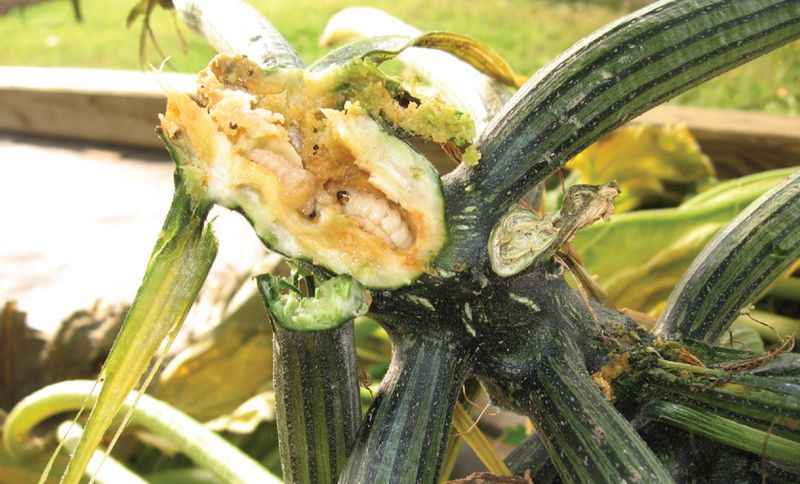
To attempt the procedure, use a clean, sharp knife to make a careful lengthwise slit along the affected section of the stem. Work slowly and try to follow the tunnel rather than cutting through healthy tissue unnecessarily.
Once the larva is visible, remove it with the blade tip or a thin tool. After extraction, press the cut stem closed as well as possible and mound moist soil over the wounded section.
University of Minnesota Extension and University of Illinois Extension’s guide to managing squash vine borer both describe this approach as a possible option for a still-viable plant, with the covered stem potentially forming new adventitious roots.
Be honest about the odds. The surgery itself can further injure the vine, and a plant with extensive tunneling may not recover regardless of what is done.
A stem that is already mushy, blackened along most of its length, or completely collapsed is not a good candidate for rescue. Remove and destroy those plants rather than leaving them in the bed, where the pest can continue its life cycle in the soil near the garden.
Reduce future exposure before moths lay eggs
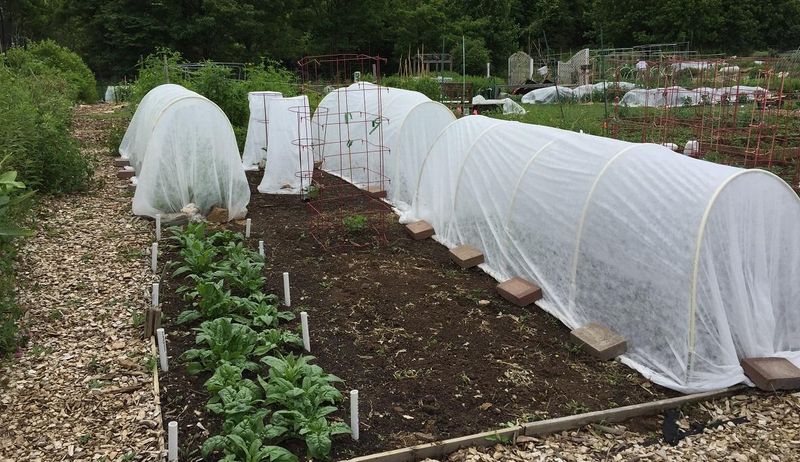
Prevention works best when it starts before the adult moths arrive, because once eggs hatch and larvae enter the stem, the options narrow quickly. Floating row covers made of lightweight fabric can physically exclude adult moths from laying eggs on your plants.
Secure the edges tightly to the soil so moths cannot find a gap, and install them at transplanting or shortly after seeds germinate.
The cover creates a trade-off that requires attention. Squash flowers need bee pollination to set fruit, so covers must be removed once the plants begin to flower – or the gardener must hand-pollinate.
University of Minnesota Extension also points out an important caveat: if cucurbits were grown in the same bed the previous year, adult borers may emerge from pupae already in that soil and become trapped beneath the cover rather than excluded by it. Rotating your squash planting to a new location each season is one way to reduce that risk, though rotation is a risk-reduction measure rather than a guarantee, particularly in small gardens where neighboring cucurbits may still attract adults.
Cleaning up after a lost plant matters too. Remove and destroy vines killed by borers rather than leaving them in the bed, because the pest overwinters in the soil near host plants.
UF/IFAS and University of Minnesota’s summer squash guide both include residue removal and rotation as part of an integrated approach. Some gardeners also switch to Cucurbita moschata types such as butternut squash, which are generally described as less susceptible to squash vine borer than zucchini and other Cucurbita pepo varieties – though less susceptible does not mean immune.
Use chemical controls early, cautiously, and by the label
Reaching for a spray after the plant has already wilted dramatically is usually too late to matter. Larvae inside a stem are shielded from foliar products by the plant tissue surrounding them, so surface applications have little chance of reaching the pest once it has burrowed in.
University of Georgia Extension’s troubleshooting guide for the Southeast reinforces that insecticides work primarily as preventive or early-intervention treatments targeting adults or newly hatching larvae before they enter the stem.
Bt-k (Bacillus thuringiensis var. kurstaki) is sometimes suggested as a safer option, but it is not a reliable rescue for larvae already inside the vine. UF/IFAS guidance on natural pest management products specifically cautions that common Bt formulations are not very effective against squash vine borer.
Some extension recommendations mention active ingredients such as bifenthrin, permethrin, carbaryl, or esfenvalerate for borer management, applied to the lower stem and crown during the adult flight period, but product registrations, permitted crops, application rates, and preharvest intervals vary by state and product.
Before applying anything, verify that the current product label specifically lists this crop and this pest. EPA guidance on pesticide labels is clear that the label is a legally enforceable document specifying where, how much, and how often a product may be used.
Reading the label before any garden application is not optional. Pollinator safety is equally non-negotiable: EPA pollinator protection guidance and extension sources both advise against spraying when bees are actively foraging, which in a flowering squash bed can mean waiting until early morning or evening when bee activity is low.
Let local scouting guide the next decision
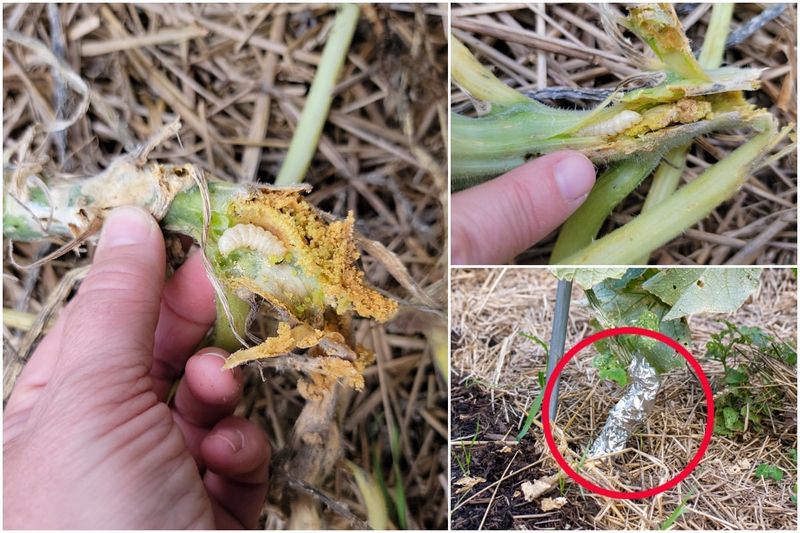
Every wilting zucchini deserves a two-step look before any action: examine the lower stem for entry holes and wet greenish-orange frass, and check the soil and drainage conditions at the same time. A basal hole packed with that characteristic frass is strong evidence of squash vine borer and justifies treating the situation as a probable borer problem.
Wilt without those stem clues calls for a broader look at squash bugs, cucumber beetles, drainage, and crown health before committing to a response.
If the vine still has living tissue, the rescue procedure described earlier is worth attempting. If the plant is collapsed and the stem is extensively damaged, remove it and destroy the debris to limit the pest’s ability to overwinter near your next planting.
University of Minnesota Extension and the diagnostic guide for wilting squash both support this methodical approach over reacting to wilt alone.
Timing your scouting to local conditions matters more than following a single national calendar. UF/IFAS documents two overlapping generations and adult activity in Florida from approximately mid-May through late October, a window far longer than northern patterns.
Gardeners in other Southern states should check with their state or county Extension office rather than assuming any one regional schedule applies. University of Georgia Extension’s Southeast troubleshooting resource is a practical starting point for gardeners across the region.
The gardener who scouts the stem first, checks local emergence timing, and acts before the larva is deep inside the vine will always have more options than one who waits for the collapse to arrive.