
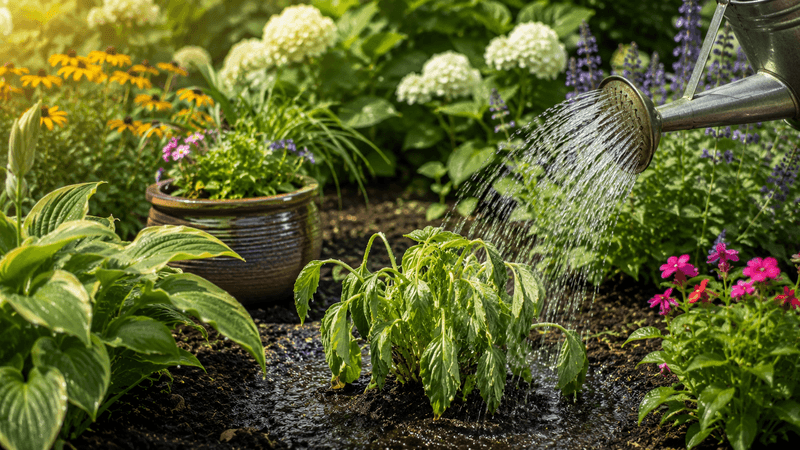
Watching your purple coneflowers go limp on a scorching August afternoon can feel like a gut punch, especially when they were blooming beautifully just days before. Many Southern gardeners assume drought-tolerant plants can go weeks without a drink, but that assumption can quietly shorten the bloom season.
Before you grab the hose or panic, there is a simple soil check that will tell you exactly what your plant actually needs.
Wilting Signals Stress, Not a Certain Diagnosis
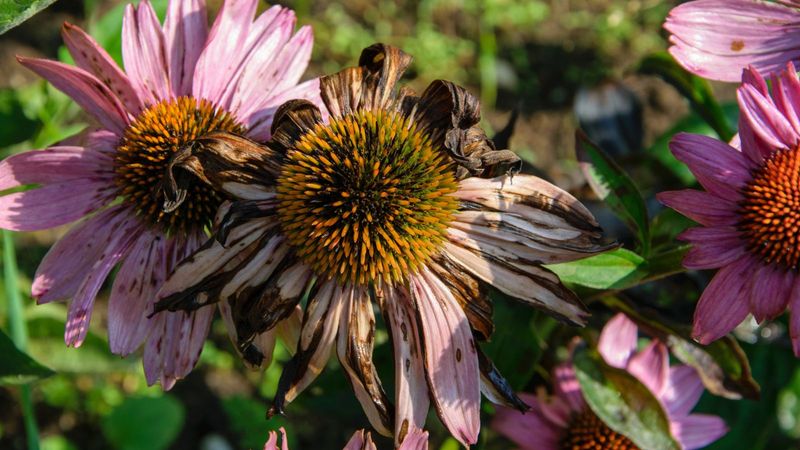
A drooping coneflower on a blazing afternoon is unsettling, but the droop itself cannot tell you why the plant is struggling. University of Illinois Extension guidance on rescuing plants in extreme heat points out that leaf wilt during high temperatures does not automatically confirm dry soil.
Plants lose water through their leaves faster than roots can replace it when heat is intense, so the soil beneath may still be moist even when the plant looks distressed.
The most useful distinction to make is between temporary midday droop and persistent wilt that lingers into the evening. University of Minnesota Extension’s guide to keeping gardens thriving through heat explains that a plant drooping only during the hottest part of the day and recovering by evening is likely responding to heat load rather than a straightforward lack of water.
Persistent wilt that does not ease after sunset, combined with dry soil, browning edges, leaf drop, or dieback, is a more reliable indicator of drought stress.
University of Arizona Extension’s overview of drought and extreme heat responses reinforces this point: heat can push plants into temporary stress even under adequate soil moisture. The diagnostic rule that keeps you from overwatering or underwatering is straightforward – check the root zone before you reach for the hose, and let the soil condition guide the decision rather than the leaves alone.
Drought Tolerance Still Requires Water
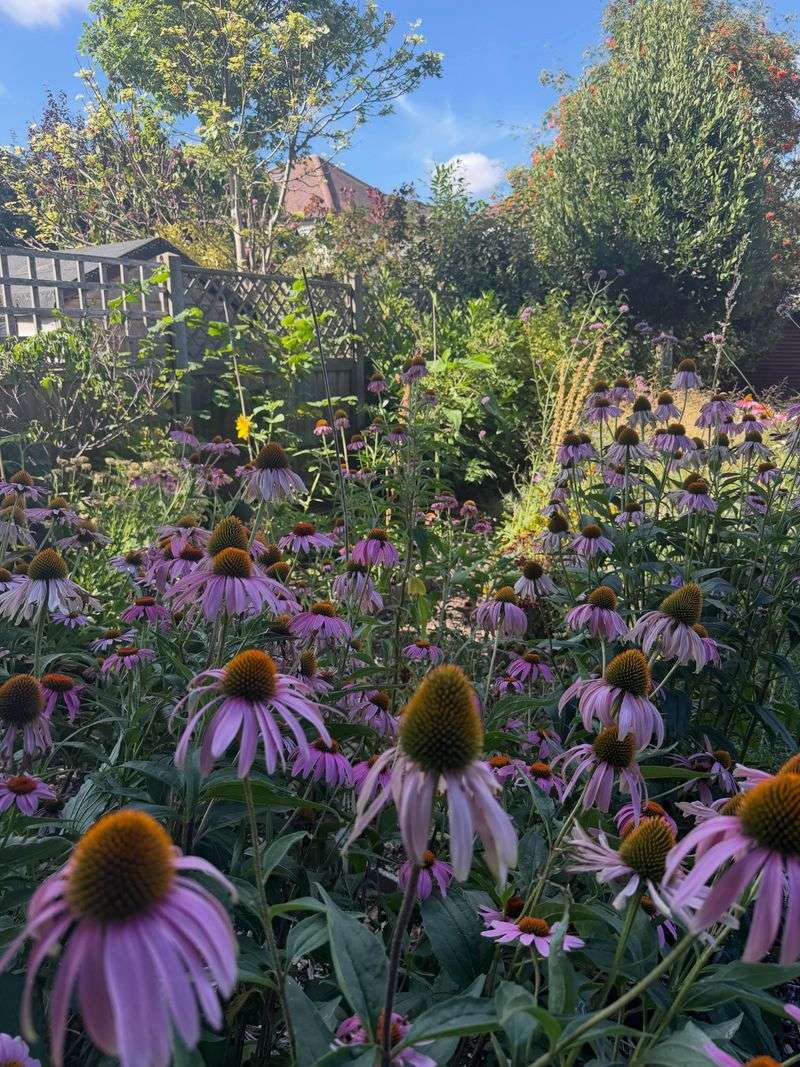
Purple coneflower earns its reputation as a tough perennial. Missouri Botanical Garden’s plant profile for Echinacea purpurea notes that the species prefers full sun and well-drained soil and tolerates heat, humidity, poor soil, and dry conditions once established.
That resilience is real, and it is one reason coneflowers appear on so many low-maintenance plant lists across the South.
The catch is that “drought tolerant” describes a plant’s capacity to endure periods of dryness, not its preference for going without water indefinitely. Oklahoma State University Extension’s column on drought-tolerant plants makes clear that all plants still need water, and prolonged drought can cause even heat-adapted perennials to produce fewer or smaller flowers in later bloom periods.
Waiting for visible wilt before checking on your plant is a watering habit worth examining – but it is one possibility to investigate, not a proven explanation for every struggling plant.
Age matters enormously here. Penn State Extension’s ornamental planting guide and its perennial care resource both emphasize that newly planted and recently transplanted perennials need regular watering while roots develop.
A first-year coneflower has a fraction of the root system of an established plant and can move from adequate moisture to serious stress much faster on a hot day. Established plants typically need less frequent supplemental irrigation under ordinary conditions, but they are not immune to drought stress during extended heat.
Check the Root Zone Before Watering
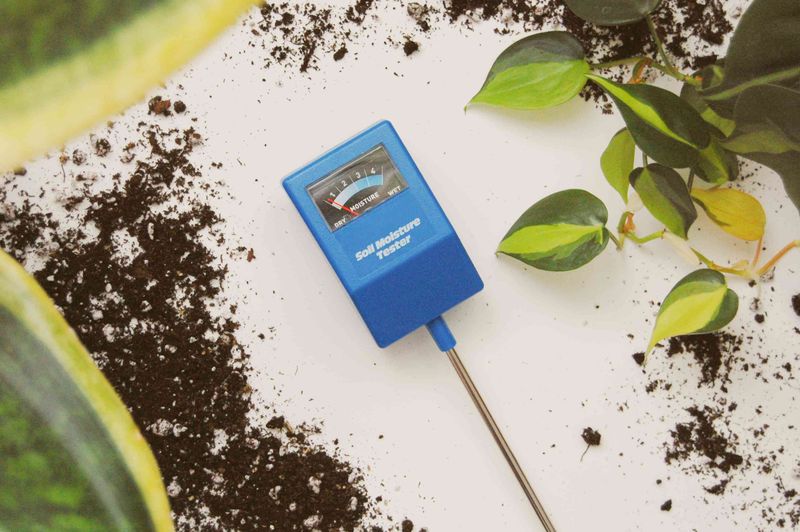
Leaf appearance is an unreliable guide when temperatures climb into the 90s. A far more dependable method is to press a finger or a small trowel into the soil near your plant and assess what you find roughly six inches down.
University of Minnesota Extension’s drought gardening guidance recommends checking the upper root zone – approximately the top six inches – rather than judging moisture by the surface alone, which can dry out quickly while deeper soil remains adequately moist.
Soil that feels dry or barely damp at that depth, combined with persistent wilt, supports a decision to water. Soil that still feels moist calls for a pause and a closer look at other factors: Is the plant in a spot that gets blasted by afternoon sun and hot wind?
Could the roots be compacted, recently disturbed, or competing with a nearby tree? Is water pooling around the crown after rain?
Penn State Extension’s guide to garden watering myths cautions against automatic watering routines that ignore actual soil conditions, noting that both under- and overwatering harm plants.
The goal is to monitor consistently rather than react only when the plant looks alarmed. Catching the root zone as it becomes dry – before the plant reaches severe stress – is more protective than waiting for full wilt.
At the same time, allowing soil to remain saturated creates its own problems, since coneflower roots need oxygen and do not tolerate standing water well.
Water Dry Coneflowers Slowly and Deeply
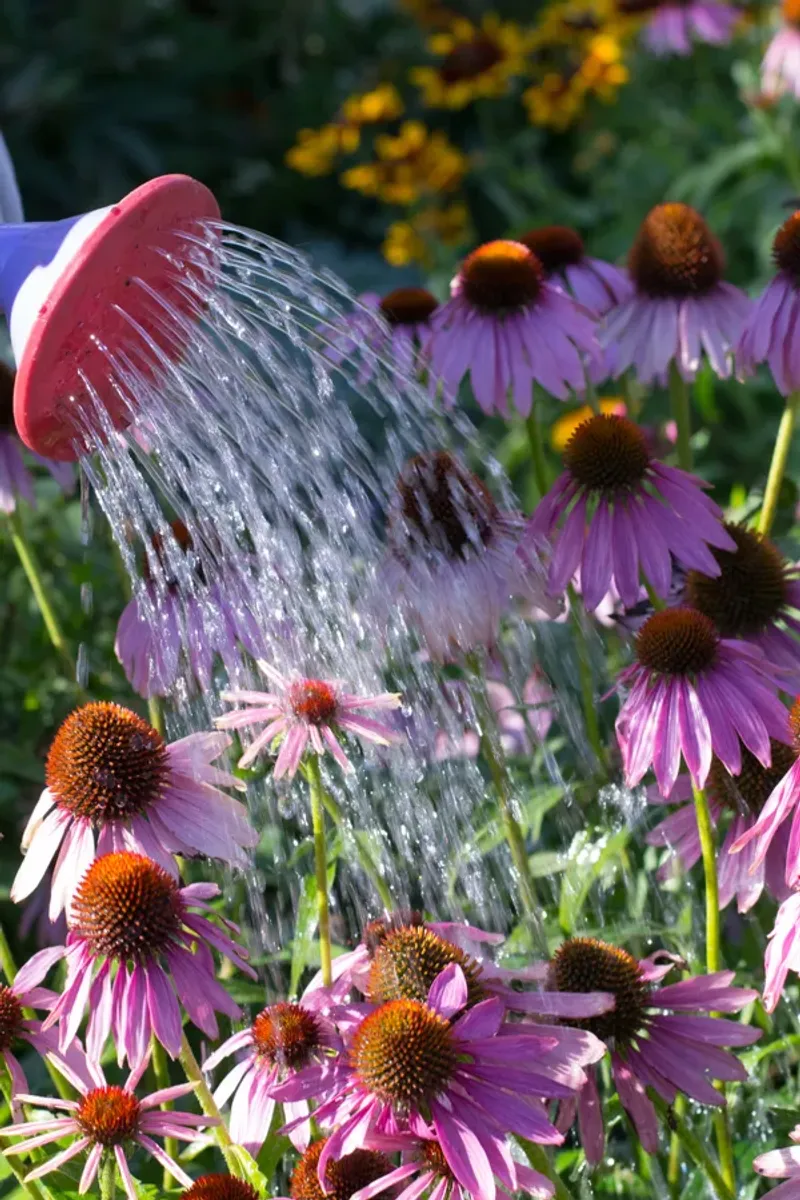
When the root zone check confirms dry soil, the correction is straightforward: apply water slowly at the plant’s base and across the root area until the soil is thoroughly moistened several inches down. Slow application gives the water time to penetrate rather than run off the surface, especially in compacted or clay-heavy soil.
A soaker hose or drip emitter placed near the plant works well for this purpose.
Penn State Extension’s watering myths resource and its perennial maintenance guide both favor deep, less-frequent watering over brief daily sips. Light daily watering encourages roots to stay near the surface where they are more exposed to heat and drying, while deeper soaking promotes root growth that makes plants more resilient between waterings.
For established perennials, about one inch of water per week is a commonly used starting point – not a universal prescription for every coneflower, but a reasonable benchmark to adjust based on your rainfall, soil type, plant age, heat, wind, and sun exposure.
Morning is the preferred time to water when your schedule allows. Penn State Extension’s summer watering advice and University of Illinois Extension’s warm-weather plant care blog both recommend directing water to the soil rather than spraying over the foliage.
Soil-level delivery gets moisture where it is needed, and keeping the leaves dry reduces conditions that favor certain leaf diseases. Avoid heavy fertilizing as a rescue measure – excess fertilizer can push soft leafy growth and worsen stress rather than help a struggling plant recover.
Adjust for Roots, Containers, and Southern Sites
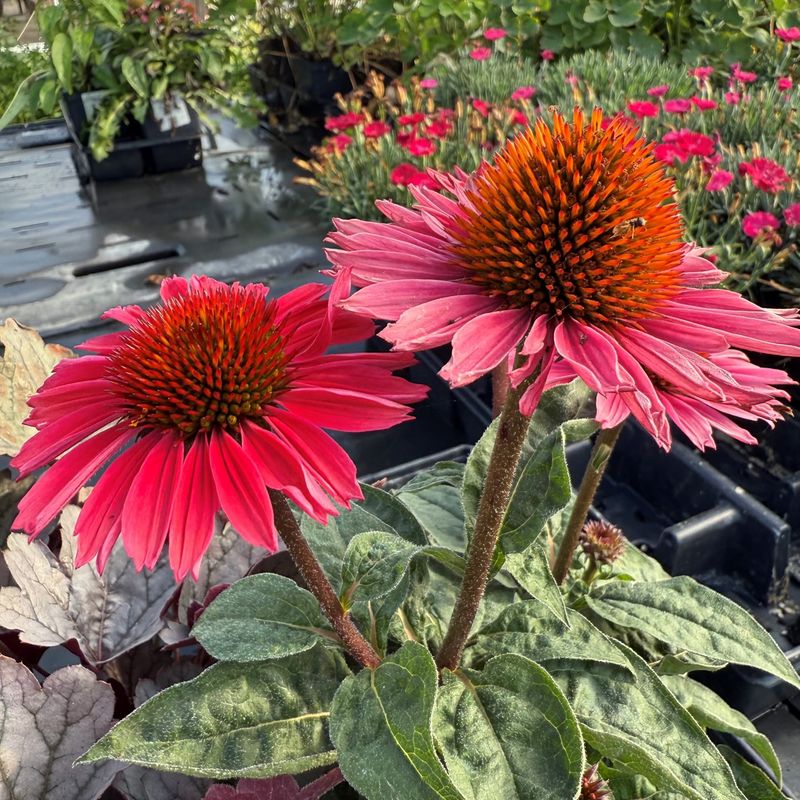
A single watering calendar cannot serve every coneflower in every yard. The plant’s age, container status, soil type, sun exposure, and local climate all shift how quickly the root zone dries out and how often you need to check.
Penn State Extension’s ornamental planting guide notes that first-year plants, recent transplants, and perennials competing with tree roots need more frequent attention than established plants in open beds. Sandy soil drains fast and dries out quickly; clay holds moisture longer but can become waterlogged after heavy rain.
Containers present their own challenge. Potted coneflowers dry out much faster than in-ground plants because the root zone is confined and exposed to heat on all sides.
During a Southern summer heat wave, a container may need checking every day or two. University of Minnesota Extension’s heat-gardening guidance also points out that windy exposures accelerate moisture loss from both soil and leaves, making monitoring even more important on breezy sites.
Florida and Texas are not uniform gardening environments. University of Florida IFAS Extension and its Florida plant guide resources indicate that local climate, soil drainage, and cultivar selection all affect performance, so gardeners should confirm suitability for their specific region rather than assuming a zone listing tells the whole story.
Texas A&M AgriLife Extension similarly highlights how sharply conditions vary across the state. Mulching the root zone with two to three inches of organic material can help slow evaporation and moderate soil temperature on hot sites; University of Minnesota Extension’s mulching guide and University of Arizona Extension’s watering resource both recommend keeping mulch pulled back from the crown and stems to reduce rot risk.
Moist Soil Means You Should Investigate Further

Finding moist soil under a wilting coneflower is not a reason to add more water – it is a signal to look closer. University of Minnesota Extension’s heat-gardening resource explains that extreme afternoon heat can temporarily overwhelm a plant’s ability to move water from roots to leaves, causing droop even when the soil is adequately moist.
If that is the situation, providing temporary shade or a windbreak during the worst of the afternoon heat may offer some relief, followed by reassessment in the evening once temperatures drop.
Waterlogged or poorly drained soil is a separate and more serious problem. Missouri Botanical Garden’s coneflower profile and Oklahoma State University Extension’s drought-plant guidance both note that persistently saturated soil damages roots and can produce wilt-like symptoms because injured roots cannot take up water effectively.
Coneflower requires well-drained conditions, and treating a drainage problem with more water makes it worse, not better.
Some wilt symptoms point to disorders that watering cannot fix at all. Yellowing leaves, stunted growth, distorted foliage, or flowers that emerge green and malformed are associated with aster yellows, a disease spread by leafhoppers.
University of Illinois Extension’s aster yellows resource and Penn State Extension’s Echinacea disease guide explain that affected plants should be removed to prevent further spread. Penn State Extension’s perennial care guide also cautions against heavy fertilizing as a rescue measure, since excess fertilizer can push soft growth and worsen stress rather than restore a struggling plant.
Use a Moisture Check to Protect Future Blooms
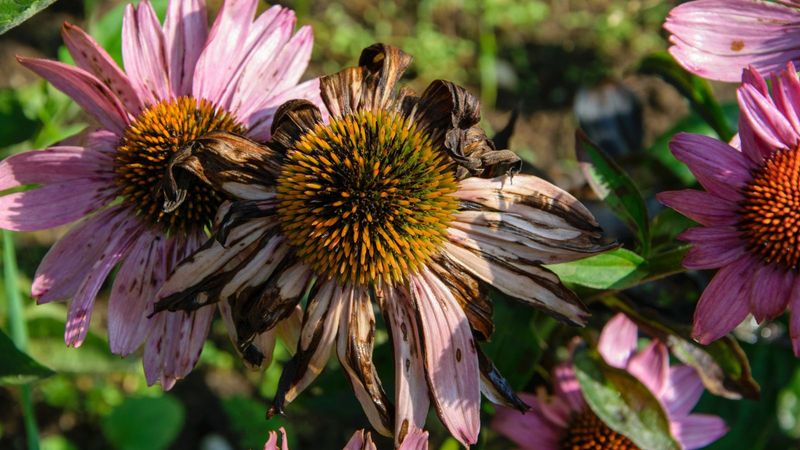
Keeping future flowers on your coneflowers comes down to a simple repeating sequence: check the upper root zone regularly, water when it is becoming dry or when the plant’s specific conditions – container, sandy soil, heat wave, recent planting – call for it, and soak the root area slowly without letting it stay saturated. University of Minnesota Extension’s extreme-drought gardening guide and Penn State Extension’s watering myths resource both support checking soil conditions rather than following a fixed calendar or waiting for visible distress.
University of Illinois Extension’s extreme-heat plant guidance and Penn State Extension’s perennial maintenance resource note that prolonged drought stress can reduce flowering in later bloom periods, producing fewer or smaller blooms. Addressing dry soil before stress becomes severe may help protect that flowering, though it cannot guarantee recovery if damage has already occurred or if another cause is involved.
Plants that remain wilted despite moist, well-drained soil deserve a closer look at drainage, root condition, or disease rather than another round of irrigation.
The real lesson is a shift in habit: the soil, not the leaf, should drive your watering decision. A plant that gets checked before it reaches crisis rarely needs rescuing.