
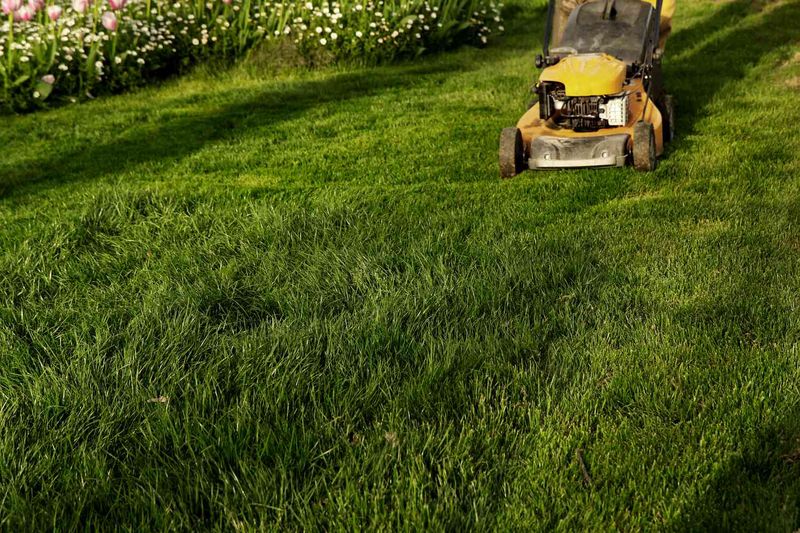
Every summer, the same scene plays out in Southern yards: you pull crabgrass by the handful, toss it in a bag, and feel good about the progress, only to watch a fresh crop appear two weeks later. The problem is not that you are pulling it wrong.
Crabgrass is a summer annual that produces thousands of seeds before it dies, and those seeds can wait in your soil for years, ready to sprout when conditions are right. How you mow your lawn is one factor that can quietly tip those conditions in crabgrass’s favor, and understanding that connection is the first step toward gaining the upper hand.
Pulling removes the plant, not the seedbank
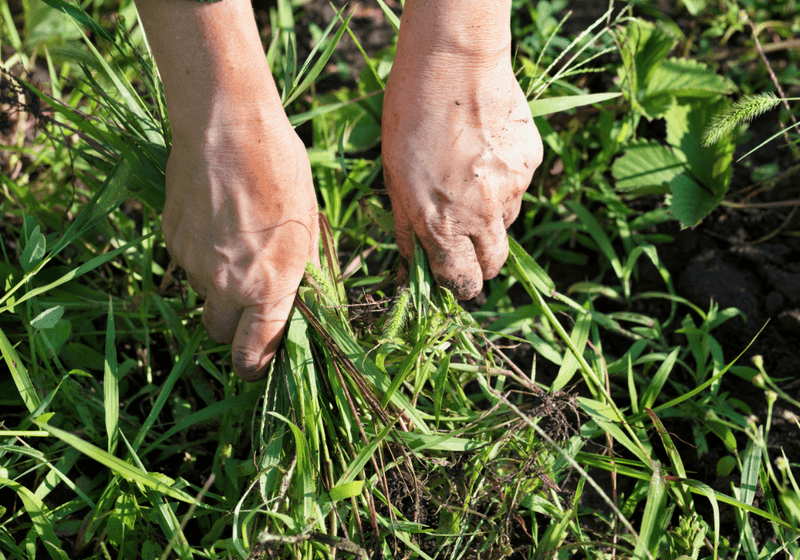
Crabgrass is a summer annual, meaning it completes its entire life cycle in one season. It germinates from seed in warm soil, grows aggressively through the heat of summer, produces a substantial number of seeds, and then dies when temperatures drop in fall.
Penn State Extension’s guidance on summer annual grass weeds notes that a single crabgrass plant can produce thousands of seeds, and those seeds can remain viable in the soil for several years.
When you pull a crabgrass plant, you remove that individual plant. You do not remove the seeds already sitting in the soil below it, and you do not change the conditions that allow new seedlings to sprout.
The seedbank, which is the reservoir of viable seeds in your lawn’s soil, persists regardless of how many plants you remove from the surface. New seedlings will emerge from that bank whenever soil temperatures and light conditions are favorable.
Preventing seed production for multiple growing seasons is the only way to gradually draw down the seedbank, and even that takes time. Penn State’s crabgrass identification and management resource confirms that hand-pulling is still worthwhile for small infestations, especially when you catch plants before seedheads form.
If the plants have already flowered, dispose of them in a sealed bag rather than leaving them on the lawn. University of Georgia Extension reinforces that pulling alone cannot correct weak or thin turf, which is what allows new germination to keep occurring season after season.
Improper mowing can give crabgrass an opening
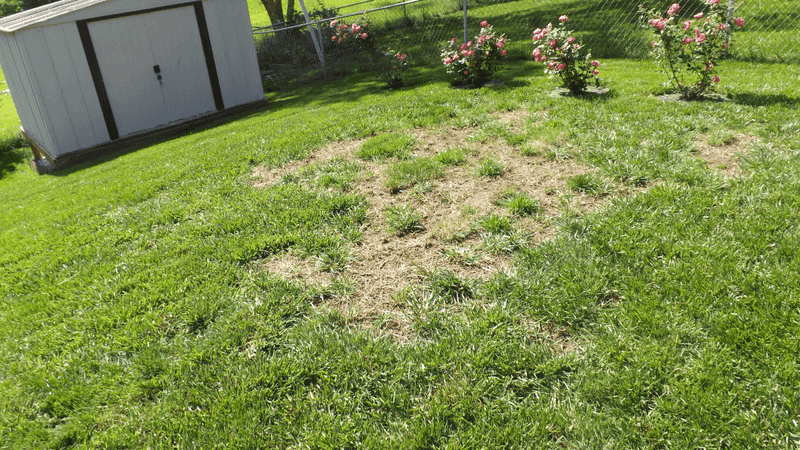
Mowing is not the single cause of every crabgrass infestation, but the way you mow can shift conditions in crabgrass’s favor. When you cut desirable turf too short or scalp it after letting it grow excessively tall, the canopy thins out.
That thinning exposes soil to direct sunlight, and crabgrass seedlings are well adapted to take advantage of exactly that kind of opening.
Research reported by NC State’s TurfFiles program found substantially less crabgrass in tall fescue plots mowed at 3 to 4 inches compared with plots mowed at 1 to 2 inches, demonstrating that mowing height can meaningfully influence how much light reaches the soil surface and how well desirable turf competes. That finding applies most directly to tall fescue, not to every Southern grass, but the underlying principle, that a denser canopy shades out germinating seedlings, holds broadly.
Ordinary variation in mowing intervals is not automatically damaging. The documented risk comes from a specific pattern: the lawn grows much taller than its recommended range between cuts, and then the mower removes too much leaf tissue in one pass to bring it back down.
University of Florida IFAS guidance on mowing describes this kind of scalping as a source of real turf stress, not a minor cosmetic issue. A stressed, thinned canopy is precisely the environment where crabgrass seedlings find the light and space they need to establish.
Identify the grass before changing the mower
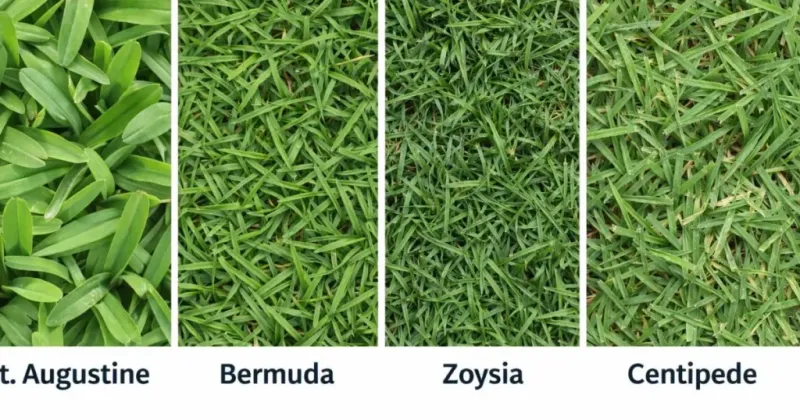
Before adjusting your mower deck, you need to know what grass you are actually mowing. The correct height target follows the desirable turf species, not the crabgrass.
Applying a height that is right for one grass type to a lawn that grows a different species can weaken the turf just as much as mowing too short.
University of Florida IFAS lawn management guidance and Texas A&M AgriLife Extension’s mowing publication provide species-specific reference ranges for common Southern warm-season grasses. St. Augustinegrass is generally maintained between about 2.5 and 4 inches in Florida, with similar guidance from Texas.
Bahiagrass performs well at roughly 3 to 4 inches. Bermudagrass home lawns are commonly kept at about 1 to 2 inches, though the appropriate height varies between common and hybrid types.
Centipedegrass is typically managed at around 1.5 to 2 inches. Coarse-textured zoysiagrass falls at approximately 2 to 2.5 inches in Florida, with Texas recommendations allowing roughly 1 to 2.5 inches depending on the cultivar.
These are starting ranges, not rigid rules. Cultivar differences, your mower type, local climate, and seasonal conditions can all shift the appropriate target within or near those ranges.
Texas A&M’s St. Augustinegrass management guide and the bermudagrass home lawn calendar both reflect that regional conditions matter. Applying a blanket 3-inch setting to a bermudagrass lawn, for example, can produce an overly lush, disease-prone canopy rather than a competitive one.
Identify your grass first, then find its recommended range and work within it.
Use the upper end of the right range
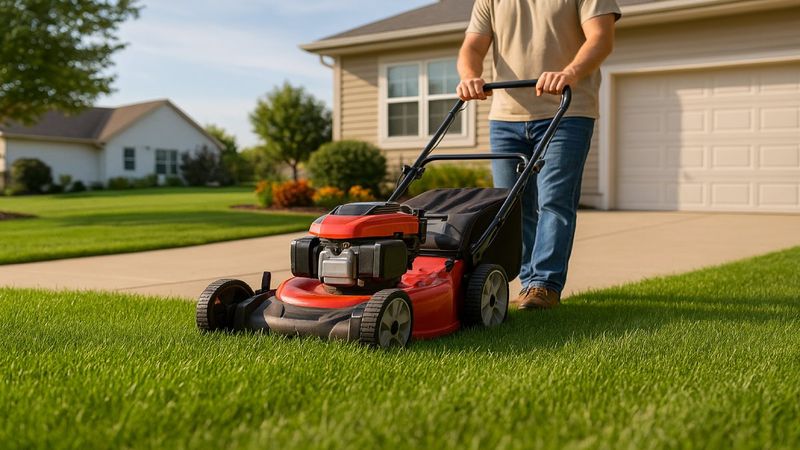
Once you know your turf type and its recommended mowing range, the practical correction is straightforward: mow near the upper end of that range when your grass and regional conditions support it. A taller, denser canopy shades the soil more effectively, which reduces the light available to crabgrass seedlings trying to establish.
This does not guarantee that crabgrass will vanish, but it consistently improves the competitive position of the desirable grass.
The one-third rule is what keeps that height target sustainable. University of Florida IFAS mowing guidance explains the principle clearly: never remove more than one-third of the leaf blade in a single mowing.
If your St. Augustinegrass is managed at 4 inches, that means you should mow again before it reaches about 6 inches. If you miss a few weeks and the lawn is already at 7 or 8 inches, a single pass back to 4 inches removes far more than one-third and stresses the turf in exactly the way that opens the door to crabgrass.
Texas A&M AgriLife’s mowing publication recommends increasing mowing frequency or making gradual reductions across multiple passes rather than one dramatic cut.
Low mowing is not automatically a mistake in every situation. University of Florida IFAS bermudagrass management guidance notes that some bermudagrass cultivars can be maintained at low heights when equipment, fertility, irrigation, and mowing frequency all support that system.
The problem occurs when mowing drops below the grass’s supported range or when too much leaf tissue is removed at once, not simply because the setting is low. The NC State TurfFiles mowing research reinforces that the key variable is whether the height chosen is appropriate for the turf being managed, not a single universal number.
Make each mowing pass less stressful

Getting the height right is only part of the picture. How you execute each mowing pass also determines how much stress the turf absorbs.
Keeping your blade sharp is one of the simplest and most overlooked factors. A dull blade tears grass tissue rather than cutting it cleanly, leaving ragged edges that lose moisture faster and invite disease.
University of Florida IFAS lawn management guidance and UF IFAS’s basic lawn care publication both list blade sharpness as a meaningful factor in overall turf quality.
Mowing when the grass is dry, when possible, produces a cleaner cut and reduces the chance of heavy clumps forming on the lawn surface. Clumps of wet clippings left in place can smother the turf beneath them, creating small dead patches that crabgrass seedlings can colonize.
Dispersing those clumps or mowing again lightly to break them up prevents that outcome. Changing your mowing direction from one session to the next also helps the grass stand upright and reduces ruts or wear patterns that thin the canopy over time.
Returning to the bermudagrass example: low mowing is not harmful when the full management system supports it. Texas A&M AgriLife’s bermudagrass management calendar outlines the fertility, irrigation, and frequency requirements that allow close mowing to produce a dense, healthy stand rather than a stressed one.
UF IFAS mowing guidance keeps the central distinction clear: the risk comes from cutting below the turf’s appropriate range or removing too much leaf tissue at once, not from low mowing in a well-managed system.
Build the dense turf crabgrass cannot easily invade
Mowing better is necessary, but it cannot close every gap that crabgrass exploits. Thin turf, compacted soil, dry conditions, and frequent shallow irrigation all create openings that no mower setting alone can fix.
Penn State Extension’s summer annual weed management resource identifies thin or open turf as one of the primary conditions that favor crabgrass, alongside compaction and drought stress.
Compacted soil limits root depth and reduces the turf’s ability to take up water and nutrients efficiently. Where compaction is a documented problem, core aeration can improve soil structure and give the desirable grass a better foundation for dense growth.
NC State TurfFiles’ smooth crabgrass profile and University of Georgia Extension’s crabgrass management guidance both point to deep, as-needed irrigation as a cultural practice that supports competitive turf growth. Frequent light watering encourages shallow roots in the desirable grass while also keeping the soil surface moist, which is favorable for crabgrass germination.
Deep, less frequent irrigation, applied within any local water restrictions and matched to the turf’s actual needs, encourages deeper rooting and a more resilient stand.
Bare patches from drought, disease, or heavy foot traffic are prime germination sites. Filling those areas promptly with appropriate turf, whether through seeding, plugging, or sodding depending on the grass type, reduces the exposed soil that crabgrass seedlings need.
These practices improve the canopy’s competitive strength and can reduce crabgrass pressure over time, but they do not guarantee eradication when the seedbank is large and conditions vary by season.
Prevent the next generation before it emerges
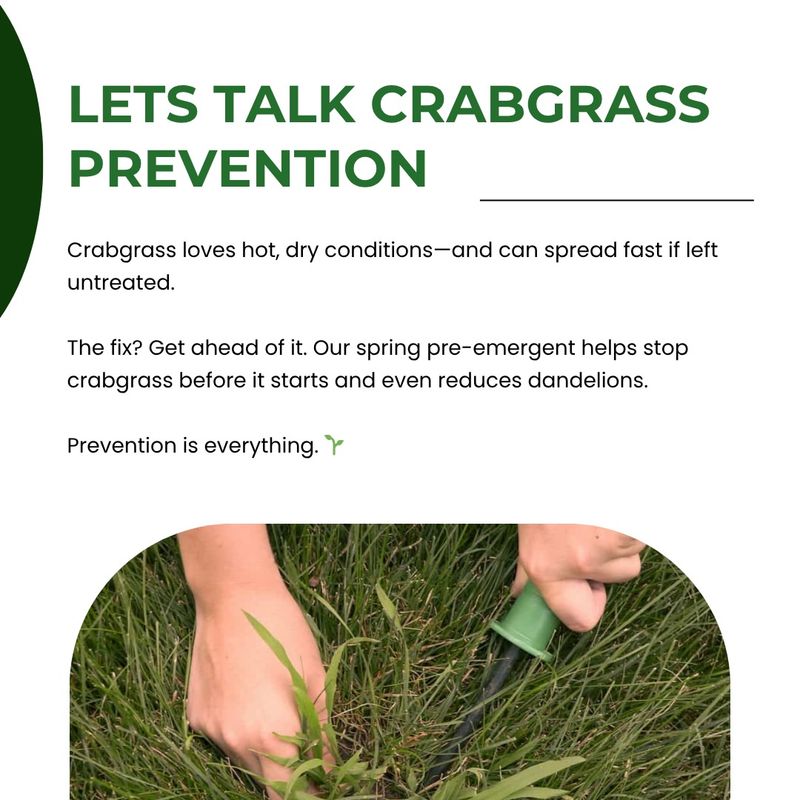
Once crabgrass has produced seed and died back in fall, the plants themselves are gone but the seeds they dropped are not. The most effective way to interrupt the cycle for the following season is to stop those seeds from germinating in the first place.
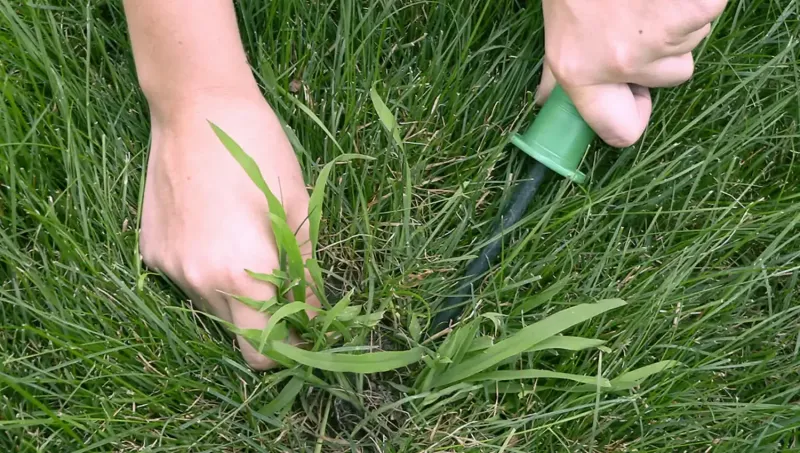
Hand-pulling still makes sense for small numbers of actively growing plants, especially when you catch them before seedheads have fully formed. If the plants already have mature seedheads, bag and dispose of them rather than leaving them on the lawn where seeds can fall and add to the existing seedbank.
Pre-emergence herbicides are the primary chemical tool for preventing germination. They act on seedlings as they sprout, not on established plants or seeds sitting dormant in the soil.
Penn State Extension’s crabgrass resource and University of Georgia Extension’s prevention guide both associate crabgrass germination with soil temperatures around 53 to 58 degrees Fahrenheit as a general reference point, but calendar timing varies considerably across the South. South Texas may reach those soil temperatures weeks earlier than North Texas or Georgia.
Florida’s timing differs further by region and by year. A soil thermometer or local extension office can help you identify the right application window for your specific area.
Texas A&M AgriLife’s bermudagrass management calendar notes that product choice matters by turf species. Quinclorac, for example, can significantly injure St. Augustinegrass and should not be used on that turf type.
University of Minnesota Extension’s lawn weed guidance and UGA Extension’s pre-emergent timing article both emphasize that pre-emergence products can interfere with overseeding or newly established turf. Always read and follow the product label, which governs legal use, application rates, personal protection, reentry intervals, and restrictions near water and desirable plants.
Treat crabgrass as a system, not a mowing mistake
Crabgrass persistence is rarely the result of one error. The practical action sequence that addresses the full system starts with identifying your turf species and then setting your mower near the upper end of its recommended range when conditions support it.
Follow the one-third rule at every pass, and if the lawn has grown too tall, increase mowing frequency or reduce height gradually rather than scalping it back in one cut. Penn State Extension’s summer annual weed guide and University of Florida IFAS lawn care guidance consistently point to dense, actively managed turf as the cultural foundation for reducing weed pressure.
Alongside mowing, fill bare patches promptly, correct compaction where it exists, and irrigate deeply and as needed within local restrictions. Pull small crabgrass plants before seedheads appear and plan region-appropriate pre-emergence control for the following spring, timed to your local soil temperatures.
Texas A&M AgriLife’s mowing publication and NC State TurfFiles’ crabgrass profile both frame these practices as parts of an integrated approach rather than standalone solutions.
Consistent cultural care can reduce crabgrass pressure meaningfully over time. Because the seedbank does not disappear in a single season, some persistence is normal and not a sign that the approach is failing.
Progress shows up as fewer plants each year, not an empty lawn overnight.