
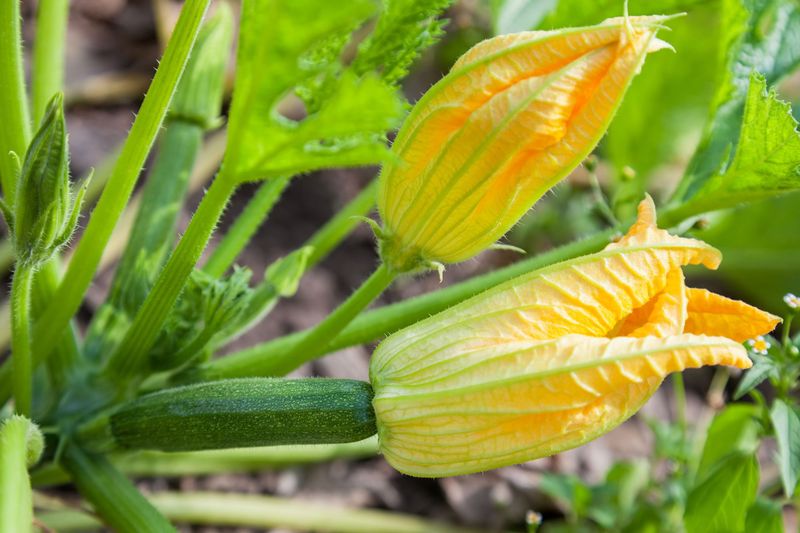
You water faithfully, the plant looks healthy, and flowers keep opening every morning – yet not a single zucchini appears. For gardeners in Florida, Texas, and other warm Southern states, this is one of summer’s most frustrating puzzles.
The good news is that the cause is usually diagnosable, and often fixable, once you know what to look for on the plant itself.
Check the flower sex before blaming the bees
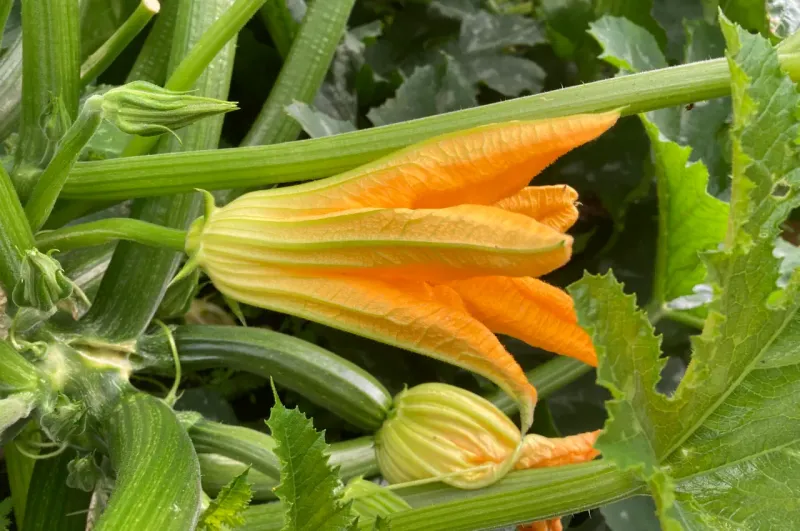
Grab a hand lens or just lean in close, because the most important clue about your zucchini’s problem is right on the stem below each blossom. Zucchini produces two distinct types of flowers on the same plant, and they look noticeably different once you know what to compare.
Male flowers grow on a long, slender stem with no swelling at the base. They exist to produce pollen and are not capable of developing into fruit on their own.
Female flowers, by contrast, have a shorter and thicker stem, and they carry a small swollen ovary directly behind the petals – that miniature bump is the embryonic zucchini. University of Illinois Extension notes that only female flowers can develop into fruit, so a plant covered exclusively in male blooms has nothing available to set, regardless of how many bees visit.
Walk your plant row in the morning and check every open flower. If you see only the long, thin stems with no swelling below, your plant is currently producing only male flowers.
That is a different problem than poor pollination, and it calls for a different response – patience and environmental adjustment rather than hand-pollinating flowers that cannot produce squash.
Identifying flower sex first saves you from chasing the wrong fix. Once you confirm that female flowers are actually present, you can move on to evaluating whether those flowers are being pollinated.
Dropped early blooms may signal normal zucchini growth
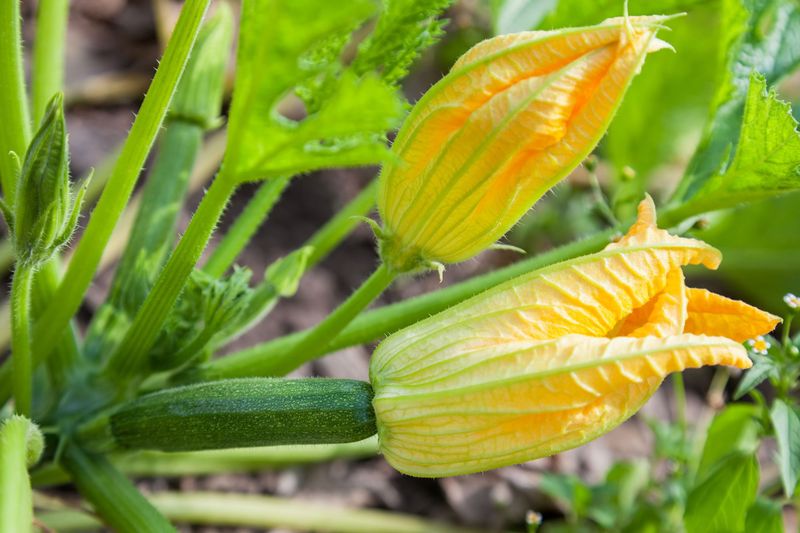
Seeing the first wave of flowers fall off the plant without producing anything is disheartening, but it is also completely normal for zucchini and other cucurbits. Plants in the squash family commonly open male flowers first, sometimes a week or more before any female flowers appear.
Those early male blooms open, release pollen, and then drop – that is their job. University of Minnesota Extension explains that cucurbits typically produce male flowers ahead of female flowers, and that natural flower drop during this early phase does not indicate a problem with pollination or plant health.
Expecting fruit from that first flush sets up unnecessary worry.
The situation that warrants closer attention is different: female flowers that arrive, show their small ovaries, and then fail to enlarge. When the tiny squash behind the blossom shrivels, browns, or simply stops growing after a few days, that pattern suggests something is interrupting the process after female flowers have opened.
A helpful habit is to mark the calendar or take a photo when you first notice flowers opening. If female flowers have not appeared within one to two weeks in warm Southern conditions, then the male-only phase is running longer than expected and heat or other stressors may be shifting the plant’s flower ratio.
That distinction matters for deciding what to try next.
Read the symptoms after female flowers arrive
Once female flowers are opening regularly, the specific way fruit fails tells you something useful about what is going wrong. Not every failure looks the same, and collapsing them all into one diagnosis leads to fixes that miss the real problem.
A female flower that opens but stays small and never begins to swell usually means pollen was not transferred to the stigma during that flower’s brief open period. Tiny fruits that start to enlarge and then turn brown at the blossom end, shrivel, and drop are a common sign of incomplete or absent pollination – Texas A&M AgriLife Extension identifies this pattern as characteristic of poor pollination in cucurbits.
Fruits that develop but come out twisted, lumpy, or unevenly shaped often indicate that pollination was only partial, with pollen deposited on some parts of the stigma but not others.
Each of those symptoms points toward inadequate pollen transfer as a leading possibility, but it is not the only explanation. Penn State Extension notes that disease, moisture stress, pest damage, and root problems can produce similar fruit-set failures, including misshapen or aborted fruits that look like pollination failures but are not.
Running through the symptoms systematically – rather than assuming one cause – keeps you from repeating the same hand-pollination attempt on a plant whose real problem is a disease or a watering inconsistency. Check pollen transfer first, then look outward at plant health if the problem persists after female flowers have been treated.
Watch the short morning pollination window
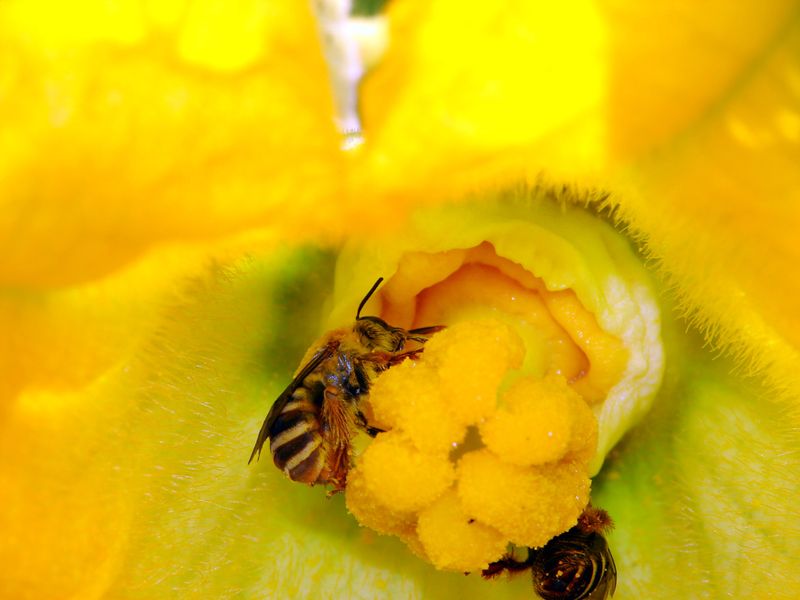
Midday is the wrong time to judge whether your zucchini is being pollinated. Zucchini flowers open early and stay fully receptive for only a few hours in the morning, closing as temperatures climb.
A glance at noon tells you almost nothing about what happened at 7 a.m.
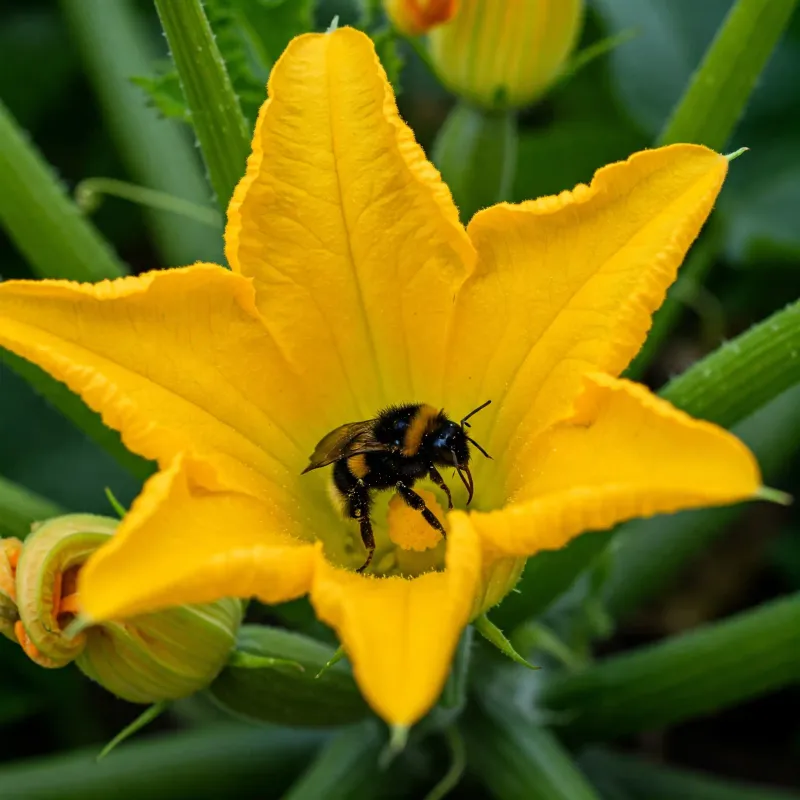
Squash bees and bumblebees are the pollinators most likely working your zucchini, and both species commonly forage during that early morning window. Not seeing honeybees does not mean no pollination is occurring.
UF/IFAS research on cucurbit pollination in Florida identifies extreme heat, high humidity, continuous rainfall, and competing nearby flowers as factors that can reduce pollination success – each of those is a separate category of interference worth checking.
Weather plays a real role, but the relationship is not simple. Cold, rainy, cloudy, or very windy mornings can reduce bee activity.
Prolonged heat may reduce pollen viability and can shift the plant toward producing more male flowers, though the exact temperature at which this happens varies by variety and conditions. Treating any single temperature figure as a guaranteed cutoff for every garden would be misleading.
University of Minnesota Extension also points out that pollinators may be present in the landscape but visiting other flowers instead of your zucchini. A yard full of blooming ornamentals or flowering weeds nearby can draw bees away from the crop during that critical morning hour.
Observing the plant on several consecutive mornings, rather than just once, gives you a more reliable read on what is actually happening during the pollination window.
Hand-pollinate a confirmed female flower
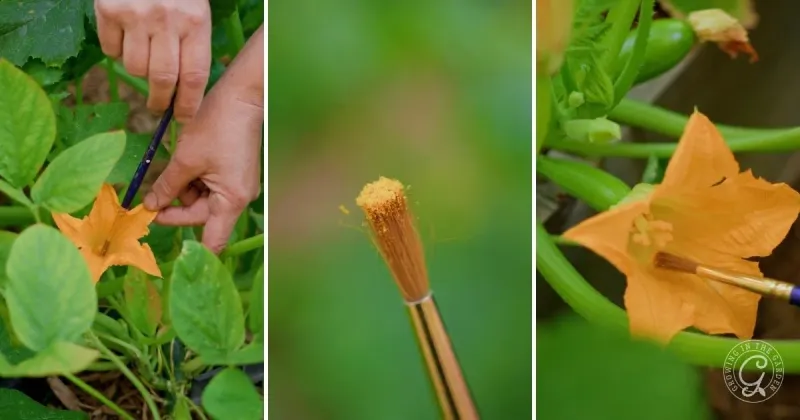
Hand-pollination is a practical backup when you have confirmed that female flowers are opening but natural pollination appears inadequate. It works best in the morning, on the same day a flower opens, before heat causes the blossom to close.
Start by selecting a male flower that has opened fully and shows visible yellow pollen on its anther – the central structure inside the petals. Fold back or gently remove the petals so the anther is exposed and easy to work with.
Then locate a freshly opened female flower, identifiable by the swollen ovary behind its base. University of Georgia Cooperative Extension recommends transferring pollen by touching the male anther directly to the stigma inside the female flower, or by using a small artist’s brush or a cotton swab to carry pollen from one to the other.
After completing the transfer, mark the treated flower with a small piece of yarn or a twist tie so you can track its progress. Over the next several days, watch whether the small ovary behind the blossom begins to enlarge steadily.
A successfully pollinated fruit will keep growing. One that was not adequately pollinated will typically shrivel and brown within a few days.
Each new female flower that opens may need the same treatment. Hand-pollination does not carry over to future flowers, and it cannot create female flowers on a plant that is not producing them.
Think of it as a targeted morning task you repeat as new blooms appear, not a one-time fix for the whole season.
Remove barriers without putting pollinators at risk
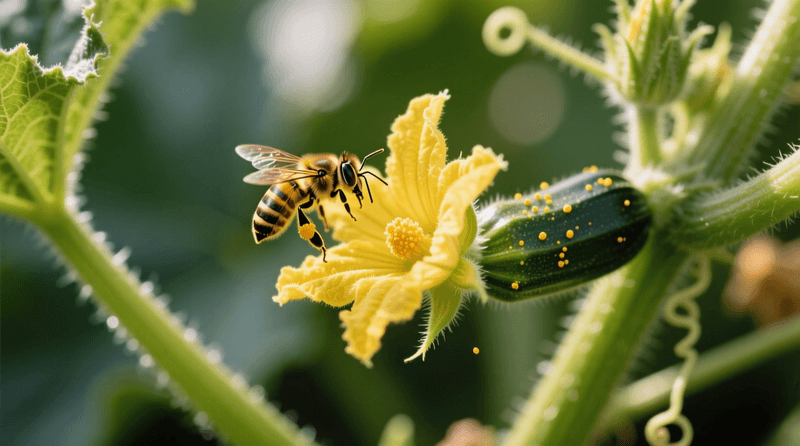
Supporting natural fruit set often means removing obstacles rather than adding interventions. Several common garden practices can quietly block pollination without the gardener realizing it.
Floating row covers are a useful tool for keeping pests off young plants, but they also keep pollinators out. University of Minnesota Extension advises removing row covers once zucchini begins flowering, unless you are deliberately hand-pollinating and managing the cover yourself.
Leaving covers in place through the flowering period can create exactly the fruit-set failure you were trying to prevent.
Soil disturbance near cucurbit beds is another overlooked issue. Squash bees nest in the ground, often in bare or lightly covered soil close to where squash plants grow.
Tilling or heavily mulching that area can disrupt nesting and reduce the very pollinators that specialize in your crop.
Pesticide timing and choice matter significantly. EPA guidance on pollinator protection is clear that pesticide labels – not a general rule about nighttime application – determine when and how a product can be used safely around pollinators.
Spraying open blooms or treating plants while bees are actively foraging puts pollinators at risk regardless of the product. Read the label before applying anything to a flowering plant.
Texas A&M AgriLife Extension notes that honey-bee colonies are used as a commercial supplemental-pollination strategy at field scale. Home gardeners should not treat buying a hive as a necessary first response – observing morning pollinator activity, protecting existing bees and ground-nesting species, and hand-pollinating when needed will address most backyard situations.
Investigate plant stress when pollination is not enough
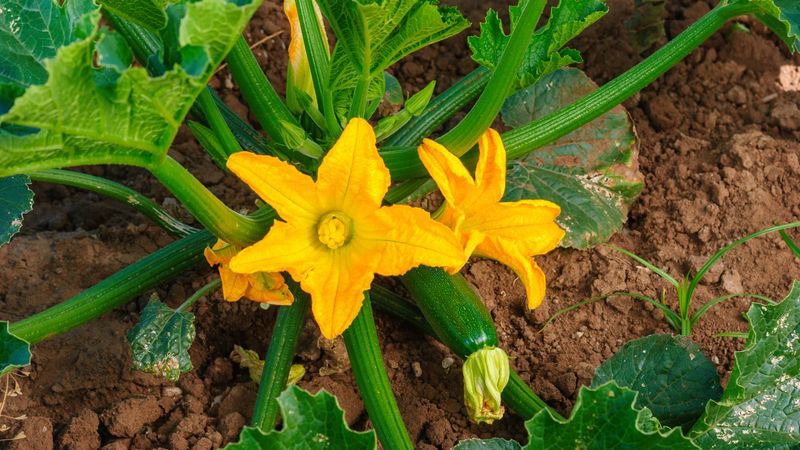
When female flowers are present, the morning window is clear, and hand-pollination has been tried without success, the problem is likely rooted somewhere in the plant itself or its growing conditions. Several stressors can interfere with fruit set in ways that look a lot like pollination failure.
Drought stress is one of the more common culprits in Southern gardens. Inconsistent watering can shift the plant toward producing more male flowers and fewer females, and it can cause developing fruits to abort even after successful pollination.
University of Minnesota Extension also flags excessive nitrogen as a contributing factor – too much of it encourages lush foliage growth at the expense of flowering and fruit development. A soil test is a more reliable guide than automatic fertilizer application.
Prolonged heat, squash vine borers, squash bugs, and root problems can all suppress fruit set or cause young fruits to collapse shortly after forming. Texas A&M AgriLife Extension keeps disease, pests, and moisture stress in the differential diagnosis alongside pollination failure, because the visible symptoms often overlap.
A practical decision path helps avoid chasing the wrong fix repeatedly. Start by identifying flower sex – confirm that female flowers are actually present.
Next, observe the plant during the morning pollination window on several consecutive days. If female flowers are opening and bee activity looks low or unreliable, hand-pollinate each new female flower as it opens.
If fruit still fails to set after those steps, shift focus to soil moisture consistency, pest inspection, and a soil test before adding any inputs. The plant usually tells you where the problem is – you just have to look at the right things in the right order.