
Petunias are one of the most popular flowering plants in Southern yards, but they have a frustrating tendency to grow long, floppy, and bare instead of the full, colorful mounds shown on the plant tag. Most gardeners assume something is seriously wrong, when the real fix is often simpler than they expect.
One corrective habit – pinching or cutting back stems at the right time – can encourage branching and help reshape a stretched plant. Understanding when and how to use it, and what else might be contributing to the problem, makes all the difference.
Leggy petunias need diagnosis before pruning
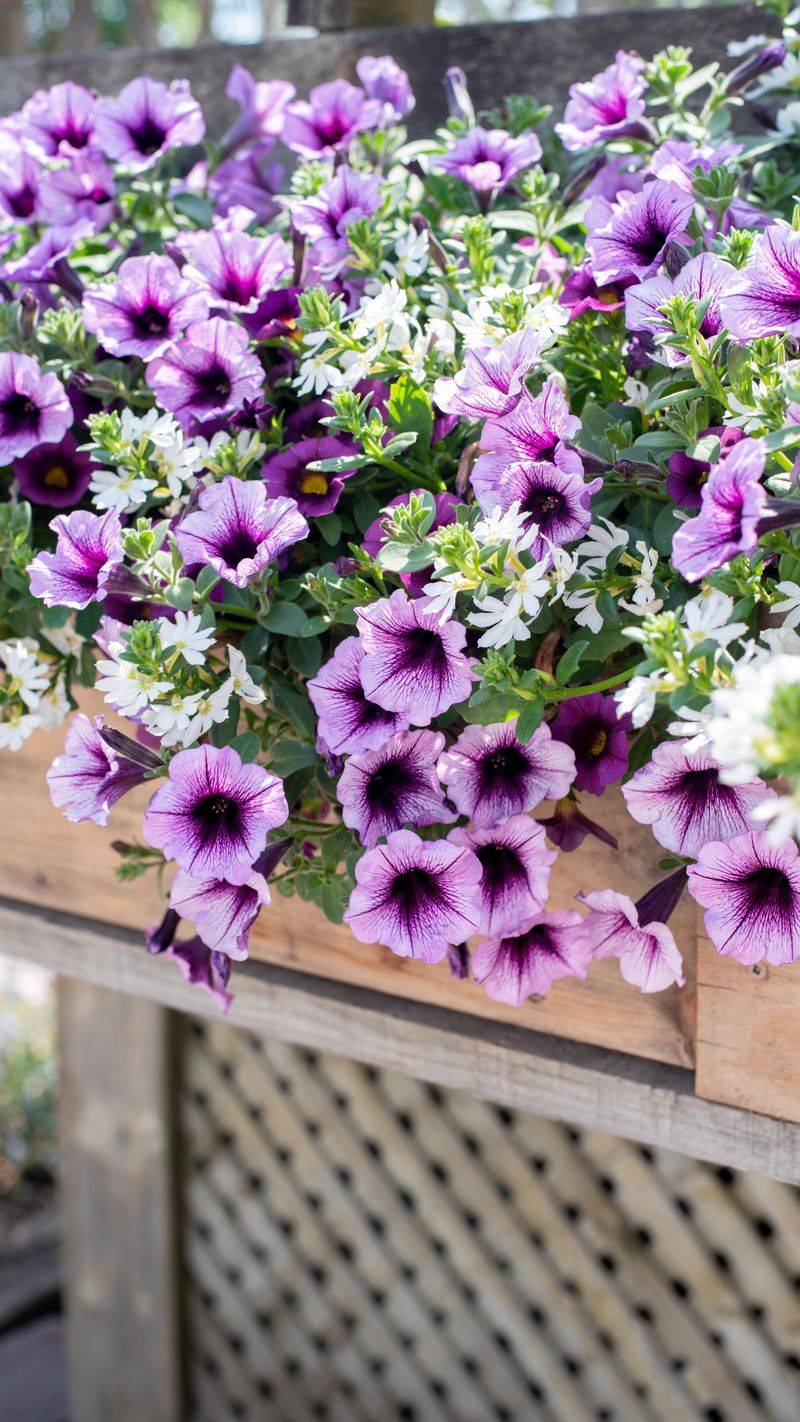
A petunia that looks stretched, bare in the middle, or flopped over the edge of a pot is showing you something worth paying attention to before you reach for the scissors. Legginess shows up as long stems with wide gaps between the leaves, sparse branching, and a hollow or flowerless center after the first bloom flush fades.
The plant is still alive, but its shape has gotten away from you.
The word “leggy” actually covers two different situations. A young seedling with a single thin, pale stem that keeps reaching upward is almost always responding to inadequate light – University of Minnesota Extension guidance on indoor plant lighting explains that low light causes plants to produce longer spaces between leaf nodes as they stretch toward a light source.
An established outdoor petunia that has sprawled or gone bare after weeks in the garden is a different case: it may simply need seasonal pruning, though low light, heat, nutrition gaps, or water stress can all play a role.
Pinching or cutting back provides the main corrective action for suitable established plants, and MSU Extension research on vegetative petunia production confirms that stem elongation has multiple contributing causes. Pruning alone does not explain every case of legginess, and it works best when you have also identified what caused the stretching in the first place.
Pinching redirects growth into side shoots
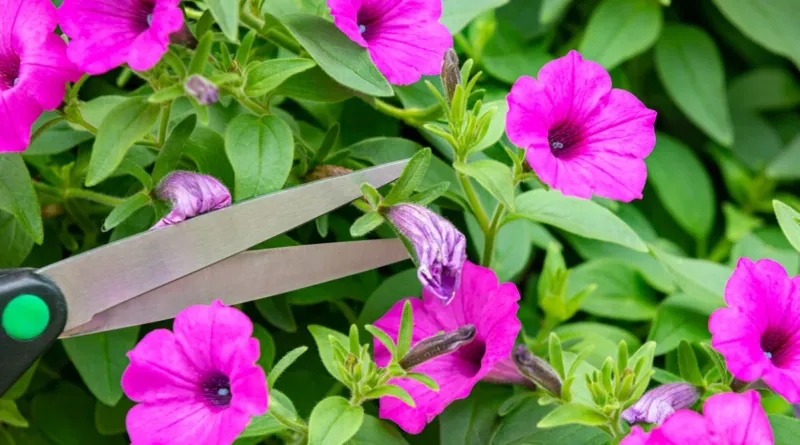
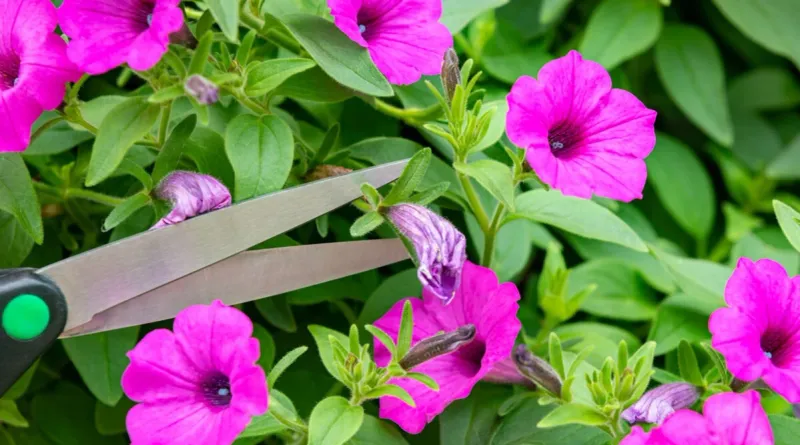
Every petunia stem ends in a growing tip, and as long as that tip is intact, the stem tends to keep extending in one direction. Removing it – by pinching with your fingers or snipping with clean scissors – signals the plant to redirect energy into the lateral buds sitting lower on the stem.
Those buds can develop into side shoots, and more side shoots mean more branching and more potential flower sites.
University of Minnesota Extension’s petunia growing guide recommends pinching upright grandiflora and multiflora petunias when plants are approximately 6 inches tall to encourage flowering side shoots from the start. For young plants, catching them at that stage gives branching a head start before stems get long.
UF/IFAS gardening guidance recommends pinching approximately the top inch of growth to encourage branching without removing too much of the plant at once.
For established petunias that have already stretched or finished their first bloom flush, pinching the tips of long stems can encourage new lateral growth and help restore a fuller framework. Keep in mind that pruning can reshape a suitable petunia but cannot correct inadequate light on its own.
If the growing spot is too shady, new growth may simply stretch again in the same direction.
Make a measured cut above a node
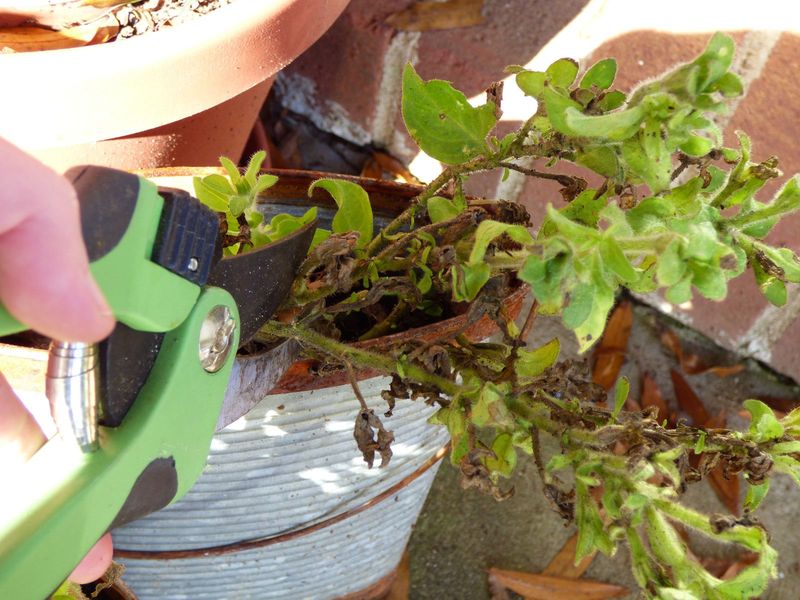
When a petunia has gone well past leggy and the stems are long, floppy, and flowerless in the middle, a more deliberate cut often works better than a light pinch. Penn State Extension’s herbaceous plant pruning guidance supports trimming back annual stems to encourage fresh, compact growth, and the practical approach for petunias is to cut long stems back to roughly 3 to 5 inches from the base when a stronger reset is appropriate.
The key is where you make the cut. Snip just above a leaf node or a visible lateral bud, not in the middle of a bare section of stem.
Nodes are the small bumps or joints where leaves attach to the stem, and cutting just above one gives the plant a clear point from which new shoots can develop. Leave several nodes on each remaining stem so the plant has more than one option for sending out new growth.
If cutting the whole plant back feels drastic, a staged approach works well too. Texas Master Gardener guidance on Supertunia care notes that removing about one-third of the plant at a time is a lighter renovation that can encourage recovery without leaving the container completely bare.
Either method can encourage regrowth, but recovery depends on healthy roots, adequate light, moisture, and heat conditions – not just the cut itself.
Adequate light helps new growth stay compact
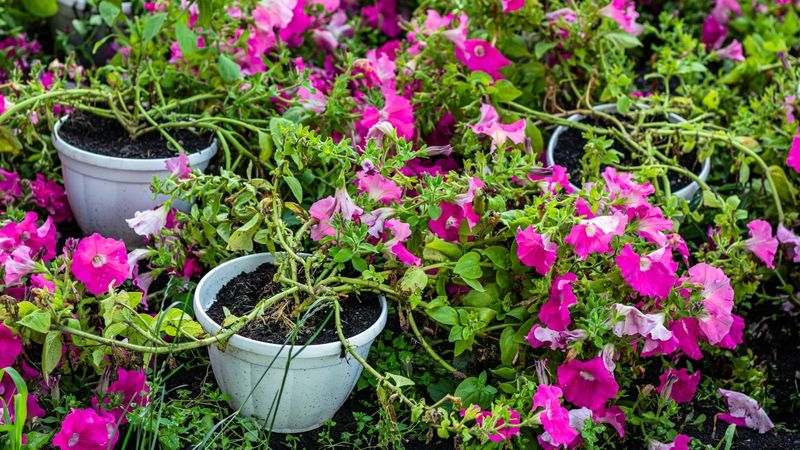
Pruning a leggy petunia without addressing the light situation is a short-term fix. If the plant goes back into the same dim corner or stays in a spot that only gets a few hours of filtered sun, new growth often stretches right back toward the light source.
UMN Extension’s lighting guidance explains that low-light conditions lengthen the spaces between leaf nodes, which is the physical reason stretched growth looks so different from compact, well-branched growth.
For outdoor petunias, UMN’s petunia growing guide and NC State Extension’s petunia profile both note that petunias perform best in full sun and generally need at least 5 to 6 hours of good sunlight daily. Six or more hours of direct sun is a practical benchmark for Southern home gardeners, though it does not guarantee compact growth on its own – cultivar habit, heat, and nutrition also play a part.
For indoor seedlings or plants grown under supplemental lighting, Wisconsin Extension’s petunia growing guide recommends 14 to 16 hours of light daily, with seedlings positioned close to the fixture. UMN suggests keeping seedlings about 4 to 6 inches below fluorescent lights.
The practical sequence is straightforward: improve the light situation where possible first, then pinch or prune to reshape the plant.
Some petunias are naturally meant to trail
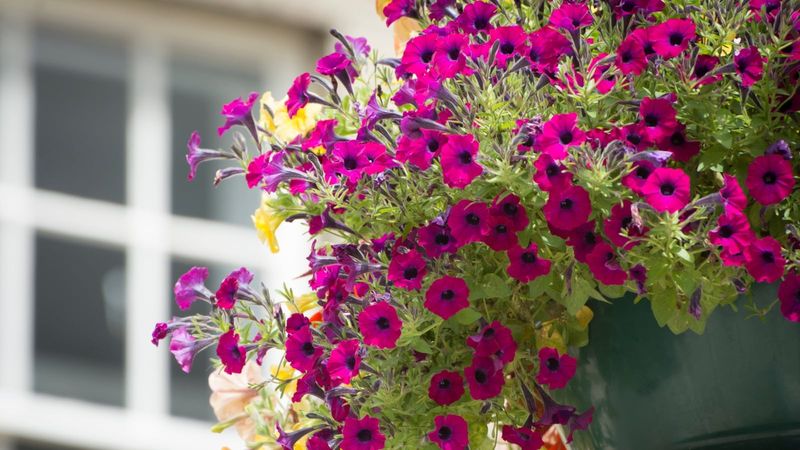
Not every long petunia stem is a pruning failure. Before cutting back a plant, knowing its cultivar type saves a lot of unnecessary work and prevents you from fighting a habit the plant was bred to have.
Petunias fall into several broad categories, and their natural growth forms are genuinely different from one another.
Upright grandiflora and multiflora types are the ones most likely to benefit from pinching when young and cutting back when they sprawl mid-season. UMN Extension specifically advises against pinching milliflora or spreading petunias, noting that those types have naturally low or trailing habits that should not be judged against the compact mound standard.
Wave petunias and other spreading cultivars are bred to cascade and cover ground, so long trailing stems are the whole point.
Cultivar guidance also varies within the spreading category. Texas Master Gardener guidance on Tidal Wave Silver petunia states that pruning is not needed for flowering on that cultivar, while Supertunia Vista Bubblegum guidance from the same source notes that some Supertunia types can become leggy midseason and may respond well to light pruning.
Check the plant tag or the grower’s published guidance before deciding whether a long stem is a problem worth correcting.
Heat and container care support new growth
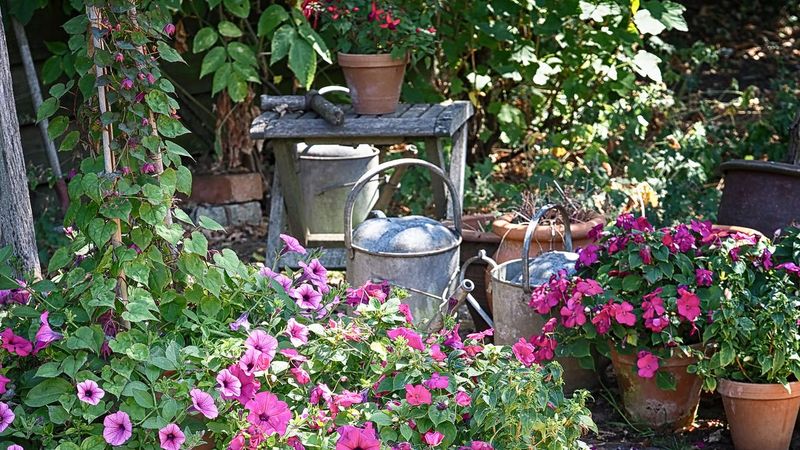
Southern summers put extra pressure on petunias, and a plant that was full and blooming in May can look exhausted and sparse by July even after a good pruning. Heat-related midseason decline is real, though how much it affects a particular plant depends on the cultivar, the container, and how well the basic care conditions are being met.
UF/IFAS Charlotte County Extension notes that Wave hybrids offer better heat tolerance than older petunia types, which is worth knowing when choosing plants for a Florida or Texas summer.
Container care becomes especially important when temperatures climb. Iowa State Extension watering guidance recommends watering thoroughly so moisture reaches the full root zone, then allowing the soil to guide the next watering rather than following a fixed daily schedule.
Small hanging baskets and pots can dry out quickly in hot weather and may need daily watering or more, but the right frequency depends on container size, potting mix, drainage, and the weather that week. Constantly wet soil creates a different set of problems, so good drainage matters as much as consistent moisture.
UMN Extension’s container plant feeding guidance explains that repeated watering leaches nutrients from potting mix, so container petunias often need regular feeding to stay healthy. Use a fertilizer according to its label directions.
Adding extra fertilizer does not automatically produce fuller growth and can cause fertilizer injury or encourage weak, soft vegetative growth if misapplied.
Deadheading supports flowers but does not replace pruning
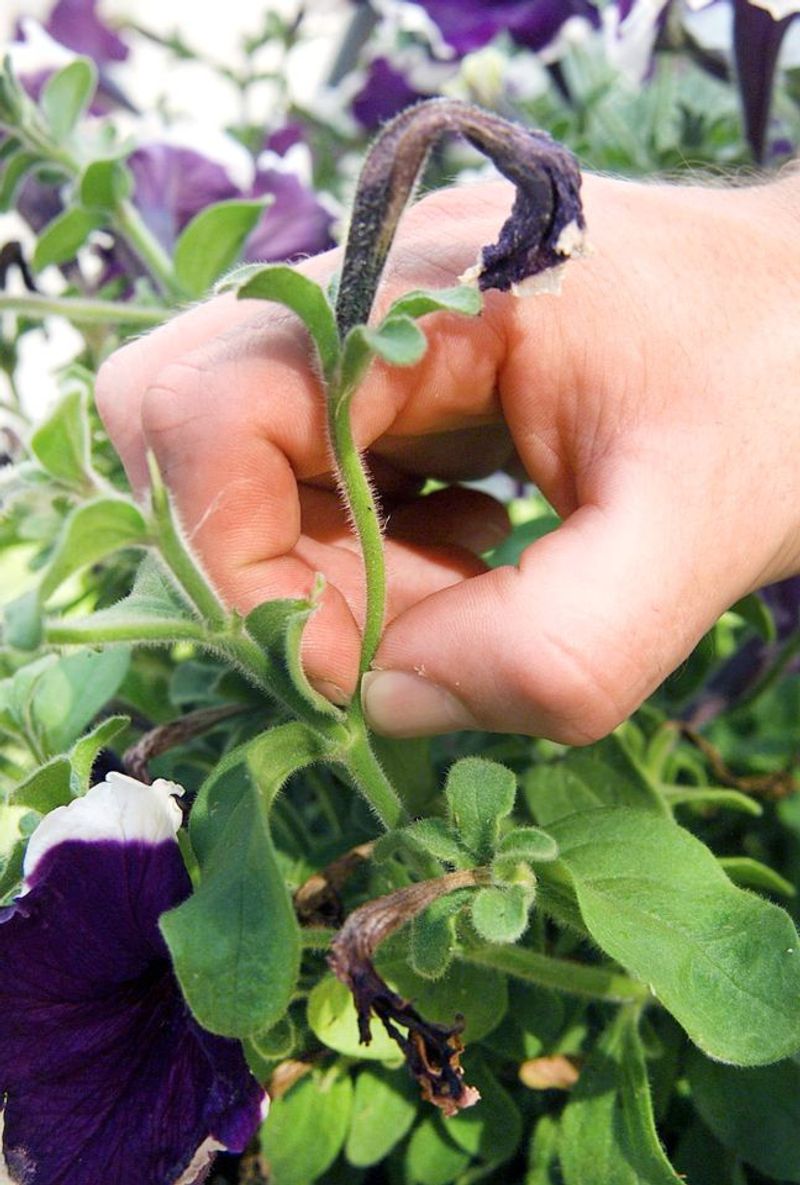
Deadheading and pinching are two different tasks that get mixed up often enough to cause real confusion. Deadheading means removing a spent or fading flower, usually by snapping or snipping it off at the base of the bloom.
The goal is to keep the plant from putting energy into seed production and to encourage it to keep setting new flower buds. University of Illinois Extension guidance on caring for annuals supports deadheading as a way to extend the blooming season on many flowering plants.
Pinching or cutting back targets something different entirely. Removing a growing tip or trimming a long stem redirects growth into lateral branches, which is what actually changes the plant’s shape and density.
Deadheading a leggy petunia keeps the old flowers tidy but does not address the sparse branching or the long bare stems. UF/IFAS petunia guidance treats pinching and deadheading as separate practices with separate purposes, and deadheading is not a substitute for cutting back when the goal is to reshape a stretched plant.
Worth noting: many small-flowered and spreading petunias are self-cleaning, meaning spent blooms drop on their own without any help. For those cultivars, routine deadheading is often unnecessary, and the pruning question becomes the more relevant one when midseason legginess sets in.
Use one timely reset, then monitor the plant
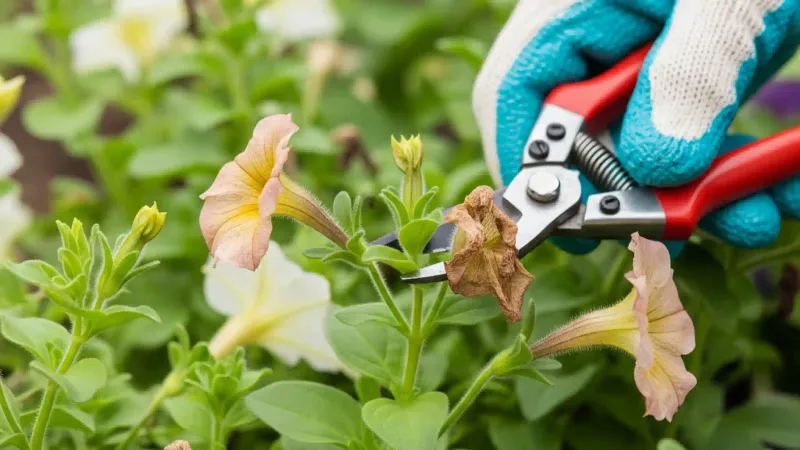
Putting it all together starts with knowing what you are working with. Identify the cultivar type first – upright grandiflora or multiflora plants are the ones most likely to respond well to pinching and cutting back, while trailing and spreading types may simply need better light or a more suitable location.
Check the sun exposure before making any cuts, since pruning a plant that stays in inadequate light often produces new growth that stretches again.
For young upright plants, UMN Extension’s petunia guidance supports pinching at approximately 6 inches tall to encourage early branching. For established leggy plants, Penn State Extension’s herbaceous pruning guidance supports trimming stems back above leaf nodes to encourage fresh growth.
After cutting, monitor soil moisture, watch for heat stress, check that drainage is working, and feed according to label directions if the plant is in a container.
Illinois Extension’s annual care guidance and UF/IFAS petunia guidance both frame consistent tip removal as a way to maintain plant shape over a season, with recovery remaining conditional on healthy roots, adequate light, and suitable growing conditions. A well-timed cut in the right spot, followed by steady attention to light, water, and heat, gives a stretched petunia its best realistic chance at growing fuller rather than longer.