
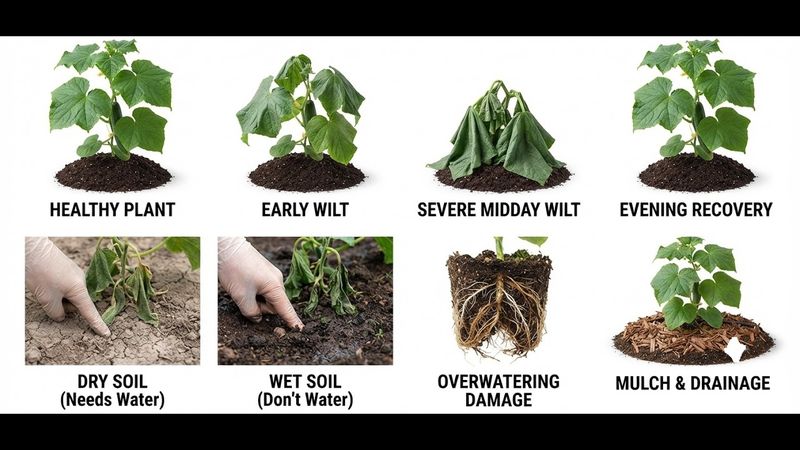
Watching cucumber vines go limp in the afternoon heat is one of those gut-punch moments in the garden, especially when the plants looked fine at breakfast. Before grabbing the hose, though, it pays to slow down – because not every wilting cucumber is a thirsty cucumber.
The right response depends on what is actually happening in the root zone, and getting that wrong can make things worse. This guide walks through how to read the signs, check the soil, and decide whether watering will help or hurt.
Afternoon wilt may signal heat stress rather than thirst
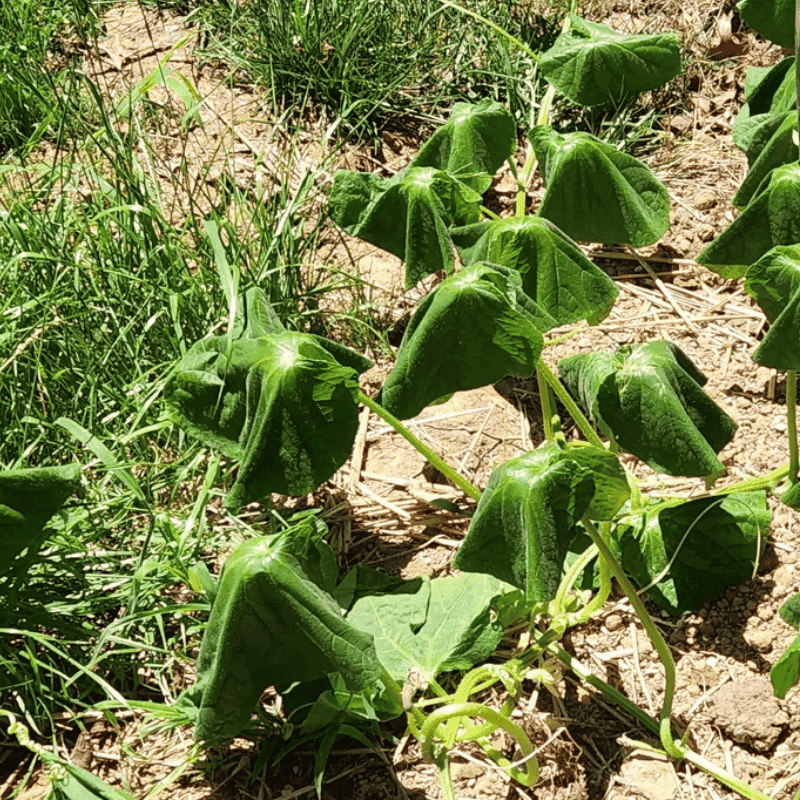
Cucumber leaves that go flat between noon and four o’clock and then perk back up by evening are showing a pattern worth understanding before acting on. During the hottest part of a Southern summer day, leaves can lose moisture through transpiration faster than roots can pull water up from the soil.
UGA Cooperative Extension guidance on heat and plant stress notes that this kind of temporary physiological wilt can occur even when the root zone holds plenty of moisture. Hot, dry wind makes the gap between leaf water loss and root uptake even wider.
Recovery by evening or the next morning is a clue that heat-driven water loss played a role. Treat it as a clue, though, not a clean bill of health.
A vine can recover overnight from heat stress one day and still be developing a root or disease problem underneath.
The smarter starting point is a two-part observation: note when the wilt appears and when it clears, then get down and check the soil near the roots. Replacing the automatic “water now” reaction with that sequence costs almost nothing and can prevent a common mistake – adding water to soil that is already wet enough, which creates a different set of problems entirely.
Check the root zone before deciding whether to water
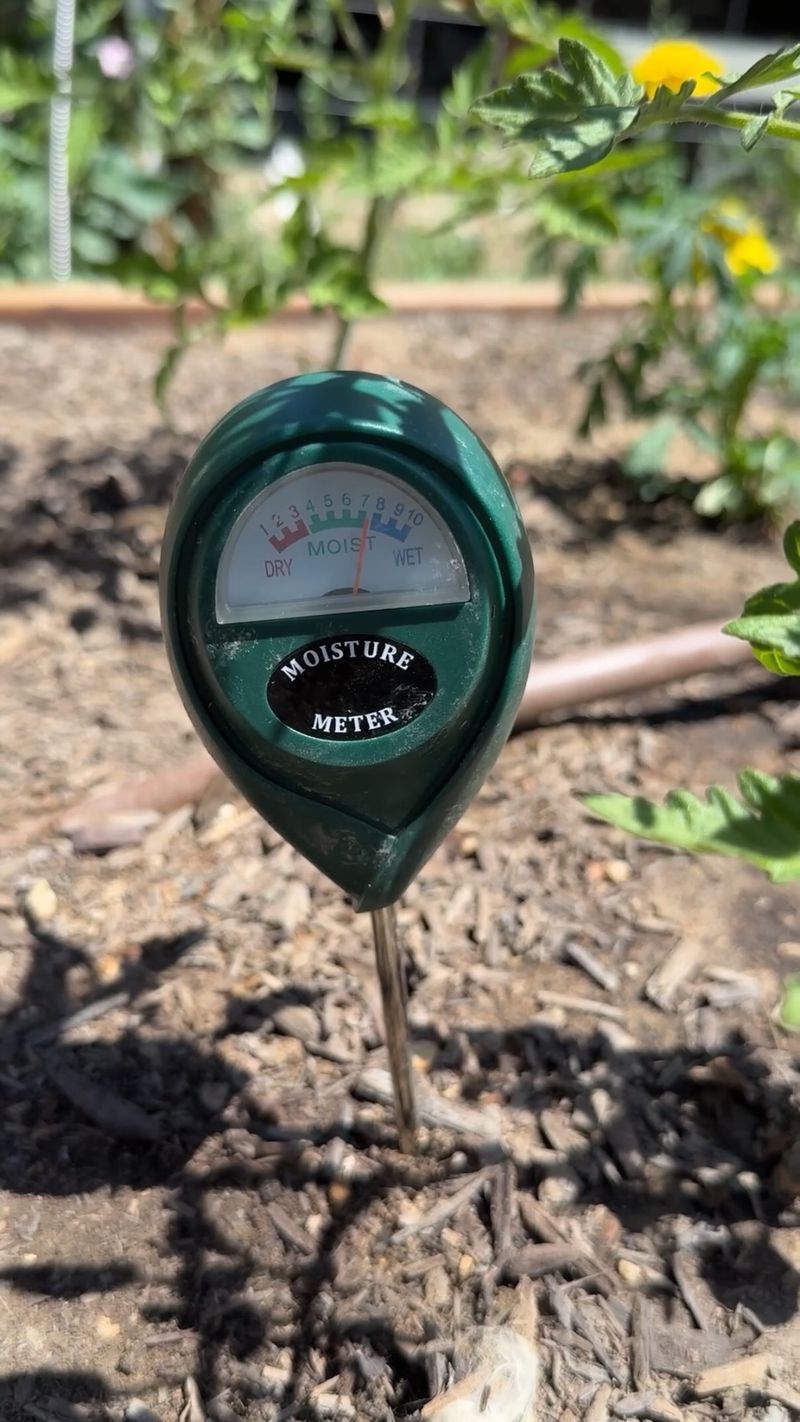
The most reliable tool for deciding whether to water a drooping cucumber is not a calendar or a watering app – it is a finger or a thin trowel pushed roughly 4 to 6 inches into the soil near the plant’s root zone. UGA Extension’s Goldilocks watering guide recommends checking several inches below the surface rather than judging moisture by how the top of the soil looks or feels.
Surface soil can feel bone-dry even when the deeper root zone holds adequate moisture, and the reverse is also true after a heavy rain.
Dry soil at that depth supports a decision to water deeply and evenly. Moist or saturated soil at that depth is a signal to hold off, even if the leaves are drooping.
UGA Extension’s vegetable problem-avoidance guidance points out that soggy, poorly aerated soil can itself cause wilting by damaging roots and cutting off oxygen, so adding more water to an already wet root zone can deepen the problem rather than solve it.
That soil check guides the watering decision, but it does not settle every question. University of Minnesota Extension’s cucumber wilt diagnostic lists root damage, vascular disease, and pest feeding as causes of wilting that can occur even when soil moisture seems adequate.
Think of the soil check as the essential first step, not the final answer.
If the soil is dry, give the vine a deep soil-level soak
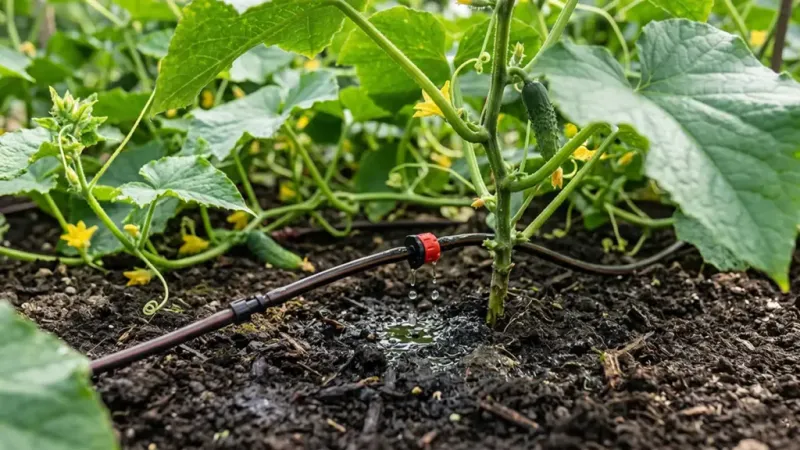
Finding dry soil 4 to 6 inches down is the green light to water, and how that water is applied matters as much as the decision to apply it. Direct the flow slowly and steadily at the soil line rather than sprinkling the foliage from above.
The goal is to wet the main root zone to approximately 6 to 8 inches, which UGA Cooperative Extension’s vegetable water conservation guide recommends as the target depth for a thorough soak. A quick pass with the hose that wets only the top inch or two can evaporate before it reaches the roots and can encourage roots to stay shallow rather than reaching deeper for moisture.
Timing matters, but not in the way the old warnings suggest. Morning is the preferred routine time to water because it reduces evaporation and gives any wet foliage time to dry before nightfall.
When the soil check reveals a genuinely dry root zone and the vine is visibly stressed in the afternoon heat, waiting until the next morning is not the right call. Extension specialists responding to heat-stressed cucumbers support watering when the plant clearly needs it, with water directed at the soil rather than overhead.
Afternoon watering is not inherently harmful to cucumber leaves. Penn State Extension’s garden myths watering resource identifies the idea that water droplets act as magnifying glasses and scorch leaves as unsupported.
The practical reasons to favor soil-level delivery are efficiency and limiting prolonged leaf wetness, not leaf burn. A drip line, soaker hose, or a hose directed carefully at the base of the plant accomplishes both.
Use morning for routine irrigation, not as a guaranteed wilt-prevention schedule
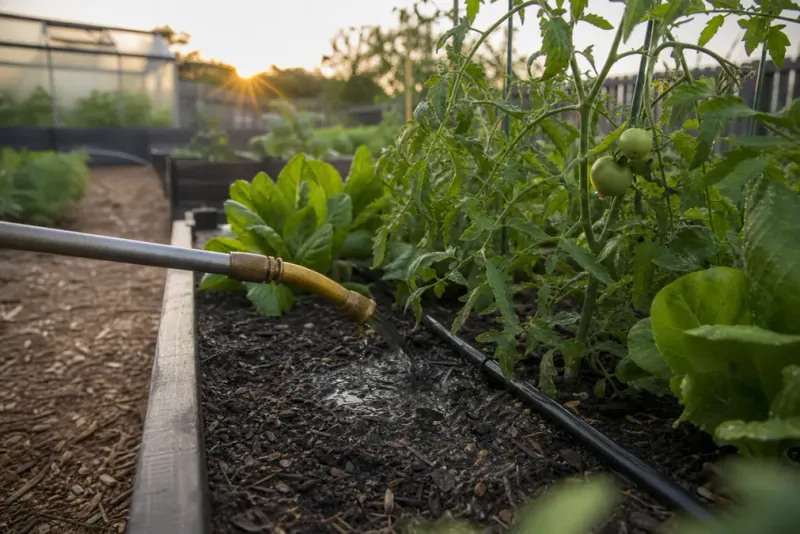
Early morning stands out as the preferred routine time to irrigate because it pairs well with how cucumbers use water through the day. Watering before the heat builds reduces evaporation loss from the soil surface and gives any moisture that reaches the foliage time to dry before evening.
UGA Cooperative Extension’s water conservation guidance for vegetable gardens discourages midday irrigation as a routine practice because a meaningful portion of the water can be lost before it soaks into the root zone. A drip irrigation line, soaker hose, or a low stream aimed at the base of the plant works better than overhead sprinklers for exactly this reason.
Morning timing does not guarantee that vines will stand firm through a 98-degree afternoon. Heat, wind, and the plant’s own transpiration rate can still cause temporary drooping even when the root zone was well-watered at dawn.
The preferred timing is about efficiency and disease risk reduction, not a promise that afternoon wilt will not happen.
Watering time is also separate from watering frequency. How often the root zone actually needs water depends on soil type, rainfall, plant size, fruiting stage, mulch, drainage, and whether the cucumber is growing in a container or in the ground.
UGA’s home gardening publication and University of Minnesota Extension’s vegetable irrigation strategies both treat 1 to 1.5 inches of water per week, including rainfall, as a broad vegetable-garden planning benchmark rather than a fixed cucumber prescription. Check the root zone first and let actual soil conditions drive the interval.
Keep moisture steady while cucumbers flower and develop fruit
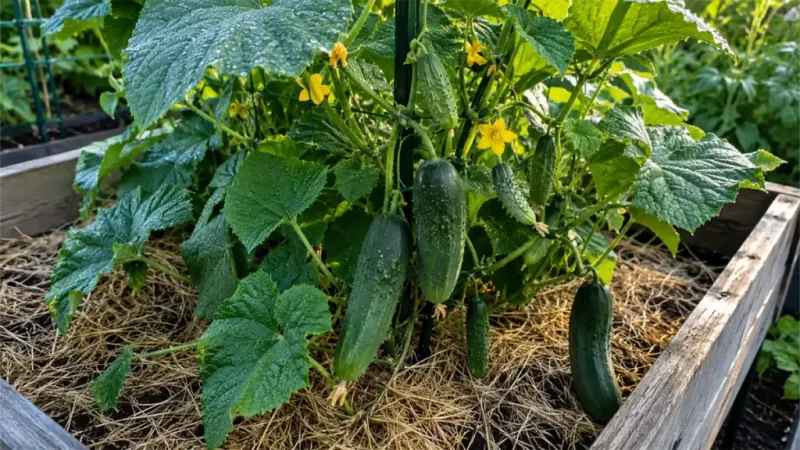
Cucumbers ask the most from the soil during flowering, fruit set, and active fruit development. University of Minnesota Extension’s vegetable irrigation strategies highlight that moisture fluctuations during these growth stages can affect both yield and fruit quality.
Keeping the root zone consistently moist – not wet – gives the plant a stable foundation for setting and sizing fruit without the swings that come from alternating drought and flood.
Repeated shallow sips create those swings. Light surface watering can evaporate quickly in Southern heat and may never penetrate far enough to reach the main root zone.
On the other end of the scale, excessive water reduces soil oxygen, can leach nutrients past the roots, and may cause the same kind of wilting that drought does. The target is steady, adequate moisture verified by checking the soil rather than by counting days between waterings.
Organic mulch is one of the more practical tools for holding that balance. UGA Cooperative Extension’s home gardening guide recommends approximately 2 to 4 inches of organic mulch around vegetable beds to slow evaporation and moderate soil temperature.
Keep the mulch pulled a few inches back from the base of the stem to avoid trapping moisture against the crown. Mulch helps stabilize root-zone conditions between waterings, but it does not compensate for soil that is genuinely dry or for drainage problems that keep roots sitting in water.
Adjust moisture checks for containers, sandy beds, and Southern weather
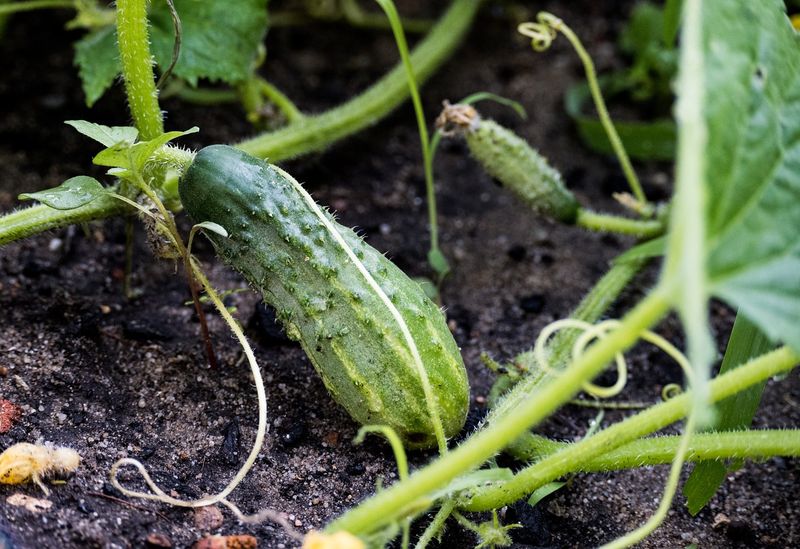
Container-grown cucumbers operate by different rules than in-ground vines. A pot limits the total volume of growing medium available to the roots, and that smaller volume can dry out surprisingly fast during a Southern summer.
University of Minnesota Extension’s container plant watering guidance notes that hot, dry conditions can require daily or even more-than-daily checks for container plants. Checking the growing medium every morning and sometimes again in the late afternoon is not excessive when temperatures are consistently above 90 degrees and the pot is in full sun.
Sandy soils common across much of the South, including much of Florida, drain quickly and hold less moisture than loam or clay. University of Florida IFAS guidance on cucumber production in South Florida emphasizes managing soil moisture carefully in sandy conditions and avoiding over-irrigation, which can leach nutrients and saturate roots.
Raised beds, depending on their mix, can behave like containers or like well-draining sandy soil, both of which may need more frequent checks than a traditional in-ground bed.
Heavy rainfall, clay-based soils, and local irrigation restrictions add more variables. UGA’s home gardening publication reinforces that no single watering interval fits every situation.
After significant rain, skip the scheduled watering and check the soil first. During dry spells or heat waves, check more frequently.
Local water-management districts in Florida and other Southern states may also impose irrigation restrictions that affect when and how often supplemental watering is permitted.
Morning wilt or progressive decline calls for diagnosis, not more water
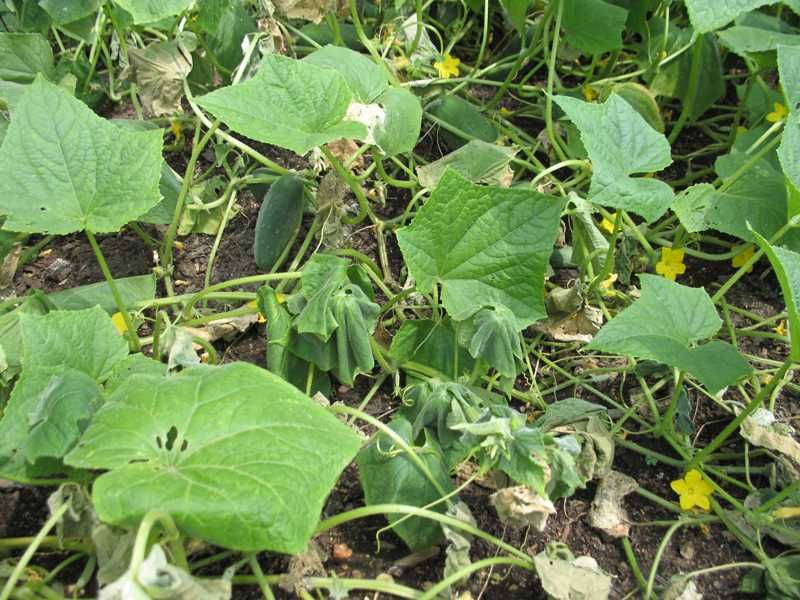
Wilt that is still present when you walk out to the garden in the morning is a different problem from the afternoon droop that clears by sunset. Morning wilt points toward inadequate root-zone moisture, root damage, poor drainage, vascular disease, or some combination of those factors.
University of Minnesota Extension’s cucumber wilt diagnostic tool lists bacterial wilt, root rot, and feeding damage among the causes of wilting that do not respond to additional irrigation.
Bacterial wilt deserves special attention because it can start out looking a lot like heat stress. The early symptom is daytime wilting with some overnight recovery, which is easy to dismiss as a hot-weather problem.
Warning signs that point toward bacterial wilt rather than simple drought include wilt that progresses down one runner or spreads across the vine over several days, leaves that turn dull or begin to yellow, visible cucumber beetles on the plant, and eventual vine collapse. University of Minnesota Extension’s vegetable IPM blog on cucumber beetles explains that cucumber beetles transmit the bacterial wilt pathogen, making beetle management an important part of prevention.
Watering will not cure an infected plant, and severely affected vines may need to be removed to reduce spread.
Wet-soil wilt is another situation where adding more water makes things worse. UGA Extension’s vegetable problem guidance points to saturated, poorly aerated soil as a root-damaging condition that can cause wilting even when the soil surface appears moist.
If the soil check reveals wet or waterlogged conditions, the answer is to improve drainage and withhold water, not to add more. Morning wilt plus moist soil is a signal to investigate, not irrigate.
Use mulch and temporary shade to manage exceptional heat
Pulling together the decision sequence makes the whole process easier to follow in the moment. When vines wilt in the afternoon, note the time and check whether the wilt clears by evening.
Then check the soil 4 to 6 inches down near the roots. Dry soil means water deeply at soil level.
Moist soil means hold off and look for other causes. Morning stays the preferred routine for irrigation, and the root-zone check stays the deciding factor regardless of the time of day.
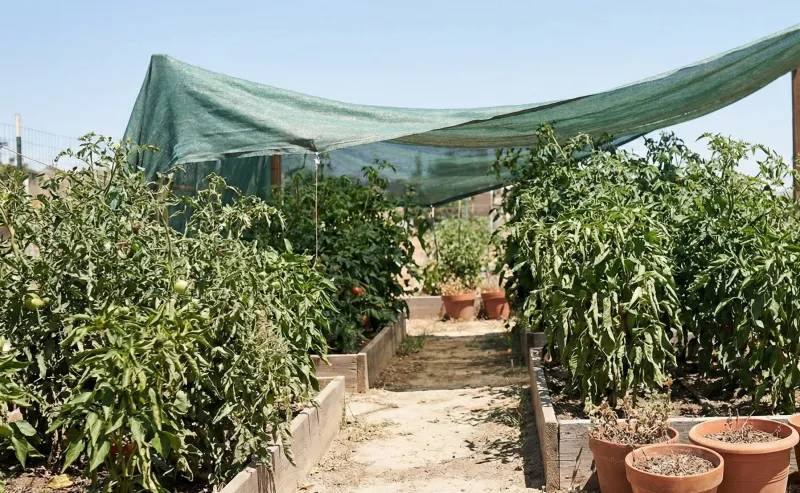
Mulch and temporary afternoon shade fit into this picture as heat-management tools, not substitutes for addressing the real cause of wilt. Extension guidance on shade for vegetables supports using temporary shade during exceptional heat to reduce leaf stress and transpiration.
A light shade cloth positioned to block the harshest afternoon sun can lower the demand on the root zone without cutting off the strong light cucumbers need for production. UGA’s home gardening publication recommends 2 to 4 inches of organic mulch to slow soil moisture loss and moderate root-zone temperature.
Neither tool corrects dry soil, poor drainage, root damage, or disease.
The title of this article promises a watering rhythm that firms vines back up, and that promise holds only when a dry root zone caused the wilt. The real rhythm is simpler: observe, check, match the response to the actual condition.
UGA Extension’s heat and plant stress guidance reinforces that the goal is not to water on a fixed schedule but to water when the plant and the soil together call for it. A gardener who reads those signals accurately will do more for wilting cucumber vines than any calendar-based routine ever could.