
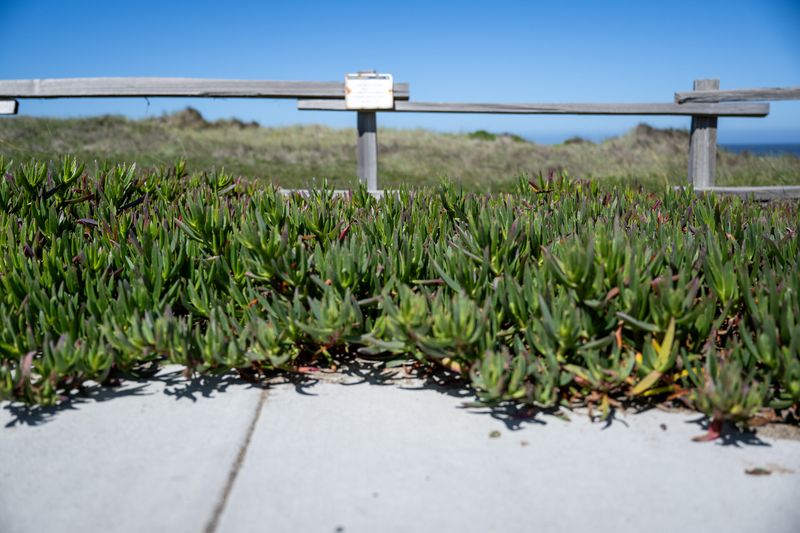
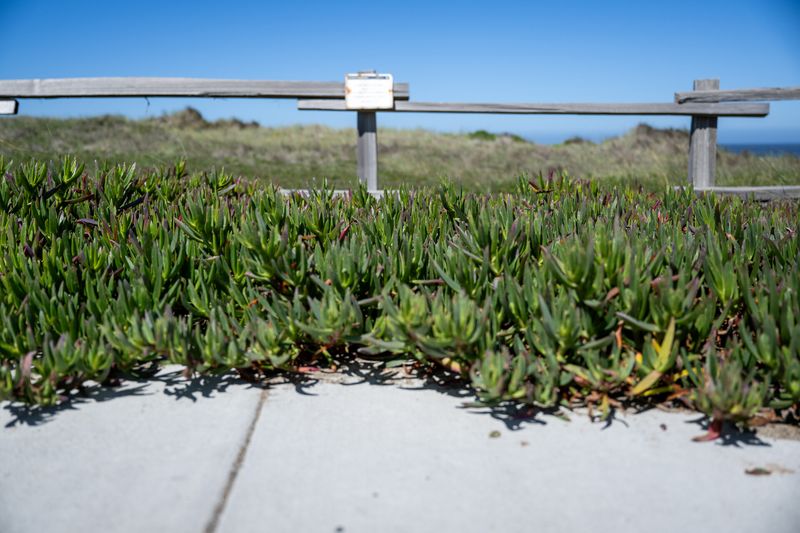
A familiar groundcover with thick, succulent leaves and bright flowers has been showing up on restricted and prohibited plant lists in parts of California, and many homeowners have no idea their yard could be affected. The plant at the center of the concern is highway ice plant, known botanically as Carpobrotus edulis, and it was planted widely for decades along roads, railroads, and coastal slopes before its ecological problems became clear.
No statewide ban covering every residential yard exists, but localized rules tied to coastal zones, fire-management areas, and development permits are real and worth understanding. Knowing what you actually have, what rules apply to your property, and how to act carefully can save you from making a costly or ecologically damaging mistake.
The “ice plant” in the headlines is usually highway ice plant
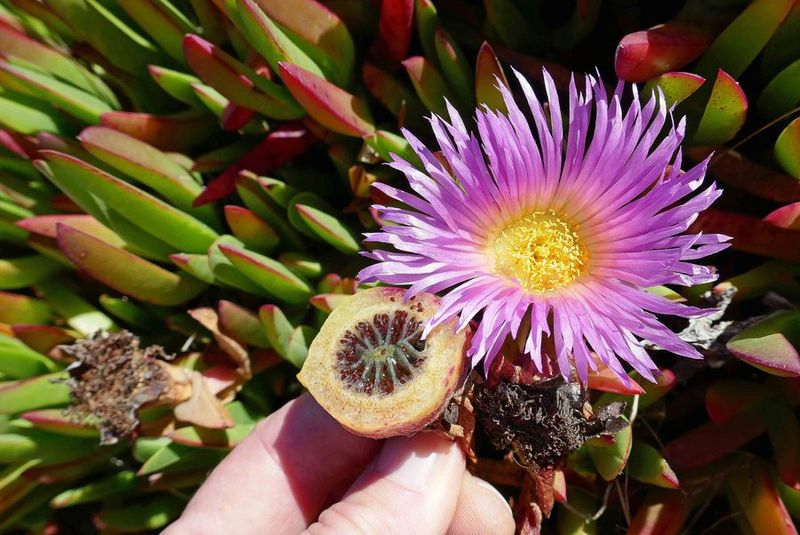
Highway ice plant, Carpobrotus edulis, is the species most often behind the headlines. It grows with thick, three-sided succulent leaves that feel almost rubbery and produces large, showy flowers in shades of yellow, pink, or magenta.
A closely related species, Carpobrotus chilensisC. edulis, often called sea fig, looks similar and appears alongside in many California conservation documents as a co-concern.
Before assuming the plant in your yard is the problem species, confirm the botanical name. Plant California’s water-wise groundcover guide notes that the common name “ice plant” is applied to multiple genera, including Delosperma cooperiCarpobrotus edulis and other smaller-leaved ornamentals that are distinct from and not subject to the same invasive concerns.
Pulling out the wrong plant is a frustrating and unnecessary mistake.
Carpobrotus edulis was intentionally introduced to California from South Africa. UC Agriculture and Natural Resources identifies it as a widespread, highly invasive species that was brought in for erosion control along infrastructure corridors and later adopted for ornamental landscaping.
The California Department of Fish and Wildlife confirms it spread easily from those original planting sites into coastal habitats.
State parks documents, including a California State Parks exotics management plan, treat both C. edulisC. chilensisCarpobrotus and as significant invasive threats in parklands. San Diego County planning documents also list species on prohibited invasive-plant inventories connected to development and landscape review.
None of that history makes every existing residential planting automatically illegal, but it does explain why the plant now draws regulatory attention in specific settings.
Why agencies want Carpobrotus out of natural areas
Spend time near a California coastal dune or bluff covered in Carpobrotus edulis and the problem becomes visually obvious: almost nothing else grows through it. California Department of Fish and Wildlife reports that ice plant creates dense mats that choke native plants, compete with rare and endangered species, and alter the soil composition of coastal habitats in ways that make recovery difficult.
UC ANR’s invasive spotlight on highway ice plant classifies it as a Cal-IPC A-1 species under older terminology, meaning one of the most invasive and damaging widespread plants in California. It outcompetes native plants not just for light and water but by physically smothering them under a mat that can be several inches thick.
California State Parks’ exotic plant control program describes ice plant and sea fig as major invasive threats in state parklands, noting their ability to rapidly outcompete native species and disrupt natural ecosystem processes. That disruption is not limited to visible plant loss.
Altered soils and reduced native-plant diversity affect insects, birds, and other wildlife that depend on the specific plants being displaced.
Restoration evidence makes the scale of the problem concrete. The Fort Ord Dunes State Park General Plan and EIR documents how ice plant mats displace native perennial dune species and eliminate habitat for native annual plants entirely.
Restoration projects that remove it require years of follow-up monitoring because the plant can re-establish from fragments left in the soil. The concern is not direct harm to individual animals but the steady replacement of a functioning native ecosystem with a monoculture that supports far fewer species.
A high invasive rating is not the same as a statewide ban
Seeing Carpobrotus edulis on an invasive species inventory can feel alarming, but a scientific rating carries no legal weight on its own. The California Invasive Plant Council explicitly states that its inventory has no regulatory authority.
A High rating means the plant causes significant ecological damage and spreads readily. It does not mean possession or cultivation is illegal, and it does not trigger any automatic removal obligation for established residential yards.
Enforceable restrictions come from specific local documents: a county prohibited-plant list, a fire-fuel-modification plan, a coastal development permit condition, or a habitat-restoration project requirement. San Luis Obispo County’s potentially problematic plants document does list Carpobrotus edulis as a county-prohibited plant.
That document is real evidence of a county-level restriction, but its last revision date is June 2005, making it a long-standing policy rather than proof of a new or expanding annual trend.
San Diego County materials show a similar pattern. San Diego County’s invasive species appendix and the Otay Ranch Village 13 fire and planning document both identify Carpobrotus species in the context of development review and fuel-modification planning.
Those restrictions apply to specific projects and planning zones, not to every residential yard in the county.
Coastal-permit conditions add another layer. A California Coastal Commission permit report on Ballona Wetlands and a CEQA filing for the Dangermond Iceplant Removal Project both describe ice plant removal as part of habitat-restoration conditions.
Those are site-specific requirements, not general residential orders. The distinction matters: a rule that applies to a wetland restoration site or a new development’s landscape plan is a different thing from a blanket ban on every established yard planting.
What should a homeowner check before acting?
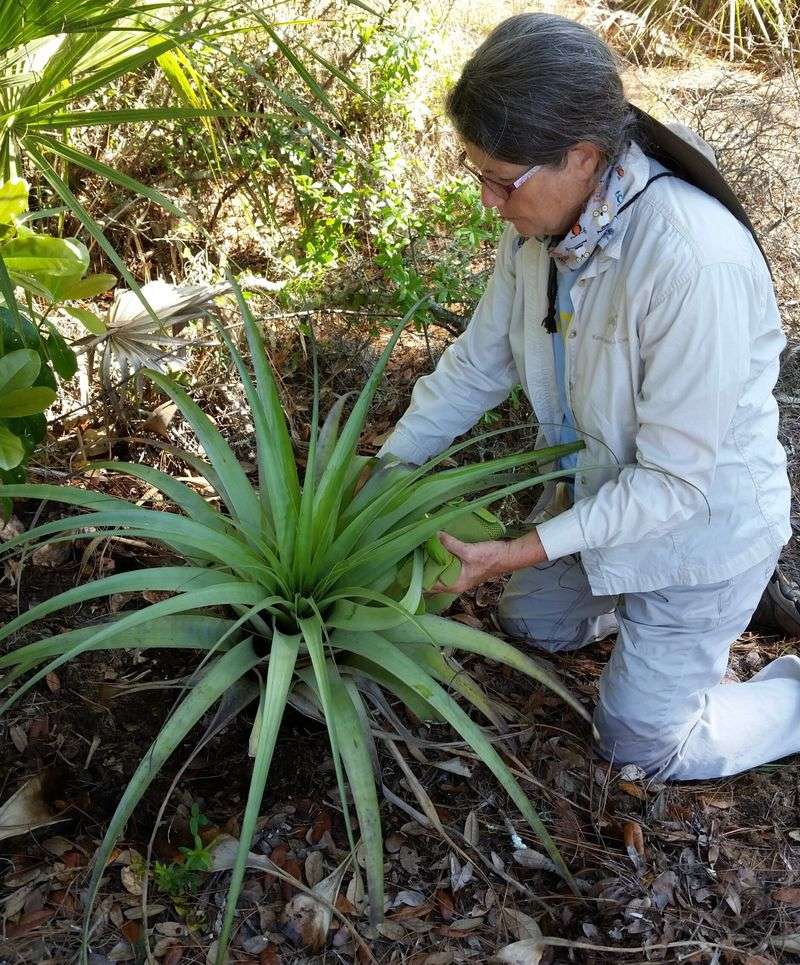
Before pulling a single stem, confirm what you actually have. Look up the botanical name of your plant using a local nursery label, a plant-identification app cross-checked against a reliable source, or a UC Master Gardener clinic.
If the name is Carpobrotus edulisCarpobrotus chilensisDelosperma cooperi or , the concern applies. If it is or another genus sold under the common name ice plant, the invasive restrictions described here generally do not.
Once you know the species, check the current rules for your specific address. The Cal-IPC inventory is a useful starting point for understanding the plant’s ecological rating, but it is not a legal source.
For enforceable rules, contact your county’s planning or agriculture department and ask whether a prohibited-plant list, fuel-modification plan, or habitat-management policy applies to your parcel. Ask for the document name, its effective date, and whether it covers existing residential plantings or only new development and landscaping plans.
Location within your property also matters. A planting that sits on a flat, fully enclosed residential lot is a different regulatory situation from one at the edge of a drainage channel, within a coastal zone, adjacent to open space, or inside a fire-management overlay.
San Diego County’s invasive species guidance and San Luis Obispo County’s plant document both tie their restrictions to specific land-use contexts rather than applying universally to every yard.
No authoritative statewide rule was found requiring ordinary homeowners to remove every established Carpobrotus planting from private residential property solely because the plant appears on an invasive-species list. The legal question is local and fact-specific.
If your property sits in a coastal zone, borders a natural area, or is tied to a development permit or landscape approval, contact your city or county planning office, the local fire department, and your regional water agency before making any changes to a large slope planting.
Old mats require removal, cleanup, and follow-up
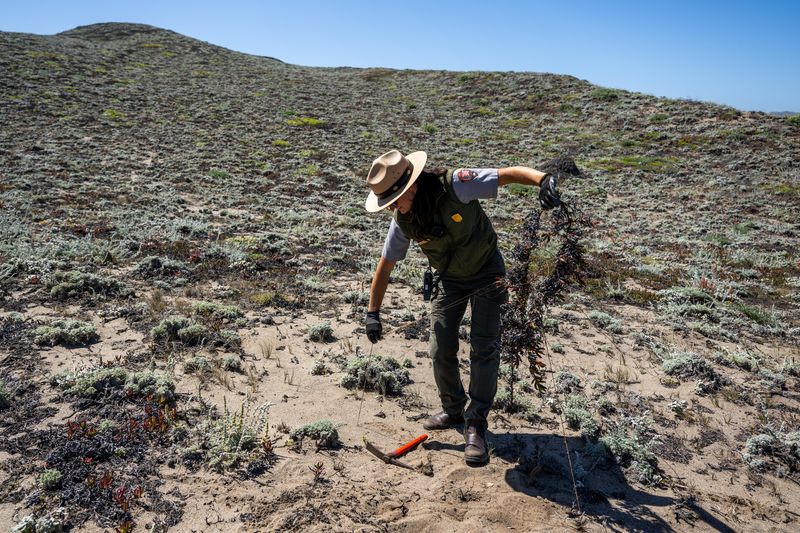
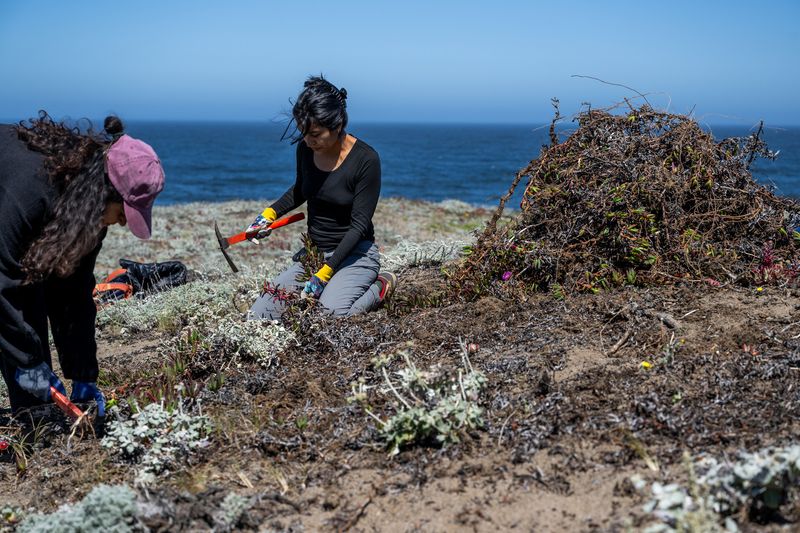
Deciding to remove an established Carpobrotus planting is the right ecological choice in many situations, but the process matters as much as the decision. UC ANR advises removing all live shoots because the plant can regrow from nodes left behind in the soil.
A patch that looks cleared after one afternoon of work can be back within a season if roots and stem fragments remain.
For small patches, hand removal is the right starting point. Grip the stems near the base, pull steadily, and follow the root system as far as possible.
Work across the patch methodically rather than pulling from the edges, which can leave buried nodes in the center. UC ANR’s invasive weed management guide recommends lifting or rolling dense mats, removing roots and plant fragments thoroughly, raking the area afterward, and then monitoring regularly for regrowth over the following months.
Disposal requires care. Do not pile removed material near a drainage channel, storm drain, natural open space, or unmanaged slope.
Even detached stems and nodes can root if they reach moist soil. Bag the material and dispose of it according to your local green-waste guidelines, or confirm with your waste hauler that the material will not be composted and redistributed.
California Department of Fish and Wildlife specifically warns that ice plant can re-establish easily after removal, which means leaving bare soil in place is not a finished job. Plan your replacement planting before you start removing, so rehabilitated ground does not sit exposed through rain or wind events.
Wear gloves, long sleeves, eye protection, and sturdy footwear whenever you are working with a large mat. The practical risks are sharp debris, awkward pulling postures, slips on damp or steep ground, and possible contact with unknown pesticide residues from past applications.
For large infestations, coastal sites, steep slopes, or locations adjacent to regulated habitat, get a professional assessment before proceeding. Herbicide is not a default recommendation here; product selection, application timing, proximity to water, and potential effects on desirable plants all require site-specific guidance from a qualified advisor.
The replacement must fit the yard, not just the rule
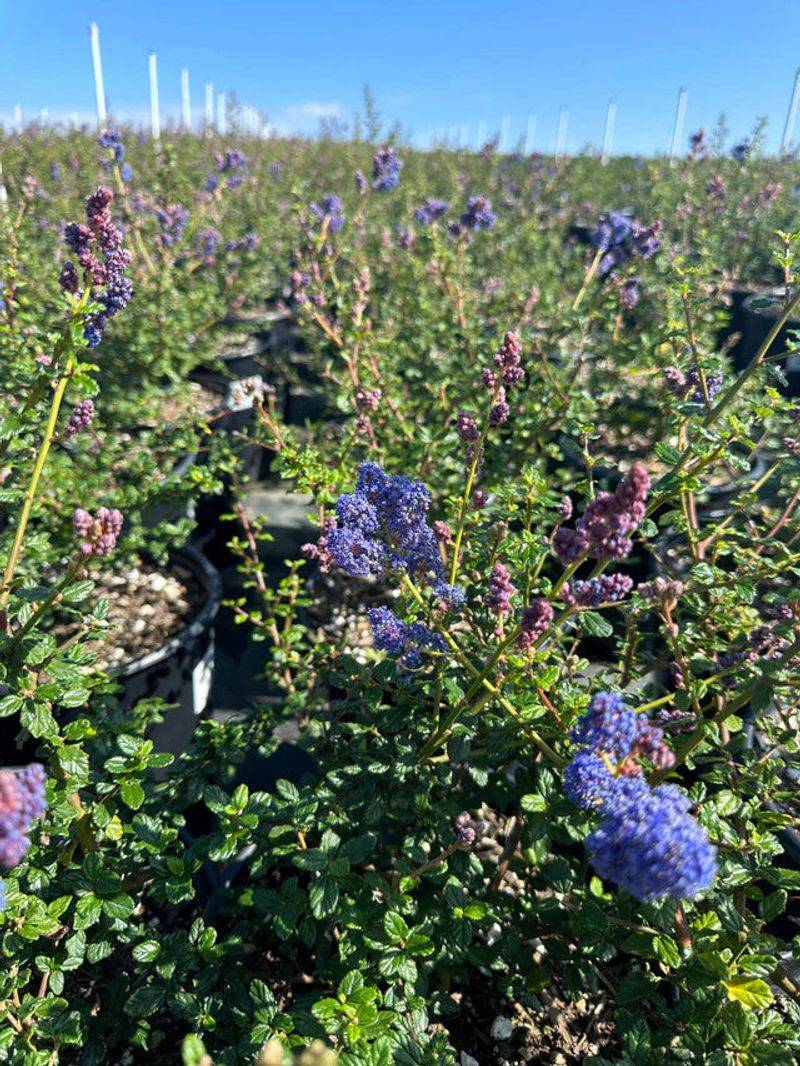
Bare ground after ice plant removal is an invitation for weeds, erosion, and – ironically – ice plant to come back from any fragments left behind. Choosing the right replacement before you start digging is not optional; it is part of the removal plan.
California Department of Fish and Wildlife recommends purple sage, Salvia leucophylla, as one native coastal alternative. After establishment, it is drought tolerant, provides erosion-control coverage, and attracts native bees and butterflies.
Other candidates depend heavily on your specific site. UC Master Gardener drought-tolerant native groundcover guidance points to wild strawberry (Fragaria californica) for shaded or partly shaded spots with moderate water, and to low-growing ceanothus varieties for sunny, well-drained slopes where you want something that fixes nitrogen and supports pollinators.
UC ANR’s suggested noninvasive alternatives list also includes native yarrow (Achillea millefolium), which handles dry summers well and spreads to form a low, feathery mat in many California gardens.
No single plant duplicates everything ice plant does across every California climate. A coastal San Diego yard, a shaded inland valley lot, and a hot, dry hillside in the foothills all call for different solutions.
UC ANR’s guide to alternatives for invasive garden plants reinforces that the best replacement choice accounts for water availability, soil type, slope angle, sun exposure, foot-traffic expectations, and the appearance you want through the dry season.
Ask your local native plant nursery or UC Master Gardener program for species that are already proven in your specific zip code and microclimate. A plant that thrives two miles away at sea level may fail on your north-facing slope, and a species rated for low water use in a coastal climate may need supplemental irrigation further inland.
Match the plant to the site first, and the ecological and regulatory benefits will follow.
Slopes and fire zones change the removal decision
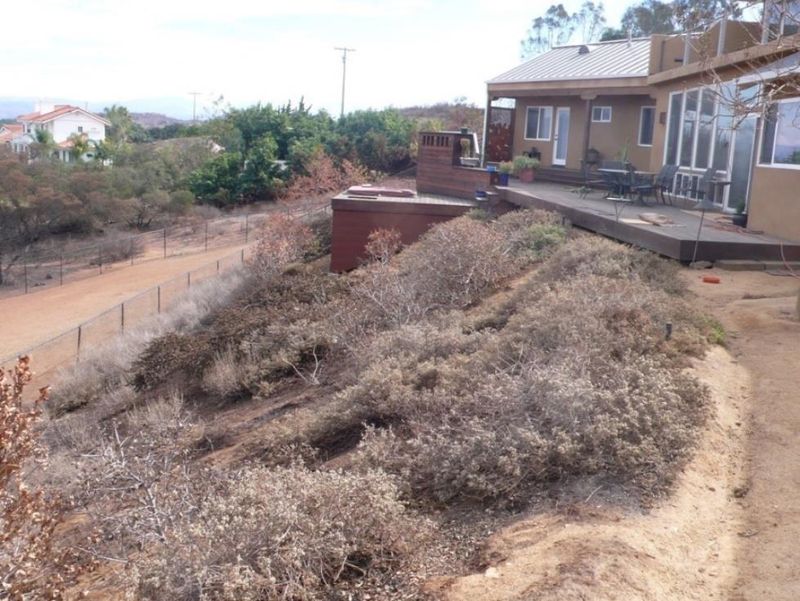
Removing a mature Carpobrotus mat from a steep slope is not the same project as pulling a flat garden bed. A living mat, even an invasive one, holds soil in place with its root network.
Stripping it away without a replacement plan ready can expose bare soil to the next rain event, increasing short-term erosion and potentially destabilizing the slope itself. For any steep or actively eroding hillside, consult a landscape professional or a licensed geotechnical advisor before starting removal, and have your replacement plants sourced and ready to go in the ground quickly.
Fire-zone rules add a separate layer of complexity. Ice plant is sometimes marketed as fire-safe because its thick, water-filled leaves do not ignite easily when green.
UC ANR’s Southern California homeowner guidebook cautions that dense groundcovers can accumulate dead material underneath the living surface, creating a fuel load that complicates the fire-safety picture. Maintenance frequency, seasonal moisture, and the volume of dead thatch all affect how a groundcover performs in a fire event.
CAL FIRE’s defensible space guidance sets the standards for what vegetation management looks like in and around your home’s defensible-space zones. Those rules apply to whatever plant you have now and to whatever you plant next.
A native replacement is not automatically fire-safe, erosion-proof, or compliant with local defensible-space requirements just because it is native. Verify that your chosen replacement meets the fuel-modification or defensible-space criteria in your zone before planting.
California Fish and Wildlife’s ice plant page also warns that removal near natural areas can disturb protected plants or affect regulated habitat. If your slope borders open space, a riparian corridor, or a coastal bluff, check whether your planned removal requires a permit or triggers any environmental review before you begin.
The sensible response is verification, not panic
The ecological case against Carpobrotus edulis in natural areas is well supported by state agencies, university research, and restoration project records. That evidence is a good reason to take the plant seriously, especially if your yard sits near a coastal habitat, a drainage channel, or open space where seeds and fragments can travel.
What the evidence does not support is the idea that every homeowner in California faces an expanding annual wave of county bans or a blanket legal order to remove every established planting immediately.
A practical response starts with three steps: confirm the botanical name of your plant, check whether a current local rule actually applies to your parcel and your specific situation, and avoid planting Carpobrotus edulisCarpobrotus chilensis or anywhere they can escape into natural areas. California Department of Fish and Wildlife and Cal-IPC both provide accessible information for starting that process.
If a rule does apply, build your removal and replanting plan around the site’s slope, drainage, fire requirements, and habitat context rather than rushing to pull everything at once.
Localized restrictions from county planning offices, such as San Luis Obispo County’s prohibited-plant policy, are real and worth knowing about, but they are not the same as a statewide emergency. The most durable outcome for a California yard is a planting that is honest about what grows there, matched to the site’s water and fire realities, and chosen with the surrounding habitat in mind.
That is a better goal than either ignoring the problem or overreacting to a headline.