
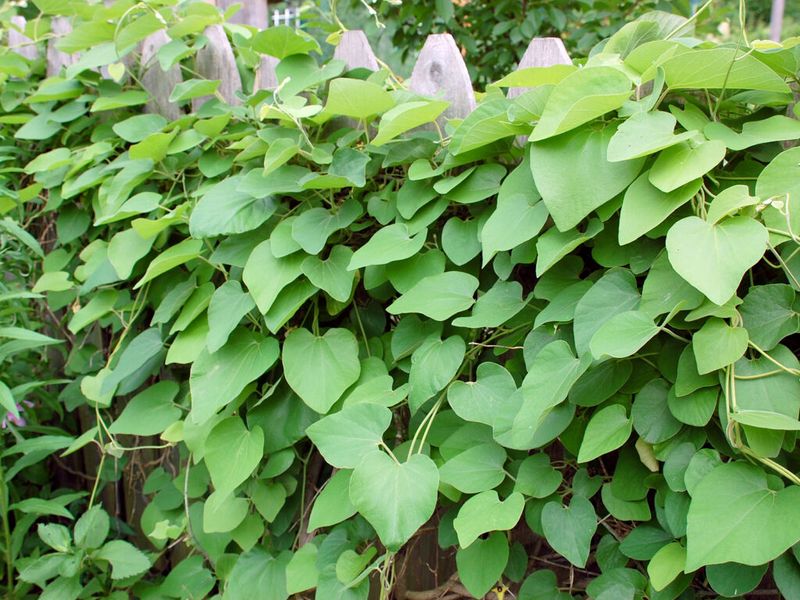
A fence gets the job done, but it does not feed a single bee or shade a single bird. More North Carolina homeowners are trading boards and pickets for climbing native vines that block nosy neighbors while quietly working for local wildlife.
These plants shrug off our humid summers, ask very little of you, and turn a plain property line into something alive. Here are seven native vines that can screen your yard and support the creatures that belong here.
1. Coral Honeysuckle (Lonicera sempervirens)
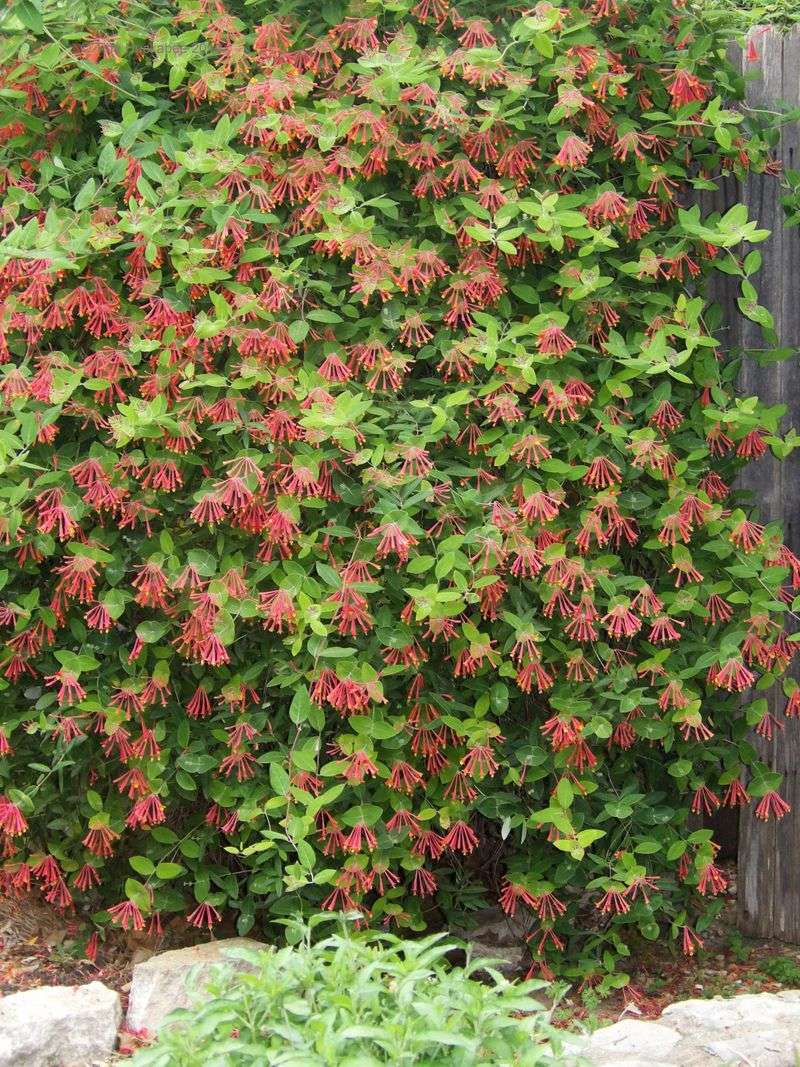
Hummingbirds will find this vine before you even finish planting it. Coral honeysuckle throws out clusters of tubular red-orange blooms from spring straight through fall, and ruby-throated hummingbirds treat it like a roadside diner.
Unlike the aggressive Japanese honeysuckle that smothers NC roadsides, this native cousin stays polite. It climbs to about 15 feet, twining neatly along a fence line or trellis without swallowing everything nearby.
It handles Piedmont clay and coastal sand alike, and once established it barely needs watering. Songbirds pick at the red berries in fall, so you get a screen that shifts from flowers to fruit across the seasons.
For anyone wanting fast, tidy privacy with a wildlife payoff, this is the easy first pick.
2. Carolina Jessamine (Gelsemium sempervirens)
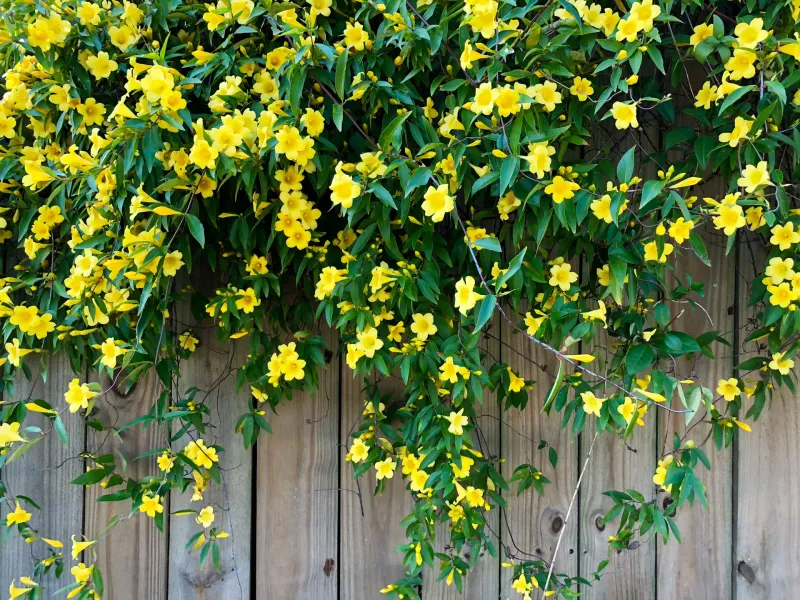
Come late winter, when most of the yard still looks tired, Carolina jessamine lights up with bright yellow trumpet flowers. It is the official state flower for good reason, and its evergreen leaves mean your privacy does not vanish when cold weather arrives.
The glossy foliage forms a dense curtain that holds through the year, giving you screening in January just as reliably as in July. Early pollinators, waking hungry, lean on those first blooms.
A quick note for families: every part of this plant is toxic if eaten, so it is best kept away from spots where small kids or pets graze. Give it a sturdy support and a sunny wall, and it rewards you with one of the earliest, cheeriest screens in the state.
3. American Wisteria (Wisteria frutescens)
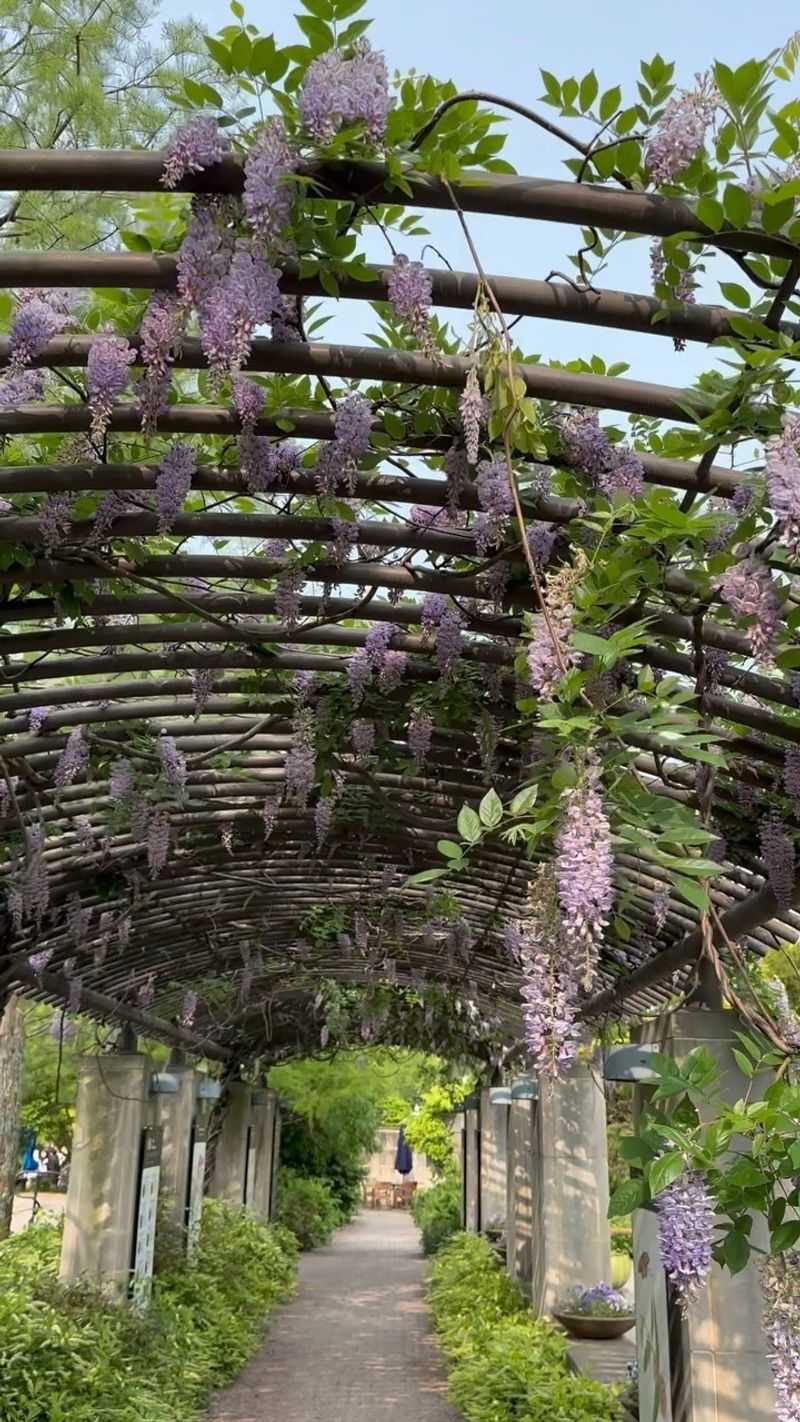
Everyone loves the dripping purple curtains of wisteria, but the Asian varieties turn into fence-crushing monsters. American wisteria is the well-behaved native answer, with softer lavender-purple flower clusters and far gentler manners.
It blooms after the leaves fill in, so you get a lush green wall first and a flower show second. The vine can may support native bees and butterflies drawn to those fragrant blooms.
Give it a strong arbor or a heavy-gauge fence, because even the polite version has muscle once it matures. In the coastal plain and Piedmont it thrives in full sun with steady moisture.
If you want that dreamy cascading look without the invasive baggage, this is the one to plant.
4. Crossvine (Bignonia capreolata)
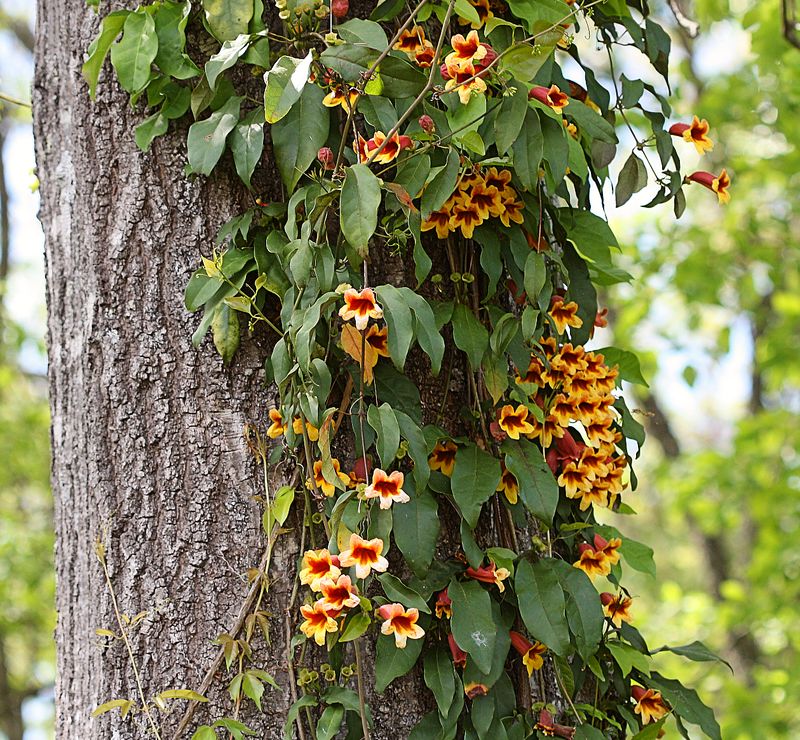
Need to cover a big, ugly stretch fast? Crossvine is the workhorse.
It rockets up to 30 or 50 feet using tiny tendrils that grip fences, brick, and bark with almost no help from you.
In spring it bursts with trumpet-shaped blooms in warm orange and yellow, another hummingbird favorite that also pulls in early butterflies. The leaves stay semi-evergreen through NC winters, tinting a moody reddish-purple in the cold.
It is remarkably unfussy about soil and shrugs off heat and drought once its roots settle in. Because it self-clings, crossvine is a smart choice for covering chain-link or a bare masonry wall where you want dense, tall coverage without constant tying and training.
5. Virginia Creeper (Parthenocissus quinquefolia)
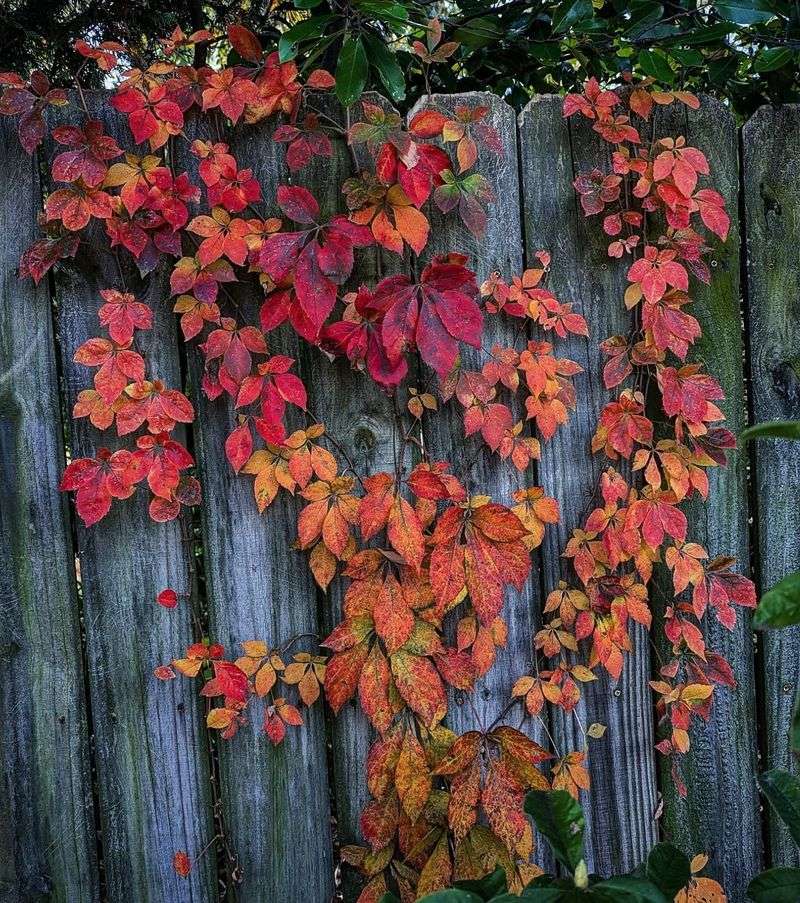
Come October, Virginia creeper turns the color of a stoplight. Its five-fingered leaves blaze crimson in fall, giving you a privacy screen that doubles as the best autumn display on the block.
Birds love it. The dark blue berries feed woodpeckers, thrushes, and dozens of other native species heading into winter, making this a genuine backyard buffet.
People sometimes confuse it with poison ivy, but the easy tell is the leaf count: creeper has five leaflets, poison ivy has three. It grows fast, clings to almost any surface with sticky pads, and tolerates shade better than most vines here.
For a low-maintenance green wall that puts on a fiery finale, few natives compete.
6. Passionflower (Passiflora incarnata)
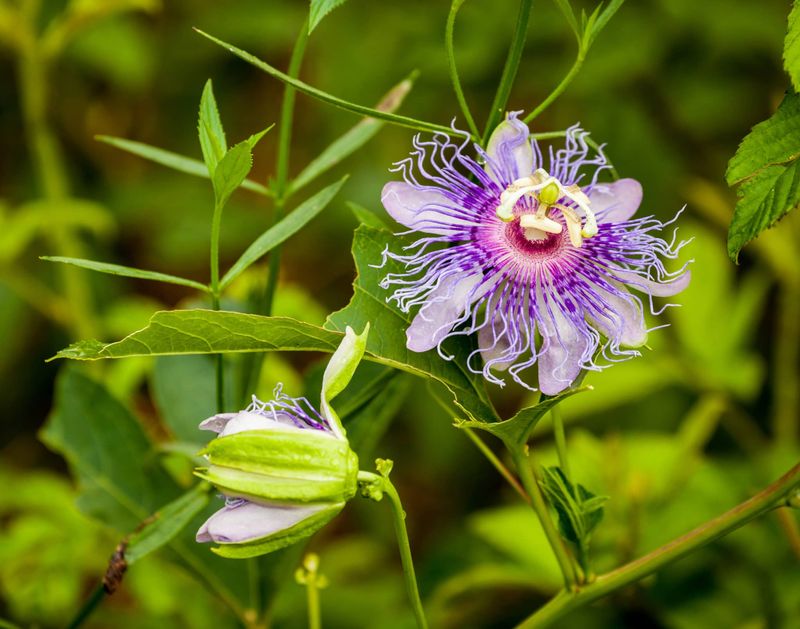
The flower alone looks like something from a jungle documentary, all purple fringe and otherworldly structure, yet passionflower grows wild across North Carolina roadsides and fields. Locals call the egg-shaped fruit a maypop, and it is edible when ripe.
Here is the wildlife angle that steals the show: passionflower is the host plant for the gulf fritillary and variegated fritillary butterflies. Plant it and you may support entire generations of native butterflies right along your fence line.
It dies back in winter and returns from the roots each spring, spreading enthusiastically, so give it room or a contained bed. Through the warm months it covers a fence in exotic blooms and busy pollinators.
For a screen that turns a boring boundary into a butterfly nursery, this native overdelivers.
7. Trumpet Creeper (Campsis radicans)
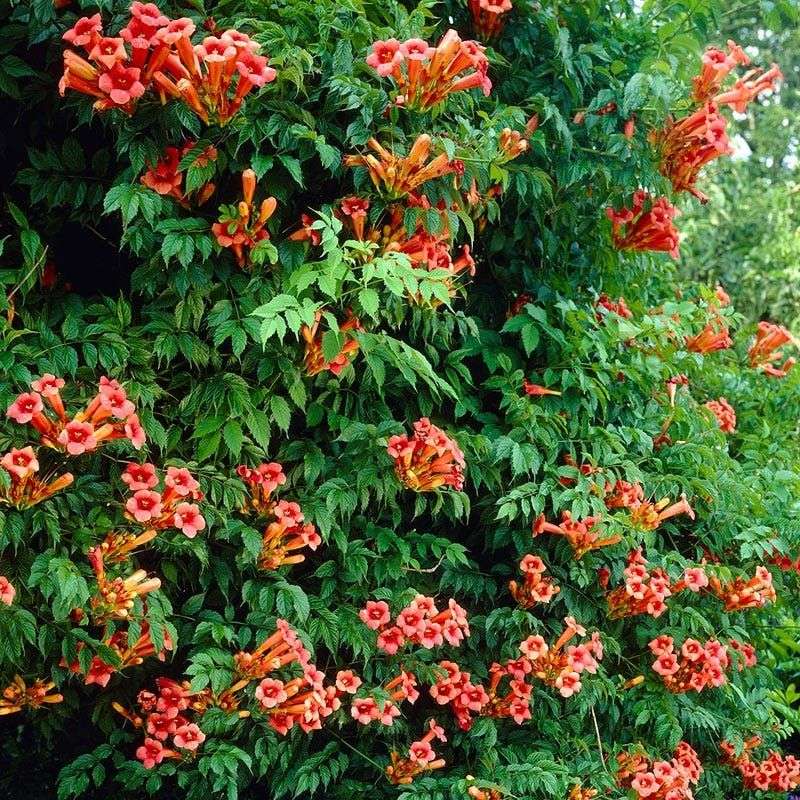
If hummingbirds had a favorite plant, trumpet creeper might top the list. Its big orange trumpet flowers bloom all summer long and are practically designed to fit a hummingbird’s beak, so expect regular visitors buzzing your fence.
Vigorous does not begin to cover it. This vine can reach 40 feet and coats a fence in dense foliage quickly, making it ideal for tall, fast screening on a large property.
That same enthusiasm means it needs a firm hand: prune it hard each year and keep it off structures you care about, since it clings aggressively. Plant it where you have space and want maximum coverage with maximum pollinator traffic.
In the right spot, it is one of the boldest, most alive green walls you can grow in NC.