
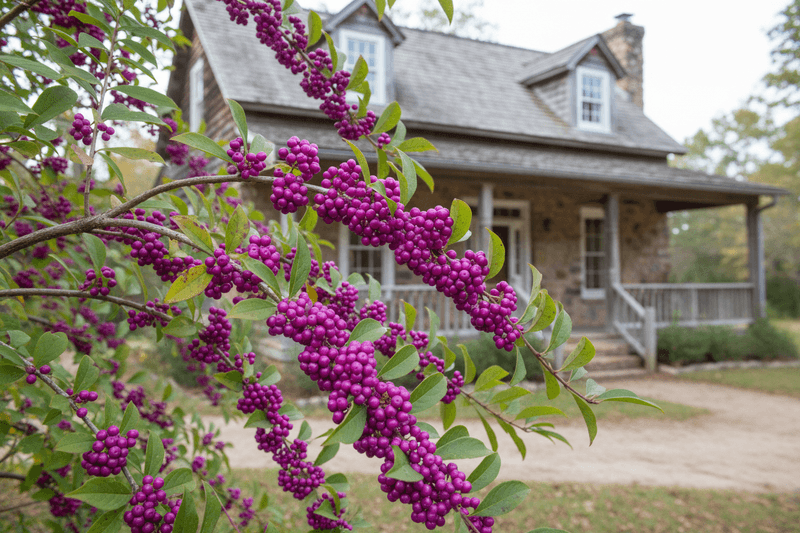
American beautyberry (Callicarpa americana) earns its place in many North Carolina yards with clusters of vivid purple berries that appear just when most shrubs are winding down for the season. It feeds songbirds, supports pollinators, and tolerates a surprisingly wide range of soils without demanding constant attention.
Yet it remains an underrated choice compared to the non-native shrubs that fill most nursery aisles. If your yard has a sunny or lightly shaded edge with room to grow, this native shrub is worth a serious look.
Why this overlooked native deserves a place at the wooded edge
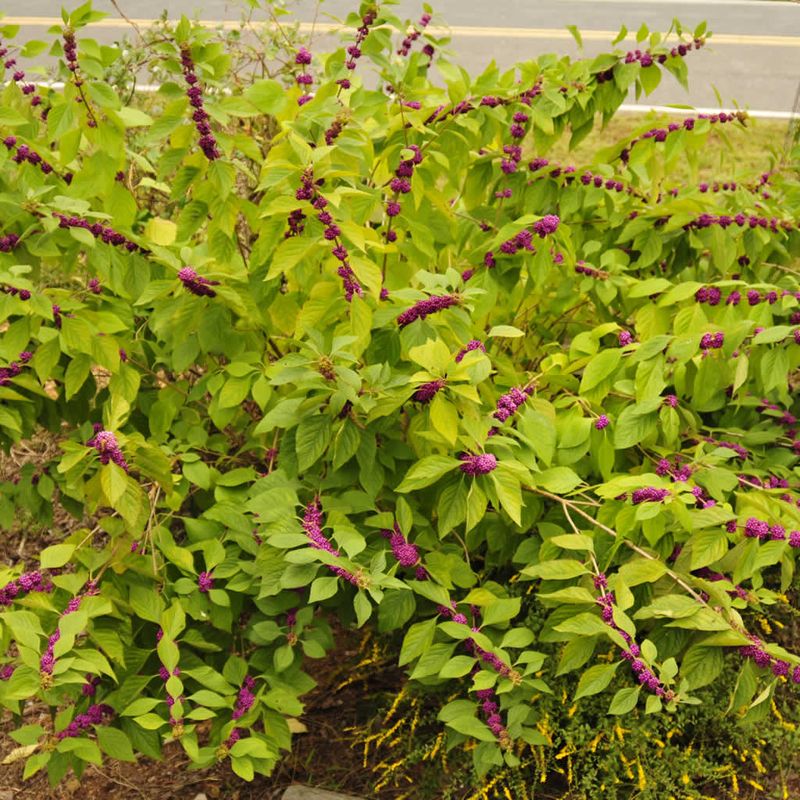
American beautyberry is one of those native shrubs that earns real admiration once you see it loaded with purple berries in August or September, yet it rarely shows up in the average North Carolina landscape. That gap between what the plant offers and how often homeowners actually plant it is the reason it deserves a closer look.
Calling it overlooked is an editorial judgment rather than a census finding, but the shrub’s documented qualities make the case on their own.
The plant’s appeal centers on its late-season berry display, its value to wildlife, its tolerance for varied soils, and a care profile that suits most homeowners willing to give it the right setting. NC State Extension’s plant profile describes it as a deciduous native shrub suited to naturalized areas, woodland edges, and informal screens, which captures its strongest landscape roles well.
Those uses matter because the shrub’s arching, open form looks at home against a tree line or along a pond margin but can feel out of place in a tightly clipped foundation bed.
Its native status in North Carolina carries a geographic footnote worth knowing upfront. North Carolina’s vascular plant database shows American beautyberry occurring widely across the Coastal Plain and southeastern Piedmont, with a more scattered presence in parts of the western Piedmont and southern Mountains, and little or no natural occurrence across much of the northern Mountains.
That distribution does not disqualify the plant for homeowners outside its core range, but it does mean the recommendation is strongest where the species naturally thrives.
Beautyberry is not the right choice for every yard. Deep shade, salt-spray exposure, very small beds, and landscapes that call for a compact evergreen or a formally clipped hedge all argue against it.
For the many North Carolina homeowners who have a sunny or lightly shaded edge, a relaxed design sensibility, and an interest in native wildlife, though, it fills a real gap in the late-season landscape.
How to identify American beautyberry before you buy
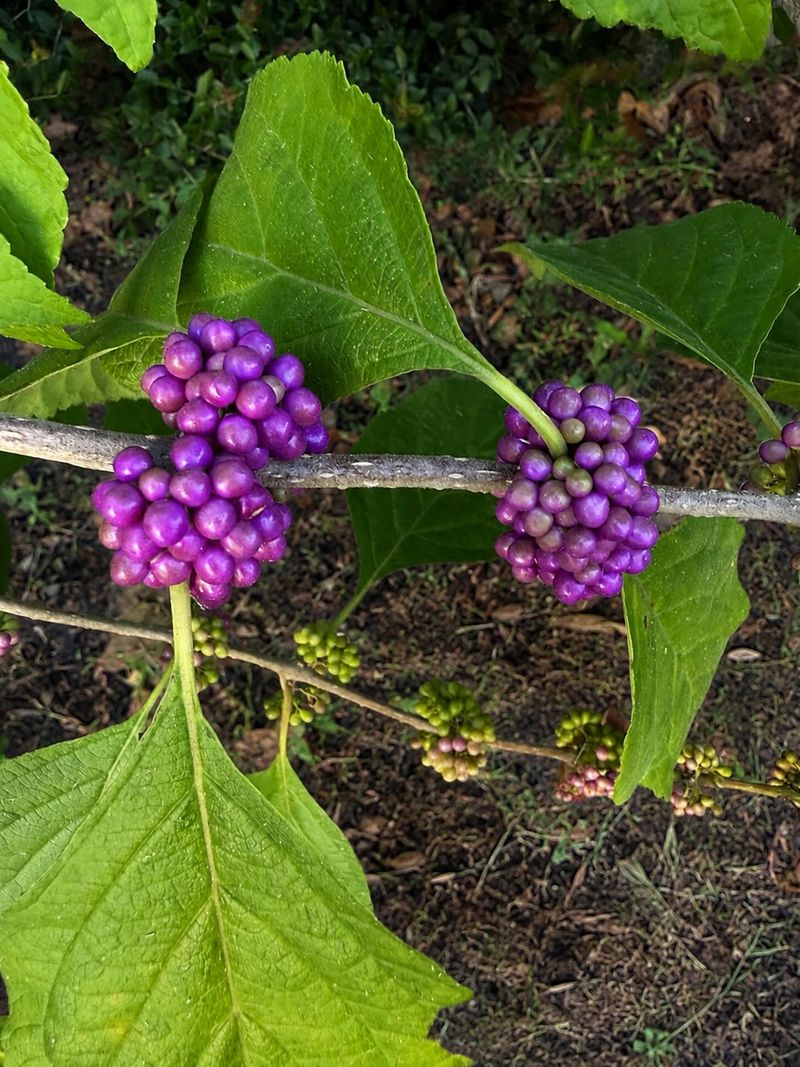
The most reliable way to avoid a misidentified purchase is to know exactly what you are looking for before you walk into the nursery. American beautyberry is a deciduous shrub with long, arching branches and opposite leaves that are toothed along the edges and noticeably large, sometimes reaching six inches or more in length.
The leaves have a slightly rough texture and can release a distinctive scent when crushed.
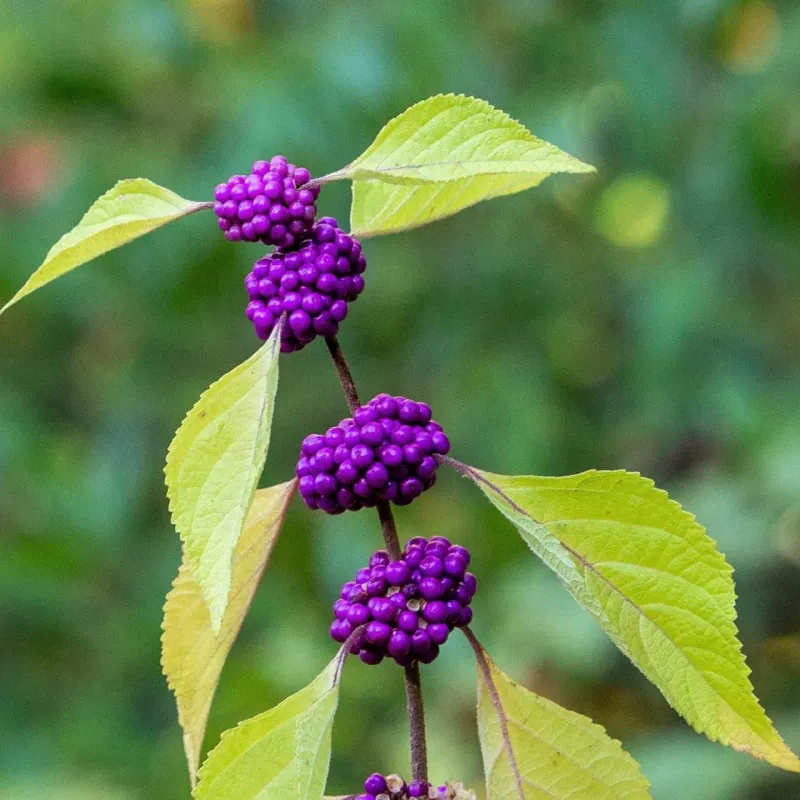
What sets the plant apart from almost everything else in a fall landscape is the way its berries are arranged. The purple-blue fruit clusters form in tight rings directly around the stems, right at the leaf nodes, rather than hanging from long stalks or appearing at branch tips.
That wraparound berry habit is the clearest field mark. NC State Extension’s beautyberry profile confirms that the small flowers appear from spring into summer and that the showy berry clusters generally follow from August through October, sometimes persisting into early winter after the leaves drop.
At the nursery, check the label for the scientific name Callicarpa americana. Several Asian species, including Callicarpa japonica and Callicarpa dichotoma, are sold under the common name beautyberry and produce similar purple berries.
NC State’s common-name beautyberry page distinguishes the American native from these introduced relatives. If supporting native pollinators and local wildlife is your primary reason for planting, the species name on the tag is the only guarantee you are getting the right plant.
American beautyberry is also sometimes confused with pokeweed (Phytolacca americana), which is a much taller, herbaceous plant with berries that hang in elongated clusters from long, separate stalks rather than wrapping tightly around the stem. Pokeweed berries are poisonous, and the plants look quite different up close.
University of Florida IFAS guidance on telling the two apart is a useful reference if you are uncertain about a plant already growing on your property.
On the question of eating the berries: NC State’s sourbush page notes that the fruit is edible but has little flavor, and other university sources describe raw berries as mealy, astringent, or potentially stomach-upsetting. Do not taste berries from any plant until you have made a confident positive identification from a known, unsprayed specimen.
Cooked preparations such as jelly are sometimes made from the fruit, but human edibility is a minor footnote to the plant’s value, not a reason to plant it.
Your North Carolina location and sunlight shape the decision
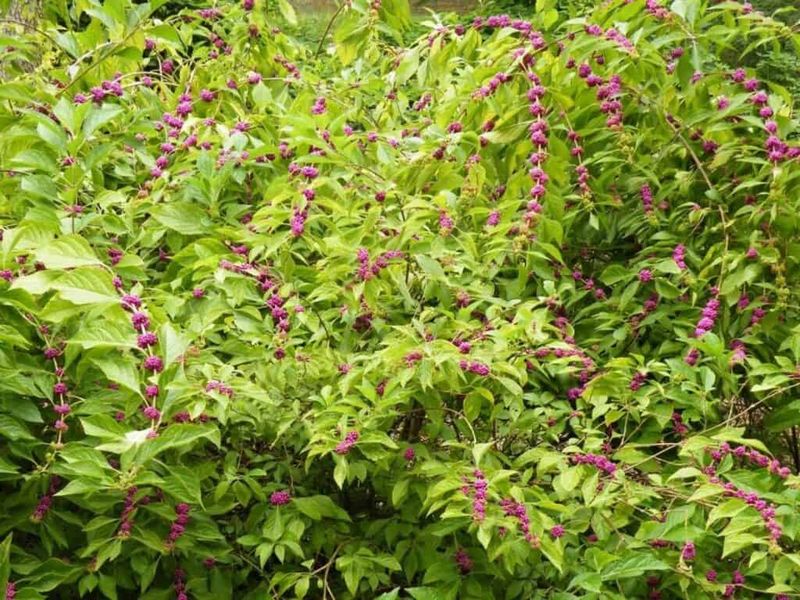
Where you live in North Carolina matters more for this plant than for many other native shrubs. American beautyberry’s natural distribution is not uniform across the state.
North Carolina’s vascular plant database places the species throughout the Coastal Plain and into the southeastern Piedmont, with scattered occurrences in parts of the western Piedmont and southern Mountains. Across much of the northern Mountains and northwestern Piedmont, it does not appear as a naturally occurring plant at all.
That distribution history does not mean mountain homeowners cannot grow it, but it does suggest that Coastal Plain and Piedmont gardeners are planting it in its home territory, where it has already proven it can handle local conditions over long periods. Gardeners farther west or north should think of it as a cultivated choice rather than a wild neighbor and pay extra attention to site conditions during establishment.
Sunlight is the single most important site factor. NC State Extension recommends full sun to light or dappled shade for best performance.
Plants in sunnier positions tend to grow denser and produce heavier berry crops, which also means more food for wildlife. Deep shade is a dealbreaker: a beautyberry planted under a closed canopy will produce sparse foliage, minimal flowers, and few berries.
Soil flexibility is one of the plant’s genuine strengths. University of Florida IFAS Extension’s beautyberry fact sheet confirms tolerance for clay, loam, and sandy soils, as well as acidic to moderately alkaline pH.
The shrub can handle periodically wet or dry conditions as long as drainage is adequate, which makes it a realistic option for the edges of rain gardens, low-lying borders, and pond margins where other ornamentals struggle. Prolonged standing water is still a problem, so a site that drains within a day or two of heavy rain is the target.
Coastal homeowners in North Carolina should note one additional limit: Florida extension guidance identifies poor salt tolerance in American beautyberry, which means sites exposed to salt spray from ocean winds are not good candidates. A protected coastal yard with adequate freshwater drainage can still work, but an exposed oceanfront border is a poor match for this shrub.
Give its arching branches enough room to work
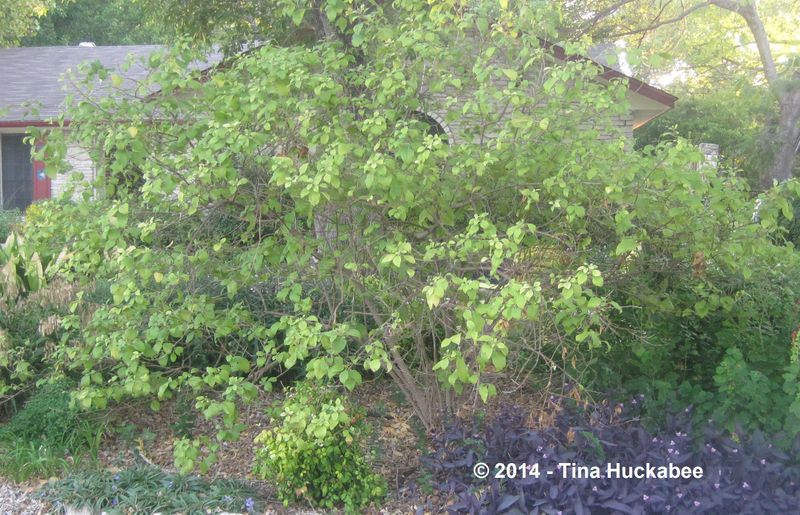
One of the most common planning mistakes with American beautyberry is treating it like a compact foundation shrub. It is not.
NC State Extension describes typical plants reaching roughly 3 to 8 feet tall and 3 to 6 feet wide under North Carolina conditions, and Virginia Cooperative Extension’s beautyberry guide notes that favorable conditions can push plants to 8 to 10 feet. Either way, this is a shrub that needs space, and trying to keep it small by constant shearing will cost you the berry display.
The branches arch outward and downward as the plant matures, creating a fountain-like silhouette that looks relaxed and natural rather than structured. That form is an asset in the right setting and a source of frustration in the wrong one.
A row of beautyberries along a back fence, a wooded property edge, or a stream bank looks intentional and full. The same shrubs crammed into a narrow foundation bed in front of a window will spend their lives being cut back and never showing their best berries.
University of Florida IFAS Extension lists the best landscape roles as naturalized areas, woodland edges, informal screens, large mixed borders, pond or stream margins, wildlife gardens, pollinator gardens, and mass plantings. Those uses share a common thread: they all give the plant horizontal room and tolerate a loose, deciduous habit.
Mass plantings of three or more shrubs spaced about five feet apart can create an informal hedge that provides dense berry coverage and a longer wildlife feeding window as different plants peak at slightly different times.
The deciduous habit is another factor to plan around honestly. From late fall through early spring, American beautyberry is a collection of bare, arching stems with no ornamental value.
In a mixed border with evergreen companions, that dormant period is easy to absorb. As a standalone specimen in a prominent spot near the front door, the bare-stem months may feel like a long wait.
Pair it with native evergreen shrubs such as inkberry or wax myrtle if year-round structure matters in the bed.
The flowers and berries support a range of wildlife
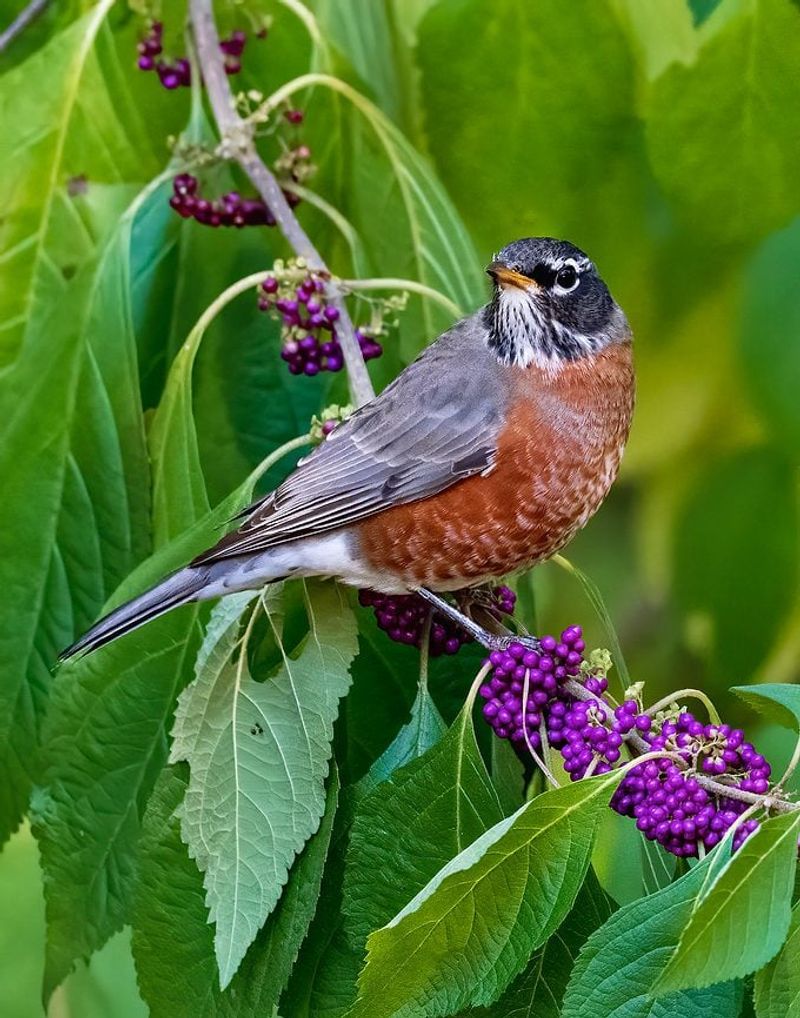
Few native shrubs pack as much ecological work into a single season as American beautyberry does from late summer through early winter. The berry clusters that make the plant so visually striking also make it a documented food source for a notable list of birds and mammals.
USDA Forest Service research on American beautyberry records fruit use by robins, brown thrashers, purple finches, eastern towhees, northern bobwhite, raccoons, opossums, squirrels, foxes, and armadillos. That breadth of documented use is one of the strongest arguments for including the plant in a habitat-friendly yard.
Wildlife use is real but not guaranteed on a specific schedule. Some horticultural sources note that birds may ignore the berries until other food sources become scarce, which means a single beautyberry in a yard full of other fruiting plants might not attract attention until late in the season.
One shrub is a starting point, not a complete wildlife strategy. Adding several plants, or pairing beautyberry with other native fruiting shrubs like possumhaw or native viburnums, increases the odds of consistent wildlife activity.
The Forest Service research also documents white-tailed deer browsing the leaves and fruit. That browsing record matters for homeowners in areas with high deer pressure, and it will come up again in the section on what beautyberry cannot promise.
University of Florida IFAS Extension identifies the flowers as attractive to pollinators and notes that American beautyberry serves as a larval host plant for the spring azure butterfly and the snowberry clearwing moth. The flowers are small and easy to overlook, but they open across a fairly long window from spring into summer, providing a sustained nectar resource.
NC State Extension also notes pollinator value in its plant profile. Taken together, the flowers and fruit extend the shrub’s ecological contribution across most of the growing season, which is a meaningful return on a single planting decision.
Water, mulch, and volunteer control keep care manageable
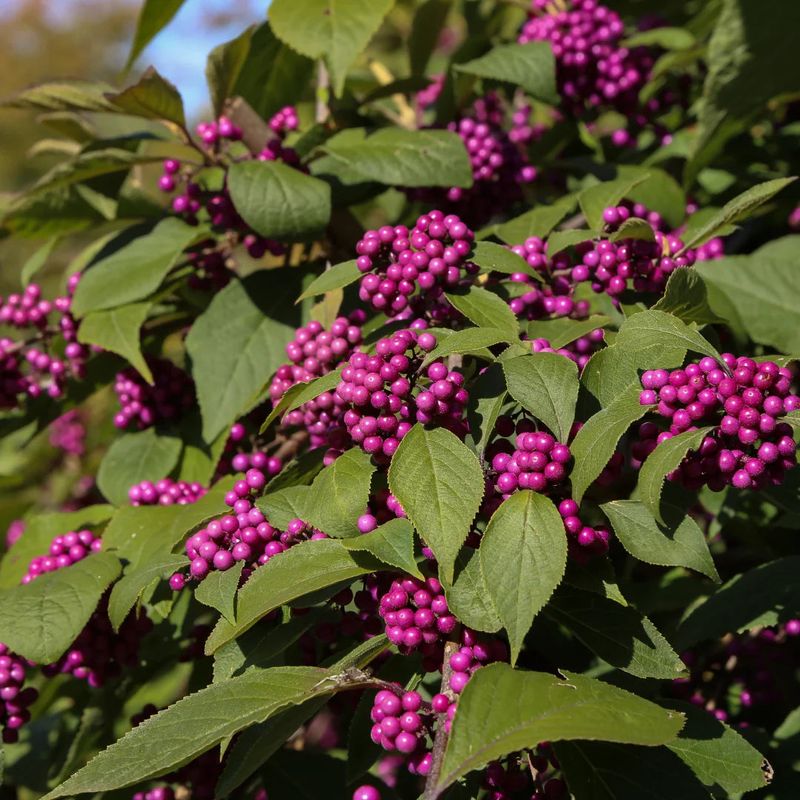
Getting a beautyberry through its first summer is the most labor-intensive part of the whole relationship. Newly planted shrubs need regular watering to develop a root system capable of handling North Carolina’s summer heat and dry spells.
University of Florida IFAS Extension’s beautyberry fact sheet and a companion UF/IFAS article on American beautyberry both note that established plants develop reasonable drought tolerance, but that tolerance takes time to build. Plan to water deeply once or twice a week during dry stretches in the first growing season, then taper off as the plant settles in.
A two- to three-inch layer of organic mulch around the root zone helps retain soil moisture, moderates soil temperature, and reduces weed competition during establishment. Keep the mulch pulled back a few inches from the base of the stems to avoid creating a moist environment that encourages rot or pest problems at the crown.
After the first year, most established beautyberries in appropriate sites handle normal rainfall without supplemental irrigation except during extended droughts.
Volunteer seedlings are the maintenance task that surprises some gardeners. Birds that eat the berries disperse the seeds, and new plants can sprout in beds or natural areas near the parent shrub.
The USDA NRCS plant guide for American beautyberry confirms that seed is a viable propagation method, which is exactly why bird-dispersed seedlings appear where you did not plant them. Self-seeding does not make the shrub invasive in the ecological sense, but it does mean pulling volunteers in tightly managed beds or near the edge of natural areas where you do not want the plant spreading on its own.
If you want to propagate intentionally, softwood cuttings taken in early summer root reliably and give you control over placement. For most homeowners, though, the practical task is simply checking the planting area each spring and removing any volunteers that have appeared outside the intended zone before they get large enough to be difficult to pull.
Prune for new growth instead of forcing a formal shape
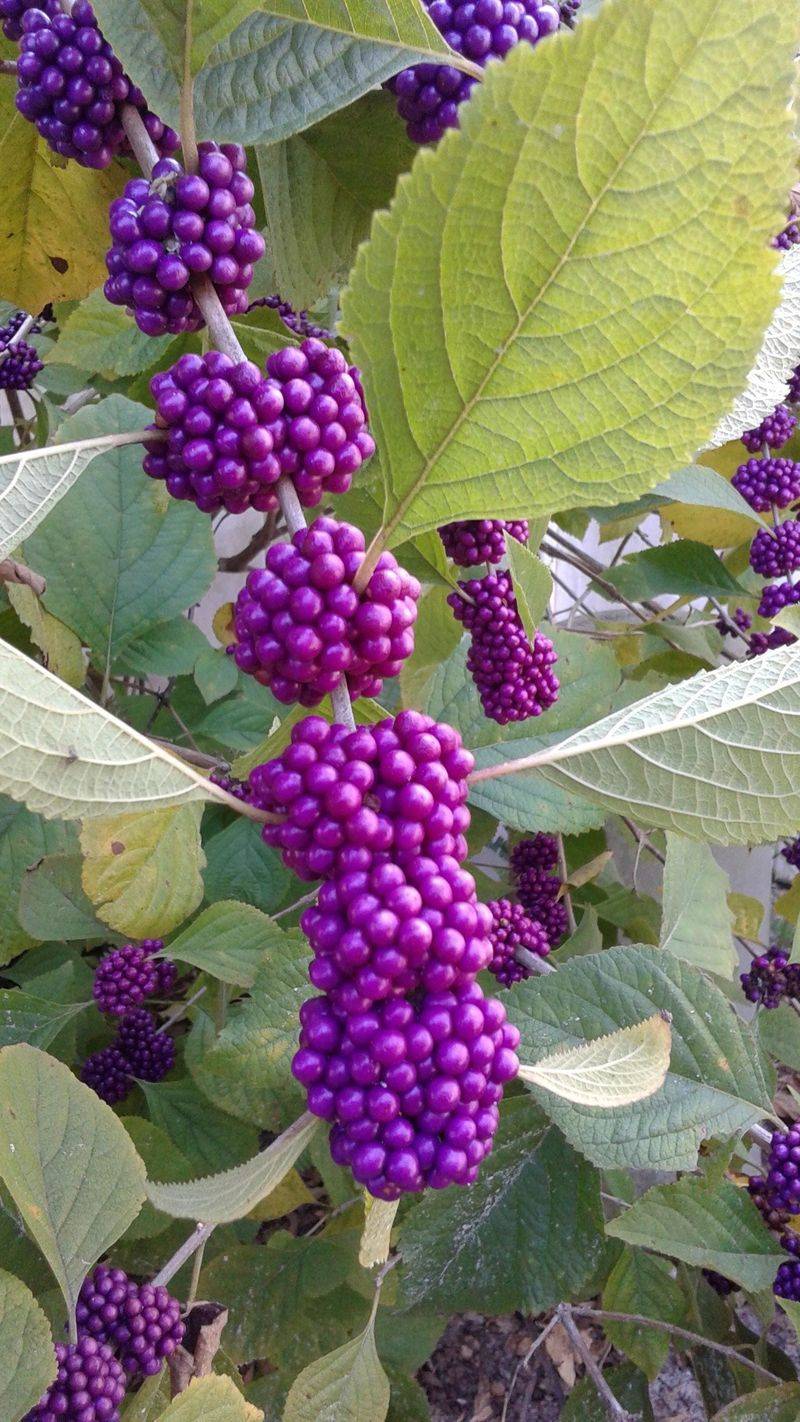
Pruning beautyberry at the wrong time is the most reliable way to eliminate the berry display you planted it for. Flowers and fruit form on new growth produced in the current season, which means any branch that carried berries last year needs to be cut back before growth starts in order to generate fresh, berry-bearing stems for the coming season.
Virginia Cooperative Extension’s beautyberry guide recommends heavy pruning in late winter or very early spring, cutting established plants back to roughly 4 to 12 inches above the ground. That kind of hard cutback sounds drastic, but it produces a fuller, more upright plant with a heavier berry load than one left to accumulate old wood year after year.
NC State Extension’s pollinator garden guidance supports the same late-winter timing for rejuvenating shrubs that flower on new growth.
The timing rule to remember: prune before growth begins in late winter or very early spring, and leave the plant alone once flowering starts. Shearing it after the flowers open removes the developing flower buds and the fruit that would have followed.
University of Florida IFAS Extension confirms this new-growth flowering habit and cautions against post-bloom trimming for gardeners who want the full berry display.
Rejuvenation pruning, the hard annual cutback, is best reserved for plants that have been in the ground at least two or three years. A newly planted shrub benefits more from light shaping and establishment than from an aggressive cutback in its first winter.
Once the plant is established and filling its space, the late-winter cutback becomes a routine annual task that takes about fifteen minutes and pays off all fall. The arching form that returns after pruning is not a sign that something went wrong.
It is the plant being exactly what it is.
Know what beautyberry cannot promise
Several claims circulate about American beautyberry that go well beyond what the evidence supports, and sorting them out before planting saves disappointment and, in one case, a real safety concern.
The mosquito and tick repellent story is the most widespread overclaim. USDA Agricultural Research Service research identified compounds in beautyberry leaves that showed repellent activity against mosquitoes in laboratory assays, and a published study on beautyberry’s mosquito-deterrent terpenoids documented that activity in controlled conditions.
Those are genuine scientific findings. What they do not establish is that planting the shrub in your yard will lower mosquito or tick populations around your home.
The compounds were isolated and tested in a lab, not evaluated as a whole-plant, whole-yard intervention.
Rubbing crushed leaves on your skin is sometimes suggested as a homemade repellent based on the same research. That advice is not supported by safety or efficacy data for a skin-applied product.
EPA guidance on skin-applied repellents explains how registered products are evaluated for both effectiveness and safety. CDC guidance on preventing mosquito bites and CDC guidance on Lyme disease prevention both direct people to EPA-registered repellents for reliable protection.
Homemade leaf applications are not a substitute.
Deer resistance is another claim that needs qualification. NC State Extension lists American beautyberry as deer-resistant, but USDA Forest Service documentation records white-tailed deer browsing both the leaves and fruit, describing the foliage as highly palatable in some contexts.
Deer pressure, local food availability, and seasonal hunger all affect browsing behavior. The plant may fare well in low-pressure areas and get hammered in high-pressure ones.
Salt-exposed coastal sites are also a poor match. University of Florida IFAS Extension identifies poor salt tolerance as a limitation, so any site that receives direct salt spray from ocean winds requires caution regardless of other favorable conditions.
Finally, on the question of eating the berries: NC State’s sourbush page notes the fruit is edible but flavorless, and raw berries may cause stomach upset in some people. Positive identification and careful preparation matter; casual tasting does not.
Choose beautyberry when your yard can let it be itself
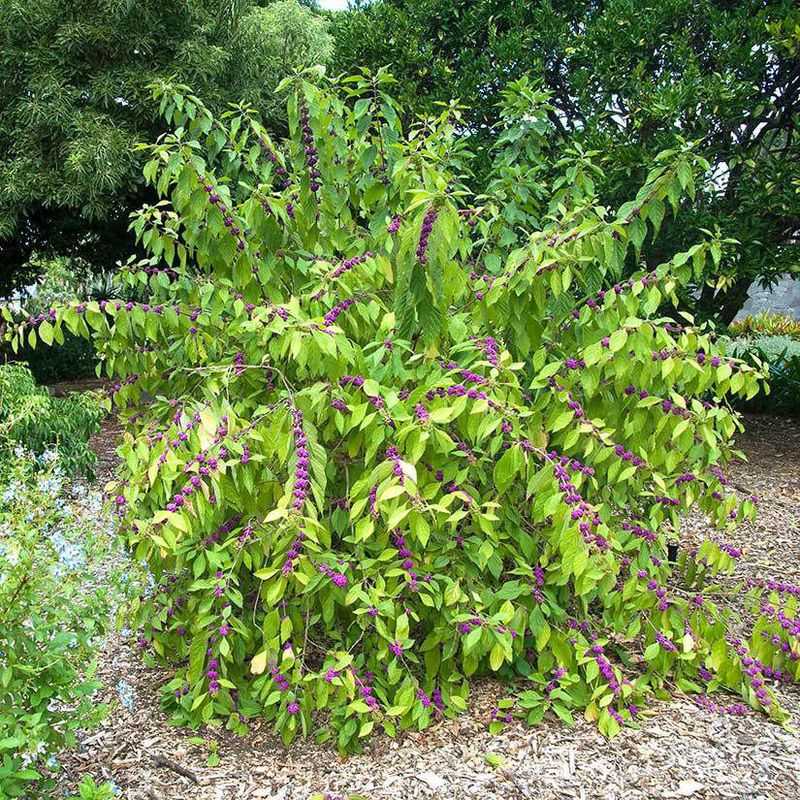
American beautyberry earns its place in many North Carolina yards, but the decision comes down to a simple site checklist. You need a sunny or lightly shaded spot, enough horizontal room for a shrub that will reach at least five to six feet across, and a design sensibility that welcomes a loose, arching, deciduous form.
If those three conditions exist, the shrub will handle most of the rest on its own once it is established.
Before purchasing, confirm the scientific name Callicarpa americana on the nursery label, especially if supporting native wildlife is part of your reason for planting. North Carolina’s vascular plant database and NC State Extension’s plant profile are both reliable references for confirming native status and site requirements.
University of Florida IFAS Extension’s fact sheet adds useful detail on soil tolerance and landscape placement.
Place beautyberry where its natural form looks like a deliberate design choice rather than an afterthought, and accept that it contributes one layer to a habitat-friendly yard rather than solving every wildlife or pest challenge on its own. For the right site in North Carolina, it is a genuinely useful native shrub that asks little and gives back every fall in purple.