
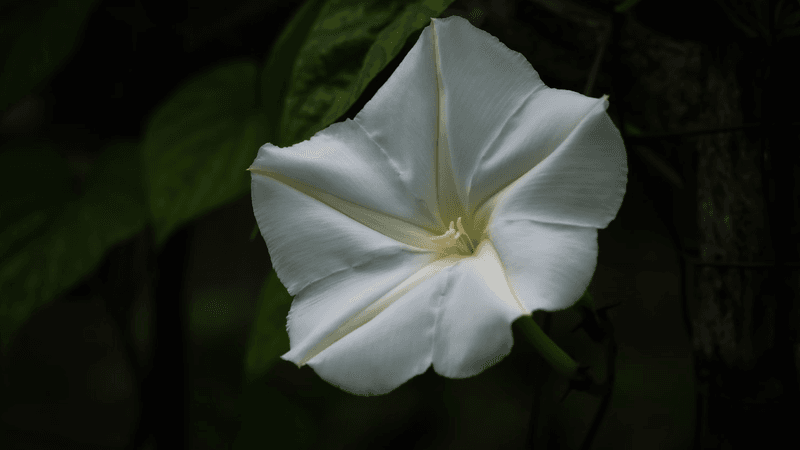
Most flowers close up when the sun goes down, but one vine does the opposite, saving its biggest show for after dark. Ipomoea alba, commonly called moonflower or moonvine, unfurls large, white, trumpet-shaped blooms around dusk and fills the air with a sweet fragrance that carries across a patio or porch.
For North Carolina homeowners who spend warm evenings outside, this fast-climbing vine can turn a plain fence or trellis into something genuinely worth watching.
Ipomoea alba turns an evening garden into the main event
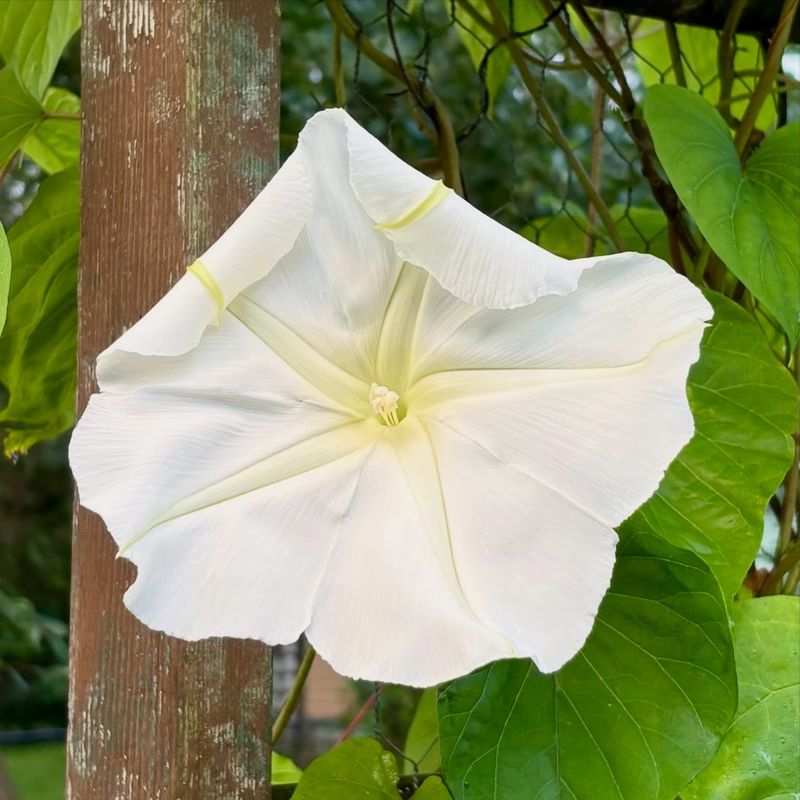
Gardeners who have stood beside a moonflower vine at dusk know the feeling: you glance over, and suddenly a bloom that was a tight spiral an hour ago has opened into a wide white trumpet the size of a salad plate. That is the plant at the center of this article, Ipomoea alba, profiled by NC State Extension as a fragrant, night-blooming vine with flowers roughly three to six inches across.
It goes by several names, including moonvine and tropical white morning glory, but its scientific name is the one that matters most when you are buying seeds or plants.
Ipomoea alba belongs to the Convolvulaceae family, the same group as morning glories, so its heart-shaped leaves and twining habit will look familiar if you have grown those. Unlike a morning glory, though, the flowers open as evening light fades and typically close again around or before noon the following day.
NC State lists the vine as a tender perennial that North Carolina gardeners treat as an annual, meaning it will not survive a hard freeze but can deliver a conspicuous warm-season display from mid-summer into fall.
One quick clarification before going further: “moonflower” is not a name that belongs to a single plant. Datura species, including Datura wrightii and Datura inoxia, are also sold and described as moonflowers in some nurseries and seed catalogs.
Those plants belong to an entirely different family and carry substantially different toxicity concerns. This article covers Ipomoea alba only, and the distinction matters every time you read a care tip or safety note anywhere online.
Always check the botanical name on the packet or label before purchasing, planting, or giving advice to anyone else.
Why does the flower wait for dusk?
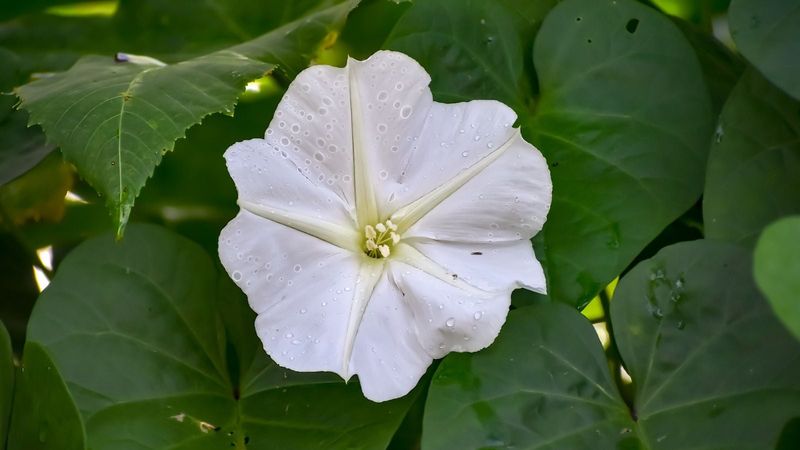
Ipomoea alba does not open at night because of the moon, despite what the common name implies. The plant’s opening pattern is driven by its own internal floral rhythms and by sensitivity to low light levels, a combination that consistently brings blooms out around dusk under normal conditions.
Research on Ipomoea species and their ecogeographic traits supports the idea that light cues and floral timing work together to align opening with periods when nocturnal pollinators are most active. The moon itself, including its phase, does not appear in the documented explanation for when or whether an individual flower opens.
In practice, the vine typically begins opening its buds in the late afternoon or early evening, and the unfurling can happen over just a few minutes, which makes watching it a genuine garden event. NC State Extension notes that flowers open at night and close around dawn, though individual timing shifts with temperature, plant maturity, and the length of the day as the season progresses.
Because the trigger is related to light levels rather than a fixed clock, unusually dark or deeply overcast daytime conditions can sometimes be associated with flowers opening outside the standard evening schedule, though this is not the norm.
The practical takeaway for North Carolina gardeners is to set reasonable expectations. Blooms will not appear on a schedule you can set your watch by, and not every bud on the vine will open on the same night.
Flowering generally picks up from mid-summer onward once the plant has had time to establish and the days have grown long enough to build energy for bloom production. Cooler nights in the mountains may push opening slightly later than in the warmer Piedmont or coastal plain.
What stays consistent is the basic pattern: as the light drops, the flowers respond.
White petals and perfume form a nighttime signal
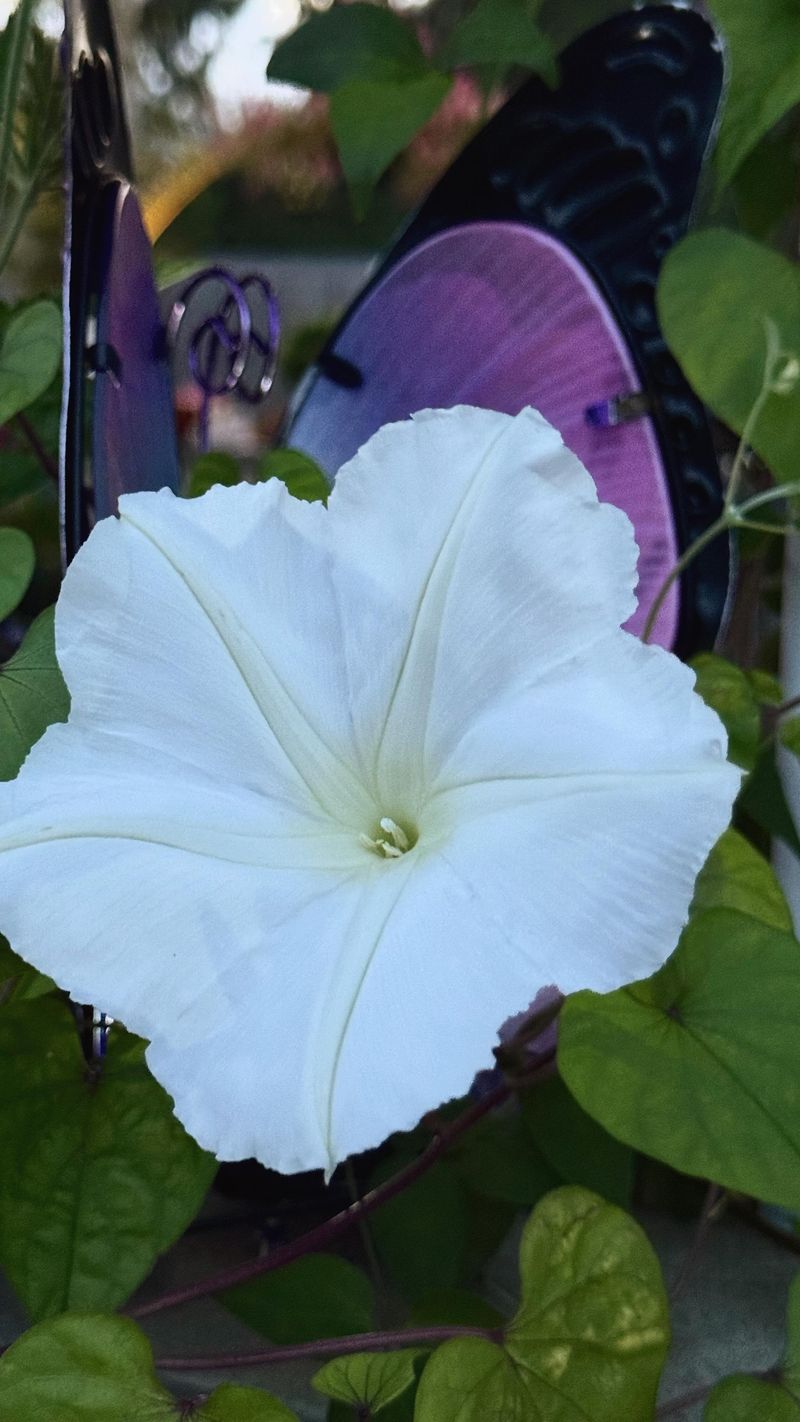
Stand next to a moonflower vine on a warm August evening in North Carolina and two things hit you almost at once: the bright white of the open blooms against the darkening garden, and a sweet, heavy fragrance that hangs in the still air. Both of those qualities serve a purpose beyond aesthetics.
A study on floral nectaries and nectar dynamics in Ipomoea species connects the genus to nocturnal visitors, with hawkmoths and other sphingid moths identified as important pollinators for night-blooming members of the group. White or highly reflective flowers are easier for moths to detect visually against a dark background, while floral scent can help guide them to a specific bloom at close range.
These two traits, pale color and strong fragrance, are common in flowers associated with moth pollination across many plant families, not just Convolvulaceae. Research on multimodal floral signals and moth foraging decisions shows that moths integrate both visual and olfactory information when locating flowers after dark.
That does not mean Ipomoea alba has a single exclusive pollinator or that a hawkmoth is guaranteed to appear every night in your yard. What it does mean is that the plant’s design fits a nighttime strategy, and you may well see large moths working the flowers on calm, warm evenings.
For the homeowner, the sensory experience is the payoff. Pale blooms catch whatever ambient light is available, whether from a porch light kept low, a sliver of moon, or simply the sky’s residual glow after sunset.
The fragrance intensifies in still evening air and can reach a seating area several feet away. Treating the vine as a living evening feature rather than a daytime ornamental is the right frame of mind for getting the most out of it.
The best payoff comes beside a place you already use
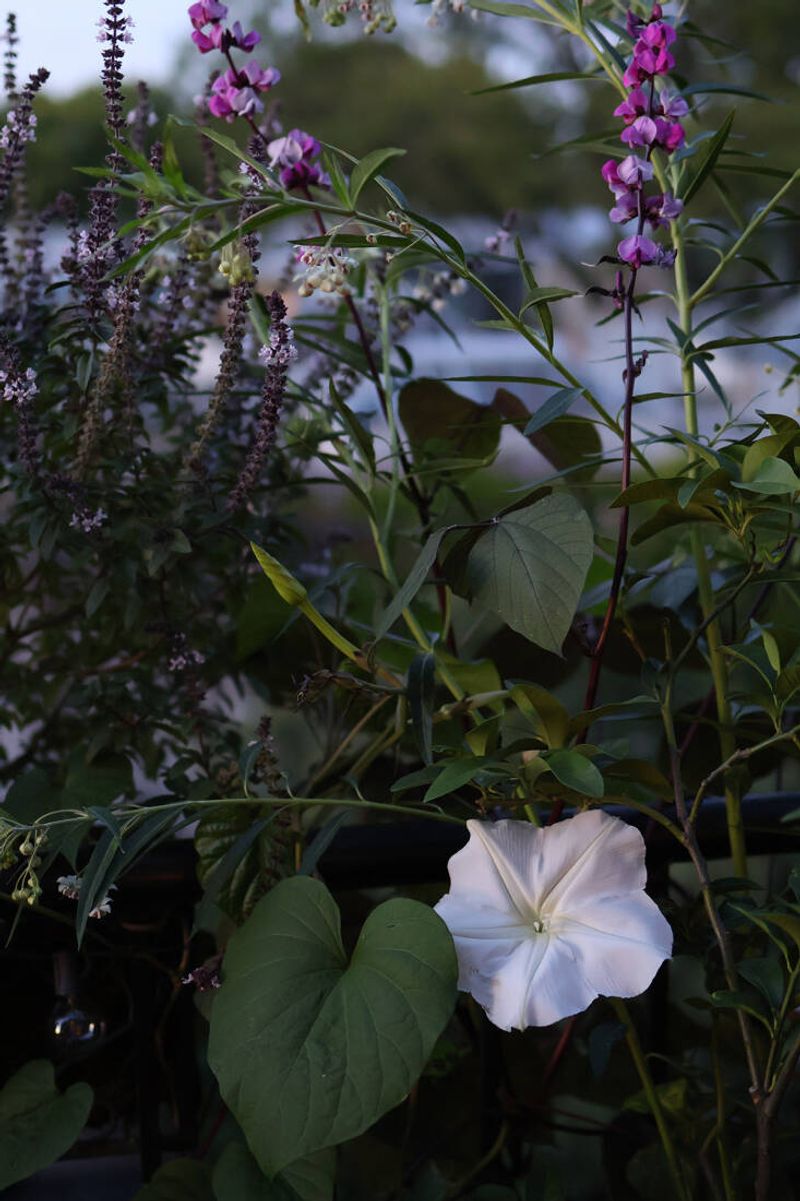
Planting a night-blooming vine at the back of a remote border is like buying a good speaker and leaving it in a closed room. The flowers and fragrance of Ipomoea alba are most rewarding when you are actually nearby to enjoy them, which makes placement one of the most important decisions you will make for this vine.
NC State Extension and Clemson Extension’s nocturnal garden guide both point toward patios, porches, decks, and seating areas as ideal spots, and the reasoning is straightforward: those are the places North Carolina homeowners actually spend their evenings.
A fence along a walkway, an arbor over a garden gate, or a trellis mounted to the wall beside an outdoor dining area all work well as support structures and as display backdrops. The vine’s white blooms stand out even in low light, and the fragrance travels easily across a small outdoor space.
Placing the plant within ten to fifteen feet of where you sit or walk means you will notice the opening process, catch the scent, and potentially observe any moth activity around the flowers after sunset.
One practical consideration: Ipomoea alba still needs full sun during the day even though it flowers after dark. Clemson’s vine-selection guidance confirms that the plant performs best in full sun with moist, well-drained soil, whether that soil is clay, loam, or sandy as long as drainage is adequate.
A south- or west-facing fence near a patio often checks both boxes: it catches plenty of afternoon sun for the plant and puts the evening display right where you want it. Avoid planting in spots that receive heavy afternoon shade, as reduced light during the growing day can slow establishment and delay flowering.
A fast-growing vine needs a serious structure
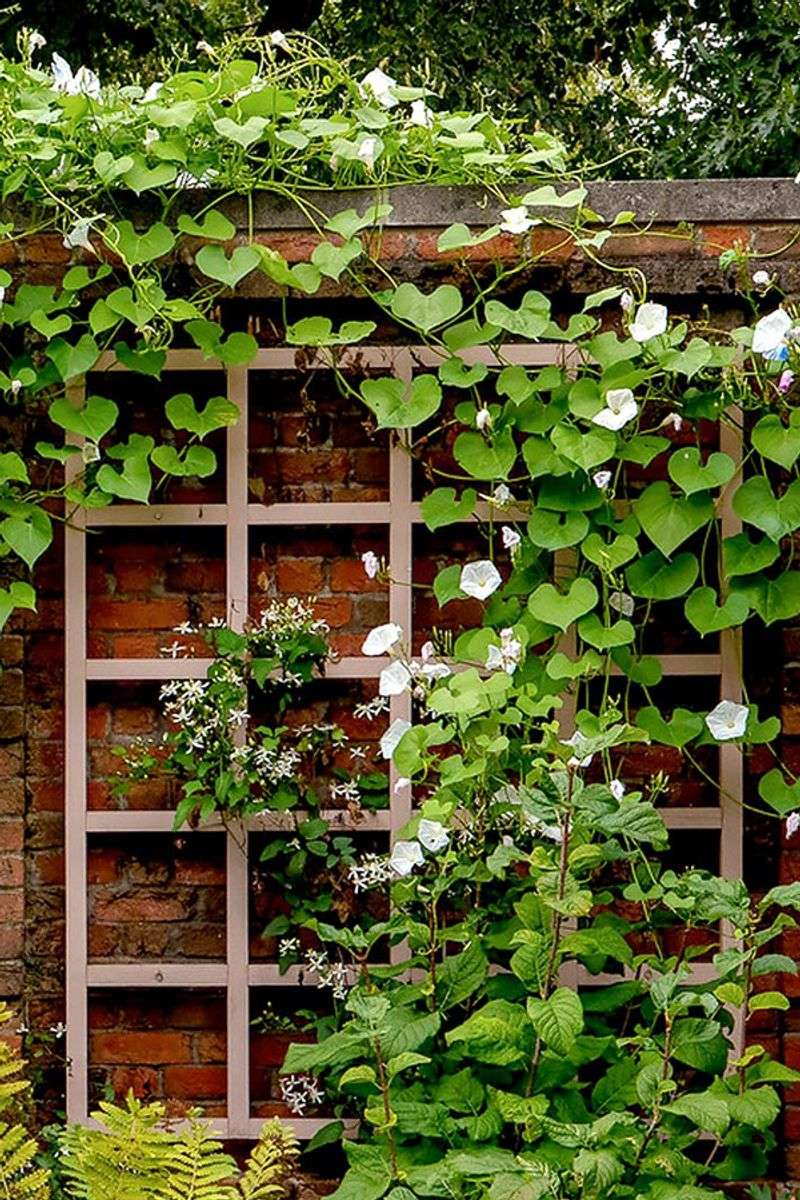
Anyone who has grown a moonflower vine for the first time is usually surprised by how much ground it covers in a single season. Ipomoea alba is a twining vine that can reach roughly ten to fifteen feet in one warm-season growing period, and in the right conditions it may push well beyond that.
NC State Extension’s plant profile describes it as vigorous, which is a polite way of saying you should install your support structure before the vine decides where it wants to go. A lightweight tomato cage or a thin bamboo stake will not hold this plant by midsummer.
Choose a sturdy trellis, a solid fence panel, a wooden arbor, or a heavy-gauge wire structure anchored firmly in the ground. The support should be in place at planting time, not added later as an afterthought.
Once the vine begins twining in earnest, redirecting it is possible but more work than starting with the right setup. Leave enough horizontal space around the planting area so the vine does not quickly engulf nearby shrubs or crowd out other plants.
For North Carolina gardeners who want earlier flowers, starting seeds indoors about four to eight weeks before the last expected spring frost gives the vine a head start. Clemson Extension’s annual-growing guidelines support indoor starting as a practical strategy for warm-season vines in the region.
Transplant seedlings outdoors only after cold weather has reliably passed, since Ipomoea alba has no frost tolerance. Seeds can also be sown directly in the garden after the last frost date, though direct-sown plants will flower later in the season.
The hard seed coat is worth addressing before planting. Soaking seeds in water overnight or carefully nicking the outer coat with a nail file or sandpaper can help water reach the interior and may improve germination rates.
Treat these steps as helpful preparation rather than a guaranteed fix, since germination still depends on soil temperature, moisture, and seed viability. Keep the soil consistently moist during the first few weeks after planting or transplanting, as the young root system needs steady moisture to establish before summer heat arrives.
The name requires a safety check
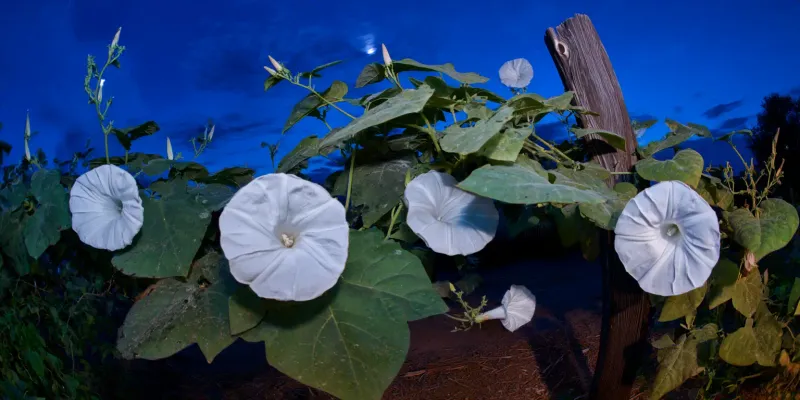
“Moonflower” is one of those common names that can point to very different plants depending on who is using it, and that ambiguity has real consequences. Datura species, including Datura wrightii, are also sold, described, and even promoted as moonflowers in some nurseries and online seed shops.
NC State Extension’s profile on Datura wrightii makes clear that this is a different plant entirely, with substantially different and severe toxicity concerns across the whole plant. Ipomoea alba and Datura are not in the same plant family, do not have the same growth habit, and should not be treated as interchangeable based on a shared nickname.
A CDC report on suspected moonflower intoxication specifically notes that the common name can complicate identification in poisoning cases, because people and even medical professionals may not immediately know which plant is involved. The lesson for home gardeners is simple: check the botanical name on the seed packet or plant tag before you buy.
If the label says “moonflower” without a scientific name, ask the nursery staff or look it up before bringing the plant home.
Ipomoea alba has its own cautions that deserve attention. NC State identifies the seeds as a toxicity concern and lists the plant as a potential problem for cats, dogs, and horses.
Do not eat the seeds, brew them into tea, or encourage children or pets to handle them. If you grow the vine in a yard where animals have access, monitor seed pod development and remove pods before they mature and drop.
Never assume that an unidentified white, night-blooming plant is safe simply because it resembles a photo of Ipomoea alba you saw online.
Responsible night-garden practices extend to how you manage the space around the vine. If you are hoping to see moth activity after dark, keep artificial lighting near the flowers low and targeted rather than flooding the planting area with bright white light, which can disrupt nocturnal insects.
University of Minnesota Extension’s overview of nocturnal pollinators recommends avoiding broad-spectrum pesticide applications near plants that support night-flying insects. If pest control is necessary, choose targeted treatments applied during daylight hours when nocturnal visitors are not active, and follow label directions carefully.
Plant it for the evening garden, not for a moon myth
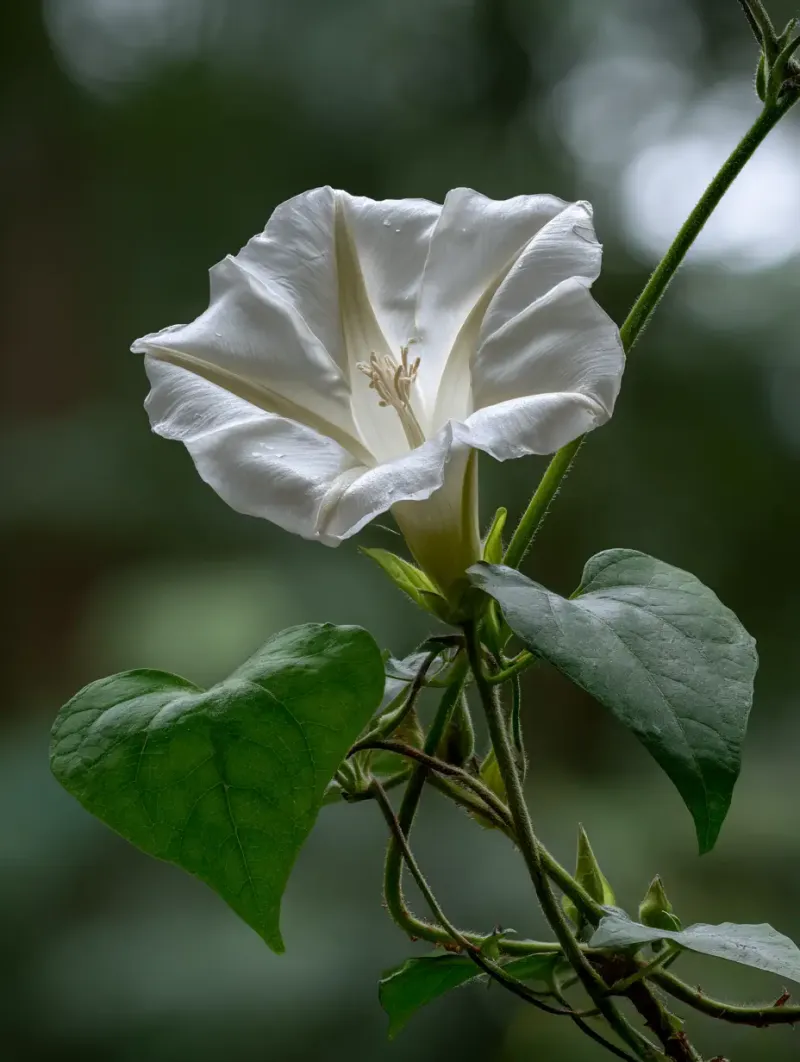
The story of Ipomoea alba is simpler and more rewarding than the myths surrounding it. This vine opens its large white flowers around dusk because its floral rhythms and sensitivity to low light align with that timing, as research on Ipomoea species and light-driven floral cues supports.
The moon does not trigger the blooms, and no particular lunar phase makes the display better or worse. What actually determines your results is the practical side: the right plant identity confirmed by scientific name, a sturdy support in a sunny spot near a patio or porch, good soil drainage, consistent moisture during establishment, and patience through the first weeks of the season.
Missouri Botanical Garden places the flowering window from July through October, which gives North Carolina gardeners a solid run of warm evenings to enjoy the display before frost ends the season. Treat Ipomoea alba as the vigorous, warm-season ornamental it is, handle identification and safety with care, and the vine will do the rest.
Few plants deliver a fragrant, glowing show at exactly the hour you step outside to enjoy your yard.